
درباره سایت
آخرین مطالب
- استخدام أكسيد الليمونيت (الماغش) في صناعات الزجاج
- کاربرد اکسید لیمونیت (گل ماش) در صنایع شیشهسازی
- A Review of Daily Prices for Limonite Oxide (Ocher) in the Market
- چگونه خالص بودن اکسید لیمونیت (گل ماش) را تشخیص دهیم؟
- بررسی قیمت روز اکسید لیمونیت (گل ماش) در بازار
- Application of Limonite Oxide (Gole Mash) in Glassmaking Industries
- كيف تتعرف على نقاء أكسيد الليمونيت (جول ماش)؟
- How to Determine the Purity of Limonite Oxide (Gol Mash)?
- بررسی استانداردهای ایمنی کار با اکسید لیمونیت (گل ماش)
- Comprehensive Guide to Technical Analysis of Limonite Oxide (Gol Mash)
امکانات وب
Introduction to the Importance of Kaolin in Water and Wastewater Treatment Industry
Today, with population growth and the ever-increasing development of industries, access to clean water resources and proper management of industrial wastewater has become one of humanity's greatest challenges. Water and wastewater treatment processes require efficient, environmentally friendly minerals that can optimally separate impurities, suspended particles, and toxic pollutants from fluid streams. Among various minerals, kaolin, as a natural hydrated aluminum silicate with a unique layered structure, has found a special place in various industries, including water treatment. This valuable mineral, in addition to its traditional applications in industries such as application of kaolin in the paint and industrial coatings industry, plays an important role in improving physical and chemical separation processes.
The physical and chemical properties of kaolin powder produced by the Kani Sang Amiran project make it an ideal option for engineers and designers of treatment systems. With its stable structure, high purity, and appropriate particle size distribution in the range of 450 to 1500 mesh, this material can act as a filtration agent, adsorbent, and coagulant aid. In this comprehensive article, we intend to discuss and examine the various aspects of using this vital mineral in water and wastewater treatment processes to determine how this natural resource can be used to protect water resources.
Understanding the Chemical and Physical Structure of Kaolin
To better understand the performance of kaolin in treatment systems, it is essential to have a precise knowledge of its structural and physical properties. The chemical formula of this material consists of hydrated aluminum silicate, and its crystalline structure is composed of repeating layers of silica tetrahedral and alumina octahedral sheets. This layered structure allows kaolin to have a very large contact surface with its surroundings, a feature that is very important in pollutant adsorption processes. In addition, the relative neutrality of this material against extreme chemical reactions makes it a stable medium against dilute acids and bases.
The granulation specifications of kaolin, which are usually processed in the 450 1500 mesh range by the Kani Sang Amiran project, determine its permeability, sedimentation rate, and filtration power in treatment beds. Higher mesh particles (finer particles) provide more specific surface area, which is very effective in ion exchange processes and the removal of colloidal particles. Alongside this material, other minerals such as the role of bentonite in water and industrial wastewater treatment are also used as clay supplements in water engineering, and comparing their behavior with kaolin provides a broader perspective to water treatment specialists.

The Role of Kaolin in Water Coagulation and Flocculation Processes
One of the critical stages in surface water and industrial wastewater treatment is the coagulation and flocculation process, which aims to remove suspended colloidal particles and water turbidity. Suspended particles in water usually carry a negative electrical charge and therefore repel each other, remaining stable in the system. Adding powdered minerals as primary nuclei or coagulant aids can neutralize the surface electrical charge and help particles aggregate. Kaolin, with its appropriate density and active surface, acts as an aggregate or weighting agent, helping the formed flocs become faster and heavier, thereby increasing the speed of the sedimentation process.
The use of kaolin powder in the 450 1500 mesh range allows treatment plant operators to control the particle size distribution of flocculants. Finer kaolin particles act as nucleation sites for the formation of larger flocs, drastically increasing the efficiency of clarifiers. This application ensures the stability of the treatment system, especially in cases where the influent water has variable turbidity and severe quality fluctuations, and prevents hydraulic shocks to subsequent units.
Application of Kaolin as an Adsorbent in Pollutant Removal
The removal of heavy metals, pigments, and toxic organic compounds from industrial wastewater is one of the critical tasks of wastewater treatment units. The specific mineral structure of kaolin possesses significant Cation Exchange Capacity (CEC), which allows it to adsorb metallic ions suspended in water. Although kaolin's ion exchange capacity is lower than some other clays, its high mechanical and chemical stability, combined with its abundance and economic price, makes it an attractive option for pre-treatment or secondary treatment of wastewater.
The Kani Sang Amiran project, by producing kaolin in precise 450 1500 mesh granulations, provides a porous and homogeneous surface for adsorbing pollutants. When wastewater containing dyes or organic materials comes into contact with kaolin slurry, the pollutant molecules are adsorbed onto the surface of the clay particles and separated from the liquid phase. This physicochemical phenomenon plays an important role in reducing the overall pollution load of wastewater discharged from paint, paper, and ceramic industries and improves the quality of recycled water.

Filtration and Separation Using Kaolin-Containing Beds
Physical filtration is one of the main pillars of water treatment, used to remove suspended particles remaining after the sedimentation stage. In the design of sand and granular filter beds, additive minerals are sometimes used to modify hydraulic properties and increase particle trapping efficiency. Kaolin, due to its fine particle size and controlled colloidal ability, can play a role in creating dense yet permeable filter cakes. This feature is also considered in membrane filtration processes and filter presses.
In addition to water treatment, the application of clay minerals is also widespread in industries dealing with concrete structures and water transmission piping; for example, the role of kaolin in the pipe-making and concrete products industry shows how this material can improve the durability and resistance of water transmission infrastructure against environmental corrosive factors. Combining the applications of kaolin in the construction of water transmission pipes and treatment processes demonstrates the synergy of this mineral in the complete cycle of water resource management.
Optimization of Consumption and Operational Parameters in Wastewater Treatment
Optimal use of chemical and mineral materials in water and wastewater treatment requires precise control of operational parameters such as pH, dosage, retention time, and stirring speed. Kaolin, as a neutral mineral, does not have a severe negative effect on water pH and is easily manageable under various operating conditions. However, accurately determining the dosage based on influent water quality (such as turbidity, hardness, and type of pollutants) is essential to achieve maximum efficiency.
The Kani Sang Amiran project, by processing kaolin in the 450 1500 mesh range, makes it possible to select the most precise material in accordance with the design of clarification units. The kaolin dosage should be adjusted to prevent premature clogging of filters and excessive production of sludge. Proper management of the volume of sludge resulting from kaolin sedimentation and the adsorbed pollutant materials constitutes an important part of the economy and sustainability of the wastewater treatment system.
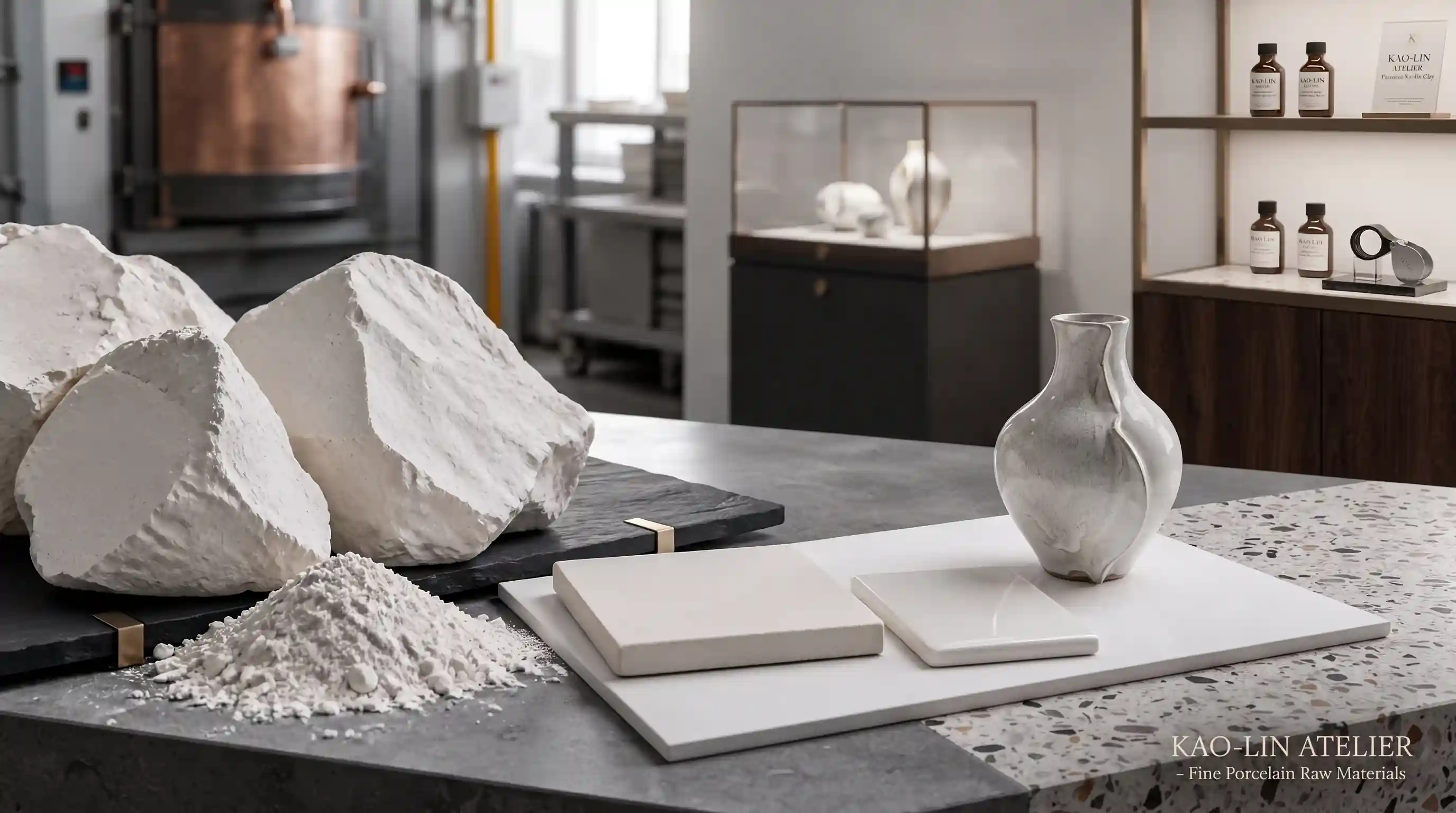
Economic and Environmental Benefits of Using Domestic Kaolin
Economic sustainability and environmental compatibility are two key factors in choosing consumables in the water and wastewater treatment industries. The use of domestic kaolin brings significant advantages in terms of supply costs, transportation, and reducing dependence on imported products. Since this material is naturally found in the country's mines and processed by industrial units, stable access to it is guaranteed for municipal and industrial treatment plants.
From an environmental perspective, kaolin is a non-toxic, stable material compatible with aquatic ecosystems that does not produce hazardous residues, unlike some synthetic chemicals. Using this mineral as a coagulant aid or adsorbent can reduce the consumption of other expensive and dangerous chemicals, thereby minimizing the negative environmental effects of industrial wastewater. This approach is in line with sustainable development standards and green water resource management.
Future Outlook and Conclusion on Kaolin Applications in Water Management
Given water scarcity crises and the tightening of wastewater discharge standards to the environment, the need for more advanced technologies and materials is felt more than ever. Kaolin, relying on its unique structural features and reasonable finished cost, has high potential for a more prominent presence in the new generation of water treatment systems. Research into modifying the kaolin surface to increase the efficiency of adsorbing specific pollutants promises new applications for this material in the near future.
Overall, the products offered by the Kani Sang Amiran project, including kaolin powder with 450 to 1500 mesh, provide a reliable and efficient tool for engineers in the water and wastewater industry. Combining technical knowledge of water engineering with the quality characteristics of this mineral can help solve many challenges of industrial wastewater treatment and supply clean water, taking a positive step toward preserving the country's natural resources.

| Question | Answer |
|---|---|
| What is kaolin and what is its composition? | Kaolin is a natural hydrated aluminum silicate with a layered structure that is used as a widely applicable mineral in various industries. |
| What is the mesh range of kaolin supplied by Kani Sang Amiran? | The kaolin products of this collection are processed and offered in the granulation range of 450 to 1500 mesh. |
| What is the role of kaolin in water and wastewater treatment? | This material acts as a coagulant aid, floc weighting agent, and surface adsorbent to remove turbidity and pollutants. |
| Is kaolin effective in removing heavy metals from wastewater? | Yes, kaolin can adsorb some metal ions and pollutants due to its cation exchange capacity and high contact surface. |
| What other industries use kaolin? | In addition to water treatment, it is used in the production of tiles, ceramics, glaze, paper, and the paint industry. |
| Is kaolin dangerous for the environment? | No, kaolin is a natural, non-toxic, and environmentally friendly material that does not have the negative effects of synthetic chemicals. |
| How can suitable kaolin be selected for treatment? | Selection is based on influent water quality parameters, required mesh, and optimal dosage. |
| Is kaolin also used in the concrete and pipe industry? | Yes, this material helps improve the durability and mechanical properties of concrete products and water transmission pipes. |
| What is the economic advantage of using domestic kaolin? | Stable supply, reduced transportation costs, and reasonable price compared to imported samples are its advantages. |
| How can kaolin be obtained from Kani Sang Amiran? | By visiting the kaolin product page on the Kani Sang Amiran website, you can receive more information. |
Kani Sang Amiran Project — Reference for the production and processing of high-quality minerals and kaolin.

برچسب: Kaolin,Investigation of Kaolin Application in Water and Wastewater Treatment Industry,
نویسنده: رساوب آفرین