
درباره سایت
آخرین مطالب
- انتخاب اکسید آهن قرمز (اخرا) برای بهبود کیفیت پیگمنت و پوششهای رنگی
- تامین کربنات کلسیم با دانهبندی دقیق جهت استفاده در مستربچ
- تأمین تخصصی سیلیس برای مصالح ساختمانی، شیشه و صنایع سرامیک
- ویژگیهای فنی بنتونیت کانی سنگ امیران برای کاربردهای خاص
- فلدسپات کانی سنگ امیران برای شیشه کاشی و سرامیک
- کاربرد تالک سفید درجه یک در فرمولاسیون پیشرفته رنگ و محصولات کاغذی
- اکسید آهن قرمز (اخرا) کاربردی جهت تولید محصولات سرامیکی و پوشش
- مشخصات فنی اکسید آهن قرمز (اخرا) مناسب برای پوشش و تولید پیگمنت
- مشاوره تخصصی خرید کربنات کلسیم بر اساس نیاز دقیق صنعت شما
- انتخاب تالک سفید صنعتی مناسب برای تولیدات کاغذ و مستربچ
امکانات وب
Introduction to White Talc and Its Importance in Mode Industries
The mineral white talc is recognized as one of the most functional raw materials in industry, playing a key role in improving the physical and chemical properties of final products. With its flaky structure and unique properties, this material is utilized in various industries such as masterbatch, compound, paint, paper, and ceramic manufacturing. The Kani Sang Amiran project has taken an effective step toward supplying the needs of domestic industries by offering this high-quality mineral.
In mode industrial processes, selecting suitable fillers and additives has a direct impact on product quality, durability, and final cost. Due to its high purity, softness, and thermal stability, white talc has become one of the top choices for engineers and manufacturers. Familiarity with the diverse applications of this mineral greatly helps in optimizing industrial formulations.
Technical Specifications and Mesh Range of White Talc
One of the most important parameters in determining the quality and application of white talc is its particle size and mesh range. This product is processed and supplied in a mesh range of 450 to 2500 mesh. The variety in granulation allows industrialists to choose the appropriate mesh based on the exact requirements of their production process. Finer particles with a high mesh provide better coverage and mechanical properties.
The crystalline structure and natural softness of this mineral powder ensure that it behaves appropriately when combined with other materials. Strict quality control during the production process by the Kani Sang Amiran project guarantees that the final product possesses optimal uniformity and purity, which is extremely critical for sensitive industries.
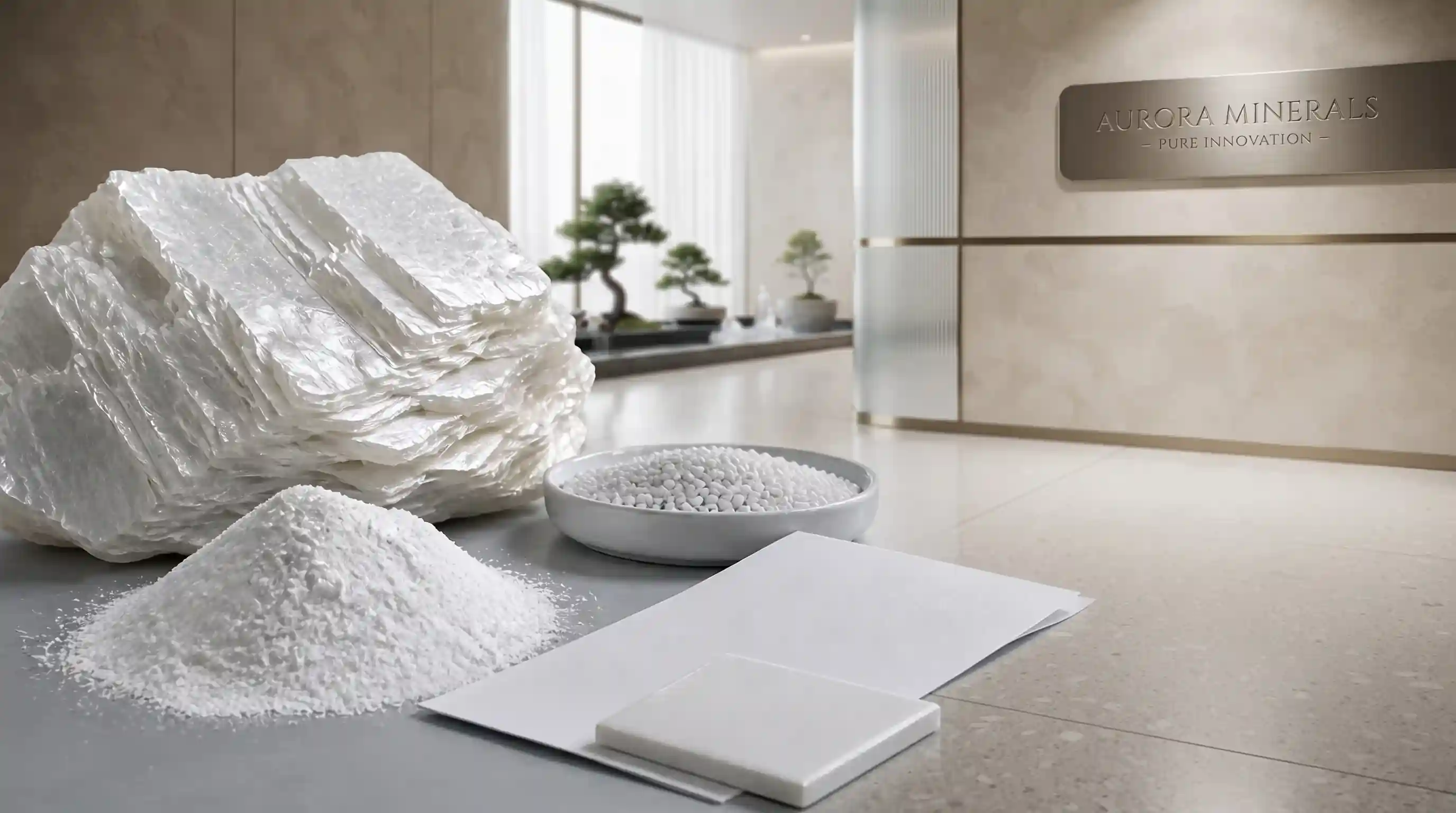
Application of White Talc in Masterbatch and Compounding Industries
Polymer industries, masterbatch, and compounding production are constantly looking for fillers that improve the mechanical and dimensional properties of products. White talc acts as an excellent filler in these industries. Adding this material to polymers increases flexural modulus, improves thermal stability, and reduces the shrinkage of injection-molded parts.
In addition, to achieve the best results in polymer composites, the use of complementary materials is also common. For example, examining the role of white barite in improving the mechanical properties of composites demonstrates what a transformation the intelligent combination of mineral fillers creates in the industry. Nevertheless, due to its optimal specific gravity and lubricating property in the extruder, white talc holds a special place in the production of plastic masterbatches.
The Role of White Talc in the Paint and Industrial Coatings Industry
In the formulation of various paints and coatings, the use of mineral fillers is very common to adjust gloss, improve coverage, and increase resistance to peeling. Due to its favorable whiteness and appropriate refractive index, white talc is used as a complementary pigment and efficient filler in paint manufacturing.
The paint manufacturing industry utilizes various minerals, each adding a specific property to the product. Along these lines, studying the article application of kaolin in paint and industrial coatings industries provides useful information regarding the synergy of mineral materials. Nonetheless, due to providing controlled matting and improving the flow properties of paint, white talc is always one of the main pillars of color formulations.

Application of White Talc in the Papermaking Industry
The papermaking industry is another major consumer sector of white talc. This material is used as a filler and coating agent in the manufacture of various papers to improve whiteness, surface smoothness, and ink absorption rates. The use of talc powder in paper pulp reduces permeability and increases print quality on paper.
Furthermore, due to its special characteristics, talc helps control gums and sticky substances in the paper production process, which increases machinery efficiency. By supplying quality talc, the Kani Sang Amiran project has well addressed the need of paper manufacturers for standard raw materials.
Application of White Talc in Ceramic and Tile Industries
In the ceramic industry, the production of tiles, porcelain, and ceramic products, thermal stability and reduction of firing shrinkage are of paramount importance. White talc acts as a source of magnesium in the ceramic body and glaze, which greatly helps reduce the firing temperature and improve the mechanical properties of the ceramic piece.
Precise recognition of mineral raw materials in the ceramic and glass industries is of high importance. To better understand the application of other minerals in this field, reading the article related to reviewing the application of dolomite in paint and resin industries will be very enlightening. However, the dedicated role of talc in reducing the coefficient of thermal expansion of ceramics is undeniable.

Economic and Technical Advantages of Using White Talc from the Kani Sang Amiran Project
Choosing quality raw materials has a direct impact on the productivity of production lines. The white talc supplied by the Kani Sang Amiran project, featuring a mesh range of 450 to 2500 mesh, provides high flexibility for production engineers so they can implement the most precise formulations.
From an economic perspective, using this mineral filler helps reduce the final price of polymer, paint, paper, and ceramic products without causing a significant drop in final quality; in fact, in many cases, the mechanical and appearance properties of the product are even improved.
Conclusion and Future Prospects of White Talc Application in Industry
As a strategic mineral, white talc has solidified its position in masterbatch, compound, paint, paper, and ceramic industries. The unique characteristics of this material, such as softness, purity, and the breadth of granulation in the 450 to 2500 mesh range, have made it an unrivaled option.
By focusing on quality and the sustainable supply of minerals, the Kani Sang Amiran project has paved the way for the progress of domestic industries. With the development of mode technologies in mineral processing, newer applications are expected to be introduced for this valuable material in the near future.

| Question | Answer |
|---|---|
| What is white talc? | It is a flaky mineral used in masterbatch, compound, paint, paper, and ceramic industries. |
| What is the mesh range of white talc? | This product is supplied in a mesh range of 450 to 2500 mesh. |
| What are the main applications of white talc? | Masterbatch, compound, paint, paper, and ceramic products. |
| What is the effect of white talc in the plastics industry? | Improving flexural modulus, thermal stability, and reducing shrinkage of polymeric parts. |
| What is the role of talc in the paint industry? | Adjusting gloss, improving coverage, and increasing paint resistance. |
| Is talc used in papermaking? | Yes, it is used as a filler to improve whiteness, smoothness, and ink absorption. |
| What is the application of talc in ceramics? | Reducing firing temperature, supplying magnesium, and improving the thermal stability of the ceramic body. |
| Who is the main supplier of this product? | Kani Sang Amiran Project. |
| How can this product be obtained? | Through the dedicated product page on the Kani Sang Amiran website. |
| Why is talc mesh sizing important? | Because particle size has a direct impact on the mechanical and coating properties of the final product. |
Kani Sang Amiran Project — Reference for the production and processing of mineral and industrial materials.
برچسب: White Talc,Reviewing the Application of White Talc in Fiberglass Industries,
نویسنده: رساوب آفرین