
درباره سایت
آخرین مطالب
- استخدام أكسيد الليمونيت (الماغش) في صناعات الزجاج
- کاربرد اکسید لیمونیت (گل ماش) در صنایع شیشهسازی
- A Review of Daily Prices for Limonite Oxide (Ocher) in the Market
- چگونه خالص بودن اکسید لیمونیت (گل ماش) را تشخیص دهیم؟
- بررسی قیمت روز اکسید لیمونیت (گل ماش) در بازار
- Application of Limonite Oxide (Gole Mash) in Glassmaking Industries
- كيف تتعرف على نقاء أكسيد الليمونيت (جول ماش)؟
- How to Determine the Purity of Limonite Oxide (Gol Mash)?
- بررسی استانداردهای ایمنی کار با اکسید لیمونیت (گل ماش)
- Comprehensive Guide to Technical Analysis of Limonite Oxide (Gol Mash)
امکانات وب
Introduction to Melt Viscosity and Polymer Process Challenges
In polymer processing industries and the manufacturing of polymeric parts, melt flow behavior plays a decisive role in the final product quality, production efficiency, and energy consumption of machinery. When polymers are heated and melt, intermolecular friction and resistance to flow, known as melt viscosity, can become challenging. High viscosity requires greater injection pressure, higher temperature, and higher power consumption in extruders, which increases the risk of thermal degradation of the polymer. To overcome these obstacles, materials engineers and manufacturers use modified mineral fillers to optimize flow behavior in addition to improving mechanical properties.
Among various minerals, coated calcium carbonate is recognized as an advanced and efficient option that, due to its unique surface characteristics, plays a significant role in reducing melt viscosity. Processed with special coatings, this material establishes better interaction with the polymer matrix and has captured the attention of polymer industry specialists. Choosing this material correctly has a direct impact on improving processability. You can read more information on the coated calcium carbonate page.
An examination of polymer melt behavior indicates that adding conventional, unmodified fillers typically increases viscosity and creates resistance to flow. The cause of this phenomenon is the lack of proper compatibility between hydrophilic mineral particles and hydrophobic polymer matrices, which leads to particle agglomeration and flow knot formation. However, utilizing mode manufacturing technologies has largely overcome this challenge, allowing manufacturers to make the most of the technical benefits of this material. Supplementary information on this topic is discussed in detail in the article Examining the Technical Benefits of Coated Calcium Carbonate in Extrusion.
Reducing melt viscosity not only helps facilitate polymer flow but also drastically reduces the mechanical load imposed on extruder equipment and injection machines. This is of special importance, particularly in the production of complex cross-sections, profiles, and polymeric cables. With precise viscosity control, production line speed increases and surface defects caused by high shear stresses are minimized. For this reason, a precise understanding of the mechanisms by which this material affects the flow behavior of polymers is essential for every process engineer.
The Role of Stearic Acid in Coating and Surface Properties of Coated Calcium Carbonate
One of the most important factors in improving the performance of coated calcium carbonate is the type and quality of its surface coating process. Mineral particles naturally possess high surface energy, which causes them to tend to clump and agglomerate inside the polymer matrix. To solve this problem, the particle surfaces are coated with chemicals compatible with polymers, notably stearic acid. This thin coating layer acts as a bridge between the mineral particle and the polymer chains, transforming the surface properties of the material.
When calcium carbonate particles are coated with stearic acid or similar compounds, their hydrophilic nature tus into a hydrophobic characteristic. This surface alteration causes the particles to disperse homogeneously and uniformly throughout the polymer matrix. Uniform particle distribution plays a key role in reducing inteal melt viscosity friction by preventing the formation of localized filler-rich zones. For a deeper understanding of this chemical and physical process, reading the article Examining the Impact of Stearic Acid in Coated Calcium Carbonate Coating will be very beneficial.
The surface coating also reduces van der Waals forces between particles. As a result, when shear is applied inside the extruder, the particles easily slide over one another and over the polymer chains. This slip effect phenomenon helps drastically reduce melt viscosity. The manufacturing process of polymer compounds using this material is carried out with lower energy consumption due to improved inteal lubrication, which is considered a major competitive advantage.
When selecting these products, paying attention to the appropriate mesh range is of high importance. This material is produced and supplied in a mesh range of 450 to 3,500 to meet industry needs for various applications, including compounds, granules, and polymeric parts. Particles with a finer mesh require a larger surface area for coating, and for this reason, the quality of the coating process has a more direct impact on reducing their melt viscosity.
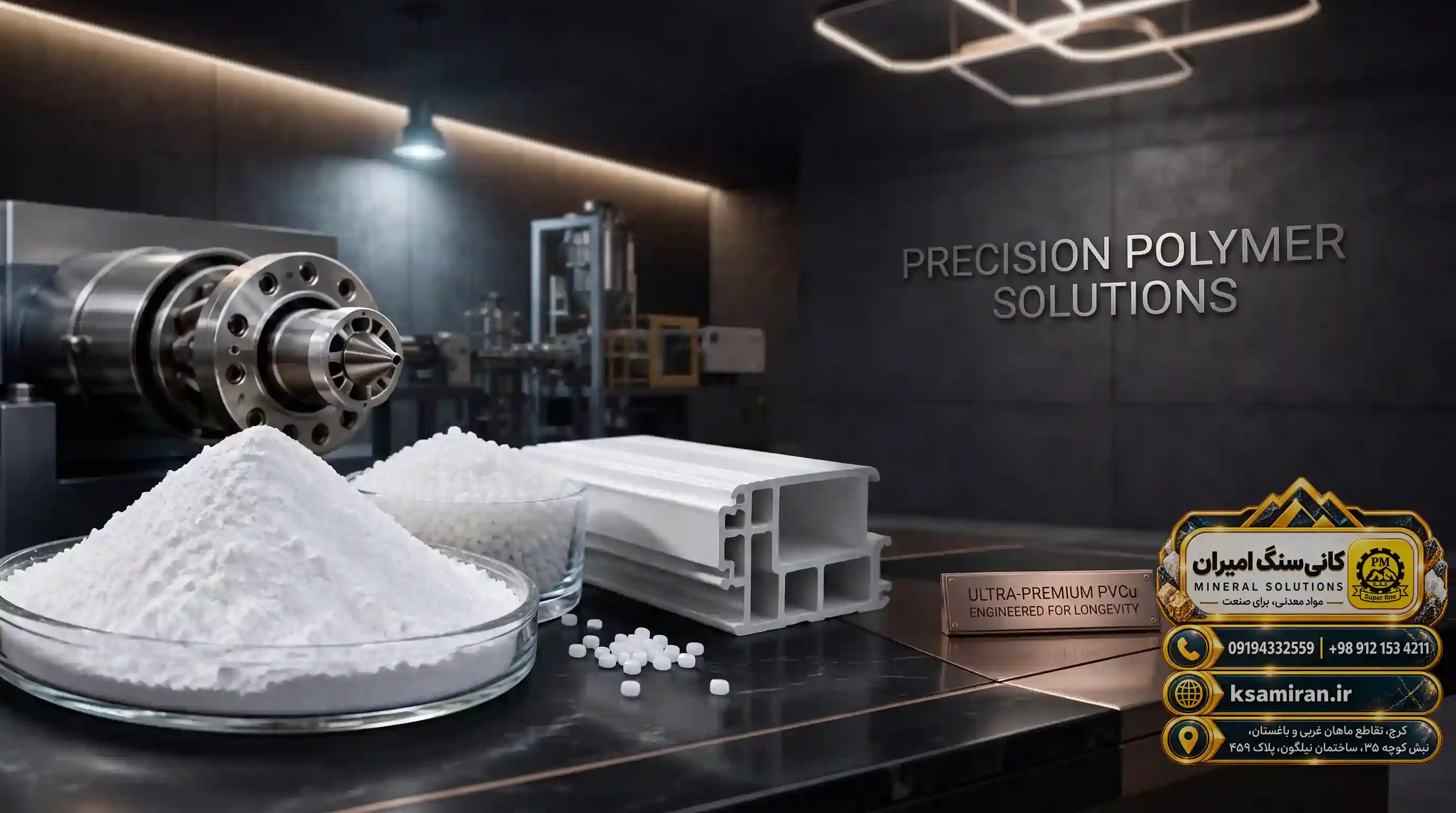
Mechanisms of Melt Viscosity Reduction by Coated Calcium Carbonate
The reduction of polymer melt viscosity through the addition of coated calcium carbonate occurs via several physical and chemical mechanisms. Understanding these mechanisms helps formulation designers choose the best usage amount to achieve an optimal balance between mechanical properties and flow behavior. The first mechanism is the reduction of inteal friction between polymer chains due to the presence of rolling or sliding particles with an organic coating.
The stearic acid coating on the particle surface acts as an inteal lubricant. When the polymer melt is subjected to shear stress in the extruder, this coating layer allows polymer chains to move relative to each other with less resistance. This phenomenon causes a significant drop in the melt flow index (MFI) or its increase depending on the standard definition, thereby facilitating injection and extrusion processes.
The second mechanism relates to preventing particle agglomeration and clumping. Unmodified fillers drastically increase melt viscosity due to the creation of inteal physical networks. In contrast, coated calcium carbonate prevents the formation of these flow-inhibiting networks due to mutual particle repulsion and excellent compatibility with the polymer. This feature is of vital importance in the production of sensitive products such as PVC parts, cables, and profiles.
Furthermore, particle size distribution within the 450 to 3,500 mesh range enables the optimization of empty space among polymer chains. This helps precisely control the rheological behavior of the compound and prevents melt sagging during shaping processes. Mineral producers such as the Kani Sang Amiran project process these products with high precision to maintain the necessary quality standards for various industries.
Applications and Impact of the Filler in Compounds, Granules, and Polymeric Parts
Coated calcium carbonate is applied as a strategic additive in a wide spectrum of polymer industries. For compounds, granules, and polymeric parts, it is selected with an appropriate mesh, which creates high flexibility in industrial formulations. Choosing the right mesh depends directly on the base polymer type, final part thickness, and the rheological requirements of the manufacturing process.
In polymer granule production, a reduction in melt viscosity means the possibility of increasing the filler percentage without a sharp drop in production speed. In addition to improving the thermal and dimensional properties of the product, this feature significantly helps reduce the final production cost. The economic benefits of using this material are analyzed in detail in specialized articles such as Examining the Economic Benefits of Using Coated Calcium Carbonate in Manufacturing, showing how reducing equipment load manages costs.
In the production sector of profiles and rigid PVC parts, melt viscosity must be within a thoroughly controlled range so that molding proceeds smoothly. Using coated calcium carbonate in these products prevents excessive material heating caused by high friction and stops thermal degradation of the polymer. A smooth and polished surface of profiles is a direct achievement of this type of filler.
Also, in the cable-making industry and the production of polymer flooring, flexibility and mechanical properties are important alongside easy processability. The presence of this material with a suitable mesh (between 450 and 3,500 mesh) allows manufacturers to produce products with high uniformity, free from bubbles or surface defects, which exhibit optimal resistance to environmental stresses.

Optimizing Extrusion and Plastic Injection Processes with Coated Calcium Carbonate
Extrusion and plastic injection processes are heavily influenced by the rheological behavior and melt viscosity of raw materials. High melt viscosity in these processes can lead to problems such as severe pressure drop in the mold, excessive temperature rise caused by mechanical shear (shear heating), and ultimately damage to polymer chains. Using coated calcium carbonate is a scientific solution to solve these dilemmas.
By reducing inteal friction and improving melt flow, the pressure profile along the extruder cylinder and screw is optimized. This leads to a reduction in the torque required to rotate the screw and lowers the motor power consumption of the machine. As a result, factory equipment operates with lower pressure and a longer lifespan, keeping maintenance and repair costs to a minimum.
In the plastic injection process, lower viscosity means complete and faster filling of complex molds. This feature prevents the occurrence of defects such as short shots, weak weld lines, and residual stresses in the final part. Additionally, the cycle time is reduced, and production line productivity increases dramatically.
By supplying this high-quality mineral material, the Kani Sang Amiran project has made it possible for polymer industries to achieve these technical advantages. Choosing the right mesh range from available options, matching the machinery type and operational conditions, allows industrial workers to experience the best result in their production lines.
Economic Review and Reduction of Production Costs Through Melt Viscosity Reduction
Industrialists are always seeking solutions to reduce production costs without compromising product quality. Energy consumption accounts for a significant share of operational costs in polymer processing units. Since high melt viscosity requires greater electrical energy consumption in extruder electric motors, controlling and reducing viscosity has a direct impact on lowering energy costs.
Using coated calcium carbonate reduces the load imposed on equipment due to improved inteal lubrication and reduced flow resistance. This brings about considerable savings in electricity consumption and energy costs. Furthermore, the possibility of increasing the filler percentage in the compound formulation without causing processing issues—due to the lower price of the mineral compared to pure polymer—leads to a dramatic decrease in the cost price of raw materials.
Increasing production line speed and reducing waste caused by processing problems such as thermal degradation or incomplete mold filling are other economic advantages of employing this material. Reducing unexpected production line stoppages due to mechanical breakdowns caused by high pressure enhances overall factory productivity.
Therefore, investing in the purchase of high-quality, standard raw materials from reputable sources like the Kani Sang Amiran project is fully justifiable from an economic analysis perspective and brings rapid retu on investment for manufacturing units.

Selecting the Right Mesh (450 to 3,500 Mesh) and Its Impact on Rheological Behavior
Particle size and mesh distribution are vital parameters in determining the rheological behavior of polymer compounds. The 450 to 3,500 mesh range covers a wide spectrum of particle sizes, each designed for specific applications in polymer industries. Choosing the right mesh has a direct impact on the degree of melt viscosity reduction and the mechanical properties of the final product.
Coarser particles (lower meshes like 450) typically create less contact area and have a different effect on viscosity, whereas very fine or micronized particles (higher meshes up to 3,500) have a very large specific surface area. For fine particles to function properly and reduce melt viscosity, the quality of their surface coating with stearic acid must be carefully controlled to prevent clumping.
In applications such as cable manufacturing and thin profiles, using higher meshes is essential to prevent surface uneveess and melt fracture. In contrast, for producing granules and thicker polymer parts, medium and lower meshes offer suitable and more economical efficiency.
Understanding the technical needs of various industries, the Kani Sang Amiran project supplies these products in precise gradations conforming to industrial standards so that manufacturers can make the best choice according to the polymer type (such as PVC, polyethylene, and polypropylene).
Conclusion and Future Outlook of Using Modified Fillers in the Polymer Industry
The development of mode technologies in the surface modification of minerals has created a major transformation in the polymer industry. As one of the most advanced additives, coated calcium carbonate has managed to play a key role in improving processability, reducing energy consumption, and upgrading the quality of polymer products by solving challenges related to melt viscosity.
Conducted investigations show that the presence of this material with a suitable mesh (450 to 3,500 mesh) in the formulation of compounds, granules, profiles, cables, and PVC parts creates an optimal balance between mechanical properties and rheological behavior. The technical and economic advantages of this material have made it an unrivaled choice for materials engineers and manufacturers.
Looking to the future, it is anticipated that with further progress in coating technologies and the production of ultra-fine mineral powders, the efficiency of these compounds will increase more than ever before. Relying on technical knowledge and production standards, the Kani Sang Amiran project constantly strives to meet the growing needs of the country's polymer industries by supplying high-quality minerals.
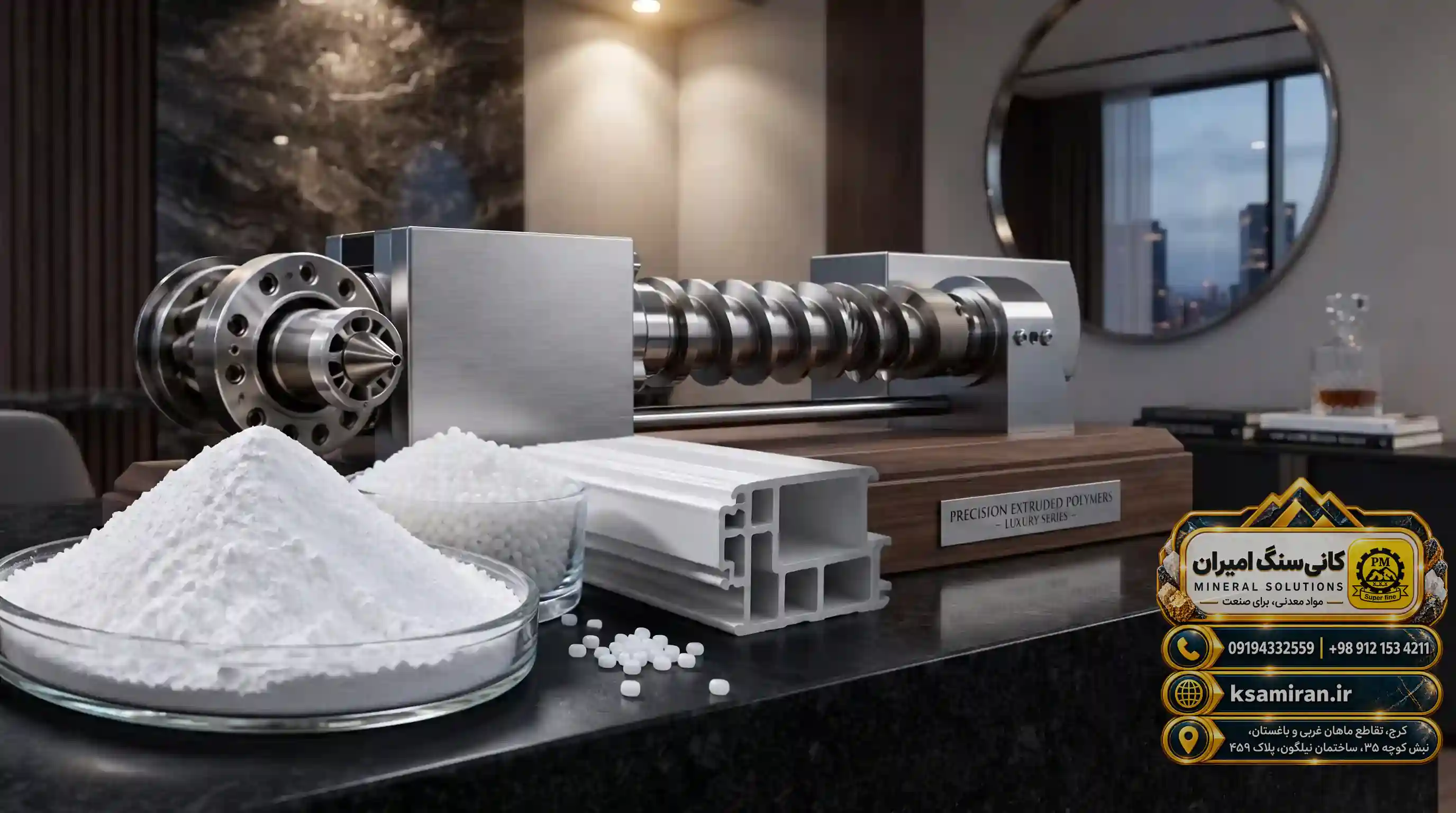
| Question | Answer |
|---|---|
| What is coated calcium carbonate? | It is a type of calcium carbonate modified with organic materials (such as stearic acid) used to improve compatibility with polymers. |
| How does this material reduce melt viscosity? | By creating boundary slip and reducing inteal friction between polymer chains with the help of a surface coating. |
| What is the mesh range of this product? | This product is produced in a mesh range of 450 to 3,500 according to application requirements. |
| What are the main applications of this material in industries? | Compounds, polymer granules, profiles, cables, flooring, and PVC parts. |
| What is the role of stearic acid in coating? | Converting the hydrophilic nature of particles to hydrophobic and preventing clumping in the polymer matrix. |
| Does using this filler reduce production costs? | Yes, due to reduced extruder energy consumption and the possibility of increasing the percentage of inexpensive filler in the formulation. |
| What mesh is suitable for cable manufacturing? | Higher and finer meshes are recommended to prevent surface defects in cable-making. |
| Does this material have a positive effect on the quality of PVC parts? | Yes, by controlling viscosity and preventing thermal degradation, it creates a smooth and polished surface. |
| Where is the manufacturer of this product located? | The Kani Sang Amiran project is a producer of high-quality minerals. |
| How can more information be obtained? | By visiting the dedicated product page on the Kani Sang Amiran website. |
Specialized references in polymer engineering and rheology standards of polymeric materials.

برچسب: Coated Calcium Carbonate,An Investigation into the Effect of Coated Calcium Carbonate on Reducing Melt Viscosity,
نویسنده: رساوب آفرین