
درباره سایت
آخرین مطالب
- انتخاب اکسید آهن قرمز (اخرا) برای بهبود کیفیت پیگمنت و پوششهای رنگی
- تامین کربنات کلسیم با دانهبندی دقیق جهت استفاده در مستربچ
- تأمین تخصصی سیلیس برای مصالح ساختمانی، شیشه و صنایع سرامیک
- ویژگیهای فنی بنتونیت کانی سنگ امیران برای کاربردهای خاص
- فلدسپات کانی سنگ امیران برای شیشه کاشی و سرامیک
- کاربرد تالک سفید درجه یک در فرمولاسیون پیشرفته رنگ و محصولات کاغذی
- اکسید آهن قرمز (اخرا) کاربردی جهت تولید محصولات سرامیکی و پوشش
- مشخصات فنی اکسید آهن قرمز (اخرا) مناسب برای پوشش و تولید پیگمنت
- مشاوره تخصصی خرید کربنات کلسیم بر اساس نیاز دقیق صنعت شما
- انتخاب تالک سفید صنعتی مناسب برای تولیدات کاغذ و مستربچ
امکانات وب
Introduction to National Standards for Industrial Calcium Carbonate
Calcium carbonate mineral is recognized as one of the most widely used fillers in various industries. A precise understanding of national standards and technical specifications of this material is vital for engineers and manufacturers. This strategic material plays a key role in polymer industries, paint manufacturing, paper production, and engineered products, and the final product quality depends on its standard requirements. Kani Sang Amiran Mineral Project, as a mineral supplier, provides this material with precise characteristics for various industries.
In the industrial production process, compliance with quality standards guarantees the purity and efficiency of the powder. The mesh range of products in this category varies from 100 to 3500 mesh, enabling its use in a wide spectrum of manufacturing processes. Among these, we can mention its application in calcium carbonate for engineering purposes, which demands strict standards.
Industrial development requires an understanding of quality pattes. Aligning the physical and chemical properties of raw materials with reference standards reduces production errors and creates added value. In the upcoming chapters, we will examine various dimensions of mesh sizing, applications, and differences of this material.
The Role of the 100 to 3500 Mesh Range in the Quality of Industrial Calcium Carbonate
Granulation and mesh sizing of mineral powders have a direct impact on the mechanical and appearance properties of the final product. The 100 to 3500 mesh range provides a wide variety of particle sizes for different industries. Coarser particles are suitable for applications requiring volumetric filling, while very fine meshes (nanometric to micronric) are used in advanced polymer and paint industries.
Precise adjustment of mesh sizing requires advanced milling and classification equipment. Utilizing state-of-the-art technologies, the Kani Sang Amiran Mineral Project produces powders with homogeneous particle size distribution. This homogeneity is effective in the final quality.
To better understand particle behavior in thermal and mechanical processes, reading Technical Benefits of Coated Calcium Carbonate in Extrusion provides valuable information regarding the improvement of the extrusion process and the impact of particle size, which significantly helps in production optimization.
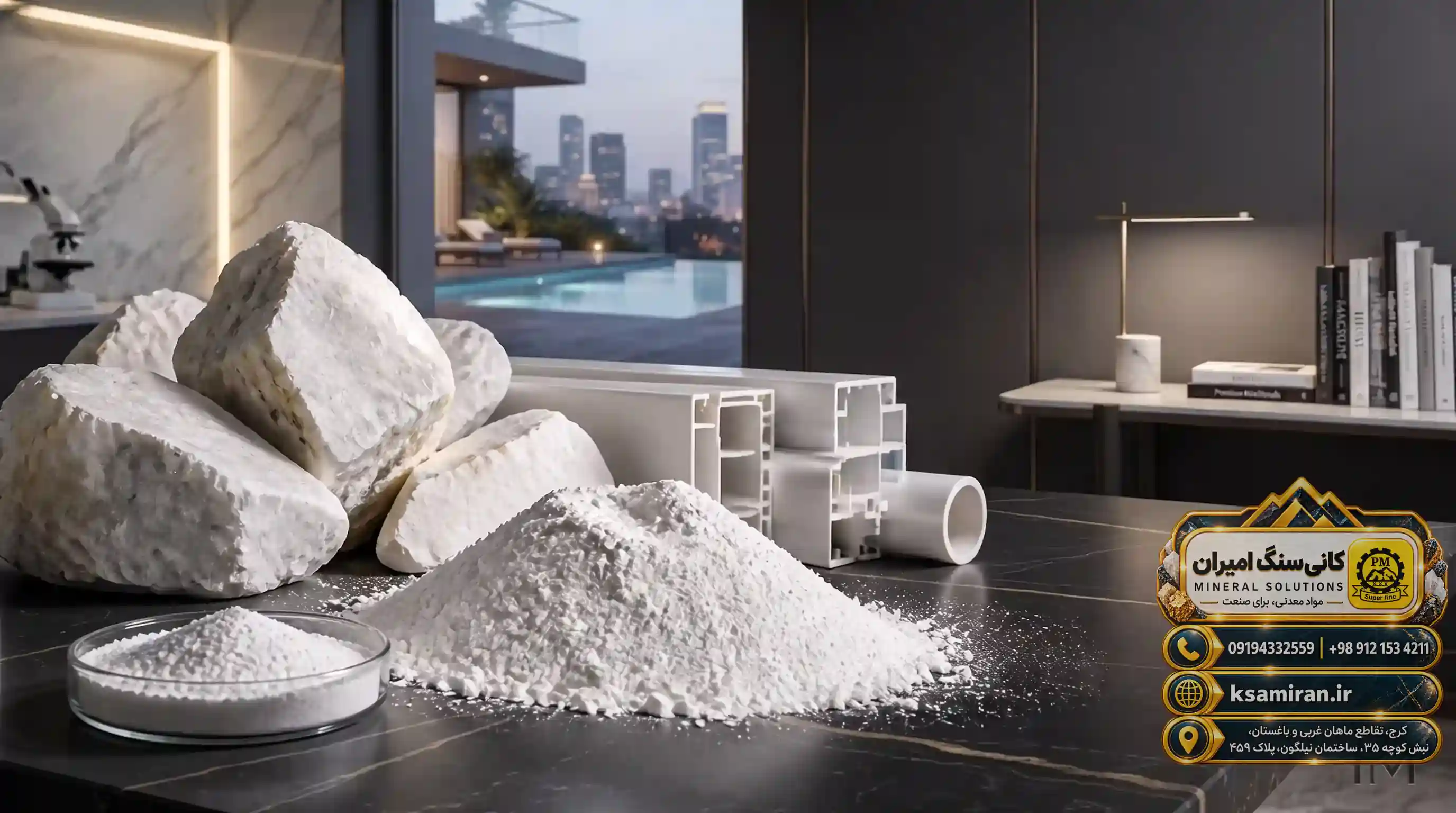
Specialized Applications of Calcium Carbonate in PVC/UPVC Profile and Pipe Industries
The PVC/UPVC profile and pipe manufacturing industry is one of the major consumers of mineral powders. Adding this material to the polymer compound improves the elastic modulus, increases dimensional stability, and reduces the final price of the product. Proper particle distribution in the polymer matrix prevents their agglomeration and preserves the impact resistance properties of the pipe and profile.
Choosing the right grade depends on the type of formulation. Using finer meshes in door and window profiles leads to a smoother cross-section and better surface quality. This material also acts as an auxiliary stabilizer.
To optimize costs and increase productivity in the production lines of these products, reading Economic Benefits of Using Coated Calcium Carbonate in Manufacturing examines the financial dimensions and economic added value of these materials in detail and offers appropriate solutions.
Application in Masterbatch, Cable, and Artificial Leather
In the polymer masterbatch production industry, wire and cable industry, and artificial leather manufacturing, the selection of the mineral filler is of vital importance. In masterbatches, the powder must have the highest degree of whiteness and the lowest moisture content so that it does not experience issues during melting and extrusion processes. Also, in electrical cable insulation, chemical purity is essential to maintain electrical resistance.
Artificial leather also requires fillers with a specific particle size distribution to create a flexible yet resistant texture. This material helps improve physical characteristics and reduce the final cost.
Comparing this material with other mineral fillers such as silicates or talc can be instructive. For instance, reading Structural Differences Between White Talc and Calcium Carbonate reveals the structural differences between these two widely used materials and helps in making a more accurate formulation choice.
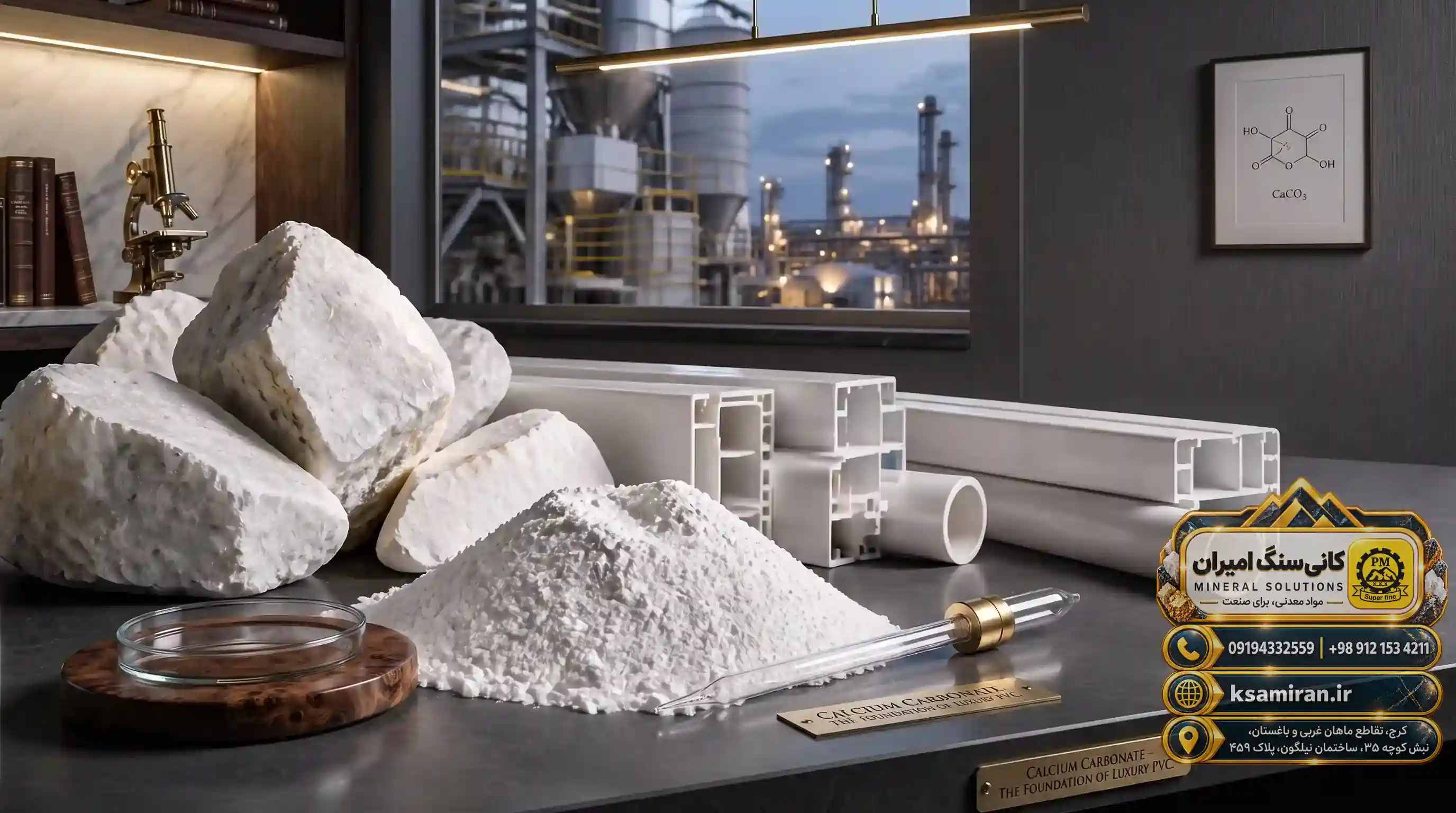
Industrial Applications in Paint, Paper, Adhesive, and Engineered Stone
Paint and coating industries heavily depend on the optical and hiding properties of mineral powders. By improving hiding power and opacity, this material optimizes paint performance. In the paper-making industry, it is also used as a filler and surface coating to improve whiteness, printability, and reduce the consumption of cellulosic fibers.
In adhesive production, viscosity and flow properties are adjusted with the help of this mineral material. Furthermore, in engineered stone manufacturing industries, this material serves as the main structural base, bringing strength and aesthetic beauty.
By using various grades of this product, manufacturers can control the final properties of their products and meet the target quality standards of the market.
Examination of Standard Physical and Chemical Properties
National standards emphasize specific parameters such as the percentage of calcium carbonate purity, amount of impurities (such as iron and magnesium oxides), moisture content, whiteness, and oil absorption. Continuous monitoring of these parameters in quality control laboratories guarantees the stability of products manufactured by the Kani Sang Amiran Mineral Project.
The degree of whiteness is one of the most important factors in the paint and paper industries. The whiter the powder, the higher its commercial value. Particle size and their distribution are also measured using laser devices to achieve complete compliance with defined standards.
Oil absorption tests and free moisture determination also help consumers accurately predict the powder's behavior in liquid and polymer formulations.
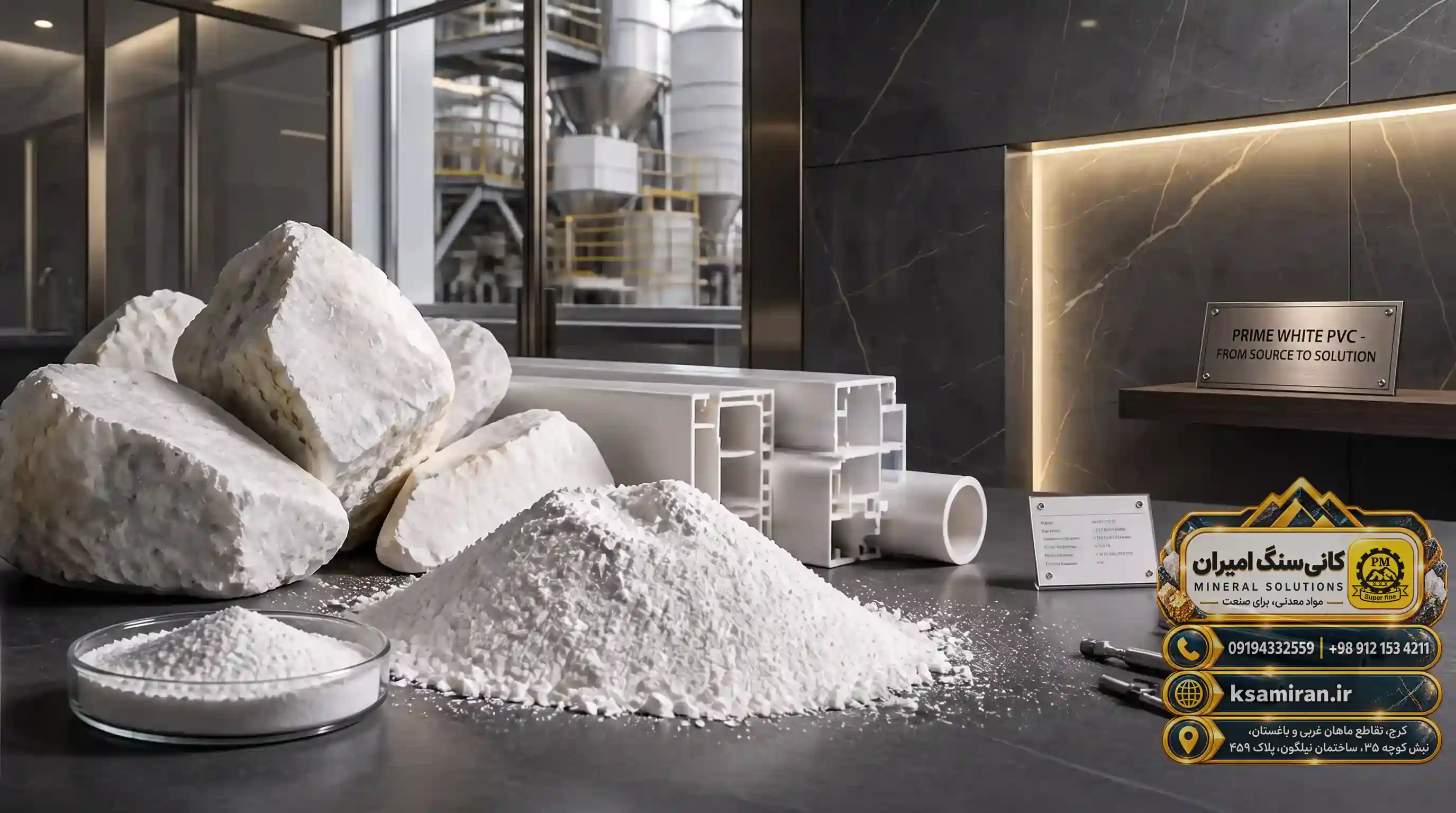
Quality Control and Laboratory Methods for Mineral Powders
To ensure product compliance with national and inteational standards, employing precise laboratory methods is mandatory. Dry and wet sieving tests, laser particle size distribution measurement, whiteness determination by spectrophotometer, and chemical assay via titration are among the most common methods.
The quality control unit of the Kani Sang Amiran Mineral Project guarantees quality stability through continuous sampling from production lines. This meticulousness in production has brought satisfaction to downstream industries and prevents defects in final products.
Documentation of laboratory results helps polymer and paint industry manufacturers to utilize raw materials in their production lines with complete peace of mind.
Conclusion and Future Outlook of National Standards for Mineral Production
Compliance with national standards in the production and processing of minerals plays a fundamental role in upgrading the quality of the country's industrial products. With a 100 to 3500 mesh range and diverse applications in PVC/UPVC profiles and pipes, masterbatches, cables, artificial leather, paints, paper, adhesives, and engineered stone, this material holds an unrivaled position in the industry.
Relying on technical knowledge and strict standards, the Kani Sang Amiran Mineral Project constantly strives to supply the best mineral products to the market. The development of mode processing technologies will be an effective step towards meeting the growing needs of various industries.
The future of the mineral industry depends on greater compliance with quality standards and the enhancement of productivity levels, which is achieved through close cooperation between mineral producers and consumer industries.

| Question | Answer |
|---|---|
| What is the mesh size range of the industrial powder? | This material is produced and supplied in a 100 to 3500 mesh range. |
| What are the main applications of mineral powder in industry? | PVC/UPVC profiles and pipes, masterbatch, cable, artificial leather, paint, paper, adhesive, and engineered stone. |
| Is this material suitable for polymer industries? | Yes, it is chosen for polymer, paint, paper, and engineered product applications. |
| Which entity is the manufacturer of this product? | Kani Sang Amiran Mineral Project — Mineral production. |
| How can product information be viewed? | Through the dedicated product page on the Kani Sang Amiran website. |
| Is the particle size distribution in these powders homogeneous? | Yes, it is produced using advanced milling and classification equipment. |
| What is the role of the powder in PVC pipe industries? | It improves the elastic modulus and reduces the final price. |
| What parameters are examined in quality control? | Purity, whiteness degree, moisture, and particle size distribution. |
| Is coated powder also available? | Yes, coated grades are offered for improved extrusion and dispersibility. |
| What effect does the national standard have on quality? | It guarantees purity, stability, and better efficiency in various industries. |
Reference for standards and technical specifications of industrial and polymer minerals in Iran.
برچسب: Calcium Carbonate,Review of National Standards for Industrial Calcium Carbonate,
نویسنده: رساوب آفرین