
درباره سایت
آخرین مطالب
- استخدام أكسيد الليمونيت (الماغش) في صناعات الزجاج
- کاربرد اکسید لیمونیت (گل ماش) در صنایع شیشهسازی
- A Review of Daily Prices for Limonite Oxide (Ocher) in the Market
- چگونه خالص بودن اکسید لیمونیت (گل ماش) را تشخیص دهیم؟
- بررسی قیمت روز اکسید لیمونیت (گل ماش) در بازار
- Application of Limonite Oxide (Gole Mash) in Glassmaking Industries
- كيف تتعرف على نقاء أكسيد الليمونيت (جول ماش)؟
- How to Determine the Purity of Limonite Oxide (Gol Mash)?
- بررسی استانداردهای ایمنی کار با اکسید لیمونیت (گل ماش)
- Comprehensive Guide to Technical Analysis of Limonite Oxide (Gol Mash)
امکانات وب
Introduction to Feldspar and Its Importance in Industry
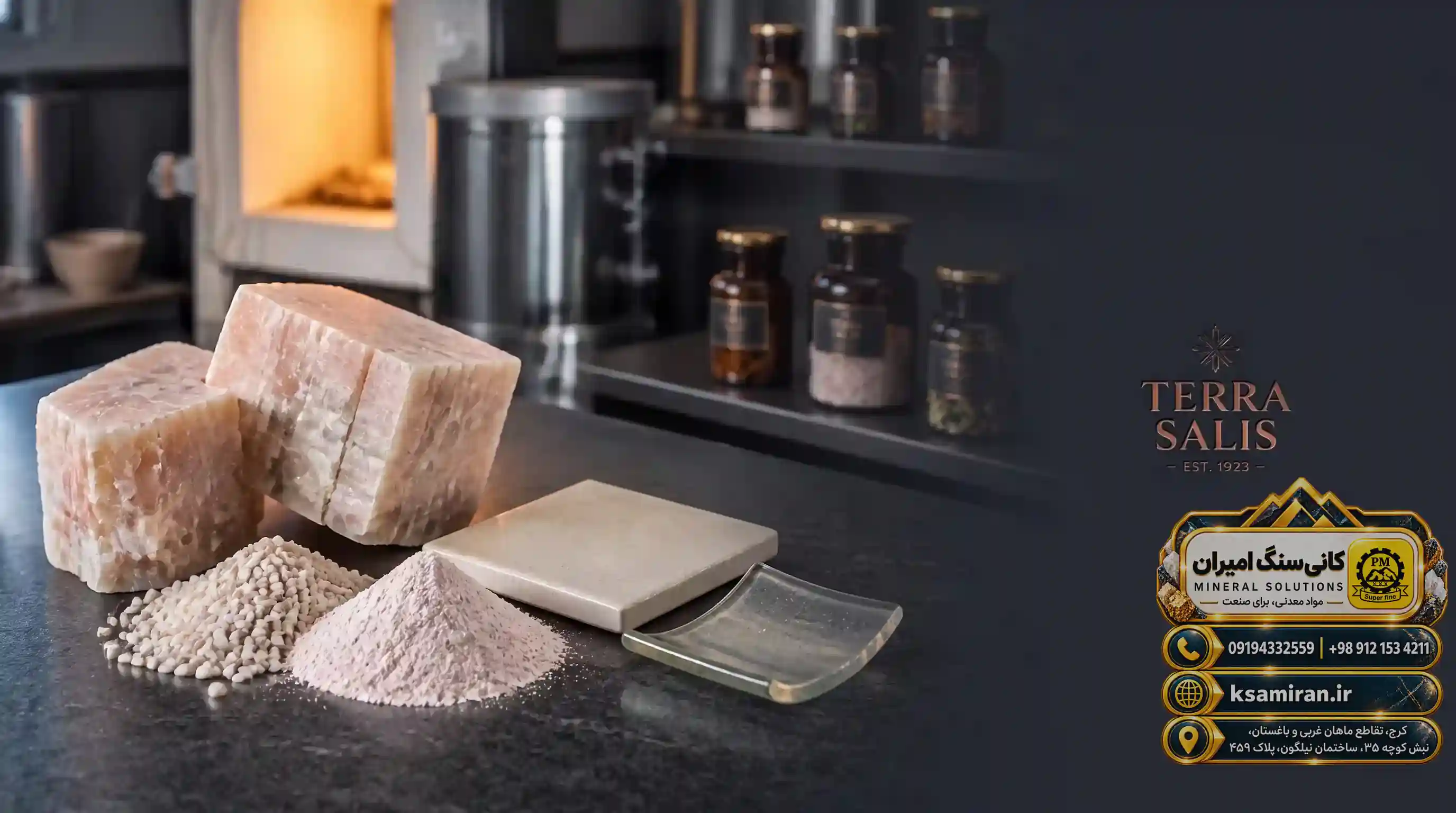
Introduction to Feldspar and Its Importance in Industry: Feldspar is a group of aluminum silicate minerals recognized as one of the most abundant ores in the Earth's crust. Due to its unique physical and chemical properties, this valuable material holds a special place in various industrial processes. In mode industries, a precise understanding of feldspar characteristics is essential for improving the quality of final products. This mineral acts as a strong thermal flux and plays a key role in lowering the melting point of mineral mixtures.
In the context of industrial applications, this material plays a vital role. For more information about this product, you can visit the Feldspar page. The importance of this material in manufacturing industries is so high that without its presence, the production of many ceramic and glass products with desirable quality would not be possible. Mining and industrial projects are constantly seeking to supply the highest quality samples of this material to optimize their production lines.
The role of feldspar in the construction and decorative industries is also undeniable. The use of this mineral allows manufacturers to control the physical structure of their products and increase their strength. Given the increasing importance of quality standards, understanding the crystal structure and chemical compositions of this material will lay the foundation for new iovations in related industries.
Furthermore, the processing of this mineral requires advanced equipment to bring its granulation and purity to standard levels. Manufacturing companies offer a homogeneous and high-quality product to the market by utilizing magnetic separation and precise crushing methods. This enables consumer industries to operate with minimal waste and maximum efficiency.
Types of Industrial Feldspar: Sodium and Potassium
Types of Industrial Feldspar: Sodium and Potassium: Minerals in this group are generally divided into two main categories: potassium and sodium, each with its own specific characteristics and applications. Potassium feldspar contains significant amounts of potassium and is typically used in advanced ceramics manufacturing and the production of special glazes. On the other hand, the sodium type contains sodium and is known as a stronger flux in the glass industry. Understanding the structural differences of these two types of materials helps industrial designers in optimally selecting raw materials.
To better understand the differences between these two types of materials, reading the specialized article Examining the Differences Between Sodium and Potassium Feldspar will be very insightful. These differences include melting point, thermal behavior, and thermal expansion rate in ceramic products. Making the right choice between these two types directly affects the quality and durability of the final product.
In industrial processes, the precise combination of these materials determines the mechanical and optical properties of the final products. For example, in tile and ceramic production, the sodium and potassium types each perform different tasks during the firing stage. A precise understanding of these behaviors helps engineers create more optimal formulations.
Kani Sang Amiran project provides access to high-quality types of these materials for various industries by offering diverse products. By carefully reviewing the needs of the production line, the most appropriate type can be selected to achieve the highest productivity and the lowest production cost.
The Role of Feldspar in the Glass Industry
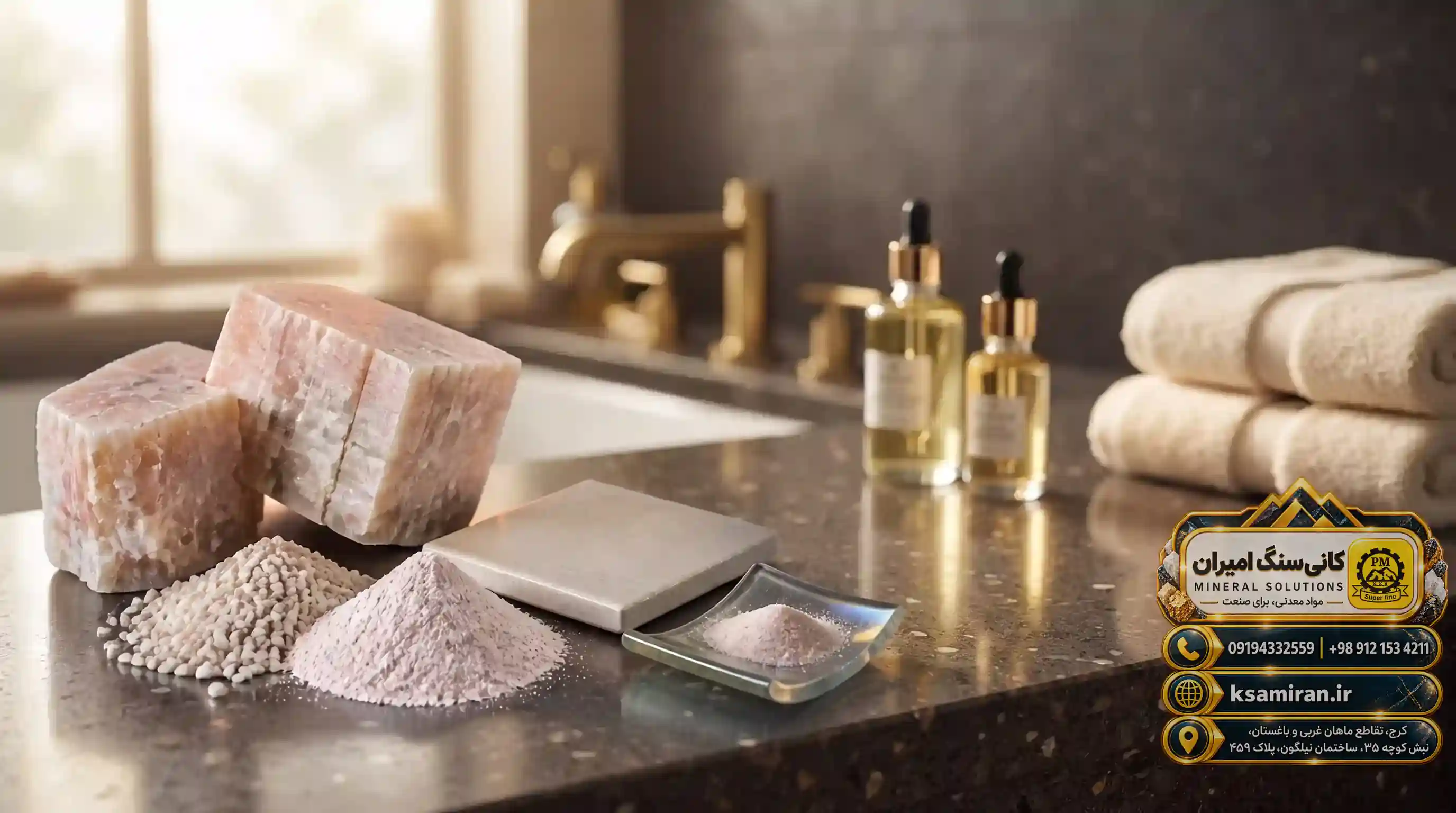
The Role of Feldspar in the Glass Industry: The glass industry is one of the largest consumers of silicate minerals, and this material plays a vital role in its structure. The presence of this material in the glass batch acts as the main source of alumina, which helps increase chemical stability, impact resistance, and overall glass durability. Additionally, the alumina present in this material prevents unwanted crystallization of the glass during the cooling process.
In addition to alumina, this material adds a certain amount of alkali (sodium or potassium) to the glass batch, which acts as a flux and lowers the overall melting temperature of the fuace. This temperature reduction means significant energy savings and an increased lifespan for glass-melting fuaces. Therefore, using this mineral is an economical and technical solution for glass manufacturers.
The granulation and purity of this material are of high importance in the glass industry. The presence of coloring impurities such as iron oxide can reduce glass transparency, which is why using processed and standard raw materials is extremely vital. Glass manufacturers supply transparent and standard products to the market by closely monitoring these parameters.
Kani Sang Amiran project well covers the needs of glass-making factories by supplying high-quality minerals. Close cooperation between mineral producers and glass industrialists promises qualitative product enhancement and sustainable development in this industrial field.
Application of Feldspar in Tile and Ceramic Production
Application of Feldspar in Tile and Ceramic Production: In the tile and ceramic industry, this material acts as the main fluxing agent or flux in the ceramic body. During the firing stage in the kiln, this material melts and creates a glass phase that binds other particles such as silica and clay together. This process causes the densification of the ceramic body, reduces water absorption, and increases the mechanical strength of the tile.
Choosing the appropriate granulation of this mineral has a direct impact on the rheological behavior of the slip and the final quality of the ceramic body. Alongside other minerals like clay, using the comprehensive guide Guide to Choosing Industrial Kaolin Granulation helps engineers provide a balanced composition of raw materials for tile production lines.
The presence of this material in the tile body improves firing properties and prevents unwanted thermal deformations. Precise control of the consumption amounts of this mineral guarantees the dimensional stability and smoothness of ceramic products. This is particularly important in the production of high-standard wall and floor tiles.
Manufacturers control the sintering or thermal separation process by utilizing various meshes of this material. The Kani Sang Amiran project has made access to diverse granulations possible for the tile and ceramic industries by offering a mesh range of 10 to 450 mesh to achieve the best results.
Application of Feldspar in Industrial Glaze Manufacturing
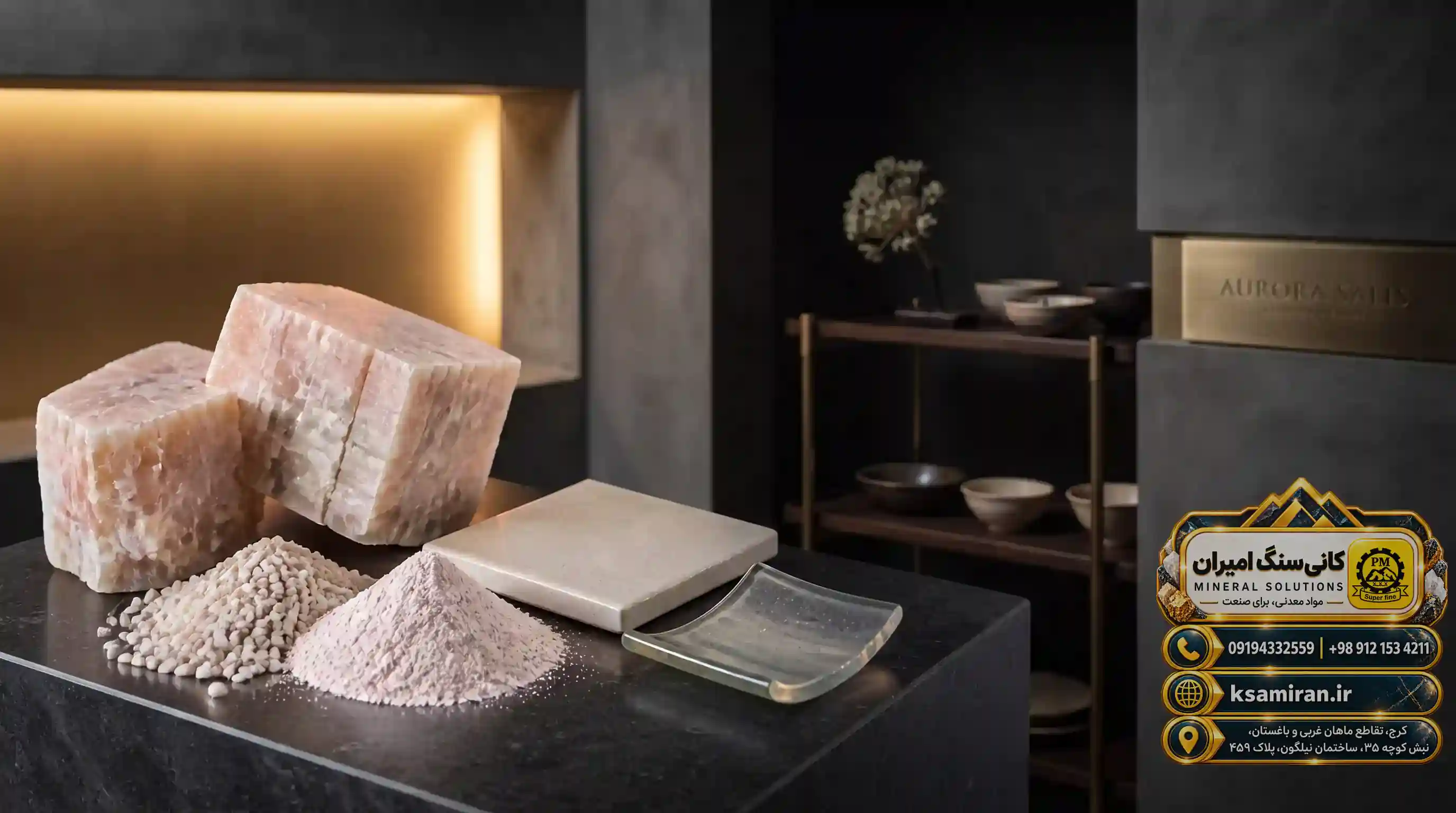
Application of Feldspar in Industrial Glaze Manufacturing: Glazes are thin glass coatings applied to the ceramic body to provide beauty, gloss, and chemical resistance. Due to having alkali and silica compositions, this material is considered a key component in the formulation of industrial glazes. It helps glaze materials melt faster at firing temperatures and creates a smooth, uniform surface.
The physical properties of mineral powders play an important role in the final quality of the glaze. To better understand the standards of industrial powders, reading the specialized article Examining the Physical and Mechanical Properties of Industrial Talc Powder is recommended for professionals in this field to gain a comprehensive perspective on the behavior of fine-grained minerals.
In glaze formulation, this material helps adjust the coefficient of thermal expansion to prevent the formation of micro-cracks (Crazing) on the tile surface after firing. The precise proportion between body and glaze expansion guarantees the long-term durability of the product without compromising its appearance.
Mineral suppliers provide the possibility of achieving transparent and opaque glazes with the highest quality standards by offering high-quality micronized powders. Using this mineral in the glaze industry guarantees the quality and color stability of final products.
The Importance of Granulation and Mesh Range in Feldspar Quality
The Importance of Granulation and Mesh Range in Feldspar Quality: Particle size of minerals is one of the most important technical parameters in determining their efficiency across various industries. The mesh range of 10 to 450 mesh covers a wide spectrum of granulations, each suitable for a specific application. Coarser particles are typically used in glass manufacturing and glasswool production, while very fine and micronized powders find applications in glazing and advanced ceramics.
Manufacturers control particle size using advanced crushing and classification equipment to ensure product uniformity. Proper particle size distribution improves the speed of chemical reactions in the kiln and reduces the final firing temperature. This drastically increases energy efficiency in production lines.
Quality control of granulation also prevents technical problems such as particle agglomeration or incomplete melting in the kiln. Consumer industries optimize their production process and minimize waste by precisely specifying their required mesh. This attention to technical details is the foundation of successful industrial production.
Utilizing state-of-the-art world technologies, the Kani Sang Amiran project offers its products within the standard mesh range of 10 450 mesh. This diversity in granulation best meets the diverse needs of the glass, tile, ceramic, and glaze industries.
Economic and Technical Advantages of Using Amiran Feldspar
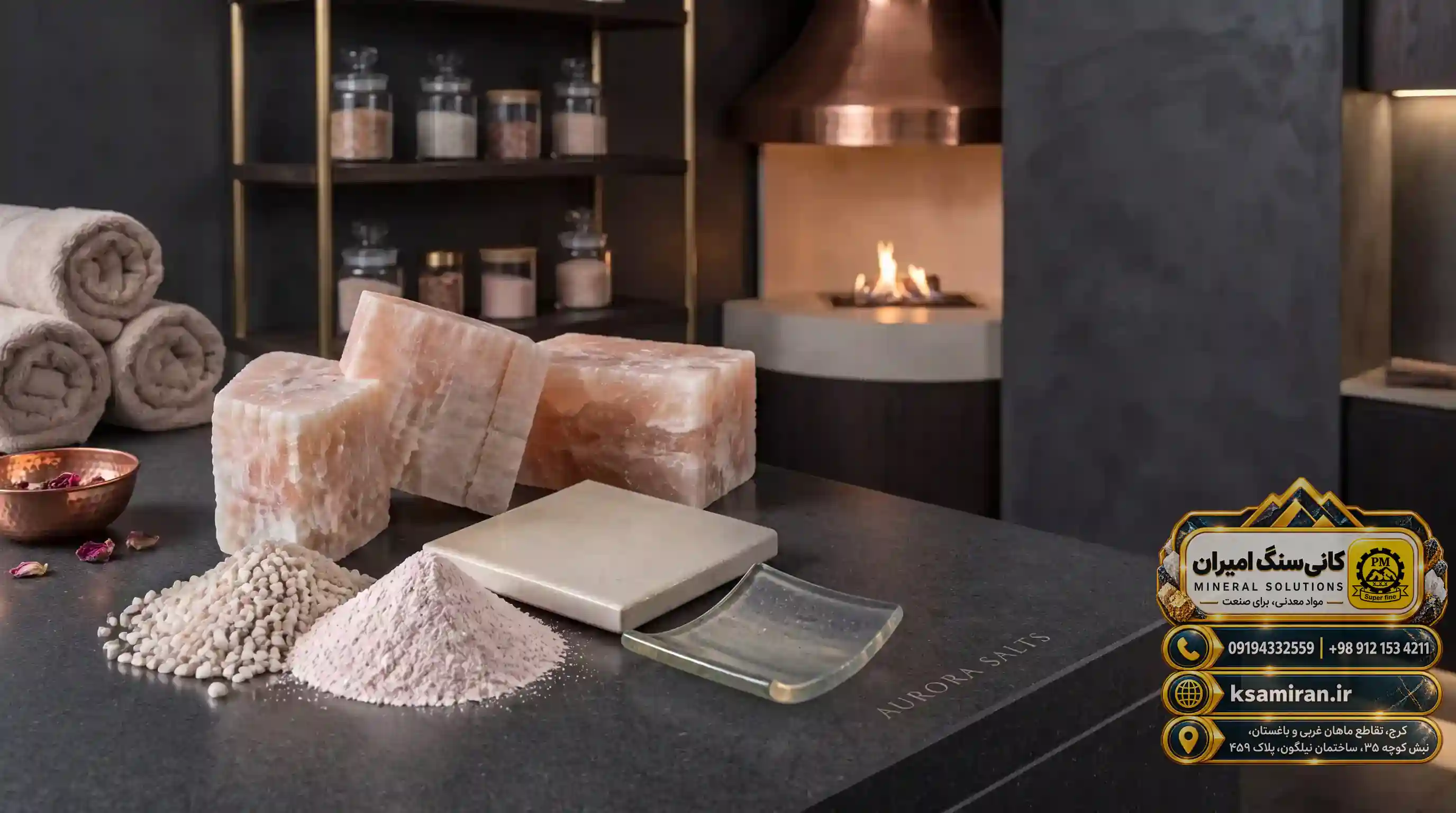
Economic and Technical Advantages of Using Amiran Feldspar: Choosing high-quality raw materials has a direct impact on the economic efficiency and technical performance of production units. Due to lowering the melting point of initial mixtures, using this high-quality mineral leads to significant savings in fuel and energy consumption of fuaces. Along with improving the technical quality of final products, this economic advantage creates high added value for factories.
From a technical standpoint, the high purity and uniformity of chemical compositions of this material minimize production errors. Relying on the qualitative stability of raw materials, glass and ceramic manufacturers can supply more standard products to the market with minimal production line downtime. This reinforces the brand credibility of manufacturers in today's competitive market.
Focusing on quality control standards, the Kani Sang Amiran project supplies homogeneous and reliable products. The commitment to providing high-grade minerals has tued this collection into a trusted partner for various industries. Optimizing production processes using these minerals paves the way for growth and sustainable development.
Ultimately, sustainable access to raw materials with precise granulations resolves the main conce of production managers. Cooperation with professional suppliers allows for more accurate long-term plaing and maximizes the overall supply chain efficiency.
Conclusion and Future Outlook of Related Mineral Industries
Conclusion and Future Outlook of Related Mineral Industries: Feldspar mineral, as one of the main pillars of the glass, tile, ceramic, and glaze industries, plays an irreplaceable role in the industrial economy. A precise understanding of sodium and potassium types, along with mastering the importance of granulation in the 10 450 mesh range, helps engineers and manufacturers achieve the highest levels of quality and efficiency. Advances in mineral processing technologies promise purer and more efficient products in the future.
With rising quality standards in domestic and inteational markets, the role of high-quality raw materials becomes more prominent than ever. Manufacturing industries are compelled to use standard minerals to maintain their competitive edge. In this regard, the Kani Sang Amiran project responds to the growing needs of these industries by offering high-quality products.
Looking to the future shows that optimizing energy consumption and reducing environmental impacts through the use of high-quality mineral fluxes will be the main approach of industrialists. Investing in the recognition and correct application of mineral raw materials is the key to success in tomorrow's industrial markets.
It is hoped that this comprehensive article has provided a precise and practical insight into the characteristics, types, and applications of this valuable mineral to industry activists and dear researchers, taking an effective step toward elevating national production.
| Question | Answer |
|---|---|
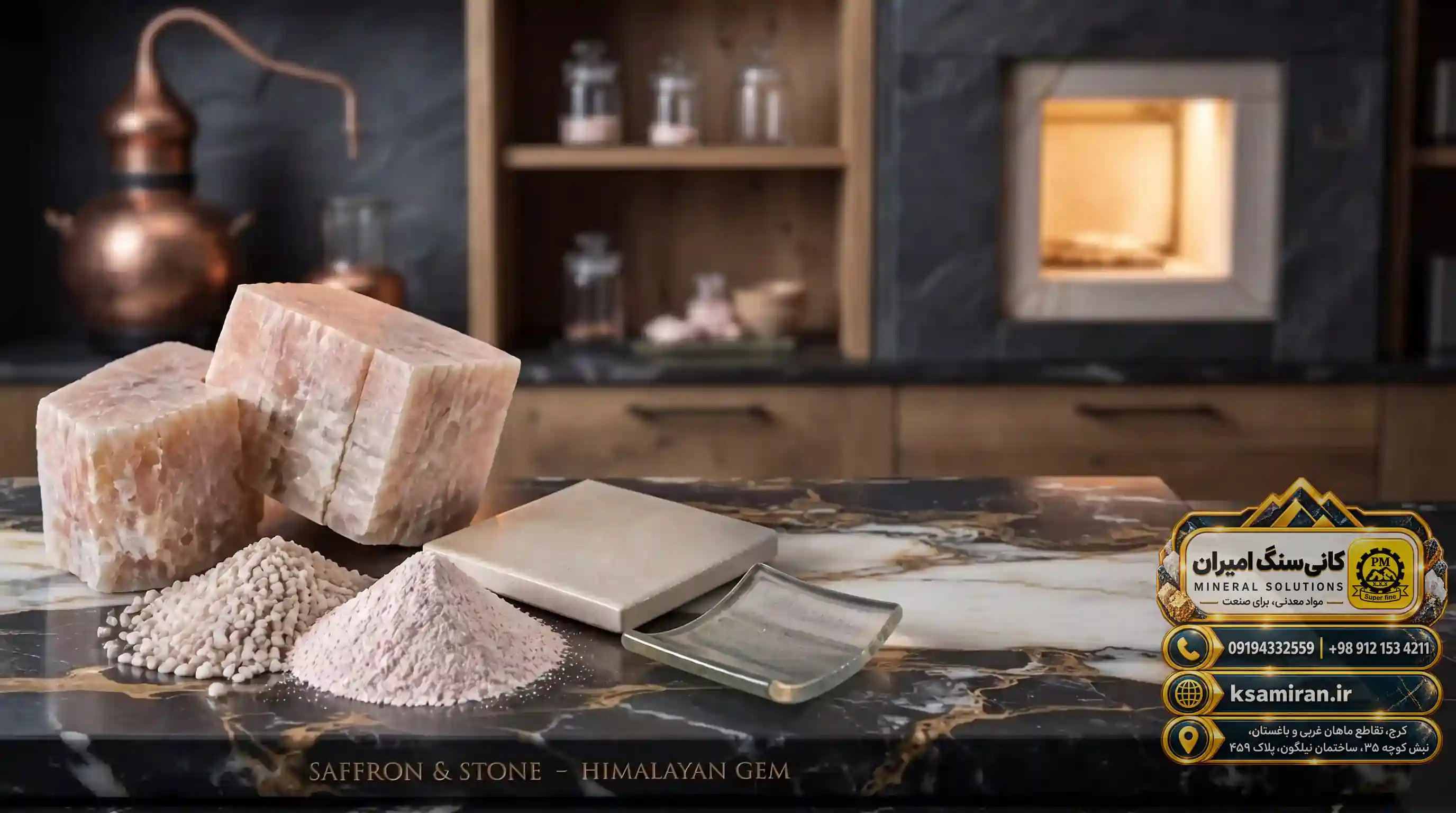
| What is feldspar? | It is a group of aluminum silicate minerals used as a thermal flux in the glass, tile, and ceramic industries. |
| What are the main applications of feldspar? | Main applications include glass, tile, ceramic products, and glaze. |
| What is the mesh range of Amiran feldspar? | These products are supplied in a mesh range of 10 to 450 mesh. |
| What is the difference between sodium and potassium feldspar? | The sodium type contains sodium and the potassium type contains potassium, creating different melting behaviors and applications in industries. |
| What is the role of feldspar in glassmaking? | It is a source of alumina and acts as a flux to lower the melting temperature and increase the stability of glass. |
| What is the role of feldspar in tiles and ceramics? | It acts as a fluxing agent and increases body density and mechanical strength by creating a glass phase. |
| Why is feldspar granulation important? | Particle size has a direct impact on chemical reaction speed, firing temperature, and final product quality. |
| Is this material used in glaze production? | Yes, it is used in manufacturing industrial glazes to create a smooth surface and adjust thermal expansion. |
| How can Amiran feldspar be obtained? | It can be reviewed through the dedicated product page on the Kani Sang Amiran website. |
| Are micronized feldspar powders available? | Yes, micronized powders are supplied up to 450 mesh for special applications. |
Kani Sang Amiran Project — Reference for production and supply of industrial minerals.
برچسب: Feldspar,Understanding Types of Industrial Potassium and Sodium Feldspar,
نویسنده: رساوب آفرین