
درباره سایت
آخرین مطالب
- بررسی تاثیر اکسید لیمونیت (گل ماش) بر پایداری رنگ
- استخدام أكسيد الليمونيت (الماغش) في صناعات الزجاج
- کاربرد اکسید لیمونیت (گل ماش) در صنایع شیشهسازی
- A Review of Daily Prices for Limonite Oxide (Ocher) in the Market
- چگونه خالص بودن اکسید لیمونیت (گل ماش) را تشخیص دهیم؟
- بررسی قیمت روز اکسید لیمونیت (گل ماش) در بازار
- Application of Limonite Oxide (Gole Mash) in Glassmaking Industries
- كيف تتعرف على نقاء أكسيد الليمونيت (جول ماش)؟
- How to Determine the Purity of Limonite Oxide (Gol Mash)?
- بررسی استانداردهای ایمنی کار با اکسید لیمونیت (گل ماش)
امکانات وب
Introduction to Industrial Talc and Its Fundamental Properties
Industrial talc is one of the most widely used minerals in various industries, holding a special place due to its layered structure and unique properties. This mineral is recognized as an efficient filler and additive utilized extensively across numerous sectors. A precise understanding of the visual and tactile characteristics of this material serves as a proper guide for selecting it correctly in manufacturing processes. To lea more about mineral products, you can visit the Industrial Talc page and review its technical specifications.
In this article, we intend to examine the visual and tactile properties of this mineral, analyzing its various physical and sensory dimensions. The visual characteristics of this material, including color, gloss, and particle shape, have a direct impact on the final quality of the products in which they are used. Additionally, the tactile sensation and smoothness under the fingers are important indicators for evaluating purity quality and the degree of powder particle fineness.
Consumer industries are constantly looking for high-quality, standardized raw materials. For this reason, a detailed examination of the powdery structure of this material is of high importance. In the following sections, we will discuss in detail the mesh sizing characteristics, applications in the polymer and paint industries, as well as its comparison with other minerals to provide you with a comprehensive understanding of this product.
The Kani Sang Amiran mineral project, focusing on the production of high-quality minerals, strives to provide the best products to meet industrial needs. Paying attention to the visual and tactile details of powders is part of quality control that helps various industries make more precise and smarter choices in their production processes.
Examining the Visual Characteristics and Powder Color
One of the most prominent visual features of industrial talc is its white, powdery appearance. This white and brilliant color allows it to be used as an excellent filling pigment in the paint and coatings industries without having a negative effect on the final color of the product. The appearance of this powder is completely homogeneous and uniform, and its particles are well-ground and classified.
The apparent gloss of the powder depends on the purity level of the initial ore and its processing methods. The higher the purity, the whiter and glossier the resulting powder will be. This visual feature is of vital importance for industries sensitive to transparency and the preservation of product color. To better understand the structural differences between various mineral materials, reading the article A Review of Structural Differences Between White Talc and Calcium Carbonate provides useful information.
In addition to its white color, the physical form of this material is a soft powder showing no abnormal agglomerations. This apparent uniformity indicates high precision in the production and mesh-sizing process. The particles of this powder are produced within a specific mesh range, favorably guaranteeing particle size distribution.
Visual inspections of the powder help operators and quality control experts ensure its health and uniformity before the raw material enters the production line. These initial controls prevent structural problems in the final products and significantly increase production quality.
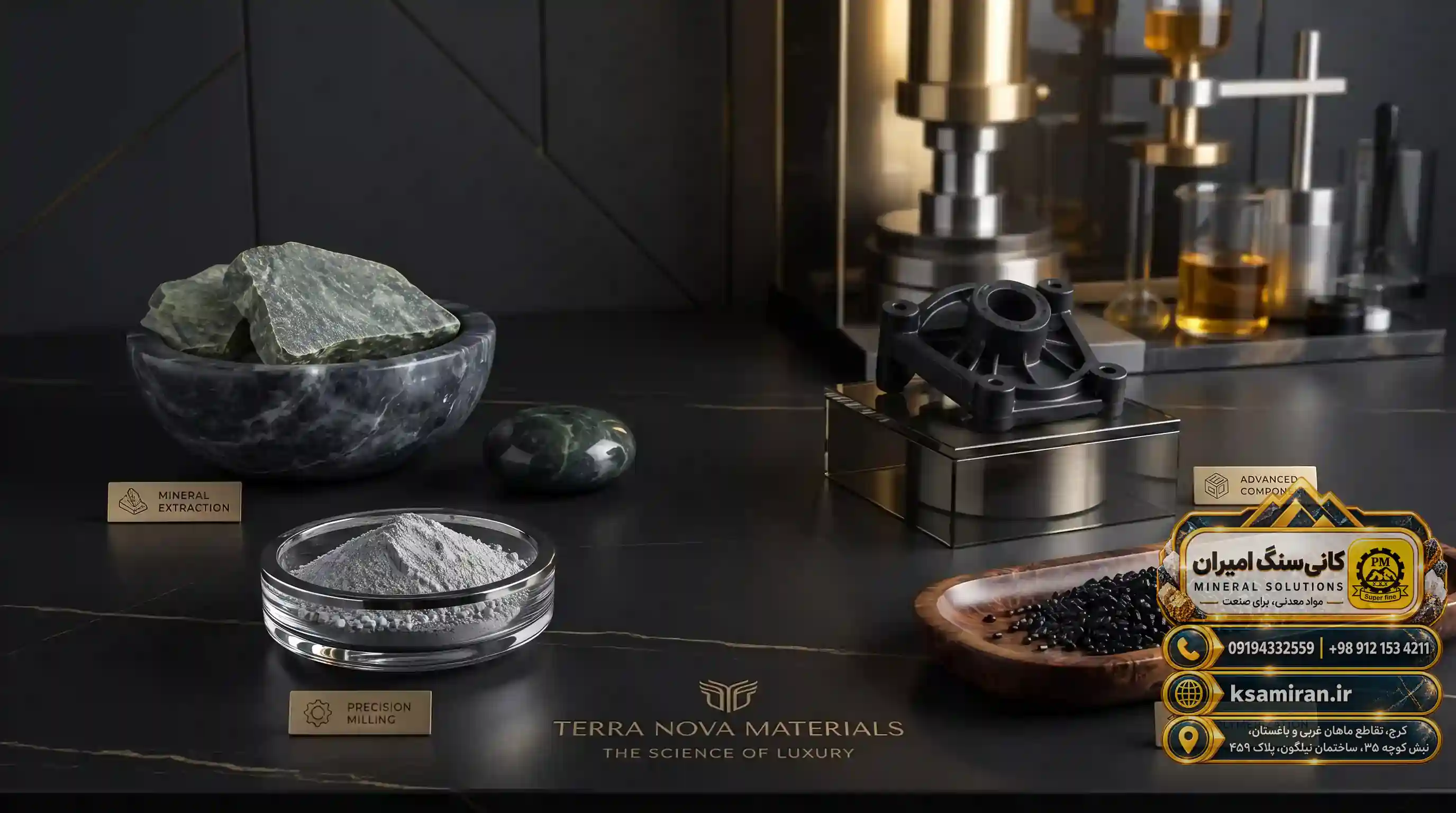
Tactile Experience and the Sensation of Smoothness Under the Fingers
The tactile sensation of industrial talc is one of its most fascinating and distinctive features. When you touch a small amount of this powder between two fingers, you will experience a very soft, slippery, and silky feel. This property is due to the microcrystalline sheet-like and layered structure of this mineral, which allows the layers to slide easily over one another.
This greasy yet dry sensation is the primary characteristic of this material, setting it apart from other mineral powders. Touching the powder reveals no roughness or coarseness, which testifies to its precise grinding and placement within the standard mesh range. This unparalleled softness has a direct impact on lubricating properties and friction reduction in industrial applications.
Compared to other mineral fillers, the tactile feel of this material is much more delicate. This sensory property helps industrial applications disperse uniformly and prevent balling when mixed with polymers or rubbers. Understanding this tactile feature serves as a quick and preliminary diagnostic tool for laboratory and production experts.
Many quality control specialists can deduce the grinding quality and moisture level to some extent simply by touching the powder. Utilizing advanced equipment, the Kani Sang Amiran mineral project produces a powder with a completely soft and standard texture that meets all consumer industry expectations in terms of appearance and touch.
The Role of the 450 to 1000 Mesh Range in Visual and Tactile Quality
The mesh range is one of the most important technical parameters in determining the quality of industrial talc particles. This product is supplied in a mesh range of 450 to 1000, representing diversity in particle size and their degree of softness. The higher the mesh number, the finer the particles become, resulting in a softer tactile feel and a more homogeneous powder appearance.
Particles positioned within this mesh range establish an ideal balance between mechanical and visual properties. This particle size easily penetrates polymer and rubber matrices and acts as an optimal filler. Furthermore, to better understand the effects of physical characteristics on performance, you can read the article A Review of Physical and Mechanical Properties of Industrial Talc Powder.
The particle size distribution within this mesh range guarantees that the powder is neither too coarse to feel rough under the fingers nor too fine to cause severe agglomeration problems. This balance makes the final appearance of colored and polymeric products look extremely smooth and polished.
Strict control of mesh-sizing is performed in the production lines of the Kani Sang Amiran project to ensure that the final powder falls precisely within the customers' requested range. This precision in particle size guarantees consistency in visual and tactile quality across all shipped consignments.
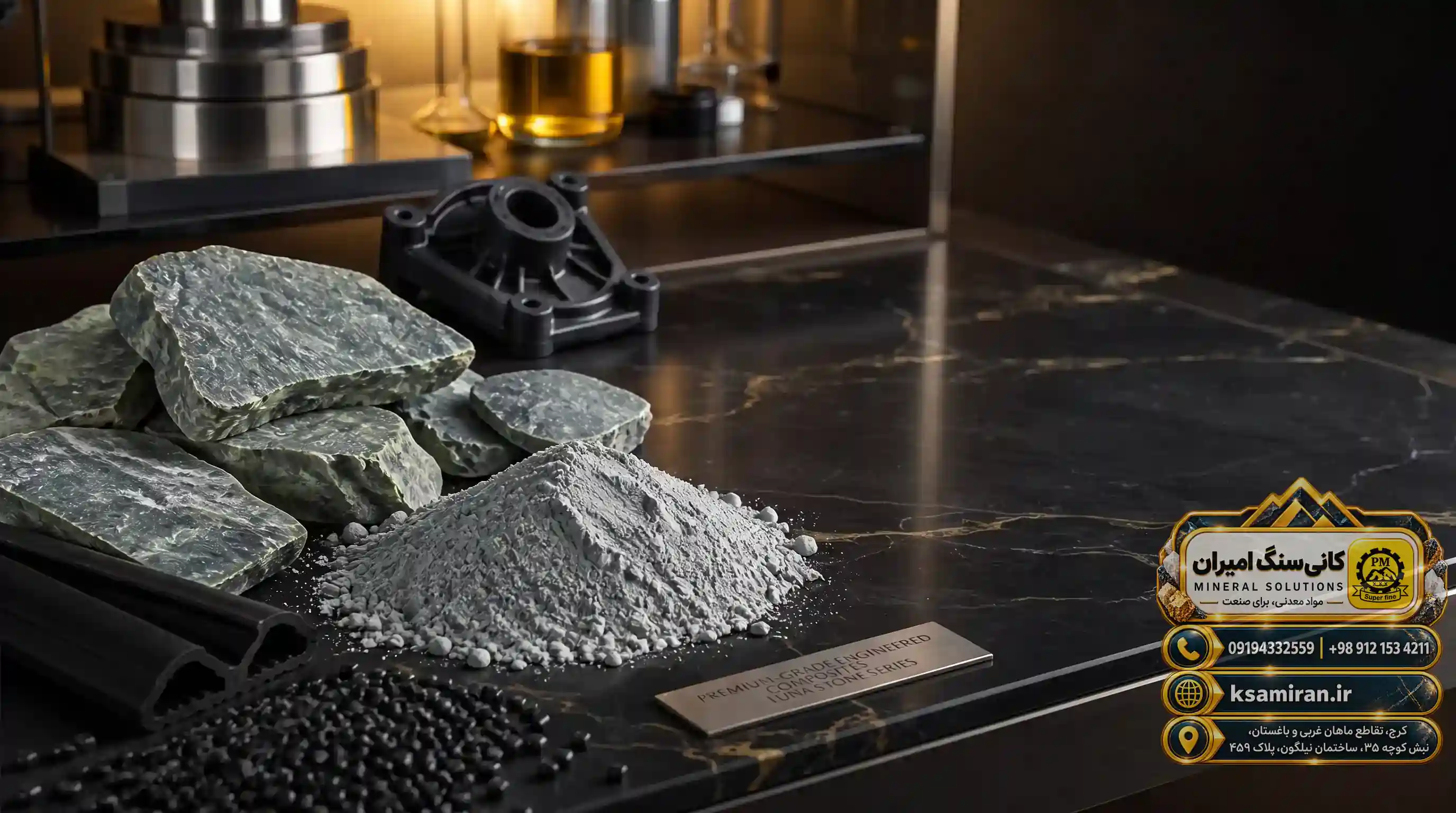
Applications in Polymer and Rubber Industries Based on Visual Characteristics
In the polymer and rubber industries, the visual and tactile features of industrial talc play a key role in its selection. This material is used as a functional filler to improve the appearance and dimensional properties of plastic parts. Its white and neutral appearance allows coloring of polymeric parts to be carried out easily and without color interference.
When this powder is mixed with polymer granules, due to its softness and layered structure, it disperses well throughout the polymer mass, making the cross-section of the final part smooth and free of visual defects. In rubber products, utilizing this material also prevents layers from sticking together and imparts a dry, desirable tactile feel to the rubber surface.
Polymeric and rubber products containing this mineral show better resistance to dimensional changes. The final appearance of produced parts becomes more matte and uniform, and material flow lines during the plastic injection process are minimized. These advantages are achieved through the uniform distribution of particles within the specified mesh range.
Manufacturers of rubber and polymer parts can offer more durable products with a more professional appearance to the market by relying on the visual characteristics and high quality of this product. The Kani Sang Amiran mineral project is a supplier of this high-quality mineral for various industries.
Application in the Paint-Making Industry and Industrial Coatings
The paint and coatings industry is another primary consumption area for industrial talc. In this industry, the visual properties of the powder such as whiteness level, gloss, and particle size are of paramount importance. This material acts as an extender filling pigment that greatly assists in improving the coverage and opacity of paints.
The silky touch and sheet-like structure of the particles cause the paint layer to settle completely uniformly on surfaces, creating a smooth, bump-free appearance after drying. Additionally, particles of this material help maintain paint stability against environmental factors and prevent paint settling in the container. To examine the role of other minerals in this industry, reading the article A Review of the Effect of Kaolin on Gloss and Durability of Industrial Coatings is recommended.
Selecting the appropriate mesh in the paint industry is critical because coarse particles can cause roughness in the final appearance of the paint. The 450 to 1000 mesh range is an ideal choice for achieving a proper balance between coverage and paint surface smoothness.
Paint formulation experts can precisely control paint gloss and opacity by examining the appearance and behavior of this powder in various formulations. Using standard minerals produced by the Kani Sang Amiran project guarantees quality and consistency in industrial and architectural paints.

Quality Control Standards and Sensory Inspections
Quality control in mineral production requires precise laboratory methods, but initial visual and tactile inspections also hold an important place. Operators and quality control inspectors on the production line can largely ensure the uniformity of industrial talc powder through quick sensory checks.
Visual tests include examining color under standard light, testing for the absence of foreign particles, and controlling the powder's moisture content. Additionally, the tactile test is performed manually to ensure the absence of hard lumps and to confirm powder softness. These quick evaluations are conducted alongside precise laboratory mesh-sizing tests.
Production standards dictate that every batch of manufactured products must have visual specifications completely similar to previous batches. This consistency in appearance and texture gives consumer industries peace of mind that they will not face quality fluctuations in their production lines.
By establishing strict quality control systems, the Kani Sang Amiran project evaluates all its products prior to packaging and shipping to ensure complete compliance of visual and tactile characteristics with industrial standards.
Conclusion and Summary Regarding the Properties of Industrial Talc
In this article, we comprehensively reviewed the visual and tactile characteristics of industrial talc, analyzing its various dimensions in terms of color, softness, mesh range, and application across diverse industries. It became clear that possessing a brilliant white color, layered structure, and silky tactile feel makes this mineral one of the best choices as a filler and additive in the polymer, rubber, and paint industries.
The 450 to 1000 mesh range of this product allows for precise selection based on the technical requirements of each industry, creating an excellent balance between visual and functional properties. Recognizing these characteristics helps engineers and manufacturers elevate the quality of their final products with full awareness of raw materials.
Adhering to quality control standards during production guarantees consistency in the visual and tactile properties of the powder. Relying on technical knowledge and appropriate equipment, the Kani Sang Amiran project constantly strives to address the needs of various industries by supplying high-grade minerals.
We hope this article has provided you with a clear perspective regarding the visual and sensory specifications of this practical mineral. For more information and order registration, you can visit the Kani Sang Amiran project website.
| Question | Answer |
|---|---|
| What is industrial talc? | It is a powdery mineral chosen for polymer, rubber, paint, and industrial applications. |
| What are the main visual features of industrial talc? | Brilliant white color, a homogeneous powder, and being free of lumps are among its visual features. |
| What is the tactile feel of the powder? | It creates a very soft, slippery, silky, and dry sensation under the fingers. |
| What is the mesh range of this product? | This powder is produced and supplied in the 450 to 1000 mesh range. |
| What are the main applications of industrial talc? | Polymeric products, rubber products, paint, and industrial goods. |
| Why is it used in the paint-making industry? | It acts as a filling pigment, helping to improve coverage and create a smooth, matte surface. |
| What is its role in polymer industries? | It is used as a filler to improve visual properties, dimensional stability, and surface smoothness of parts. |
| How can the initial quality of the powder be inspected? | Through checking the apparent white color and testing for softness and lack of roughness by touch. |
| Does this material affect the final color of products? | No, due to its white and neutral color, it does not interfere with the final color. |
| Where can we obtain Kani Sang Amiran products? | Through the Kani Sang Amiran website and the page dedicated to industrial products. |
Reference: Mineral quality control standards and technical production information of the Kani Sang Amiran project.
برچسب: Industrial Talc,A Review of the Visual and Tactile Characteristics of Industrial Talc,
نویسنده: رساوب آفرین