
درباره سایت
آخرین مطالب
- انتخاب اکسید آهن قرمز (اخرا) برای بهبود کیفیت پیگمنت و پوششهای رنگی
- تامین کربنات کلسیم با دانهبندی دقیق جهت استفاده در مستربچ
- تأمین تخصصی سیلیس برای مصالح ساختمانی، شیشه و صنایع سرامیک
- ویژگیهای فنی بنتونیت کانی سنگ امیران برای کاربردهای خاص
- فلدسپات کانی سنگ امیران برای شیشه کاشی و سرامیک
- کاربرد تالک سفید درجه یک در فرمولاسیون پیشرفته رنگ و محصولات کاغذی
- اکسید آهن قرمز (اخرا) کاربردی جهت تولید محصولات سرامیکی و پوشش
- مشخصات فنی اکسید آهن قرمز (اخرا) مناسب برای پوشش و تولید پیگمنت
- مشاوره تخصصی خرید کربنات کلسیم بر اساس نیاز دقیق صنعت شما
- انتخاب تالک سفید صنعتی مناسب برای تولیدات کاغذ و مستربچ
امکانات وب
A Comprehensive Introduction to Calcium Carbonate and Its Importance in Mode Industries
The mineral calcium carbonate is one of the most abundant and versatile compounds in the Earth's crust, holding a special position in various industries due to its unique physical and chemical characteristics. Extracted and processed from mines in various forms, this material acts as an economical and efficient filler. The Kani Sang Amiran mineral project, as an active mineral producer, supplies this product with the highest quality for various industries.
In mode industries, selecting high-quality raw materials plays a direct role in improving the properties of the final product. Due to its high compatibility with polymers, paints, and other chemical materials, this mineral has been able to elevate production standards. Familiarity with the types and applications of this material helps engineers and manufacturers make the best choice for their industrial processes. For more information and purchases, you can visit the calcium carbonate page.
The use of this mineral powder in polymer industries, paint manufacturing, and engineered product production improves dimensional stability, reduces final costs, and increases mechanical strength. In the following sections, we will examine the specifications, mesh size ranges, and specialized applications of this valuable material in more detail.
Reviewing the Mesh Size Range from 100 to 3500 Mesh and Its Importance
One of the most important parameters in selecting calcium carbonate is particle size, or its mesh size range. This product is produced and supplied in a wide range from 100 to 3500 mesh, each serving specific applications in various industries. Coarser particles are typically used in the construction industry and engineered stone production, while very fine particles (micronized and nano) are used for more advanced polymer and paint industries.
Precision in selecting the appropriate mesh has a direct impact on the quality of particle distribution in the polymer matrix or paint. To better understand this topic, reading the article Review of Standard Mesh Grading in Various Types of Coated Calcium Carbonate will be very enlightening. Mode milling and grading technologies have made it possible to produce powders with a very narrow particle size distribution.
By selecting the correct mesh, manufacturers can achieve the best level of gloss, opacity, and mechanical properties. The variety of mesh sizes from 100 to 3500 mesh allows the most precise and suitable type of powder to be selected and applied for every industrial application.
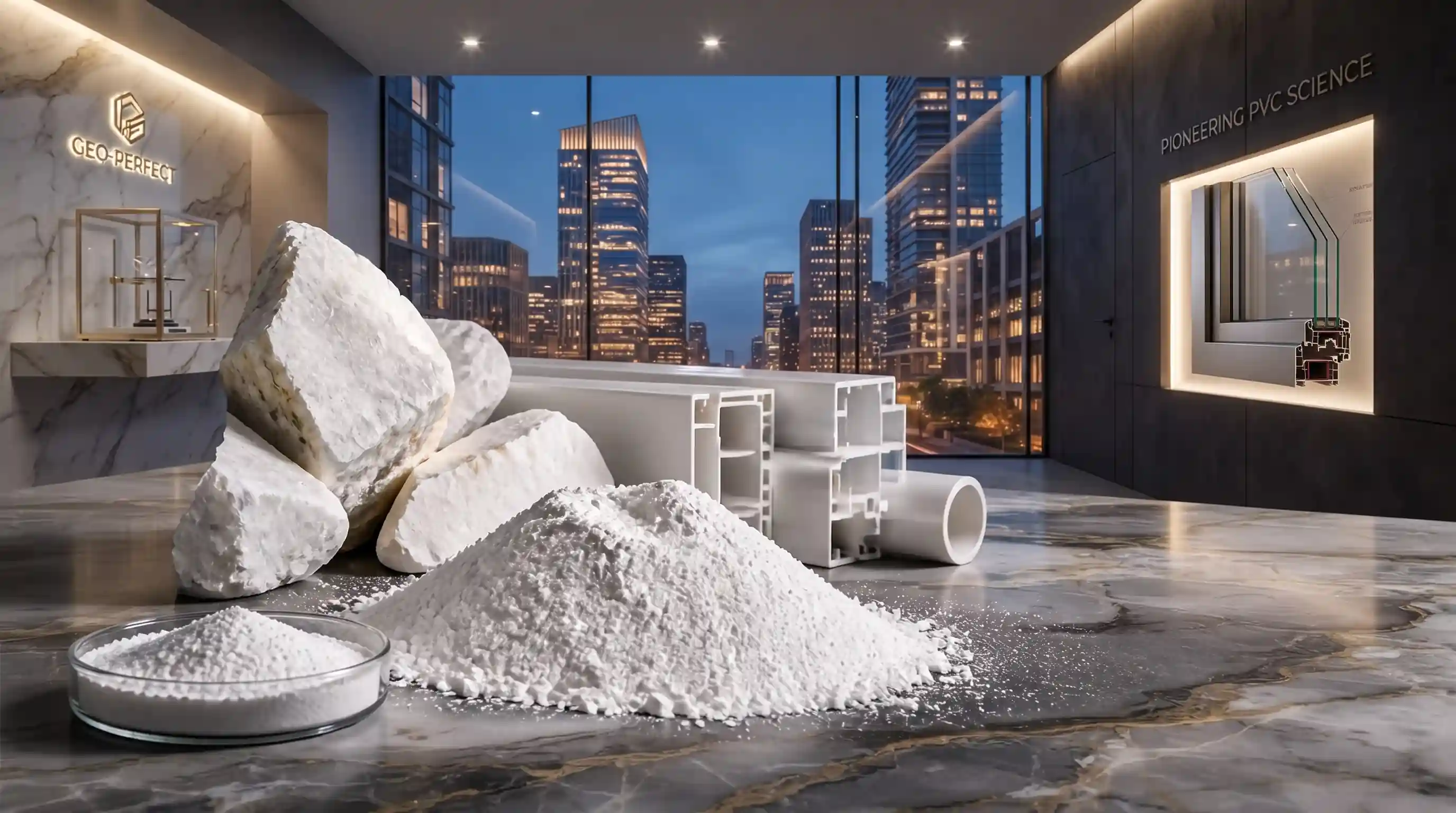
Application of Calcium Carbonate in Polymer Industries and PVC/UPVC Pipe and Profile Production
The polymer industry is one of the largest consumers of calcium carbonate. In the production of PVC/UPVC profiles and pipes, this material acts as a vital structural filler that, in addition to lowering the final price, improves the mechanical properties of the pipes and profiles. The uniform distribution of particles in the polymer compound prevents weak points in the structure of the final product.
Specialized reviews show that using this mineral in extrusion processes has many benefits. For further reading on this subject, you can refer to the article Review of the Technical Benefits of Coated Calcium Carbonate in Extrusion. Due to its favorable thermal stability, this material shows good resistance against the high temperatures of the pipe and profile manufacturing process.
Optimal use of this mineral powder in the formulation of PVC/UPVC profiles and pipes increases hardness, improves impact resistance, and reduces linear shrinkage during the product cooling process.
Key Role in the Masterbatch Industry and Engineered Products
The production of polymer masterbatches requires the use of high-purity fillers with a defined particle size distribution. Due to its desirable whiteness, excellent dispersion in the polymer base, and compatibility with various polyolefins, calcium carbonate is considered an unmatched option for producing filler and color masterbatches. This material significantly helps improve production efficiency and reduce the consumption of expensive pigments.
In addition to masterbatches, this material also plays a prominent role in the production of engineered stone and various engineered products. Engineered stone made with this mineral powder features suitable density, a beautiful appearance, and acceptable abrasion resistance. The careful selection of the type and mesh of the powder used in engineered stone directly affects the final surface quality.
By utilizing this mineral, masterbatch and engineered part manufacturers can create an ideal balance between final cost and functional quality, which is a major advantage in today's competitive market.
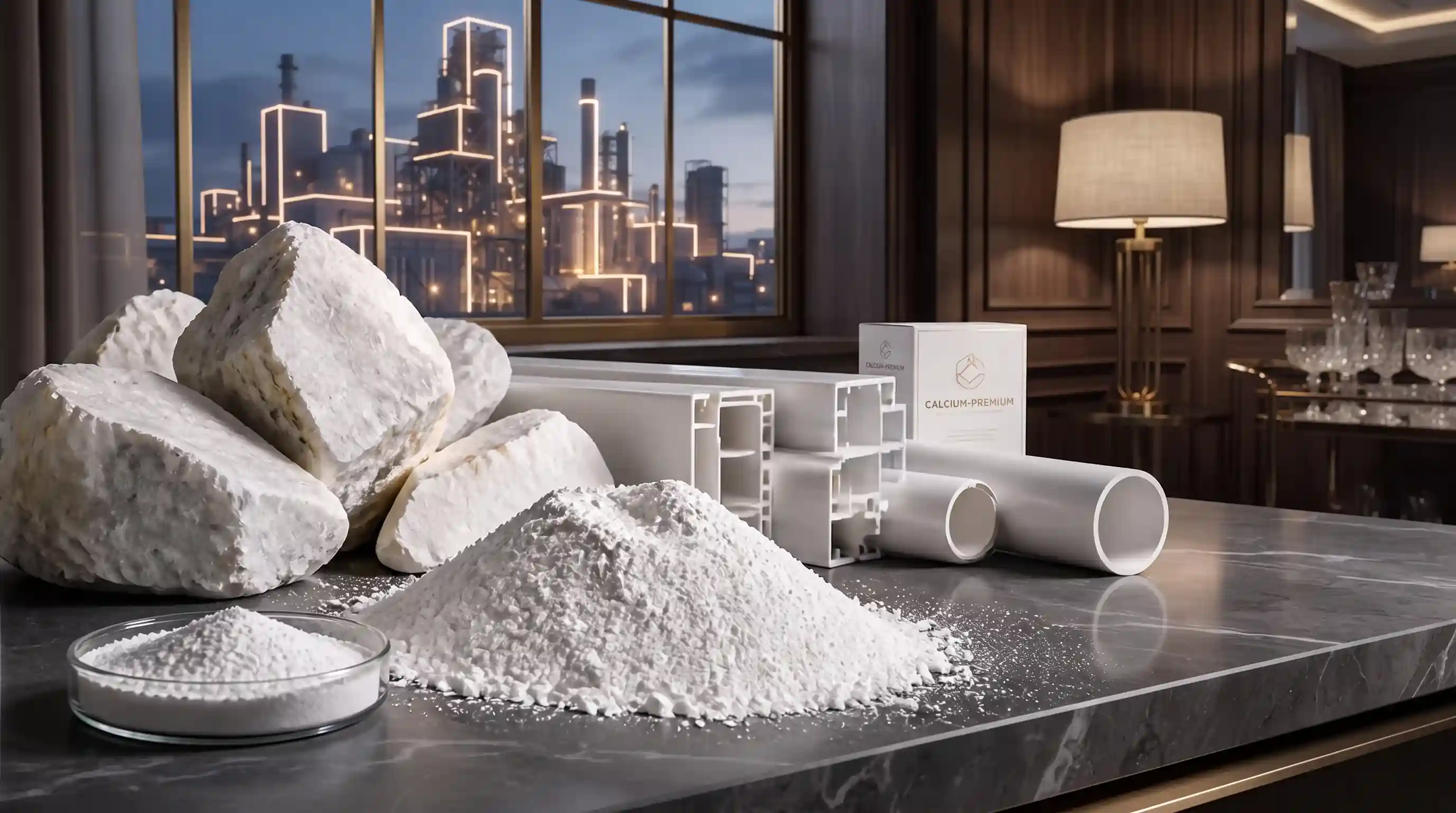
Application in Cable Manufacturing, Synthetic Leather, and Adhesive Industries
Other industries that extensively use calcium carbonate include cable manufacturing, synthetic leather, and various adhesives. In the cable industry, this material is used as a filler in cable insulation and sheathing, helping to improve the electrical and mechanical properties of the insulation. It also increases the thermal stability of the cable under harsh operating conditions.
In synthetic leather production, the use of this mineral powder helps control flexibility, texture, and the hand-feel of the product. Synthetic leather containing this mineral will have greater durability against wear and tear. In the adhesive industry, it also acts as a viscosity-controlling agent and improves cohesive properties.
Choosing the appropriate grade with the matching mesh for adhesives and synthetic leather guarantees the absence of particle agglomeration and creates a uniform surface, significantly increasing the final quality of the products.
Application in Paint and Papermaking Industries
The paint and coating industry is another traditional yet advanced field consuming calcium carbonate. This material is used as an extender pigment and filler in water-based and oil-based paints. The high whiteness of this powder helps improve the hiding power of the paint and optimizes titanium dioxide consumption, which is highly cost-effective.
In the papermaking industry, this material is used as a filler and surface coating to improve paper whiteness, brightness, smoothness, and printability. Papers containing this mineral have higher print quality and show greater resistance to yellowing over time.
Paint and paper manufacturers can achieve a homogeneous texture and excellent optical properties in their products by utilizing the micronized meshes of this product.

Comprehensive Guide to Choosing Coated and Uncoated Calcium Carbonate
The mineral market includes various types of this product, and understanding their differences is of high importance for buyers. For a more precise selection, reading the Specialized Guide to Comparing Coated Calcium Carbonate Types Available in the Market provides valuable information. The main difference between the uncoated and coated types (surface-treated with fatty acids such as stearic acid) lies in their degree of hydrophobicity and compatibility with polymers.
Due to its coating layer, the coated type disperses well within polymer matrices and prevents particle aggregation. This feature is of paramount importance in masterbatch and plastic compounding industries. In contrast, the uncoated type is considered a more economical option for industries such as paint, paper, and adhesives that require different characteristics.
The Kani Sang Amiran project, by supplying a variety of high-quality products, covers the diverse needs of different industries in the best possible way and provides the necessary guidance for selecting the appropriate grade.
Conclusion and Summary Regarding Industrial Applications of Calcium Carbonate
In this article, we comprehensively examined calcium carbonate, mesh ranges from 100 to 3500 mesh, and its diverse applications in industries such as PVC/UPVC profiles and pipes, masterbatch, cables, synthetic leather, paints, paper, adhesives, and engineered stone. As one of the main pillars of industrial formulations, this mineral plays an irreplaceable role in improving quality and reducing production costs.
Correctly selecting the mesh type, reviewing grade differences, and paying attention to the technical specifications of the product can create a positive transformation in industrial production lines. The Kani Sang Amiran project constantly strives to meet the needs of the country's industries by supplying high-quality minerals and to elevate the quality standards of domestic production.
We hope this comprehensive guide has provided you with useful information about the applications and characteristics of this valuable material, helping you act more successfully in optimizing your production processes.

| Question | Answer |
|---|---|
| What is calcium carbonate? | It is a widely used mineral in polymer, paint, paper, and engineered product industries that acts as an economical filler. |
| What is the mesh size range of this product? | This product is produced and supplied in a mesh size range of 100 to 3500 mesh. |
| What are the main applications of this mineral? | PVC/UPVC profiles and pipes, masterbatch, cables, synthetic leather, paints, paper, adhesives, and engineered stone. |
| What is the difference between uncoated and coated types? | The coated type is coated with fatty acids and is hydrophobic, exhibiting better compatibility with polymers. |
| Is this product used in the pipe and profile industry? | Yes, it is used as a structural filler in the production of PVC/UPVC profiles and pipes. |
| What is the role of this material in the paint industry? | As an extender pigment, it improves the whiteness and hiding power of the paint. |
| Why is this powder used in masterbatch? | Due to its desirable whiteness, excellent dispersion, and compatibility with polyolefins, it is used for producing masterbatch. |
| Is it also consumed in the papermaking industry? | Yes, it is used to improve the whiteness, brightness, and printability of paper. |
| Where is the producer of this product located? | The Kani Sang Amiran project supplies this product as a mineral producer. |
| How can this product be purchased? | It can be ordered through the dedicated product page on the Kani Sang Amiran website. |
Kani Sang Amiran Project — Mineral Production (ksamiran.ir)

برچسب: Calcium Carbonate,Introduction to Types of Calcium Carbonate and Its Applications,
نویسنده: رساوب آفرین