
درباره سایت
آخرین مطالب
- سیلیس کانی سنگ امیران مناسب شیشه و سرامیک با دانهبندی ۱۰ تا ۴۵۰
- سفارش سیلیس کانی سنگ امیران در شیشه و سرامیک در مش ۱۰ تا ۴۵۰
- کائولن باکیفیت کانی سنگ امیران برای صنایع سرامیک مش 450 تا 1500
- سیلیس پروژه کانی سنگ امیران برای صنایع شیشه در مش ۱۰ تا ۴۵۰
- اکسید لیمونیت (گل ماش) دقت فنی در تولید پودر صنعتی شما
- خرید سیلیس کانی سنگ امیران مناسب صنعت شیشه دانهبندی ۱۰ تا ۴۵۰ مش
- سفارش کربنات کلسیم ۱۲۵۰ مش با دانهبندی دقیق برای کابل
- فلدسپات باکیفیت کانی سنگ امیران برای محصولات سرامیکی
- تالک صنعتی برای شراکت در فرمولاسیون
- استعلام قیمت کائولن کانی سنگ امیران کاغذسازی با مش 450 تا 1500
امکانات وب
Introduction to the Role of Calcium Carbonate in Engineering Industries
Mineral materials play a vital role in optimizing the physical and mechanical properties of various industrial products. Among these, calcium carbonate is recognized as one of the most widely used fillers in polymer, paint, paper, and engineering industries, significantly increasing the final efficiency of products by improving structural characteristics. The Kani Sang Amiran project supplies the needs of various industries by producing this high-quality mineral material.
The use of suitable mineral fillers reduces production costs while simultaneously improving dimensional stability and mechanical strength. In polymer and engineering industries, selecting a material with the appropriate particle size is of special importance. To lea more about the spectrum of applications for this material, you can visit the dedicated calcium carbonate page.
The mesh range of this material varies from 100 to 3500 mesh, allowing formulators to choose the appropriate granulation according to the exact needs of the production process. This flexibility in particle size allows for homogeneous distribution in the polymer or liquid matrix and prevents particle agglomeration.
Examining the mechanical behavior of composites containing mineral materials has always been a conce for materials engineers. Similar to the studies conducted in the field of examining the role of white barite in improving the mechanical properties of composites, using suitable fillers has a direct impact on the modulus of elasticity and impact resistance.
In the rest of this article, we will examine in detail the various dimensions of this valuable material's impact on tensile, impact, and thermal stability properties, as well as its specialized applications in the pipe and profile, masterbatch, and engineered stone industries.
Effect of the 100 to 3500 Mesh Range on the Mechanical Behavior of Materials
One of the most important parameters in determining the quality and efficiency of calcium carbonate is the particle size and its mesh range. The 100 to 3500 mesh range covers a wide spectrum of particles from coarse to nano, each having a special application in different industries. Finer particles create a greater surface area with the polymer matrix and improve stress transfer.
In the production of products that require a smooth and polished surface, the use of high meshes (nano and micronized) is preferred. This is while lower meshes are used for applications where filling volume at the lowest cost and maintaining flow properties are the priority. Particle size distribution plays a key role in preventing the creation of stress concentration points.
When mineral particles with precise dimensions are added to the matrix, the compressive strength and hardness of the final product increase. For example, in extrusion processes, precise control of particle dimensions prevents a decrease in the surface quality of pipes and profiles and facilitates the optimization of melt flow.
Production engineers are always looking for a balance between mechanical properties and melt viscosity. Adding this mineral material with the appropriate mesh, without excessively increasing viscosity, reinforces the flexural modulus. This feature is particularly important in the construction of complex engineering parts.
Correctly choosing the mesh size based on the type of final application will ensure optimal product performance under long-term mechanical loading conditions. The Kani Sang Amiran project offers this product in various granulations to fully cover industrial needs.

Application of Calcium Carbonate in PVC/UPVC Profiles and Pipes
The plastic pipe and profile production industry always requires additives to improve rigidity and dimensional stability properties. The use of calcium carbonate in PVC and UPVC formulations acts as a volumetric stabilizer and reinforcement, helping to reduce the final price without sacrificing quality.
In the manufacture of water and sewage transmission pipes, resistance to inteal pressure and impact is of vital importance. A detailed examination of these processes in the specialized article The role of calcium carbonate in plastic pipe manufacturing shows well how uniform particle distribution can increase the lifespan of the pipe.
UPVC door and window profiles also strictly require dimensional stability against temperature changes. The presence of this mineral material reduces the linear thermal expansion coefficient and prevents the profile from warping against sunlight radiation and seasonal changes.
Adding micronized fillers with appropriate surface coating improves the adhesion between mineral particles and PVC resin, consequently maintaining the Charpy and Izod impact resistance of extruded parts at the standard level.
Applying up-to-date technical knowledge in compounding and observing optimal raw material ratios is the key to success in producing standard and high-quality profiles, in which the Kani Sang Amiran project plays an important role by offering standard mineral products.
Improving Properties of Masterbatch and Polymer Composites
The masterbatch industry is one of the major consumers of powdered mineral materials. In the production of colored and white masterbatches, calcium carbonate acts as a carrier and coating improver. Proper distribution of particles in the base polymer significantly affects the final quality of the masterbatch.
During the masterbatch extrusion process, the presence of mineral particles helps control shear heat and improve the thermal conductivity of the melt. This results in greater uniformity in the curing and shaping of granules and prevents thermal degradation of the polymer.
In engineering polymer composites, tensile properties and modulus of elasticity are reinforced by adding optimal amounts of this filler. Mineral particles act as barriers against crack growth and increase the fracture toughness of the composite.
To achieve the best result in masterbatch extrusion lines, studying the technical principles of the process is very helpful. In this regard, it is recommended to read the article examining the technical benefits of coated calcium carbonate in extrusion to become familiar with the details of flow and dispersion improvement.
Masterbatch manufacturers can use standard Kani Sang Amiran products to upgrade the color stability, gloss, and mechanical strength of their polymer products to a higher level and maintain their competitiveness in the market.

Role of Filler in Paint, Paper, and Adhesive Industries
In the coating and paint industry, light reflection, coverage, and rheological properties of paint are of high importance. The use of calcium carbonate as a filler pigment, in addition to reducing the consumption of expensive resins, improves the whiteness and brilliance of the paint film and enhances its adhesion.
In the papermaking industry, this mineral material is a suitable alteative to cellulose and helps increase whiteness, surface smoothness of the paper, and improve printability. Fine particles of this material fill the empty spaces between paper fibers and create a denser structure.
Adhesive and sealant industries also benefit from the stabilizing and viscosity-regulating properties of this material. The presence of mineral particles in construction and industrial adhesives increases shear strength and initial adhesion and prevents the adhesive from sagging on vertical surfaces.
Particle size distribution in the 100 to 3500 mesh range allows paint and paper formulators to precisely control product viscosity. This feature prevents premature particle settling in storage and increases product shelf life.
By supplying high-purity mineral powders, the Kani Sang Amiran project has provided reliable raw materials for manufacturers in the paint, paper, and adhesive industries, which fully meet the quality standards of these industries.
Application in Synthetic Leather, Cable, and Engineered Stone
Advanced engineering products such as synthetic leather, cable coatings, and engineered stones strictly require high-quality additives to enhance physical durability. In the synthetic leather industry, calcium carbonate improves flexibility, desired touch, and wear resistance of the top layer.
In the cable industry, polymer insulators must have high electrical and mechanical resistance. Adding this high-purity mineral material, in addition to reducing production costs, maintains the thermal stability of the cable insulation against temperature changes caused by electric current passage.
Engineered stones and Corian, which are widely used today in interior decoration and construction industries, consist of a high percentage of mineral filler. This material acts as the main skeleton of the engineered stone and significantly increases resistance to bending, impact, and scratch susceptibility.
Selecting appropriate granulation and being free from chemical impurities are main requirements in the production of engineered stones and cable coatings to prevent structural defects in the curing or shaping process.
The Kani Sang Amiran project has created a reliable supply chain for manufacturers in these specialized industries by offering processed mineral products so that final products can be introduced to the market with the highest quality standards.
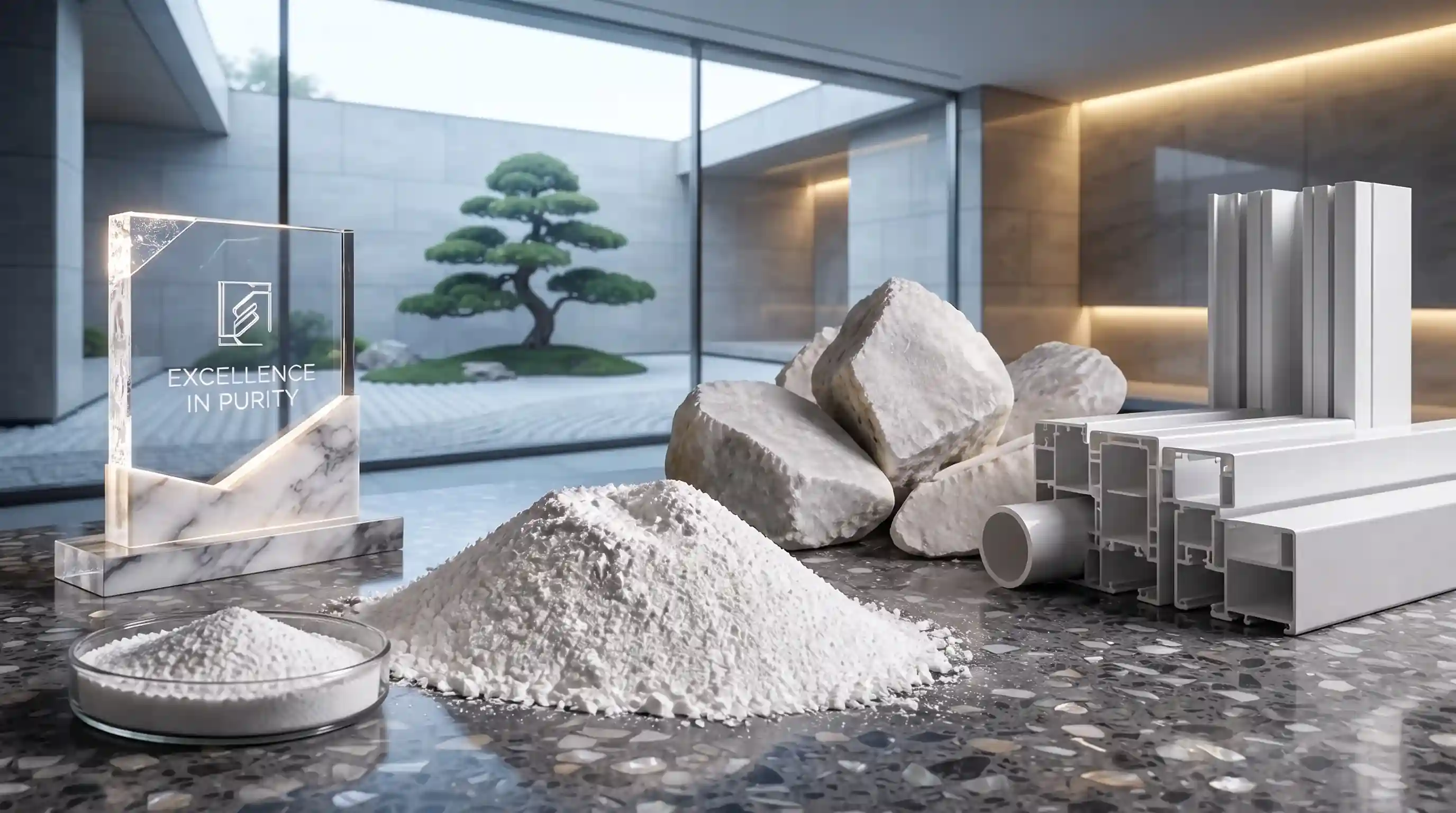
Reinforcement Mechanisms and Improvement of Tensile and Impact Properties
Understanding the scientific mechanisms of mechanical property improvement by calcium carbonate helps engineers design better formulations. When mineral particles are distributed in a polymer or composite matrix, applied stresses are transferred from the soft polymer phase to the rigid particles.
This stress transfer results in uniform force distribution throughout the volume of the part and prevents stress concentration in specific points. Consequently, the modulus of elasticity and tensile strength of the composite increase. However, the optimal amount of usage must be observed to prevent a drop in toughness.
Another mechanism is crack arrest. The presence of fine mineral particles in the path of microscopic crack propagation causes them to change direction or stop, and absorbs fracture energy, which directly improves the impact resistance of the part.
The use of particles with appropriate surface coatings (coated) significantly strengthens the bond between the mineral and polymer phases and prevents phase separation under dynamic loads. This ensures the long-term mechanical stability of structures.
Observing production standards in the Kani Sang Amiran project guarantees the purity and appropriate particle size distribution of these powders, which plays an essential role in activating these reinforcement mechanisms in various industries.
Conclusion and Guide to Selecting the Best Grade of Calcium Carbonate
In this comprehensive article, the various dimensions of using calcium carbonate in engineering, polymer, paint, paper, and pipe-making industries were examined. It was determined that careful selection of the mesh range (from 100 to 3500) and attention to the type of application is the key to achieving the highest mechanical properties and dimensional stability in final products.
Reducing production costs, improving flexural and tensile modulus, upgrading impact resistance, and increasing thermal stability are among the most important benefits of using this valuable mineral material in industrial formulations. Various industries, including PVC pipe, masterbatch, and engineered stone manufacturers, can rely on these benefits to guarantee the quality of their products.
Selecting a reputable supplier will ensure the continuity of high-quality production. Utilizing mode mineral processing equipment, the Kani Sang Amiran project supplies this practical product with stable technical specifications for domestic industries.
Before final selection, industrial engineers and formulators should perform compatibility tests and filler percentage optimization on a laboratory scale to achieve the best balance between mechanical efficiency and economy.
It is hoped that this article is a useful guide for professionals and activists in the field of polymer and engineering industries in the direction of improving the quality of their products.
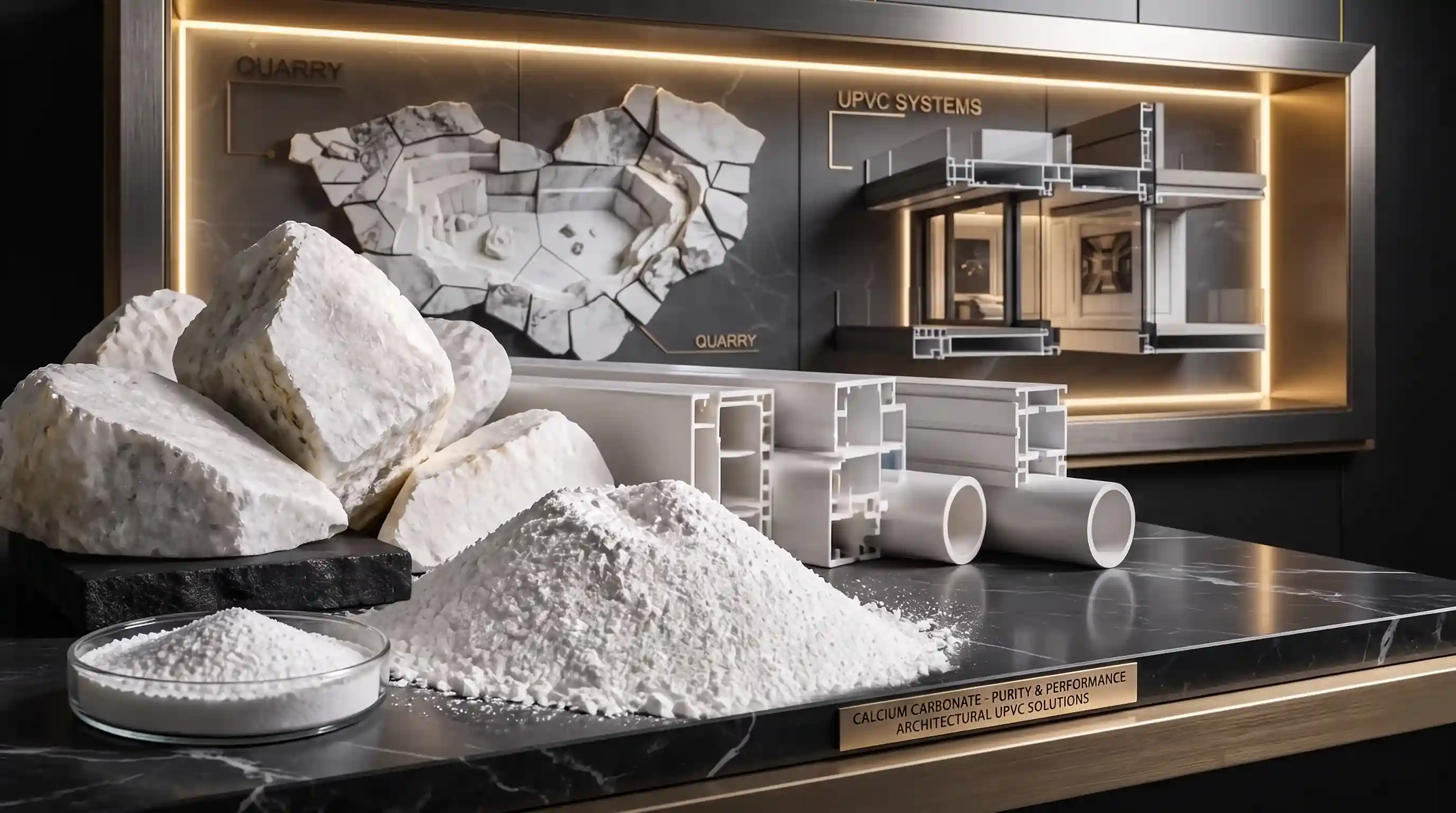
| Question | Answer |
|---|---|
| What is the effect of calcium carbonate on mechanical properties? | It improves the modulus of elasticity and tensile strength of products by appropriate stress transfer and crack growth inhibition. |
| What is the mesh range of this product? | This product is offered in the 100 to 3500 mesh range. |
| What are the main applications of this mineral material? | PVC/UPVC profiles and pipes, masterbatch, cable, synthetic leather, paint, paper, adhesive, and engineered stone. |
| Why is particle mesh important for final quality? | Particle size has a direct impact on homogeneous distribution, melt viscosity, and the surface quality of the final part. |
| Is this material used in the pipe manufacturing industry? | Yes, it is used in the production of PVC/UPVC pipes as a volumetric stabilizer and reinforcement. |
| What is the role of calcium carbonate in masterbatch? | It acts as a carrier, coating improver, and shear heat controller. |
| How can the quality of polymer composites be increased? | By choosing the appropriate mesh and uniform distribution of mineral fillers in the polymer bed. |
| Is this material also used in engineered stone? | Yes, it is used as the main skeleton of engineered stone to increase resistance to impact and scratch susceptibility. |
| Which entity supplies these mineral materials? | The Kani Sang Amiran project is the producer and supplier of these mineral products. |
| How can the appropriate grade be selected? | Based on process needs, the type of polymer or resin, and the expected mechanical properties of the final product. |
Specialized mineral material supply reference of Kani Sang Amiran project.
برچسب: Calcium Carbonate,The Role of Calcium Carbonate in Improving Mechanical Properties,
نویسنده: رساوب آفرین