
درباره سایت
آخرین مطالب
- بررسی تاثیر اکسید لیمونیت (گل ماش) بر پایداری رنگ
- استخدام أكسيد الليمونيت (الماغش) في صناعات الزجاج
- کاربرد اکسید لیمونیت (گل ماش) در صنایع شیشهسازی
- A Review of Daily Prices for Limonite Oxide (Ocher) in the Market
- چگونه خالص بودن اکسید لیمونیت (گل ماش) را تشخیص دهیم؟
- بررسی قیمت روز اکسید لیمونیت (گل ماش) در بازار
- Application of Limonite Oxide (Gole Mash) in Glassmaking Industries
- كيف تتعرف على نقاء أكسيد الليمونيت (جول ماش)؟
- How to Determine the Purity of Limonite Oxide (Gol Mash)?
- بررسی استانداردهای ایمنی کار با اکسید لیمونیت (گل ماش)
امکانات وب
An Introduction to the Importance of Industrial Talc in Various Industries
Industrial talc is one of the most widely used and valuable mineral materials in the world of mode manufacturing and industry, which has found a special place in production processes due to its unique physical and chemical properties. This mineral acts as an efficient filler and additive and has been able to positively influence various industries. Kani Sang Amiran project, by focusing on the production of high-quality mineral materials, plays an important role in meeting the needs of industrial units for this vital material.
A deep understanding of the wide applications of industrial talc requires a precise examination of its features. In many production lines, choosing the right raw material determines the final quality of the product. For more information in this field, you can read the article The Key Role of Industrial Talc in Improving the Quality of Manufactured Products, which examines the details of this topic.
Various industries are always looking for raw materials that, in addition to improving mechanical and aesthetic properties, are also economically justified. Industrial talc, with a mesh range of 450 to 1000, is considered one of the best options to meet these needs and is used in various sectors such as polymers, rubber, and paint.
Getting to Know the Features and Technical Specifications of Industrial Talc
The physical and mechanical specifications of any mineral material determine its level of efficiency in various industries. Industrial talc has attracted the attention of many engineers and manufacturers due to its flaky structure, natural softness, and chemical neutrality. This material acts as a mineral filler that can noticeably enhance the flow properties, thermal stability, and wear resistance of products.
To better understand the structure of this material, a precise examination of its properties is of high importance. It is recommended that for further study regarding these features, you refer to the article Examination of the Physical and Mechanical Properties of Industrial Talc Powder so that its various dimensions can be better understood.
One of the most important parameters in the classification of this material is the granulation or the mesh range. The mesh range of 450 1000 mesh enables the use of industrial talc in complex industrial formulations and significantly helps to improve particle dispersion in the base material matrix.
Application of Industrial Talc in Polymer and Plastic Industries
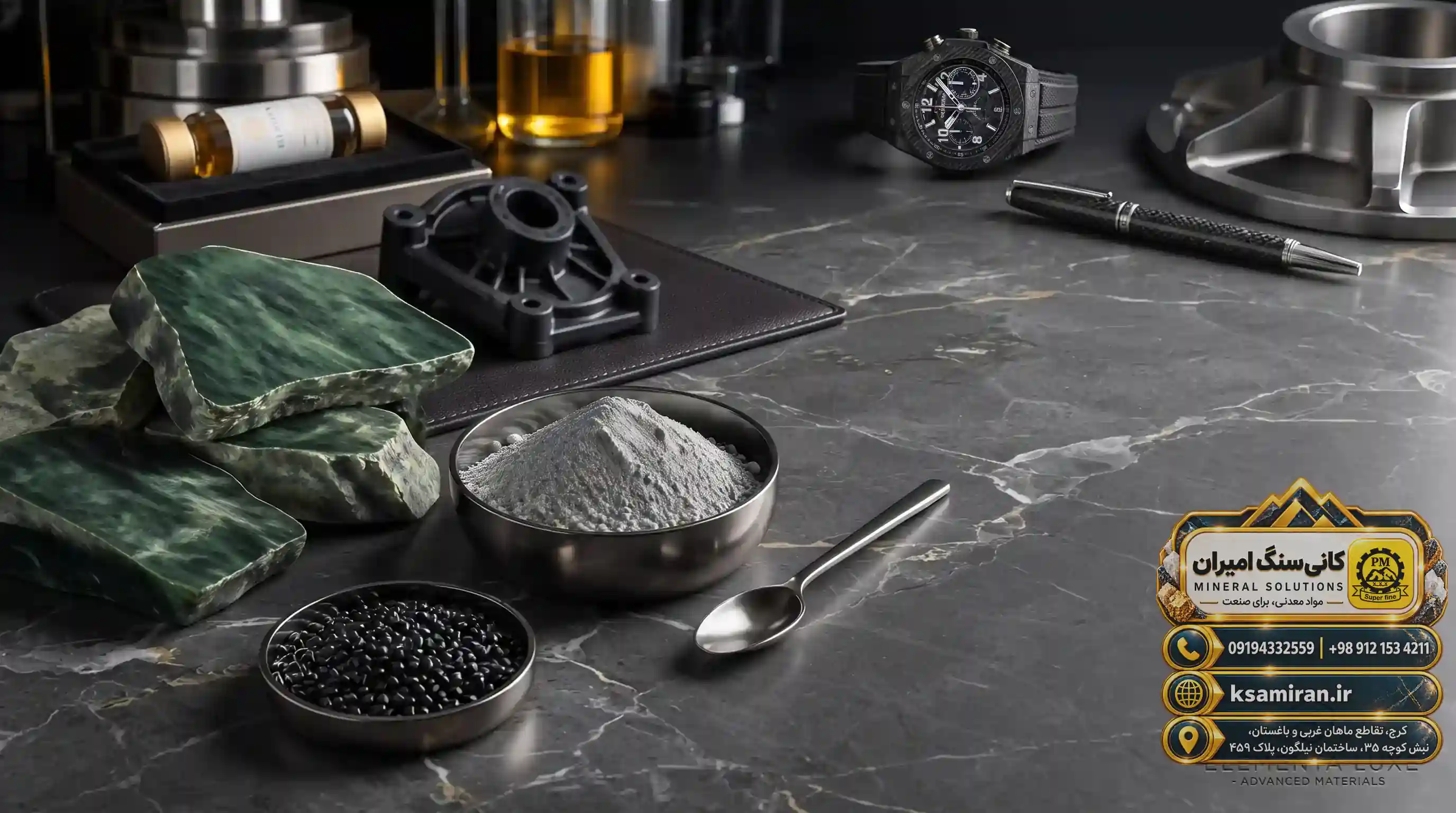
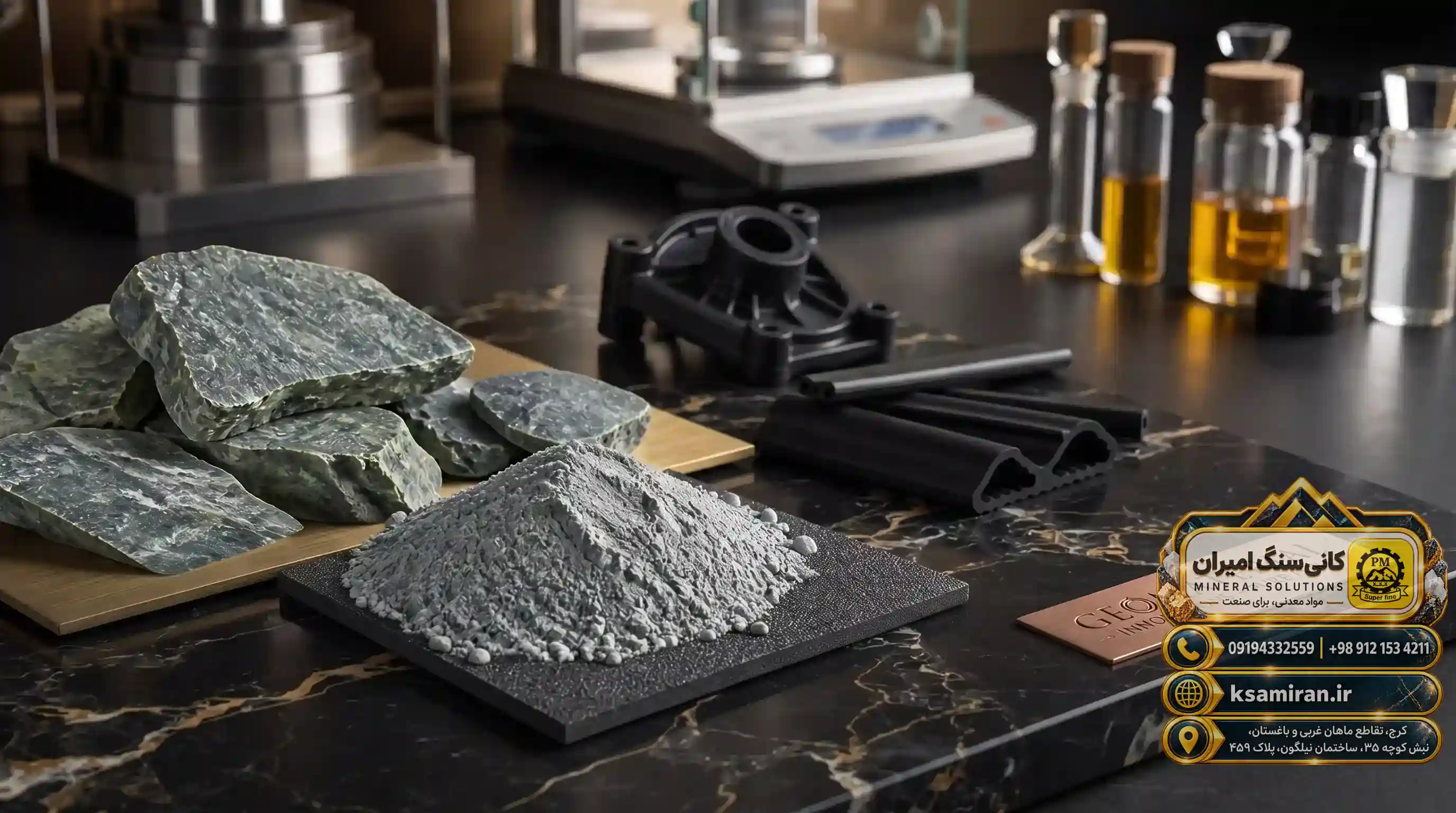
The polymer and plastic parts manufacturing industries are among the largest consumers of micronized mineral materials. The use of industrial talc in polymer products is very common due to its high ability to improve flexural modulus, increase stiffness, and reduce shrinkage of injected parts. This material, as an efficient mineral filler, helps reduce final production costs while simultaneously improving the structural quality of plastic parts.
In the production of automotive parts, home appliances, and polymer pipes, the presence of industrial talc with a mesh range of 450 1000 mesh leads to improved dimensional stability against heat and mechanical stress. The uniform distribution of particles in the polymer matrix ensures that the final properties of the product remain homogeneous in all parts.
Mineral producers such as the Kani Sang Amiran project, by precisely processing this material, offer a product suitable for polymer industries that easily mixes with various resins and thermoplastic polymers and improves the overall performance of the production line.
The Role of Industrial Talc in the Rubber Industry
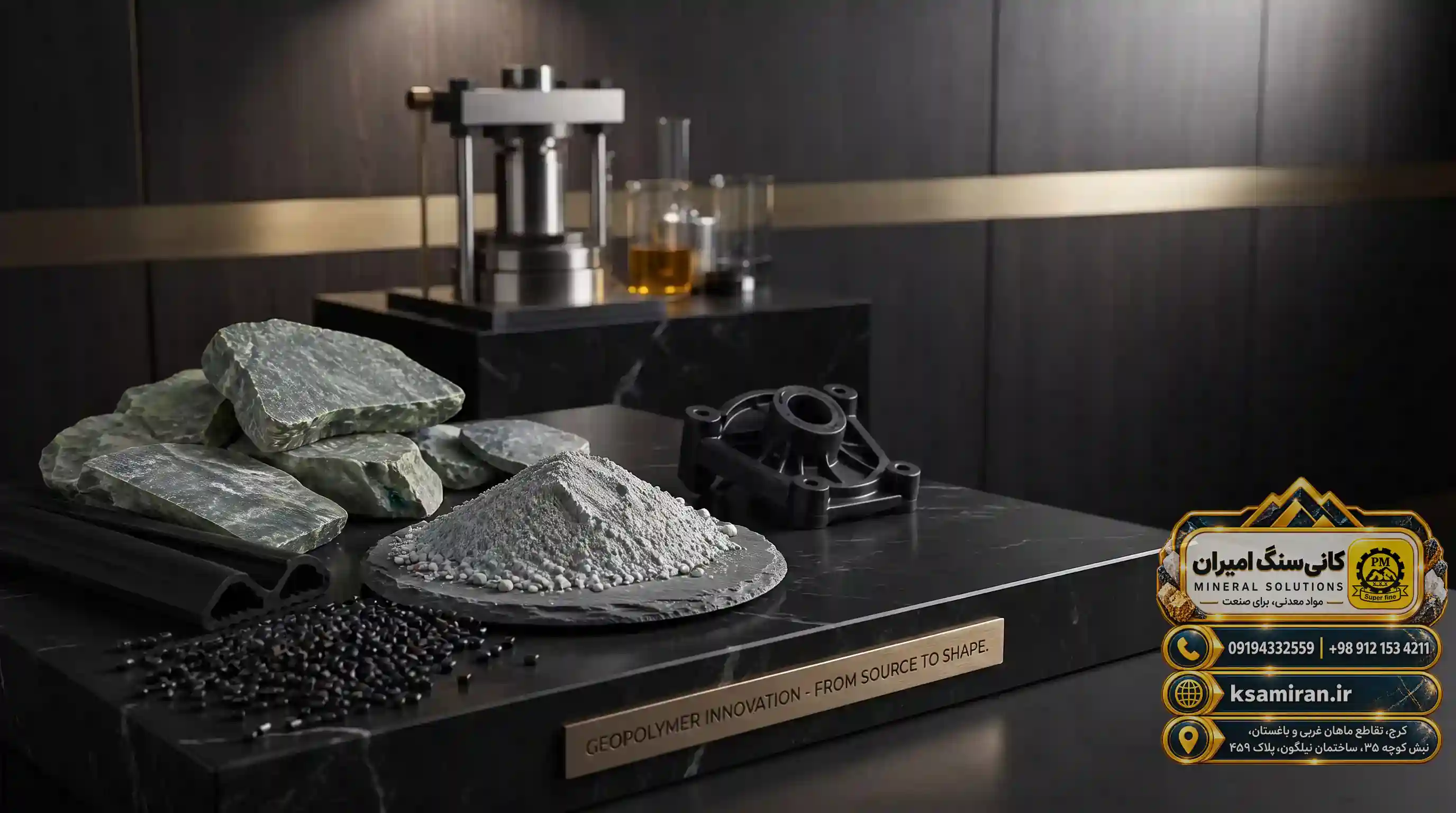
The rubber industry requires additives that can increase flexibility, durability, and resistance to wear in final products. Industrial talc is used as a filler and processing aid in rubber products and helps reduce stickiness and improve the extrusion properties of rubber compounds.
The use of this material in the production of various tires, gaskets, rubber profiles, and sealing strips leads to improved thermal stability and resistance to environmental factors. The 450 1000 mesh range ensures that particles are well distributed in the rubber structure and do not create structural weak points.
Many rubber parts manufacturing factories have managed to upgrade the quality standards of their products and increase the durability of manufactured parts in harsh working conditions and under pressure by utilizing the industrial talc supplied by the Kani Sang Amiran project.
Application of Industrial Talc in Paint and Protective Coatings Industry
The industrial paint and coating industry always needs mineral materials that can improve coverage, durability, and color stability against atmospheric conditions. Due to its flaky structure, industrial talc prevents moisture penetration into underlying layers and acts as an effective anti-corrosion agent in various architectural and industrial paints.
In addition to talc, the use of other minerals such as kaolin is also common in these industries. To better understand the differences and applications of similar mineral materials, reading the article Application of Kaolin in Paint and Industrial Coatings Industries will provide you with useful information.
Selecting the appropriate granulation with a 450 1000 mesh range in paint manufacturing improves flow properties, prevents peeling, and increases the longevity of the coating on various surfaces. This material acts as an economical volumetric pigment that helps optimize paint formulations.
Other Industrial Applications of Industrial Talc
In addition to the aforementioned industries, industrial talc has an active presence in many other production fields. Generally, various industrial products benefit from this material as a versatile mineral filler that helps improve rheological properties, reduce friction, and increase the aesthetic quality of products.
In many production processes, there is a need for a material that can increase thermal stability or act as a dry lubricant. Industrial talc, given its natural properties, covers these needs well and is recognized as a key component in various industries.
To procure this high-quality product for industrial and workshop use, you can visit the dedicated Industrial Talc page and receive supplementary information so that you can make the best choice for your production line.
Economic and Technical Advantages of Using Industrial Talc
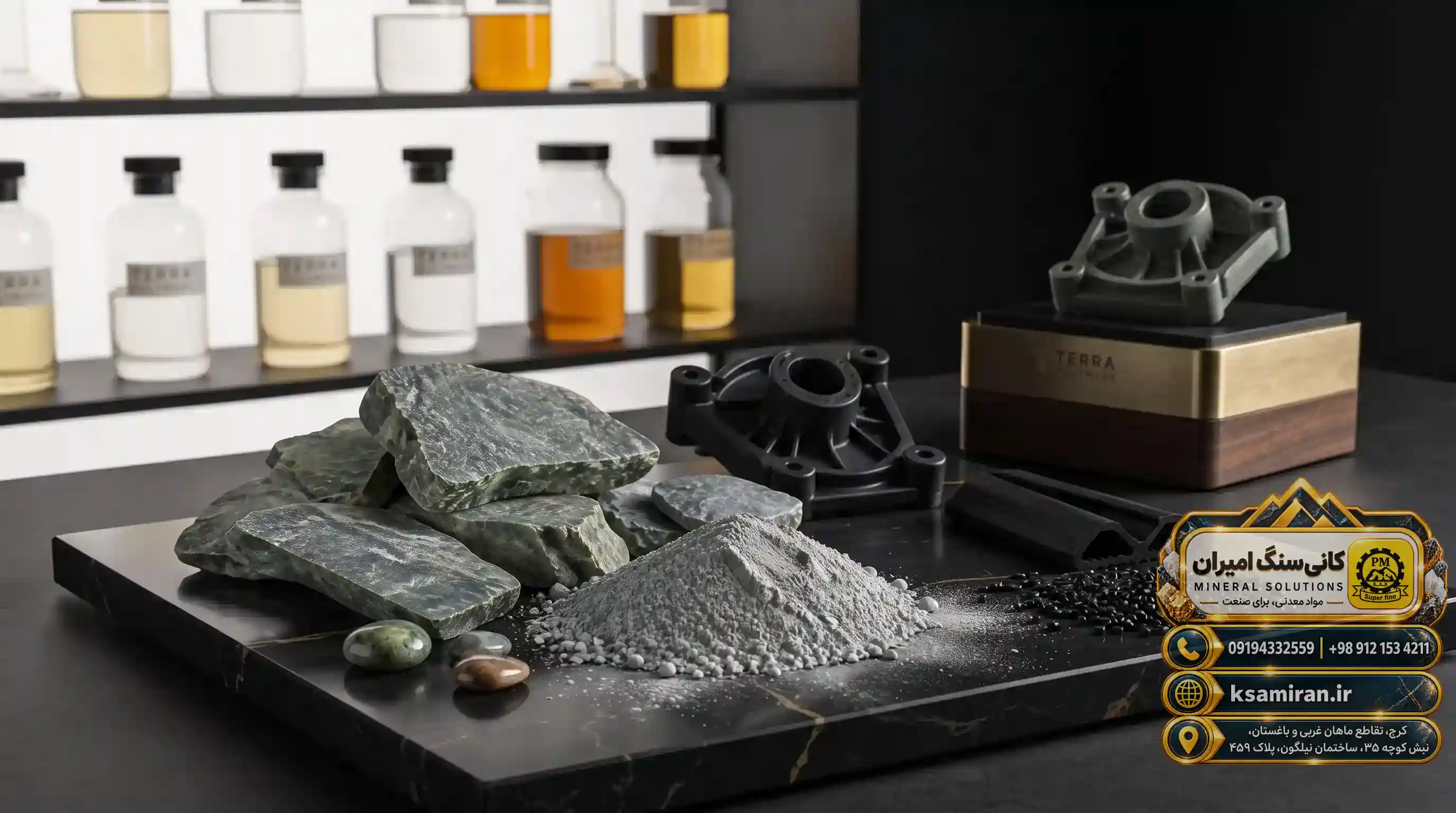
Using processed mineral materials in mass production is always accompanied by many economic and technical advantages. Due to its relative abundance, ease of processability, and positive effect on the final properties of products, industrial talc significantly reduces production costs while maintaining or enhancing the quality of the final product.
From a technical perspective, improving the elastic modulus, increasing resistance to heat, improving dielectric properties, and reducing the shrinkage of parts are among the main advantages of using industrial talc in industrial formulations. These features allow manufacturers to offer more competitive and higher-quality products to the market.
The Kani Sang Amiran project, with precision in the production and granulation process, has provided a product with stable specifications that various industries can use with peace of mind in their continuous and semi-continuous production lines.
Conclusion and Future Outlook of the Industrial Talc Market
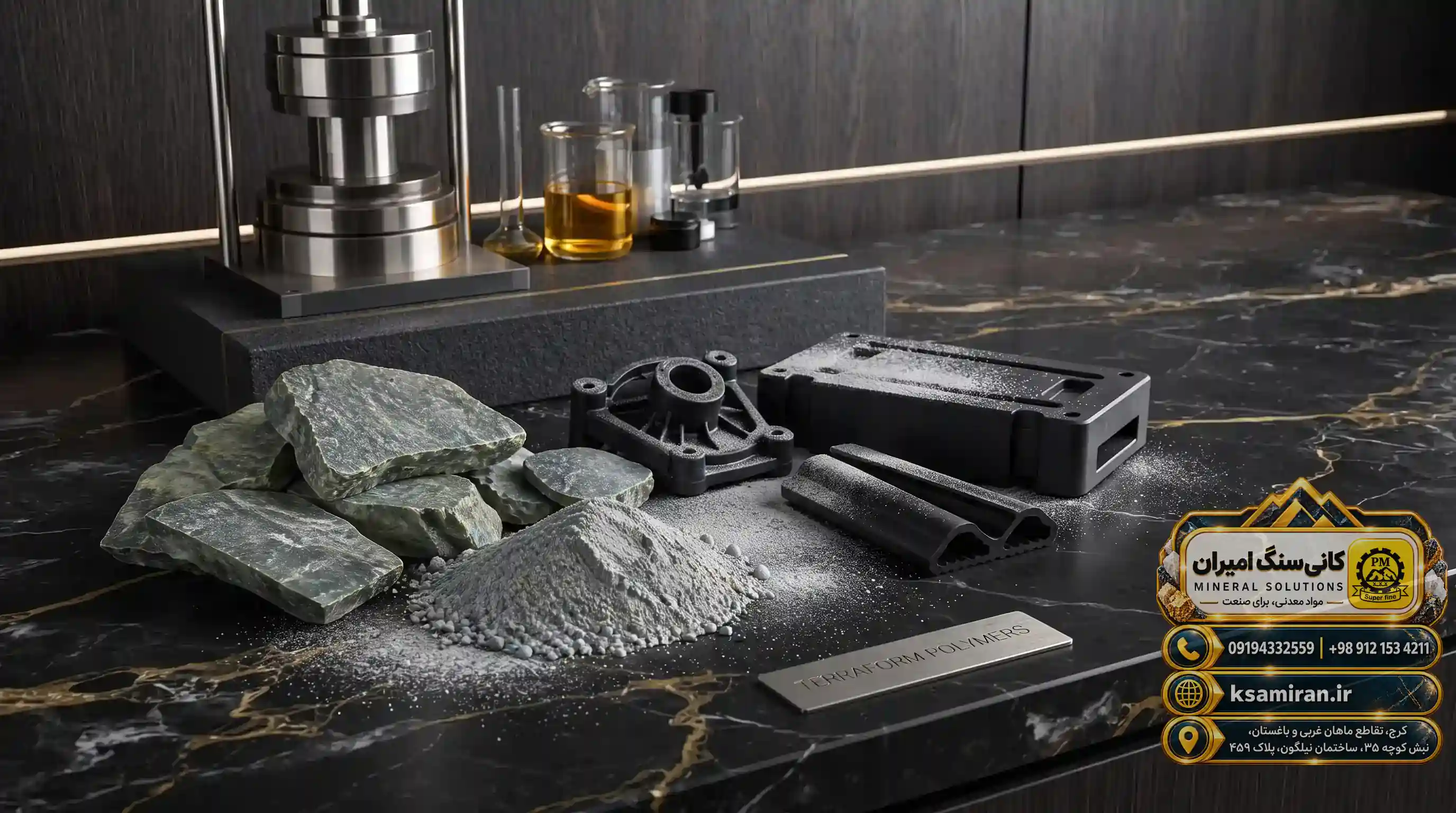
Industrial talc has a well-established position as one of the strategic mineral materials in polymer, rubber, paint, and industrial product industries. The combination of outstanding physical properties and appropriate economic justification has made this material the first choice in many production units.
With the advancement of production technologies and the increasing need for high-quality raw materials, the importance of accurate and standard supply of industrial talc becomes more apparent than ever. Entities such as the Kani Sang Amiran project, by providing standard products in the 450 1000 mesh range, play an important role in supplying the value chain of various industries.
Ultimately, choosing the right mineral material tailored to the technical needs of each industry is the key to success in producing durable and high-quality products, and a precise examination of the technical specifications of industrial talc will guarantee maximum efficiency in production lines.
| Question | Answer |
|---|---|
| What is industrial talc? | It is a soft, flaky mineral material used as a filler in various industries. |
| What is the mesh range of Amiran industrial talc? | This product is offered in a mesh range of 450 to 1000 mesh. |
| What are the main applications of industrial talc? | Polymer products, rubber products, paint, and industrial products. |
| Is this material used in the plastic industry? | Yes, it is used to increase stiffness, flexural modulus, and reduce polymer shrinkage. |
| What is the role of talc in the rubber industry? | It acts as a filler and processing aid, and increases wear resistance. |
| Why is talc used in paint manufacturing? | Due to improved coverage, stability, and resistance to moisture and corrosion. |
| Which group produces this product? | Kani Sang Amiran project — Production of mineral materials. |
| How can this product be ordered? | By visiting the industrial talc product page on the Kani Sang Amiran website. |
| Does industrial talc improve thermal properties? | Yes, it increases the thermal stability of polymer and rubber parts. |
| What is the main economic advantage of talc? | Reduction of final production costs due to reasonable price and high efficiency as a filler. |
Specialized reference for the supply and processing of Kani Sang Amiran mineral materials.
برچسب: Industrial Talc,Application of Industrial Talc in Pharmaceutical and Medical Industries,
نویسنده: رساوب آفرین