
درباره سایت
آخرین مطالب
- انتخاب اکسید آهن قرمز (اخرا) برای بهبود کیفیت پیگمنت و پوششهای رنگی
- تامین کربنات کلسیم با دانهبندی دقیق جهت استفاده در مستربچ
- تأمین تخصصی سیلیس برای مصالح ساختمانی، شیشه و صنایع سرامیک
- ویژگیهای فنی بنتونیت کانی سنگ امیران برای کاربردهای خاص
- فلدسپات کانی سنگ امیران برای شیشه کاشی و سرامیک
- کاربرد تالک سفید درجه یک در فرمولاسیون پیشرفته رنگ و محصولات کاغذی
- اکسید آهن قرمز (اخرا) کاربردی جهت تولید محصولات سرامیکی و پوشش
- مشخصات فنی اکسید آهن قرمز (اخرا) مناسب برای پوشش و تولید پیگمنت
- مشاوره تخصصی خرید کربنات کلسیم بر اساس نیاز دقیق صنعت شما
- انتخاب تالک سفید صنعتی مناسب برای تولیدات کاغذ و مستربچ
امکانات وب
Introduction to the Mineral Importance of Calcium Carbonate and Dolomite in Industry
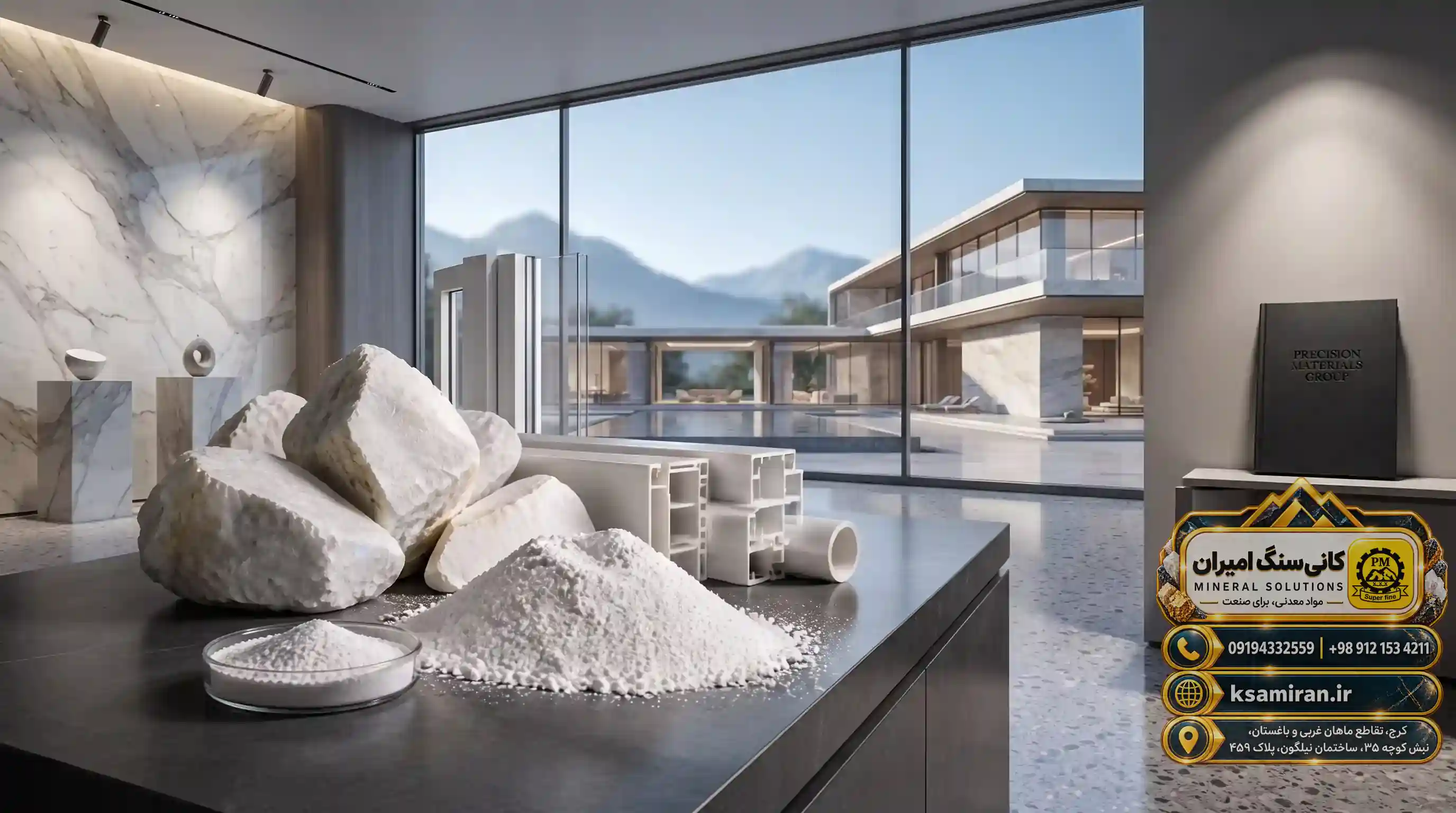
Filler minerals play a vital role in determining the mechanical, physical, and economic properties of various industrial products. Among the range of these materials, calcium carbonate and dolomite are recognized as two strategic minerals that have wide applications in polymer, paint, paper, artificial leather, and engineered product manufacturing industries. Understanding the differences, structural characteristics, and performance of each of these materials can help engineers and manufacturers maximize the efficiency of their production processes by making the right choice.
Kani Sang Amiran project, as a reputable manufacturer of mineral materials, has made access to these materials with standard technical specifications possible. In this article, we intend to provide a comprehensive and comparative study between these two minerals to shed light on the hidden aspects of their industrial application. For more information on the details of this mineral, you can visit the calcium carbonate page and obtain complete information.
Choosing between these two materials depends directly on parameters such as purity grade, hardness, chemical reactivity, and their impact on the color and gloss of the final product. In the following chapters, various dimensions of this comparison will be discussed, relying on industrial standards and production experiences.
Understanding the Chemical and Physical Structure of Calcium Carbonate
This material is a chemical compound with the formula $CaCO_3$, which is found naturally in limestone, chalk, and marble. Due to its high whiteness, suitable thermal stability, and excellent compatibility with various resins and polymers, it has a special position in industrial formulations. The mesh range produced for this material varies from 100 to 3500 mesh, and this variety in granulation allows it to be used in various industries, including PVC/UPVC profiles and pipes, masterbatches, and cables.
One of the specialized topics in this field is the use of coated types. For more information in this regard, reading the article Getting to know the application of coated calcium carbonate in the plastic industry is recommended, which provides you with key points. By reducing oil absorption and improving dispersion in the polymer matrix, this material upgrades the final performance of plastic parts.
Also, in complex industrial processes such as the production of construction profiles, a precise examination of the material type is of great importance. In this regard, reading the specialized guide for comparing types of coated calcium carbonate available in the market can provide procurement and production experts with a broad perspective on existing options.
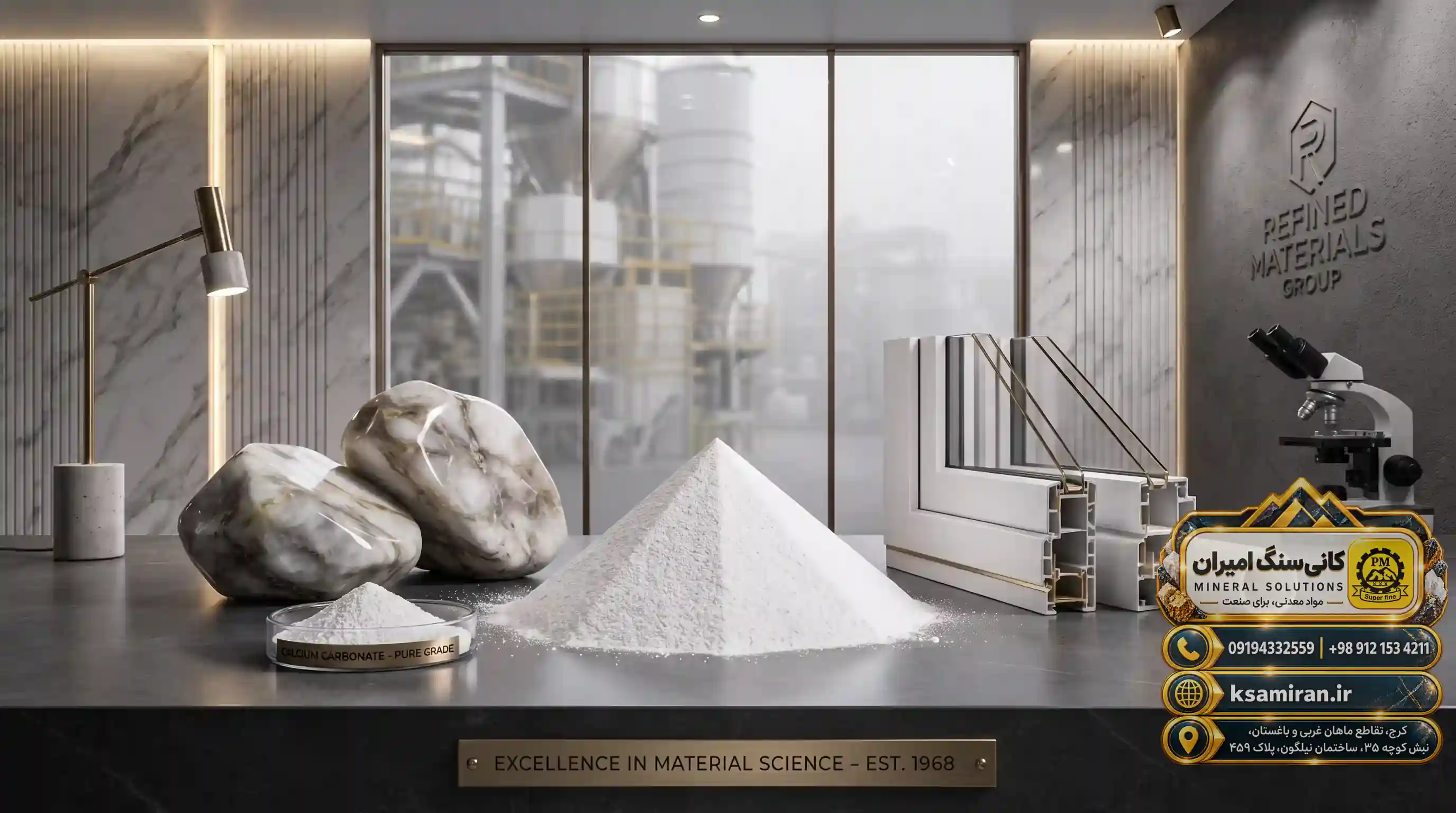
Examination of the Structure and Mineral Characteristics of Dolomite
Dolomite is a double carbonate of calcium and magnesium with the chemical formula $CaMg(CO_3)_2$. The presence of the magnesium ion in the crystal structure of dolomite makes this material harder than pure limestone and causes it to show a slower reaction to acids. These features make dolomite highly regarded in industries that require high mechanical strength and specific chemical stability.
Despite the superficial similarities between dolomite and calcium carbonate, the difference in the percentage of magnesium and Mohs hardness has a direct effect on milling processes, equipment wear, and the final quality of the product. In applications where absolute whiteness and high gloss in paint or paper are of vital importance, this material may be a second priority compared to calcium carbonate due to having minor impurities and a cream or gray color.
However, in the production of some engineered products, adhesives, and special fillers that require higher heat and pressure resistance, dolomite acts as a cost-effective and high-quality alteative. Precise knowledge of the physical and chemical properties of both materials is the key to optimal selection for process engineers.
Industrial Applications of Calcium Carbonate in Polymer and Engineering Industries
This material is considered the most widely used filler in the plastic and polymer industry. Precise granulation in the range of 100 to 3500 mesh allows for precise control of the rheological and mechanical properties of polymer products. Major applications of this material include the production of PVC/UPVC profiles and pipes, polymer masterbatches, cable industries, and artificial leather, where the presence of this material significantly helps improve flexural modulus, dimensional stability, and reduction of final costs.
When this material is used in extrusion processes, choosing the appropriate type takes on double importance. In this regard, reading the article Examining the technical benefits of coated calcium carbonate in extrusion states valuable technical details about material behavior in extruder machines, which is very practical for production engineers.
In addition to polymers, paint industries, high-quality paper production, industrial adhesive manufacturing, and engineered stone production are also major consumers of this mineral. The presence of this material in paints serves as a whitening filler, and in papermaking, it acts as a factor in improving the brightness and printability of the paper.
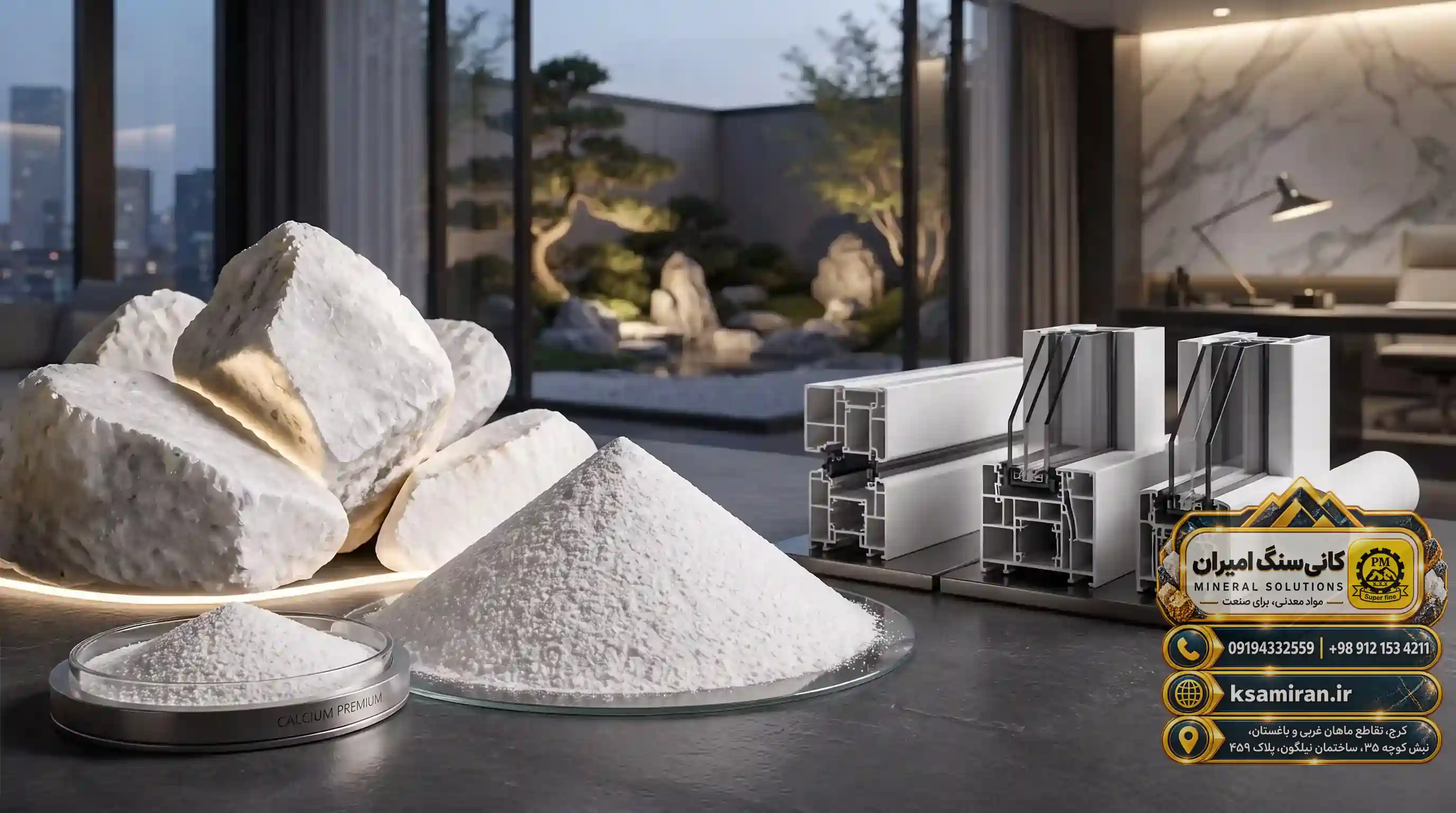
Comparing Thermal Behavior, Hardness, and Processability of the Two Materials
In the technical evaluation between calcium carbonate and dolomite, physical parameters such as hardness, density, and thermal behavior play a decisive role. Mohs hardness for calcium carbonate is about 3, while dolomite hardness varies between 3.5 and 4. This seemingly small difference in hardness has a significant impact on crushing processes, micronization, and the rate of industrial machinery wear.
In terms of thermal behavior, both materials undergo calcination and loss of carbon dioxide at high temperatures, but the initial thermal decomposition temperature of dolomite is slightly different due to the presence of magnesium. In masterbatch and polymer compounding production processes, the thermal stability of this material ensures that the final product is protected against color change or polymer chain degradation at high temperatures.
Also, the rate of oil absorption in calcium carbonate is adjustable due to its surface structure and type of processing, while dolomite shows different behavior against resins and plasticizers. Manufacturers must choose the appropriate material based on the type of base plastic (such as PVC, PE, or PP) and the desired viscosity.
The Impact of Meshing and Granulation on the Final Product Quality
The mesh range is one of the most important characteristic parameters in the supply of mineral materials. The produced mesh spectrum from 100 to 3500 mesh indicates the ability to supply various granulations from coarse micronized powders to super-micronized and nano-structures. High-mesh powders (such as 2500 to 3500 mesh), due to having a very high specific surface area, create extraordinary dispersion in polymer matrices and improve the impact resistance and appearance properties of the part.
In contrast, lower meshes (such as 100 to 400 mesh) are mostly used in industries where high filling volume with minimal impact on viscosity is desired, such as the production of certain adhesives, sealants, or engineered stone products. Choosing the exact mesh range directly affects surface gloss, opacity of the color, and final tensile properties.
The Kani Sang Amiran project, by precisely controlling the granulation and micronization process, offers products with uniform particle size distribution, which minimizes production errors and ensures the quality stability of final products in industrial production lines.
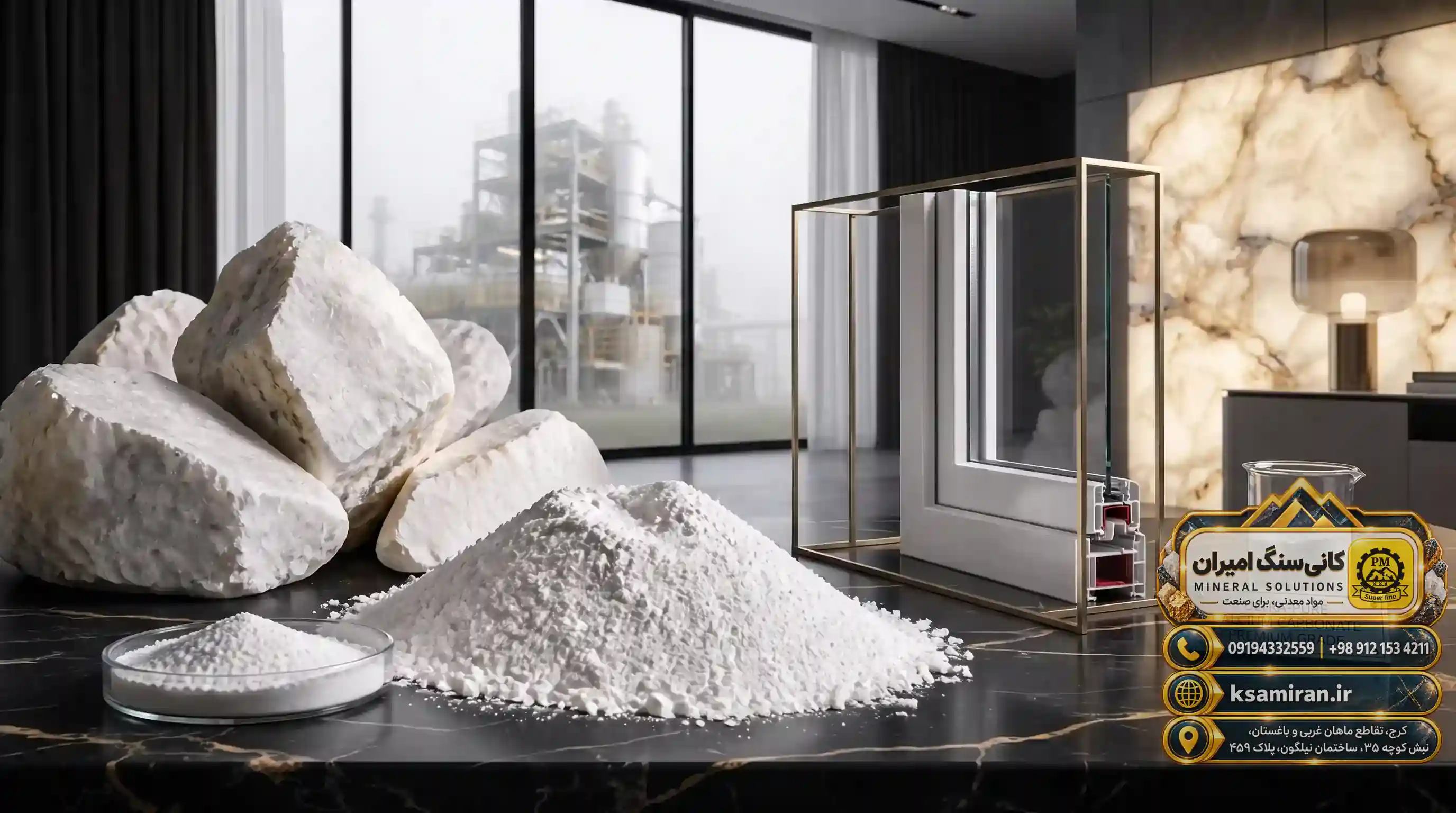
Economic Analysis and Cost-Effectiveness of Substituting Mineral Materials
In today's industrial economy, optimizing formulations without losing product quality is one of the main conces of production managers and sales engineers. Using low-cost mineral fillers such as calcium carbonate and dolomite is considered a standard solution for reducing the final cost of polymer, paint, and paper products. However, economic evaluation should not be based solely on the initial price of the mineral material.
Hidden costs such as extruder wear, loss of mechanical properties in case of using an unsuitable filler, the amount of colored masterbatch consumption, and the impact on production line efficiency (Throughput) all play a role in cost-benefit analysis. Calcium carbonate, due to its excellent compatibility with various chemical additives, offers high economic efficiency in the plastic and profile industries.
On the other hand, dolomite also acts as a cost-effective mineral in industries where hardening and high compressive strength are a priority, significantly reducing raw material costs. Smart selection between these two materials based on technical requirements and project budget creates a sustainable competitive advantage for the production unit.
Conclusion and Final Selection Guide for Industries
Choosing between calcium carbonate and dolomite is a process that requires a precise understanding of the chemical, physical, and final application of the product. While calcium carbonate with its high whiteness, unparalleled compatibility with polymers, and wide mesh range (100 to 3500 mesh) is the first choice in masterbatch, profile, and PVC/UPVC pipe, paint, and paper industries, dolomite also maintains its special place in engineered products and special applications with higher hardness and structural resistance.
Industrial manufacturers should choose the best option by considering the quality standards of their product and consulting with mineral experts. The Kani Sang Amiran project, relying on technical knowledge and production standards, is prepared to meet the needs of various industries with the highest quality. For additional information and to place an order, our experts are ready to answer you.
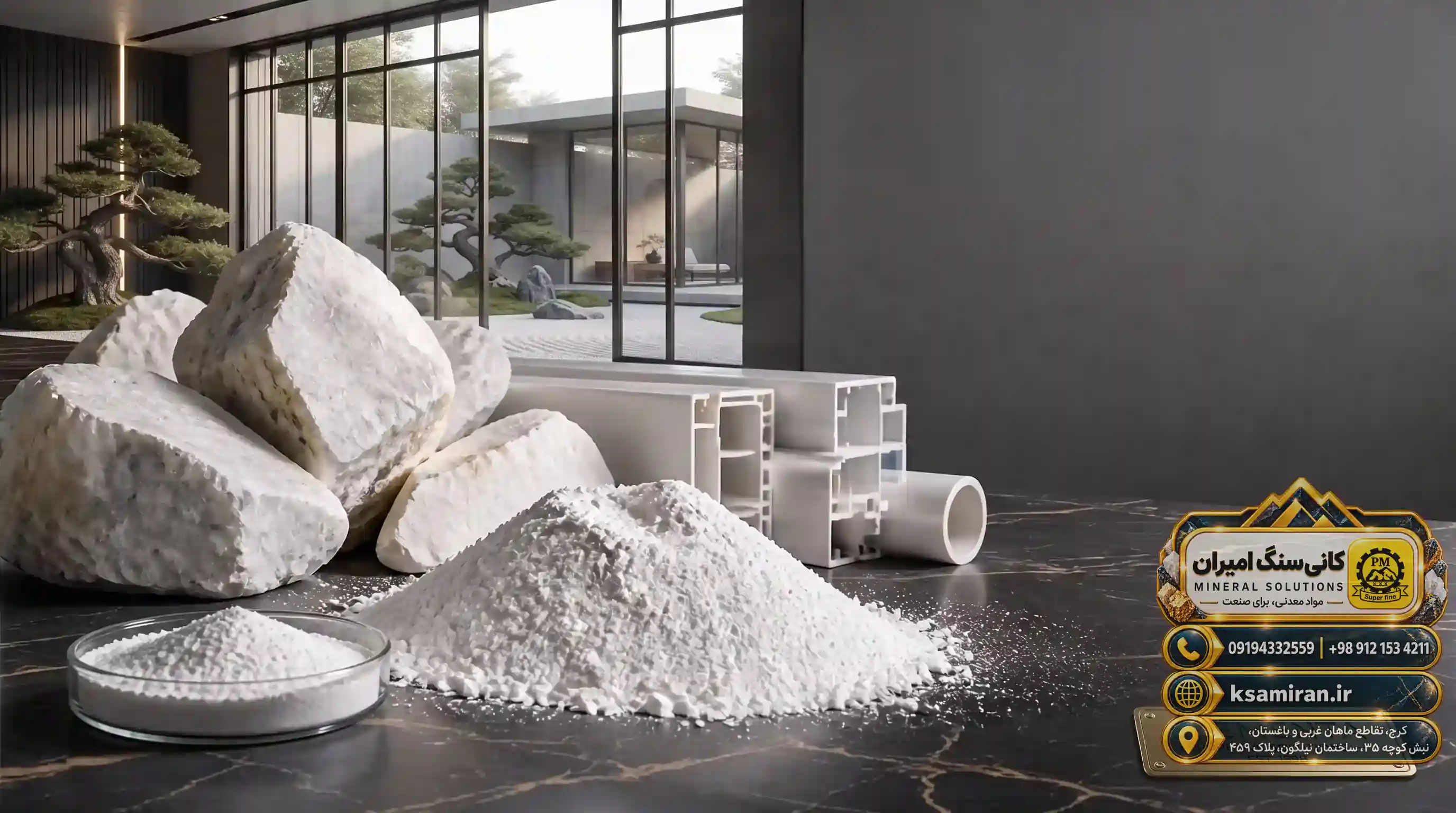
| Question | Answer |
|---|---|
| What is the main difference between calcium carbonate and dolomite? | Calcium carbonate is pure ($CaCO_3$), while dolomite is a double carbonate of calcium and magnesium ($CaMg(CO_3)_2$) and has different hardness and thermal resistance. |
| What is the meshing range of calcium carbonate produced by Kani Sang Amiran? | These products are produced and supplied in the range of 100 to 3500 mesh. |
| What are the main applications of calcium carbonate in industry? | PVC/UPVC profiles and pipes, masterbatch, cable, artificial leather, paint, paper, adhesive, and engineered stone. |
| Is calcium carbonate used in the paint industry? | Yes, it is used as a whitening filler and to improve paint coverage and gloss. |
| Why is the coated type used in some industries? | It is used to improve dispersion in the polymer matrix and reduce oil absorption in the plastic industry. |
| Does dolomite have the same whiteness as calcium carbonate? | No, dolomite usually has less whiteness than pure calcium carbonate due to minor impurities. |
| How is the hardness of dolomite compared to calcium carbonate? | Dolomite has a higher hardness (3.5 to 4) compared to calcium carbonate (3). |
| Which material is more suitable for PVC profile industries? | Micronized and coated calcium carbonate is a more standard option due to high compatibility. |
| How can the best mesh be chosen for one's product? | It is determined based on the need for mechanical properties, viscosity, and final part surface gloss. |
| How can we contact the Kani Sang Amiran project? | It is accessible through the company's official website and the mineral products section. |
Specialized sources of economic geology and industrial mineral technology, Kani Sang Amiran project.
برچسب: Calcium Carbonate,Comparison of Calcium Carbonate and Dolomite in Industry,
نویسنده: رساوب آفرین