
درباره سایت
آخرین مطالب
- سیلیس کانی سنگ امیران مناسب شیشه و سرامیک با دانهبندی ۱۰ تا ۴۵۰
- سفارش سیلیس کانی سنگ امیران در شیشه و سرامیک در مش ۱۰ تا ۴۵۰
- کائولن باکیفیت کانی سنگ امیران برای صنایع سرامیک مش 450 تا 1500
- سیلیس پروژه کانی سنگ امیران برای صنایع شیشه در مش ۱۰ تا ۴۵۰
- اکسید لیمونیت (گل ماش) دقت فنی در تولید پودر صنعتی شما
- خرید سیلیس کانی سنگ امیران مناسب صنعت شیشه دانهبندی ۱۰ تا ۴۵۰ مش
- سفارش کربنات کلسیم ۱۲۵۰ مش با دانهبندی دقیق برای کابل
- فلدسپات باکیفیت کانی سنگ امیران برای محصولات سرامیکی
- تالک صنعتی برای شراکت در فرمولاسیون
- استعلام قیمت کائولن کانی سنگ امیران کاغذسازی با مش 450 تا 1500
امکانات وب
An Introduction to Plastic Extrusion and the Role of Minerals
The extrusion process is one of the most vital and widely used methods in the plastic and polymer shaping industry, finding extensive application in the production of various pipes, profiles, sheets, and cable coatings. In this process, raw polymer materials along with various additives and fillers enter the extruder and, after melting and passing through a die, acquire their final shape. Choosing the right additives plays a decisive role in improving the quality of the final product, increasing production speed, and reducing total costs. Meanwhile, the use of high-quality mineral fillers has brought about a major revolution in optimizing the mechanical and thermal properties of manufactured parts. Familiarity with the role of industrial talc in this process helps engineers and manufacturers make more accurate choices.
Various industries are always looking for solutions to enhance the productivity of their production lines. Mineral powders are known as modifiers and improvers of physical properties, and in this regard, the key role of industrial talc in improving the quality of manufactured products is undeniable. With its unique lamellar structure, this mineral can act as an effective reinforcing agent and manage the flow behavior of molten materials during the extrusion process. Therefore, a precise study of how this material interacts with the polymer matrix is of particular importance.
In addition to improving mechanical properties, the use of suitable mineral powders also affects the appearance and surface characteristics of extruded parts. For example, the article The role of white talc in improving the appearance quality of polymeric products discusses more details about the effect of this material on transparency and surface uniformity. In the rest of this article, we will examine various aspects of using this valuable material in the plastic extrusion process to fully clarify its hidden angles.
Success in the extrusion process requires a precise understanding of the characteristics of raw materials. The more we understand the structure and function of additives, the higher the quality of the output product will be. The Kani Sang Amiran project, by providing standard mineral products, has created a suitable platform for enhancing the quality of polymer and rubber industries.
Getting to Know Industrial Talc and Its Structural Characteristics
Talc is a hydrated magnesium silicate that has global fame due to its unique layered structure. The layers of this material are held together by weak van der Waals bonds, a feature that creates its natural lubricating and slippery property. This lamellar structure plays a very important role in how particles are distributed within the polymer matrix during the extrusion process. A precise understanding of the examination of physical and mechanical properties of industrial talc powder helps specialists adjust the dosage and mixing method with higher accuracy.
Due to its chemical neutrality, this mineral has high resistance to acids, bases, and unfavorable weather conditions. This characteristic ensures that its presence in plastic formulations does not create any unwanted reactions and guarantees the long-term stability of extruded parts. In the paint and rubber industries, this feature is also cited as a major competitive advantage.
The mesh range of this material is one of the main parameters in determining the final quality of the product. Proper granulation helps particles to be distributed completely homogeneously in the polymer bed and prevents clumping or agglomeration. This directly has a positive impact on the final properties of the part.
The Kani Sang Amiran collection, through precise processing of minerals, has prepared this product with the highest quality standards for supply so that various industries can take full advantage of its structural benefits.
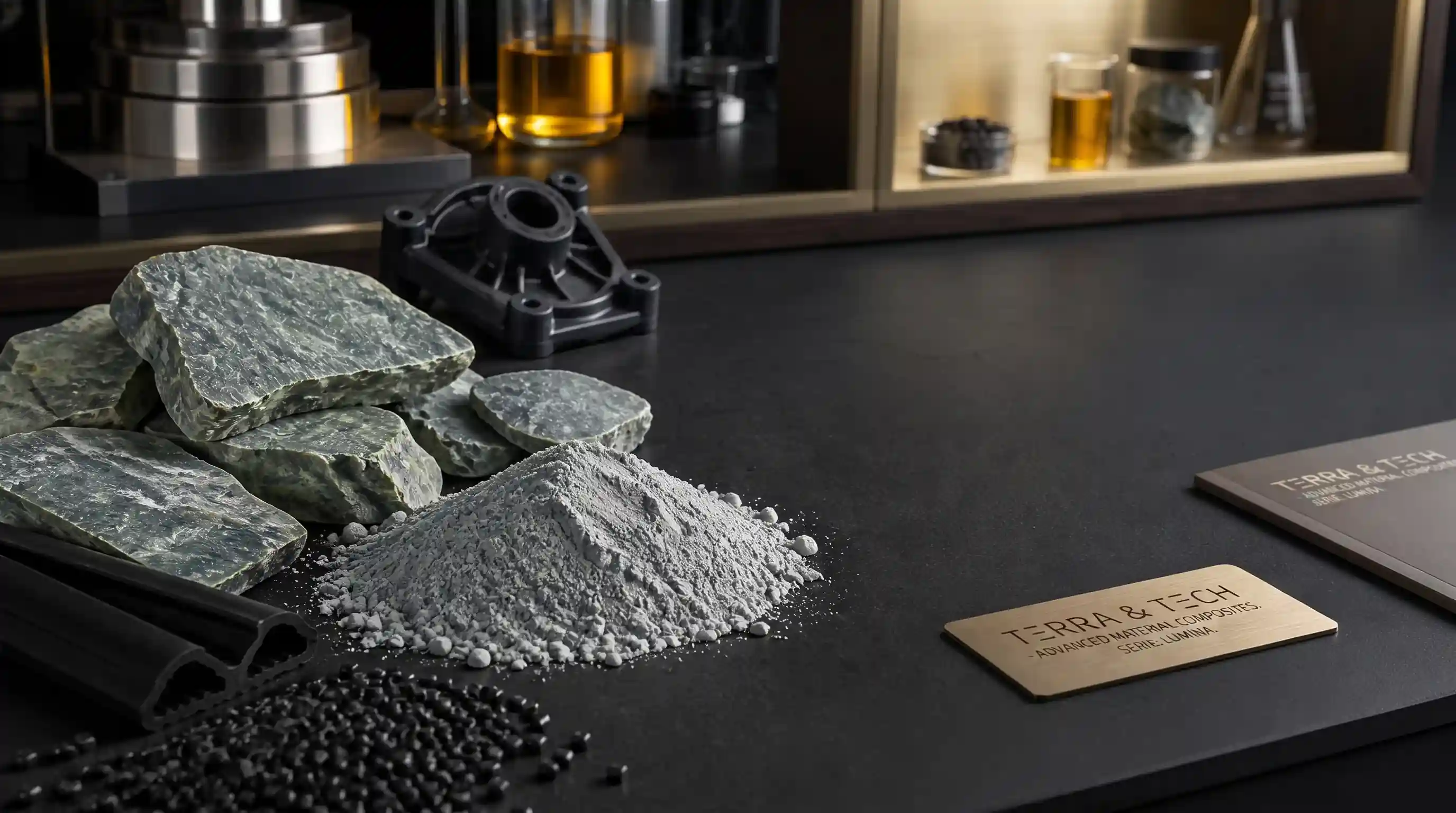
The Role of the 450 to 1000 Mesh Range in Plastic Extrusion
One of the most important factors in choosing mineral powders for extrusion is the particle size and their mesh range. The 450 to 1000 mesh range is recognized as one of the most practical granulations for polymer, rubber, and paint industries. Particles in this size range create a very suitable balance between surface area and dispersion capability in the polymer matrix. When particles in this mesh range are used, the cross-sectional area of material flow within the extruder is managed better.
Using much coarser meshes may cause a drop in mechanical properties and create weak points in the extruded part, while meshes beyond this range sometimes bring challenges related to clumping and excessive increase in melt viscosity. Therefore, the 450 1000 mesh range is proposed as an optimal point in industrial formulations, which results in a homogeneous and high-quality output.
In the extrusion process, the uniformity of particle size significantly contributes to the dimensional stability of the output profile or pipe. Industrial talc particles in this mesh range sit well in the space between polymer chains and prevent unwanted deformation of the product when exiting the mold.
The Kani Sang Amiran project, with precision in the granulation process and continuous quality control, produces a product with a 450 1000 mesh range that exactly covers the technical needs of factories manufacturing polymer and rubber products.
Main Applications in Polymer and Rubber Industries
Polymer and rubber industries are among the largest consumers of micronized minerals. In the production of polymer products, adding mineral fillers helps reduce the final price while improving mechanical properties such as elastic modulus and hardness. Engineering plastics and thermoplastics, by utilizing this additive, show better resistance to heat and deformation. In the rubber products sector, this material acts as an active or semi-active filler and increases the durability of the rubber.
One of the common challenges in the extrusion of rubber and polymer products is the phenomenon of shrinkage and warping of the part after exiting the mold. The lamellar structure of industrial talc, by creating barriers in the path of polymer molecules, controls transverse and longitudinal shrinkage and significantly increases the dimensional stability of the part. This feature is of high importance, especially in the production of construction profiles and automotive parts.
In addition, in the paint industry, this material is used to improve coating properties, reduce resin consumption, and increase the durability of paint on surfaces. The high compatibility of this mineral powder with a wide range of resins and polymers has made it an unrivaled option.
Considering the variety of main applications including polymer products, rubber products, paint, and industrial products, choosing a reputable source like Kani Sang Amiran will guarantee quality consistency in industrial production lines.
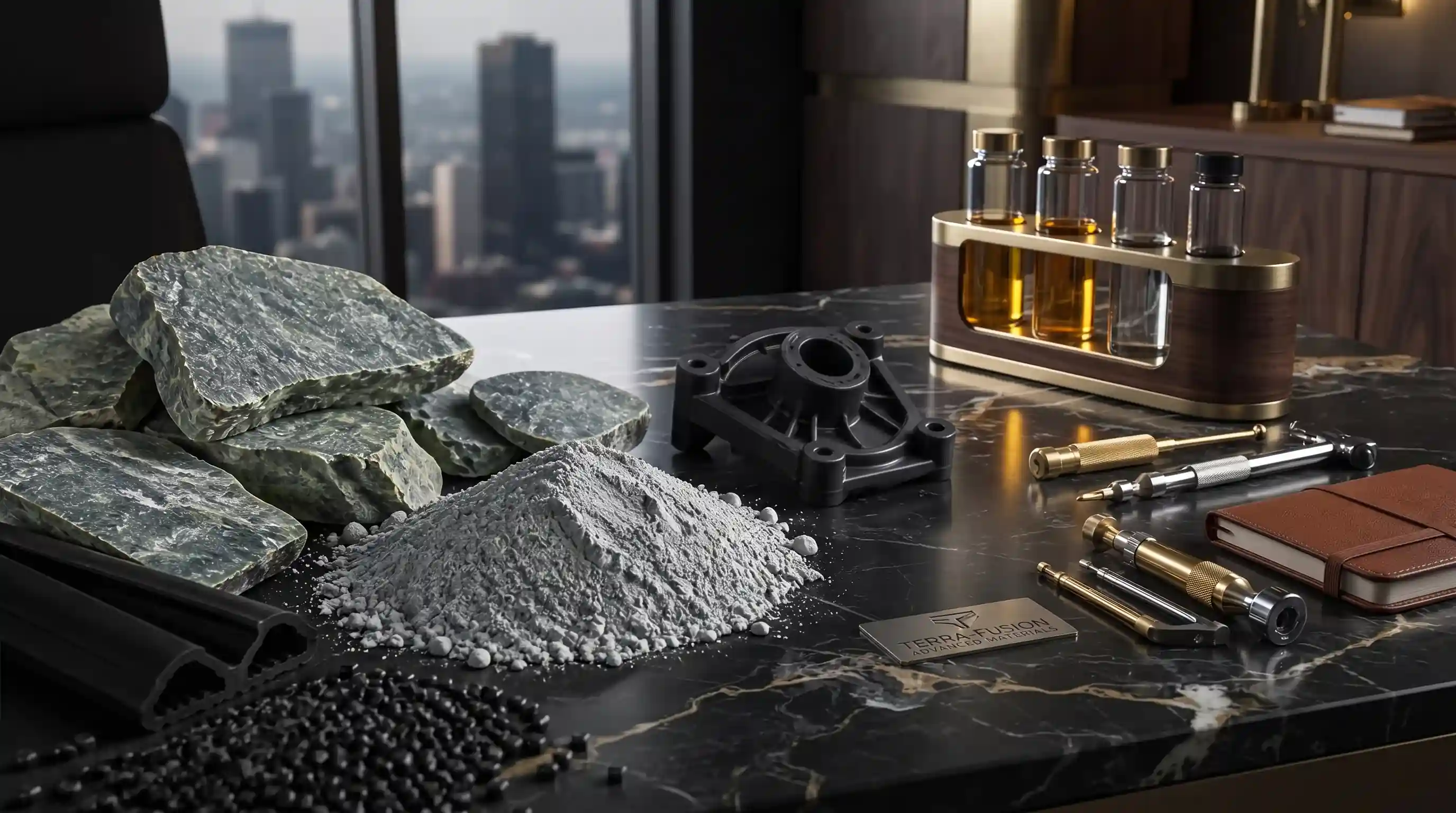
Improving Flow Behavior and Processability in the Extruder
The flow behavior of molten materials, or Rheology, inside the extruder cylinder and screw, has a direct impact on the quality of the final product. If the melt viscosity is too high, great pressure is applied to the machine, and if it is too low, the moldability of the part is disrupted. Industrial talc, due to its natural slipperiness resulting from its crystalline structure, reduces inteal friction between polymer particles and helps the flow become smoother.
This feature leads to a reduction in the power consumption of the extruder machine and, consequently, a reduction in energy costs. Also, by improving processability, the production line speed can be increased without the visual or dimensional quality of the product dropping. This is considered a very large technical advantage for factories seeking maximum productivity from their equipment.
The homogeneous distribution of this mineral powder in the polymer matrix prevents the creation of blind spots and localized heat accumulation inside the screw. As a result, the thermal degradation of the polymer is minimized and the final product will have higher structural integrity.
Adherence to production standards in preparing these powders plays an important role in facilitating the operation of extruders. The Kani Sang Amiran collection, by providing this high-quality product, helps industrialists experience a smoother and more flawless extrusion process.
Increasing Mechanical Properties and Thermal Stability of Extruded Parts
After the extrusion process, polymer and rubber parts must be able to withstand the mechanical and thermal stresses of the user environment. Adding industrial talc powder as a structural reinforcer significantly increases the flexural modulus and hardness of the parts. This improvement occurs due to the transfer of stress from the soft polymer matrix to the hard mineral particles, which reinforces the entire structure.
On the other hand, the thermal resistance of products is also improved thanks to the presence of this material. Polymers filled with this mineral have a higher Heat Deflection Temperature (HDT) and maintain their shape and strength better when exposed to high temperatures. This feature is vital for parts used in the automotive, home appliance, and industrial equipment industries.
Reducing the coefficient of linear thermal expansion is another major achievement of using this material. This means that the part experiences less severe expansion or contraction during environmental temperature changes and keeps its dimensions constant over time.
The Kani Sang Amiran project, through the principled processing of these materials, brings a product to the market that meets the necessary standards for enhancing mechanical and thermal properties in the best possible way.

Cost Optimization and Increasing Industrial Production Productivity
In today's competitive world, managing production costs while maintaining or improving quality is the key to the survival and success of every industrial unit. Using cost-effective mineral fillers is one of the strategic solutions for reducing the final cost of polymer and rubber products. Industrial talc acts as a partial substitute for expensive polymer resins and increases the volume of the consumed material without losing overall quality.
Increasing the speed of the extrusion line thanks to improved thermal conductivity and faster cooling of the output part reduces the production cycle time and raises the overall factory productivity. Furthermore, reducing production waste caused by inhomogeneity or deformation of parts guarantees the profitability of the operation.
The use of this material in paint formulations and industrial products also brings similar economic benefits that will lead to the optimization of raw material consumption.
The Kani Sang Amiran collection, with continuous and high-quality supply of this mineral, is a reliable partner for the country's manufacturing industries in achieving their economic and technical goals.
Conclusion and Summary on the Role of Industrial Talc in Extrusion
The plastic extrusion process requires high precision, high-quality raw materials, and efficient additives. As discussed, industrial talc, with its unique structural characteristics, suitable mesh range (450 1000 mesh), and outstanding physical and chemical properties, plays a very effective role in improving the quality of polymer, rubber, paint, and other industrial products.
On one hand, this material reduces energy costs and production time by improving melt flow and facilitating the extrusion process, and on the other, it guarantees the quality of the final part by upgrading mechanical properties, thermal stability, and dimensional stability. Choosing the right material has a direct impact on customer satisfaction and success in a competitive market.
Industrial manufacturers are always looking for reputable suppliers who guarantee the consistency of raw material quality. The Kani Sang Amiran collection, with a focus on production standards, is ready to provide the best mineral products to the country's industries.
For more information and to view product details, you can visit the dedicated industrial talc page and get in touch with our experts.

| Question | Answer |
|---|---|
| What is industrial talc? | It is a hydrated magnesium silicate with a layered structure used as a filler and improver in polymers, rubber, and paint. |
| What is the mesh range of Kani Sang Amiran's industrial talc? | This product is produced and supplied in the 450 to 1000 mesh range. |
| What are the main applications of this material? | Polymer products, rubber products, paint, and industrial products. |
| How does this material help plastic extrusion? | By improving melt flow, reducing inteal friction, and increasing the dimensional stability of the output part. |
| Does this material affect the mechanical properties of polymers? | Yes, it increases the elastic modulus, hardness, and thermal resistance of extruded parts. |
| What is the role of this material in the rubber industry? | It acts as an active filler and increases the durability and resistance of rubber products. |
| Why is the 450 1000 mesh range important for extrusion? | Because it creates an ideal balance between contact surface and homogeneous dispersion in the polymer matrix. |
| Does using this powder reduce production costs? | Yes, it acts as a partial substitute for expensive resins and improves production line speed. |
| How can this product be obtained? | It can be ordered through the Kani Sang Amiran website on the dedicated industrial talc page. |
| What structural feature causes this material's lubricity? | Its lamellar structure and weak inter-layer bonds. |
Kani Sang Amiran Project — Production of minerals and specialized processing of industrial powders.

برچسب: Industrial Talc,The Role of Industrial Talc in Improving Plastic Extrusion Processes,
نویسنده: رساوب آفرین