
درباره سایت
آخرین مطالب
- سیلیس کانی سنگ امیران مناسب شیشه و سرامیک با دانهبندی ۱۰ تا ۴۵۰
- سفارش سیلیس کانی سنگ امیران در شیشه و سرامیک در مش ۱۰ تا ۴۵۰
- کائولن باکیفیت کانی سنگ امیران برای صنایع سرامیک مش 450 تا 1500
- سیلیس پروژه کانی سنگ امیران برای صنایع شیشه در مش ۱۰ تا ۴۵۰
- اکسید لیمونیت (گل ماش) دقت فنی در تولید پودر صنعتی شما
- خرید سیلیس کانی سنگ امیران مناسب صنعت شیشه دانهبندی ۱۰ تا ۴۵۰ مش
- سفارش کربنات کلسیم ۱۲۵۰ مش با دانهبندی دقیق برای کابل
- فلدسپات باکیفیت کانی سنگ امیران برای محصولات سرامیکی
- تالک صنعتی برای شراکت در فرمولاسیون
- استعلام قیمت کائولن کانی سنگ امیران کاغذسازی با مش 450 تا 1500
امکانات وب
An Introduction to Limonite Oxide (Gole Mash) and Its Importance in the Industry
Limonite oxide (Gole Mash) is one of the most important mineral pigments that, due to its unique physical and chemical properties, has found a special place in various industries, including rubber manufacturing, coatings, and the production of construction materials. This mineral, with its natural and stable color spectrum, is known as an economical and high-quality pigment supplied and distributed by the Kani Sang Amiran project.
In the rubber industry, the selection of pigments and mineral fillers is of great importance. Limonite oxide (Gole Mash) not only acts as a coloring agent but can also improve the mechanical and physical properties of rubber products. A precise understanding of the structure of this material and how it interacts with the rubber matrix helps engineers and manufacturers produce final products with higher durability and efficiency.
The use of standard mineral materials in the rubber industry requires a precise examination of their particle size and surface characteristics. The 450 to 1500 mesh range of this material allows for proper dispersion in various polymer compounds. To lea more about the specifications and to purchase this product, you can visit the Limonite Oxide (Gole Mash) page and obtain more complete information.
In addition to the rubber industry, this pigment has widespread applications in other industrial fields. For example, examining the role of the role of limonite oxide (Gole Mash) in chemical industries shows the extent to which this compound can be efficient and effective in various industrial formulations.
Technical and Physical Characteristics of Limonite Oxide (Gole Mash)
Limonite oxide (Gole Mash) has special physical and chemical properties that make it suitable for specialized applications in the rubber industry. It is known as a natural mineral pigment that has high resistance to heat, sunlight, and atmospheric factors. The optical and chemical stability of this pigment ensures that the color and structure of rubber products do not undergo negative changes over time.
One of the key parameters in evaluating the quality of this mineral powder is its mesh range, which is between 450 and 1500 mesh. This fine granulation allows the material to penetrate well into the rubber matrix and create a homogeneous distribution. The uniform distribution of particles plays a very important role in improving tensile properties, abrasion resistance, and the final appearance of the rubber product.
The Kani Sang Amiran project, through precise processing of this material, offers a product with optimal purity and industrial standards that meets the rigorous requirements of rubber parts manufacturers. Also, examining other applications of this material in specialized coatings, such as the application of limonite oxide (Gole Mash) in powder coatings, demonstrates the high breadth and flexibility of this pigment in various industries.
Low hydrophobicity, appropriate hardness, and lack of unwanted reactions with other polymer additives are other reasons for the popularity of limonite oxide (Gole Mash) in industrial formulations, which justify its precise quality control.
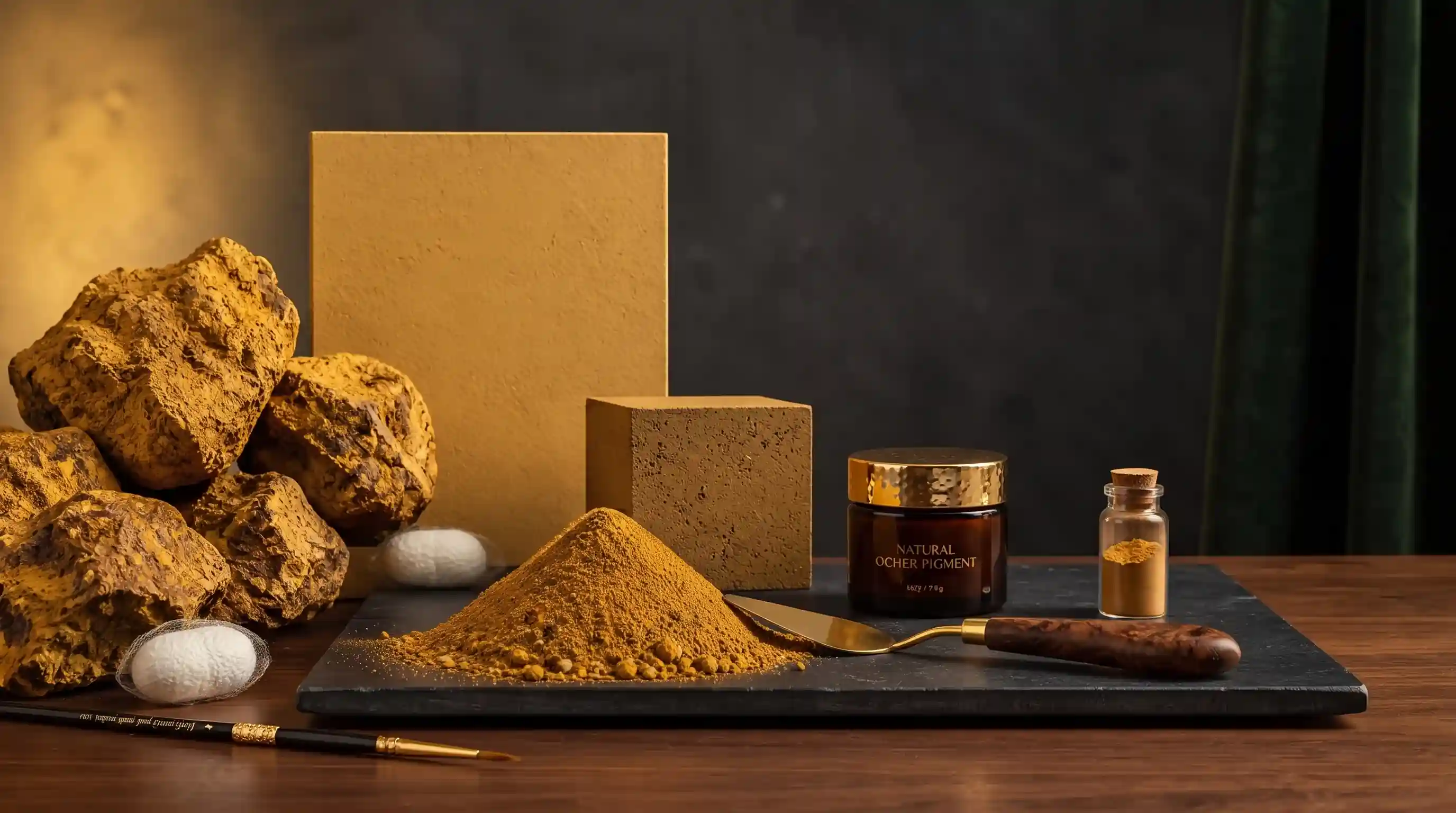
The Role of Limonite Oxide (Gole Mash) in Rubber Compound Formulations
In the rubber manufacturing industry, compounding or blending raw materials involves polymers, fillers, plasticizers, and pigments. Limonite oxide (Gole Mash) is used as one of the important mineral components in these formulations to not only provide the desired yellow to brown color but also to help improve the functional characteristics of the rubber compound. The presence of this mineral pigment in the rubber structure leads to increased density and a reduction in inteal structural voids.
Using limonite oxide (Gole Mash) with a mesh range of 450 to 1500 mesh gives engineers the assurance that the pigment particles will not remain in lumps and will be completely lost and homogenized within the rubber compound. This has a direct impact on improving the modulus of elasticity, tear resistance, and useful life of the produced rubber parts.
Furthermore, the Kani Sang Amiran project, by continuously supplying this high-quality mineral material, enables consistency of quality in industrial production lines. Rubber parts manufacturers can achieve both aesthetic goals and the technical standards of their products by utilizing this pigment, without worrying about the degradation of the rubber's mechanical properties.
Laboratory studies show that the interaction of limonite oxide (Gole Mash) with rubber curing systems is very stable and does not cause negative interference with sulfur or peroxide curing processes, which is a vital feature for formulators.
Impact of Limonite Oxide (Gole Mash) on Mechanical Properties and Rubber Durability
The use of suitable mineral pigments such as limonite oxide (Gole Mash) has a significant impact on the final mechanical properties of rubber products. Due to its hard and stable mineral structure, this material can act as a semi-reinforcing filler and optimize the hardness modulus, tensile strength, and abrasion resistance of rubber parts.
Compared to organic pigments, limonite oxide (Gole Mash) shows very high resistance against harsh environmental conditions such as continuous exposure to ultraviolet radiation, extreme temperature changes, and the presence of chemicals. This inherent stability ensures that rubber parts used outdoors or in industrial environments do not suffer from fading or premature structural degradation.
The precise granulation of this powder in the 450 to 1500 mesh range helps mechanical stresses to be distributed uniformly throughout the rubber matrix and minimizes stress concentration points. This feature is of particular importance in the production of tires, gaskets, O-rings, and widely used rubber profiles.
By relying on raw materials supplied by the Kani Sang Amiran project, manufacturers can offer products with longer lifespans and stable quality to the market, which leads to increased customer satisfaction in various industries.
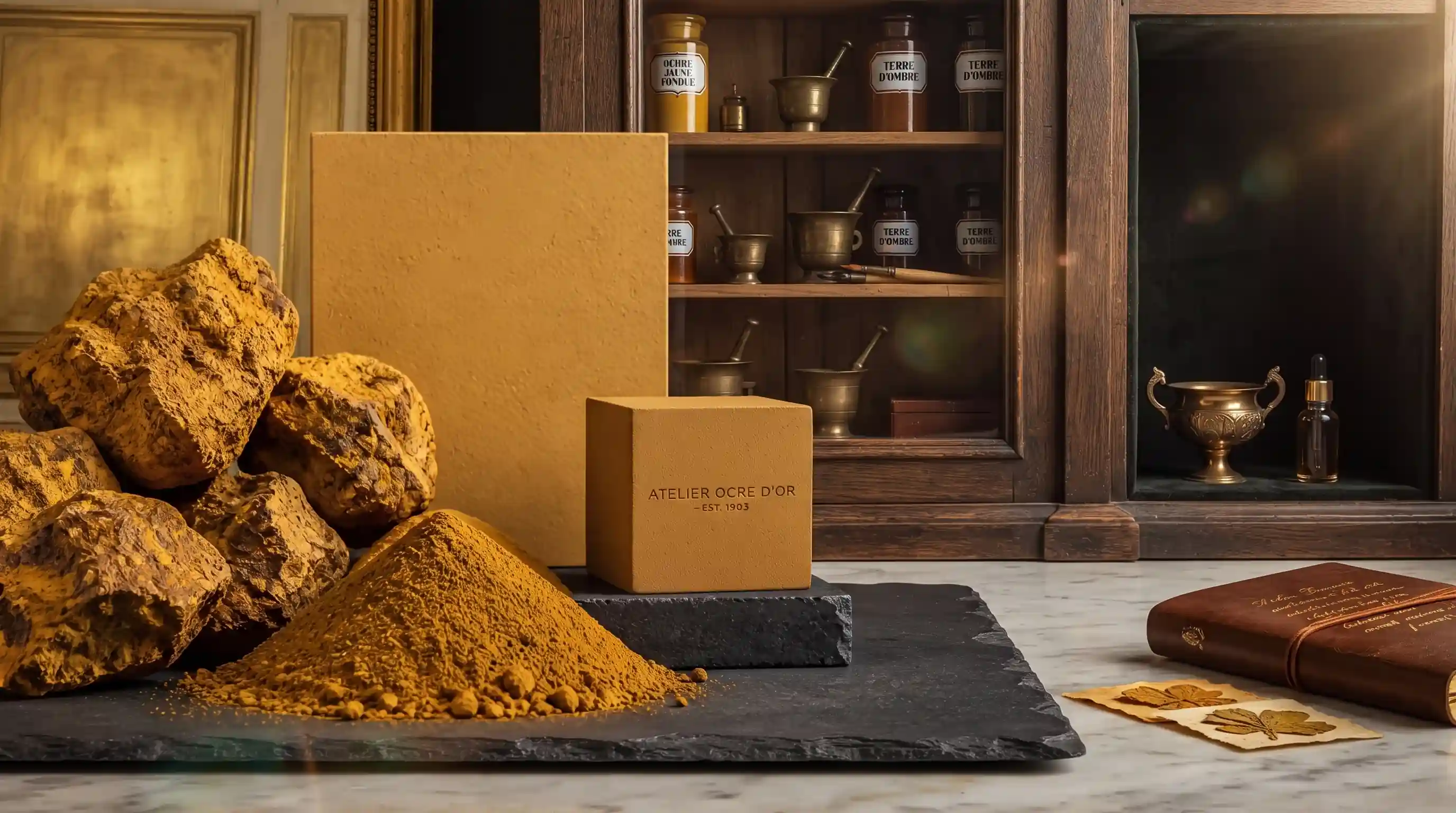
Process of Dispersion and Distribution of Limonite Oxide (Gole Mash) Particles in the Rubber Matrix
Proper dispersion of pigments and fillers in rubber compounds is one of the main challenges for polymer engineers. If pigment particles are not well dispersed in homogenizers (such as Banbury or mixing rollers), structural weaknesses are created and the mechanical properties of the rubber drop severely. Due to having a mesh range of 450 to 1500 mesh, limonite oxide (Gole Mash) creates an appropriate contact surface with the polymer chains of the rubber.
To achieve the best results in the mixing process, controlling the mixing time and using suitable dispersing additives is recommended. The fine particles of this mineral pigment easily penetrate into the empty spaces of the rubber molecules and form an integrated structure. This not only gives a uniform visual appearance to the rubber part but also prevents the formation of local agglomerates.
The Kani Sang Amiran project, through the standard processing of limonite oxide (Gole Mash), provides the rubber industry with a powder with controlled granulation that facilitates the mixing process. Similar to the application of this material in construction products, such as the specialized application of limonite oxide (Gole Mash) in concrete, precision in particle distribution is the key to final success in the rubber industry as well.
Therefore, mastering the mixing process parameters and having an accurate understanding of the rheological behavior of the rubber compound containing this pigment will guarantee the production of high-quality and flawless rubber products.
Economic and Industrial Advantages of Using Limonite Oxide (Gole Mash)
In today's competitive market, optimizing production costs while maintaining or improving product quality is the main conce of industrial managers. As an affordable mineral pigment, limonite oxide (Gole Mash) provides an ideal solution for reducing the finished costs of rubber formulations. Compared to expensive chemical pigments, this mineral material offers very high performance at an economical cost.
Stable access to domestic sources of this material by the Kani Sang Amiran project assures rubber parts manufacturers that their supply chain will face fewer challenges. The consistency of the powder quality with a mesh range of 450 to 1500 mesh leads to a reduction in production waste and an increase in the productivity of manufacturing lines.
In addition to economic aspects, the environmental compatibility of limonite oxide (Gole Mash) and the absence of toxic heavy metals in its natural structure facilitate compliance with safety and environmental standards. This feature is of high importance, especially for the production of consumer and automotive rubber parts.
As a result, the intelligent use of this mineral pigment not only reduces unit production costs but also brings high added value in terms of durability and visual quality to the final product.
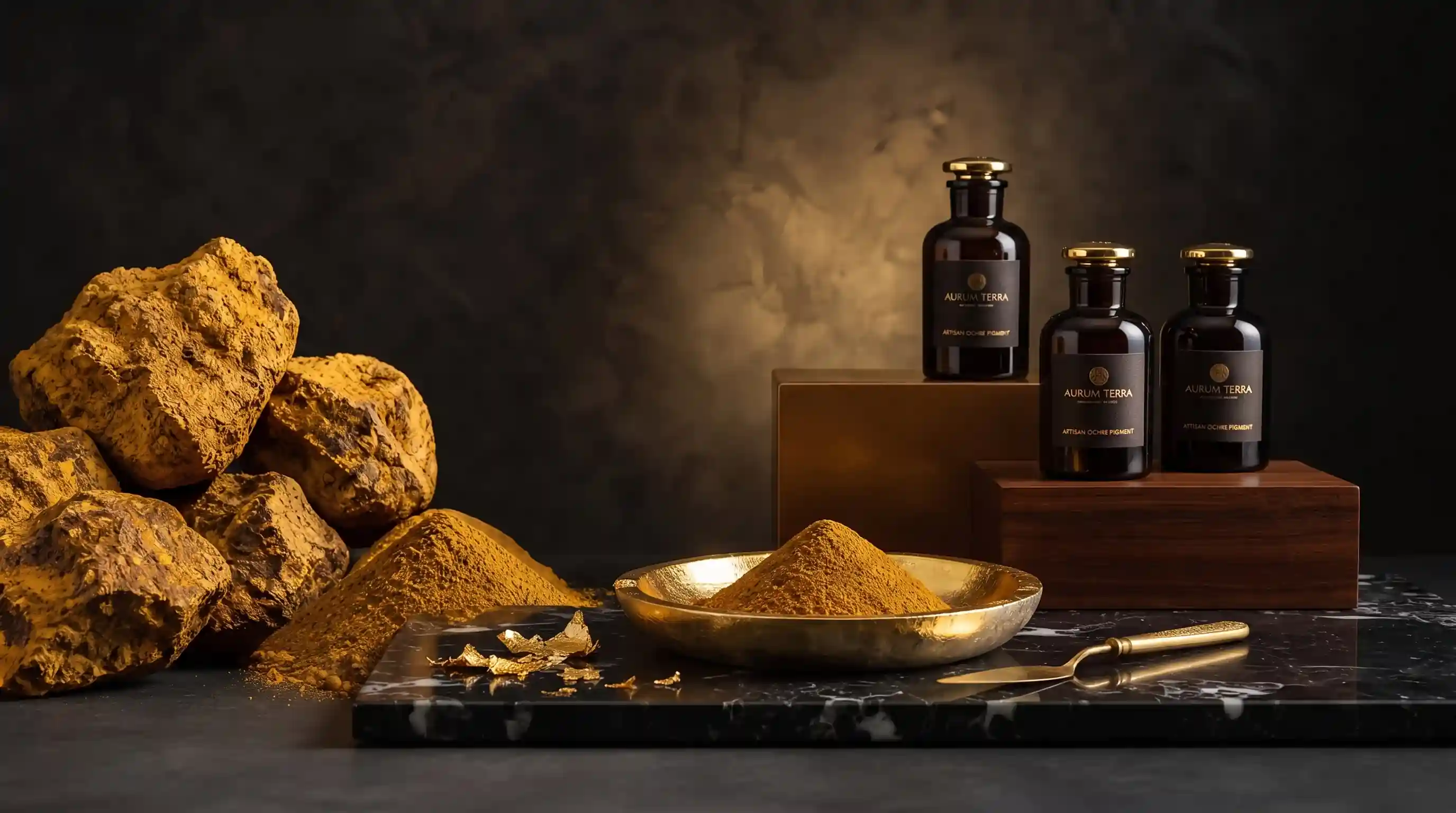
Diverse Applications of Limonite Oxide (Gole Mash) in Pigments, Coatings, and Construction Products
Although the focus of this article is on the rubber industry, a comprehensive review of limonite oxide (Gole Mash) requires a look at its other key applications in industry. This material is primarily known as one of the most widely used mineral pigments for the production of paints, protective coatings, and construction products, which has attracted the attention of architects and craftsmen due to its natural color and extraordinary stability.
In the coatings industry, this pigment acts as a coloring and anti-rust agent in the formulation of primers and industrial paints. Its 450 to 1500 mesh range allows for a smooth, uniform coverage with appropriate gloss. Also, in construction products such as mosaic making, concrete curbs, flooring, and colored blocks, this material plays a vital role in creating long-lasting yellow, ocher, and brown colors.
The Kani Sang Amiran project, through precise processing and granulation of this product, covers a wide range of needs in the coating and construction industries. Color stability against sunlight and stability in the alkaline environments of cement and concrete are among the distinct advantages of this mineral pigment.
Understanding these mutual applications shows that limonite oxide (Gole Mash) is a multi-purpose material with proven performance in various industries that gifts quality and durability to different projects.
Conclusion and Future Outlook for Using Limonite Oxide (Gole Mash) in the Rubber Industry
As an efficient mineral pigment and filler, limonite oxide (Gole Mash) has established its place as one of the key components in the formulations of rubber manufacturing, coating, and construction materials industries. Properties such as high optical and chemical stability, resistance to atmospheric conditions, and the 450 to 1500 mesh range have made this material a reliable choice for polymer engineers.
Collaborating with reputable suppliers such as the Kani Sang Amiran project allows production units to have access to high-quality, premium, and homogeneous raw materials. This plays a key role in improving mechanical properties, increasing the lifespan of rubber parts, and optimizing finished production costs.
With the advancement of mineral material processing technologies and the increasing demand for high-quality and environmentally friendly products, the application of limonite oxide (Gole Mash) in advanced industries is expected to expand more than ever. Investing in research and development of new rubber formulations containing this mineral pigment will pave the way for the production of new generations of rubber parts with high durability and efficiency.
Ultimately, the intelligent selection of mineral raw materials will guarantee the stability and competitiveness of the rubber industries in both domestic and inteational markets.
| Question | Answer |
|---|---|
| What is limonite oxide (Gole Mash)? | It is a natural mineral pigment and filler with a yellow to brown color spectrum used in the rubber, coating, and construction industries. |
| What is the mesh range of limonite oxide (Gole Mash)? | This product is processed and supplied in the 450 to 1500 mesh range. |
| What are the main applications of limonite oxide (Gole Mash)? | Main applications include mineral pigments, coatings, construction products, and the rubber industry. |
| What is the role of this material in the rubber industry? | In addition to creating stable color, it helps improve the mechanical properties, hardness, and abrasion resistance of rubber parts. |
| Is this pigment resistant to sunlight? | Yes, limonite oxide (Gole Mash) has very high optical and chemical stability against UV rays and atmospheric factors. |
| Who supplies this product? | The Kani Sang Amiran project operates as a producer and supplier of these mineral materials. |
| Is this material compatible with polymer compounds? | Yes, due to the proper distribution of particles, it does not cause negative interference with rubber curing systems. |
| How can more information be obtained? | You can obtain complete information by visiting the dedicated product page on the Kani Sang Amiran website. |
| Is this pigment also used in the concrete and construction industries? | Yes, it is widely used in coloring concrete, mosaics, and construction blocks. |
| What is the economic advantage of using this material? | It is an affordable substitute for expensive chemical pigments while maintaining the quality and durability of the final product. |
Kani Sang Amiran Project — Reference for the production and processing of mineral materials and pigments

برچسب: Limonite oxide (Gole Mash),Application of Limonite Oxide (Gole Mash) in the Rubber Industry,
نویسنده: رساوب آفرین