
درباره سایت
آخرین مطالب
- انتخاب اکسید آهن قرمز (اخرا) برای بهبود کیفیت پیگمنت و پوششهای رنگی
- تامین کربنات کلسیم با دانهبندی دقیق جهت استفاده در مستربچ
- تأمین تخصصی سیلیس برای مصالح ساختمانی، شیشه و صنایع سرامیک
- ویژگیهای فنی بنتونیت کانی سنگ امیران برای کاربردهای خاص
- فلدسپات کانی سنگ امیران برای شیشه کاشی و سرامیک
- کاربرد تالک سفید درجه یک در فرمولاسیون پیشرفته رنگ و محصولات کاغذی
- اکسید آهن قرمز (اخرا) کاربردی جهت تولید محصولات سرامیکی و پوشش
- مشخصات فنی اکسید آهن قرمز (اخرا) مناسب برای پوشش و تولید پیگمنت
- مشاوره تخصصی خرید کربنات کلسیم بر اساس نیاز دقیق صنعت شما
- انتخاب تالک سفید صنعتی مناسب برای تولیدات کاغذ و مستربچ
امکانات وب
Introduction to Kaolin and Its Position in Mode Industries
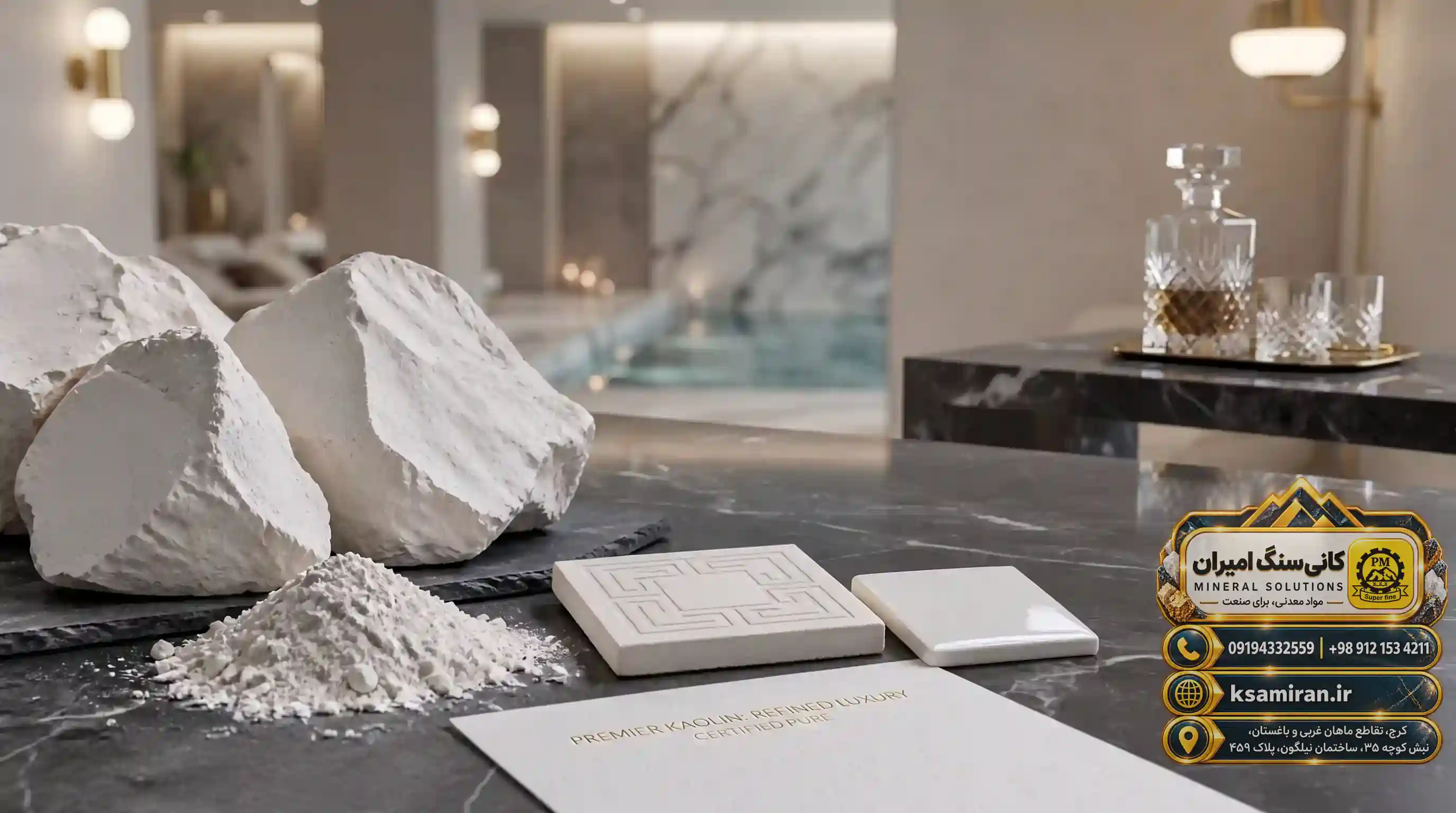
Kaolin mineral, as one of the most important hydrated aluminum silicates, plays an irreplaceable role in various industries. With its specific layered structure, this material imparts unique properties to the final products. The Kani Sang Amiran project, focusing on the extraction and processing of this high-quality mineral, has successfully met the needs of various industries in the best possible way. Understanding the physical and chemical properties of kaolin paves the way for improving manufacturing processes in factories.
Among various mineral raw materials, using high-quality kaolin can create a profound transformation in the visual and structural quality of products. With precise particle grading in the 450 to 1500 mesh range, this material is recognized as a filler and performance improver in the tile, ceramic, glaze, paper, and paint industries. The presence of this mineral in industrial formulations increases thermal stability and mechanical strength.
In addition to traditional applications, research shows that using complementary minerals such as talc is also effective in improving mechanical properties. For further reading on this subject, you can review the article The Key Role of Industrial Talc in Improving the Quality of Manufactured Products, which analyzes various dimensions of improving production quality. However, due to its X-ray properties, chemical stability, and non-reactivity, kaolin remains a top choice in advanced industries.
Utilizing mode milling and grading technologies, the Kani Sang Amiran project offers products to the market with the highest quality standards. The variety in mesh range and high purity of this mineral make it possible to use in the most sensitive production lines. In the continuation of this article, we will examine the various dimensions of the impact of this valuable material in different industries.
Examination of Technical Characteristics and Particle Grading of Kaolin
The technical specifications of minerals play a decisive role in their efficiency within industrial formulations. With a mesh range of 450 to 1500, kaolin has a high adaptability to diverse industrial requirements. This wide mesh range allows engineers to use coarser or highly micronized powders depending on the type of final application. High chemical purity and the absence of harmful impurities are among the prominent features of this product.
The crystal structure of kaolin is such that its particles are arranged in hexagonal plates on top of each other. This specific morphology improves rheological properties and viscosity in compositions such as paints and glazes. By paying careful attention to grading processes, the Kani Sang Amiran project produces a uniform and homogeneous product that is easily distributed and dispersed across various industries.
Another engineering application of these products is the use of minerals in civil and infrastructural industries. For example, the article The Role of Kaolin in Pipe Making and Concrete Products well demonstrates how this mineral can be utilized to enhance the durability and strength of concrete structures. This synergy between traditional and industrial applications brings high added value.
Strict quality control at all stages of production, from mining to final packaging, guarantees the maintenance of necessary standards. The 450 to 1500 mesh range of Amiran kaolin meets the most stringent industrial requirements and is recognized as a quality reference in the market. The technical team's expertise in maintaining these standards has created a competitive advantage for manufacturers.
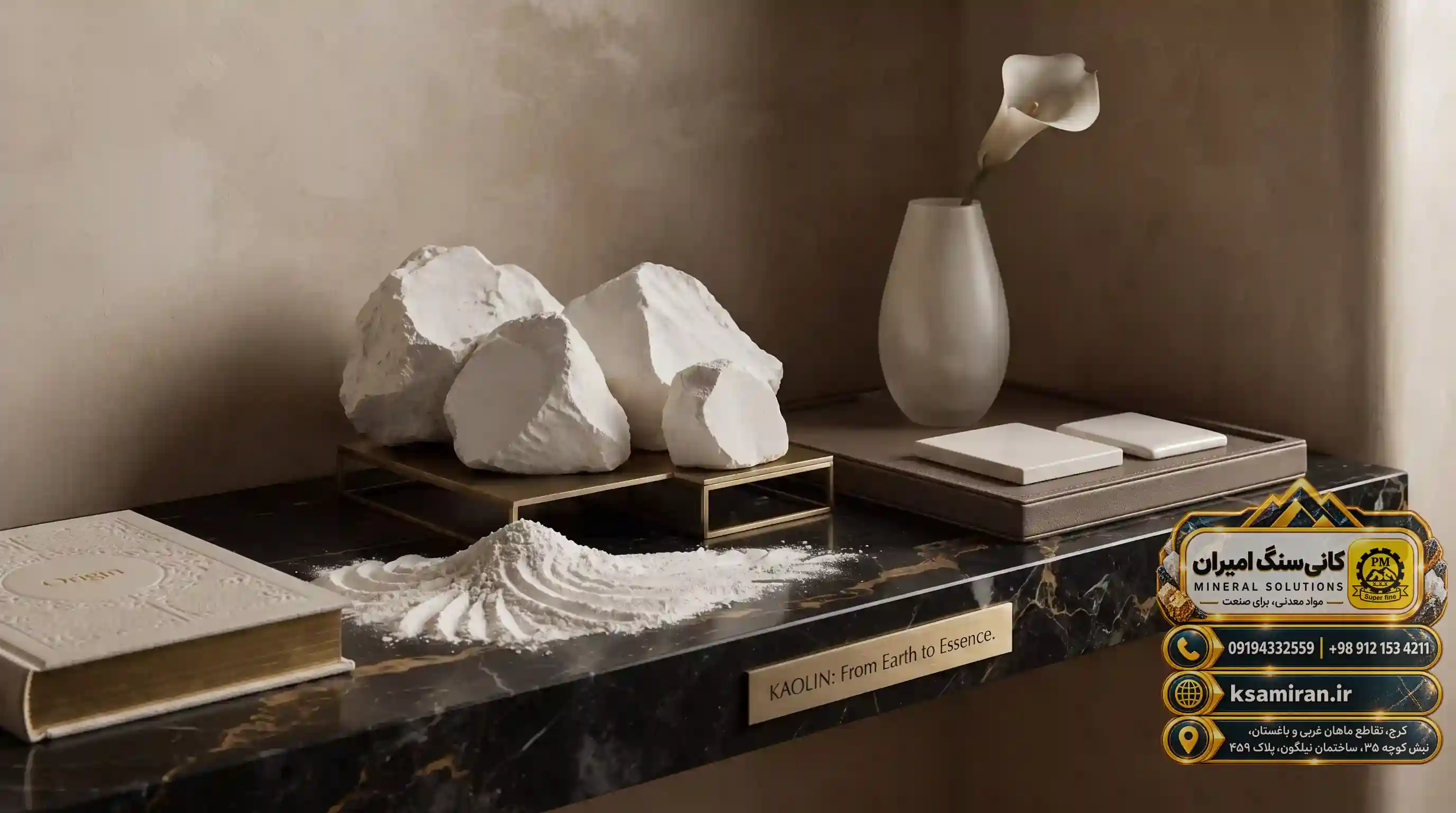
Application of Kaolin in the Tile and Ceramic Manufacturing Industry
The tile and ceramic industry is one of the largest consumers of minerals worldwide. Kaolin acts as a key component in tile and ceramic bodies, improving plasticity, reducing firing shrinkage, and increasing the whiteness of the final product. The presence of this material in the body composition significantly increases the mechanical strength of pieces before and after the firing process.
By supplying high-quality kaolin for tile and ceramic factories, the Kani Sang Amiran project helps improve firing properties and prevents product warping. The fine particles of this material fill the empty spaces between other mineral components, creating a dense, flawless structure that is resistant to thermal stresses.
In addition to the body, this mineral is also used as a suspending and gloss-imparting agent in the preparation of ceramic glazes. The 450 to 1500 mesh range makes it possible to create a completely uniform glaze without impurities on the tile surface, doubling its beauty and durability.
Optimal use of this mineral in tile and ceramic production lines reduces production waste and improves the economic efficiency of factories. The Kani Sang Amiran project's commitment to providing standard products has played a significant role in upgrading the quality of the country's ceramic industry.
The Role of Kaolin in the Papermaking and Coating Industry
The papermaking industry requires filler materials that, in addition to reducing production costs, improve print quality, whiteness, and surface smoothness of the paper. Due to its high whiteness, brightness, and excellent coating capability, kaolin is recognized as one of the best pigments and fillers in this industry. This material is used as an inteal filler as well as in the surface coating of printing and writing papers.
When paper is treated with kaolin, the pores between cellulose fibers are filled, creating a smooth surface suitable for high-quality printing. The 450 to 1500 mesh range allows particles to penetrate the paper texture with the highest efficiency, creating a uniform coating. This controls ink absorption and prevents it from bleeding.
Understanding the needs of the papermaking industry, the Kani Sang Amiran project offers products with an appropriate particle size distribution that perform well in both wet and dry papermaking processes. These materials increase paper opacity and greatly assist in producing high-quality and standard products.
Resistance to yellowing and optical stability are other advantages of using this mineral in papermaking. The presence of kaolin in the paper structure increases its lifespan and prepares it for specialized applications and high-quality printing.
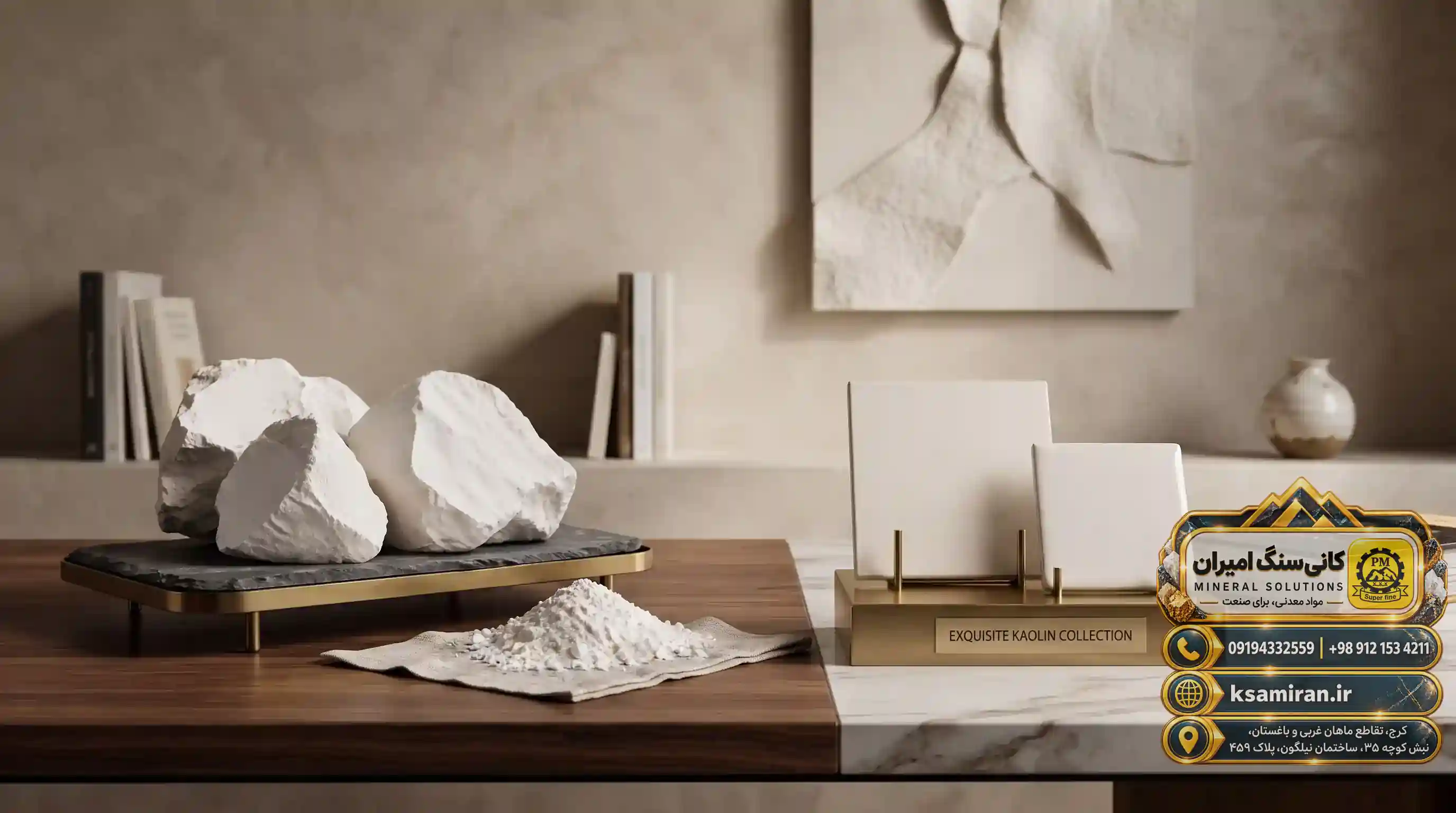
Application of Kaolin in Paint and Industrial Coating Formulations
In the paint and resin industry, kaolin plays a role as an extender pigment and functional filler. It helps control gloss, improve scrub resistance, and increase paint durability against weather conditions. The layered structure of kaolin particles creates an overlap in the paint film, significantly reducing the penetration of moisture and oxygen to the underlying surface.
Using the 450 to 1500 mesh range of kaolin in architectural and industrial paints improves the rheological properties and storage stability of the paint. This material prevents the rapid settling of heavy pigments and optimizes paint flowability during application with a brush or spray gun.
It is worth noting that mode chemical technologies require raw materials that are also applicable in advanced reactions; for instance, the article The Role of Kaolin in Advanced Chemical Catalyst Production demonstrates the breadth of applications of this mineral in high-tech industries. This functional overlap doubles the importance of kaolin in the chemical industry.
Through precise processing of kaolin, the Kani Sang Amiran project has provided a product with optimized particle distribution that performs exceptionally well in the production of various matte, semi-matte paints, and industrial primers. The chemical stability and neutrality of this material make it an ideal choice for complex formulations.
Kaolin in the Production of Ceramic Glazes and Specialized Coatings
Ceramic glazes require raw materials that melt at firing temperatures to create a glassy, uniform, and flawless surface. Kaolin acts as a source of alumina and silica in glazes and controls the viscosity of the molten glaze at high temperatures. This prevents the glaze from ruing during kiln firing.
Due to its fine particle size, Amiran kaolin's 450 to 1500 mesh range quickly dissolves and disperses in aqueous glaze suspension systems, preventing coarse particles from settling. This feature is of vital importance for tile and ceramic tableware manufacturing factories because it guarantees the final quality of the glaze.
In addition to viscosity control, kaolin helps increase the glaze's resistance to thermal shocks and cracking. Coatings resulting from these formulations also exhibit high stability against chemicals and acids, leading to an extended product lifespan.
By strictly controlling quality parameters, the technical team of the Kani Sang Amiran project produces a pure product free of interfering iron oxides, which does not negatively affect the final color of the glaze and preserves its whiteness and brightness.
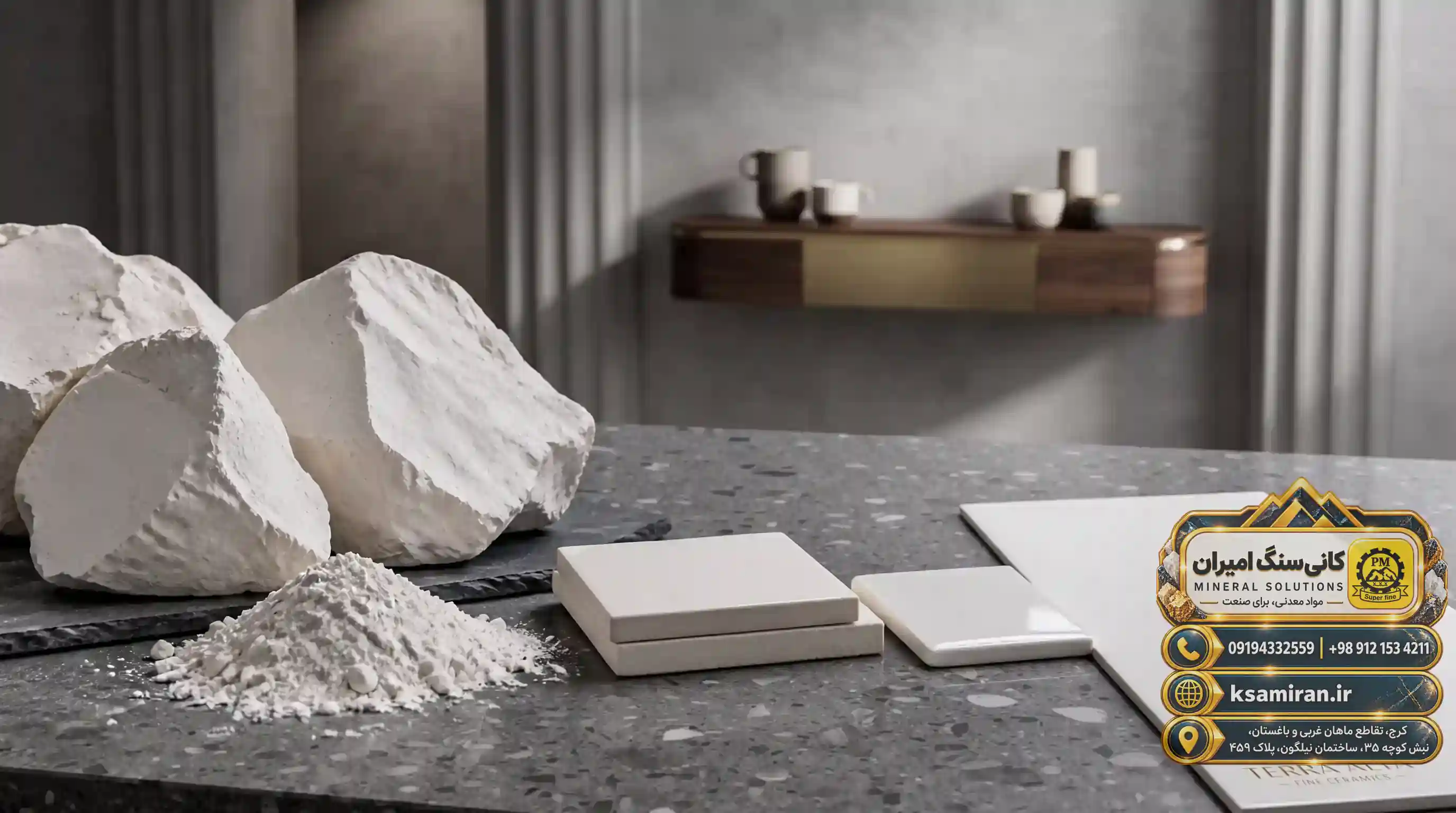
Quality Standards and Specialized Processing of Kaolin at Kani Sang Amiran
Kaolin processing involves complex stages including crushing, magnetic separation, washing, micronization, and particle size control. Utilizing advanced industrial equipment, the Kani Sang Amiran project performs all these stages with high precision to deliver a high-quality product that complies with up-to-date global standards to customers.
Achieving the 450 to 1500 mesh range requires precise milling systems and mode air classifiers. These processes ensure that the particle size distribution is completely narrow and homogeneous, with no coarse particles in the final product that could cause problems for sensitive production lines.
Continuous quality control in Amiran's quality control laboratories evaluates the chemical purity, moisture percentage, and whiteness of kaolin in every production batch. This commitment to quality has eaed the trust of consumers in the tile, ceramic, paint, paper, and glaze industries.
Sustainable development and principled mining exploitation are the main approaches of the Kani Sang Amiran project. By combining the technical knowledge of domestic specialists with mode technology, this collection has gained a special position in supplying high-quality minerals at the national level.
Conclusion and Future Outlook of the Kaolin Market
As a strategic mineral, kaolin plays a key role in advancing the quality objectives of various industries. From the tile and ceramic industry to paint, paper, and glaze production, the presence of this material improves the efficiency, durability, and appearance of final products. The 450 to 1500 mesh range provides various industries with access to appropriate gradings.
By extracting and specially processing kaolin, the Kani Sang Amiran project has guaranteed supply chain stability for domestic factories. Investing in mode processing technologies and upgrading quality standards outlines a bright prospect for developing the applications of this valuable mineral.
With increasing demand for high-quality and environmentally friendly products, the importance of using pure minerals like kaolin becomes more apparent than ever. Relying on Kani Sang Amiran's standard products, industrial manufacturers can elevate the quality of their production to a global competitive level.
It is hoped that this article has clearly elucidated the various dimensions of kaolin's importance and its role in improving the quality of industrial products, serving as a useful guide for engineers and industry practitioners.
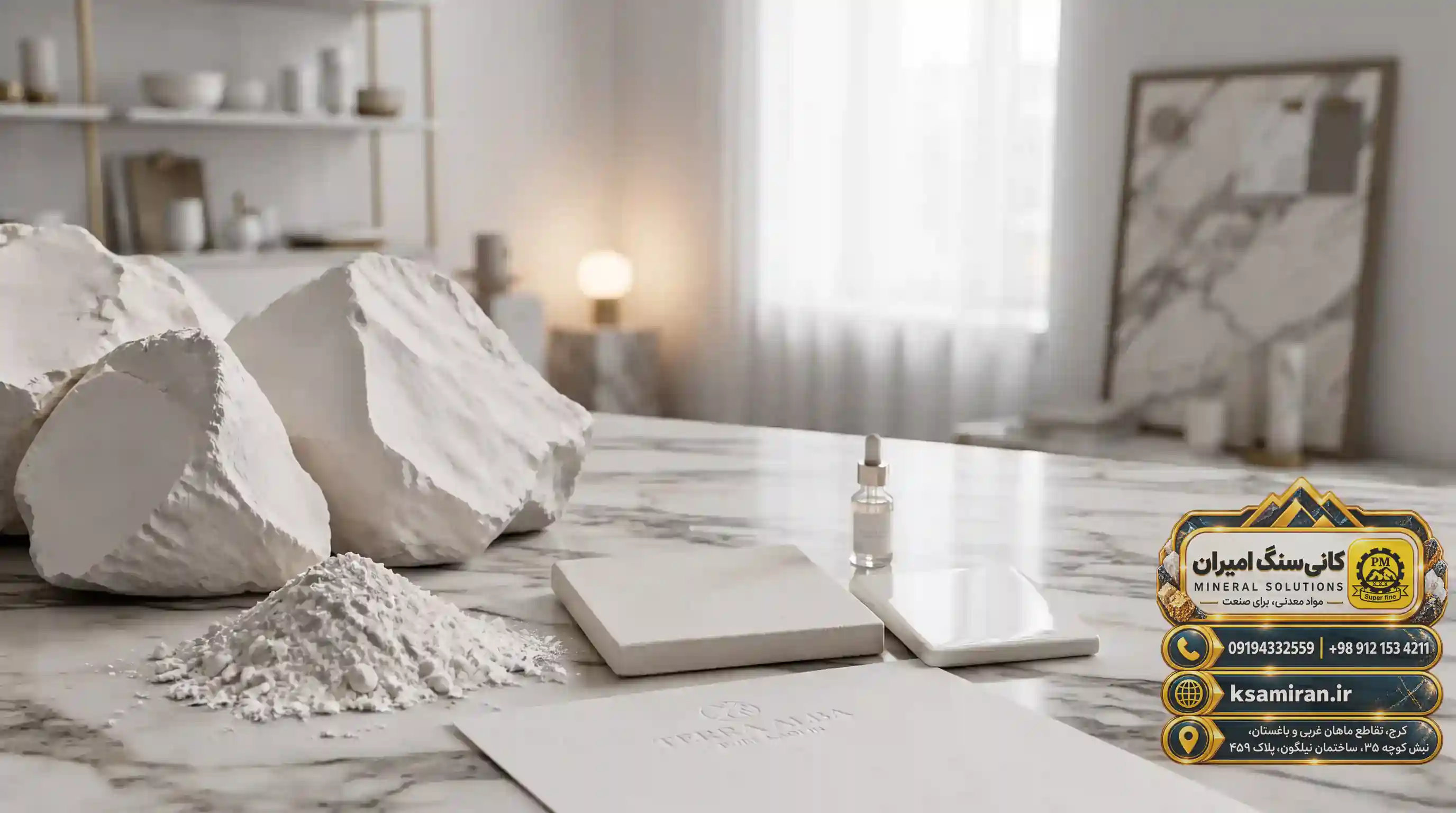
| Question | Answer |
|---|---|
| What is kaolin and what are its applications? | Kaolin is a hydrated aluminum silicate used in the tile, ceramic, glaze, paper, and paint industries. |
| What is the mesh range of kaolin produced by Kani Sang Amiran? | The kaolin products of this collection are produced and supplied in the 450 to 1500 mesh range. |
| What is the role of kaolin in the tile and ceramic industry? | It improves plasticity, reduces firing shrinkage, increases whiteness, and enhances the mechanical strength of the body. |
| Why is kaolin used in the papermaking industry? | Due to high whiteness, brightness, coating capability, and improving the surface quality of paper for printing. |
| What is the application of kaolin in paint manufacturing? | It is used as an extender pigment, gloss controller, coating improver, and paint durability enhancer. |
| What is the role of kaolin in ceramic glazes? | It serves as a source of alumina and silica, controls the viscosity of the molten glaze, and prevents ruing. |
| How can high-quality kaolin be procured? | It can be ordered through the dedicated product page on the Kani Sang Amiran project website. |
| Is kaolin also used in other advanced industries? | Yes, it also plays a role in the production of chemical catalysts, concrete, and pipe-making industries. |
| What are the important physical characteristics of kaolin? | High chemical purity, layered structure, non-reactivity, and homogeneous particle size distribution. |
| What standards are observed in the production of Amiran kaolin? | Strict control of grading, washing, magnetic separation, and continuous quality tests. |
Kani Sang Amiran Project — Reference for Mineral Production and Processing
برچسب: Kaolin,The Role of Kaolin in Producing High,Quality Fiberglass Products,
نویسنده: رساوب آفرین