
درباره سایت
آخرین مطالب
- انتخاب اکسید آهن قرمز (اخرا) برای بهبود کیفیت پیگمنت و پوششهای رنگی
- تامین کربنات کلسیم با دانهبندی دقیق جهت استفاده در مستربچ
- تأمین تخصصی سیلیس برای مصالح ساختمانی، شیشه و صنایع سرامیک
- ویژگیهای فنی بنتونیت کانی سنگ امیران برای کاربردهای خاص
- فلدسپات کانی سنگ امیران برای شیشه کاشی و سرامیک
- کاربرد تالک سفید درجه یک در فرمولاسیون پیشرفته رنگ و محصولات کاغذی
- اکسید آهن قرمز (اخرا) کاربردی جهت تولید محصولات سرامیکی و پوشش
- مشخصات فنی اکسید آهن قرمز (اخرا) مناسب برای پوشش و تولید پیگمنت
- مشاوره تخصصی خرید کربنات کلسیم بر اساس نیاز دقیق صنعت شما
- انتخاب تالک سفید صنعتی مناسب برای تولیدات کاغذ و مستربچ
امکانات وب
Introduction to the Importance of Industrial Talc in Mode Industries
Today, in advanced manufacturing industries, the use of high-quality and specialized mineral materials plays a decisive role in enhancing the quality level of final products. In this regard, industrial talc is recognized as one of the most practical and efficient fillers and additives in various industries. With its layered structure and unique physical and chemical properties, this mineral has found a special place in complex industrial formulations. The Kani Sang Amiran project, by focusing on the supply and distribution of standard mineral materials, has made this valuable powder accessible to various industries.
Examining the structural characteristics of this material shows that industrial talc, due to its inherent softness, chemical inertness, and high thermal stability, is an unparalleled option for improving the mechanical and aesthetic properties of products. A correct understanding of the performance mechanism of this material in production processes can help engineers and manufacturers significantly increase the productivity of their production lines. To lea more about the various aspects of this material, it is recommended to read the article The Key Role of Industrial Talc in Improving the Quality of Manufactured Products.
In the following sections of this article, we will examine the applications of this material in the adhesive, resin, polymer, and paint industries more precisely and analyze its various dimensions from a technical and engineering perspective. We will also provide comprehensive information to industry professionals by reviewing the range of mesh sizes for this product and its alignment with industrial needs.
Physical and Chemical Properties of Industrial Talc
A precise understanding of the physical and chemical properties of industrial talc is of great importance before entering industrial formulation processes. This material is classified as a hydrated magnesium silicate, and its crystal structure is flaky or layered. This very layered structure causes the particles to slide over each other easily, which is why this material is considered one of the softest known minerals in the world. Stability against heat and non-reactivity with various chemicals are among the other prominent features of this powder.
One of the key parameters in determining the quality of this material is its granulation and mesh range. Based on the production standards of the Kani Sang Amiran project, this product is offered in a mesh range of 450 to 1000 mesh, which allows for its use in diverse applications. Finer particles with higher mesh counts create a smoother surface and more uniform dispersion in polymer and resin matrices, which directly affects the quality of the final product.
Furthermore, features such as good whiteness, optimal bulk density, and wettability with various resins and solvents make industrial talc an ideal filler. These characteristics allow formulators to significantly increase the filler loading in products such as adhesives, paints, and rubber parts without causing undesirable changes in the system's viscosity.
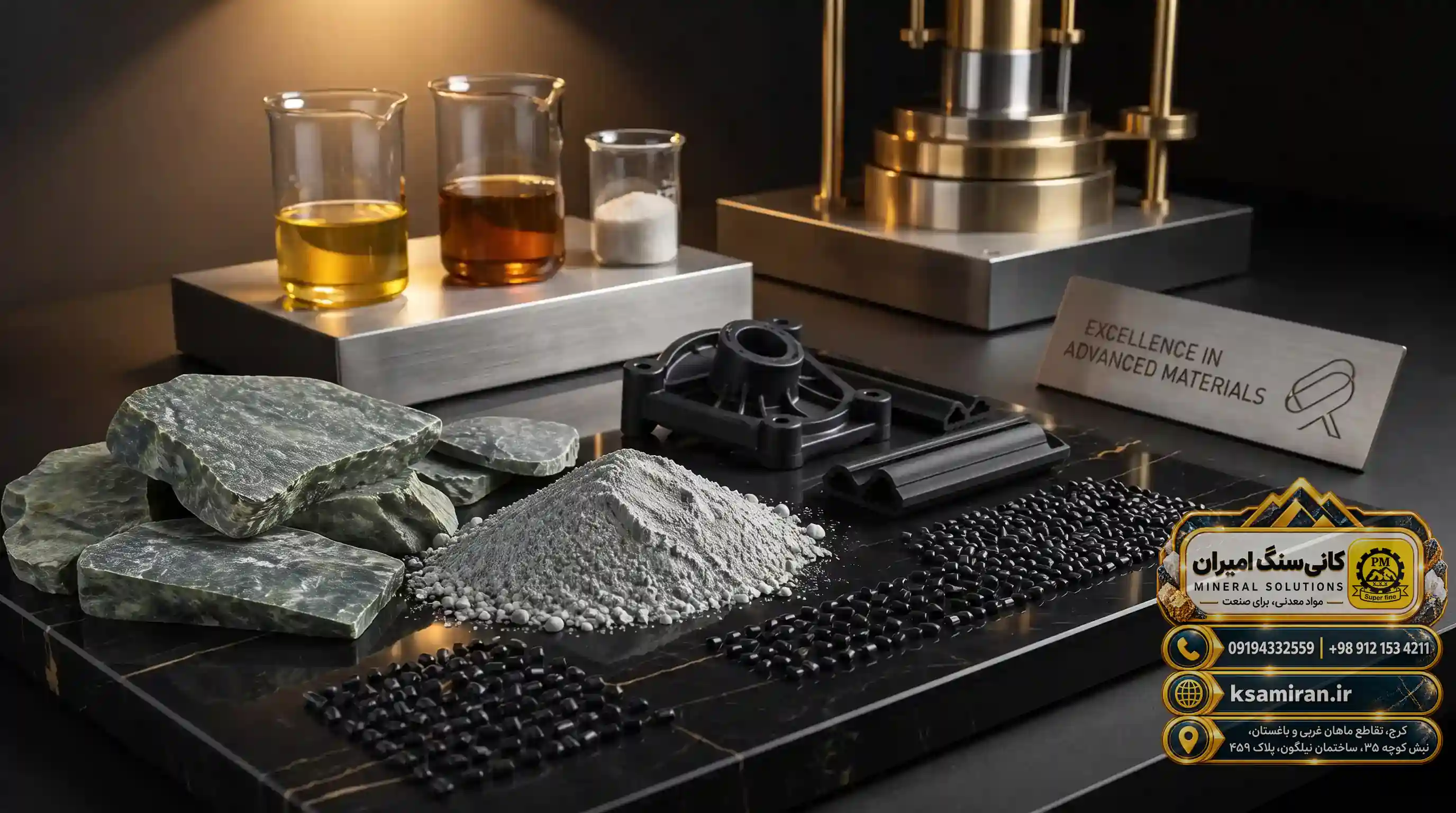
Application of Industrial Talc in the Production of Various Adhesives
The adhesive and sealant manufacturing industry is always looking for additives that, in addition to reducing the final price, improve the adhesion, viscosity, and dimensional stability of the product. Industrial talc is used as an active mineral filler in the construction of various industrial, construction, and packaging adhesives. Adding this powder to adhesive formulations helps regulate the material's flow behavior during application and prevents the adhesive from sagging on vertical surfaces.
Using the 450 to 1000 mesh range in adhesive production ensures that particles are dispersed completely homogeneously in the adhesive bed without creating any clumping or lumps. This leads to an increase in shear strength and final adhesion in bonded joints. Additionally, the relative water-repellent property and stability against environmental factors injected into the adhesive by this material significantly increase the longevity of the bond.
Industrial adhesive manufacturers are always looking for high-quality raw materials selected for polymers, rubber, paint, and industrial applications. By utilizing the standard powders supplied by the Kani Sang Amiran project, production units can create adhesives with higher mechanical strength and longer shelf life that meet the demanding needs of today's markets.
The Role of Industrial Talc in Industrial Resin Formulations
Industrial resins such as epoxy, polyester, and polyurethane have wide applications in various industries including composite manufacturing, coating, and molding. Adding industrial talc to these resins has a direct effect on improving thermal and mechanical properties and reducing resin curing shrinkage. The flaky structure of talc particles settles within the resin matrix and acts as a barrier against the penetration of moisture and gases; this property is very important in improving the corrosion resistance of resin coatings.
In the process of manufacturing composite resins, controlling volumetric shrinkage during the curing process is one of the main challenges for engineers. By using precise granulation of this mineral, inteal stresses can be minimized and parts with high dimensional accuracy can be produced. The careful selection of mesh from the 450 to 1000 range allows the formulator to adjust the transparency, opacity, and viscosity of the resin based on the project's needs.
Alongside talc, the use of other specialized minerals is also common in the chemical industry; for example, leaing about The Role of Kaolin in the Production of Advanced Chemical Catalysts can provide a comprehensive perspective on the synergy of minerals in chemical and resin industries. Combining technical formulation knowledge with high-quality raw materials is the key to achieving high-quality and standard resins.
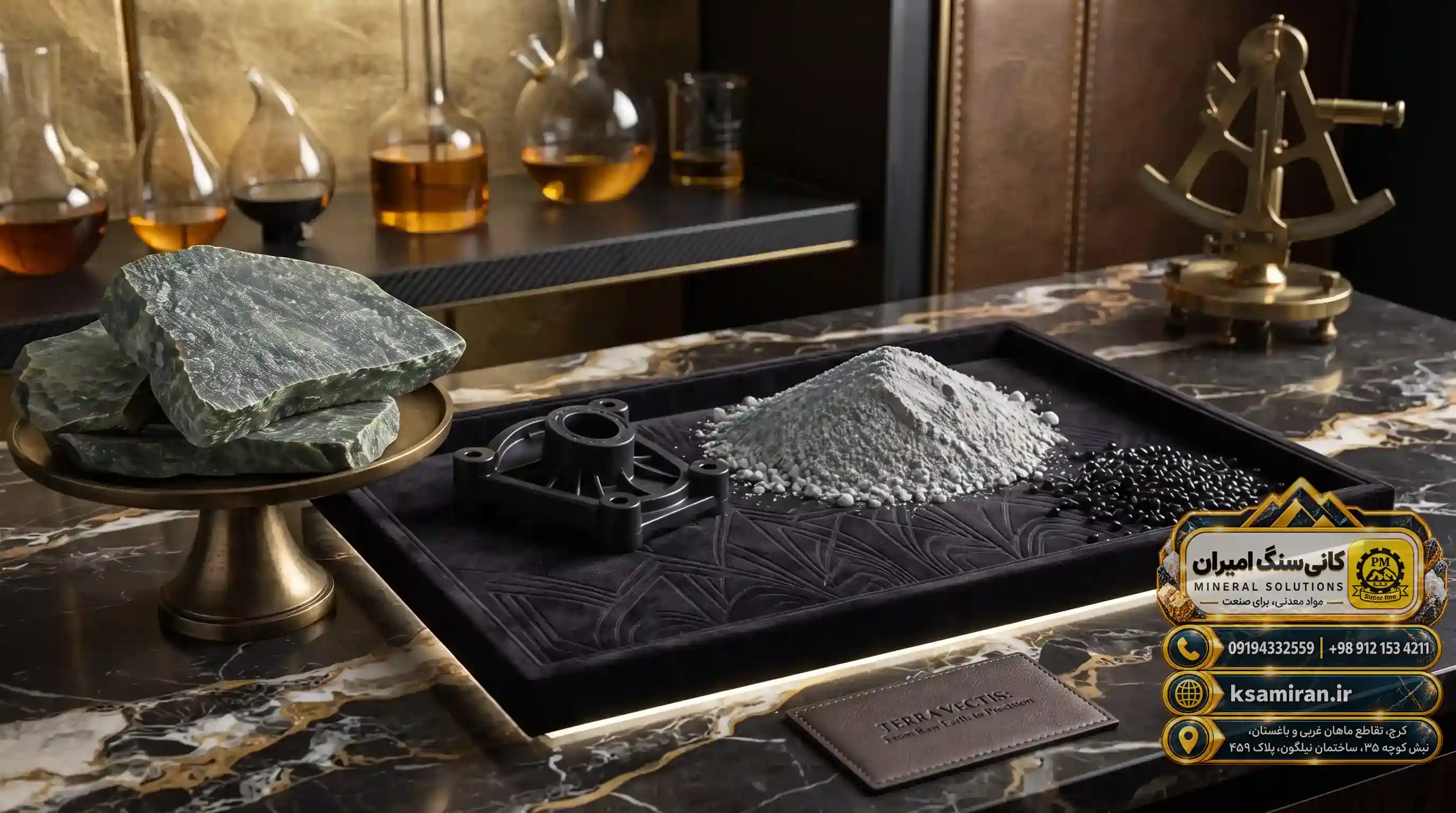
Wide Applications in Polymer and Rubber Industries
The plastics and rubber industries are the largest consumers of micronized minerals worldwide. In these industries, industrial talc is used as an agent to improve flexural modulus, hardness, and thermal stability of polymers such as polypropylene (PP), polyethylene, and PVC. Due to its economic price and high performance, this material is known as an efficient filler that improves the tensile properties and creep resistance of polymer parts.
In the rubber industry, this mineral powder helps improve elasticity, abrasion resistance, and facilitates the compounding process. Fine talc particles penetrate the space between polymer chains, reducing inteal friction and improving the extrudability and moldability of rubber compounds. The 450 to 1000 mesh range is ideal for these industries and provides the best balance between mechanical and aesthetic properties.
Polymer products, rubber products, paint, and industrial products are among the fields that benefit from the advantages of this material. Using high-quality talc supplied by the Kani Sang Amiran project in polymer and rubber production lines guarantees the required technical quality and standards. To purchase this product and view full specifications, you can visit the Industrial Talc Product Page.
Application of Industrial Talc in the Paint and Coatings Industry
The paint and surface coatings industry requires filler materials that, in addition to providing proper coverage, reinforce properties such as color retention, abrasion resistance, and water-repellent properties. Industrial talc is used as a functional extender and pigment in the production of various architectural, industrial, anti-rust, and primer paints. The flaky structure of this material improves the leveling property of the paint on the surface and prevents pigment settling during storage.
The presence of this material in paint formulations helps reduce unwanted gloss (creating a matte or semi-matte surface) and increases the durability of the paint film against various weather conditions. Also, the impermeability of the flake-shaped talc particles against moisture acts as a protective shield and prevents the rusting of underlying metal surfaces.
Compared to other mineral fillers, talc allows for higher loading percentages without a loss in performance quality because it does not negatively affect the viscosity of paint systems. For paint manufacturers, this feature means optimizing production costs while simultaneously improving the quality standards of the final product, which is realized by relying on reliable mineral sources.
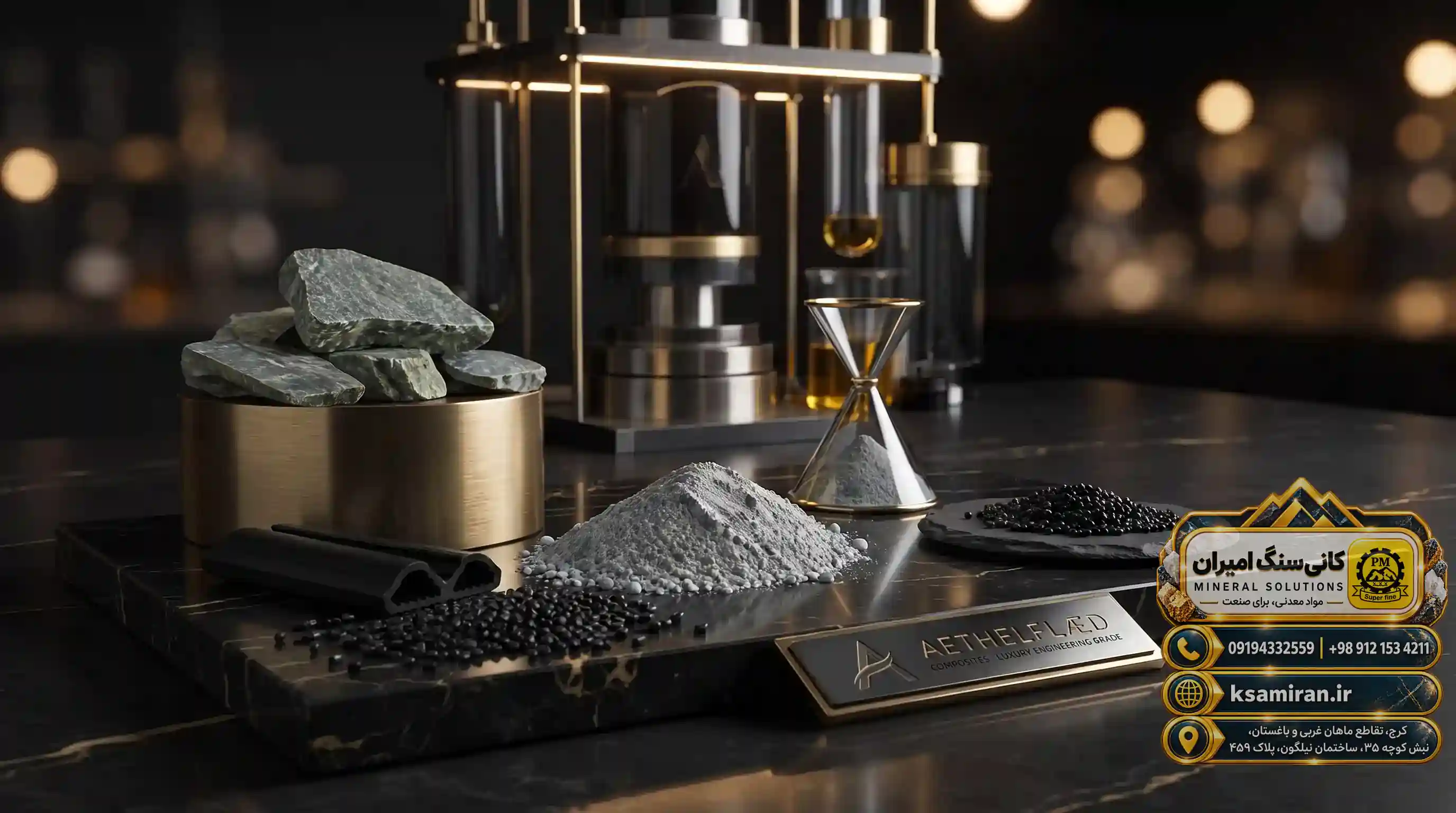
Standards and Technical Specifications of the 450 to 1000 Mesh Range
Choosing the right granulation when using minerals is one of the most critical decisions in formulation engineering. The 450 to 1000 mesh range for industrial talc indicates micronized and very fine particle dimensions, which are optimized for a wide range of applications. 450 mesh offers larger particles than 1000 mesh, and each creates its own characteristics in viscosity, matting, and mechanical properties.
Rigorous quality control in the micronization process of these products ensures that the particle size distribution (PSD) remains within the standard range. The presence of particles with uniform distribution prevents the creation of structural weak points in polymer and resin matrices. Furthermore, in the insulation and advanced coating industries, the use of minerals with appropriate mesh sizing is of high importance; similar to what is observed in the review of The Application of Industrial Barite in the Production of Sound and Thermal Insulators, the correct choice of particle dimensions has a direct impact on the insulator's performance.
The Kani Sang Amiran project, utilizing advanced processing and milling equipment, prepares industrial talc with high precision within the mentioned mesh range and makes it available to various industries. This precision in production gives customers peace of mind that they will receive a uniform product that complies with their technical needs.
Economic Benefits and Future Outlook of the Industrial Talc Market
In addition to numerous technical and engineering advantages, the use of industrial talc has a very high economic justification for production units. Replacing part of the expensive polymer, resin, or pigment materials with this efficient mineral filler significantly reduces the final production costs without causing a noticeable drop in the final product quality. This competitive advantage becomes doubly important in today's markets, where cost management is vital.
The growth of downstream industries such as automotive, construction, packaging, and home appliance manufacturing has continuously increased the demand for high-quality minerals such as talc, kaolin, and barite. Forecasts indicate that with the development of new formulation technologies and the need for lighter and more sustainable materials, the position of industrial talc in polymer, rubber, and paint industries will be strengthened more than ever.
Finally, the commitment to sustainable supply and continuous quality of minerals by reputable suppliers like the Kani Sang Amiran project is the foundation for a reliable relationship between mines and the country's manufacturing industries. The continuation of these collaborations promises to elevate the quality level of domestic products and their more powerful presence in regional and inteational markets.

| Question | Answer |
|---|---|
| What is industrial talc and what are its applications? | It is a mineral from the hydrated magnesium silicate category that is chosen for polymers, rubber, paint, and industrial applications. |
| What is the mesh range of the offered industrial talc? | This product is processed and supplied in the 450 to 1000 mesh range. |
| Is this material used in the production of adhesives and resins? | Yes, it is used as an active filler to improve viscosity, adhesion, and reduce shrinkage in industrial adhesives and resins. |
| Which industries consume the most of this material? | Polymer industries, rubber products, paint manufacturing, and industrial product production are the main consumers. |
| Who is the main supplier of this product in Iran? | The Kani Sang Amiran project operates as a producer and supplier of industrial mineral materials. |
| How can industrial talc be ordered? | By visiting the industrial talc product page on the Kani Sang Amiran website, one can receive full information. |
| Why is the layered structure of talc important? | The layered structure leads to improved mechanical properties, thermal stability, and prevents moisture penetration. |
| Is this material effective in the paint manufacturing industry? | Yes, it is used as an extender, gloss regulator, and paint durability improver. |
| What is the role of talc in rubber industries? | It helps improve elasticity, resistance to abrasion, and facilitates rubber compounding. |
| How does mesh sizing affect product quality? | Higher mesh counts (up to 1000) create more homogeneous dispersion and a smoother surface in the matrix. |
Reference: Kani Sang Amiran project - Specialized supplier of industrial mineral materials.
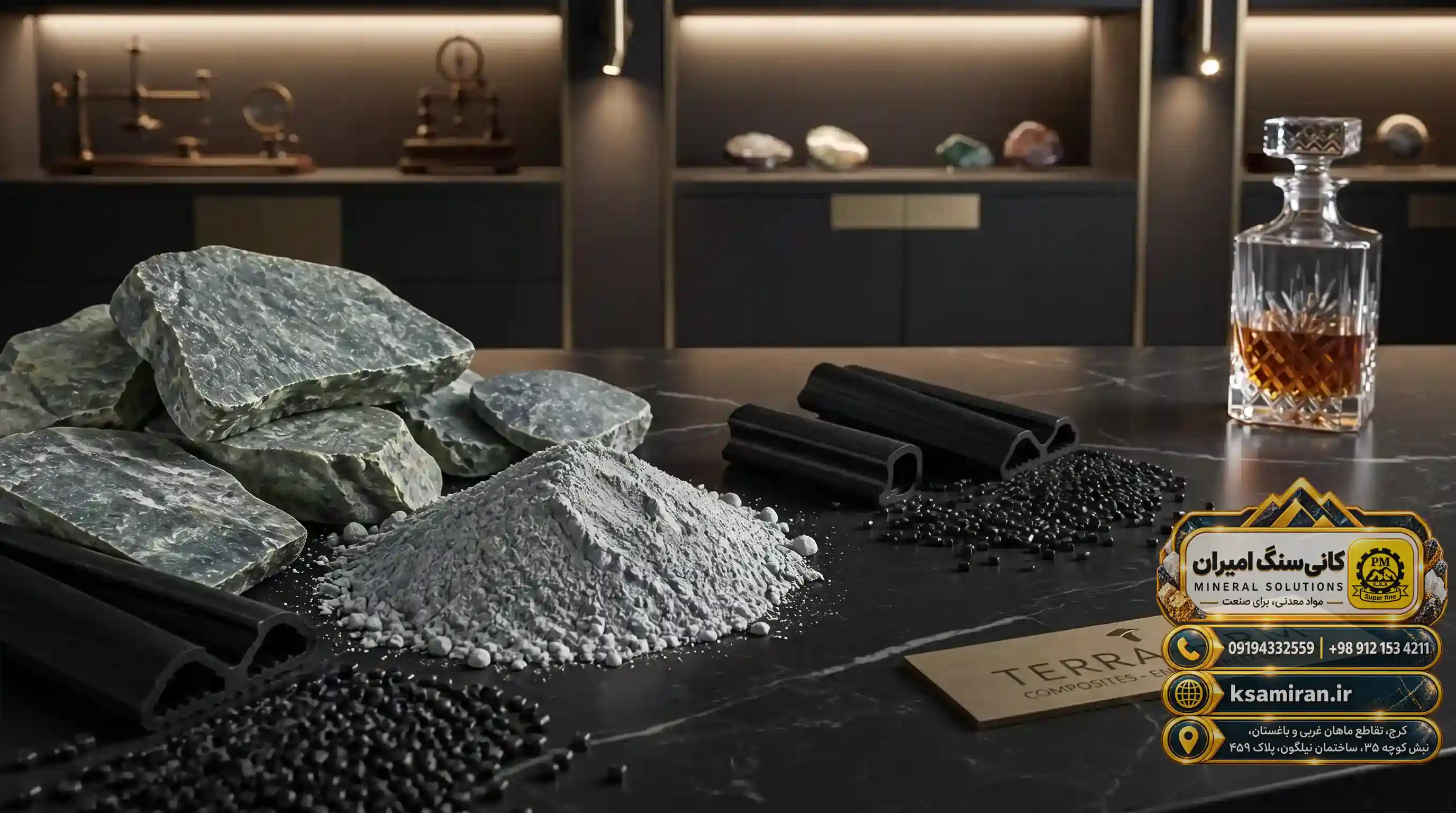
برچسب: Industrial Talc,The Role of Industrial Talc in the Production of Adhesives and Industrial Resins,
نویسنده: رساوب آفرین