
درباره سایت
آخرین مطالب
- انتخاب اکسید آهن قرمز (اخرا) برای بهبود کیفیت پیگمنت و پوششهای رنگی
- تامین کربنات کلسیم با دانهبندی دقیق جهت استفاده در مستربچ
- تأمین تخصصی سیلیس برای مصالح ساختمانی، شیشه و صنایع سرامیک
- ویژگیهای فنی بنتونیت کانی سنگ امیران برای کاربردهای خاص
- فلدسپات کانی سنگ امیران برای شیشه کاشی و سرامیک
- کاربرد تالک سفید درجه یک در فرمولاسیون پیشرفته رنگ و محصولات کاغذی
- اکسید آهن قرمز (اخرا) کاربردی جهت تولید محصولات سرامیکی و پوشش
- مشخصات فنی اکسید آهن قرمز (اخرا) مناسب برای پوشش و تولید پیگمنت
- مشاوره تخصصی خرید کربنات کلسیم بر اساس نیاز دقیق صنعت شما
- انتخاب تالک سفید صنعتی مناسب برای تولیدات کاغذ و مستربچ
امکانات وب
Introduction to the Importance of Industrial Talc in Mode Industries
In today's industrial world, increasing product lifespan and improving their quality are primary conces for manufacturers. The use of appropriate mineral materials can play a decisive role in this regard. Meanwhile, industrial talc is recognized as one of the most practical mineral raw materials, which, due to its unique structural characteristics, has found a special place in various industries. With its flaky structure and specific physical and chemical properties, this mineral significantly helps improve the stability and durability of final goods.
The precise selection of raw materials for industries such as polymers, rubber, and paint manufacturing has a direct impact on product efficiency and lifespan. Familiarizing oneself with this material and how it functions in industrial formulations is an important step toward optimizing production processes. For further reading regarding the characteristics of this material, you can read an examination of the physical and mechanical properties of industrial talc powder.
Kani Sang Amiran Project, by producing various high-quality minerals, supplies this product in a mesh range of 450 to 1000, and this standard granulation makes it highly ideal for various industrial uses. In the continuation of this article, we will examine the various dimensions of this material's impact on increasing product durability.
What is Industrial Talc and What Are Its Structural Characteristics?
This material is a hydrated magnesium silicate, which in terms of hardness is at the lowest level of the Mohs scale (hardness of 1). This property imparts a special softness and smoothness to the powder that is vital for many industrial applications. The crystalline structure of this material consists of parallel flaky sheets that easily slide over one another. This layered structure is the main factor behind many of its mechanical and functional properties in industrial formulations.
In the production process of this mineral powder, controlling the granulation is of high importance. Products supplied by the Kani Sang Amiran Project have a mesh range of 450 to 1000. This mesh range well covers the needs of various industries and guarantees a uniform particle size distribution. Understanding this structure helps engineers gain a better understanding of how this material interacts with polymer and rubber matrices.
In addition to softness, chemical inertness, heat resistance, and non-reactivity with other chemical substances are other inherent features of this material. This chemical stability prevents the premature degradation of materials exposed to harsh environmental conditions and directly plays a role in increasing product lifespan.
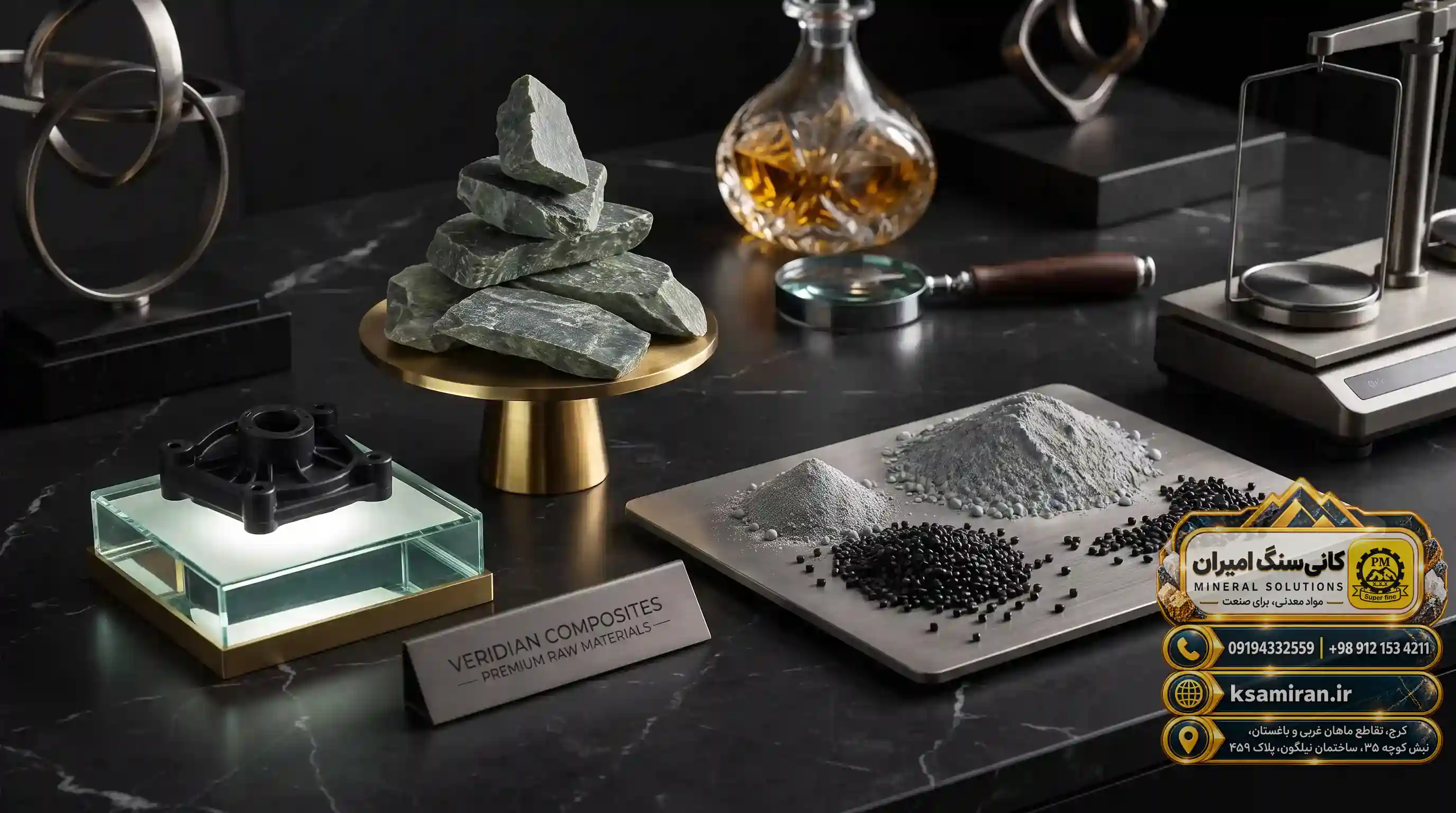
The Key Role of Industrial Talc in Polymer Industries and Enhancing Durability
The polymer industry is one of the largest consumers of minerals, and the use of fillers to improve the final properties of plastics is widespread. Adding this material to polymers as an effective filler increases the flexural modulus and tensile strength of polymer parts. This improvement in mechanical properties causes polymer parts to undergo less deformation or damage over time and under mechanical stresses.
Also, the presence of the flaky particles of this material in the polymer matrix lengthens the penetration path of gases and moisture. This feature prevents destructive environmental agents from penetrating into the structure of the part, and consequently significantly enhances the stability and lifespan of polymer parts. For a deeper understanding of this subject, it is suggested to read the article the key role of industrial talc in improving the quality of manufactured products.
Choosing the appropriate mesh range such as 450 to 1000 for polymer applications guarantees that the particles are distributed completely homogeneously in the plastic matrix and do not create weak points. By supplying these high-quality products, the Kani Sang Amiran Project helps polymer manufacturers bring products with higher durability and stable quality to the market.
Application of Industrial Talc in Rubber Products and Combating Erosion
Due to their elastomeric nature, rubber products require compounds that increase their abrasion resistance, tensile strength, and dimensional stability. This mineral acts as an excellent reinforcing agent and filler in the rubber manufacturing industry. The proper distribution of this powder's particles in rubber compounds significantly helps reduce dimensional changes caused by heat and stress.
One of the main challenges for rubber products is erosion caused by friction and atmospheric agents. Adding this powder to the rubber formulation improves tear and abrasion resistance, which directly leads to an increase in the lifespan of parts such as belts, gaskets, and rubber profiles. The mesh range of 450 to 1000 makes it possible for the particles to penetrate well into the rubber texture and deliver optimal performance.
Focusing on quality, the Kani Sang Amiran Project provides the powder required for rubber products with the necessary standards. The principled use of these minerals alongside other additives significantly increases the useful life of rubber products under heavy working conditions.
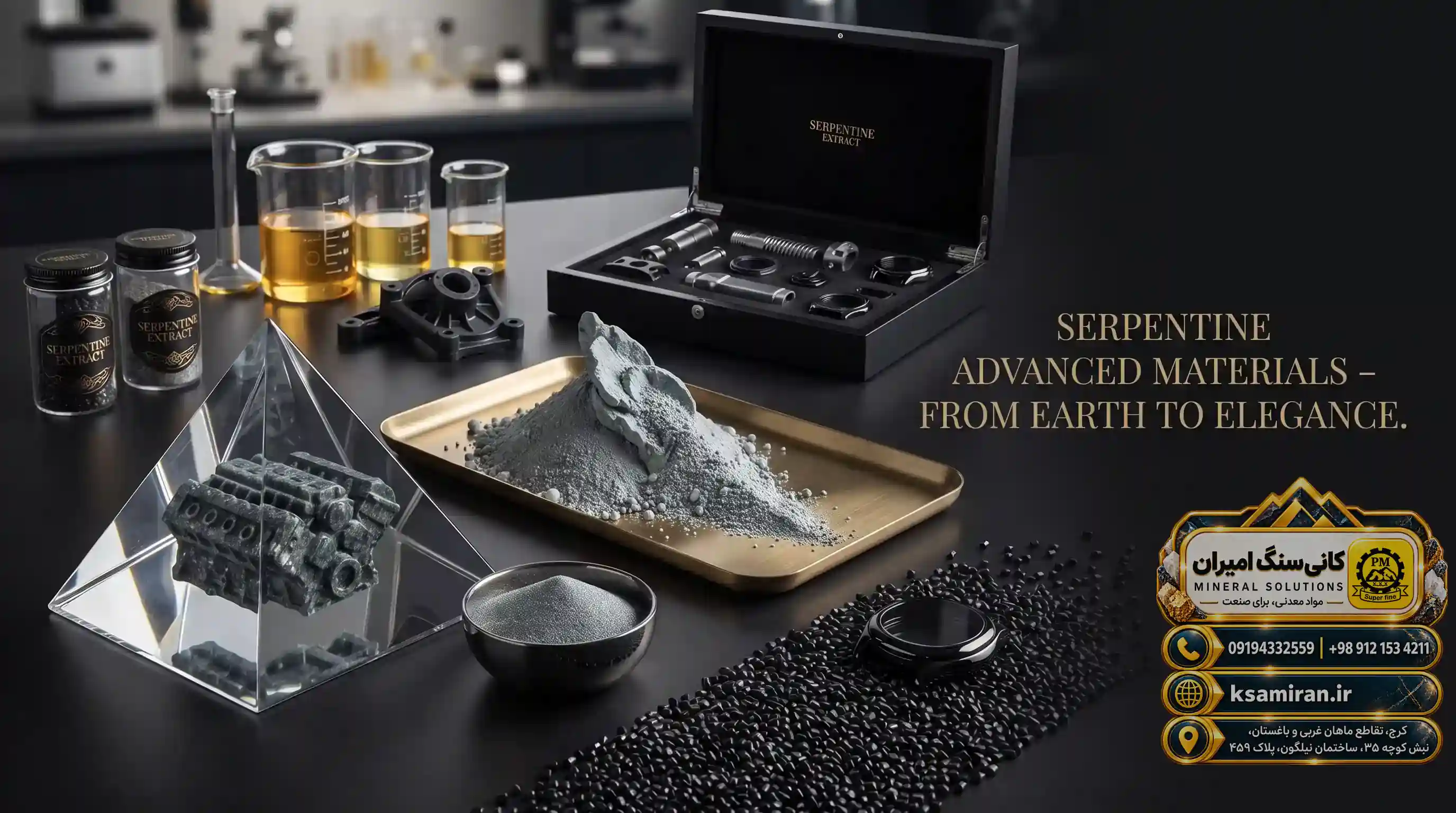
The Impact of Industrial Talc on the Paint and Protective Coatings Industry
In the paint and resin industry, the durability of the coating against atmospheric agents, moisture, and ultraviolet radiation is of vital importance. This mineral is used as an efficient extender pigment and filler in various types of paints. The layered structure of this powder's particles creates an overlap in the paint film and forms a protective barrier against the penetration of water and moisture to the substrate surface.
This protective barrier prevents the corrosion of metal surfaces under the paint and drastically increases paint stability outdoors. In addition, this material helps control gloss, improves viscosity, and prevents paint settling in storage. To compare the impact of various minerals on the gloss and durability of coatings, reading the article an examination of kaolin's impact on the gloss and durability of industrial coatings would be worthwhile.
By using products supplied by the Kani Sang Amiran Project with a mesh range of 450 to 1000, paint manufacturers can produce coatings with higher mechanical resistance and longer lifespan that exhibit unparalleled stability against harsh environmental conditions.
Technical Review of the Role of the 450 to 1000 Mesh Range in Final Quality
The particle size of minerals is one of the key parameters in determining the final quality of industrial products. The mesh range of 450 to 1000 is recognized as one of the widely used standards in the processing of this mineral. Particles in this range have specific micron dimensions that create an unmatched balance between surface and bulk properties.
Coarser meshes may make the final surface uneven, and much finer meshes create challenges in terms of caking and energy consumption during the mixing process. Therefore, the mesh range of 450 to 1000 is considered an optimal point for various uses such as polymers, rubber, paint, and industrial products, bringing excellent blending and desirable mechanical properties.
Utilizing mode processing equipment, the Kani Sang Amiran Project produces and supplies this powder with high precision within this mesh range. This precision in granulation allows manufacturers to execute their formulations with greater peace of mind and bring products with uniform quality and high lifespan to the market.
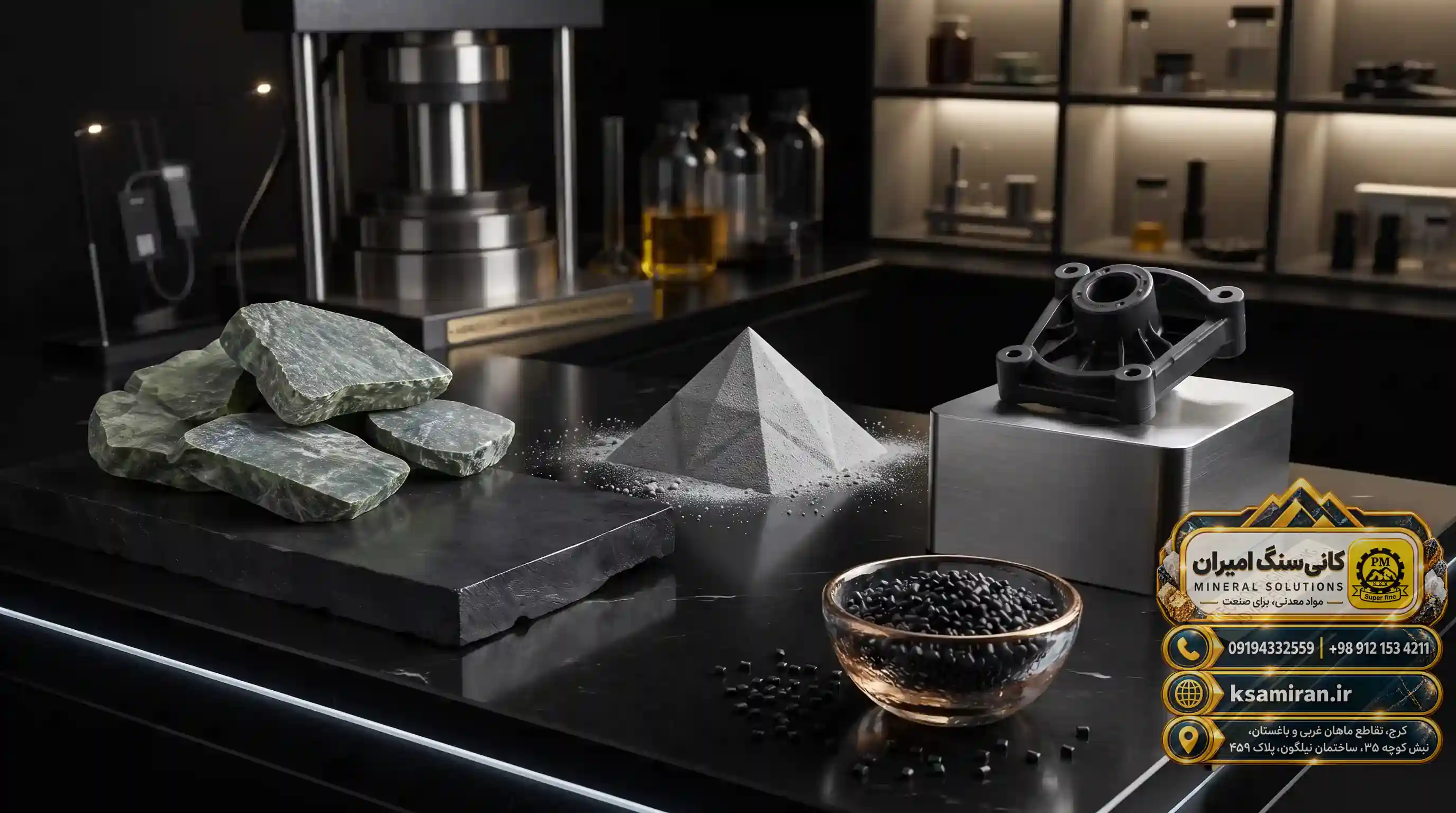
Economic and Environmental Benefits of Using Industrial Talc
In addition to improving technical properties and increasing product lifespan, the use of high-quality minerals also brings significant economic benefits. As a cost-effective filler, this material can replace a portion of more expensive raw materials (such as resins and pure polymers) without any loss in quality, which significantly helps reduce final production costs.
From an environmental perspective, greater durability of final goods means reduced waste disposal, lower consumption of raw materials for reproduction, and reduced negative impacts on the environment. Products that become more resistant using this powder wear out later and have a longer lifecycle, which benefits both the manufacturer and the final consumer.
By offering standard mineral products, the Kani Sang Amiran Project has provided industries with access to high-quality and economical raw materials. For more information and to view product details, visit the introduction page of industrial talc to get acquainted with the complete specifications of this mineral.
Conclusion and Summary Regarding the Role of Industrial Talc in the Durability of Goods
Increasing the lifespan of industrial products requires the intelligent selection of raw materials. Thanks to its flaky structure, unique softness, chemical inertness, and thermal stability, this mineral powder has managed to secure a firm foothold in polymer, rubber, paint, and other industrial applications. By improving mechanical properties, creating a protective barrier against destructive agents, and reducing inteal stresses, this material dramatically increases the durability of parts.
Care in selecting the appropriate mesh range (450 to 1000) plays an important role in the homogeneous distribution of particles and achieving the best result. By relying on the quality of the supplied minerals, manufacturers can upgrade their production standards and introduce high-quality and durable products to the market.
Ultimately, investing in premium raw materials not only optimizes production costs but also brings customer satisfaction and brand credibility. By continuously supplying standard minerals, the Kani Sang Amiran Project is a reliable companion for industrialists on the path of producing high-quality and long-lasting products.
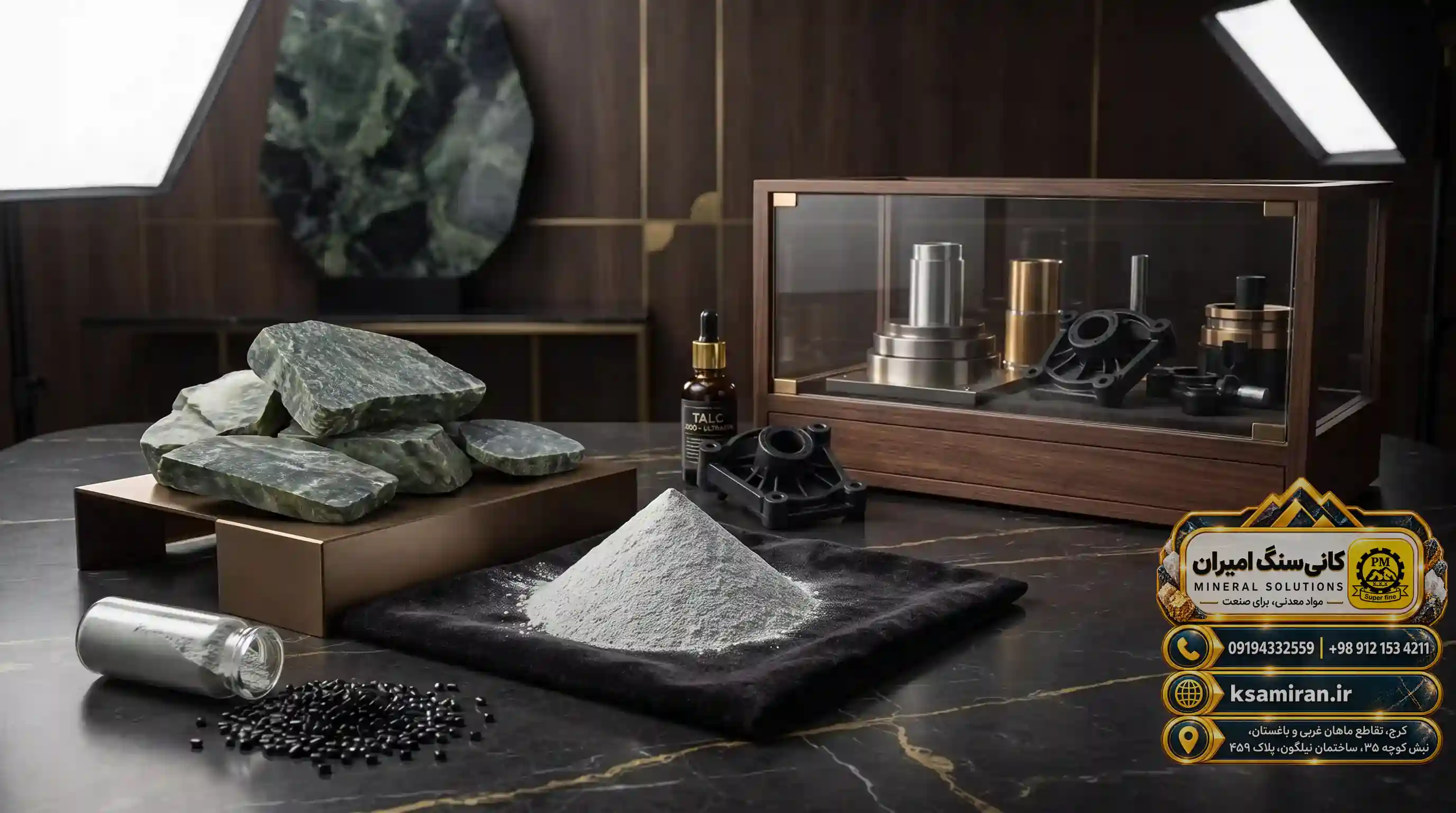
| Question | Answer |
|---|---|
| What is industrial talc? | It is a hydrated mineral magnesium silicate with a flaky structure used in the polymer, rubber, and paint industries. |
| What is the mesh range of this product? | This mineral powder is supplied in the mesh range of 450 to 1000 by the Kani Sang Amiran Project. |
| What are the main applications of this material? | Polymer products, rubber products, paint, and various industrial products. |
| How does it increase the lifespan of polymer products? | By improving the flexural modulus, tensile strength, and creating a barrier against moisture and gas penetration. |
| Is it also used in the paint industry? | Yes, it is used as an extender pigment and to create a protective barrier against corrosion and atmospheric agents. |
| Why is the layered structure of this material important? | The layered structure helps improve mechanical properties and increases resistance to wear and tearing. |
| What is the economic advantage of using this filler? | Reducing final production costs by replacing a portion of expensive materials without loss of quality. |
| What is its role in rubber products? | As a reinforcing agent, it improves the abrasion resistance and dimensional stability of rubber parts. |
| How can one obtain more information? | By visiting the industrial talc product page on the Kani Sang Amiran Project website. |
| What is the hardness of this mineral? | This material has a hardness of 1 on the Mohs scale and is very soft. |
Kani Sang Amiran Project — Specialized reference for the production and supply of industrial minerals
برچسب: Industrial Talc,The Impact of Industrial Talc on Increasing Product Lifespan,
نویسنده: رساوب آفرین