
درباره سایت
آخرین مطالب
- انتخاب اکسید آهن قرمز (اخرا) برای بهبود کیفیت پیگمنت و پوششهای رنگی
- تامین کربنات کلسیم با دانهبندی دقیق جهت استفاده در مستربچ
- تأمین تخصصی سیلیس برای مصالح ساختمانی، شیشه و صنایع سرامیک
- ویژگیهای فنی بنتونیت کانی سنگ امیران برای کاربردهای خاص
- فلدسپات کانی سنگ امیران برای شیشه کاشی و سرامیک
- کاربرد تالک سفید درجه یک در فرمولاسیون پیشرفته رنگ و محصولات کاغذی
- اکسید آهن قرمز (اخرا) کاربردی جهت تولید محصولات سرامیکی و پوشش
- مشخصات فنی اکسید آهن قرمز (اخرا) مناسب برای پوشش و تولید پیگمنت
- مشاوره تخصصی خرید کربنات کلسیم بر اساس نیاز دقیق صنعت شما
- انتخاب تالک سفید صنعتی مناسب برای تولیدات کاغذ و مستربچ
امکانات وب
An Introduction to the Importance of Discoloration in Masterbatch and the Role of Minerals
The production of masterbatches and polymer compounds is one of the most sensitive stages in the plastics industry, where maintaining color stability and preventing undesirable changes is of critical importance. Many manufacturers face the challenge of yellowing, cloudiness, or shifts in color tone, which usually occur due to chemical reactions, thermal degradation, or the incompatibility of fillers with the polymer matrix. In this context, using appropriate mineral fillers such as coated calcium carbonate can be presented as an effective solution.
Discoloration in polymer products not only affects the final appearance of the part but is also a sign of structural quality loss and polymer degradation due to process heat. Understanding the root causes of these changes and carefully selecting raw materials is the key to achieving high-quality and standardized products on industrial production lines.
The Kani Sang Amiran project, by providing high-quality mineral products, strives to elevate polymer industry standards. Examining the mechanisms by which coated materials affect the optical and thermal behavior of polymers helps industrialists make more informed choices in their formulations.
In this article, we take a detailed look at the reasons for masterbatch discoloration and the vital role of surface coatings on mineral particles to determine how the color stability and appearance quality of polymer parts can be maximized.
Chemical and Physical Structure of Coated Calcium Carbonate and Its Characteristics
Coated calcium carbonate is a type of widely used mineral whose particle surface is coated with a layer of organic material, usually fatty acids such as stearic acid. This surface coating significantly changes the physical and chemical properties of the powder, distinguishing it from ordinary samples. The available mesh range of products typically varies between 450 and 3500 mesh, providing access to very fine and micronized particles for various applications.
The main difference between coated and uncoated samples is their hydrophobicity (water-repellent nature). This feature prevents the powder from absorbing moisture and stops particles from clumping inside the polymer matrix. The uniform distribution of particles in the appropriate mesh size has a direct impact on improving the optical and mechanical properties of compounds.
To better understand the behavior of these materials in various industrial formulations, it is suggested to study the comprehensive guide to using coated calcium carbonate in paint making, which examines the various dimensions of its application. These features help particles disperse well in the polymer, preventing the creation of dead spots or unwanted changes.
Selecting the precise mesh suitable for the final application type ensures the optimal performance of the material in various industrial processes, including the production of profiles, cables, and PVC flooring.

Main Causes of Discoloration in Masterbatch and Polymer Compounds During the Production Process
Discoloration of masterbatches during extrusion and molding processes can be caused by multiple factors. Thermal oxidation of the polymer, undesirable reactions between additives, and the physical incompatibility of fillers are among the most significant. When ordinary mineral particles are added to the polymer, due to their active surfaces and moisture absorption, they can act as catalysts for certain degradative reactions, resulting in yellowing or discoloration of the final product.
Another factor is the accumulation and clumping of mineral particles in specific points of the polymer, which creates localized stresses and changes in surface light reflection. This phenomenon makes the product look cloudy and destroys color uniformity. To counter this challenge, thermal stability and optimal particle dispersion are of extreme importance.
The specialized article How does coated calcium carbonate help the thermal stability of polymers? explains in detail how the surface coating of this material prevents thermal degradation and color changes caused by high heat.
A precise understanding of these mechanisms helps polymer engineers prevent losses caused by discoloration by strictly controlling process parameters and using processed raw materials.
The Role of Surface Coating in Improving Compatibility and Preventing Optical Degradation
The fatty acid coating on the particles acts as a compatibilizing bridge between the mineral factors and the polymer base. This coating reduces the surface energy of the particles and prevents unwanted reactions between calcium carbonate and other masterbatch additives. As a result, the probability of discoloration caused by chemical incompatibilities is minimized.
In addition to chemical stability, this coated structure plays an important role in improving the physical and optical resistance of parts. For more information on this subject, studying the article How does coated calcium carbonate increase the resistance of polymer products? is recommended, as it examines the positive effects of this material on product durability.
Preventing particle accumulation and creating homogeneous dispersion makes the reflection of light from the polymer surface more uniform and prevents the occurrence of unwanted dark or light shadows. This is especially double-important in the production of sensitive colored masterbatches.
Using this material in the appropriate mesh range (450 to 3500) helps ensure minimal optical interference in the product and that the transparency or color coverage is preserved in the best possible way.
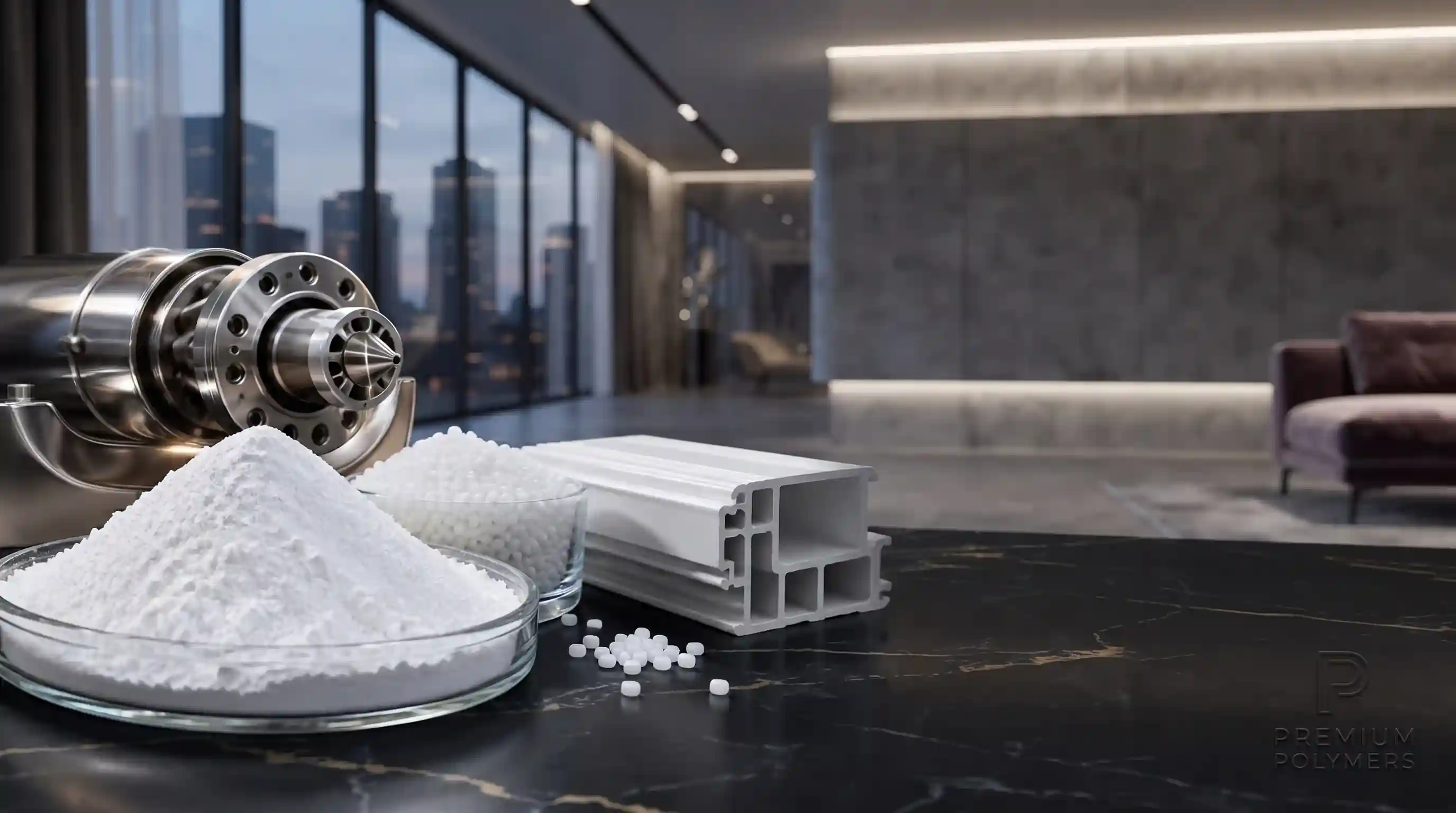
Main Applications in the Compounding, Granule, and PVC Parts Industries
This processed mineral has a special place in various polymer industries. In the production of polymer compounds and granules, maintaining color stability and mechanical properties are major conces for producers. The use of coated powder, due to better processability, creates granules with a uniform appearance and no color change.
In the industries of profile production, cables, flooring, and PVC parts, this material also acts as an efficient filler. In PVC products, sensitivity to heat is high, and any thermal degradation can quickly lead to discoloration (especially yellowing of profiles or cables). The presence of a protective surface coating prevents these destructive reactions.
Selecting the appropriate mesh for each of these applications is very important; for example, in the production of thin films or sensitive PVC parts, higher meshes (up to 3500 mesh) are used so that surface quality and color stability are completely preserved.
The Kani Sang Amiran project, by supplying these products to various industries, has provided a suitable platform for enhancing the quality and durability of polymer products so that producers can use these materials in their production lines with peace of mind.
Mechanisms for Preventing Yellowing and Clouding of Masterbatches
Yellowing of masterbatches is usually caused by the degradation of the base polymer due to extruder heat or reaction with impurities present in ordinary fillers. Particles without a coating, due to having active surface groups, absorb atmospheric moisture and cause hydrolysis or oxidation of the polymer at high temperatures, the consequence of which is discoloration of the product.
Coated calcium carbonate, by having a water-repellent layer, prevents moisture absorption and improves the thermal degradation temperature of the compound. This feature prevents the creation of free radicals and, consequently, prevents masterbatch yellowing.
Furthermore, the particle size distribution in the 450 to 3500 mesh range helps optimize the contact surface of particles with the polymer and ensures that no localized hot spots that cause discoloration are created.
This precise chemical and physical mechanism ensures that masterbatches produced with this mineral material retain their original color well, even after several recycling stages or continuous heating.
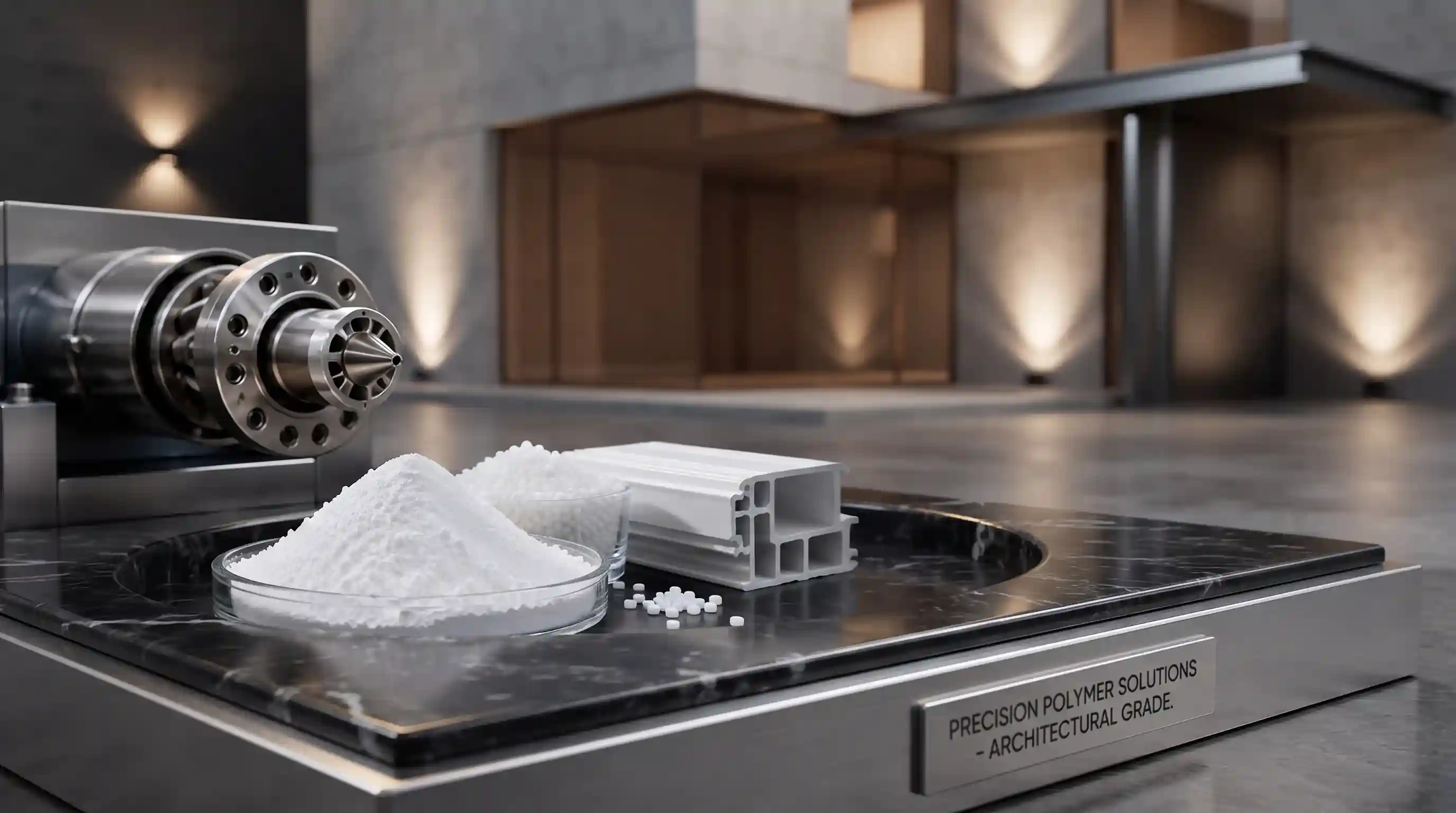
Economic and Qualitative Advantages of Using Coated Fillers
The use of processed mineral fillers, in addition to technical advantages, also has high economic justification for production units. Reducing the amount of color degradation means reducing production waste, reducing the need for more expensive pigments (color masterbatch), and increasing the efficiency of extrusion lines.
A uniform appearance quality and the absence of color spots or tonal changes in the final products increase customer satisfaction and solidify the brand's position in the market. Manufacturers who use these materials have better control over the quality parameters of their product.
The diverse mesh range (from 450 to 3500 mesh) allows formulators to choose the best option according to the budget and technical needs of the product, creating an appropriate balance between final price and quality.
The Kani Sang Amiran project, with a focus on quality and industry needs assessment, offers its products in such a way that they bring the highest added value to the plastics and polymer industries.
Conclusion and Practical Recommendations for Masterbatch and Polymer Producers
Ultimately, the discoloration of masterbatches and polymer parts is one of the preventable challenges in the plastics industry. A precise understanding of the role of mineral materials and their correct selection can significantly improve the final quality of products. Coated calcium carbonate, with features such as hydrophobicity, high thermal stability, and excellent dispersion, is a reliable solution for preventing discoloration and quality loss.
Producers must pay sufficient attention to selecting the mesh corresponding to the type of application (compounds, granules, profiles, cables, flooring, and PVC parts) to achieve the best result. Adhering to formulation standards and using processed raw materials is the key to success in today's competitive markets.
Following the technical points mentioned in this article helps production lines continue their operations with the least amount of waste and the highest color stability. The Kani Sang Amiran project is always a supporter of industrialists on the path to improving the quality of national production.

| Question | Answer |
|---|---|
| What is coated calcium carbonate? | A type of mineral powder whose particle surface is coated with organic material (fatty acid) to make it water-repellent. |
| Why does this material prevent masterbatch discoloration? | The surface coating prevents moisture absorption and destructive thermal chemical reactions with the polymer. |
| What is the mesh range of this product? | The mesh range of this product varies between 450 and 3500 mesh. |
| What are the main applications of this material? | Compounds, polymer granules, profiles, cables, flooring, and PVC parts. |
| What is the difference between coated and ordinary samples? | The coated sample is water-repellent and has better dispersion in the polymer matrix. |
| Is this material used in the production of PVC profiles? | Yes, it is widely used due to preventing yellowing and improving thermal stability. |
| How does it prevent particle clumping? | The fatty acid coating reduces surface energy and prevents particles from sticking together. |
| Does it affect the thermal stability of the polymer? | Yes, it improves the thermal degradation temperature and prevents optical degradation. |
| What mesh is suitable for cables and profiles? | Depending on the formulation, it is selected from the 450 to 3500 mesh range. |
| How can this product be obtained? | It can be ordered through the Kani Sang Amiran project website. |
Kani Sang Amiran Project — Specialized reference for supplying mineral and industrial materials for polymers.

برچسب: Coated Calcium Carbonate,How Does Coated Calcium Carbonate Prevent Masterbatch Discoloration?,
نویسنده: رساوب آفرین