
درباره سایت
آخرین مطالب
- سیلیس کانی سنگ امیران مناسب شیشه و سرامیک با دانهبندی ۱۰ تا ۴۵۰
- سفارش سیلیس کانی سنگ امیران در شیشه و سرامیک در مش ۱۰ تا ۴۵۰
- کائولن باکیفیت کانی سنگ امیران برای صنایع سرامیک مش 450 تا 1500
- سیلیس پروژه کانی سنگ امیران برای صنایع شیشه در مش ۱۰ تا ۴۵۰
- اکسید لیمونیت (گل ماش) دقت فنی در تولید پودر صنعتی شما
- خرید سیلیس کانی سنگ امیران مناسب صنعت شیشه دانهبندی ۱۰ تا ۴۵۰ مش
- سفارش کربنات کلسیم ۱۲۵۰ مش با دانهبندی دقیق برای کابل
- فلدسپات باکیفیت کانی سنگ امیران برای محصولات سرامیکی
- تالک صنعتی برای شراکت در فرمولاسیون
- استعلام قیمت کائولن کانی سنگ امیران کاغذسازی با مش 450 تا 1500
امکانات وب
An Introduction to the Importance of White Talc in Mode Industries
In today's competitive world, various industries are constantly looking for high-quality and cost-effective raw materials to enhance the level of their products. In this regard, minerals are recognized as the foundation of many industrial processes. The mineral white talc is considered one of the most widely used fillers and additives in various industries, having created a profound transformation in production quality with its unique characteristics.
Kani Sang Amiran Project, with a focus on supplying high-quality minerals, offers this product with the highest quality standards for various industries. Understanding the key role of this material in improving the physical and mechanical properties of products is of vital importance to any manufacturer. To lea more about the extensive applications of this material, you can visit the white talc page and check its exact specifications.
Characteristics such as softness, chemical stability, brightness, and non-toxicity have made this material the first choice in manufacturing industries. In the rest of this article, we will examine the various dimensions of using this valuable material in the masterbatch, compound, paint, paper, and ceramic industries to determine why its presence in production lines is essential.
The Role of White Talc in the Masterbatch and Compound Production Industry
The polymer and plastic industry requires additives that, in addition to improving mechanical properties, help reduce finished costs. The use of white talc in the production of polymer masterbatches and compounds is one of the standard engineering solutions that significantly increases the dimensional stability and thermal resistance of plastic parts.
The mesh range of this material, which varies between 450 and 2500 mesh, allows for its uniform distribution in the polymer matrix. This leads to improved flexural modulus, hardness, and reduced shrinkage of injection-molded parts. Also, a more detailed examination of this subject is well explained in the specialized article The role of white talc in improving the appearance quality of polymeric products, which indicates the importance of this mineral powder in enhancing aesthetics and surface quality.
Manufacturers can use different granulations of this product to control the level of gloss or matte finish of the final product and bring the tensile properties of polymers to the desired level. These advantages have made this material an integral component of mode compounding formulations.
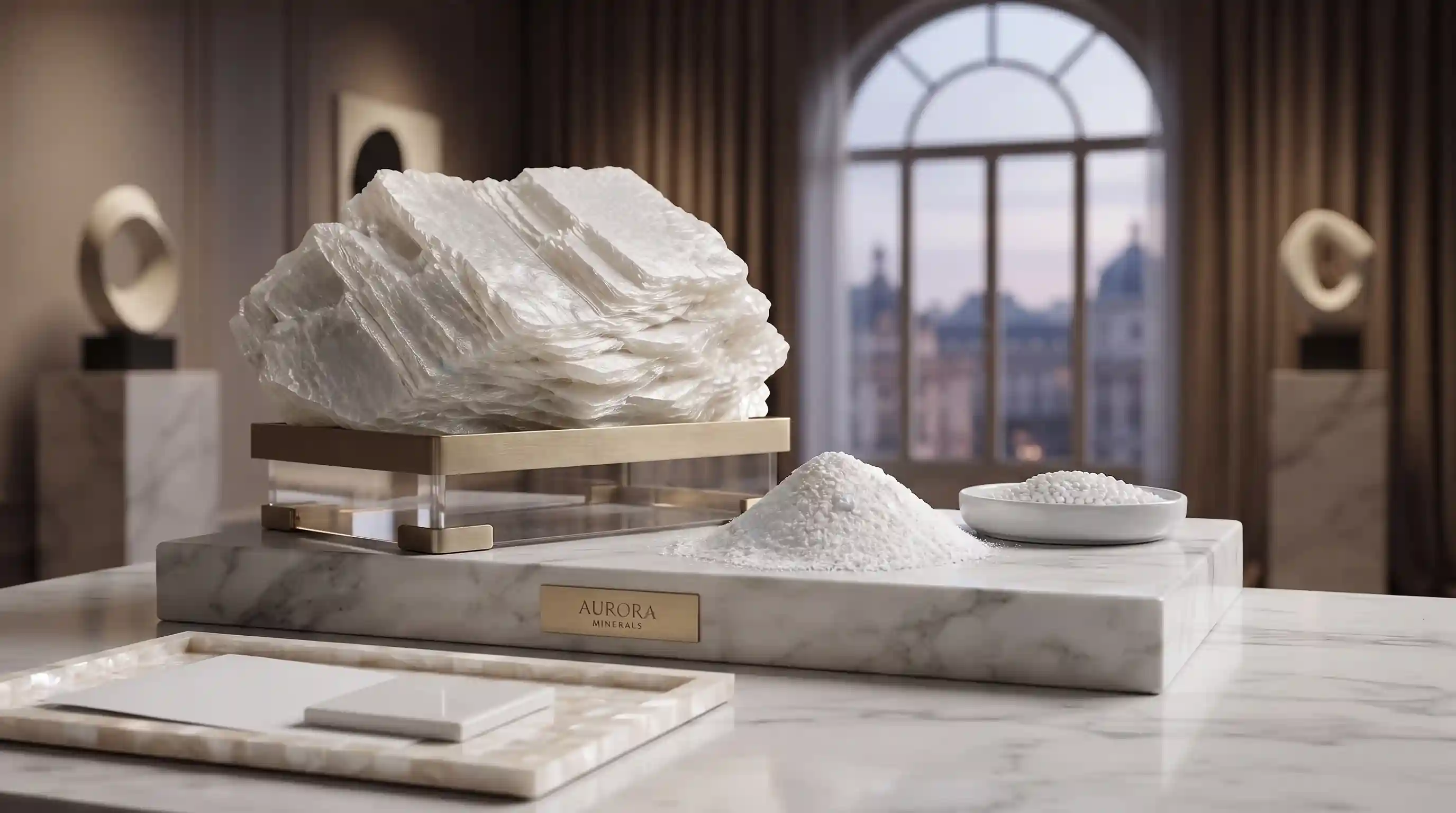
Improving the Quality of Paints and Industrial Coatings with White Talc
In the paint industry, the choice of pigments and fillers has a direct impact on coverage, durability, and the appearance of the paint. White talc is used as an excellent functional filler in the formulation of various architectural, industrial, and anti-corrosion paints. The platy or layered structure of this material ensures that the paint has high resistance to moisture penetration and atmospheric factors after drying.
Adding this mineral powder to paint significantly helps improve storage stability, prevent rapid pigment settling, and increase hiding power. In addition, the consumption of this material plays a key role in reducing unwanted gloss in matte paints and improving the scratch resistance of the paint layer. To better understand the importance of mineral powders in improving mechanical and structural properties, reading the article Examining the role of white barite in improving the mechanical properties of composites provides a more comprehensive perspective for industrialists.
Kani Sang Amiran Project, by supplying standard granulations in the mentioned mesh range, covers the diverse needs of paint manufacturers in the best possible way and guarantees the final quality of the coatings.
Specialized Application of White Talc in the Paper Industry
The paper industry is always looking for raw materials that help improve the whiteness, opacity, and printability of paper. White talc, due to its unique optical and physical characteristics, is considered one of the best fillers and coating agents in the paper and cardboard production process.
When this material is used in paper pulp, it fills the pores between cellulose fibers well and creates a smooth, even surface with optimal ink absorption. This feature improves print quality, reduces ink consumption, and increases the clarity of images and texts printed on paper. Also, the inherent softness of this material prevents wear on equipment and blades of papermaking machines and increases the useful life of the machinery.
The 450 to 2500 mesh range allows paper mills to choose the most appropriate particle size depending on the type of paper produced (from packaging cardboard to high-quality writing paper) and achieve maximum productivity.

The Vital Role of White Talc in the Ceramic and Tile Industries
In the ceramics industry, controlling dimensional changes, improving thermal resistance, and reducing firing temperatures are among the primary conces of production engineers. White talc, acting as a refractory material and flux, has a very prominent presence in the body and glaze of ceramic products.
Adding appropriate amounts of this material to the ceramic body formulation reduces the coefficient of thermal expansion, consequently increasing the part's resistance to thermal shock significantly. Furthermore, in the production of wall and floor tiles, this mineral powder helps reduce water absorption and increase mechanical strength.
Kani Sang Amiran Project, by offering high-quality mineral products, helps the ceramic industry bring products with higher strength, flawless surfaces, and excellent quality stability to the market and upgrade production standards.
The Effect of Mesh Range on the Efficiency and Performance of White Talc
One of the most important parameters in choosing minerals is the particle size or the mesh range. For the white talc product, the standard mesh range is defined between 450 and 2500 mesh, and each of these granulations has its own specific applications and characteristics in production lines.
Particles with lower meshes (such as 450 mesh) are usually used in industries that require deep filling and structural mechanical properties, while higher meshes (such as 2500 mesh), due to their very high surface area, are used in the production of high-quality paints, thin masterbatches, and precision coatings. This diversity in granulation allows manufacturers to optimize their formulation exactly according to the technical requirements of the final product.
To gain more information about the general importance of this category of materials in the industry, reading the article The key role of industrial talc in improving the quality of manufactured products is recommended, as it provides a deeper insight into industrial standards.
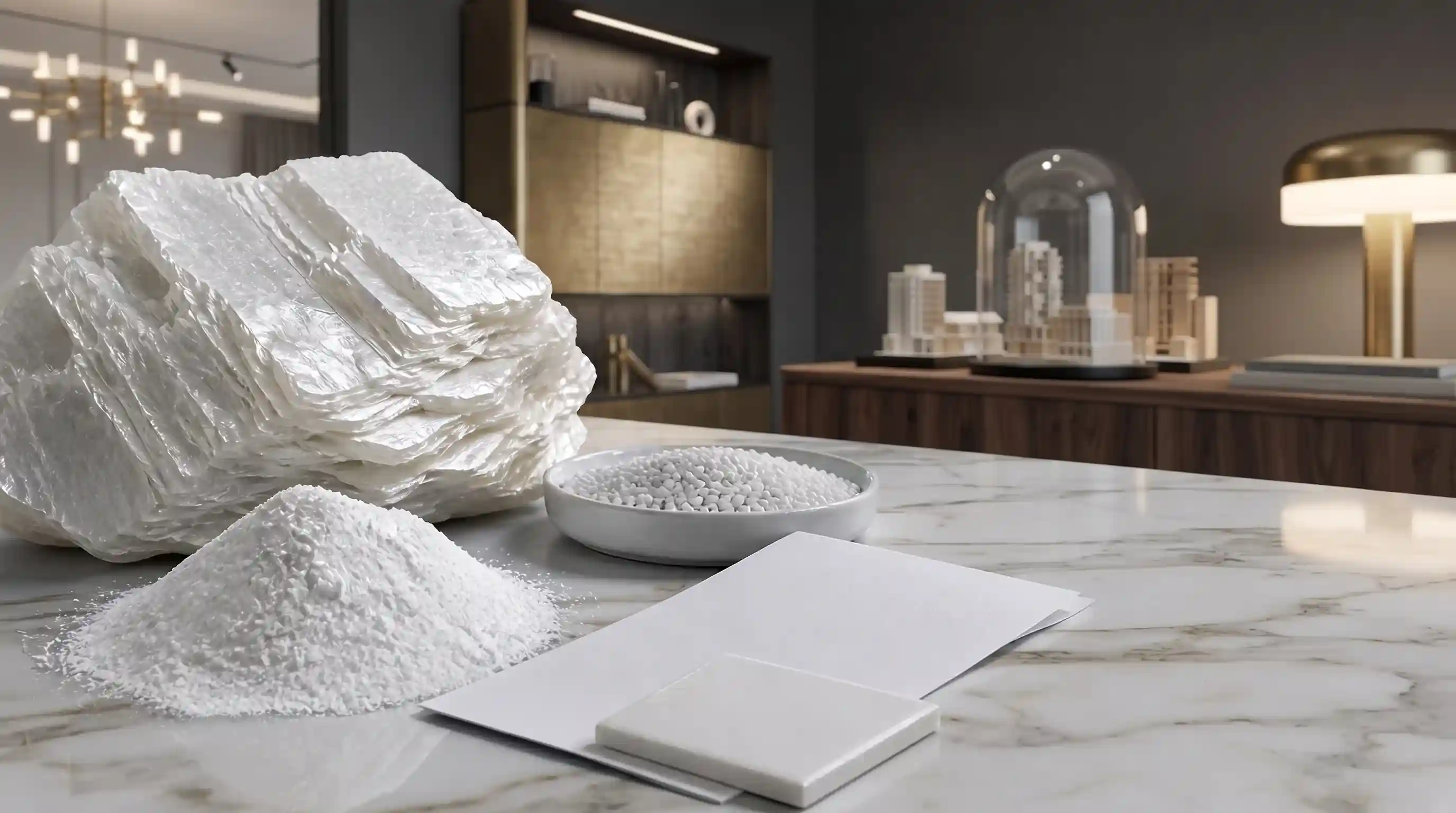
Economic and Technical Advantages of Using White Talc for Manufacturers
The use of high-quality raw materials is always pursued with two main objectives: improving technical quality and optimizing production costs. White talc, due to its relative abundance and exceptionally high efficiency, creates an unparalleled balance between cost and the added value of the product.
From a technical standpoint, improving melt flow properties in polymers, increasing resistance to ultraviolet rays, improving anti-sticking properties, and increasing surface hardness are among the obvious advantages of this material. From an economic perspective, replacing a portion of expensive polymer materials or pigments with this high-quality filler leads to a significant reduction in production costs without sacrificing quality.
Kani Sang Amiran Project, through the stable and reliable supply of this mineral, assures industry owners that their raw material supply chain will always remain active and uninterrupted.
Conclusion and Future Outlook for the Application of White Talc in Industry
Ultimately, examining the diverse applications of white talc in the masterbatch, compound, paint, paper, and ceramic industries shows that this mineral acts beyond a simple filler and is recognized as a strategic quality improver.
Advances in production technologies and the growing need of industries for higher-quality raw materials have doubled the importance of using micronized mineral powders with standard mesh ranges (450 to 2500). Kani Sang Amiran Project, relying on technical knowledge and a commitment to quality, has provided the best products to improve the level of national production.
Investing in the purchase of standard and high-purity raw materials will ensure the durability, beauty, and performance of the final product in domestic and inteational markets and will help industries maintain their competitive advantage.
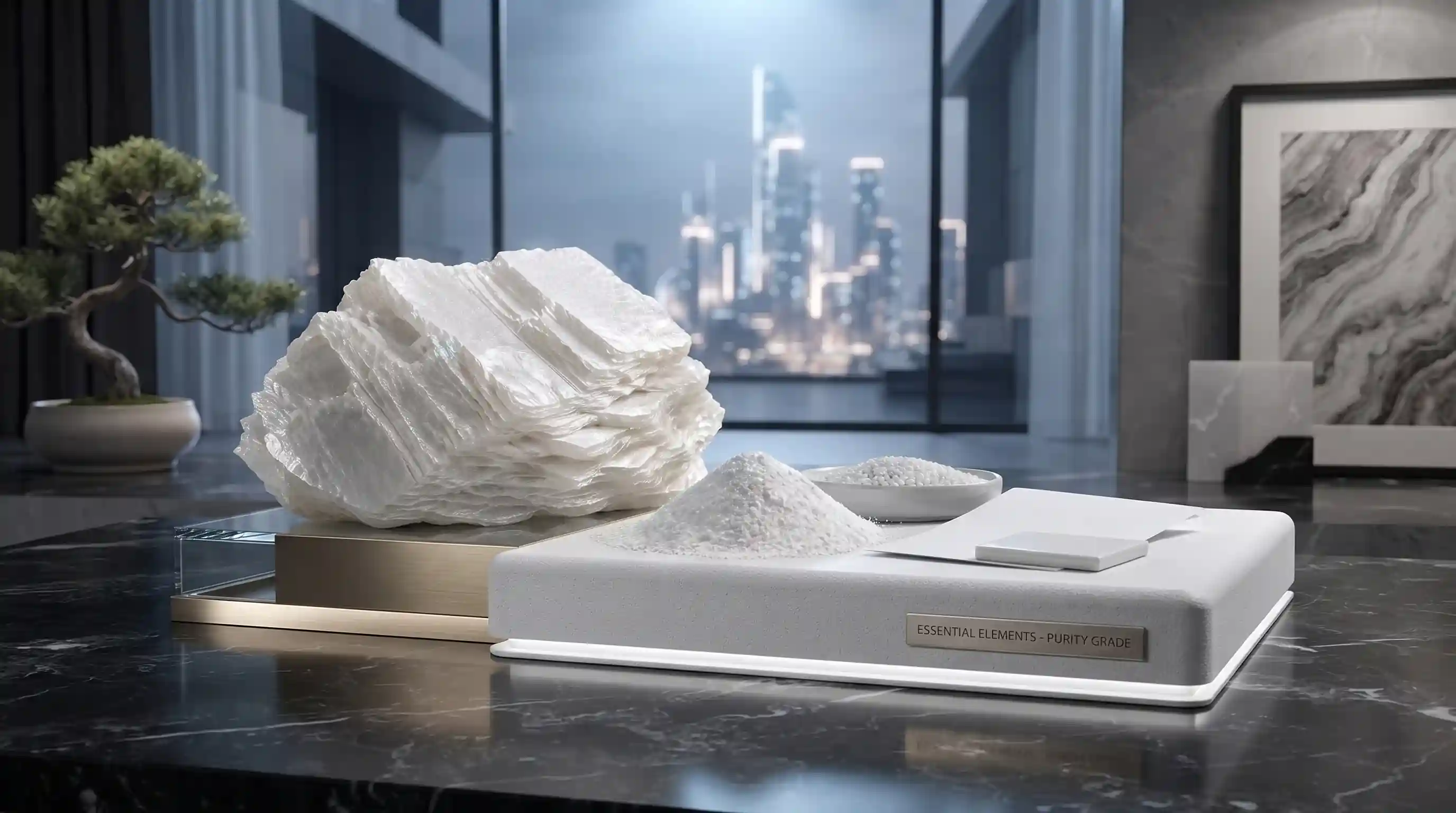
| Question | Answer |
|---|---|
| What is white talc and what are its applications? | It is a powdered mineral used in the masterbatch, compound, paint, paper, and ceramic industries as a filler and quality improver. |
| What is the mesh range of the supplied white talc? | This product is supplied in the standard mesh range of 450 to 2500 mesh. |
| Is this material used in the plastic and masterbatch industry? | Yes, it is used to improve mechanical properties, dimensional stability, and increase the thermal resistance of polymer parts. |
| What is the role of this material in the paint industry? | It helps improve coverage, moisture resistance, gloss control, and increases paint durability. |
| How does white talc help the paper industry? | By filling cellulose pores, it increases the whiteness, surface smoothness, and printability of paper. |
| What is the application of this material in the ceramic industry? | It acts as a flux, improving resistance to thermal shock and the strength of the ceramic body. |
| Why is the use of different meshes important? | The varied mesh range (450 to 2500) allows for precise adjustment of the aesthetic and mechanical properties of the final product. |
| Is using this material economically justified? | Yes, as a high-quality filler, it helps reduce production costs without sacrificing quality. |
| How can this product be purchased? | It can be ordered through the dedicated product page on the Kani Sang Amiran Project website. |
| Who is the main supplier of this mineral? | Kani Sang Amiran Project operates as a manufacturer and supplier of mineral materials. |
Kani Sang Amiran Project — Specialized reference for the supply and processing of mineral and industrial materials.
برچسب: White Talc,The Key Role of White Talc in Improving the Quality of Manufactured Products,
نویسنده: رساوب آفرین