
درباره سایت
آخرین مطالب
- انتخاب اکسید آهن قرمز (اخرا) برای بهبود کیفیت پیگمنت و پوششهای رنگی
- تامین کربنات کلسیم با دانهبندی دقیق جهت استفاده در مستربچ
- تأمین تخصصی سیلیس برای مصالح ساختمانی، شیشه و صنایع سرامیک
- ویژگیهای فنی بنتونیت کانی سنگ امیران برای کاربردهای خاص
- فلدسپات کانی سنگ امیران برای شیشه کاشی و سرامیک
- کاربرد تالک سفید درجه یک در فرمولاسیون پیشرفته رنگ و محصولات کاغذی
- اکسید آهن قرمز (اخرا) کاربردی جهت تولید محصولات سرامیکی و پوشش
- مشخصات فنی اکسید آهن قرمز (اخرا) مناسب برای پوشش و تولید پیگمنت
- مشاوره تخصصی خرید کربنات کلسیم بر اساس نیاز دقیق صنعت شما
- انتخاب تالک سفید صنعتی مناسب برای تولیدات کاغذ و مستربچ
امکانات وب
Introduction to the Importance of Mineral Fillers in Polymer Industries
The polymer and plastic industries are constantly seeking to improve the mechanical, aesthetic, and economic properties of their products. In this regard, the use of mineral fillers has found a special place. As fillers, minerals not only optimize the volume of consumed materials but can also significantly enhance the physical and thermal properties of polymers. Among various mineral fillers, choosing the right additive plays a key role in the final success of the product.
One of the most widely used materials in industrial formulations is white barite, which, due to its unique characteristics such as high density and chemical purity, has secured a steady position in various industries. Materials engineers and polymer formulation designers constantly strive to strike a proper balance between mechanical properties and production costs, which is why a precise understanding of the characteristics of mineral fillers is of high importance.
In addition to baryte, other minerals such as talc are also used in the polymer industry, each having its own specific advantages and disadvantages. A detailed examination of the behavior of these materials in a polymer matrix allows manufacturers to make informed decisions and choose the best option for their production lines. In the continuation of this article, we intend to provide a comprehensive comparison between white barite and talc in the polymer and plastic industries to reveal the hidden dimensions of each application.
Choosing a suitable filler depends directly on the type of base polymer, the production process, and the final consumer expectations. With the advancement of micronized powder production technology, access to fillers with a more precise particle size distribution is now possible. This allows industries to expect better performance from their polymeric products and maintain their competitiveness in the market.
Introduction to White Barite and Its Structural Characteristics
White barite is a natural mineral based on barium sulfate, known for its brilliant white color and high chemical purity. This material is introduced as one of the most important fillers in paints, coatings, and mineral-filled polymeric products. The stable and neutral chemical structure of this compound makes it highly compatible with most resins and polymers without causing undesirable reactions.
The prominent feature of this mineral is its very high specific gravity or density. This technical specification causes polymers containing this filler to become heavier and perform exceptionally well in applications requiring high density and a sense of rigidity. On the other hand, the particle size distribution of this material plays a decisive role in the final quality of coatings and plastic parts.
During the production process, the powder of this material is produced and supplied in the range of 450 2500 mesh. This wide range of mesh sizes allows manufacturers to use coarser or very fine micronized particles depending on the type of application. The finer particles in this range create a larger contact surface with the polymer matrix and greatly help improve product uniformity.
Specialized studies have shown that examining the role of white barite in improving the mechanical properties of composites can provide a deeper perspective on the strengthening mechanisms of this material. By filling the empty spaces between polymer molecules, this material significantly improves the compressive strength and dimensional stability of parts.
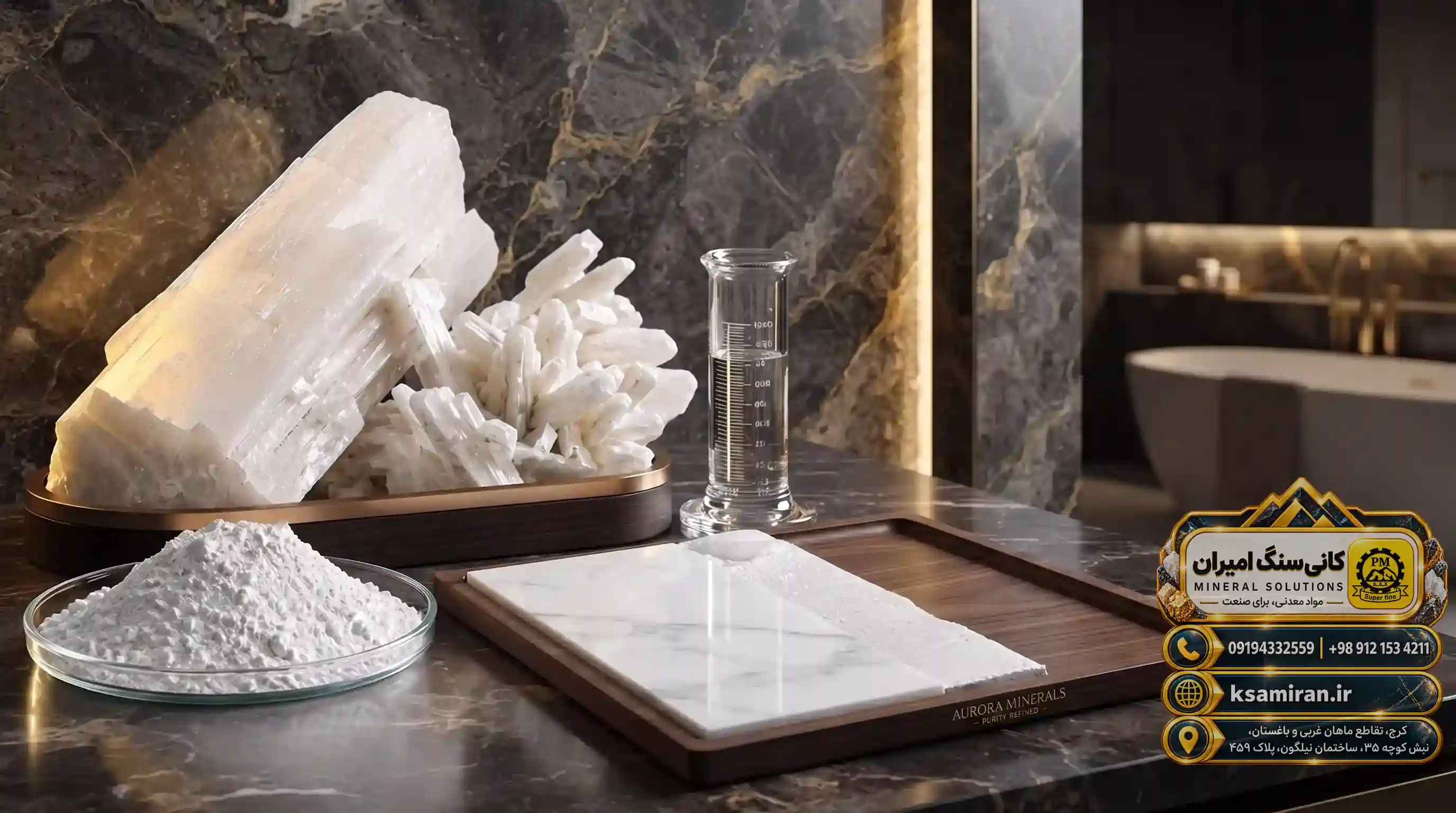
The Role of Talc in Polymer and Plastic Industries
Talc is a hydrated magnesium silicate, known for its layered structure and exceptional softness. This mineral is considered one of the most popular fillers in the plastics industry. The flaky structure of talc causes its particles to align parallel to each other within the polymer matrix, and this feature has a direct impact on the mechanical and thermal properties of plastic composites.
One of the most important advantages of using talc in polymers is increased heat resistance and improved heat deflection temperature (HDT). Plastic parts containing talc show better resistance to deformation at high temperatures. Additionally, this material helps reduce the shrinkage of injection-molded parts and ensures their dimensional stability after cooling.
In addition to mechanical properties, the final appearance of the parts is also influenced by the type of filler. To better understand this issue, studying the specialized article the role of white talc in improving the appearance quality of polymeric products will be very instructive and reveal more details in this regard. This material can significantly optimize the surface gloss and smoothness of plastic parts.
Despite all its advantages, talc has a soft and layered structure which, compared to heavier fillers such as barium sulfate, exhibits different behavior against impact and scratching. Choosing between these two materials entirely depends on the product designer's engineering priorities; is the goal to increase heat resistance or achieve a specific weight and density?
Comparison of Mechanical and Physical Properties of White Barite and Talc
When it comes to comparing the mechanical properties of white barite and talc, the structural differences of these two materials play the main role. White barite, with its high density, is an excellent choice for increasing the bulk weight and rigidity of plastic parts, whereas talc, with its flaky structure, significantly increases the flexural modulus without drastically raising the weight of the part.
In terms of impact resistance, the behavior of polymers filled with these two materials also differs. Due to particle density and hardness, white barite can enhance the compressive strength of the part at optimal amounts. In contrast, due to its layered nature, talc dissipates impact energy within the polymer network to some extent, which depends on the filler loading level.
In the field of coatings and paints, the 450 2500 mesh range for white barite allows the viscosity and flowability of the paint system to be precisely controlled. Talc also acts as a matting agent and improves the adhesion of paint layers in paints. The difference in the refractive index of these two materials also affects the hiding power and transparency of the final layer.
Mineral producers in the Kani Sang Amirhan project have always strived to provide high quality standards for polymer and paint industries through precise processing of their products. A precise understanding of these physical properties helps engineers design better formulations for final products and prevent resource waste.
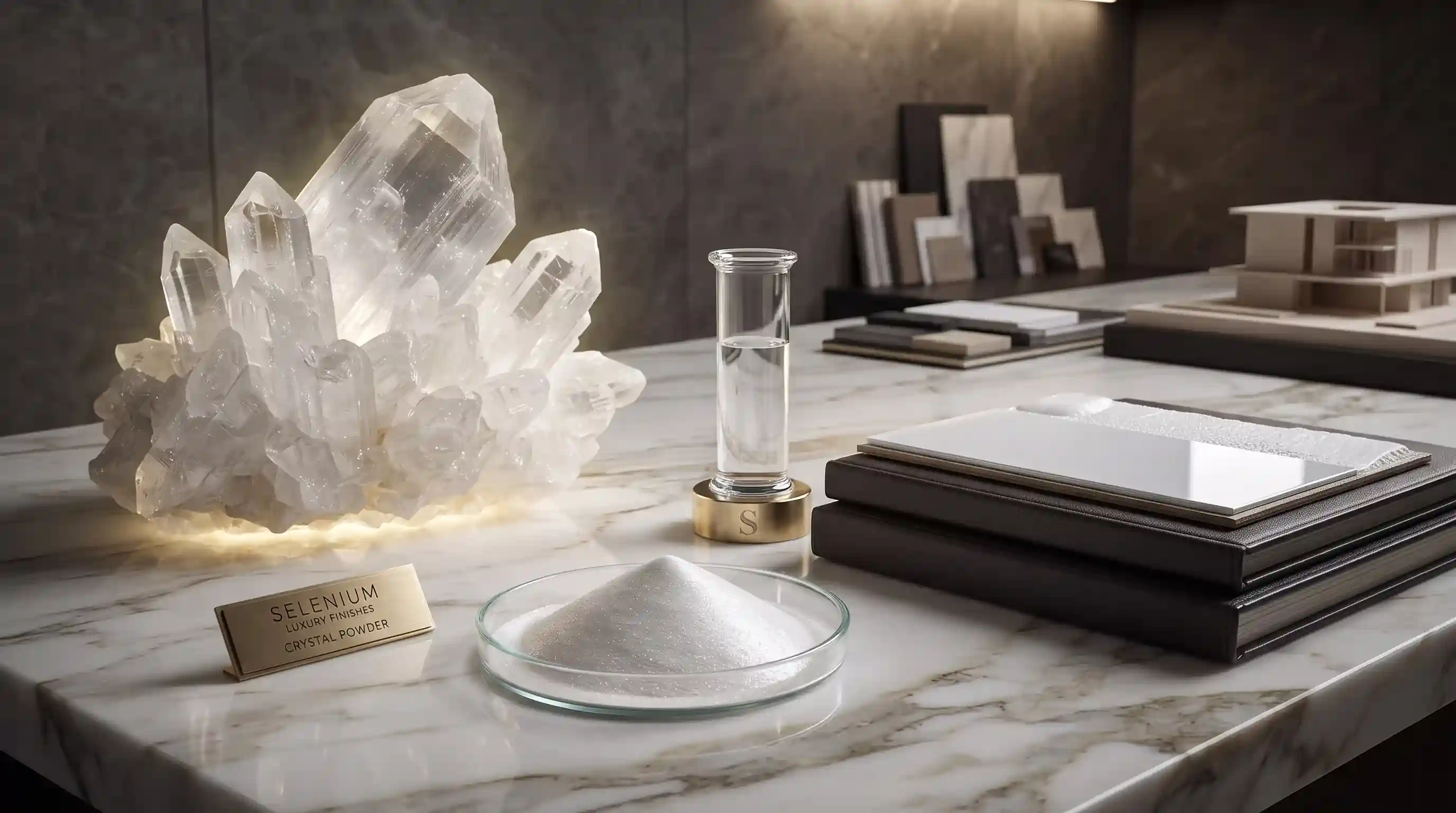
Application of White Barite in Paint, Coatings, and Polymeric Products
As an efficient mineral filler, white barite has wide applications in paints, coatings, and plastic parts. In the paint manufacturing industry, due to its high purity and suitable whiteness, this material acts as an extender and helps reduce titanium dioxide consumption, which is very cost-effective economically.
In mineral-filled polymeric products, white barite helps improve melt flow properties and reduce shrinkage. The 450 2500 mesh range makes it possible for particles to be completely dispersed within the polymer matrix and prevents particle agglomeration. This uniform distribution is essential to achieve homogeneous mechanical properties across all points of the plastic part.
Industrial and moisture-resistant coatings also greatly benefit from the presence of this material. The high density and non-porous structure of white barite prevent the penetration of corrosive agents and moisture into the underlying layers. For this reason, this material is considered a key component in protective and anti-corrosion formulations.
By supplying this high-quality mineral for paints, coatings, and mineral-filled polymeric products, the Kani Sang Amirhan project best covers the needs of various industries. For more information and to view product details, you can visit the dedicated page white barite to examine its complete specifications.
Economic Review and Supply Sustainability of Mineral Fillers
In addition to technical properties, economic aspects and sustainable access to raw materials are among the main conces of production managers and suppliers. Both white barite and talc are abundant minerals in nature, but the cost of their extraction, processing, and milling to reach micronized meshes varies. The use of these fillers significantly helps reduce the final production costs of polymers.
Due to domestic reserve abundance and a relatively straightforward production process, white barite has a competitive finished price. This feature allows paint and polymer industries to keep their product prices optimized in the market without sacrificing quality. On the other hand, the quality of processing and the uniformity of the delivered powder have a direct impact on reducing production line waste.
Also, quality stability across different mineral shipments is of high importance. Fluctuations in particle size or impurity levels can disrupt the entire plastic injection line or paint production. Therefore, collaborating with reputable and experienced suppliers is the key to continuous, high-quality, and economical production in the polymer and paint industries.
Performance comparison of these materials shows that although talc is unmatched in certain thermal applications, in many other cases white barite is considered a more economical and efficient choice due to its high density and chemical purity. A detailed assessment of the project's technical requirements and budget will serve as the guiding light for the final selection.
Challenges and Technical Points in Using Polymer Fillers
The application of mineral fillers such as white barite and talc in polymer matrices is always accompanied by technical challenges. One of the most important problems is weak compatibility between the polar surface of the mineral filler and the non-polar polymer matrix. If this compatibility is not properly managed, the mechanical properties of the part will experience a sharp drop instead of improving.
To overcome this challenge, the use of coupling agents or surface coatings is common. These additives strengthen the bond between filler particles and the polymer, preventing filler separation under mechanical loading. Proper particle distribution in the 450 2500 mesh range also helps reduce these problems because finer particles create better contact surfaces.
Another issue is the increase in polymer melt viscosity when adding high amounts of fillers. This phenomenon can increase injection pressure in molding machines and make processability difficult. Formulation designers must establish a proper balance between the final properties of the part and its processability by optimizing the filler weight percentage.
Finally, precise control of extruder parameters and mixing machines plays a vital role in the quality of the final composite. Improper mixing can lead to particle agglomeration and create weak points in the polymer structure, which is easily preventable by following technical guidelines.
Conclusion and Final Selection Guide for the Suitable Filler
In this article, we examined and compared the performance of white barite and talc in the polymer and plastic industries. It became clear that each of these minerals offers special advantages for specific applications based on their chemical structure, density, and morphology. Talc shines in improving thermal properties and dimensional stability with its flaky structure, while white barite, with its high density and chemical purity, is an unmatched choice for heavy polymeric products, paints, and resistant coatings.
The final choice between these two materials depends entirely on project goals, required technical specifications, weight limitations, and economic budget. A precise understanding of the 450 2500 mesh range and its effect on polymer behavior helps engineers make smarter decisions. Using high-quality sources and reputable suppliers will guarantee success in industrial production.
By offering premium mineral products, the Kani Sang Amirhan project is fully prepared to cover the needs of various industries. To obtain supplementary information and place an order, it is recommended to take a look at the product introduction page white barite and examine its exact technical specifications.
In conclusion, continuous iovation and the application of up-to-date knowledge in polymer formulations are the main keys to survival and growth in today's competitive markets. We hope the information presented in this article has provided you with a clear perspective for better selecting mineral fillers.
| Question | Answer |
|---|---|
| What is white barite and what are its applications? | It is a barium sulfate-based mineral with high purity used in paint, coating, and mineral-filled polymeric product industries. |
| What is the supplied mesh range of white barite? | This product is produced and supplied in the 450 2500 mesh range. |
| What is the main difference between white barite and talc? | White barite has high density and chemical purity, whereas talc has a layered structure and is mostly used to improve heat resistance and dimensional stability. |
| Why is white barite used in the paint industry? | Due to high whiteness, chemical neutrality, and helping reduce titanium dioxide consumption, it acts as an extender. |
| Does white barite affect the mechanical properties of polymers? | Yes, by filling inter-molecular spaces, it helps improve rigidity, density, and dimensional stability of parts. |
| How can the white barite product page be viewed? | By visiting the link of the dedicated product page on the Kani Sang Amirhan website, you can obtain complete information. |
| What is the role of talc in polymeric products? | Talc helps improve appearance quality and increase heat deflection temperature (HDT) in plastic parts. |
| Which filler is more suitable for increasing the weight of plastic parts? | Due to very high density and specific gravity, white barite is an ideal option for increasing the bulk weight of parts. |
| What is the main challenge in using mineral fillers in polymers? | Weak compatibility between the polar surface of the filler and the non-polar polymer matrix, which is managed using coupling agents. |
| Who is the main supplier of these mineral products? | The Kani Sang Amirhan project supplies these products as a mineral manufacturer. |
Specialized Reference for Minerals and Polymers - Kani Sang Amirhan Project

برچسب: White Barite,Comparison of the Performance of White Barite and Talc in Polymer and Plastic Industries,
نویسنده: رساوب آفرین