
درباره سایت
آخرین مطالب
- استخدام أكسيد الليمونيت (الماغش) في صناعات الزجاج
- کاربرد اکسید لیمونیت (گل ماش) در صنایع شیشهسازی
- A Review of Daily Prices for Limonite Oxide (Ocher) in the Market
- چگونه خالص بودن اکسید لیمونیت (گل ماش) را تشخیص دهیم؟
- بررسی قیمت روز اکسید لیمونیت (گل ماش) در بازار
- Application of Limonite Oxide (Gole Mash) in Glassmaking Industries
- كيف تتعرف على نقاء أكسيد الليمونيت (جول ماش)؟
- How to Determine the Purity of Limonite Oxide (Gol Mash)?
- بررسی استانداردهای ایمنی کار با اکسید لیمونیت (گل ماش)
- Comprehensive Guide to Technical Analysis of Limonite Oxide (Gol Mash)
امکانات وب
Introduction to the Importance of Preventing Clumping in Polymer Industries
Polymer industries and compounding production have always faced numerous technical challenges, one of the most significant being the phenomenon of clumping of raw materials and additives. In mode industrial processes, uniform distribution of materials and maintaining the flowability of powders play a vital role in the quality of the final product. When mineral powders are added as fillers to polymer matrices, they have an inherent tendency to aggregate and form larger masses, which can disrupt production lines. Using coated calcium carbonate is considered one of the most effective methods to overcome this major problem.
In this article, we provide a specialized examination of the role of coated calcium carbonate in preventing the clumping of polymer materials and will scrutinize its various technical dimensions. Phenomena such as moisture absorption, high surface energy, and van der Waals forces between fine particles cause them to stick together. However, modifying the surface of these particles with special coatings fundamentally transforms their physical and chemical behaviors, significantly enhancing the storage stability and processability of polymers.
What is Coated Calcium Carbonate and How Does It Differ from the Standard Type?
To better understand the mechanism of this material, we must first recognize its nature. Coated calcium carbonate is a mineral powder whose particles have been covered with a thin layer of fatty acids (usually stearic acid) through chemical processes. This hydrophobic coating creates a fundamental difference between this material and precipitated or standard calcium carbonate. The uncoated type, due to having active surface groups and a hydrophilic nature, absorbs environmental moisture and is highly susceptible to clumping.
In contrast, the presence of the coating agent in coated calcium carbonate significantly reduces the surface energy of the particles. This energy reduction prevents the particles from bonding to each other during storage, transport, and mixing with polymers. To lea more about the economic aspects of this material, we recommend reading the review of economic benefits of using coated calcium carbonate in production to gain a more comprehensive view of production line efficiency.
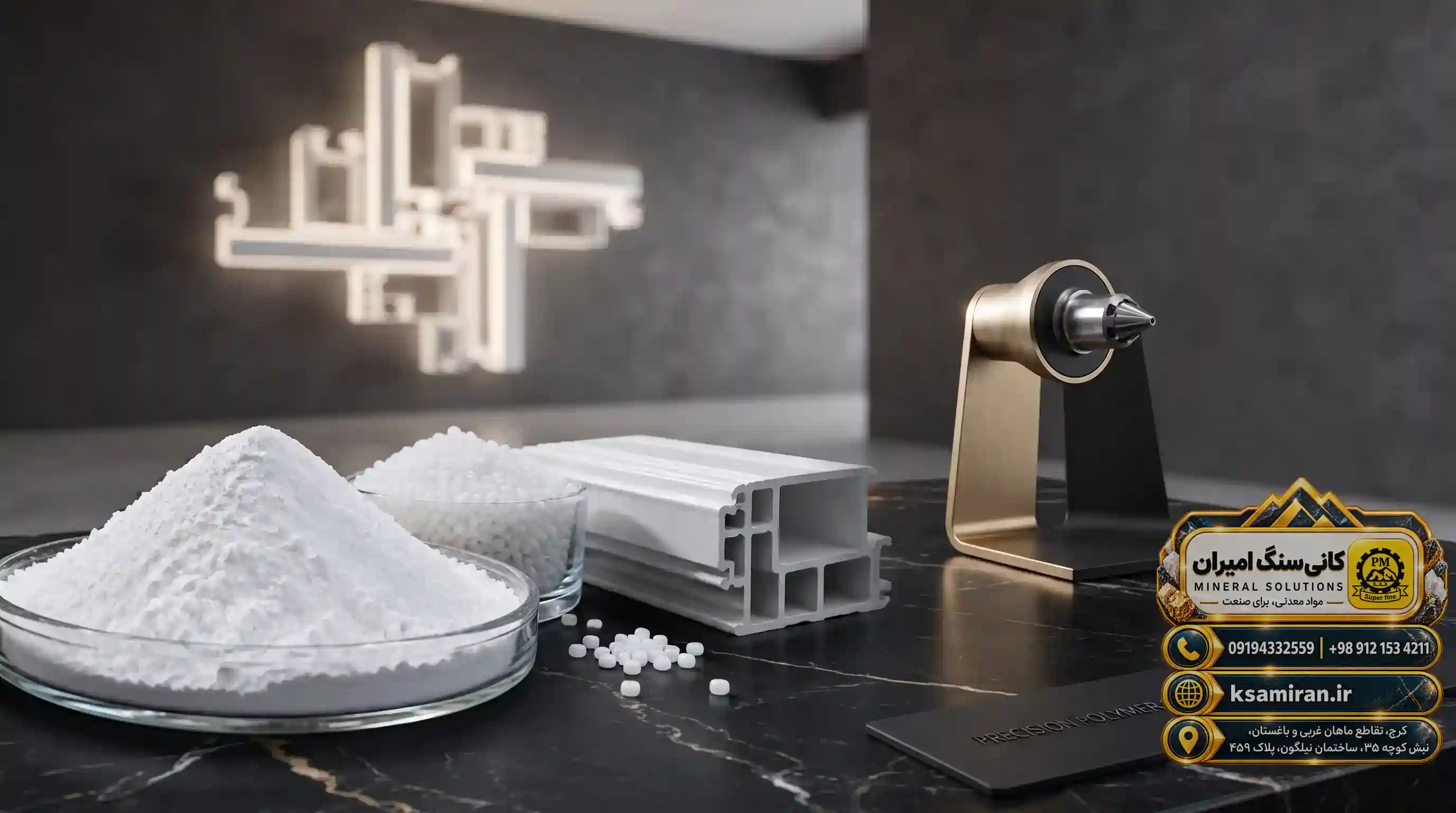
Physical and Chemical Mechanisms for Preventing Clumping
The prevention of clumping by coated calcium carbonate is a purely scientific process based on surface chemistry. When mineral particles become extremely fine, their surface-to-volume ratio increases, and intermolecular attractive forces are strengthened. In a normal state, these forces cause particle aggregation and the creation of clumps. However, the coating layer on coated calcium carbonate acts as a spatial barrier, preventing direct contact between mineral cores.
Furthermore, the hydrophobic feature of this material prevents moisture from penetrating inside bags and packaging. Moisture is one of the main factors for the clumping of mineral powders in storage. By repelling surface water and moisture, the powder remains free-flowing and dry, which makes feeding industrial extruders and mixers much smoother and uninterrupted.
The Role of Appropriate Mesh Range (450 to 3500) in Dispersion and Anti-Clumping
One of the most important parameters in selecting polymer fillers is particle size distribution and their mesh range. This product is offered with a mesh range of 450 to 3500, which covers a wide spectrum of industrial needs. Finer particles with higher mesh counts, such as 3500, create a much greater contact surface with the polymer matrix, but at the same time, the risk of them clumping due to low shear force in ordinary mixers increases.
With coating technology, even in high mesh counts, the powder maintains its flow state and is distributed uniformly when combined with granules and polymers. This feature is vital for producing sensitive parts. Also, for those interested in other applications of this material, reading the comprehensive guide to using coated calcium carbonate in paint making can provide useful information about particle behavior in other industries.
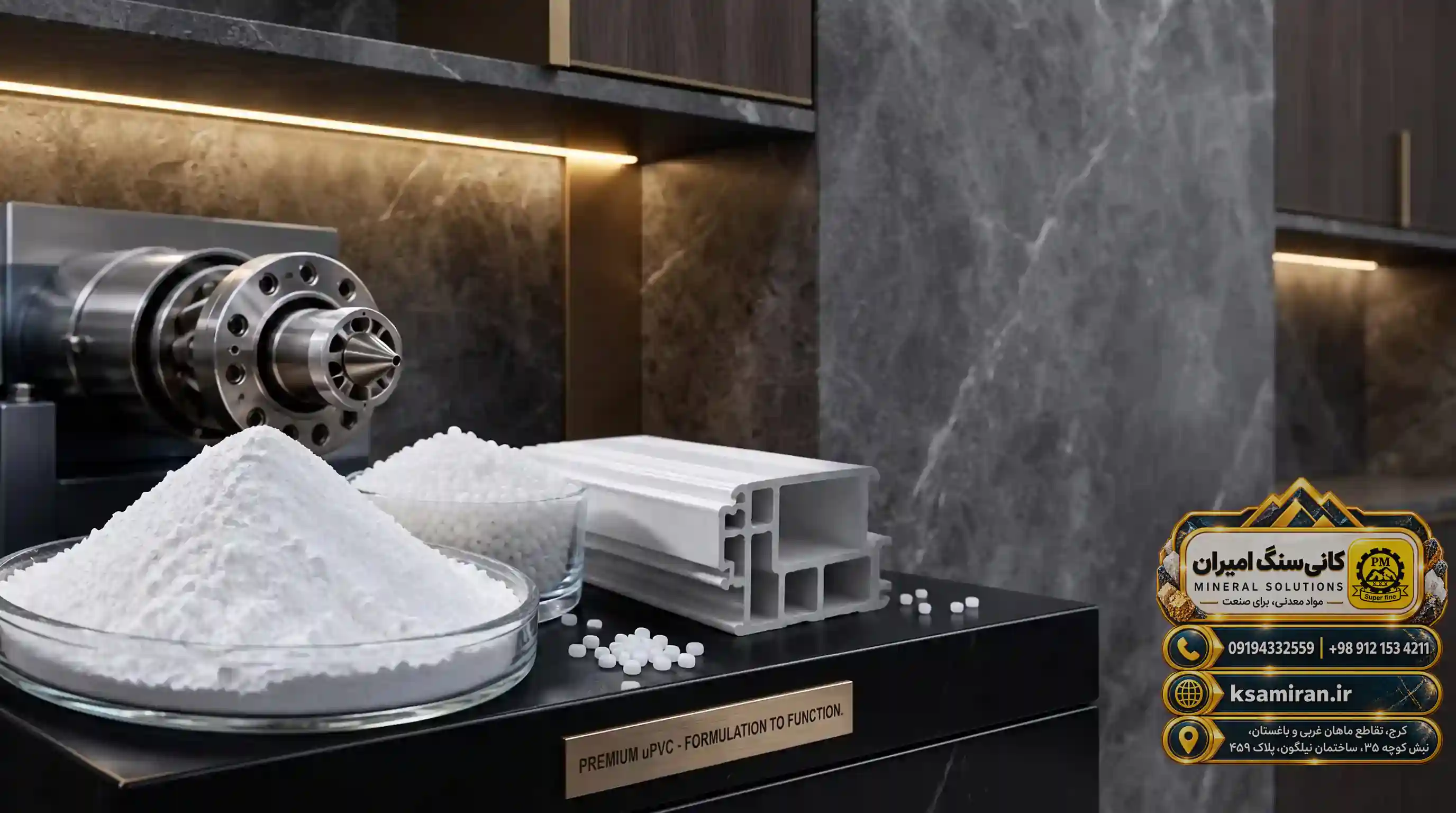
Applications in Compounds, Granules, and Polymer Parts
This material is widely chosen for compounds, granules, and polymer parts with appropriate mesh. In the production of polymer compounds, if the filler is clumped, weak points are created in the structure of the final piece, and mechanical properties drop sharply. Using coated calcium carbonate ensures that the powder is dispersed in the polymer mixture as completely separate, individual particles.
In polymer granule production processes, the presence of clumps can also cause blockage of extruder screens, pressure drops, and product inhomogeneity. Modifying the particle surface improves compatibility between the mineral filler and base polymers, resulting in maximum granule homogeneity. This directly ensures the quality of final polymer products.
Application in Profiles, Cables, Flooring, and PVC Parts
The PVC industry and the production of profiles, cables, and flooring require high precision in formulation. In the production of door and window profiles or electrical cable coatings, even a small clump of mineral material can lead to layer rupture, reduced tensile strength, or visual defects in the product. Because of its anti-clumping property, coated calcium carbonate is easily mixed with PVC resin and lubricants.
In the production of polymer flooring and rigid/soft PVC parts, inteal and exteal lubrication resulting from the presence of the fatty acid coating on the particles improves melt flowability. This feature significantly helps reduce machinery wear, increases production line speed, and prevents material accumulation in various sections of the extruder.

Improving Processability and Reducing Equipment Wear
The phenomenon of clumping of raw materials not only reduces product quality but also puts severe mechanical stress on injection and extrusion equipment. When powders have tued into hard masses, feeder systems experience fluctuations, and the material output rate will not be uniform. Coated calcium carbonate ensures continuous and stable feeding by maintaining its free-flowing powder property.
Specialized reviews comparing different market options show that the right choice of this material has a direct impact on reducing maintenance costs. For more information on this, reading the specialized guide for comparing types of coated calcium carbonate available in the market is recommended so that the best grade corresponding to your technical needs can be selected.
Maintenance and Storage Tips to Prevent Final Clumping
Although coated calcium carbonate has very high resistance to clumping due to its hydrophobic nature, observing storage principles is necessary to maintain its long-term quality. Bags containing this material must be kept in a dry environment, away from direct sunlight, and on wooden pallets to prevent potential moisture absorption from the warehouse floor.
Also, observing the FIFO (First-In, First-Out) principle in the storage of these materials is important. The Kani Sang Amiran project, by providing high-quality products with precise mesh sizing, has taken an effective step toward supplying standard raw materials for polymer industries. By strictly observing these points, manufacturers can always benefit from the smooth flow of materials in their production lines.

| Question | Answer |
|---|---|
| What is coated calcium carbonate? | A type of mineral powder whose particles are covered with a layer of fatty acids to have better hydrophobic and flowability properties. |
| Why does calcium carbonate clump? | Moisture absorption and strong attractive forces between fine particles cause accumulation and clump formation in the standard type. |
| What is the role of the coating in coated calcium carbonate? | The surface coating reduces particle energy and prevents them from sticking together and absorbing moisture. |
| What is the mesh range of this product? | This product is available in the 450 to 3500 mesh range. |
| What are the main applications of this material? | Compounds, polymer granules, profiles, cables, flooring, and PVC parts. |
| How can we prevent clumping in the warehouse? | Store in a dry environment, on pallets, and away from direct moisture and sunlight. |
| Is this material used in the PVC industry? | Yes, due to improved flowability and lack of clumping, it is widely used in PVC parts and profiles. |
| What is the effect of coated calcium carbonate on production equipment? | By preventing mass formation, it guarantees uniform extruder feeding and reduces machine wear. |
| What is the difference between high and low meshes? | Higher meshes create more contact surface but require more precision in the mixing process. |
| How can this product be purchased? | It can be ordered through the Kani Sang Amiran project website and the dedicated product page. |
Kani Sang Amiran Project — Mineral Production (ksamiran.ir)
برچسب: Coated Calcium Carbonate,The Role of Coated Calcium Carbonate in Preventing Clumping of Polymer Materials,
نویسنده: رساوب آفرین