
درباره سایت
آخرین مطالب
- استخدام أكسيد الليمونيت (الماغش) في صناعات الزجاج
- کاربرد اکسید لیمونیت (گل ماش) در صنایع شیشهسازی
- A Review of Daily Prices for Limonite Oxide (Ocher) in the Market
- چگونه خالص بودن اکسید لیمونیت (گل ماش) را تشخیص دهیم؟
- بررسی قیمت روز اکسید لیمونیت (گل ماش) در بازار
- Application of Limonite Oxide (Gole Mash) in Glassmaking Industries
- كيف تتعرف على نقاء أكسيد الليمونيت (جول ماش)؟
- How to Determine the Purity of Limonite Oxide (Gol Mash)?
- بررسی استانداردهای ایمنی کار با اکسید لیمونیت (گل ماش)
- Comprehensive Guide to Technical Analysis of Limonite Oxide (Gol Mash)
امکانات وب
Introduction to the Role of White Talc in Mode Industries
Today, various industries require advanced mineral materials to enhance the quality of their products and improve their physical and mechanical properties. In this context, white talc is recognized as one of the most functional mineral materials that has found a special place in industrial production. A precise understanding of this material's properties helps engineers and manufacturers maximize the efficiency of their processes.
Due to its layered structure and unique properties, talc mineral has a significant impact on improving the thermal and structural stability of various materials. Its use as a standard filler is prevalent in polymer industries, paint manufacturing, and paper production. To better understand the importance of this material in optimizing processes, it is recommended to read the article The Key Role of Industrial Talc in Improving the Quality of Manufactured Products, which examines the various dimensions of its application.
The structural characteristics of white talc have made it act as a reinforcing agent in industrial formulations. By utilizing this material, manufacturers can produce products with greater resistance to environmental and thermal factors. In the remainder of this article, we will examine the various technical and practical dimensions of this mineral in various industries to further clarify its role in elevating industrial standards.
Technical Specifications and Granulation of White Talc (450 to 2500 Mesh)
The physical specifications and the degree of pulverization of mineral materials play a direct role in their efficiency in industrial formulations. The mesh range of white talc, which varies between 450 and 2500 mesh, provides manufacturers with a wide range of particle sizes to choose the appropriate option based on the exact needs of the final product. Finer particles in this range create a larger surface area, consequently improving thermal stability.
Compared to other minerals, talc has a specific crystalline structure that helps its uniform distribution in the material matrix. This uniformity in granulation ensures that thermal stresses are distributed evenly throughout the material's structure, preventing localized degradation. Additionally, the softness and purity of this material play an important role in reducing the wear and tear of production equipment.
Choosing the right mesh for specific applications, such as masterbatch production or paint manufacturing, is of high importance. Super-fine particles in the high mesh range provide better transparency and mechanical properties. Correct application of these technical specifications is considered the foundation for producing high-quality and heat-resistant products in mode industrial factories.
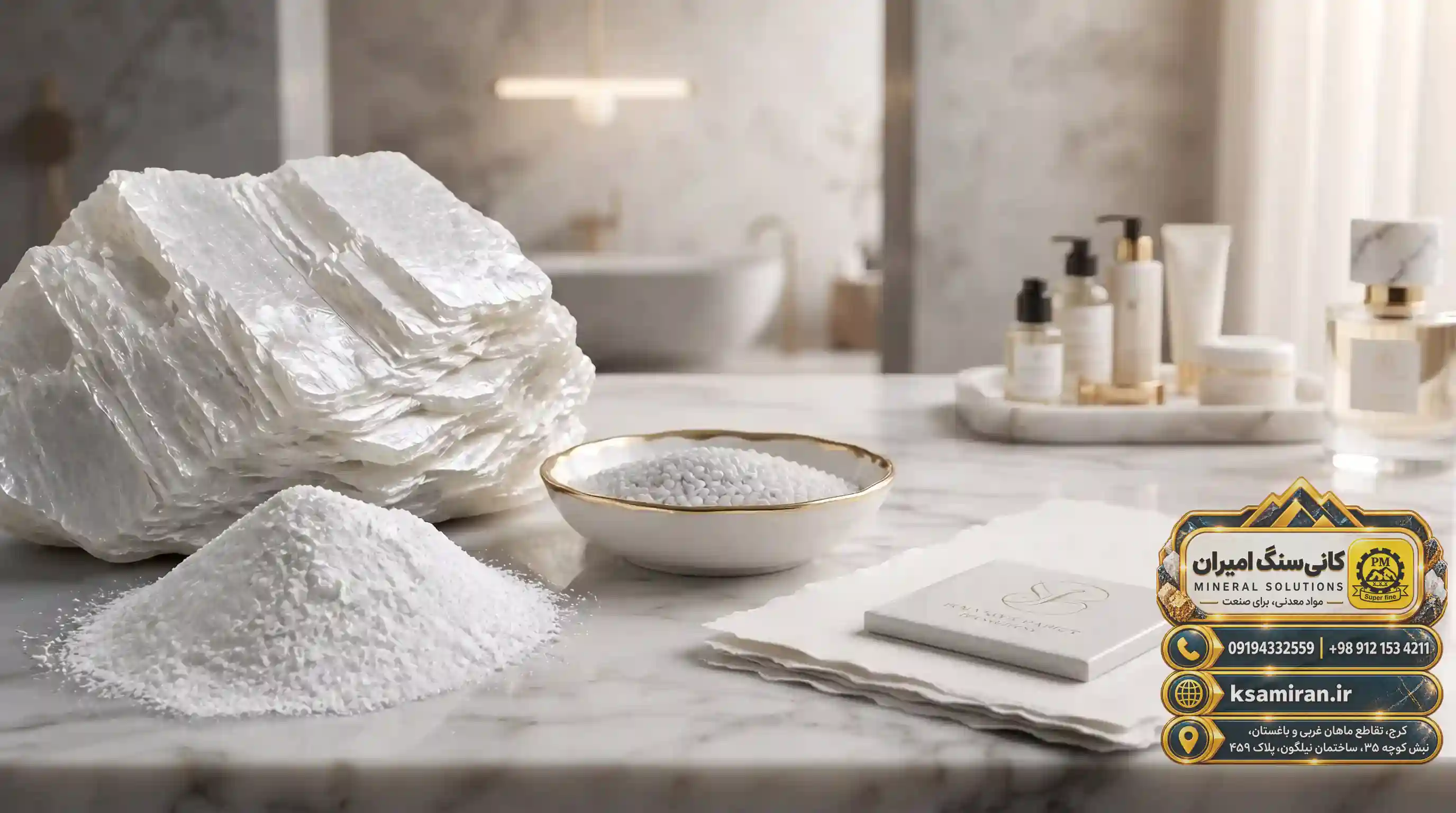
Application of White Talc in the Masterbatch and Compound Industry
The polymer and plastic industry is always looking for additives that, in addition to reducing production costs, strengthen the mechanical and thermal properties of products. The use of white talc in the production of masterbatch and compounds is very common due to its high ability to improve flexural modulus and dimensional stability. This material acts as an efficient mineral filler.
Adding this mineral to polymer compounds increases the Heat Deflection Temperature (HDT) of plastic parts. This feature is vital for components that are subjected to heat in the automotive and home appliance industries. For more information on the effect of this material on the appearance and quality of polymer products, reading the article The Role of White Talc in Improving the Appearance Quality of Polymeric Products will be very useful.
In addition to improving thermal resistance, the presence of talc in polymer compounds helps reduce molding shrinkage and makes the final part's dimensions more stable. This reduces production waste, significantly increases the overall efficiency of masterbatch production lines, and ensures the quality standards of the final product.
The Role of White Talc in the Paint and Industrial Coatings Industry
In the formulation of paints and industrial coatings, the selection of pigments and fillers is key. White talc is used as a major component in the paint industry due to its desirable whiteness, appropriate adhesion, and resistance to harsh weather conditions. This material helps significantly in controlling gloss and improving the hiding power of the paint.
The layered structure of talc particles creates a physical barrier against the penetration of moisture and gases in the paint film, which in tu increases the durability and thermal resistance of the coating. Paints containing this mineral show better stability against sudden temperature changes and are less prone to cracking or peeling.
Furthermore, the presence of talc in architectural and industrial paints leads to improved anti-settling properties and better flow during application. These practical features have caused paint manufacturing factories to always include this mineral as a reliable and economical solution in their advanced formulations.
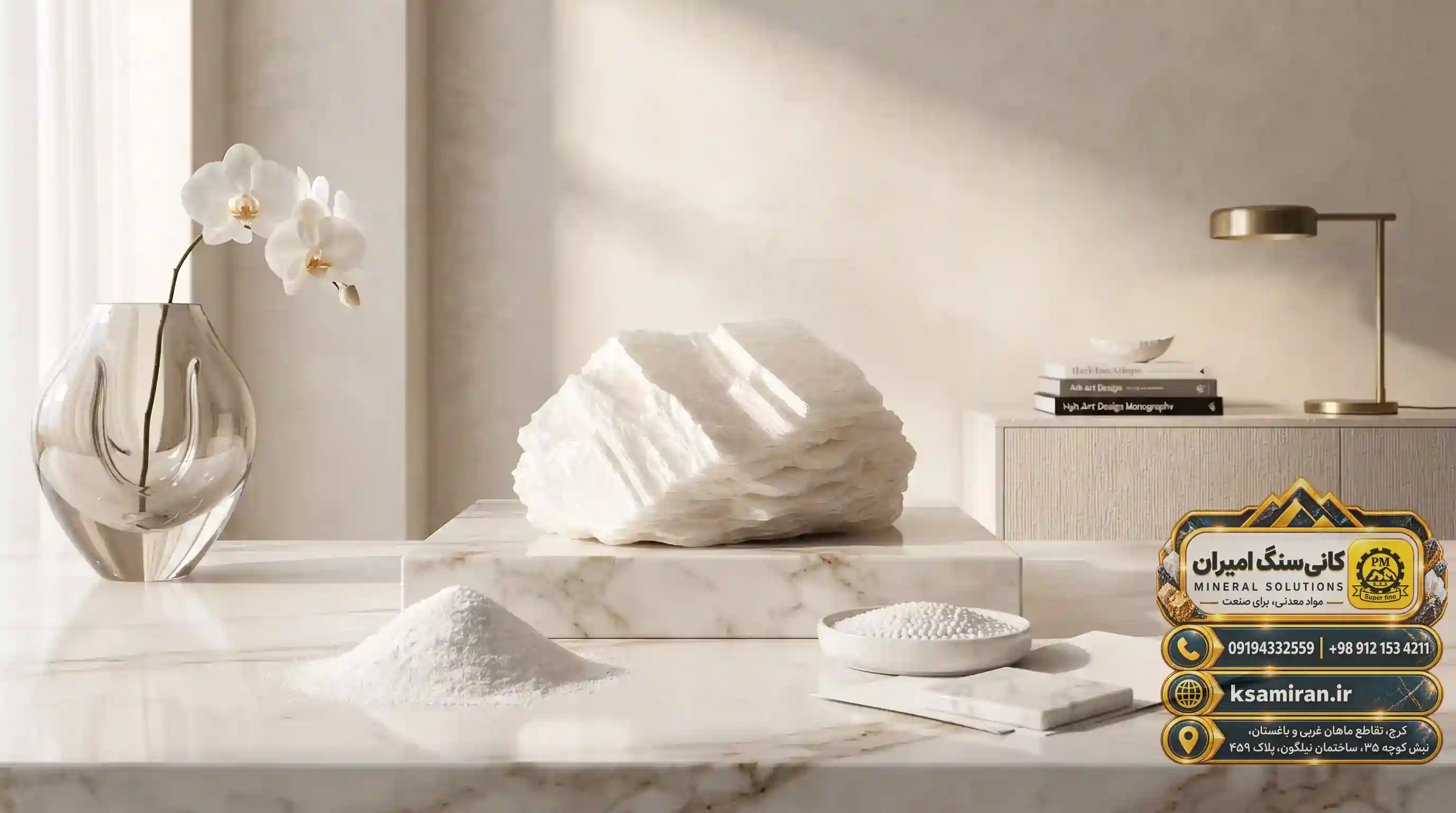
Application of White Talc in the Paper Industry
The paper industry requires minerals that can improve the whiteness, smoothness, and printability of paper without compromising its weight or strength. White talc is used as an excellent filler and coating agent in the production of various types of specialty and writing papers and plays an important role in the final quality of the product.
One of the great advantages of using talc in papermaking is the improvement of ink absorption and the reduction of ink consumption during printing. The fine particles of this material effectively fill the pores between cellulose fibers and create a smooth and uniform surface. This feature is of particular importance for the production of high-quality papers.
In addition, the relative thermal and chemical resistance of talc helps the stability of the paper in thermal printing and industrial drying processes. The presence of this mineral also improves the opacity of the paper and prevents light from passing through the pages, which significantly increases readability.
Improving the Quality of Ceramic Products with White Talc
In the ceramics industry, achieving high mechanical strength and resistance to thermal shock are the main goals of manufacturers. White talc, having a suitable chemical composition, acts as a fluxing agent in the body and glaze of ceramic products, reducing the firing temperature.
Lowering the firing temperature means significant energy savings in kilns and an increase in the useful life of thermal equipment. Furthermore, the presence of this material in the ceramic body leads to reduced shrinkage during drying and firing, which prevents warping and cracking in the parts.
To complete the discussion of thermal resistance in industrial and refractory materials, comparing the properties of different materials is important; in this regard, reading the specialized article The Role of Kaolin in Improving the Thermal Resistance of Refractory Materials provides experts with a comprehensive perspective on the synergy of different minerals. The intelligent combination of these materials ensures the final quality of ceramic products.
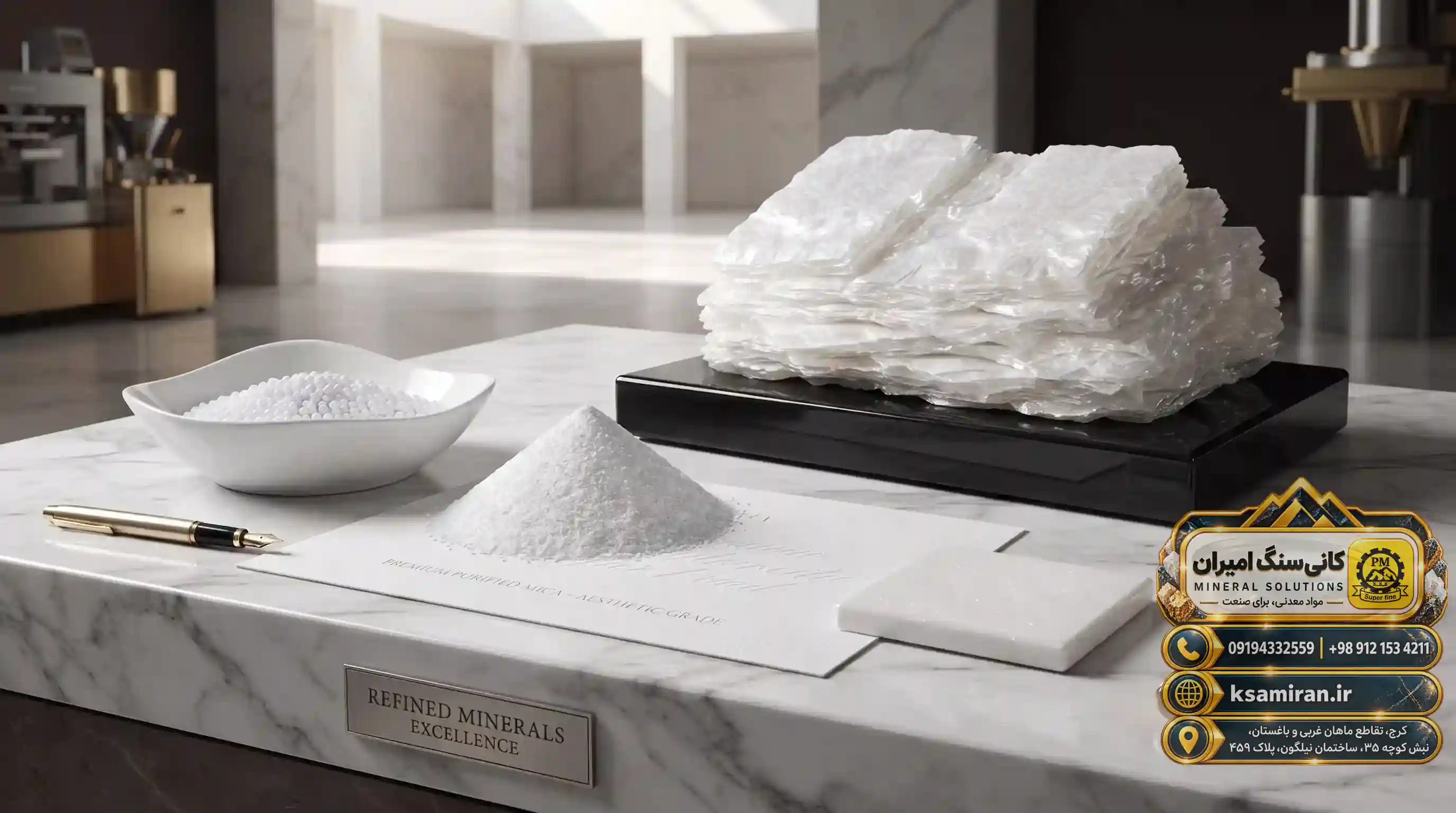
Mechanisms of Increasing Thermal Resistance by White Talc
Understanding the scientific mechanisms through which white talc increases the thermal resistance of materials is very interesting and practical for materials engineers. The lamellar structure of talc causes the heat transfer path within the polymer or ceramic matrix to become longer, reducing the total heat transfer coefficient of the material.
When the material is exposed to flames or direct heat, the layered talc particles act as a thermal shield and prevent the rapid degradation of the underlying structure. This thermal barrier effect helps maintain the mechanical integrity of the component at high temperatures and increases safety time.
In addition to the physical thermal shield, the chemical stability of this material at high temperatures prevents premature decomposition of the formulation. This inherent thermal stability, combined with the homogeneous distribution of particles in the appropriate mesh range, is the reason why various industries have full confidence in this mineral for harsh working conditions.
Economic Benefits and Outlook of White Talc Application in Industry
The use of high-quality minerals, in addition to technical benefits, must also be economically justifiable. Due to its relative abundance, appropriate cost, and very high efficiency, white talc is considered an economical option for replacing a portion of more expensive materials in industrial formulations, thereby increasing the profitability of production units.
Reducing energy costs in ceramic firing processes, improving the speed of masterbatch production lines, and increasing the durability of paints and coatings are all factors that accelerate the retu on investment for consumer industries. This competitive advantage has caused the demand for high-quality mineral purchases to follow an upward trend.
Kani Sang Amiran project, by producing and supplying various standard minerals, has provided a suitable platform for industries to access this valuable material. The future outlook shows that with the development of new technologies, the role of white talc in the formulation of advanced and heat-resistant materials will become even more prominent.

| Question | Answer |
|---|---|
| What are the applications of white talc? | It is introduced for masterbatch, compound, paint, paper, and ceramics. |
| What is the mesh range of white talc? | The mesh range of this product varies between 450 and 2500 mesh. |
| Does this material increase thermal resistance? | Yes, the layered structure of talc acts as a thermal shield and improves thermal stability. |
| What is the role of talc in the masterbatch industry? | It increases the heat deflection temperature, improves flexural modulus, and reduces molding shrinkage. |
| Why is talc used in the paint industry? | It helps improve gloss, resistance to weather conditions, and paint hiding control. |
| What is the application of white talc in papermaking? | It improves whiteness, smoothness, printability, and the opacity of the paper. |
| What is the effect of talc in the ceramic industry? | It acts as a flux, reduces firing temperature, and minimizes shrinkage. |
| How does talc inhibit heat? | Its layered structure lengthens the heat transfer path and reduces the heat transfer coefficient. |
| What is the economic advantage of using talc? | It reduces production costs, saves energy, and serves as an optimal replacement for expensive materials. |
| How can high-quality white talc be obtained? | It can be obtained through the Kani Sang Amiran product page at https://ksamiran.ir/products/white-talc/ |
Kani Sang Amiran Project — Reference for the production and supply of high-quality industrial mineral materials.
برچسب: White Talc,The Role of White Talc in Increasing the Thermal Resistance of Industrial Materials,
نویسنده: رساوب آفرین