
درباره سایت
آخرین مطالب
- سیلیس کانی سنگ امیران مناسب شیشه و سرامیک با دانهبندی ۱۰ تا ۴۵۰
- سفارش سیلیس کانی سنگ امیران در شیشه و سرامیک در مش ۱۰ تا ۴۵۰
- کائولن باکیفیت کانی سنگ امیران برای صنایع سرامیک مش 450 تا 1500
- سیلیس پروژه کانی سنگ امیران برای صنایع شیشه در مش ۱۰ تا ۴۵۰
- اکسید لیمونیت (گل ماش) دقت فنی در تولید پودر صنعتی شما
- خرید سیلیس کانی سنگ امیران مناسب صنعت شیشه دانهبندی ۱۰ تا ۴۵۰ مش
- سفارش کربنات کلسیم ۱۲۵۰ مش با دانهبندی دقیق برای کابل
- فلدسپات باکیفیت کانی سنگ امیران برای محصولات سرامیکی
- تالک صنعتی برای شراکت در فرمولاسیون
- استعلام قیمت کائولن کانی سنگ امیران کاغذسازی با مش 450 تا 1500
امکانات وب
Introduction to the Importance of Industrial Talc in Agriculture and Related Industries
Industrial talc is recognized as one of the most functional minerals in the world, possessing unique physical and chemical properties. With its layered structure and extraordinary softness, this mineral plays a significant role in improving the quality of various products. Although the primary application of industrial talc is in polymers, rubber, paints, and industrial products, this mineral has recently found its way into sectors related to agriculture and fertilizer production. To better understand this, it is worth taking a look at the examination of physical and mechanical properties of industrial talc powder to understand why this material has gaered so much attention from industrialists.
In the field of agriculture and fertilizer industries, mineral additives play a key role in improving the final performance of the product. Industrial talc acts as a carrier and an anti-caking agent, preventing fertilizer granules from sticking together in storage. The Kani Sang Amiran project, through the precise sourcing and processing of this material, has enabled industries to access high-quality powder. The use of industrial talc in industrial and agricultural formulations is very common due to its suitable purity and layered characteristics.
Beyond agriculture, this material is also widely studied in other industries, such as the application of kaolin in the paint and industrial coatings industries, to determine the synergy of various minerals in improving product quality. Furthermore, understanding other minerals, such as the study of dolomite application in the paint and resin industries, gives industrialists a comprehensive perspective on selecting the best minerals. A mesh range of 450 to 1000 mesh has been defined for these powders, ensuring high precision in various applications.
The intrinsic properties of talc, including its de-greasing, relative hydrophobicity, and high softness, make it exceptionally efficient in various manufacturing processes. In the remainder of this article, we will examine the various dimensions of using this valuable mineral in the specialized agriculture and fertilizer industry sectors in detail, so that its role in improving production efficiency becomes entirely clear.
The Role of Industrial Talc as an Anti-Caking Agent in Fertilizers
One of the biggest challenges in warehousing and storing chemical and animal fertilizers is the phenomenon of caking or clumping of particles. Environmental humidity and the pressure caused by stacking bags can lead to the formation of hard masses, making the use of fertilizer difficult or impossible. In this context, industrial talc acts as an effective anti-caking agent, coating the surface of fertilizer granules and preventing them from absorbing moisture and sticking together.
The 450 1000 mesh range for industrial talc allows very fine particles with a large cross-sectional area to sit well on fertilizer granules. This soft powder acts as a physical separator and improves the flowability of fertilizers during usage and packaging. The Kani Sang Amiran project, by producing this high-quality powder, offers a reliable solution to solve storage problems for agricultural products.
Using this mineral in the fertilizer industry not only maintains the visual quality of the product but also increases the efficiency of fertilizer spreading equipment. When fertilizers are free of clumps, agricultural machinery can distribute nutrients uniformly across fields without clogging or breaking down. This, in tu, significantly increases agricultural productivity.
Compared to other fillers, industrial talc, due to its chemical neutrality, does not react negatively with the nutrient compounds of the fertilizer. This vital feature ensures that the original quality of the fertilizer is preserved and its beneficial elements are transferred to the soil unchanged. The stability and durability of polymer and rubber products produced with this material also indicate its high structural quality.
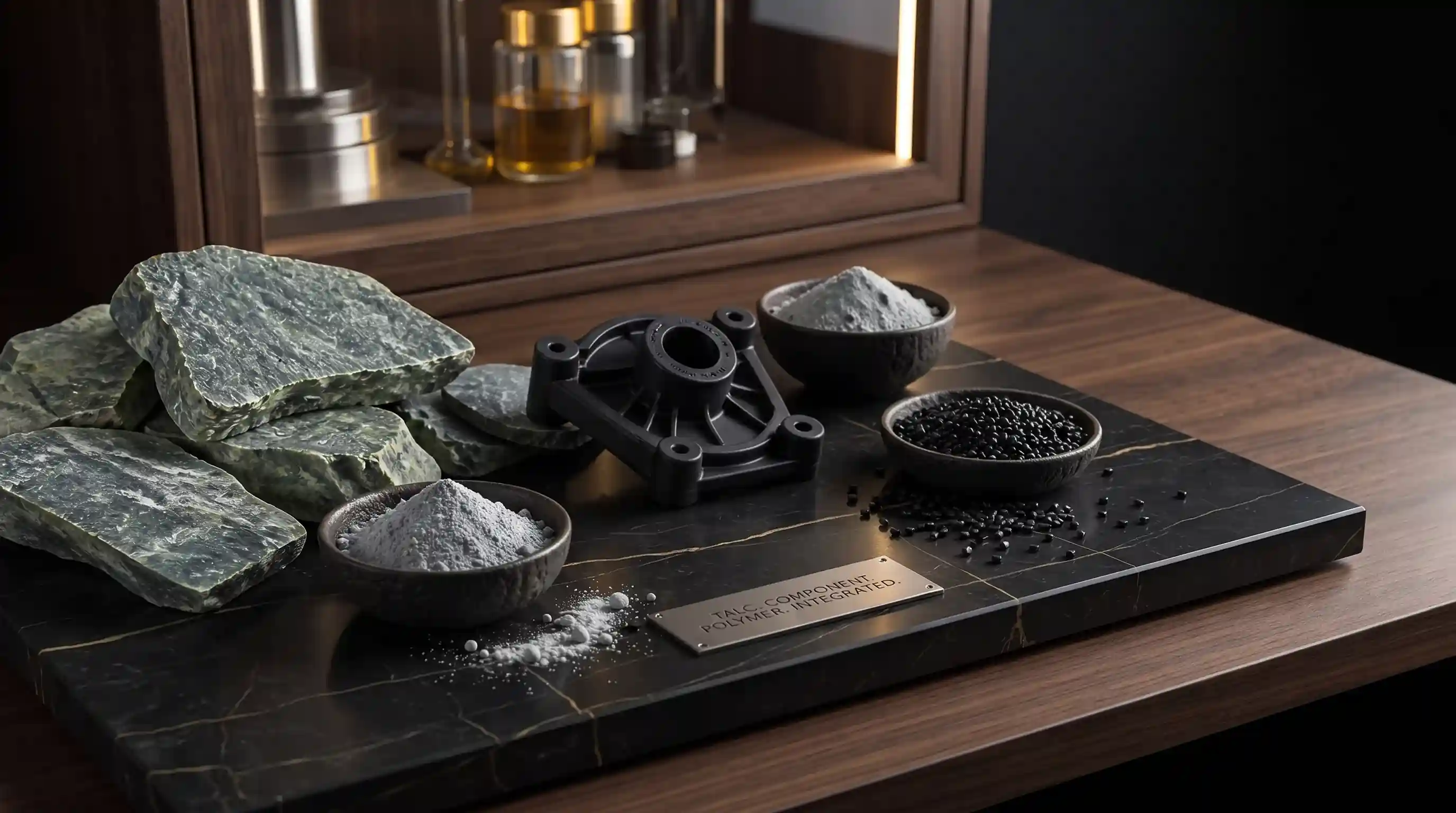
Industrial Talc as a Carrier in Fertilizer Formulations
In the fertilizer and agricultural pesticide manufacturing industries, carriers play a very important role in diluting and uniformly distributing active ingredients. Fertilizer and pesticide active ingredients are usually highly concentrated and require a stable and neutral material to be distributed homogeneously throughout the entire volume of the product for safe and effective use. Industrial talc, due to its platy structure and high specific surface area, is considered one of the best carriers in this industry.
The physical properties of this mineral powder, especially its granulation in the 450 to 1000 mesh range, allow active ingredients to be well-adsorbed onto the surface of the talc particles and released smoothly during application. This feature is of great importance in the production of granular and powdered fertilizers, as it ensures that nutrients are uniformly available to the plant.
The Kani Sang Amiran project, by precisely processing this mineral, provides a uniform and high-quality product for consumer industries. Using industrial talc as a carrier increases the shelf-life stability of products and prevents the premature degradation of sensitive compounds.
In addition to the carrier role in fertilizers, this material is also used as a filler in polymer, rubber, and paint products, indicating its high flexibility in various industries. Choosing the right mineral can elevate the quality and performance of final agricultural products to a higher level.
An Overview of Physical and Chemical Properties of Industrial Talc in Agricultural Applications
A precise understanding of the physical and chemical properties of industrial talc is essential for its optimal use in the agriculture and fertilizer industries. This material is a hydrated magnesium silicate that has extraordinary softness and is known as the softest mineral. Its hardness degree on the Mohs scale is 1, which means no wear on equipment during grinding and mixing.
One of the most important features of industrial talc is its chemical neutrality. This mineral does not react with most weak acids and bases, which is why it remains stable when in contact with the chemical compounds present in fertilizers and does not cause undesirable changes in soil or fertilizer pH. The 450 1000 mesh range of this powder allows for precise control of rheological and coating properties.
The Kani Sang Amiran project, with a focus on standard extraction and processing of this material, offers a homogeneous product with minimal impurities. Talc's relative hydrophobicity also prevents fertilizers from absorbing environmental moisture and prevents premature decay.
These features have caused the agricultural industry, in addition to known applications in polymers, rubber, and paint, to increasingly benefit from this mineral powder. The thermal and mechanical stability of talc makes it a reliable choice in industrial and agricultural formulations.
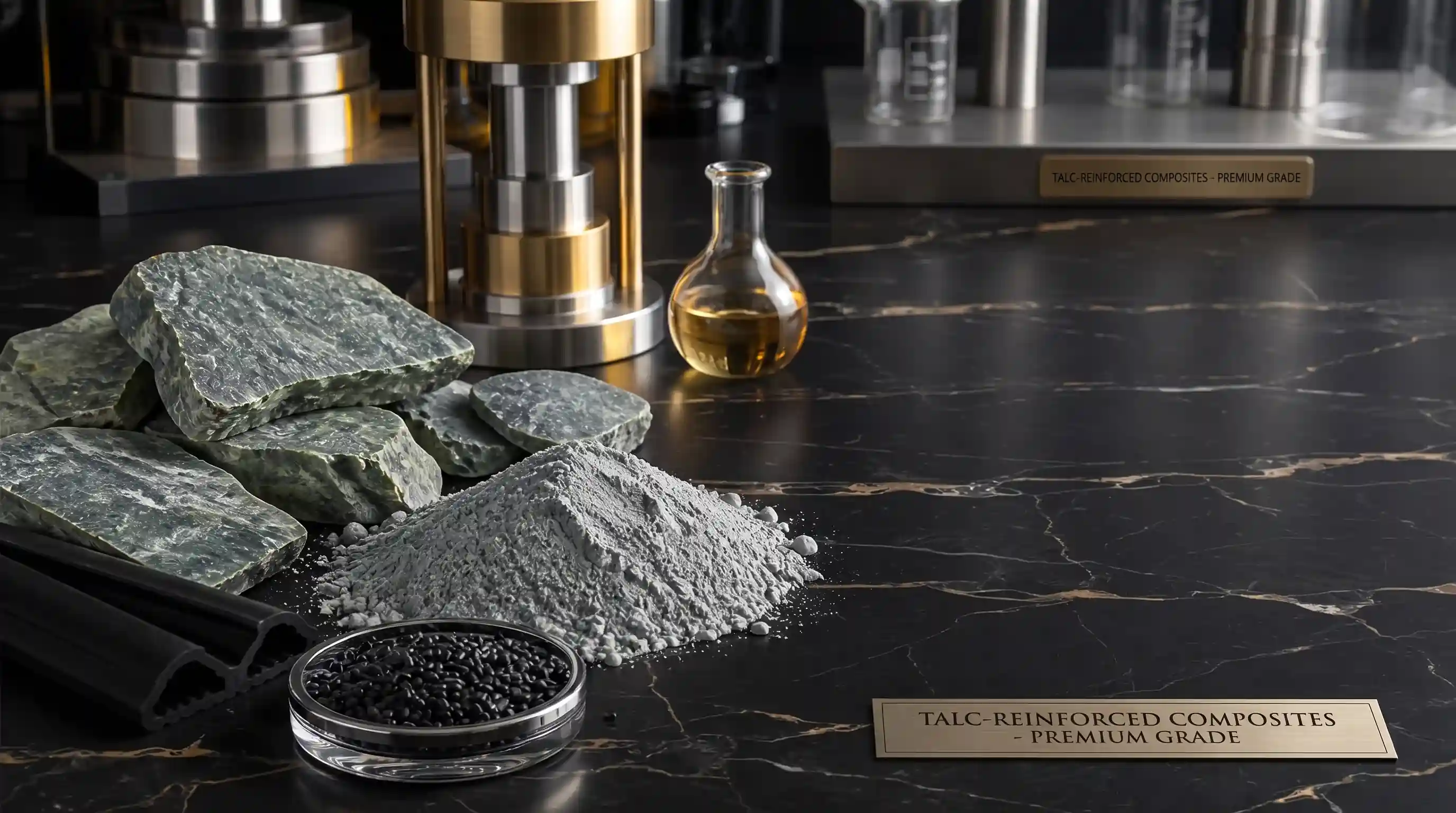
Comparison of Industrial Talc with Other Fillers and Minerals in Agriculture
In the fertilizer and agricultural input manufacturing industries, various minerals are used as fillers, carriers, or flowability improvers. Among the most common are calcium carbonate, barite, clay, and kaolin. However, industrial talc has significant competitive advantages over others due to its unique structural characteristics.
Unlike some fillers that may have abrasive properties, talc is very soft and does not wear down mills and mixing equipment. The 450 to 1000 mesh range in industrial talc allows for a very uniform and soft coating, which is more effective compared to coarse-grained materials.
The Kani Sang Amiran project, by offering this high-quality product, helps fertilizer manufacturers choose the best material to improve the physical properties of their product. Although kaolin and other minerals have their own applications, talc is unrivaled in preventing caking due to its platy structure and excellent lubricity.
These features have made the fertilizer industry highly inclined to use industrial talc. The optimal combination of this material with other agricultural compounds ensures the final performance of the product in the warehouse and in the field.
Standards and Technical Specifications of Industrial Talc Used in the Fertilizer Industry
The quality of industrial talc used in the agriculture and fertilizer industries must be evaluated based on specific standards to ensure no harm is caused to the soil, plants, or equipment. Key parameters in determining the quality of this material include purity percentage, moisture content, particle size distribution, and powder color.
The 450 1000 mesh range indicates the fine-grained nature of this product, which is highly suitable for surface coating and providing anti-caking properties. The Kani Sang Amiran project, by strictly adhering to quality control principles, supplies industrial talc to the market with standard technical specifications to meet the needs of various industries, especially the agricultural sector, in the best possible way.
The moisture content in talc powder should be at the lowest possible level to avoid unwanted reactions when mixed with sensitive fertilizers. Furthermore, the absence of heavy and toxic impurities ensures that the use of this material will not have a negative impact on the soil ecosystem and agricultural products.
In addition to its use in fertilizers, these precise specifications have made industrial talc the first choice in the polymer, rubber, and paint industries as well. Adherence to production standards guarantees the efficiency and safety of this mineral in all industrial applications.

The Role of Industrial Talc in Improving Packaging and Warehousing of Agricultural Products
Warehousing and logistics for agricultural products and fertilizers are sensitive stages in the supply chain. Air humidity, temperature changes, and pressure caused by stacked bags can severely compromise product quality. Industrial talc, as a key additive, plays an important role in facilitating warehousing and maintaining the quality of fertilizers.
The use of this soft powder in the 450 to 1000 mesh range as a surface coating for fertilizer granules prevents them from sticking to the walls of the bags and clumping together. The Kani Sang Amiran project, by supplying high-quality industrial talc, helps fertilizer manufacturing companies bring their products to market with longer shelf life.
This material also prevents excessive dust generation during discharge and bagging, making the work environment safer. The lubricity of talc makes the movement of materials in packaging lines smoother and increases production efficiency.
Therefore, the benefits of industrial talc are not limited to the production process but extend to the final warehouse and the end consumer. By improving storage conditions, this valuable mineral prevents the loss of agricultural materials.
Future Outlook and Development of Industrial Talc Applications in Mode Agriculture
With the advancement of mode agricultural technologies and the need to increase the productivity of arable land, the use of advanced minerals has become more important. Due to its environmental friendliness and high performance, industrial talc has found a special place in mode agricultural formulations. Research shows that the optimal use of this mineral can significantly help reduce food and fertilizer waste.
The Kani Sang Amiran project, by monitoring the daily needs of industries, is always striving to supply industrial talc with the best quality and in the 450 1000 mesh range for various applications, including polymers, rubber, paint, and agricultural industries. The development of new processing methods has led to increased purity and efficiency of this mineral.
In the near future, talc's role in the production of slow-release fertilizers and environmentally friendly products is expected to become more prominent. As a stable and reliable component, this mineral will play a significant share in improving the quality of the agricultural production chain.
Ultimately, selecting the right raw materials like industrial talc ensures the success of manufacturers in today's competitive markets. Continued cooperation between the mining sector and agricultural industries will create a bright outlook for sustainable development.

| Question | Answer |
|---|---|
| What is industrial talc? | It is a natural hydrated magnesium silicate with high softness and purity used in various industries. |
| What are the main applications of industrial talc? | Polymer products, rubber, paint, industrial products, and the agriculture and fertilizer industry. |
| What is the mesh range of Amiran industrial talc? | This product is offered in the 450 to 1000 mesh range. |
| What is the role of talc in the agricultural industry? | It is used as an anti-caking agent and carrier in fertilizer formulations. |
| Why does talc prevent fertilizer caking? | By coating the surface of particles and repelling moisture, it prevents granules from sticking together. |
| Does talc react with chemical fertilizers? | No, talc is neutral and does not create negative reactions with fertilizer compounds. |
| What is the role of talc as a carrier? | It causes uniform distribution of active ingredients in fertilizers and agricultural pesticides. |
| How can industrial talc be obtained? | It can be ordered through the Kani Sang Amiran project and the industrial products page of the website. |
| Is talc also used in paint and polymer industries? | Yes, this material is one of the most widely used fillers in paint, rubber, and polymers. |
| What is the prominent physical feature of talc? | Very high softness, low hardness, and a platy structure are its main features. |
Kani Sang Amiran Project — The reference for supplying high-quality minerals and industrial talc.

برچسب: Industrial Talc,An Overview of Industrial Talc Application in Agriculture and Fertilizer Industries,
نویسنده: رساوب آفرین