
درباره سایت
آخرین مطالب
- انتخاب اکسید آهن قرمز (اخرا) برای بهبود کیفیت پیگمنت و پوششهای رنگی
- تامین کربنات کلسیم با دانهبندی دقیق جهت استفاده در مستربچ
- تأمین تخصصی سیلیس برای مصالح ساختمانی، شیشه و صنایع سرامیک
- ویژگیهای فنی بنتونیت کانی سنگ امیران برای کاربردهای خاص
- فلدسپات کانی سنگ امیران برای شیشه کاشی و سرامیک
- کاربرد تالک سفید درجه یک در فرمولاسیون پیشرفته رنگ و محصولات کاغذی
- اکسید آهن قرمز (اخرا) کاربردی جهت تولید محصولات سرامیکی و پوشش
- مشخصات فنی اکسید آهن قرمز (اخرا) مناسب برای پوشش و تولید پیگمنت
- مشاوره تخصصی خرید کربنات کلسیم بر اساس نیاز دقیق صنعت شما
- انتخاب تالک سفید صنعتی مناسب برای تولیدات کاغذ و مستربچ
امکانات وب
An Introduction to the Importance of Coated Calcium Carbonate in the Polymer Industry
The polymer industry and masterbatch production are constantly seeking additives that can enhance the final product quality and optimize production costs. In this regard, coated calcium carbonate is recognized as one of the most widely used mineral fillers. The coating process, where calcium carbonate particle surfaces are treated with organic substances like stearic acid, ensures that particles have a lower tendency to clump together and disperse effectively within the polymer matrix.
At the Kani Sang Amiran project, the primary focus is on supplying high-quality minerals so that manufacturers can utilize the best raw materials in processes such as compounding, polymer granules, profiles, cable industries, and PVC flooring. To view the specifications and technical features of this product, you can visit the coated calcium carbonate page.
The Coating Process and the Role of Stearic Acid in Improving Properties
Surface coating causes significant chemical and physical changes in the behavior of the powder. To better understand this process, it is recommended to read the review of the impact of stearic acid in coated calcium carbonate. Stearic acid, by creating a water-repellent (hydrophobic) layer on the particle surface, prevents their accumulation (agglomeration) and ensures that particles are distributed completely uniformly during the mixing process with the polymer.
The use of this technology ensures that the final product has more stable mechanical properties and a better appearance. In masterbatch production, poor particle dispersion can create stress points in the final part; however, coated calcium carbonate completely eliminates this problem, leaving the surface of the polymer parts smooth and non-porous.

Benefits of Using Coated Calcium Carbonate in Masterbatch Production
Masterbatches, as carriers for pigments and additives, play a key role in the plastics industry. Employing coated calcium carbonate in masterbatch formulations not only reduces the final cost but also aids in improving the extrusion process. Since coated particles have hydrophobic properties, they absorb less moisture, which is vital in moisture-sensitive processes such as plastic injection molding and the production of delicate parts.
For a deeper understanding of cost-saving aspects in production, reading the article examining the economic benefits of using coated calcium carbonate in manufacturing is recommended. This material, as an active filler, serves as an excellent substitute for a percentage of expensive resins without compromising the physical properties of the product.
The Impact of Granulation and Mesh Size on Product Performance
Choosing the appropriate mesh size for coated calcium carbonate is one of the sensitive engineering decisions during masterbatch production. Kani Sang Amiran provides a wide range of diversity for various applications by offering products in the 450 to 3500 mesh range. Lower meshes are typically used in the production of construction profiles and pipes, while higher meshes (such as 2500 to 3500) are utilized for producing thin polymer films and high-surface-quality parts.
The higher the mesh size (the smaller the particle size), the greater the specific surface area, requiring more precision in the coating process. If finer particles are not properly coated, they quickly clump together due to high surface energy; however, by utilizing advanced coating technology in Amiran products, excellent stability and dispersion are guaranteed for all mesh ranges.
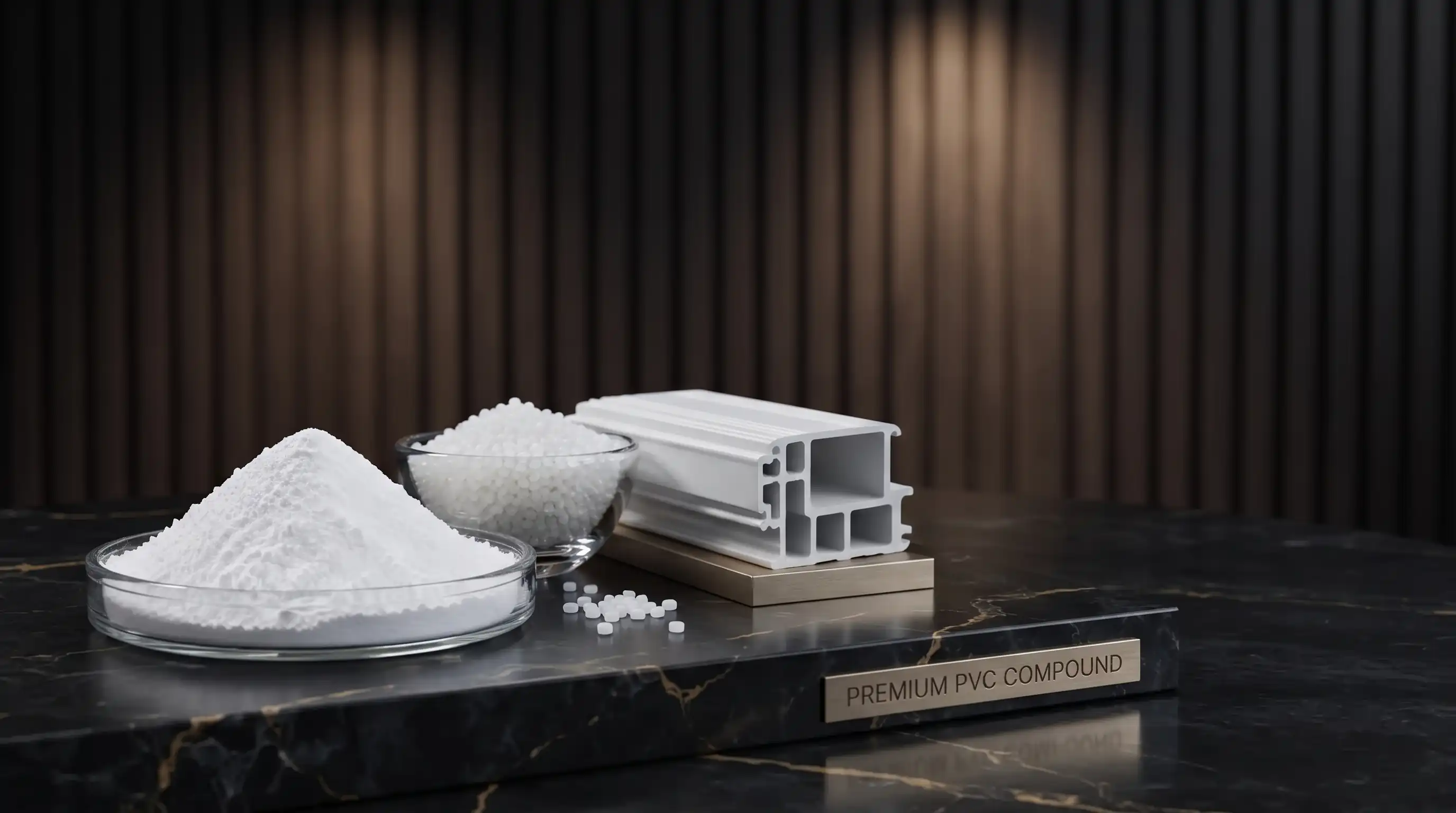
Technical Role of Coated Calcium Carbonate in Extrusion Processes
In extrusion processes, polymer melt viscosity and inteal friction are very important. To study more details in this field, reviewing the technical benefits of coated calcium carbonate in extrusion can be a good guide for production engineers. Coated particles act as an inteal lubricant, reducing the load on the extruder machine.
This friction reduction increases the lifespan of the machine's cylinder and screw while also reducing electrical energy consumption. Furthermore, uniformity in particle distribution leads to the production of products with more precise dimensions (in the case of profiles) and improved tensile properties (in the case of cables), which in itself is evidence of the technical superiority of using this engineered mineral material.
Application in the Production of Cables and PVC Flooring
The wire and cable industry, as well as the production of polymer flooring, require materials that, in addition to having good insulating characteristics, possess high mechanical strength. Due to its chemically neutral nature and coating property, coated calcium carbonate creates an optimal interaction with PVC resin. This combination increases impact resistance and improves dielectric properties in power cables.
In the flooring industry, there is a need for a product that is resistant to abrasion and deformation. Using mesh sizes adapted to the needs of this industry, supplied by Kani Sang Amiran, ensures high abrasion resistance and long-term flexibility of the product. Additionally, the hydrophobic property ensures that the flooring remains much more stable against environmental factors and moisture.

Optimizing Polymer Granule Formulations
In the production of polymer granules, managing both cost and final quality must be considered simultaneously. Coated calcium carbonate, as an intelligent additive, balances these two indicators. Due to excellent compatibility with various polymer matrices such as polyethylene, polypropylene, and PVC, this material allows for an increased percentage of filler usage without creating instability in the production process.
The products offered at Kani Sang Amiran are granulated with very high precision to ensure no inconsistency occurs during the masterbatch and base polymer mixing process. This integrity ensures that the produced granules have a clear appearance, better colorability, and resistance to mechanical stress, which ultimately builds customer trust in the manufacturers' final products.
Conclusion and Future Outlook in the Mineral Industries
Investing in quality raw materials is the key to success in today's competitive markets. Coated calcium carbonate, beyond being a simple filler, acts as a performance improver that elevates polymer production standards. Relying on specialized knowledge and experience in mineral processing, the Kani Sang Amiran project meets all the needs of various industries for this practical product with guaranteed quality.
The future of the polymer industry is moving towards producing lighter, more durable, and more economical products, and coated calcium carbonate is at the forefront of these changes. By considering the variety of available meshes from 450 to 3500, manufacturers can confidently use this valuable mineral in complex polymer part production projects and experience tangible results in quality improvement and cost reduction.
| Question | Answer |
|---|---|
| What is coated calcium carbonate? | A type of calcium carbonate where the surface of the particles is coated with organic substances (usually stearic acid). |
| What is the mesh range of the products? | Products are supplied in the 450 to 3500 mesh range. |
| Why should we use the coated version? | Due to lack of particle accumulation, better dispersion, and resistance to moisture. |
| Is this material suitable for PVC? | Yes, it is widely used in the production of PVC profiles, cables, and flooring. |
| What is its advantage for masterbatch production? | Cost reduction and improvement of physical and appearance properties of the granules. |
| What is the role of stearic acid? | Creating water-repellent properties and preventing particle clumping. |
| What are high meshes (3500) used for? | For the production of delicate parts and high-quality polymer films. |
| Does it reduce energy consumption? | Yes, it acts as an inteal lubricant and reduces machine friction. |
| How can we purchase from you? | By visiting the Kani Sang Amiran website. |
| Is it possible to supply in large toages? | Yes, Kani Sang Amiran has the capability to supply materials continuously. |
Sources: Technical data of Kani Sang Amiran products and specialized polymer science books in the field of mineral additives.
برچسب: Coated Calcium Carbonate,Examining the Benefits of Coated Calcium Carbonate in Masterbatch Production,
نویسنده: رساوب آفرین