
درباره سایت
آخرین مطالب
- اکسید لیمونیت (گل ماش) استاندارد جدید در صنایع پوشش صنعتی
- کائولن باکیفیت کانی سنگ برای کاغذسازی مش 450 تا 1500
- سیلیس باکیفیت کانی سنگ امیران برای صنایع سرامیک با مش ۱۰ تا ۴۵۰
- تالک صنعتی با دانه بندی استاندارد برای کاربردهای صنعتی
- کائولن مرغوب کانی سنگ امیران برای رنگ و لعاب با مش 450 تا 1500
- کائولن درجه یک کانی سنگ امیران برای کاشی و لعاب مش 450 تا 1500
- خرید کائولن اصیل کانی سنگ برای کاشی و کاغذ دانه بندی 450 تا 1500
- دریافت کاتالوگ و آنالیز فنی کربنات کلسیم ۸۰۰ مش
- سیلیس صنعتی کانی سنگ امیران برای صنایع شیشه در مش ۱۰ تا ۴۵۰
- خرید فلدسپات به عنوان مواد اولیه صنایع شیشه و سرامیک
امکانات وب
Introduction to the Importance of Weight Reduction in Plastic Parts
In today's mode industries, optimizing the weight of plastic parts is considered one of the primary goals for engineers and industrial designers. Reducing the final weight of polymer products not only leads to significant savings in raw material costs, but also plays a direct role in reducing fuel consumption and optimizing transportation in industries such as automotive and packaging. To achieve this goal, the use of specialized fillers and minerals has become widespread. Among these, industrial talc is recognized as one of the most effective minerals that has brought about a fundamental revolution in polymer formulations.
Kani Sang Amiran Company, by producing high-quality minerals, provides this product to industries with precise mesh sizing. A precise understanding of the physical properties of this material helps manufacturers to minimize the weight of their parts while maintaining structural strength and quality. For more reading on this subject, you can refer to the article Examining the Physical and Mechanical Properties of Industrial Talc Powder to become familiar with more scientific aspects of this mineral powder.
In addition to weight reduction, the principled use of this material significantly contributes to improving dimensional stability and increasing production efficiency. In the coming chapters, we will examine more precisely the mechanisms by which this material affects plastics, rubbers, and paints.
The Key Role of Industrial Talc in Polymer and Rubber Industries
Polymer and rubber industries are the largest consumers of micronized minerals. Adding the appropriate mineral powder to the polymer matrix improves the thermal and mechanical properties of the parts. The use of industrial talc in these products causes, in addition to improving flexural modulus, an increase in the dimensional stability of the part against heat. This material acts as a lightweight and functional filler that disperses well in polymer blends.
Studies show that the presence of this powder in the structure of polymer and rubber products reduces inteal stresses in the part and prevents unwanted deformation. To better understand the importance of this material in production processes, it is suggested to read the article The Key Role of Industrial Talc in Improving Manufacturing Quality, which offers more practical details.
Products produced by the Kani Sang Amiran project, with a mesh range of 450 to 1000, are considered an ideal option for these applications. Particle distribution in this mesh range guarantees the homogeneous dispersion of the powder in rubber and polymer compounds and prevents particle agglomeration.
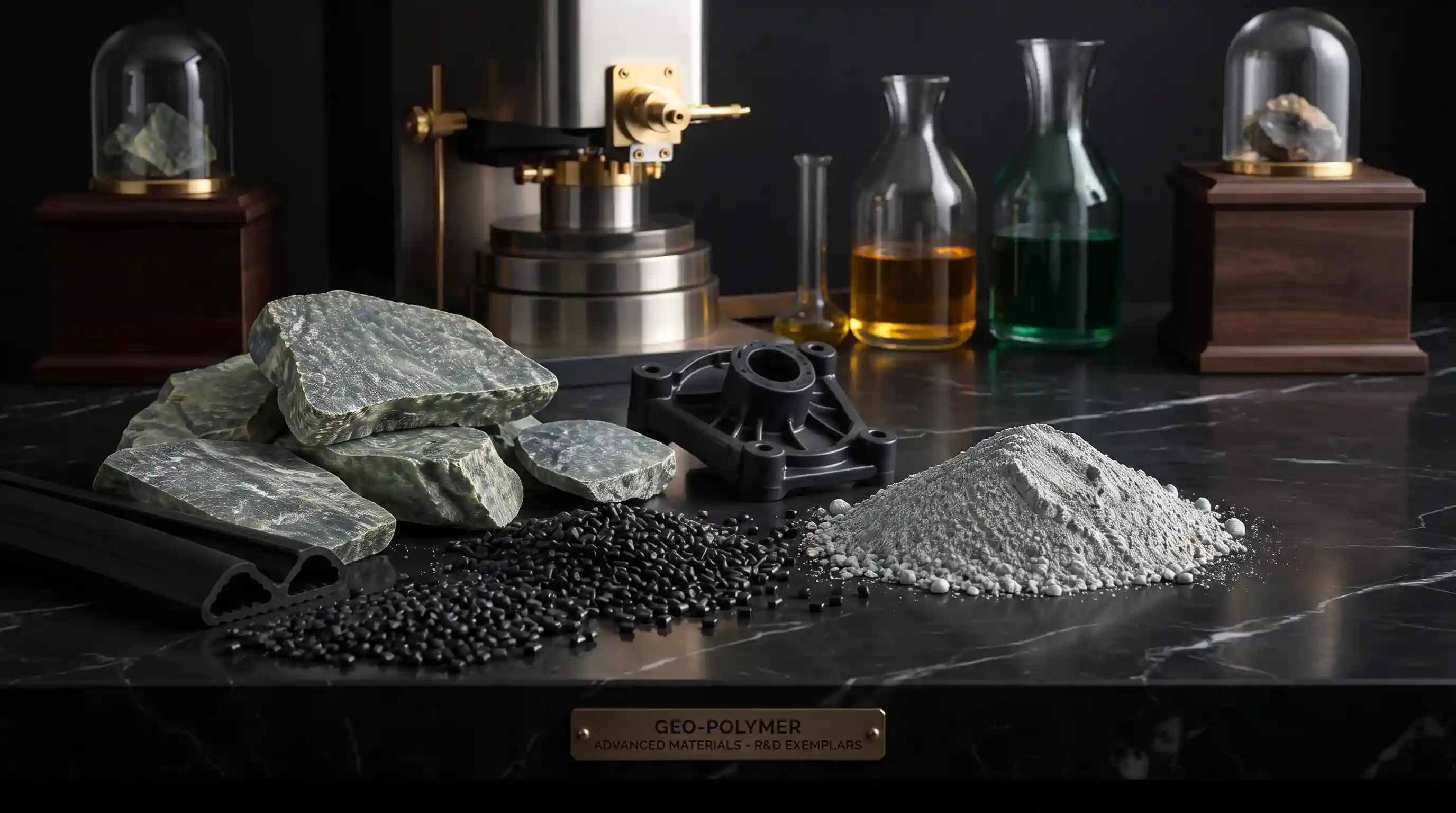
The Mechanism of Plastic Part Weight Reduction Using Mineral Fillers
One of the main conces in mass production of plastic parts is controlling the density and final weight of the product. When industrial talc is used in combination with polymers, the final density of the polymer compound is managed depending on the mixing percentage. This process allows engineers to fill the volume of the part with less weight without sacrificing mechanical quality.
The Kani Sang Amiran project, by offering its high-quality products on the dedicated page Industrial Talc, has provided access to standard raw materials for those active in the plastics sector. Using this mineral instead of some expensive pure polymers is an economical solution for lightweighting parts.
In addition to lightweighting, the presence of this powder in the plastic structure increases resistance to impact and scratching, which significantly increases the useful life of the part and reduces maintenance and replacement costs.
Examining the 450 to 1000 Mesh Range and Its Effect on Final Properties
The particle size of mineral powders plays a direct role in the quality of the final product. The industrial talc offered in the 450 to 1000 mesh range has very fine particle dimensions that establish a high contact surface with the polymer. The finer and more uniform the particles are, the better their dispersion in the plastic matrix will be, resulting in more optimized mechanical properties.
This mesh range is optimized for applications such as the production of polymer products, rubber products, paints, and industrial products. Particles in this range are neither coarse enough to cause a drop in impact strength nor clumpy enough to cause problems in the mixing process.
The Kani Sang Amiran project, by utilizing advanced granulation equipment, produces this product with the highest precision in the mesh sizes required by industries. This high precision in granulation guarantees the quality consistency of final productions and minimizes production waste.
Specialized Applications of Industrial Talc in Paints and Coatings
The paint and resin industry is another field where talc mineral powder has a special place. The use of industrial talc as a filler in paint formulations contributes to improved coverage, increased resistance to peeling, and stability against weather conditions. Due to its platy structure, this material creates a strong barrier against the penetration of moisture and corrosive agents.
Alongside this material, the use of other supplementary minerals is common in various industries. For example, reading the article The Effect of Dolomite on Reducing Production Costs in Mineral Industries can provide you with a comprehensive perspective on the intelligent selection of mineral fillers for cost optimization.
In paint manufacturing, the use of suitable granulation of this powder improves the flowability of the paint and prevents particle sedimentation during storage. These features have made this product an integral component in the coating industry.
Improving Thermal Properties and Dimensional Stability of Lightweight Parts
Lightweighting plastic parts should not come at the cost of losing their thermal stability. One of the great advantages of adding industrial talc to plastics is the increase in Heat Deflection Temperature (HDT). This feature allows the part to maintain its shape and strength at higher temperatures.
The Kani Sang Amiran project, by offering high-quality mineral products, helps industries produce parts with precise dimensional tolerances. The shrinkage of plastic parts after exiting the mold is a common problem that is well-controlled and restrained by the presence of this mineral material.
This high dimensional stability is of extraordinary importance especially in automotive parts and industrial equipment that are exposed to extreme temperature fluctuations, and prevents warping or deformation of the products.
Economic Benefits and Cost Optimization in Industrial Production
From an economic perspective, production managers are always looking for ways to reduce the final price of a product without sacrificing standards. Replacing a percentage of expensive polymers with industrial talc is one of the proven strategies for reducing raw material costs. Due to its affordable price, this mineral powder creates high added value for production lines.
In addition to reducing raw material costs, because of the reduction in the final weight of plastic parts, energy costs consumed in injection molding and extrusion processes are also reduced. Also, logistics and transportation costs are noticeably optimized due to the final products becoming lighter.
The Kani Sang Amiran project, by continuously supplying this high-quality mineral, acts as a reliable arm for the polymer, rubber, and paint industries, and brings economic stability to manufacturers.
Conclusion and Future Prospects for Using Minerals in Plastics
The growing demand trend for lighter, more resistant, and environmentally friendly parts shows that the use of mineral fillers will become even more important in the future. Industrial talc, with its unique physical and chemical characteristics, has solidified its position as a key solution in the industry.
By covering a wide range of needs in polymer products, rubber products, paints, and industrial products, this material acts beyond a simple filler and is recognized as a structural enhancer. The precise selection of the mesh range (450 to 1000) plays a decisive role in maximizing the benefits of this material.
The Kani Sang Amiran project is always striving to cover the needs of various industries in the best possible way through standard extraction and processing of minerals, and to take an effective step toward upgrading the quality of national production.

| Question | Answer |
|---|---|
| What is industrial talc and what are its applications? | It is a micronized mineral used to improve the properties of polymers, rubber, paint, and industrial applications. |
| What is the mesh range of Kani Sang Amiran industrial talc? | This product is produced and offered in the 450 to 1000 mesh range. |
| How does industrial talc reduce the weight of plastic parts? | By replacing a percentage of polymers and managing the final density of the polymer compound, the weight of the part is reduced. |
| Does using this powder cause a drop in thermal resistance? | No, on the contrary, its presence increases the Heat Deflection Temperature and the dimensional stability of the part. |
| What are the main applications of industrial talc? | Polymer products, rubber products, paint, and various industrial products. |
| What is the role of talc in the paint industry? | Improved coverage, increased resistance to moisture, and prevention of sedimentation are its advantages in paint. |
| Why is particle distribution in the 450 to 1000 mesh range important? | It causes homogeneous dispersion of particles in the polymer matrix and improves the final quality of the part. |
| Is using this powder economically cost-effective? | Yes, it helps reduce the consumption of expensive polymers and lowers production costs. |
| How can this product be obtained? | It can be ordered through the dedicated industrial talc page on the Kani Sang Amiran website. |
| Is this material also used in the rubber industry? | Yes, it is used as a lightweight filler to improve the physical properties of rubber compounds. |
Kani Sang Amiran Project — Production of minerals and micronized industrial powders.
برچسب: Industrial Talc,The Impact of Industrial Talc on Reducing the Final Weight of Plastic Parts,
نویسنده: رساوب آفرین