
درباره سایت
آخرین مطالب
- بررسی تاثیر اکسید لیمونیت (گل ماش) بر پایداری رنگ
- استخدام أكسيد الليمونيت (الماغش) في صناعات الزجاج
- کاربرد اکسید لیمونیت (گل ماش) در صنایع شیشهسازی
- A Review of Daily Prices for Limonite Oxide (Ocher) in the Market
- چگونه خالص بودن اکسید لیمونیت (گل ماش) را تشخیص دهیم؟
- بررسی قیمت روز اکسید لیمونیت (گل ماش) در بازار
- Application of Limonite Oxide (Gole Mash) in Glassmaking Industries
- كيف تتعرف على نقاء أكسيد الليمونيت (جول ماش)؟
- How to Determine the Purity of Limonite Oxide (Gol Mash)?
- بررسی استانداردهای ایمنی کار با اکسید لیمونیت (گل ماش)
امکانات وب
An Introduction to the Role of Calcium Carbonate in Material Engineering and Construction
Mode construction materials and engineering products always require reinforcements and fillers that, in addition to reducing production costs, enhance their durability and physical stability. Among a wide range of minerals, calcium carbonate is recognized as one of the most strategic and widely used additives. This natural substance, extracted from mineral rocks, plays a key role in improving the mechanical properties and appearance of structures and industrial products.
In the construction and engineering industries, selecting the right additive is of vital importance. Industrial projects require materials with precise particle size distribution. Calcium carbonate, utilizing a highly diverse mesh range from 100 to 3500 mesh, allows for complete customization for various formulations. This material is present in diverse applications, including the production of PVC/UPVC profiles and pipes, masterbatch, cable, artificial leather, paint, paper, adhesives, and engineered stone.
Analyzing the behavior of minerals in polymer and construction matrices shows that the presence of this material acts not only as an inexpensive filler but also significantly contributes to improving the elastic modulus and dimensional stability. By precisely adjusting the percentage of this material in the final formulation, engineers achieve an optimal balance between flexibility and compressive strength.
Furthermore, a deep understanding of the impact of this material on the rheological and structural properties of engineering materials allows manufacturers to produce higher-quality products. In the remainder of this article, we will analyze various functional dimensions of this material and its reinforcing mechanisms in the structure of different materials to provide a comprehensive perspective for engineers and manufacturers.
Physical and Chemical Properties of Calcium Carbonate in Improving Strength
The mechanical and physical properties of minerals are highly dependent on their crystalline structure and particle size distribution. The chemical formula of this material is $CaCO_3$ and it is found in nature in various forms such as calcite and aragonite. This stable crystalline structure forms the foundation for the durability of engineering products and injects appropriate thermal stability into the host matrix.
One of the most important parameters in determining the quality of this material is its mesh range. This product is produced covering a wide range of 100 to 3500 mesh, which allows engineers to use coarser or micronized particles depending on the type of final application. Finer particles with higher specific surface area establish a stronger bond with polymers and resins, thereby significantly increasing tensile strength and impact resistance.
To better understand the behavior of these particles compared to other mineral additives, reading the review of the impact of bentonite on the strength of building materials provides valuable supplementary insights for professionals. While bentonite is mostly used in specific geotechnical and drilling applications or as a clay binder, calcium carbonate plays a more direct structural role as an engineering filler in solid products and coatings.
Homogeneous distribution of particles within the construction material matrix prevents the formation of local agglomerates. This uniform distribution spreads the stresses applied to the structure evenly across the entire volume of the material and prevents the creation of local weak points. As a result, the final product shows much higher resistance to cracking caused by continuous mechanical loads.

The Role of Calcium Carbonate in PVC and UPVC Pipes and Profiles
The pipe-making and door and window profile manufacturing industry is one of the critical sectors that has strict standards for mechanical and dimensional strength. Among these, the use of calcium carbonate as the primary mineral filler in PVC and UPVC formulations has become widespread. By filling the voids between polymer chains, this material significantly improves the hardness and flexural modulus of the profiles.
Adding this mineral to the polymer compound increases the dimensional stability of the pipes against thermal changes and environmental stresses. PVC/UPVC pipes containing optimal amounts of this material show higher resistance to deformation and bending under soil pressure or passing fluids. Additionally, optimizing melt flow in the extrusion process is another key advantage of using this material with the appropriate mesh.
A point of importance in sensitive polymer applications is the type of surface treatment of the particles. To lea about methods of improving interphase adhesion and enhancing final strength, reading the specialized article How does coated calcium carbonate increase the resistance of polymer products? offers very practical information and precise scientific mechanisms that are very helpful in advanced material engineering.
Reducing longitudinal and transverse shrinkage of parts during cooling is another advantage of using this filler. This feature ensures that the produced profiles and pipes have perfectly precise dimensions in accordance with standard engineering tolerances, which ultimately guarantees the useful life of the structure in civil and construction projects.
Application of Calcium Carbonate in Engineered Stone and Composite Materials
Engineered stones and polymer-mineral composites, as a new generation of building materials, require materials with extraordinary compressive strength and high aesthetic appeal. In the construction of these stones, high-purity calcium carbonate powder is used as a bulky dispersed phase, which is uniformly distributed in a resin matrix (such as polyester or epoxy).
The presence of this mineral with appropriate hardness significantly increases the wear resistance and surface hardness of engineered stones. This feature makes the resulting materials show unparalleled stability against heavy traffic, scratching, and mechanical erosion. That is why today these materials have become a suitable substitute for natural stones in flooring, wall coverings, and cabinet countertops.
To achieve the best results in coating and increasing compatibility between mineral particles and polymer resins, specific chemical processes are performed on the particle surface. To study more details regarding the surface modification of this material, reviewing the article Reviewing the impact of stearic acid in the coating of coated calcium carbonate provides important supplementary information about improving interphase bonding.
The high density of particles in the engineered stone structure leads to reduced permeability of moisture and chemical agents into the material structure. This, in tu, prevents structural damage caused by freeze-thaw cycles and guarantees the long-term durability of engineering structures in different weather conditions.
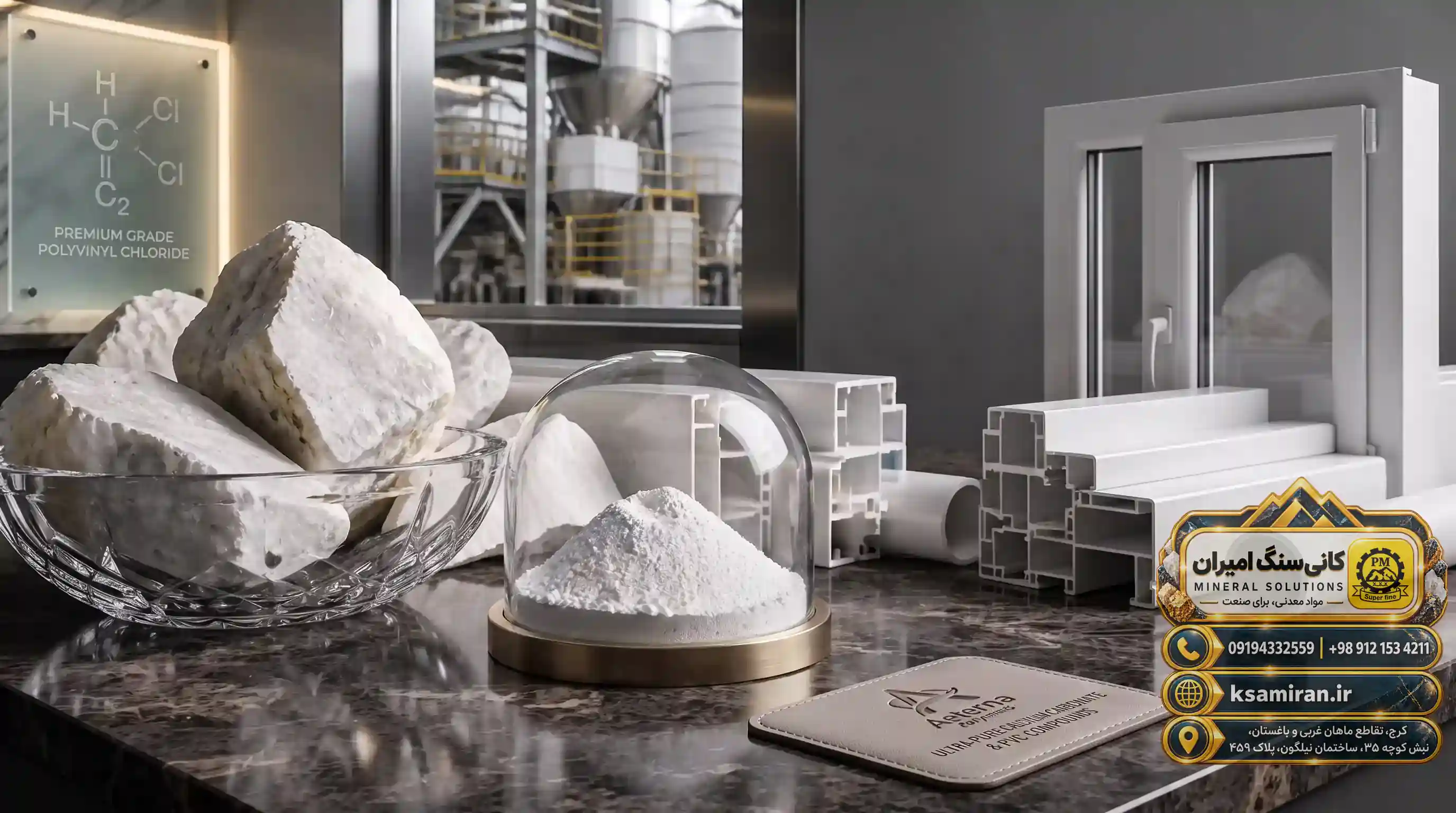
Improving the Properties of Paints, Coatings, and Construction Adhesives
The paint and construction coating industry is always looking for compounds that simultaneously improve the optical and mechanical properties of the paint film. Due to its favorable refractive index and natural brightness, calcium carbonate plays an important role as a filler pigment in water-based and oil-based paints. This material helps control gloss, improve covering power, and increase the durability of the paint film against atmospheric factors.
In the formulation of construction adhesives and sealants, the presence of this mineral also acts as a viscosity controller and shear strength improver. Adhesives containing this mineral powder have better dimensional stability after drying and do not suffer from failure or loss of adhesion under mechanical stress. The variable mesh range of this material allows the formulator to precisely control the sagging of the adhesive or paint.
Particle size distribution is very vital in these applications. Micronized particles, by filling the empty space between adhesive polymers, create a dense network that has high resistance against tensile and impact forces. This feature becomes even more important in tile adhesives and ready-mixed engineering mortars.
Furthermore, the appropriate chemical resistance of this material against corrosive environmental factors prevents the degradation of adhesive and paint layers and significantly increases the durability of the entire construction system in humid or industrial environments.
The Role of Calcium Carbonate in Masterbatch, Cable, and Artificial Leather
Advanced polymer industries such as the production of specialized masterbatches, cable coatings, and artificial leather are heavily dependent on standard mineral additives. In masterbatch production, calcium carbonate acts as a carrier and filler, helping to reduce the finished product price without compromising the quality of mechanical properties. This material also improves the thermal conductivity of the polymer.
In the cable manufacturing industry, polymer insulators must have high electrical and mechanical resistance. Adding this high-purity mineral to cable compounds maintains dielectric properties while simultaneously optimizing tensile strength and tear resistance in cable sheaths. This enhances the safety of power transmission and telecommunication lines.
In the production of artificial leather, this material is used as a filler for foam and lining layers to provide the feeling of natural texture, flexibility, and at the same time, resistance to wear to the final piece. Proper distribution of particles prevents the creation of weak points in the flexible structure of artificial leather.
Precise formulation engineering in these industries requires careful selection of mesh and additive levels to maintain the balance between tensile properties, elongation, and hardness. By providing process stability, this material maximizes the efficiency of production lines.
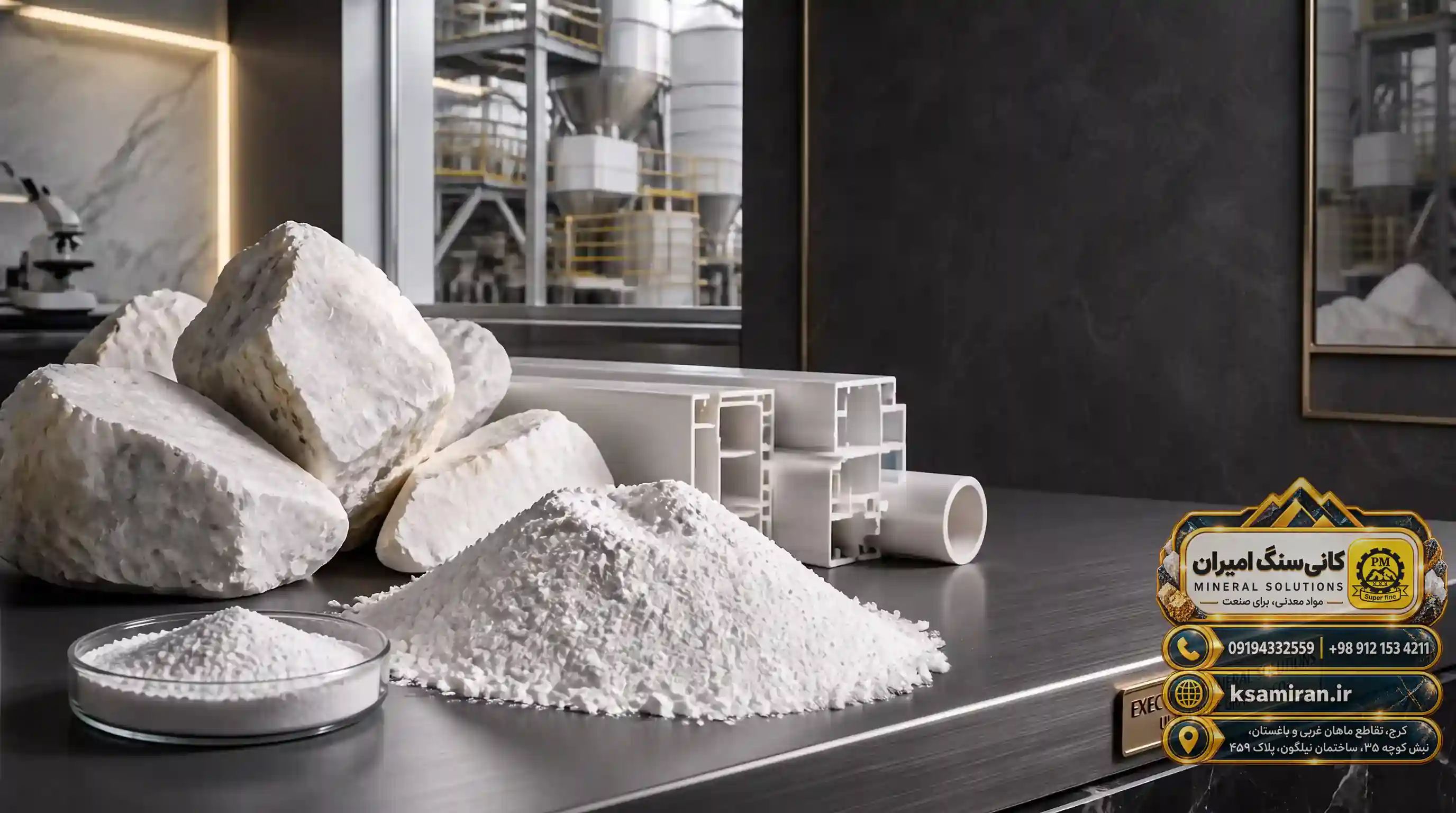
Economic Analysis and Cost Optimization in Construction Projects
In addition to technical and mechanical advantages, the use of calcium carbonate brings significant economic benefits to manufacturers of building materials and engineering products. As an abundant and cost-effective mineral, replacing a percentage of expensive resins, polymers, and adhesives with this filler dramatically reduces finished production costs.
Optimizing formulations using this mineral allows industrial units to offer more competitive prices in the market without sacrificing the quality of mechanical and physical standards. This competitive advantage plays a decisive role in the commercial success of companies in large civil and mass construction projects where cost management is vital.
Reducing energy consumption in baking and extrusion processes due to improved thermal conductivity and rheological behaviors resulting from the presence of these particles is considered another positive economic dimension. Manufacturing plants can increase their production efficiency and minimize waste caused by dimensional variations by utilizing this material.
Ultimately, the high durability and longevity of the final products mean lower repair and maintenance costs for structures in the long term. This attracts the satisfaction of customers and employers and creates high added value for the construction materials supply chain.
Conclusion and Future Outlook for the Application of Calcium Carbonate in Engineering
A comprehensive review of the properties and applications of calcium carbonate shows that this mineral, beyond being a simple filler, plays a key structural role in improving the strength and durability of building materials and engineering products. From PVC/UPVC profiles and engineered stones to paints, adhesives, and masterbatches, the homogeneous presence of this material creates a significant improvement in mechanical properties, dimensional stability, and wear resistance.
With the advancement of production and processing technologies for micronized powders in various mesh ranges, the possibility of precise customization of these materials for complex industrial projects has become more available than ever. Combining this mineral with mode surface modification technologies has opened new horizons for producing lighter, stronger, and more sustainable building materials.
By understanding the reinforcing mechanisms and utilizing precise technical data, manufacturers and engineers can design the most optimal formulations that are both economically justifiable and meet the stringent quality standards of the construction industry. This growing trend ensures the position of this vital material in the future of material engineering and related industries.

| Question | Answer |
|---|---|
| What is calcium carbonate? | It is a natural mineral with the formula CaCO3 that is used as a filler and reinforcement in polymer, paint, paper, and construction industries. |
| What is the mesh range of this product? | This product is offered in a very diverse mesh range from 100 to 3500 mesh. |
| What are the main applications of this mineral? | PVC/UPVC profiles and pipes, masterbatch, cable, artificial leather, paint, paper, adhesive, and engineered stone. |
| How does this material increase the strength of building materials? | By filling empty spaces, improving stress distribution, increasing hardness, and improving dimensional and thermal stability. |
| Is this material used in the PVC pipe industry? | Yes, it is used as the primary filler to increase the hardness, flexural modulus, and dimensional stability of pipes and profiles. |
| What is the role of calcium carbonate in engineered stone? | Increasing wear resistance, surface hardness, and reducing moisture permeability in polymer-mineral composites. |
| What are the economic benefits of using this material? | Reducing finished production costs by replacing a percentage of expensive resins and polymers without sacrificing quality. |
| Why is particle size distribution important? | Homogeneous distribution of particles prevents local agglomeration and distributes stresses evenly across the entire structure. |
| What is the difference between different meshes? | Finer particles (high mesh) have a larger specific surface area and establish a stronger bond with the polymer matrix. |
| How can the product page information be viewed? | By visiting the official product page on the Kani Sang Amiran website, complete information is available. |
Kani Sang Amiran, the specialized reference for mineral and industrial materials.
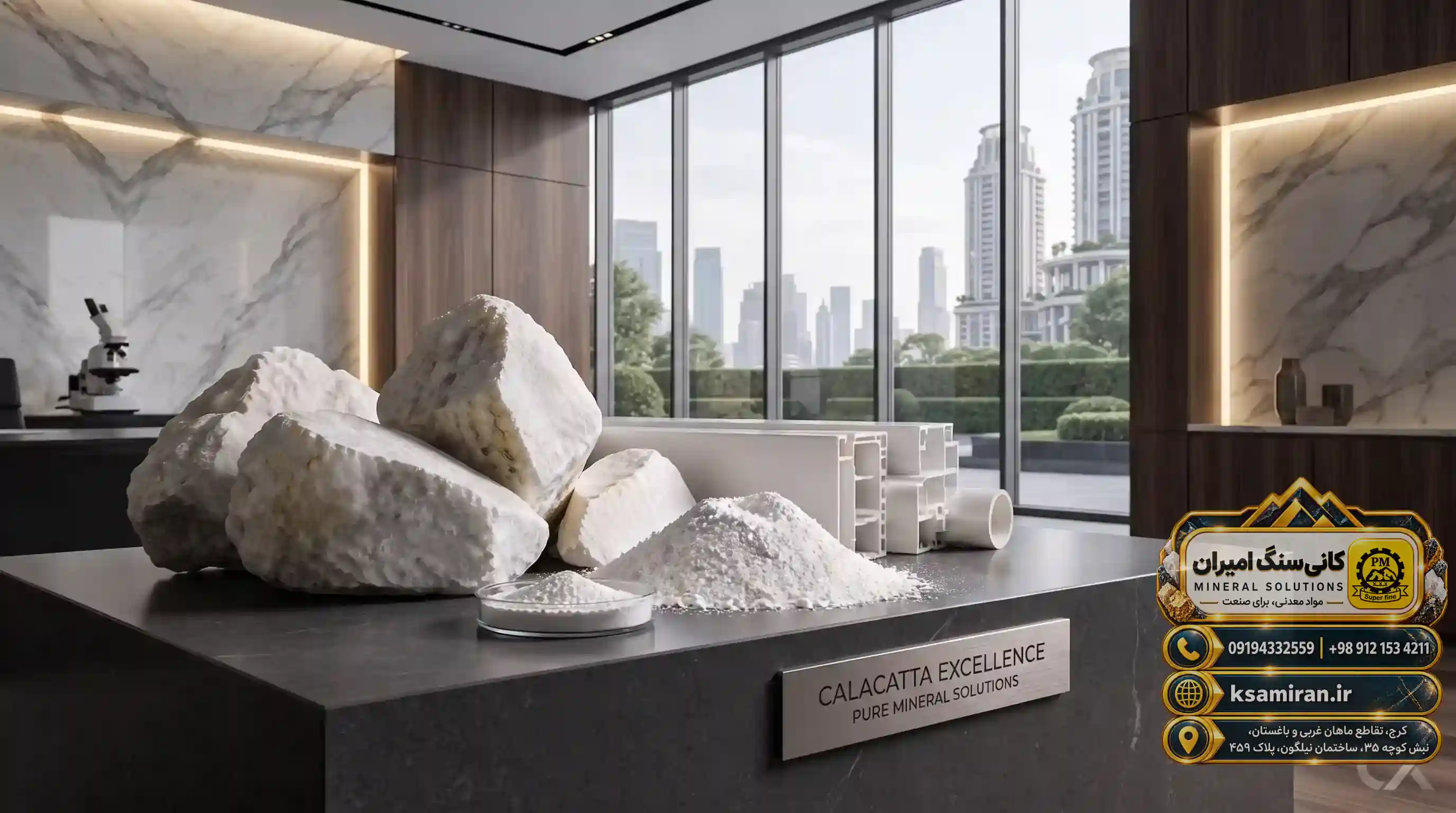
برچسب: Calcium Carbonate,The Impact of Calcium Carbonate on the Strength of Building Materials,
نویسنده: رساوب آفرین