
درباره سایت
آخرین مطالب
- سیلیس کانی سنگ امیران مناسب شیشه و سرامیک با دانهبندی ۱۰ تا ۴۵۰
- سفارش سیلیس کانی سنگ امیران در شیشه و سرامیک در مش ۱۰ تا ۴۵۰
- کائولن باکیفیت کانی سنگ امیران برای صنایع سرامیک مش 450 تا 1500
- سیلیس پروژه کانی سنگ امیران برای صنایع شیشه در مش ۱۰ تا ۴۵۰
- اکسید لیمونیت (گل ماش) دقت فنی در تولید پودر صنعتی شما
- خرید سیلیس کانی سنگ امیران مناسب صنعت شیشه دانهبندی ۱۰ تا ۴۵۰ مش
- سفارش کربنات کلسیم ۱۲۵۰ مش با دانهبندی دقیق برای کابل
- فلدسپات باکیفیت کانی سنگ امیران برای محصولات سرامیکی
- تالک صنعتی برای شراکت در فرمولاسیون
- استعلام قیمت کائولن کانی سنگ امیران کاغذسازی با مش 450 تا 1500
امکانات وب
Introduction to the Importance of Silica Grading in Mode Industries
The mineral silica is one of the most fundamental and widely used compounds in various mining and manufacturing industries, with its physical and chemical properties playing a decisive role in the quality of the final product. Among all the characteristics of this material, its particle sizing and grading are of paramount importance. The crushing and grading process of minerals determines how the resulting powders or grains will behave in fuaces, molds, and industrial mixtures.
At the Kani Sang Amiran project, this mineral is processed with high precision and prepared in a diverse range of meshes so that various industries can benefit from it. A precise understanding of this technical variable helps engineers increase production efficiency and prevent structural defects in products.
The glass-making, foundry, ceramics, and building materials industries all rely to some extent on micronized powders and grains produced with precise mesh standards. Understanding the differences between coarse and fine gradings is the key to optimizing industrial processes and allows producers to achieve maximum productivity with minimum cost.
To lea more about the details of this product and view its complete specifications, you can visit the official silica page and obtain the necessary information.
The Vital Role of Silica in the Glass-Making and Melting Industry
The glass industry is considered one of the major consumers of silica worldwide. The quality and transparency of the final glass depend heavily on the purity and, in particular, the grading of this material. If the particles are too coarse, they will not dissolve completely during melting in the fuace, causing bubbles or uneveess in the glass structure. On the other hand, extremely fine particles may cause clumping and fuace feeding issues.
Precise control of particle dimensions helps reduce melting costs and allows chemical reactions among raw materials to take place with greater speed and homogeneity. This not only improves the optical and mechanical quality of the glass but also optimizes the energy consumption of the fuaces.
Alongside glass, other mineral and chemical industries such as paint manufacturing and coatings also require raw materials with standard grading. For instance, for further reading on similar applications in this field, it is recommended to read the article Reviewing the Application of Dolomite in Paint and Resin Industries, which provides useful information.
Adhering to strict standards in the grading process guarantees consistent quality in mass production lines of glass, and production engineers always pay special attention to this factor.
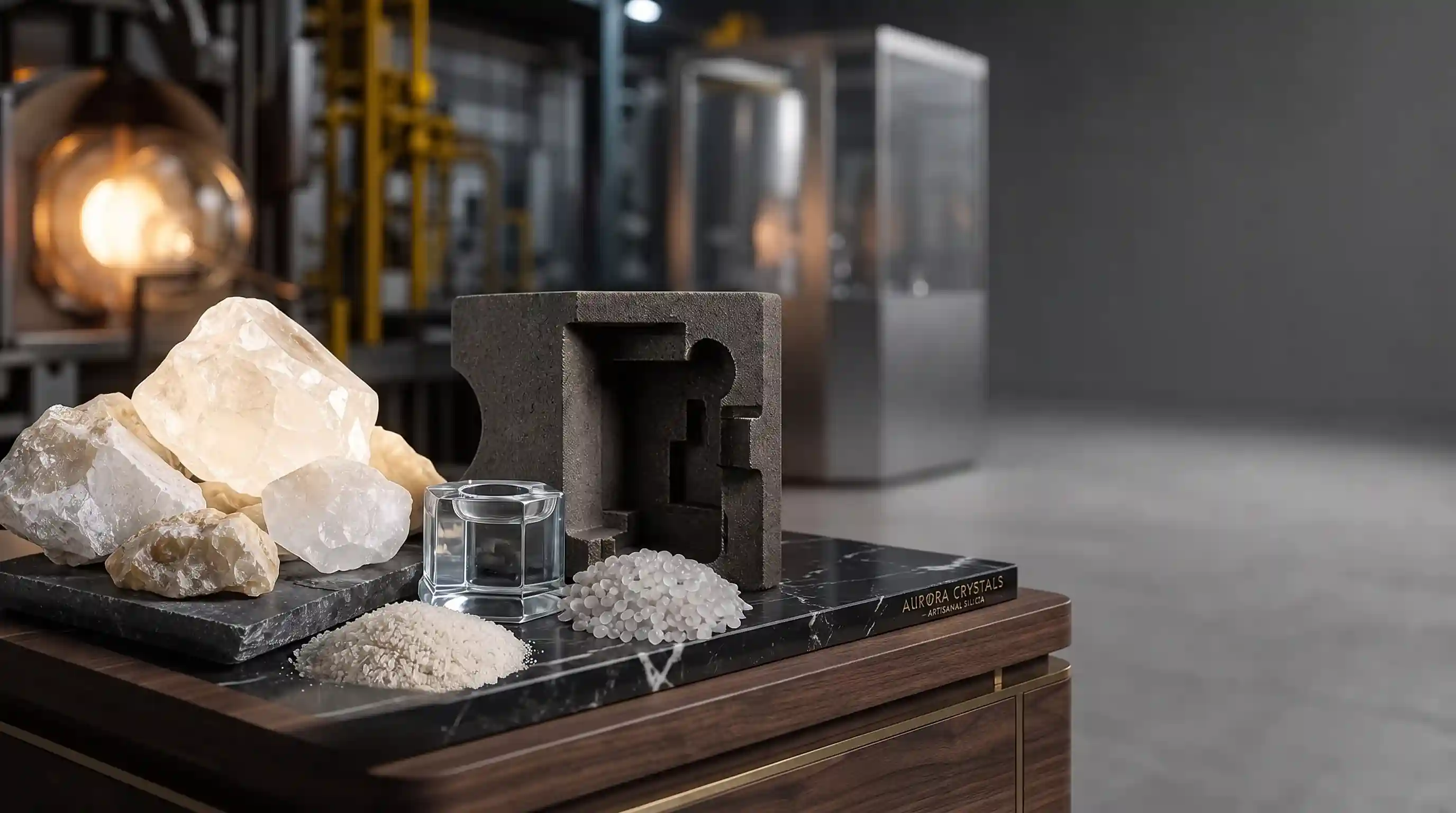
Application of Various Silica Meshes in Foundry Industries
In foundry industries, mold-making, and metal parts production, choosing raw materials resistant to high temperatures is of vital importance. Silica, as a refractory and stable material, plays a major role in constructing foundry molds and molding sands. The proper grading of foundry sand allows gases resulting from metal melting to easily escape from the mold, shaping the final piece without holes or air cavities.
The mesh range provided for this product varies between 10 and 450 mesh, covering a wide spectrum of traditional and advanced foundry requirements. Coarser gradings are used for making mold sand, while finer gradings are utilized for coating and improving the cross-sectional surface of molds.
Precision in particle dimensions guarantees the mechanical strength of the mold against the pressure of molten metal and prevents the collapse of mold walls. This directly affects the appearance quality and dimensional tolerance of the cast part, minimizing production waste.
By using meshes appropriate to the type of molten metal (iron, steel, or aluminum), producers achieve the best results from the casting process.
The Importance of Standard Mesh Grading in Ceramics and Construction Materials Industries
The ceramics and building materials industries are other sectors with a high consumption of silica. In the production of various tiles, ceramics, sanitary ware, and building mortars, the presence of this material is essential as a skeletal and filler phase. The correct particle grading results in better particle packing within the ceramic body and reduces shrinkage and cracking during the firing stage.
In the building materials sector as well, using powders and grains with specific dimensions improves the compressive strength and durability of concrete and mortar. Just as standards are important in other minerals like calcium carbonate, in this field too, for more information, you can refer to the article Reviewing Mesh Grading Standards in Coated Calcium Carbonate Types to become more familiar with the general principles of mineral particle meshing.
The optimal combination of micronized powders with other construction raw materials increases structural strength and significantly extends the service life of building materials.
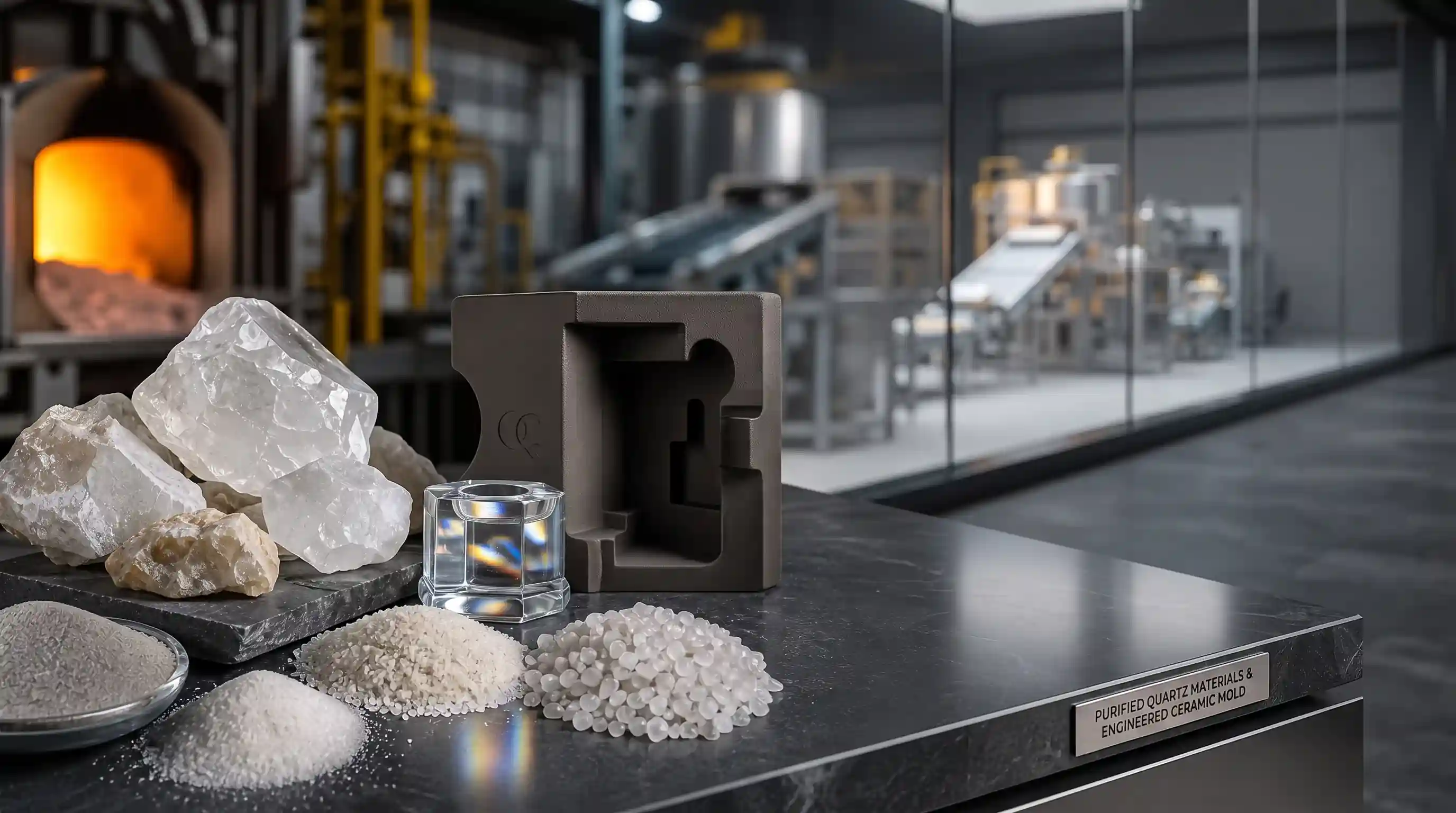
Mesh Range from 10 to 450 Mesh: Flexibility in Meeting Industrial Needs
One of the most important features offered for silica in the Kani Sang Amiran collection is covering a wide range of meshing from 10 to 450 mesh. This broad spectrum allows various industries to procure the required raw material precisely based on their technical guidelines and formulations. Coarser meshes (lower numbers) are suitable for applications requiring permeability and bulk mechanical strength, while finer and micronized meshes (higher numbers) are used for rapid chemical reactions, glass-making, and ceramics.
A precise understanding of meshing terminology and particle size helps buyers avoid mistakes when choosing the type of powder. The higher the mesh number, the finer and softer the particles will be, creating a larger contact surface area, which is extremely important in chemical and ceramic industries.
This flexibility in grading makes it possible to customize the product based on the exact requirements of each factory and maximizes production line efficiency.
Examining the Impact of Purity and Particle Size on Final Product Quality
In addition to grain dimensions, grading uniformity also plays a key role in the performance of silica. If the particle size distribution in an industrial powder is irregular, the physical behavior of the mixture during firing or melting will be unpredictable. Homogeneous particles result in uniform stress distribution, a reduction of empty spaces between particles, and an increase in the density of the final product.
In various construction and manufacturing industries, using high-quality and graded minerals has a direct effect on structural durability. To better understand this topic in other applicable minerals, reading the article What is the Important Application of Dolomite in Construction and Manufacturing Industries can provide you with a comprehensive view of the importance of grading standards in the construction industry.
The quality control team in the production process strives to deliver a product with the lowest dimensional tolerance and the highest degree of purity to consumers.
Economic and Technical Advantages of Using Precise Mineral Grading
Investing in the purchase of silica with standard and appropriate grading is also economically justifiable. When the mineral is selected precisely according to the process requirements, the amount of production waste, fuace energy consumption, and equipment depreciation are drastically reduced. For example, in the glass industry, uniform particles melt in a shorter time and consume less energy.
Furthermore, in foundry and ceramic industries, reducing the defect rate of final products results in massive savings in total production costs. Utilizing mode processing equipment, the Kani Sang Amiran project offers a stable and standard product to the market that meets rigorous industrial demands.
The smart choice of raw materials creates a major competitive advantage for manufacturing plants and guarantees the final product quality.
Conclusion and Guide to Choosing the Best Silica Mesh
In this article, we comprehensively examined the role and importance of silica grading in the glass-making, foundry, ceramics, and building materials industries. It became clear that the mesh range of 10 to 450 mesh provides engineers with a powerful tool to achieve the highest efficiency and quality in production through precise particle size selection.
Compliance with dimensional standards and mineral purity is the main foundation of progress in mode manufacturing industries. Offering high-quality products in this field, the Kani Sang Amiran project has always accompanied various industries across the country.
To receive specialized consultations, price inquiries, and order placement, it is recommended to take action through the collection's official website and review the precise technical specifications of your desired product.
| Question | Answer |
|---|---|
| What is silica and what are its applications? | It is a mineral widely used in the glass, foundry, ceramics, and building materials industries. |
| What is the silica meshing range at Kani Sang Amiran? | This product is processed and supplied in a mesh range of 10 to 450 mesh. |
| Why is silica grading important in glass-making? | Precise grading results in homogeneous melting, bubble reduction, and improved glass transparency. |
| What is the role of silica in founding? | It is used as a refractory material in the construction of molds and foundry sands. |
| Does meshing impact the ceramics industry? | Yes, it causes reduced shrinkage, better particle packing, and prevents cracking. |
| How can the most suitable mesh be chosen? | You can choose your desired mesh range based on your technical formulation and production line needs. |
| Is silica powder used in building materials? | Yes, it is used as a filler and strength enhancer in mortars and construction materials. |
| How can complete product specifications be viewed? | By visiting the silica product page on the Kani Sang Amiran website, complete information is viewable. |
| What is the impact of purity and particle size? | It improves mechanical properties, reduces waste, and optimizes energy consumption. |
| How can one proceed to purchase silica? | You can get in touch with the sales department through the official website of Kani Sang Amiran. |
Kani Sang Amiran Project — Production and Processing of Mineral and Industrial Materials.
برچسب: Silica,The Importance of Silica Grading in the Glass,Making and Foundry Industries,
نویسنده: رساوب آفرین