
درباره سایت
آخرین مطالب
- تاثیر اندازه ذرات کربنات کلسیم در صنایع
- ما هو الفرق بين الفلسبار والكوارتز؟ مقارنة شاملة بين أكثر مادتيْن معدنيتيْن استخدماً
- دليل شراء أكسيد الليمونيت عالي الجودة (الجول ماش)
- What is the Difference Between Kaolin, Bentonite, and Talc in Industry? A Complete Application Comparison
- کربنات کلسیم یا دولومیت؟ بررسی تفاوتها و کاربردهای کلیدی
- مراجعة معايير التصدير لأكسيد الليمونيت (جول ماش)
- راهنمای نگهداری و انبارداری اکسید لیمونیت (گل ماش)
- National Quality Standards of Limonite Oxide (Gol Mash)
- Guide to Receiving the Catalog and Specifications of Limonite Oxide (Gol Mash)
- کاربرد اکسید لیمونیت (گل ماش) در صنایع چرم و پارچه
امکانات وب
Introduction to Kaolin Mineral and Its Importance in Mode Industries
Kaolin mineral, as one of the most important hydrated aluminum silicates, holds a special place in various industries. This white, soft powder rooted in the mineralogy of clay soils is utilized in diverse industrial fields due to its unique physical and chemical characteristics. Precise understanding of this material helps engineers and manufacturers enhance the efficiency of their processes.
In the field of construction engineering and the production of mode building materials, the properties of kaolin take on added significance. Although traditional applications of this material mostly focus on specific sectors, studying its physical behaviors indicates that the potentials of micronized powders can be haessed to optimize industrial formulations. In this article, we intend to explore the various dimensions of this mineral.
Leading mining companies such as the Kani Sang Amiran project play a key role in meeting domestic industry needs through the precise processing of industrial minerals. To view the exact specifications and information related to this mineral, you can visit the kaolin page to become more familiar with the details of this product.
In addition to construction sectors, this material has widespread applications in other fields. For example, in the rubber manufacturing industry, this material also acts as a filler, and you can read more information in the article Review of Kaolin Application in the Car Tire Manufacturing Industry.
Furthermore, the role of this material in coating industries is very prominent, which is discussed in detail in the article Application of Kaolin in Paint and Industrial Coatings Industries. A comparative study of minerals also shows how important the comparison with other minerals such as Review of Dolomite Application in Paint and Resin Industries is for making the right choice of raw materials.
Physical Characteristics and Granulation of Kaolin in the 450 to 1500 Mesh Range
One of the most important parameters in evaluating the quality of kaolin is its granulation and mesh size. Micronized powders of this mineral are produced and supplied in the 450 to 1500 mesh range, and this wide range makes it possible to use it in various industrial formulations. Fine granulation leads to an increase in the specific surface area of particles and improves their reactive properties.
Characteristics such as whiteness, non-toxicity, chemical stability, and absence of unwanted reactivity have made this mineral an ideal choice for sensitive industries. When kaolin powder is processed within this mesh range, particles are uniformly dispersed in the matrix of other materials and improve the final properties of the product.
Precise control of particle size in the processing units of the Kani Sang Amiran project ensures that the final product complies with the expected quality standards of consumer industries. This is especially vital and impactful in cases where the homogeneity and uniformity of texture are of high importance.
Ultimately, the correct selection of the mesh range based on the needs of each industry prevents resource waste and maximizes the efficiency of the production process. By considering these features, engineers can achieve the best results in designing their industrial formulations.
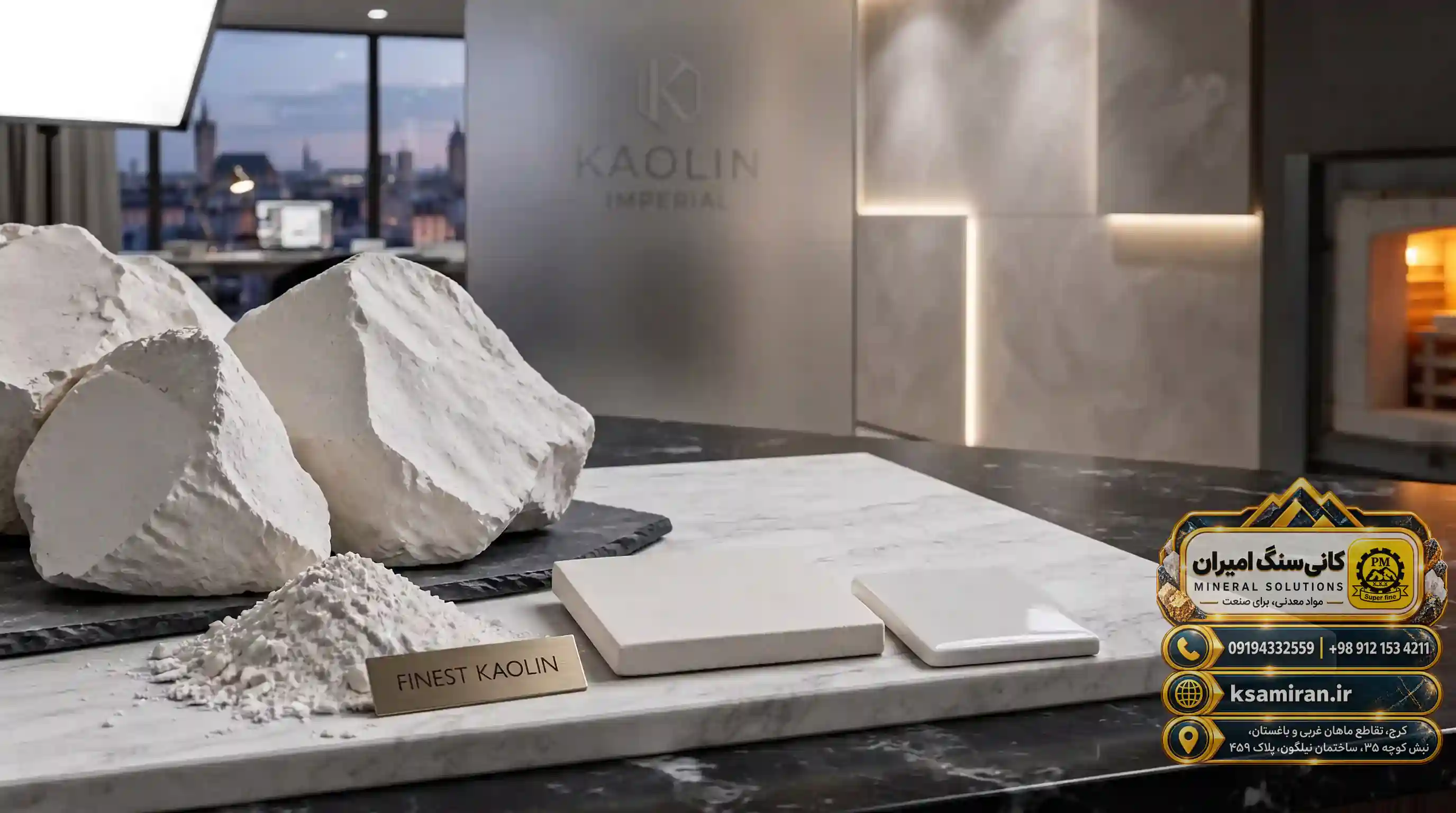
The Key Role of Kaolin in the Production of Various Tiles and Ceramics
The tile and ceramic industry is considered one of the main consumers of kaolin. This material acts as one of the main components of ceramic and tile bodies and plays a significant role in determining the mechanical strength, thermal stability, and dyeability of final products. The presence of this mineral in the ceramic body leads to reduced firing shrinkage and improved formability.
Relative refractory properties and stability at high temperatures are other advantages of using this mineral in ceramic firing kilns. This feature causes the final products to well maintain their geometric shape and dimensions, preventing them from warping or undergoing unwanted deformations.
Tile and ceramic manufacturers can raise the quality of their products to a standard and competitive level by utilizing high-quality raw materials processed by the Kani Sang Amiran project. The homogeneity and purity of these powders have a direct role in reducing waste along production lines.
Therefore, the presence of kaolin in the composition of tile bodies and ceramic products is not only a traditional choice, but a technical necessity for enhancing the durability, beauty, and final quality of wall and floor tiles.
Specialized Application of Kaolin in Glazing and Improving the Quality of Ceramic Coatings
Glazing is another vital application of kaolin where the firing and melting properties of materials are of extraordinary importance. This mineral acts as a suspending and stabilizing agent in the glaze slip and prevents heavier particles from settling in storage tanks and transfer lines.
In addition to suspending properties, this material plays a role as a source of alumina and silica in the formulation of glossy and matte glazes. Its presence leads to improved adhesion of the glaze to the ceramic body after the firing process in the kiln and prevents the occurrence of defects such as crawling or cracking.
Precision in choosing the type of micronized powder for glazing is extremely important. Industrial processing projects provide a suitable foundation for glaze manufacturers to produce high-quality surface coatings without impurities by offering standard products.
As a result, the optimal use of this mineral in glazes enhances gloss, transparency, chemical durability, and abrasion resistance in various ceramic products and sanitary wares.
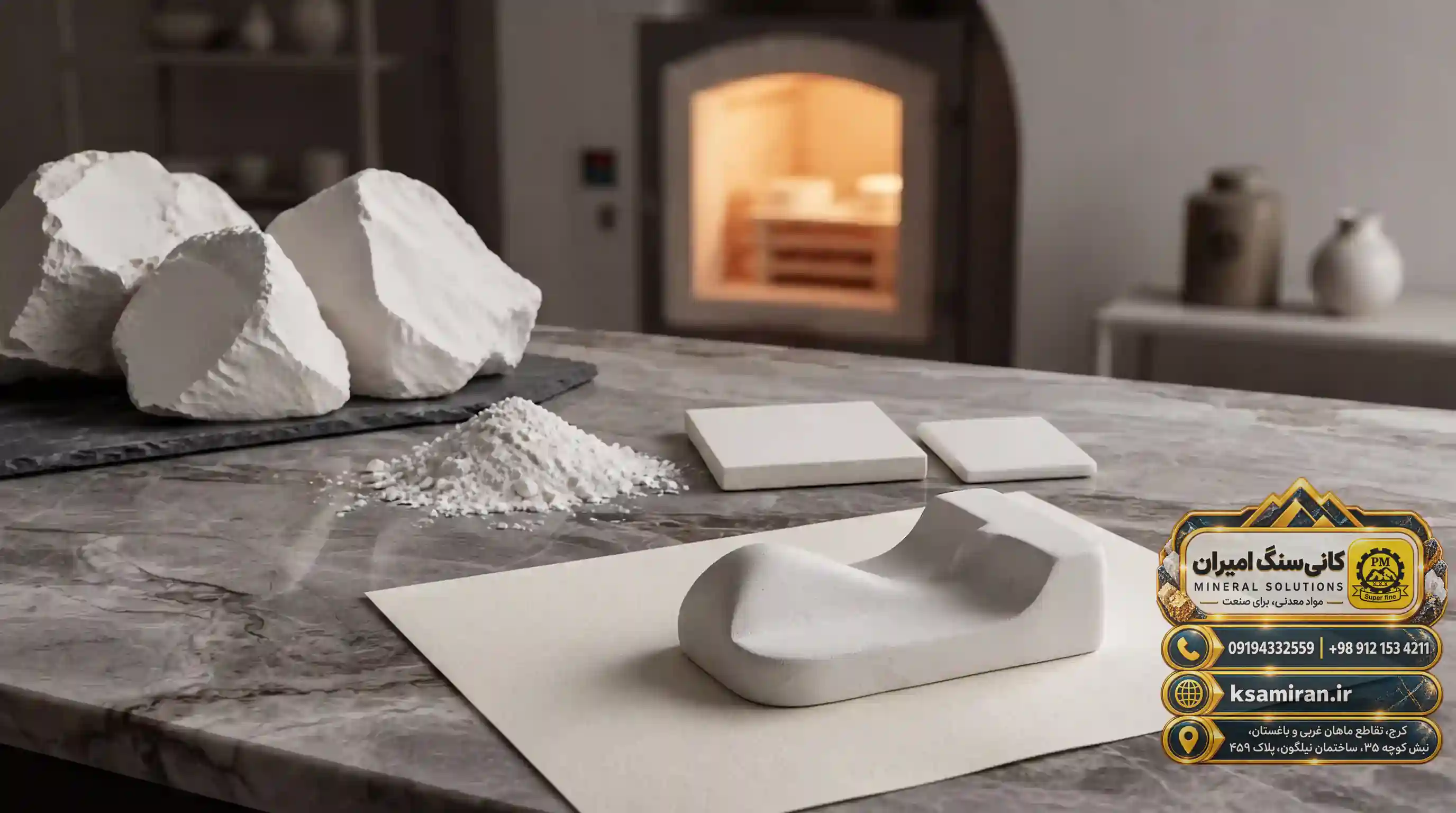
Application of Kaolin in the Paper Industry as a Filler and Coating
The paper industry is among the fields that consume a significant volume of kaolin as a filler and coating. Adding this powder to the paper pulp leads to improved whiteness, transparency, surface smoothness, and printability of the paper.
The micronized particles of this mineral properly fill the empty spaces between cellulose fibers and give the paper a denser and more uniform structure. In addition to improving visual appearance, this optimizes ink consumption in the printing process and increases the quality of printed images.
In the coating section of glossy and high-quality papers, a layer of this material along with suitable adhesives is placed on the paper surface to create a completely smooth and polished surface. This feature is of fundamental importance for the production of magazines, catalogs, and packaging paperboards.
The sustainable supply of high-quality raw materials by reputable processing units enables factories in this industry to produce paper with global standards and provides significant help in improving the efficiency of production lines.
The Role of Kaolin in Paint Manufacturing Industries and Protective Coating Production
Paint manufacturing and industrial coatings industries heavily depend on kaolin as an extender pigment and functional filler. Due to the sheet-like structure of its particles, this material helps improve the rheological properties of paint, resistance to settling, and the resistance of the paint film against atmospheric agents.
The presence of this mineral in water-based and oil-based paint formulations leads to the adjustment of final gloss, increased coverage, and reduced consumption of expensive pigments such as titanium dioxide without causing a noticeable drop in product quality.
Furthermore, high chemical stability and non-reactivity with other components of the paint formulation significantly increase the durability and lifespan of construction and industrial coatings. This feature is especially important in harsh and industrial environments.
Compliance with production standards in the preparation of this micronized powder guarantees the optimal performance of paint on various surfaces such as metals, concrete, and plaster, and ensures the final quality of the coating.
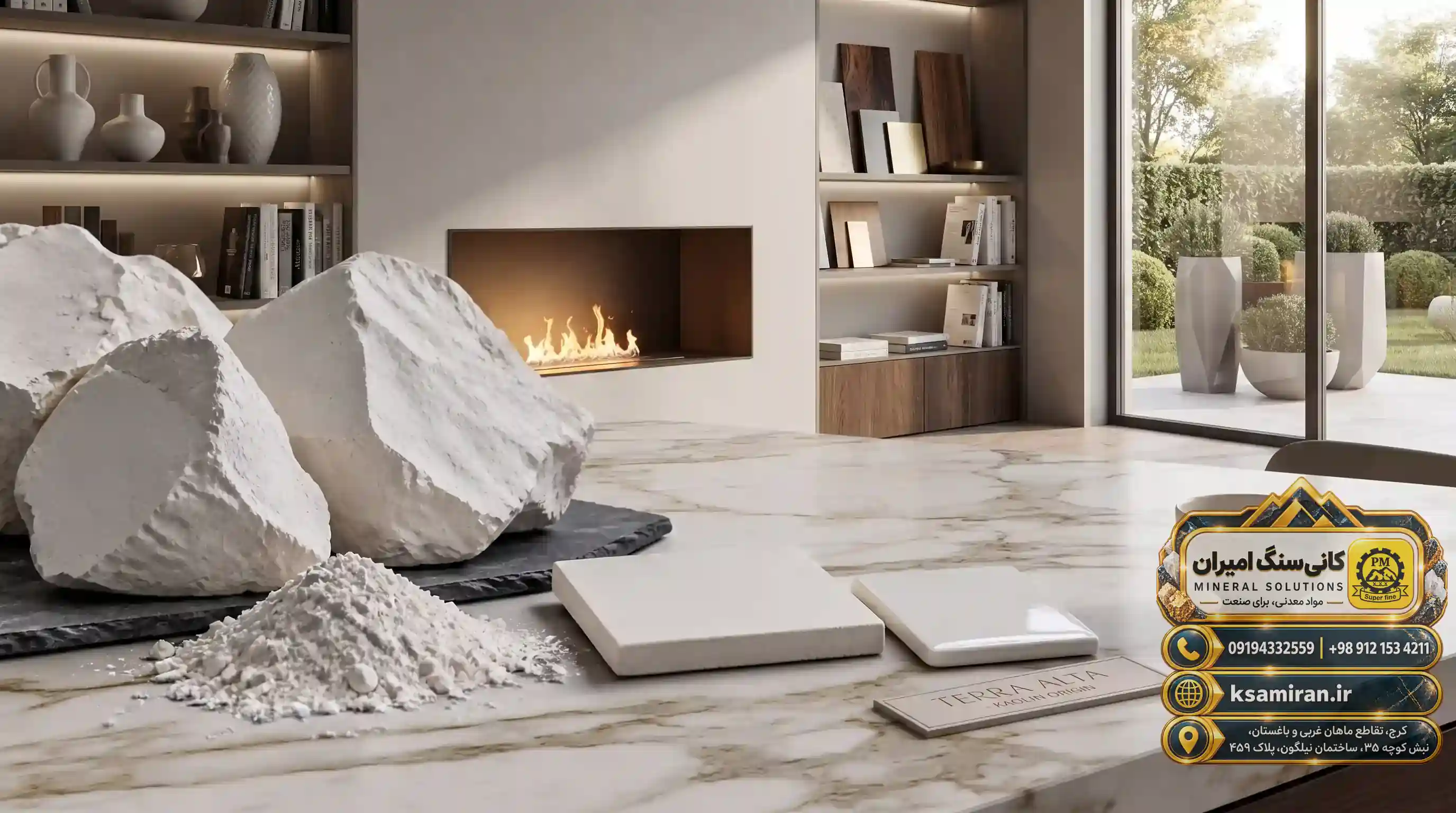
Review of Kaolin Potentials in Cement and Concrete Industries
Although traditional applications of kaolin are mostly defined in tiles, ceramics, glazes, paper, and paints, mode engineering studies show that this mineral also holds valuable potentials in the cement and concrete industries. After being fired at specific temperatures, kaolin can act as an active pozzolanic material and be used in the manufacture of blended cements.
Pozzolanic materials contain active silicates and aluminates that react with the free calcium hydroxide released during cement hydration to produce new binding compounds. This process leads to an increase in the long-term strengths of concrete and a reduction in its permeability against environmental corrosive agents.
Using micronized powders of this mineral in concrete mix designs can help improve the microstructural structure of the cement matrix. This is very efficient and beneficial, especially in civil projects that require high durability against aggressive chemical conditions.
Building material manufacturers, relying on technical knowledge and access to raw materials processed by the Kani Sang Amiran project, can employ newer solutions to enhance the quality of their concrete and cement products.
Economic Benefits and Future Outlook of Kaolin Consumption in the Construction Industry
The optimal use of kaolin in various industries, including tiles, ceramics, paints, paper, and construction materials such as cement and concrete, brings remarkable economic benefits. Access to rich domestic resources and standard processing of this mineral reduces dependence on imported foreign raw materials.
From the perspective of circular economy and sustainable development, utilizing natural mineral materials that require less production processes compared to synthetic chemical materials inflicts less damage on the environment. This feature is considered a great advantage for mode manufacturing industries pursuing green standards.
The future market outlook of this mineral indicates that with the advancement of micronization technologies and increased precision in granulation (450 to 1500 mesh range), new applications will emerge for it in advanced and high-tech industries, bringing high added value.
Ultimately, the Kani Sang Amiran project company, with continuous production quality and responsiveness to the needs of various industries, plays a significant share in developing the country's mineral value chain and paves the way for further iovations in related industries.
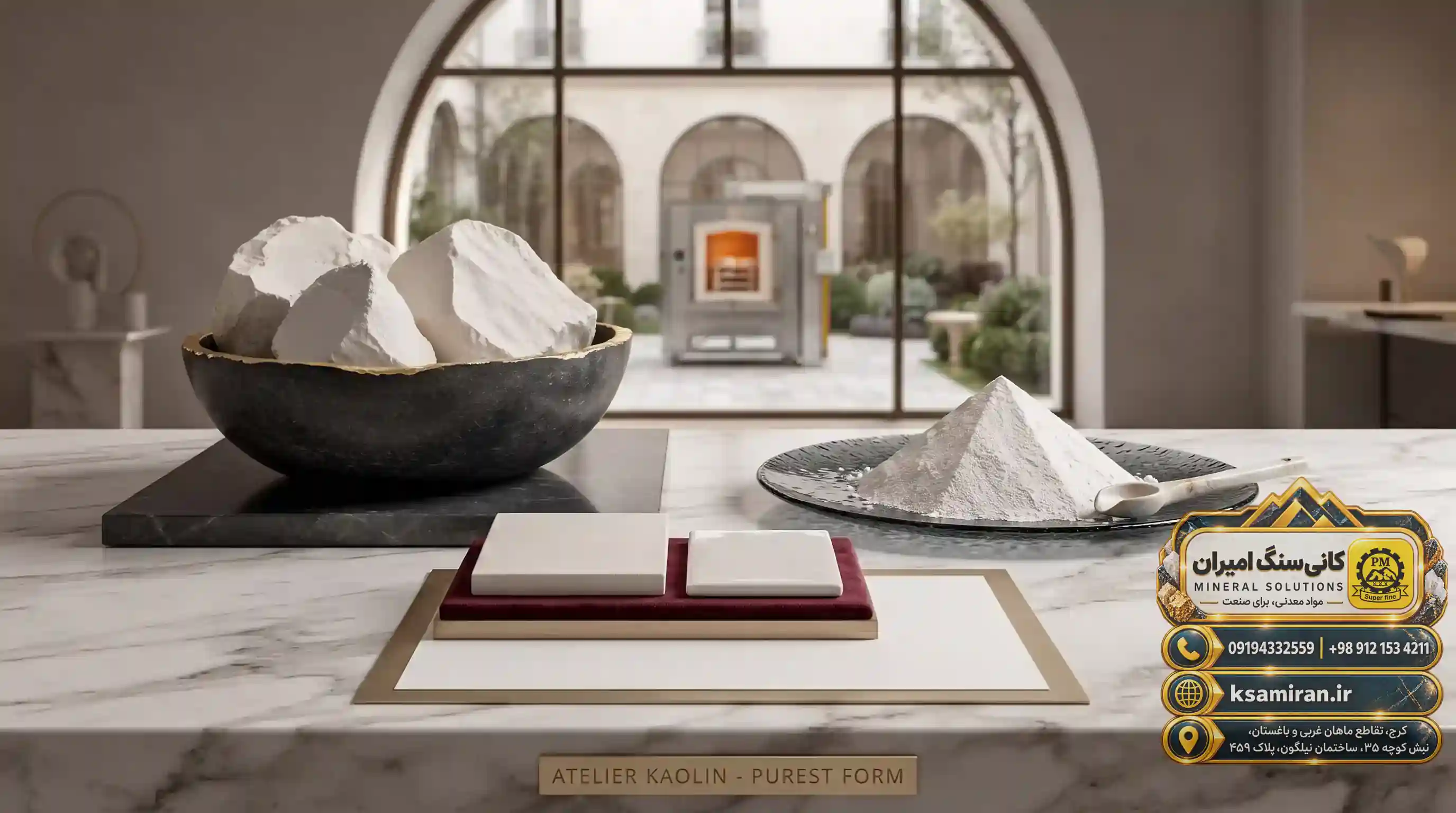
| Question | Answer |
|---|---|
| What is kaolin? | It is a hydrated aluminum silicate clay mineral with a white and soft color. |
| What is the mesh size range of this product? | Kaolin powder is produced and supplied in the 450 to 1500 mesh range. |
| What are the main applications of kaolin? | Tiles, ceramic products, glazes, paper, and paint. |
| Is kaolin used in the paper industry? | Yes, it is used as a filler and coating to improve whiteness and printability. |
| What is the role of kaolin in paint manufacturing? | It acts as an extender pigment and enhancer of paint rheological properties. |
| Why is kaolin used in glazing? | It is used as a suspending agent and a source of alumina and silica in glazes. |
| Is kaolin used in cement and concrete? | Yes, it is studied as a pozzolanic material to improve strength and reduce concrete permeability. |
| By which entity are kaolin products supplied? | They are produced and supplied by the Kani Sang Amiran project. |
| How can product information be viewed? | By visiting the official product page on the Kani Sang Amiran website. |
| What is the advantage of using micronized kaolin powder? | High homogeneity, increased specific surface area of particles, and improved final product quality. |
Kani Sang Amiran Project — Production of minerals and specialized processing of kaolin.

برچسب: Kaolin,Review of Kaolin Application in Cement and Concrete Production Industries,
نویسنده: رساوب آفرین