
درباره سایت
آخرین مطالب
- انتخاب اکسید آهن قرمز (اخرا) برای بهبود کیفیت پیگمنت و پوششهای رنگی
- تامین کربنات کلسیم با دانهبندی دقیق جهت استفاده در مستربچ
- تأمین تخصصی سیلیس برای مصالح ساختمانی، شیشه و صنایع سرامیک
- ویژگیهای فنی بنتونیت کانی سنگ امیران برای کاربردهای خاص
- فلدسپات کانی سنگ امیران برای شیشه کاشی و سرامیک
- کاربرد تالک سفید درجه یک در فرمولاسیون پیشرفته رنگ و محصولات کاغذی
- اکسید آهن قرمز (اخرا) کاربردی جهت تولید محصولات سرامیکی و پوشش
- مشخصات فنی اکسید آهن قرمز (اخرا) مناسب برای پوشش و تولید پیگمنت
- مشاوره تخصصی خرید کربنات کلسیم بر اساس نیاز دقیق صنعت شما
- انتخاب تالک سفید صنعتی مناسب برای تولیدات کاغذ و مستربچ
امکانات وب
Introduction to the Importance of Silica Selection in Industrial Production Lines
Choosing standard, high-quality raw materials is the foundation of any successful industrial production line. Among widely used minerals, silica holds a unique position and is recognized as one of the core pillars in various industries. The Amiran Stone Mineral Project meets the needs of different industries for this vital material by supplying high-grade mineral products. Understanding the physical and chemical characteristics of this material is the first step in optimizing production processes.
In mode production lines, precision in selecting granulation and purity levels is of double importance. To better understand quality standards, reading the article Silica Quality Standards in Mode Manufacturing Industries is recommended. Due to its unique properties, this mineral plays a key role in enhancing the quality of the final product, and production managers are constantly looking for reliable suppliers for it.
Using high-grade silica not only guarantees the final quality of products but also significantly reduces overhead costs and production line waste. For this reason, careful review of technical specifications and their compliance with production line requirements is the primary duty of the quality control and raw material supply unit in any leading industrial complex.
The Vital Role of Silica in the Glass Manufacturing Industry
The glassmaking industry is considered one of the largest consumers of silica globally and in Iran. This material is used as the primary raw material in the manufacturing of various flat glasses, glass containers, and glass fibers. The homogeneous presence of this mineral in the molten raw material composition guarantees thermal stability and the transparency of the final glass.
To supply this vital material, visiting the dedicated product page Amiran Stone Mineral Silica provides complete information for engineers and industrial owners. The appropriate granulation of this material plays a direct role in the melting speed of materials in the fuace and reduces energy consumption, which is of great economic and environmental importance.
Strict compliance with granulation standards and the absence of color impurities such as iron oxides in the silica used for glassmaking prevents structural defects and bubbles in the final product. Quality control experts ensure the complete compliance of materials with the strict standards of this industry by continuously reviewing incoming shipments.
Application of Silica in Foundry and Molding Industries
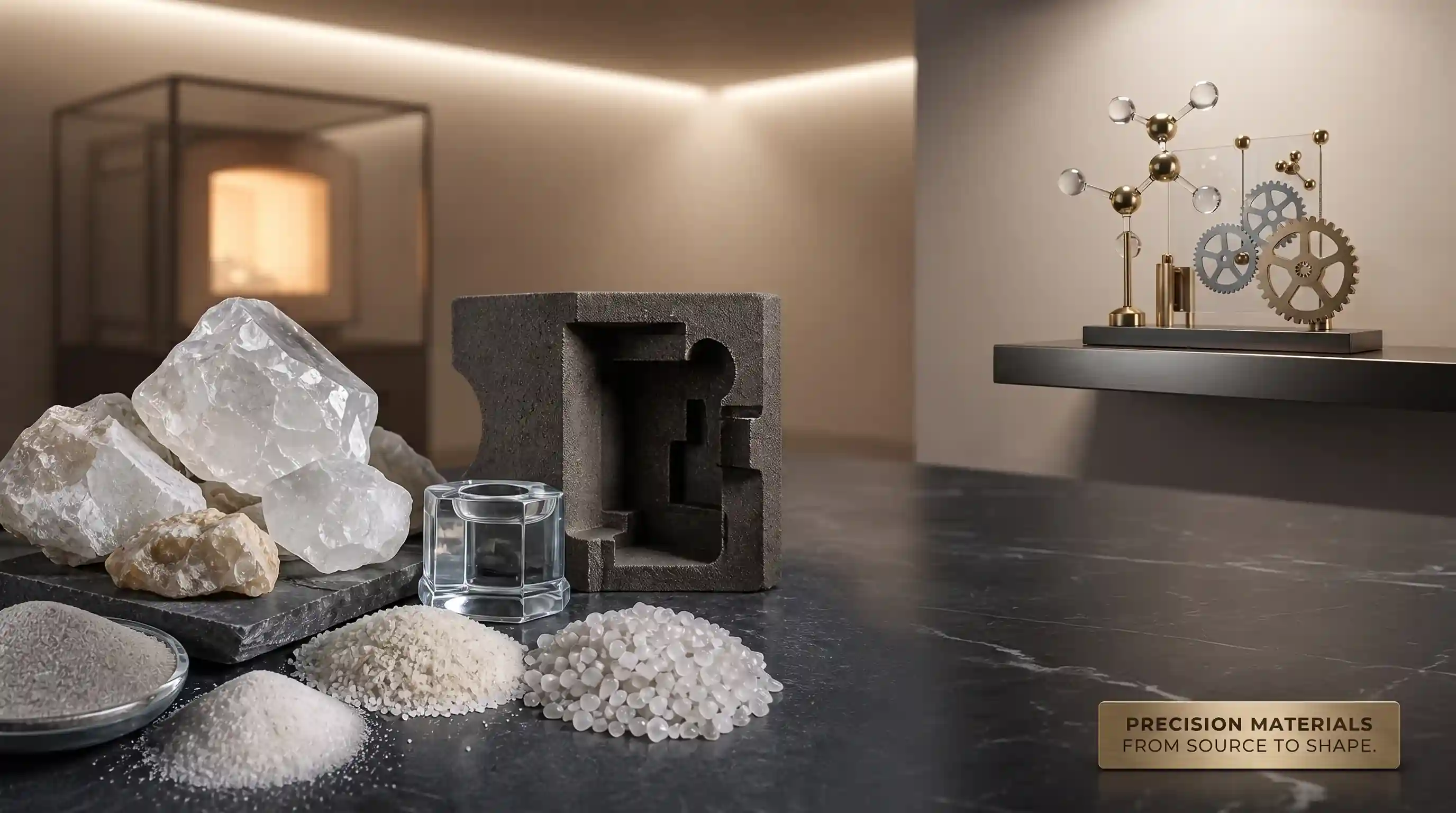
In foundry industries, resistance to high temperatures and dimensional stability of molds are of vital importance. With a high melting point and exceptional thermal resistance, silica is used as the primary material in the manufacturing of sand molds and cores. This material helps ensure that cast metal parts have a smooth surface and precise dimensions.
Compared to other industrial minerals such as coating powders or polymer additives that require high precision in mesh sizing — similar to what is reviewed in the Guide to Choosing Suitable Mesh for Coated Calcium Carbonate in Injection Molding — selecting the appropriate mesh in foundries also has a direct impact on compaction and gas permeability.
Using standard and controlled granulations of this material in casting prevents problems such as bu-on, blowholes, and cracking in cast parts. Choosing the correct type and mesh of this material based on the weight and type of molten metal is the key to achieving high efficiency in foundry workshops.
Silica in Ceramic and Porcelain Industries
Ceramic and porcelain industries require raw materials that exhibit high stability against temperature changes and reinforce the ceramic body. silica acts as a skeleton builder and hard phase in the body of tiles, ceramics, sanitary ware, and earthenware, and controls the thermal expansion coefficient.
To accurately evaluate the quality of minerals consumed in these lines, the similarities in the quality assessment of this material with other raw materials such as industrial clays are important; as explained in the article How to Evaluate Kaolin Quality in the Production Line?, laboratory testing, reviewing base granulation, and chemical stability are among the basic principles of material acceptance.
The appropriate presence of this mineral in the glaze and ceramic body formulation increases the mechanical strength of the product and prevents warping during the kiln firing stage. Precise adjustment of the mesh size of this material is carried out in accordance with the pressing and firing technology of each factory.
Widespread Application of Silica in Mode Building Materials
The construction industry is one of the largest consumers of mineral products, and silica holds a special place in this field due to its high strength and durability. This material is used in the production of various high-strength concretes, dry mortars, tile adhesives, epoxy flooring, and special cements to enhance the compressive and abrasive strength of structures.
The appropriate granulation of this material in building materials improves the rheological properties of mortar and concrete and prevents phenomena such as cracking caused by drying shrinkage. Civil engineers improve structural durability standards by utilizing this high-grade mineral.
The variety in mesh sizes of this material from 10 to 450 mesh allows engineers to select the exact product suited to the needs of the concrete formulation or specialized mortars, achieving ideal density and adhesion.
Examining the 10 to 450 Mesh Range and the Importance of Granulation
One of the most important factors in choosing silica for production lines is paying attention to its mesh range. Products supplied in the 10 to 450 mesh range cover a wide spectrum of requirements, ranging from coarse-grained foundry needs to ultra-fine ceramic and construction powders.
Choosing the wrong mesh can cause disruption in material flow, reduced mixing quality, and a drop in the mechanical properties of the final product. For example, coarser meshes (10 to 50 mesh) are mostly used in building materials and foundries, while finer meshes (such as 200 to 450 mesh) are used in ceramic industries and glass production.
Continuous control of particle size distribution (PSD) using standard screens and laser equipment ensures that the shipped load fully complies with the technical tolerances required by the production line, preventing any fluctuation in the quality of the final product.
Economic Benefits and Optimization of Production Costs with High-Grade Silica
Managing production costs in today's competitive market is a major conce for industrial managers. Using high-quality and standard silica from the Amiran Stone Mineral Project has a direct impact on reducing the final cost of the product by reducing waste, increasing equipment lifespan, and improving fuace efficiency.
Purchasing inferior raw materials might seem cost-effective at first glance, but the hidden costs resulting from production line downtime, quality drops, product retus, and high energy consumption will be much greater. Therefore, investing in high-grade minerals is a strategic decision for business sustainability.
Continuous communication with a reputable supplier and receiving technical consultations prior to purchase helps in selecting the most accurate grade and mesh suited to the production process, preventing the waste of financial resources.
Comprehensive Guide to Purchasing and Ordering Silica for Various Industries
To purchase the right silica for your production line, paying attention to a few key points is essential: precisely determining the final application (glass, foundry, ceramics, or building materials), specifying the required mesh range (between 10 to 450 mesh), reviewing the chemical analysis and purity level, and ensuring quality consistency across successive shipments.
Utilizing rich mines and advanced processing lines, the Amiran Stone Mineral Project is prepared to supply the needs of various industries with the highest quality standards. The sales and technical experts of this complex are ready to provide specialized consultation to industrial owners in order to select the best product.
By placing orders based on precise technical specifications, your production line will continue to operate without interruption and with the highest efficiency, guaranteeing the quality of the final products.

| Question | Answer |
|---|---|
| What is silica and what are its applications? | Silica is a mineral introduced for glass, foundry, ceramics, and building materials. |
| What is the mesh range of the supplied silica? | Products can be supplied and offered in the 10 to 450 mesh range. |
| Is silica used in the glassmaking industry? | Yes, one of the primary applications of this material is in the glass manufacturing and glass container industries. |
| What is the role of silica in foundry? | It is used in manufacturing sand molds and cores to withstand high temperatures and ensure dimensional accuracy. |
| Why is choosing the right mesh important? | The right mesh has a direct impact on mixing quality, mechanical properties, and production line efficiency. |
| Is silica used in the ceramic industry? | Yes, it is used as a hard phase and thermal expansion controller in ceramic bodies and glazes. |
| What is the application of this material in building materials? | It is used in the production of high-strength concrete, dry mortar, tile adhesive, and flooring to increase durability. |
| How can the best mesh be chosen? | It is selected based on the type of industry, formulation, and with the consultation of technical experts from Amiran Stone Mineral. |
| How can the product page be viewed? | By visiting the link to the silica product page on the Amiran Stone Mineral website, you can obtain complete information. |
| How can a purchase order be placed? | You can place your order by contacting the sales and support department of the Amiran Stone Mineral Project. |
Amiran Stone Mineral Project — Reference for the production and processing of industrial minerals.
برچسب: Silica,Golden Tips for Choosing the Right Silica for Your Production Line,
نویسنده: رساوب آفرین