
درباره سایت
آخرین مطالب
- مشخصات فنی و آنالیز سیلیس مناسب ریختهگری و سرامیک از امیران
- استعلام قیمت اکسید لیمونیت (گل ماش) مخصوص پیگمنتهای معدنی
- انتخاب دقیق دولومیت برای ارتقای کیفیت مصالح ساختمانی و شیشه
- فلدسپات با دانهبندی دقیق برای تولید شیشه و لعاب
- نقش بنتونیت در افزایش کیفیت چسبانندهها و مواد جاذب صنعتی
- انتخاب تالک صنعتی مناسب برای ارتقای کیفیت محصولات پلیمری و رنگ
- خرید کائولن با مش ۴۵۰ تا ۱۵۰۰ از کانی سنگ امیران برای تولید لعاب
- کائولن مرغوب کانی سنگ امیران؛ انتخابی ایدهآل برای صنعت کاغذ و رنگ
- بهترین تالک سفید صنعتی با مش ۴۵۰ تا ۲۵۰۰ جهت کاربردهای سرامیکی
- کاربرد تخصصی کربنات کلسیم در ساخت چرم مصنوعی و محصولات پلیمری
امکانات وب
An Introduction to the Importance of Mineralogy and White Barite
Economic geology and the mineral materials industry have always been based on the identification, extraction, and processing of strategic minerals. Among these, natural barium sulfate, known as barite, holds a special place in various industries. The importance of this mineral doubles when it comes to high purity, brilliant color, and the absence of dark impurities—a prominent feature clearly visible in white barite. The Amiran Stone Mineral Project, focusing on the supply of high-quality minerals, prepares this valuable powder for specialized applications.
The unique physical and chemical properties of white barite include high specific gravity, chemical inertness, favorable thermal stability, and appropriate oil absorption. These properties make the powder derived from high-grade barite stones one of the most widely used fillers and additives in mode production lines. In the paint and coating industries, the brilliance and whiteness of this material play a key role in enhancing the quality of the final product.
The process of converting raw ore into a uniform, micronized powder requires advanced crushing and classification equipment. The available mesh range for this product varies between 450 and 2500 mesh, indicating high production precision in particle sizing. To lea more about the features of this product, you can visit the White Barite page and review its technical specifications.
Accurate understanding of the country's mineral potentials in the extraction and processing of this mineral is the foundation of sustainable industrial development. By employing mode micronization techniques, a powder with a fully controlled particle size distribution can be obtained, which meets the stringent requirements of the polymer and coating industries in the best possible maer. This article examines the various dimensions of the extraction, processing, and applications of this important mineral.
Main Barite Stone Extraction Mines in Iran and the World
Natural barite resources are scattered across various parts of the Earth and Iran. Due to their location within the active metallogenic belt, Iran's mineral deposits possess high potentials for producing high-quality mineral stones. Barite stone extraction is carried out from open-pit and underground mines, and the quality of the extracted ore in each mine will determine the grade and whiteness level of the processed final product.
In the mineral supply chain, understanding adjacent mines and other industrial minerals is of particular importance. For example, studying the article Introduction to Mines and Dolomite Stone Extraction in Iran provides a broad perspective on the geological structure and methods of extracting carbonate and industrial minerals in the country, which shares many similarities with the barite extraction cycle. The country's barite mines are also equipped with advanced machinery to supply the raw stone required by processing plants.
After extraction, raw barite stone must be categorized based on the level of iron and metallic oxide impurities. Stones with minimal impurities are sent to crushing units to produce white barite, where mechanical and magnetic purification processes are performed on them. This stage plays a fundamental role in determining the degree of whiteness and transparency of the final powder.
The development of mineral infrastructure and the updating of extraction technologies reduce final production costs and improve the quality of raw minerals entering industrial units. Strict monitoring by mining engineers regarding the input grade of barite stone into the plant ensures the stability of the quality of the produced powder across various mesh ranges, including 450 to 2500 mesh.

Technologies and Processing Stages of White Barite from Mine to Factory
The processing of barite ore is a series of complex mechanical and physical operations aimed at removing impurities and achieving micronized particle sizes. Upon the arrival of raw stone at the plant, initial crushing stages are performed by jaw and hammer crushers to bring the stone dimensions to an appropriate size for entering the mills.
The next stage involves magnetic separation to reduce the percentage of iron and colored oxides, which has a direct impact on maintaining the product's whiteness degree. The resulting powder then enters advanced milling systems such as Raymond, ball mills, or jet mills. Precise control of airflow and cyclone systems at this stage makes it possible to produce white barite within the specified mesh range of 450 to 2500 mesh.
Mode air classifier technologies employed in production lines enable the separation of fine particles with micron precision. This high precision is of vital importance for sensitive industries requiring uniform particle size distribution. Continuous monitoring of the quality of the produced powder is carried out through quality control laboratories established within the plant.
Standard packaging is the final stage in the factory's processing line. Micronized white barite powder is usually packaged in multi-layer bags or jumbo bags to prevent the penetration of moisture and environmental contaminants during transportation. These standards play an important role in maintaining product quality until delivery to the final consumer.
Specialized Application of White Barite in the Paint and Coating Industry
The paint and coating industry is one of the largest consumers of micronized mineral materials. Among these, white barite is recognized as an excellent filler that, due to its high refractive index, extraordinary brilliance, and unmatched chemical resistance, brings about a dramatic improvement in the quality of architectural and industrial paints.
The use of this mineral in paint formulations significantly helps adjust gloss, improve hiding power, and reduce the consumption rate of titanium dioxide. The fine particles of this material with a mesh range of 450 to 2500 mesh disperse well within the resin matrix and prevent particle agglomeration, resulting in a uniform and durable coating.
In addition to solvent-boe and water-boe paints, this powder is also extensively used in the production of primers, anti-corrosive coatings, and traffic paints. The chemical inertness of white barite ensures that in corrosive or acidic environments, it does not react with other components of the paint formulation and guarantees the long-term stability of the coating.
Paint formulation engineers can optimize the viscosity and flowability of the paint by selecting the appropriate granulation from the products of the Amiran Stone Mineral Project. This flexibility in choosing various meshes completely leaves producers free to design a variety of specialized coatings with desirable mechanical and appearance properties.
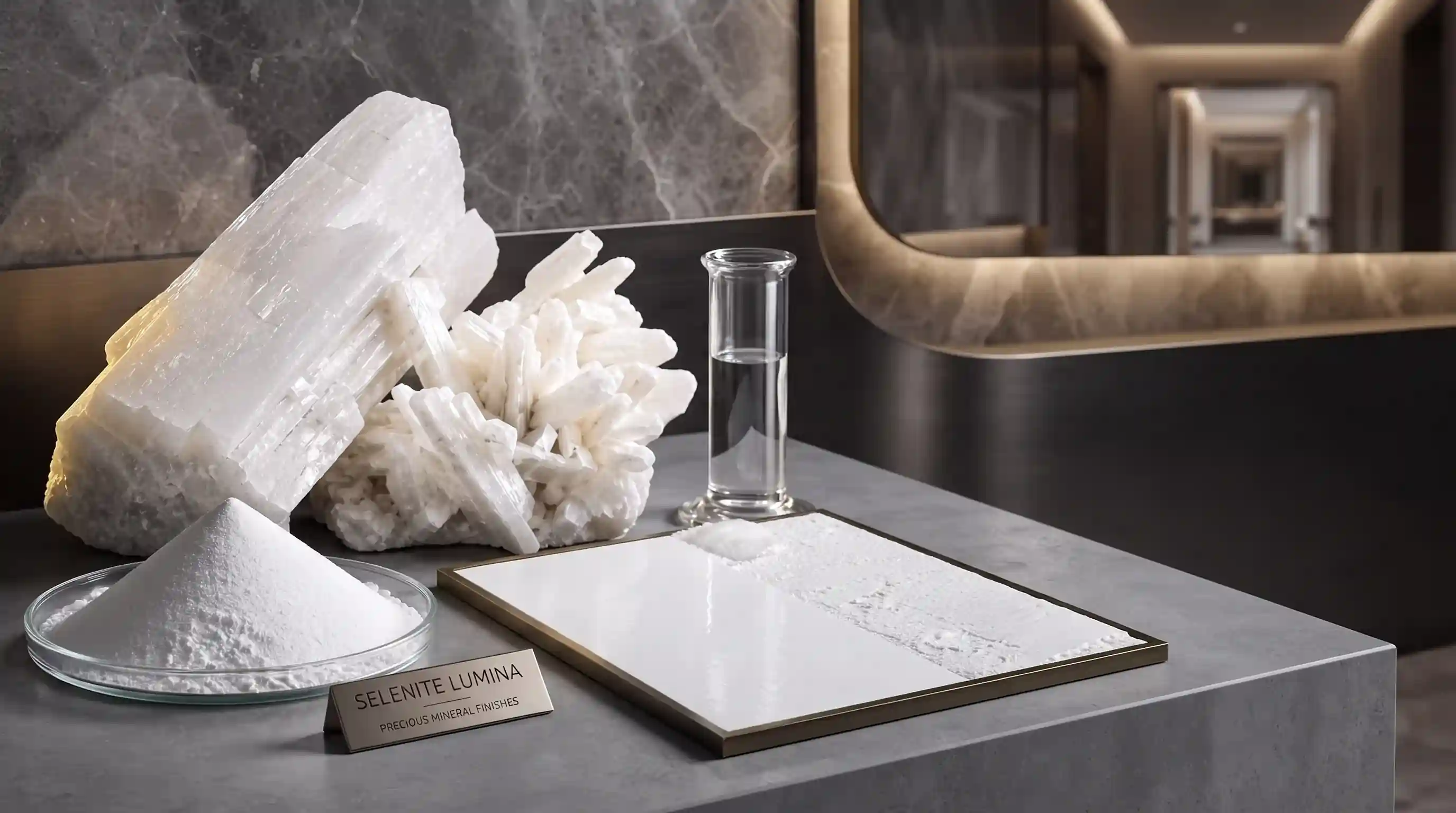
The Role of White Barite in Improving Polymer Products and Plastics
The polymer industry and plastic parts manufacturing are always looking for mineral fillers that, in addition to reducing the final price, improve the mechanical and thermal properties of the product. Due to its high density and good compatibility with various polymers, white barite has found a special place in this industry.
Specialized studies show that the presence of this mineral filler has a direct impact on upgrading the structural characteristics of composites. In this regard, studying the specialized article Examining the Role of White Barite in Improving the Mechanical Properties of Composites details the scientific and practical results of this material in polymer matrices in depth.
The use of this powder in thermoplastics, industrial pipes, and automotive parts leads to increased elastic modulus, improved dimensional stability against heat, and increased impact resistance. Homogeneous distribution of micronized particles within the polymer structure prevents the creation of stress weak points and maximizes the quality of the injected part.
By offering white barite in the mesh range of 450 to 2500 mesh, the Amiran Stone Mineral Project has made it possible to precisely select granulation according to the type of extruder and plastic injection machines. This diversity in meshing allows manufacturers to create an optimal balance between the melt flow properties of the polymer and the mechanical characteristics of the final part.
Standards, Quality Assessment, and Technical Parameters of White Barite
The quality evaluation of industrial mineral powders is carried out based on specific physical and chemical parameters. Regarding white barite, factors such as barium sulfate purity percentage, brightness, true density, and particle size distribution are of fundamental importance.
Quality control laboratories use advanced equipment such as laser particle size measurement devices to ensure that all production shipments fall within the standard mesh range of 450 to 2500 mesh. This high precision guarantees the absence of particles coarser than the permissible limit in customers' production lines.
The whiteness level of the powder, measured by spectrophotometer devices, is another key factor distinguishing white barite from drilling barites. The absence of iron and manganese impurities in high-quality samples brings about a brilliant and stable whiteness that is vital for the paint and coating industries.
Adhering to strict quality control principles, the Amiran Stone Mineral Project offers products that comply with the technical requirements of consuming industries. Documentation of technical information and the provision of chemical and physical analysis sheets for each shipment give customers the assurance that the received raw materials possess the highest industrial standards.

Comprehensive Guide to Warehousing, Storage, and Safety Tips for Barite Powder
Proper warehouse management and storage of micronized mineral materials have a direct impact on maintaining their quality and efficiency in the production line. Due to its high density and fine-grained nature, white barite powder requires adherence to specific warehousing principles to prevent caking and moisture absorption.
To obtain accurate and practical information in this field, studying the specialized guide Comprehensive Guide to Warehousing and Storage of Industrial White Barite Powder is recommended to all warehouse managers and purchasing officers to prevent potential hazards during storage.
Maintaining an appropriate height when stacking pallets, placing bags on wooden or plastic pallets away from direct contact with the floor, and proper warehouse ventilation are among the requirements for storing this product. Furthermore, protecting the packaging against tearing and the penetration of rainwater or high humidity is of great importance.
From the perspective of personal safety, working with micronized powders requires the use of appropriate respiratory protection equipment such as dust masks. Although barite is not a toxic material, continuous inhalation of fine airboe suspended particles can cause problems for the workers' respiratory system. Compliance with safety tips and occupational health guidelines in industrial environments is mandatory.
Market Outlook and the Future of Industrial Applications of White Barite
The growth of the construction, automotive, polymer, and paint industries at the national and regional levels has led to an increased demand for high-quality minerals and specialized fillers. As a strategic raw material, white barite has secured its position in the purchasing basket of advanced industries.
The advancement of processing technologies and the achievement of very fine meshes up to 2500 mesh have opened new horizons for using this mineral in high-tech products. Reducing dependence on imported foreign additives and relying on domestic capabilities in extraction and micronization constitutes a major competitive advantage for the country's industries.
By developing production capacities and improving granulation processes, the Amiran Stone Mineral Project strives to meet the diverse needs of the paint, coating, and polymer industries in alignment with global standards. Investing in research and development and upgrading product quality paves a smoother path for the future of this industry.
Ultimately, continuous interaction between mineral producers and the engineering and R&D departments of consumer industries is the main key to iovation and formulation improvements. Relying on its unique physical and chemical characteristics, white barite will continue to play its role as an inseparable component of mode manufacturing industries.

| Question | Answer |
|---|---|
| What is white barite and what are its applications? | White barite is a natural, high-purity barium sulfate used as a mineral filler in the paint, coating, and polymer product industries. |
| What is the mesh range of the produced white barite? | This product is produced and supplied in the industrial mesh range of 450 to 2500 mesh. |
| What is the role of white barite in the paint industry? | Due to its high whiteness, brilliance, and chemical stability, this material helps improve hiding power, adjust gloss, and reduce titanium dioxide consumption. |
| Can white barite be used in polymer industries? | Yes, this powder is used as a mineral filler in polymer products to improve mechanical properties, thermal stability, and increase the resistance of parts. |
| How can the technical specifications and purchase of this product be reviewed? | To view complete information and inquire about the product, you can visit the white barite page on the Amiran Stone Mineral website. |
| What are the storage and warehousing conditions for white barite powder? | It must be stored in a dry environment, on pallets, away from moisture, and in compliance with the warehousing principles of industrial powders. |
| What factors determine the whiteness degree of white barite? | The amount of metallic impurities such as iron and colored oxides, along with precision in the magnetic separation stages, determines the product's whiteness. |
| Is inhaling barite powder harmful to health? | Barite is not a toxic material, but due to the fine-grained nature of the powder, using masks and protective equipment during work is mandatory. |
| What is the difference between white barite and drilling barite? | White barite has a much higher purity, whiteness, and degree of micronization, and unlike drilling barite, it is used in the paint and polymer industries. |
| How can one utilize the purchasing consultation of Amiran Stone Mineral? | You can get in touch with sales experts through the communication chaels listed on the Amiran Stone Mineral project website. |
Amiran Stone Mineral Project — Reference for Production and Processing of Industrial Minerals
برچسب: White Barite,Introduction to the Largest Mines for Extraction and Processing of White Barite,
نویسنده: رساوب آفرین