
درباره سایت
آخرین مطالب
- Why is choosing Limonite Oxide (Gole Mash) important for industries?
- چگونه بهترین فرمولاسیون با اکسید لیمونیت (گل ماش) بسازیم؟
- لماذا يعد اختيار أكسيد الليمونيت (أوكر أصفر/كلماش) مهماً للصناعات؟
- دور أكسيد الليمونيت (الجول ماش) في إنتاج الطوب والفخار
- Examining the Effect of Limonite Oxide (Gol Mash) on Color Stability
- مراجعة مزايا الشراء بالجملة لأكسيد الليمونيت (غل ماش)
- دور أكسيد الليمونيت (الغل ماش) في الصناعات الدوائية ومستحضرات التجميل
- بررسی میزان سختی و سایش اکسید لیمونیت (گل ماش)
- Application of Limonite Oxide (Gole Mash) in Anti-Rust Industries
- نقش اکسید لیمونیت (گل ماش) در تولید پوششهای محافظ
امکانات وب
An Introduction to the Importance of Dolomite Suppliers in Mode Industries
Choosing a reputable supplier for raw minerals plays a decisive role in the final product quality of various industries. Among commonly used minerals, dolomite, as a double carbonate of calcium and magnesium, occupies a special place in industrial processes. The Kani Sang Amiran project, as one of the active groups in the field of mineral production, has made access to this high-quality material possible. Understanding the properties of this material and how to source it is an important step for purchasing managers and industrial engineers.
Industries involved in thermal processes, melting, and material production always require raw materials with stable technical specifications. Fluctuations in particle dimensions or mineral purity can cause serious challenges for production lines. For this reason, carefully examining the records and capabilities of suppliers before signing major contracts is essential. In this article, we intend to examine the various aspects of choosing the best supplier for this mineral.
Furthermore, becoming familiar with other practical minerals such as talc and feldspar can provide industry professionals with a comprehensive perspective. For example, reading related articles such as A Guide to Buying Industrial Talc with Best Quality and Reasonable Price offers useful information in this regard. Understanding the interactions within the mineral supply chain helps significantly in optimizing costs and improving the quality of final products.
In the following sections, we will examine the grading characteristics, mesh range, and application areas of this valuable material to clearly define the criteria for evaluating a standard supplier. Relying on production standards, the Kani Sang Amiran project always strives to respond to the needs of various industrial sectors with high precision.
Getting to Know the Technical Specifications and Mesh Range of Dolomite
The physical and chemical specifications of minerals are the main determinants of their performance in production lines. Regarding dolomite, one of the most important technical parameters is the particle size range, or mesh. This mineral is supplied as a graded product in the 10 to 40 mesh range by the Kani Sang Amiran project, which is perfectly suitable for specific industrial uses.
The 10 to 40 mesh grading allows industries to choose the best particle size based on their formulation needs. Precise control of particle dimensions in the crushing and grading process is of high importance because the presence of undesirable particles (too fine or too coarse) can affect the final quality of products such as glass or ceramics.
Evaluating the quality of minerals is not limited to grading; examining the purity and uniformity of shipments is also crucial. To better understand methods for measuring the purity of industrial minerals, reviewing similar standards in other materials like talc is worthwhile. Reading the article How to Identify the Purity and Quality of Industrial Talc? can provide professionals with valuable guidance on laboratory quality control methods.
Therefore, a professional supplier is obligated to provide the customer with a precise analysis of the grading and physical specifications of the delivered cargo transparently. The correspondence between the initial sample and the bulk cargo reflects the commitment and credibility of the production group, which is strictly observed at the Kani Sang Amiran project.
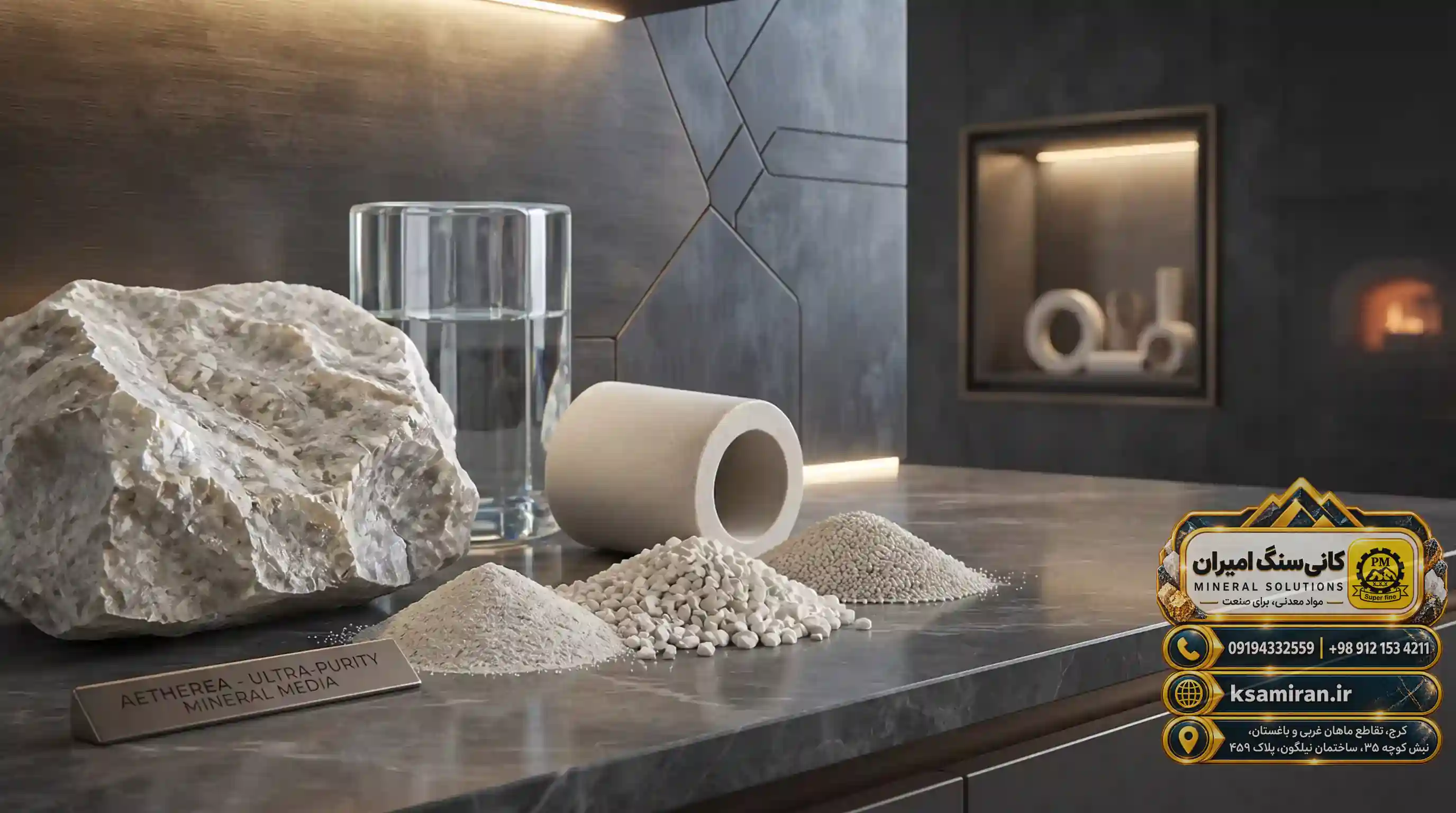
Main Applications of Dolomite in the Glass and Ceramic Industries
Silicate industries, especially glass and ceramic product manufacturing, are considered among the largest consumers of dolomite worldwide. In the glassmaking industry, this material acts as a source of magnesium oxide and calcium, which significantly helps in lowering the melting point of the glass batch and improving the chemical stability of the final product.
The presence of magnesium oxide derived from this mineral in the glass structure regulates the melt viscosity at high temperatures and prevents unwanted crystallization (the development of undesirable crystalline phases) during the glass forming process. These features have made supplying this material with precise 10 to 40 mesh grading of special importance for glass factories.
In the ceramic product manufacturing sector, this material acts as a flux phase, helping to create a glassy phase in the ceramic body during firing temperatures. This leads to a reduction in firing temperature, increased mechanical strength, and improved resistance to thermal shock. By supplying this high-quality raw material, the Kani Sang Amiran project plays an important role in meeting the needs of this sector.
A precise examination of the needs of the glass and ceramic industries shows that the stability of chemical composition and mineral grading ensures the quality of output products. For this reason, choosing a capable supplier who can maintain quality standards across consecutive batches is the main conce of production engineers in these industries.
The Role of Dolomite in the Construction Materials Industry
In addition to specialized applications in glass and ceramics, dolomite has a very prominent place in the field of construction materials and civil engineering. This material is used as aggregate in concrete, filler in asphalt, in the production of various types of cement, and for wall-building materials. The 10 to 40 mesh grading of this product is ideal for various construction applications.
Using suitable mineral aggregates in the production of materials helps improve compressive strength, reduce water absorption rates, and increase the durability of structures against weather conditions. By processing and supplying this material to standard, the Kani Sang Amiran project covers the needs of civil projects and material manufacturers in the best possible way.
In construction material production processes, having access to an appropriate volume of minerals at the scheduled time is highly important. Delays in supplying raw materials can cause civil projects to face heavy costs and financial losses. Therefore, evaluating the production capacity and logistics of the supplier is one of the critical criteria in project managers' decision-making.
Also, becoming familiar with other commonly used minerals in related industries, such as feldspars, helps engineers have a more comprehensive approach to raw material supply. For example, reading the article How to Find Suitable Feldspar for the Rubber Industry? provides good perspectives on the process of specialized industrial mineral selection.
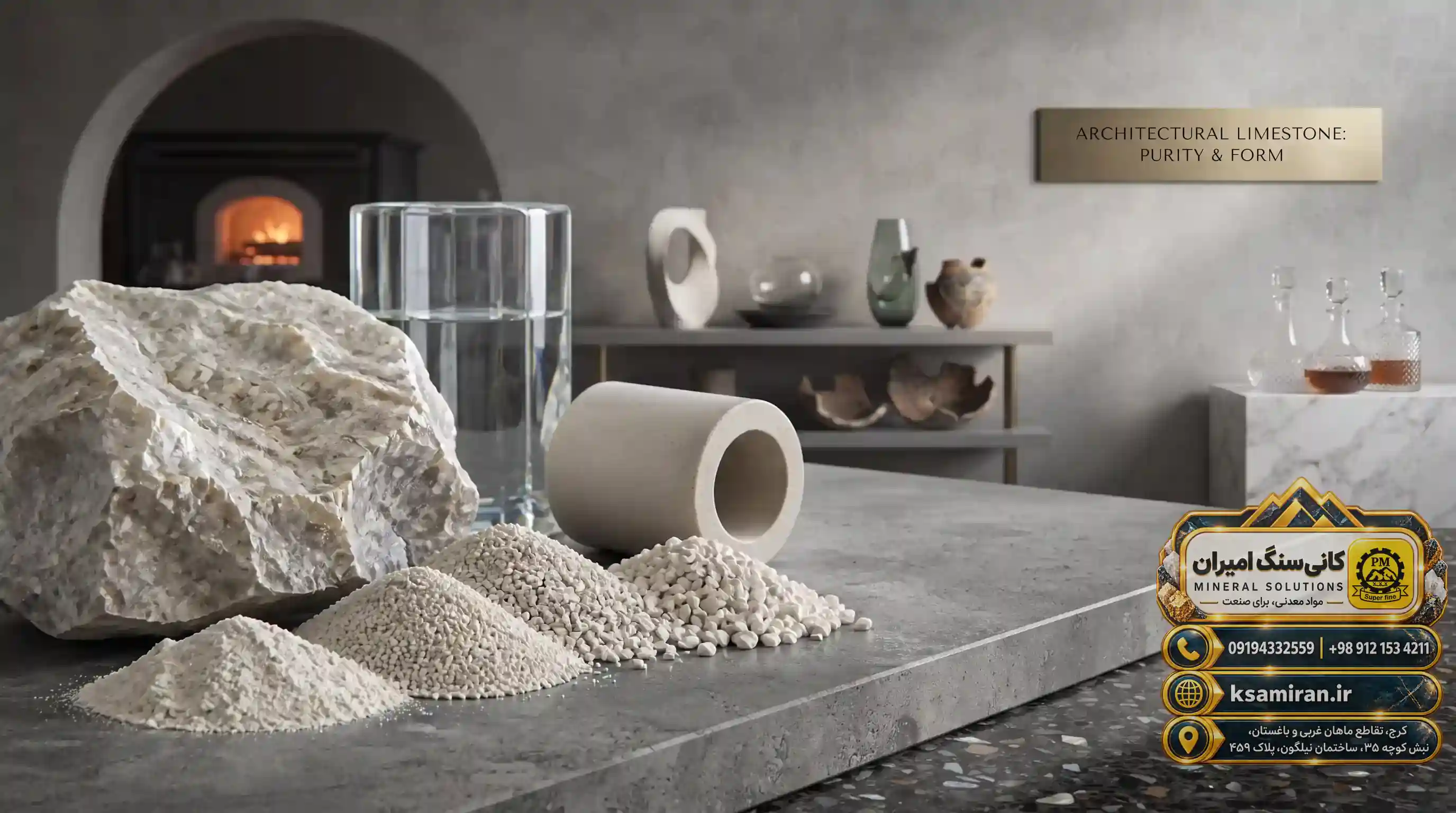
Key Criteria in Evaluating and Choosing a Dolomite Supplier
Finding a reliable supplier for dolomite requires examining specific indicators. Stable quality, compliance of grading with the 10 to 40 mesh range, having advanced processing equipment, and providing valid laboratory analyses are among these indicators that must be carefully evaluated.
Suppliers who have exclusive mines and well-equipped processing units usually have more control over pricing, delivery times, and the consistency of their product quality. The Kani Sang Amiran project, as an active manufacturer in this field, has been able to meet industrial needs by utilizing rich mineral resources and standard production lines.
Technical support and responsiveness to customers are other criteria for measuring the professionalism of a supplier. Industrial buyers often need advice regarding the type of grading and its compatibility with their production line standards. Having experienced experts at the supplier company will provide greater peace of mind for customers.
Finally, examining the business record and satisfaction of previous customers of a supplier is the best test for gauging its credibility. Transparency in transactions, adherence to time commitments, and providing precise technical documentation are features that distinguish a reputable production group from other competitors.
Examining the Impact of Logistics and Transportation in Mineral Supply
One of the main pillars in the dolomite supply chain is the logistics and transportation system. Even if the highest-quality mineral with a 10 to 40 mesh range is produced, the inability to deliver it on time and safely to the consumer's factory location can disrupt the entire production process.
Transportation costs for minerals constitute a significant share of the final price of the raw material due to their high volume and weight. Therefore, choosing a supplier that has access to major transport routes and uses reliable transportation fleets is of extraordinary economic importance.
With precise plaing in the logistics department, the Kani Sang Amiran project strives to deliver its products to consumers across the country with the lowest cost and in the shortest possible time. Proper and safe packaging also prevents material loss or contamination during transport.
Industrial purchasing managers should always set up raw material supply contracts in a way that responsibilities, delivery schedules, and damage conditions resulting from transportation delays are clearly specified to minimize supply chain risks.
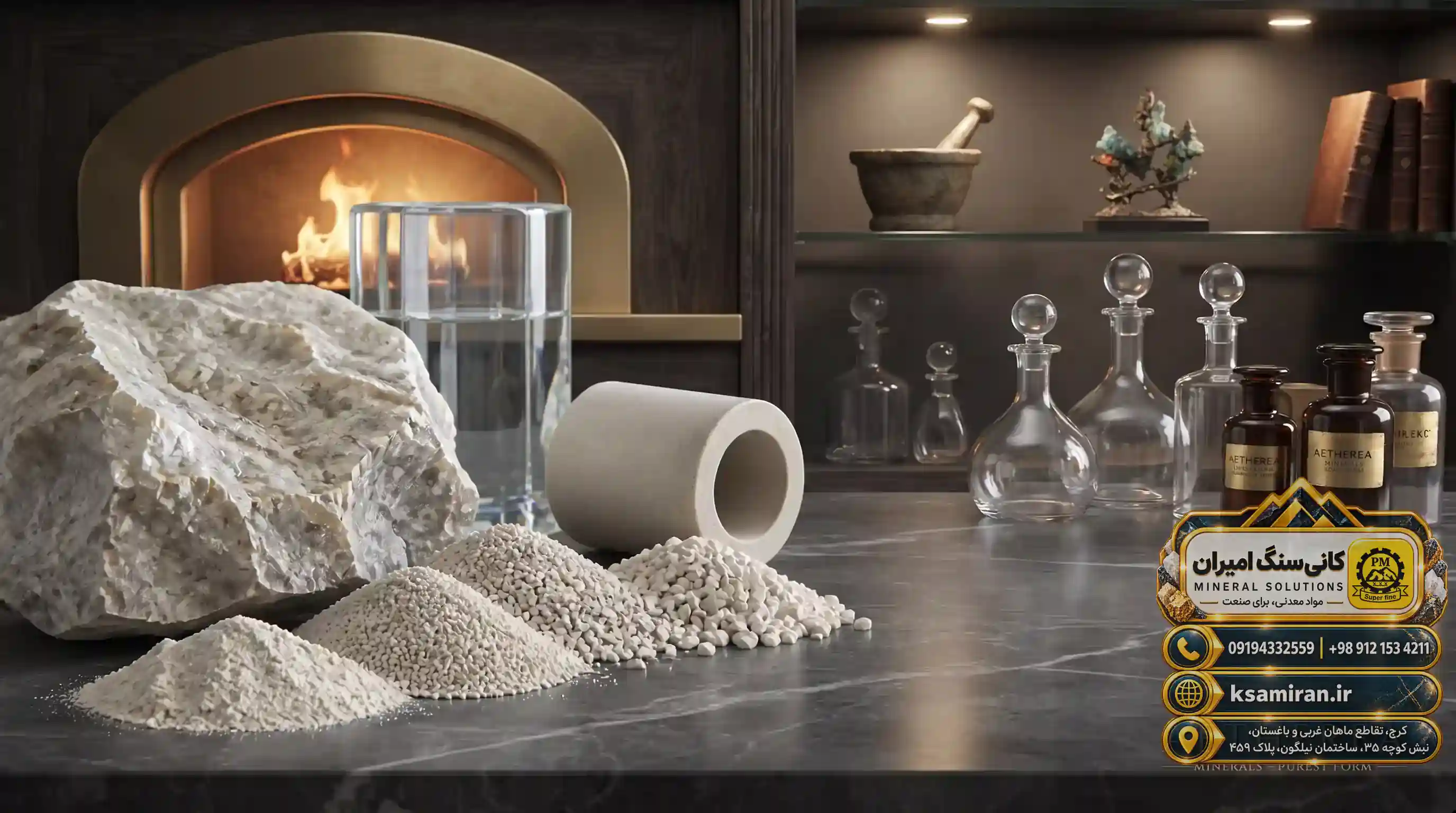
Common Challenges in Buying Dolomite and Strategies to Overcome Them
Buying minerals, including dolomite, is always accompanied by challenges, of which quality fluctuations, differences in grading, mismatch of chemical analysis, and delivery delays are the most common. To face these challenges, it is necessary to formulate specific purchasing strategies and long-term cooperation with reputable manufacturers.
One of the effective solutions to reduce quality risk is sampling the cargo before final loading or performing quality control tests in trusted laboratories. By providing a precise analysis sheet for every batch of its products in the 10 to 40 mesh range, the Kani Sang Amiran project guarantees complete transparency in industrial transactions.
Also, entering into long-term contracts with major suppliers instead of sporadic or point-in-time purchases, while creating price stability, will ensure the continuity of production lines for glass, ceramic, and construction material factories. This approach helps in creating sustainable business partnerships.
Precise knowledge of technical needs and establishing continuous communication with the sales and technical units of the supplier is the key to resolving potential disputes and achieving the highest productivity in mineral consumption.
Future Market Outlook for Dolomite and the Commitments of the Kani Sang Amiran Project
With the increasing development of the glass, ceramic, and civil engineering industries, the demand for high-quality minerals, including dolomite, is constantly growing. Stricter quality standards and the need for high-purity raw materials have forced manufacturers to upgrade their processing and grading technologies.
Understanding these developments and focusing on continuous improvement of its production processes in the 10 to 40 mesh range, the Kani Sang Amiran project moves in line with current industry standards. The goal of this group is the sustainable and reliable supply of the country's various industrial needs with the highest level of quality.
Investment in research and development, optimization of extraction and processing methods, and development of the logistics network are among the strategic plans of this group for the future. These measures ensure that customers can count on the supply of their raw materials with peace of mind.
Finally, choosing the Kani Sang Amiran project as a specialized mineral supplier is a safe step towards improving the quality of final products and increasing productivity in the glass, ceramic, and construction materials industries.
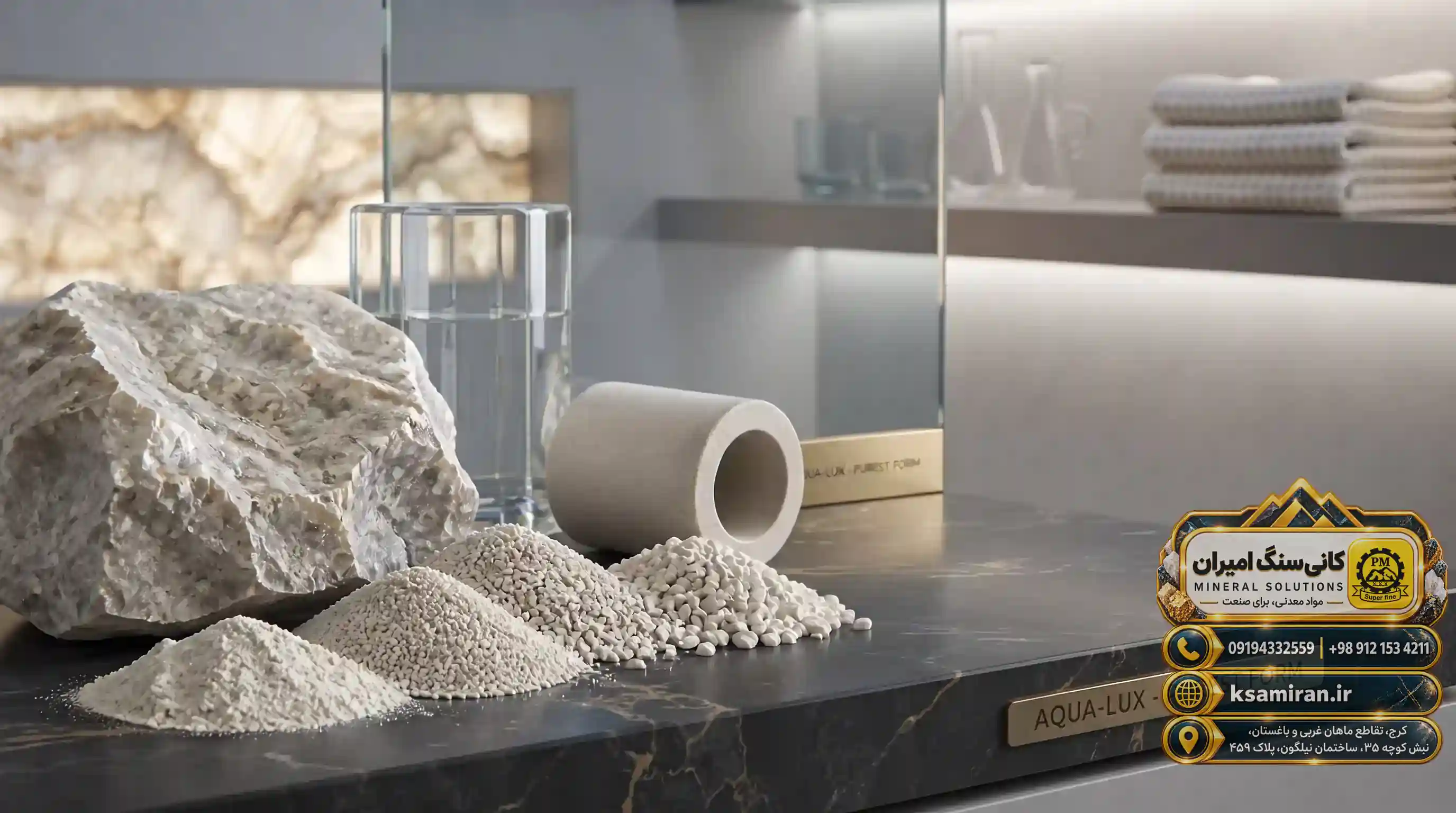
| Question | Answer |
|---|---|
| What is dolomite? | It is a mineral material and a double carbonate of calcium and magnesium used in the glass, ceramic, and construction materials industries. |
| What is the mesh range of this product? | This product is supplied in the 10 to 40 mesh range by the Kani Sang Amiran project. |
| What are the main applications of dolomite in the industry? | The main applications include the production of glass, ceramic products, and construction and civil engineering materials. |
| How can the quality of this mineral be evaluated? | Through checking the chemical analysis sheet, grading uniformity, and compliance of the cargo with the initial sample. |
| Does the Kani Sang Amiran project provide an analysis sheet? | Yes, all shipped batches are supplied with precise technical specifications and analysis. |
| What is the role of this material in the glass industry? | It acts as a source of magnesium oxide and improves the melting point and chemical stability of the glass. |
| Why is choosing a reputable supplier important? | To prevent quality fluctuations and ensure the continuity of industrial production lines. |
| What is the advantage of using dolomite in ceramics? | It acts as a flux, reducing firing temperature and increasing strength. |
| How can one order and purchase from Kani Sang Amiran? | It is possible by visiting the product page on the website or by contacting the group's sales department. |
| How is the transportation of these products handled? | It is done using a reliable fleet and proper packaging for delivery across the country. |
Kani Sang Amiran Project - Production and Processing of Industrial Minerals

برچسب: Dolomite,How to Find the Best Industrial Dolomite Supplier,
نویسنده: رساوب آفرین