
درباره سایت
آخرین مطالب
- انتخاب اکسید آهن قرمز (اخرا) برای بهبود کیفیت پیگمنت و پوششهای رنگی
- تامین کربنات کلسیم با دانهبندی دقیق جهت استفاده در مستربچ
- تأمین تخصصی سیلیس برای مصالح ساختمانی، شیشه و صنایع سرامیک
- ویژگیهای فنی بنتونیت کانی سنگ امیران برای کاربردهای خاص
- فلدسپات کانی سنگ امیران برای شیشه کاشی و سرامیک
- کاربرد تالک سفید درجه یک در فرمولاسیون پیشرفته رنگ و محصولات کاغذی
- اکسید آهن قرمز (اخرا) کاربردی جهت تولید محصولات سرامیکی و پوشش
- مشخصات فنی اکسید آهن قرمز (اخرا) مناسب برای پوشش و تولید پیگمنت
- مشاوره تخصصی خرید کربنات کلسیم بر اساس نیاز دقیق صنعت شما
- انتخاب تالک سفید صنعتی مناسب برای تولیدات کاغذ و مستربچ
امکانات وب
An introduction to the role of industrial talc in mode paint manufacturing industries
The paint and industrial coating industry is one of the fields that has always sought to improve quality, increase durability, and optimize production costs. In this regard, the use of mineral fillers and physical and chemical property enhancers is of particular importance. Industrial talc, as one of the most practical hydrated magnesium silicates, holds a special place in the formulation of various paints and coatings. With its flaky structure and unique properties, this mineral has a direct impact on improving the mechanical and aesthetic characteristics of paint.
At the Kani Sang Amiran project, this mineral is processed and supplied with high quality standards. The structural properties of this mineral powder allow formulators to achieve better resistance to atmospheric conditions, improved coverage, and color stability over time. Furthermore, a precise understanding of the physical characteristics of this material helps chemical engineers to act more efficiently in the production of final products.
Examining paint production processes shows that the correct choice of fillers can make a significant difference in the final quality. Therefore, a precise understanding of talc powder properties and its interaction with other paint components such as resins and solvents is a key step toward upgrading production standards. In the remainder of this article, we will discuss and examine the various dimensions of using this valuable material.
Before diving into the technical details, we suggest taking a look at the comprehensive guide to using coated calcium carbonate in paint manufacturing to get a more comprehensive view of the materials used and to familiarize yourself with other practical fillers in this industry.
Physical and chemical properties of industrial talc and its standard mesh range
One of the main reasons that leads paint engineers to use industrial talc is the stable physical and chemical properties of this material. Extremely low hardness on the Mohs scale (hardness 1), tactile softness, inherent water repellency, and chemical neutrality are among the most important features of this material. The crystalline, flaky (lamellar) structure of this material causes the particles to align parallel to each other, creating a dense protective layer.
The mesh range of this material in products supplied by Kani Sang Amiran is between 450 1000 mesh. This granulation range has been carefully selected to create an optimal balance between mechanical properties. Powders within this mesh range disperse easily in the paint matrix and prevent clumping, which is vital for achieving the proper viscosity and consistency of the paint.
Furthermore, the lamellar structure of talc acts as a physical barrier against the penetration of moisture, oxygen, and corrosive agents. This feature prevents the degradation of underlying paint layers and significantly increases the durability of the coating. As a result, formulators can confidently utilize this material in the production of industrial protective coatings.
To complete your information about similar minerals and their applications in the coating industries, reading the article on the application of kaolin in the paint and industrial coating industries can also provide useful supplementary information.
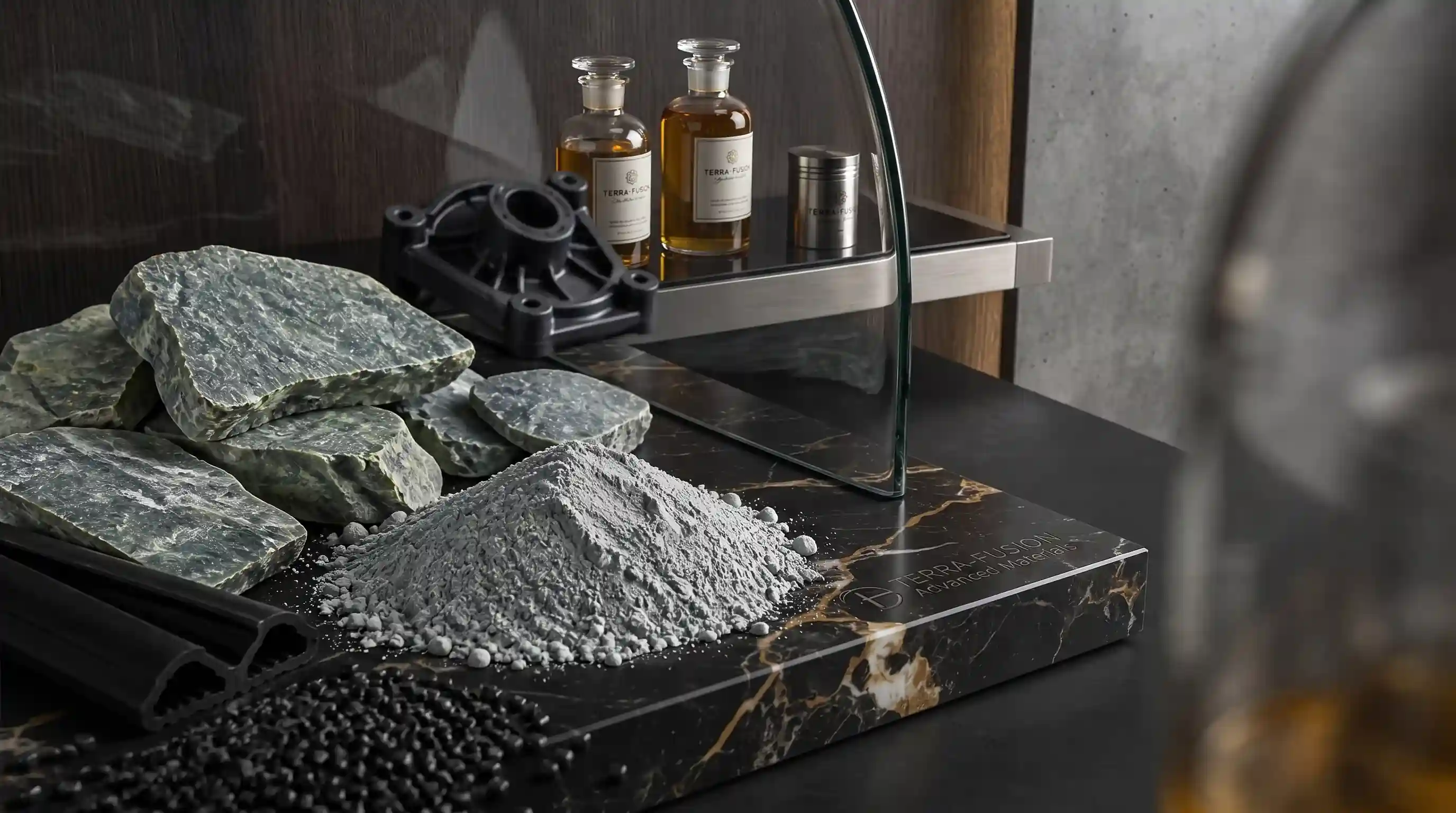
The role of industrial talc in improving coverage and matting of paint
In the formulation of architectural and industrial paints, coverage and gloss control (matting) are key quality parameters. Industrial talc, due to its suitable refractive index and particle structure, provides excellent performance in reducing unwanted gloss and creating a uniform, matte surface. This material helps distribute titanium dioxide evenly and improves the efficiency of using expensive pigments.
The use of the 450 1000 mesh range in these products ensures that the powder particles fit well into the void spaces between the resins. This process increases the covering power of the dried paint film, thereby optimizing the consumption of other raw materials. Paints containing this mineral will have a smooth texture, free of scratches, and a completely professional appearance after drying.
Also, the particle size distribution within this standard range helps the paint exhibit better resistance to abrasion and mechanical stress. This phenomenon is particularly important in paints used for high-traffic areas or exterior building surfaces. Finally, improved matting significantly helps hide imperfections in the substrate surface.
It is worth noting that the precise selection of minerals corresponding to the type of resin used has a direct impact on the longevity of the paint. To better understand how to optimize the properties of minerals in related industries, reading the article examining the technical benefits of using kaolin in ceramics will be helpful.
Increasing durability and atmospheric resistance of paint with industrial talc
Paints and industrial coatings are constantly exposed to destructive environmental factors such as ultraviolet (UV) radiation, severe temperature changes, precipitation, and atmospheric pollutants. Industrial talc acts as a protective shield, ensuring the long-term durability of the coating. The flaky structure of this material blocks the path of corrosive agents to the underlying layers and prevents the paint from peeling.
The Kani Sang Amiran project, by sourcing and supplying this high-quality product, has made it possible to produce paints with excellent stability against harsh weather conditions. When this mineral powder is incorporated into the paint structure, it reduces stresses caused by thermal expansion and contraction of the paint film, preventing cracking.
In addition to weather resistance, the chemical stability of this material ensures that the paint does not suffer from color changes or structural deterioration in corrosive or humid industrial environments. This technical advantage significantly reduces maintenance and repair costs for painted surfaces and extends the useful life of structures.
Therefore, the use of this material in the formulation of building facade paints and industrial metal coatings is considered a technical necessity that production engineers always pay special attention to.
Improving rheological properties and viscosity in the paint production process
Adjusting the rheological properties and viscosity of paint is one of the main challenges for formulators on production lines. The flow behavior of the paint must be such that it does not experience hard settling during storage, spreads easily on the surface during application (with a brush, roller, or spray gun), and does not sag after application. Industrial talc, with its unique properties, plays a very effective role as a regulator in this field.
Due to the lamellar structure of the particles, this material helps create pseudo-plastic behavior in the paint. This means that the paint's viscosity decreases under shear (such as the movement of a roller), facilitating application, but immediately after the force is removed, the viscosity retus to its initial state, preventing sagging. This delicate balance plays an important role in the final quality of the coating.
Using the 450 1000 mesh range in this product ensures that the particles disperse easily without causing excessive resistance to fluid flow. This accelerates the process of grinding and homogenizing the paint and increases production line efficiency. It also prevents particle accumulation at the bottom of the container, thereby increasing the shelf life of the product.
To purchase this high-quality product and view complete specifications, you can visit the dedicated industrial talc page.
Broad applications of industrial talc beyond the paint industry
Although the role of this material in the paint industry is very prominent, its applications are not limited to this field. Due to its chemically inert nature and excellent mechanical properties, this mineral is also widely used in other key industries such as polymers and rubber. In the polymer industry, it is known as an improver of flexural modulus, dimensional stability, and reduction of shrinkage in injection-molded parts.
In the rubber industry, it acts as an active or semi-active filler and helps improve abrasion resistance, facilitates the curing process, and reduces the stickiness of rubber compounds. Choosing the 450 1000 mesh range for these industries ensures homogeneous distribution in polymer and rubber compounds, enhancing the final quality of products such as hoses, gaskets, and automotive parts.
The Kani Sang Amiran project, by understanding the diverse needs of the country's industries, prepares and supplies this mineral for various applications, including polymer products, rubber products, paint, and industrial goods. This high versatility has doubled the economic and practical value of this material.
Familiarity with the cross-industry applications of this material in the paint, polymer, and rubber sectors shows how much the use of standard minerals can add value to the production supply chain.
Production economics and cost optimization using industrial talc
Alongside technical and quality advantages, the economic aspects of production are always of high importance to industrial managers. Using high-quality mineral fillers is an effective solution for reducing the final cost of products without sacrificing quality. Industrial talc, as a cost-effective raw material, enables the substitution of a portion of expensive resins and pigments.
Given that this material has high filling power and proportional oil absorption, formulators can optimize resin consumption without negatively affecting viscosity and coverage properties. This has a significant impact on reducing final production costs, especially in the mass production of architectural and industrial paints.
In addition to optimizing raw material costs, improving the quality of the production process and reducing waste caused by material incompatibility increases the profitability of production lines. The stable quality of products supplied by Kani Sang Amiran ensures that manufacturers encounter the fewest quality challenges on the production line and experience optimal economic efficiency.
Ultimately, investing in standard and processed minerals will bring a quick retu on investment for production units and solidify their competitiveness in the market.
Key points on storage, safety, and application of industrial talc
Observing the principles of storage, safety measures, and instructions for using minerals are basic requirements in any industrial unit. Industrial talc is a non-toxic and stable material, but like any other mineral powder, it requires safety precautions when working with large volumes. It is necessary to use appropriate personal protective equipment, such as anti-dust masks, to prevent the inhalation of airboe particles while emptying bags.
Regarding storage, this material should be kept in a dry, covered environment away from direct moisture to prevent clumping and moisture absorption. Standard packaging should be placed on pallets away from walls to allow for proper air circulation, ensuring the powder's quality is maintained over time.
Precise adherence to mixing ratios in paint formulation and the use of appropriate dispersion equipment (such as dissolvers and high-shear mixers) ensures that the properties of the 450 1000 mesh range are best manifested in the paint structure. Monitoring the quality of incoming materials and continuous laboratory controls will be the key to achieving a high-quality and standard paint.
By following these technical and safety tips, production units can gain the most productivity from this valuable mineral and elevate the quality standards of their products to a higher level.
| Question | Answer |
|---|---|
| What is industrial talc? | It is a hydrated magnesium silicate mineral with a flaky structure used in the paint, polymer, and rubber industries. |
| What is the mesh range of this product? | Products supplied by Kani Sang Amiran are processed and offered in the 450 1000 mesh range. |
| Why is this material used in paint manufacturing? | It improves coverage, increases atmospheric resistance, regulates gloss, and improves the rheological properties of paint. |
| Is this material resistant to heat? | Yes, this material shows good thermal and chemical stability in industrial formulations. |
| What are the main applications of industrial talc? | Polymer products, rubber products, various paints, and other industrial applications. |
| How does it help improve paint matting? | With its lamellar structure and refractive index, it reduces unwanted gloss and creates a matte surface. |
| Is it also used in the rubber industry? | Yes, it is used to improve abrasion resistance and facilitate the curing process in rubber products. |
| How can this product be purchased? | It can be ordered through the dedicated product page on the Kani Sang Amiran website. |
| What are the storage conditions for this mineral powder? | It should be stored in a dry, covered environment on pallets away from moisture. |
| Does using this material reduce production costs? | Yes, as an economical filler, it helps optimize resin consumption and reduce costs. |
Specialized mineral and industrial materials reference Kani Sang Amiran (ksamiran.ir)
برچسب: Industrial talc,Why is the use of industrial talc essential in paint manufacturing?,
نویسنده: رساوب آفرین