
درباره سایت
آخرین مطالب
- انتخاب اکسید آهن قرمز (اخرا) برای بهبود کیفیت پیگمنت و پوششهای رنگی
- تامین کربنات کلسیم با دانهبندی دقیق جهت استفاده در مستربچ
- تأمین تخصصی سیلیس برای مصالح ساختمانی، شیشه و صنایع سرامیک
- ویژگیهای فنی بنتونیت کانی سنگ امیران برای کاربردهای خاص
- فلدسپات کانی سنگ امیران برای شیشه کاشی و سرامیک
- کاربرد تالک سفید درجه یک در فرمولاسیون پیشرفته رنگ و محصولات کاغذی
- اکسید آهن قرمز (اخرا) کاربردی جهت تولید محصولات سرامیکی و پوشش
- مشخصات فنی اکسید آهن قرمز (اخرا) مناسب برای پوشش و تولید پیگمنت
- مشاوره تخصصی خرید کربنات کلسیم بر اساس نیاز دقیق صنعت شما
- انتخاب تالک سفید صنعتی مناسب برای تولیدات کاغذ و مستربچ
امکانات وب
Introduction to Kaolin and Its Position in Mineral Industries
Kaolin mineral is recognized as one of the most important and widely used raw materials in various industries, playing a key role in improving the quality of final products. Possessing specific physical and chemical characteristics, this material has attracted the attention of many engineers and industrial purchasing managers. At Kani Sang Amiran Mineral Production Project, efforts are made to prepare and supply the best and highest quality samples for industries.
A precise understanding of kaolin's properties and knowing how to source it fundamentally lays the groundwork for correct decision-making in production processes. Manufacturing factories always seek suppliers who guarantee the purity and uniformity of micronized powder. Due to its layered structure and inherent white color, this material holds a special place in industrial formulations.
To complete factories' raw material portfolios, reviewing other mineral items is also important. For example, studying the Expert Guide to Industrial Talc Purchasing and Supply Consultation can give engineers a broad perspective on sourcing similar supplies. However, kaolin requires extra care during selection due to its exclusive applications.
In the following sections of this guide, various aspects of the procurement process, mesh specifications, application ranges, and technical points related to kaolin will be discussed in full detail to serve as a complete guide for industrial activists.
Technical Specifications and Kaolin Mesh Range
One of the most important parameters in purchasing and ordering mineral powders is particle size and their mesh range. This valuable material is processed and supplied in a mesh range of 450 to 1500 mesh, and this diversity makes it possible to use it in production lines with various sensitivities. Precise and uniform grading has a direct impact on the final quality of manufactured products.
Choosing the appropriate mesh for kaolin varies depending on the final application type in the tile, ceramic, or paint-making industries. Higher meshes (finer) are usually used for glazing and high-quality paints, while lower meshes might be needed in certain other special applications. Industrial complexes must carefully determine their required mesh before finalizing orders.
In addition to mesh sizing, purity and the absence of disruptive mineral impurities are other items that must be checked upon receipt. Technical experts can visit the dedicated Kaolin page for more information on how to place orders and review specifications precisely, and directly obtain complete information.
Accurately understanding these technical specifications prevents capital waste and significantly increases the efficiency of production lines. Compliance with grading standards is carried out with high precision at the Kani Sang Amiran Mineral Production Project.
Application of Kaolin in the Tile and Ceramic Industry
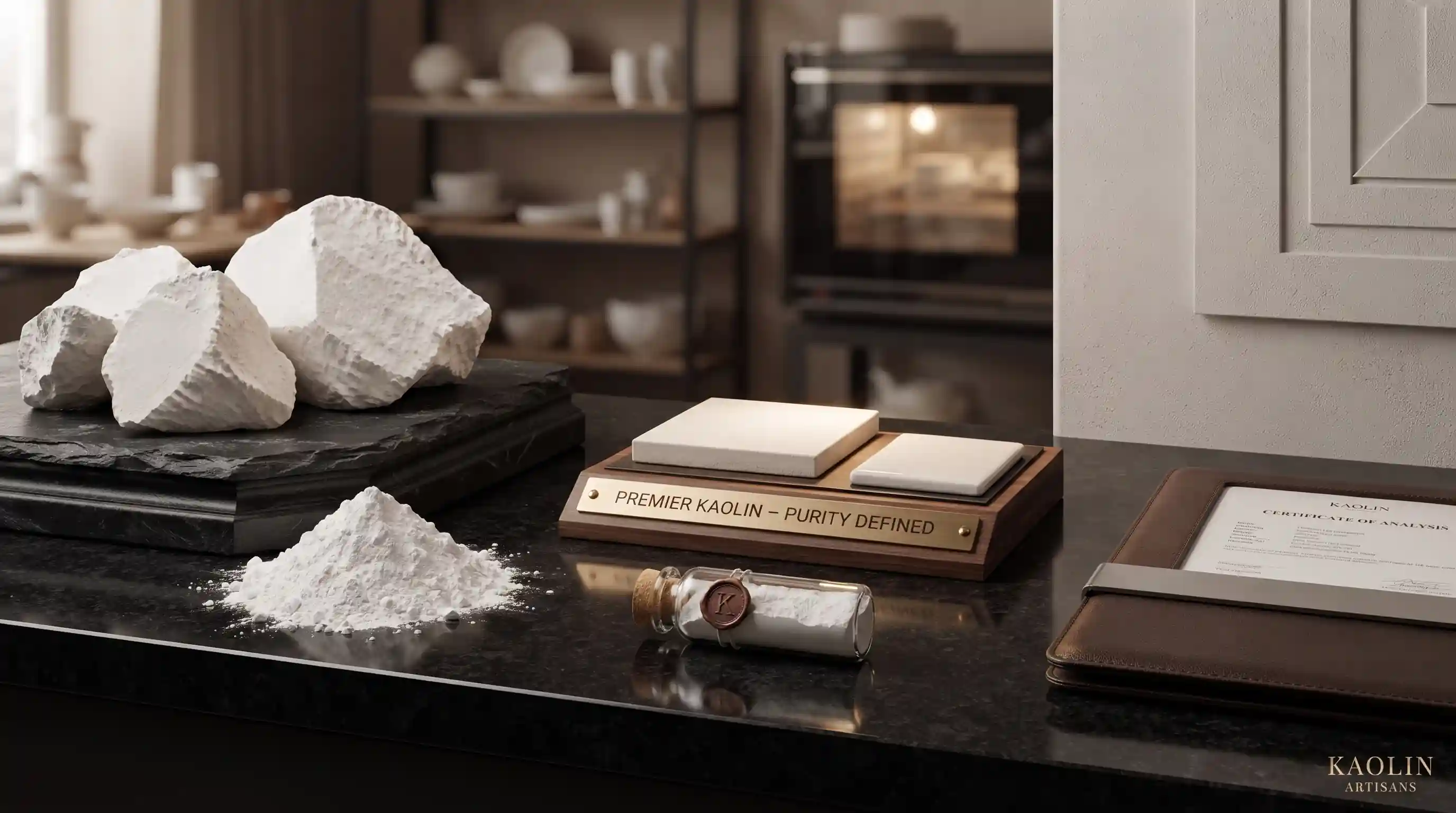
The tile and ceramic industry is considered one of the largest consumers of this mineral. The structural characteristics of kaolin improve the plasticity, mechanical strength, and thermal stability of ceramic bodies. The presence of this material in the body composition improves the firing process and prevents unwanted deformation of parts.
Alongside kaolin, other minerals also play a complementary role in tile and ceramic production. For instance, studying the Comprehensive Guide to Expert Consultation Before Buying Silica can provide specialists with useful information regarding the synergy of these two materials in ceramic formulations. The precise proportioning of these materials with each other guarantees body quality.
Using micronized powder with standard mesh in tile bodies and glazes creates a smooth, flawless final surface. Manufacturing factories can maintain the quality stability of their products in the long term by using products supplied by the Kani Sang Amiran Mineral Production Project.
Overall, utilizing high-quality kaolin in the ceramics industry leads to energy consumption optimization in kilns and increases the lifespan of manufactured parts; hence, an easy replacement for it caot be found.
The Role of Kaolin in Glaze and Paint Production
The paint and glazing industries are other vital domains for consuming this mineral. Due to its good coverage, desirable whiteness, and excellent suspending properties, kaolin is used as a functional filler and pigment in the paint and industrial coatings industry. This material greatly helps improve paint viscosity and storage stability.
In ceramic glaze formulations as well, the presence of kaolin creates proper adhesion of the glaze layer to the green or fired body and prevents hairline cracks. Powder fineness in the range of 450 to 1500 mesh is very crucial in this application because coarser particles can disrupt the surface quality of the glaze.
To simultaneously supply the mineral raw materials needed for paint and coating production lines, evaluating other inputs is also important. For instance, assessing the Comprehensive Guide to Buying Quality Silica for Factories helps purchasing managers complete their raw material baskets with the highest possible quality.
Paint manufacturers can guarantee color hue stability, hiding power, and final coating durability, and ea customer satisfaction by carefully selecting kaolin from reputable sources such as the Kani Sang Amiran Mineral Production Project.

Application of Kaolin in the Papermaking Industry
Mode papermaking heavily depends on high-quality mineral fillers and coating agents. This material is used as a surface coating and nourishing filler in paper production to significantly enhance the paper's whiteness, brightness, smoothness, and printability. Proper particle size distribution is of high importance in this context.
Using kaolin in paper production reduces the amount of ink consumed during printing and increases paper opacity, which is vital for high-quality printing and writing papers. Additionally, this material helps lower total paper production costs by replacing a portion of expensive cellulosic fibers.
Papermaking factories need continuous and uninterrupted supplies of micronized powders with standard meshes to maintain the quality standards of their products. Precision in choosing proper grading helps paper production machines operate with minimal wear and maximum efficiency.
Utilizing up-to-date technical knowledge, the Kani Sang Amiran Mineral Production Project covers the needs of this industry with the highest quality standards and stands as a reliable partner for paper manufacturers.
Comprehensive Guide to Sourcing and Purchasing Kaolin for Factories
Industrial raw material procurement requires strict adherence to managerial, technical, and logistical principles. To purchase kaolin with the most suitable quality and price, purchasing managers must first precisely determine the exact technical specifications required by the production line, including the mesh range (450 to 1500 mesh) and monthly consumption rate, so that supply chain plaing is not disrupted.
Reviewing initial samples, performing chemical and physical analysis tests, and ensuring the quality stability of shipped consignments are primary steps in the procurement process. Cooperating with experienced producers and suppliers who have the capability to provide technical documentation and valid analyses minimizes production line risks.
By offering expert pre-purchase consultations, the Kani Sang Amiran Mineral Production Project helps factories choose the most accurate kaolin grade matching their process. This approach prevents companies from wasting financial and time resources.
Proper management of warehousing and logistics for these micronized powders is just as important as purchasing; protecting materials against moisture and environmental contamination guarantees the preservation of kaolin's quality until it enters the production line.
Economic Benefits and Quality Control of Mineral Powders
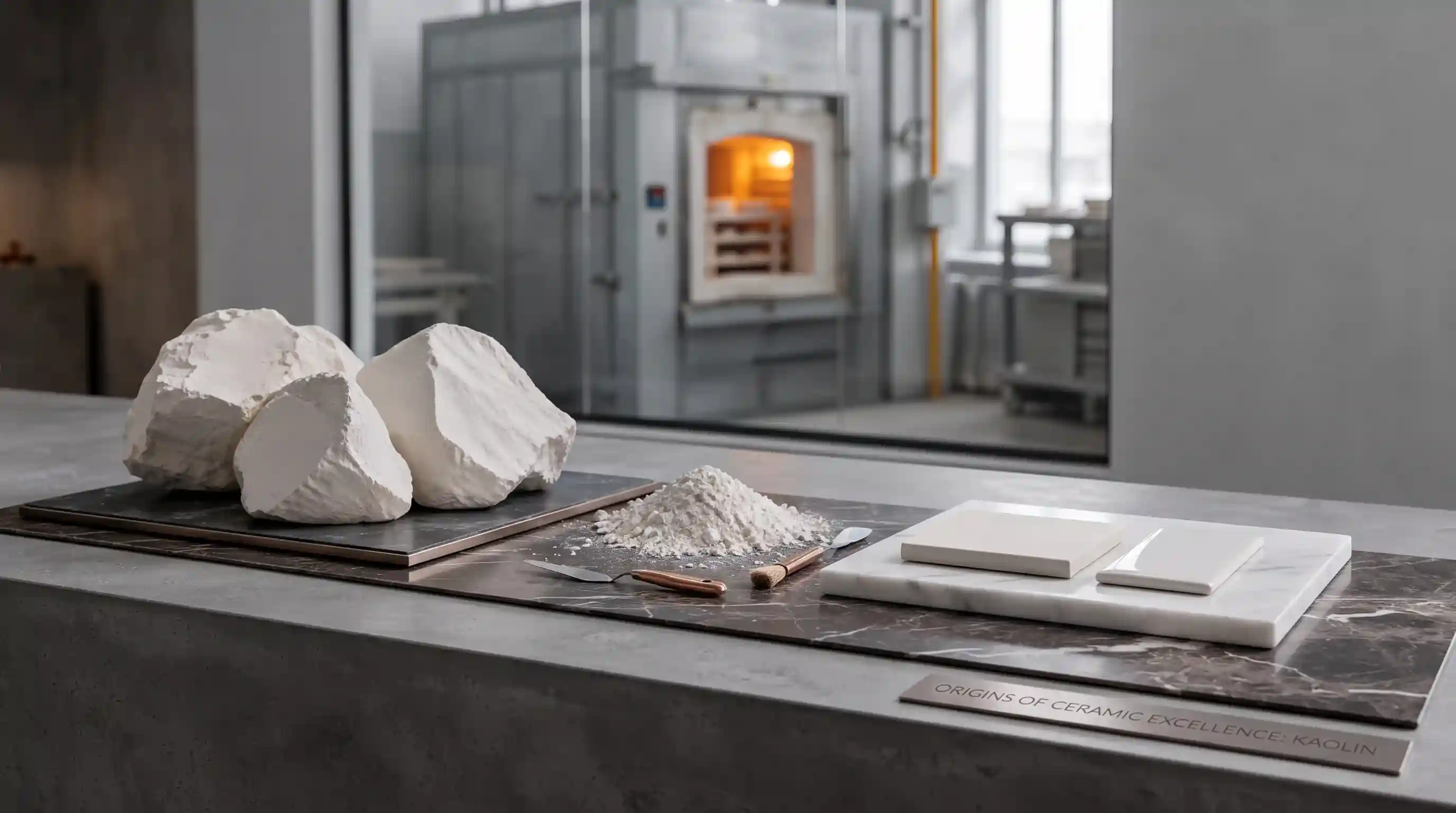
Continuous quality control in the mineral production chain is considered a red line for advanced industries. Kaolin powder must be under strict laboratory supervision during all stages of production, from ore extraction to micronization and packaging, to maintain its mesh uniformity and purity percentage.
From an economic standpoint, purchasing kaolin directly from reputable producers eliminates intermediaries, reduces the finished price of raw materials, and consequently increases the profitability of industrial units. Furthermore, the supplier's guarantee of continuous delivery prevents unexpected shutdowns of factory production lines.
Relying on advanced equipment and strict quality control standards, the Kani Sang Amiran Mineral Production Project offers a competitive and high-quality product to the market that meets the requirements of the most stringent domestic and foreign industries.
Investing in premium raw materials not only raises the quality of the final product but also severely reduces factory equipment maintenance costs due to decreased wear and operational problems.
Ordering Process and Future Outlook of the Kaolin Market
With the daily development of the tile, ceramic, paint, glaze, and paper industries, demand for quality minerals including kaolin is on the rise. Awareness of market trends and building a sustainable supply chain constitutes a competitive advantage for manufacturing factories. Long-term cooperation with professional suppliers is the key to success in this dynamic market.
To start cooperation, receive proforma invoices, and inquire about prices, respected buyers can take action through official communication chaels after reviewing their technical needs. Access to comprehensive and up-to-date information regarding various grades of kaolin is available on the dedicated products page.
The Kani Sang Amiran Mineral Production Project is always ready to supply the most suitable grades of this mineral within the specified mesh range for various industries by offering specialized consultations, thereby ensuring industrial consumers' peace of mind.
A look into the future of the market shows that stable quality and on-time delivery will be the primary determining factors in choosing top suppliers, and our collection is committed to observing the highest standards in this field.
| Question | Answer |
|---|---|
| What is kaolin? | It is a white, widely-used clay mineral consumed in tile, ceramic, glaze, paper, and paint industries. |
| What is the mesh range of kaolin? | This material is processed and supplied in the mesh range of 450 to 1500. |
| What are the main applications of kaolin? | Tile industries, ceramic products, glazing, papermaking, and paint manufacturing are its main consumers. |
| How can kaolin be ordered? | By visiting the Kani Sang Amiran website and checking the products section, reviewing and placing orders is possible. |
| Is the kaolin mesh customizable? | Yes, depending on the factories' production line needs, it can be supplied within the specified mesh range. |
| What is the role of kaolin in the paint industry? | It acts as a filler, pigment, and improver of paint coverage and viscosity. |
| Why is kaolin quality important in ceramics? | It improves the plasticity, mechanical strength, and thermal stability of ceramic bodies. |
| What is the effect of kaolin on papermaking? | It increases the paper's whiteness, brightness, smoothness, and printability. |
| Which entity produces quality kaolin? | Kani Sang Amiran Mineral Production Project is the supplier of this mineral. |
| How can we ensure the quality of raw materials? | By reviewing the chemical and physical analyses provided by a reliable supplier. |
Specialized reference for mineral information and processing, Kani Sang Amiran Project.

برچسب: Kaolin,Comprehensive Guide to Kaolin Supply and Procurement,
نویسنده: رساوب آفرین