
درباره سایت
آخرین مطالب
- استخدام أكسيد الليمونيت (الماغش) في صناعات الزجاج
- کاربرد اکسید لیمونیت (گل ماش) در صنایع شیشهسازی
- A Review of Daily Prices for Limonite Oxide (Ocher) in the Market
- چگونه خالص بودن اکسید لیمونیت (گل ماش) را تشخیص دهیم؟
- بررسی قیمت روز اکسید لیمونیت (گل ماش) در بازار
- Application of Limonite Oxide (Gole Mash) in Glassmaking Industries
- كيف تتعرف على نقاء أكسيد الليمونيت (جول ماش)؟
- How to Determine the Purity of Limonite Oxide (Gol Mash)?
- بررسی استانداردهای ایمنی کار با اکسید لیمونیت (گل ماش)
- Comprehensive Guide to Technical Analysis of Limonite Oxide (Gol Mash)
امکانات وب
Introduction to Limonite Oxide (Gole Mash) and its Position in the Construction Industry
Limonite Oxide (Gole Mash) is one of the natural mineral pigments belonging to the iron oxide family. Due to its warm yellow-brown color, high physical and chemical stability, and compatibility with various materials, it has gained a special position in the construction industry. This substance is classified among earth pigments; a category that has been used for centuries in coloring, surface decoration, and the production of building materials. Today, however, with the development of mineral processing, this product has become a standard, controlled, and reliable raw material for industrial applications.
In the Iranian mineral market, this product is mostly known as "Gole Mash" and is introduced as a mineral pigment, a raw material for coatings, and an additive for building products. Specialized producers like the Amirian Kani Sang Project offer this material in a wide range of particle sizes after extraction, processing, and size control, to meet the diverse needs of the paint, concrete, and prefabricated material industries.
The main reason for the construction industry's favorable reception of this pigment is the combination of several key features. First, its natural and earthy color, which highly harmonizes with natural and urban environments and creates a feeling of warmth and intimacy in the space. Second, color stability against UV rays and atmospheric conditions, which is vital for exterior facades. Third, compatibility with water-based, solvent-based, and powder systems. And fourth, the relatively affordable price of this material compared to high-quality synthetic pigments.
From a technical perspective, the applications of this material in construction are divided into three main categories: mineral pigments, coatings, and building products. Each of these areas requires specific characteristics such as particle size, size distribution, color strength, dispersibility, and purity. For this reason, a precise understanding of the product specifications before selection and formulation is of great importance, and a hasty choice can lead to color fluctuation or a decline in the quality of the final product.
In the rest of this article, we will examine the chemical structure and physical properties of Limonite Oxide, and then move on to its specialized applications in mineral pigments, powder paints, concrete, prefabricated materials, and other building products. Finally, we will provide a practical guide for choosing the right dimensions and maintaining the product. If you are a designer, building material manufacturer, paint maker, contractor, or construction engineer, familiarizing yourself with this pigment can greatly help you in choosing a stable and economical coloring material.
From a mineralogical point of view, limonite is the name of a group of hydrous iron oxide-hydroxides, mainly composed of goethite, found in nature as yellow to brown accumulations. This material is formed over thousands of years through the weathering and oxidation of iron minerals, and for this reason, it is considered a completely natural and stable product. The size range of the offered product varies from 450 to 1500 mesh, the importance of which in the construction industry will be discussed in the next chapter.
Chemical Structure and Physical Properties of Limonite Oxide (Gole Mash)
Understanding the structure and physical properties of Limonite Oxide (Gole Mash) is the first step for the optimal use of this pigment in the construction industry. Chemically, this material is placed in the group of hydrous iron oxide-hydroxides, and its structure mainly consists of goethite accompanied by some structural water. It is this stable crystalline structure that gives the product its distinct yellow to brown color and high chemical stability, making it resistant to environmental factors.
The color of this pigment varies in the earthy yellow, ochre, and light brown spectrum, and its intensity depends on factors such as purity, particle size, and the degree of processing. Finer particles, due to their higher specific surface area, usually produce a stronger and more uniform color and leave a smoother surface finish, while coarser particles may create a matter and more textured appearance, which is desirable for some decorative materials.
One of the most important technical characteristics of this product is its particle size range. Limonite oxide is offered in the range of 450 to 1500 mesh. In the standard mesh system, the higher the mesh number, the smaller the particle size; meaning that 450 mesh particles are relatively coarse and 1500 mesh particles are very fine. This wide range allows the selection of the appropriate product for various applications and is considered one of the strengths of this product.
The importance of this size variety in the construction industry can be summarized in a few points: in paints and coatings, finer particles create better hiding color and a better finish due to their high specific surface area. In concrete and building materials, medium to relatively coarse particles mix better with cement and aggregates, and the risk of agglomeration is reduced. In prefabricated materials, choosing the right size helps with color uniformity and prevents color fluctuations during production.
In addition to particle size, other properties such as particle size distribution (PSD), density, oil absorption, and dispersion behavior also play a role in pigment performance. Natural mineral pigments usually have different oil absorption and density compared to synthetic pigments, which must be taken into account in the formulation of paints and coatings. Controlling these parameters helps produce a high-quality and flawless final product.
In terms of stability, limonite oxide is highly stable against UV rays, moisture, and normal ambient temperatures. Unlike many organic pigments, this material does not lose its color or become dull over time and retains its original properties. This stability, in addition to extending the useful life of surfaces, also significantly reduces maintenance and renovation costs. This feature is critically important for building facades, exterior walls, floors, and materials that are constantly exposed to sun and rain.

Application of Limonite Oxide (Gole Mash) in Mineral Pigments
Mineral pigments are a category of pigments extracted and processed from natural minerals. Due to their high stability, earthy color variety, environmental compatibility, and relatively affordable price, these pigments are of great importance in the construction industry. Limonite Oxide (Gole Mash) is one of the most well-known mineral pigments in the yellow to brown range, which is used both directly and as a raw material in color formulations.
The main advantage of natural mineral pigments is their long-term color stability. Many synthetic organic pigments gradually lose their color when exposed to sunlight and atmospheric conditions, but natural iron oxides, due to their stable crystalline structure, can last for years without color change. This feature makes limonite oxide suitable for building facades, exterior walls, landscaping, and open spaces.
The applications of this pigment in the construction industry include several cases. Among them, we can mention architectural and facade painting, coloring of road construction materials such as asphalt and paving stones, production of pigments for colored concrete and floors, use in slurries, plasters, and decorative cement, and coloring of metal and wooden surfaces. In all these cases, the natural and earthy color of limonite oxide creates a warm appearance in harmony with the environment.
One of the key points in using mineral pigments is their proper dispersion in the paint base. Mineral pigment particles tend to agglomerate, and to prevent this phenomenon and achieve a uniform color, appropriate mixing methods and, if necessary, dispersants should be used. Choosing particles with homogeneous sizes makes this process simpler and the result more predictable.
Building material manufacturers can achieve a wide range of natural colors by combining limonite oxide with other mineral pigments such as red oxide, black oxide, or yellow oxide. This flexibility in combining colors is one of the most valuable features of mineral pigments and allows designers to create diverse and pleasing color palettes.
Another point is the safety and environmental aspects of mineral pigments. Natural iron oxides are generally non-toxic, and working with them, while observing simple safety precautions regarding dust, is considered safe. This feature is very important for residential projects, educational and health centers that are highly sensitive to the health of their occupants. Also, using natural pigments instead of some synthetic pigments containing harmful compounds can help reduce the environmental impact of the project.
Application of Limonite Oxide (Gole Mash) in Coatings and Powder Paints
Surface coatings play a vital role in protecting and beautifying building surfaces. Limonite Oxide (Gole Mash) is used as a pigment in various building and industrial coatings due to its stability against atmospheric conditions, natural color, and compatibility with different bases. For a more specialized study of this topic, you can refer to the article Application of Limonite Oxide (Gole Mash) in Powder Paints.
In architectural paints, this pigment is used to produce interior and exterior facade paints with earthy yellow, cream, ochre, and brown tones. Color stability against light and moisture makes these paints suitable for building facades, courtyard walls, and cement surfaces. Also, this pigment can be utilized in acrylic, plastic, and oil-based paints.
In powder paints, which are one of the most important industrial coatings for metal profiles, railings, windows, and building equipment, limonite oxide is used due to its baking temperature tolerance and color stability. The fine particles of this product can create a smooth and uniform surface finish, which is very important for high-quality products.
In metal protective coatings, which are used to prevent the corrosion of building steel structures, mineral pigments play an important role. Limonite oxide can be used as a supplementary pigment in the formulation of these coatings and, in addition to creating a natural color, it can contribute to the structure and strength of the coating.
An important technical point in using this pigment in coatings is paying attention to its oil absorption and density. These parameters directly affect the amount of pigment needed, the final viscosity, and the hiding power. Correct formulation ensures that costs are controlled while achieving the desired color.
Finally, building coatings containing limonite oxide are an economical option for construction projects due to their long lifespan and lower need for renovation. Color stability over the years means the facade and building surfaces retain their original appearance, reducing the costs of repainting and periodic repairs.
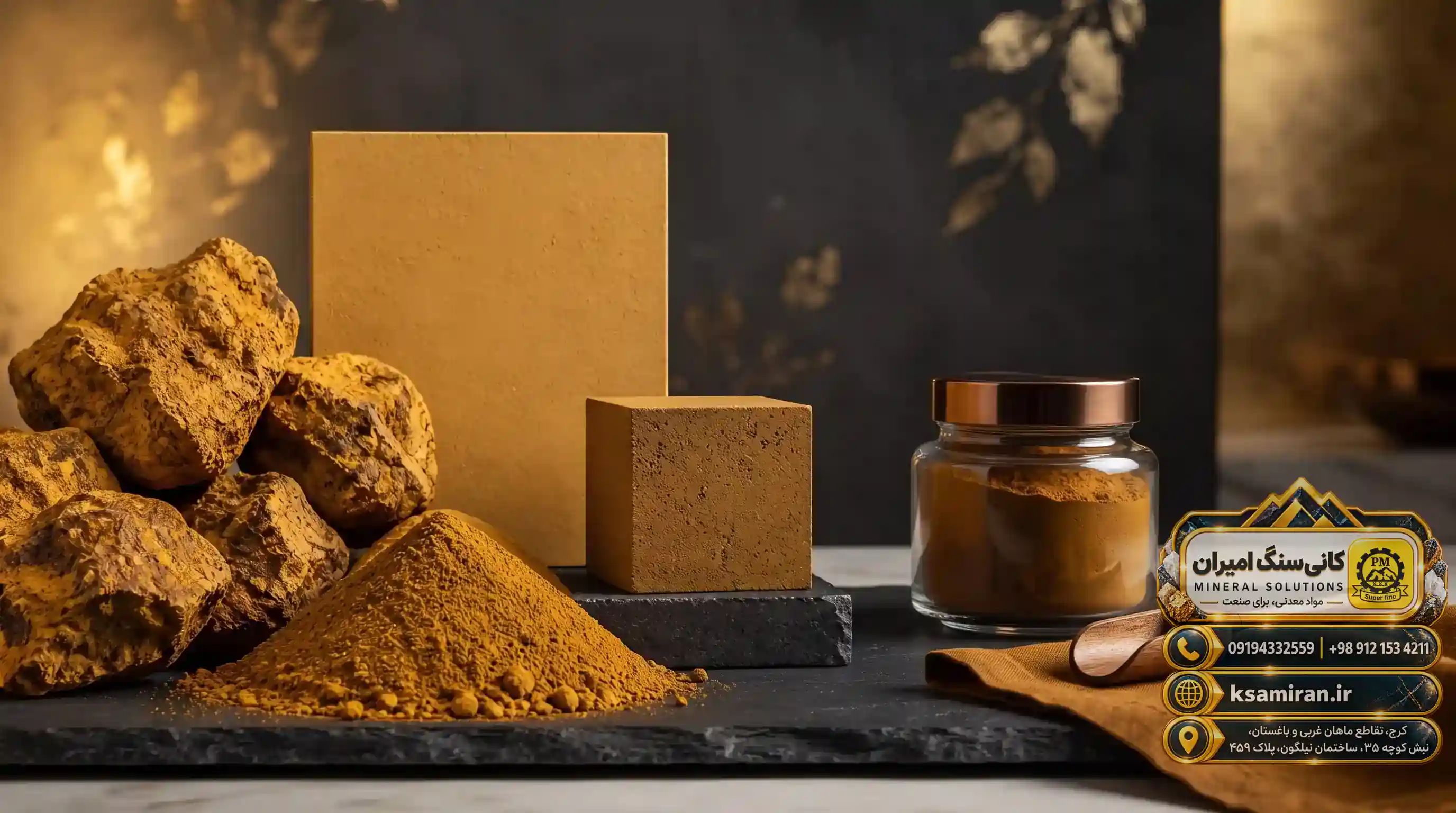
Application of Limonite Oxide (Gole Mash) in Concrete and Building Products
Concrete is one of the most widely used building materials, and coloring it has become a popular method in recent years to create a beautiful and lasting appearance. Limonite Oxide (Gole Mash), as a stable mineral pigment, is a suitable option for coloring concrete and related building products. For a deeper study, read the article Specialized Application of Limonite Oxide (Gole Mash) in Concrete.
In colored concrete, this pigment is added to the concrete during the mixing stage and creates a uniform and permanent color throughout the concrete volume. Unlike surface paints, the color resulting from the inteal pigment of the concrete is not destroyed due to erosion or surface wear and has a very long lifespan. This feature is very important for industrial floors, sidewalks, concrete blocks, and retaining walls.
Choosing the appropriate particle size for application in concrete is very important. Very fine particles may not disperse well in the concrete mix and cause staining or color fluctuation, while medium particles in the 450 to 1500 mesh range usually mix better with the cement paste. In any case, sufficient mixing and uniform distribution of the pigment in the concrete are the keys to achieving the desired color.
Limonite oxide can be used in various cement-based building products; including concrete blocks, flooring materials, cement bricks, colored plasters, decorative slurries, and artificial stones. In all these products, the natural and earthy color of this pigment creates a warm appearance in harmony with nature.
One of the advantages of using mineral pigment in concrete is its compatibility with the cement hydration process and its lack of negative effect on the final strength, provided it is used in appropriate quantities and mixed correctly. Also, the color stability against environmental conditions means that colored concrete products retain their appearance for decades.
In large construction projects, the use of colored concrete with limonite oxide can help reduce the need for surface painting and subsequent coatings, which in the long run leads to cost savings and reduced maintenance. Also, in architectural projects where the goal is harmony with the natural environment, the earthy colors of this pigment are considered an ideal choice.
Application of Limonite Oxide (Gole Mash) in Prefabricated Materials
Prefabricated materials form an expanding part of the construction industry and include products such as wall panels, blocks, beams, floors, and decorative pieces. In the production of these materials, Limonite Oxide (Gole Mash) plays an important role as a mineral pigment. To lea more, you can read the article Application of Limonite Oxide (Gole Mash) in Prefabricated Materials.
In the mass production of prefabricated materials, color uniformity is of high importance. Consumers expect products from the same batch to have a uniform color without fluctuation. Choosing a pigment with a controlled size distribution and precise mixing in the production line helps achieve this uniformity.
In concrete prefabricated materials such as flooring materials, wall blocks, and prefabricated facade panels, this pigment creates earthy yellow to brown colors that harmonize with urban and natural environments. These colors are especially visually attractive in residential complexes, parks, and open spaces.
In addition to concrete, this pigment is also used in other prefabricated materials such as decorative plasters, polymer-mineral pieces, and building composites. In these products, pigment particles must be chosen in a way that is compatible with the production process (such as molding, pressing, or extrusion) and does not cause problems such as sedimentation or agglomeration.
One of the common challenges in producing colored prefabricated materials is the effect of the pigment on the mechanical and process properties of the product. Using a stable mineral pigment with appropriate dimensions, provided the right quantities are observed and mixing is done correctly, usually does not cause serious problems and can contribute to the structural uniformity of the product while coloring it.
Finally, the use of limonite oxide in prefabricated materials allows manufacturers to offer more distinct and valuable products. Natural and stable colors create products with greater durability and higher attractiveness, which is an advantage in a competitive market. Also, the harmony of these colors with contemporary architectural trends helps products sell better.
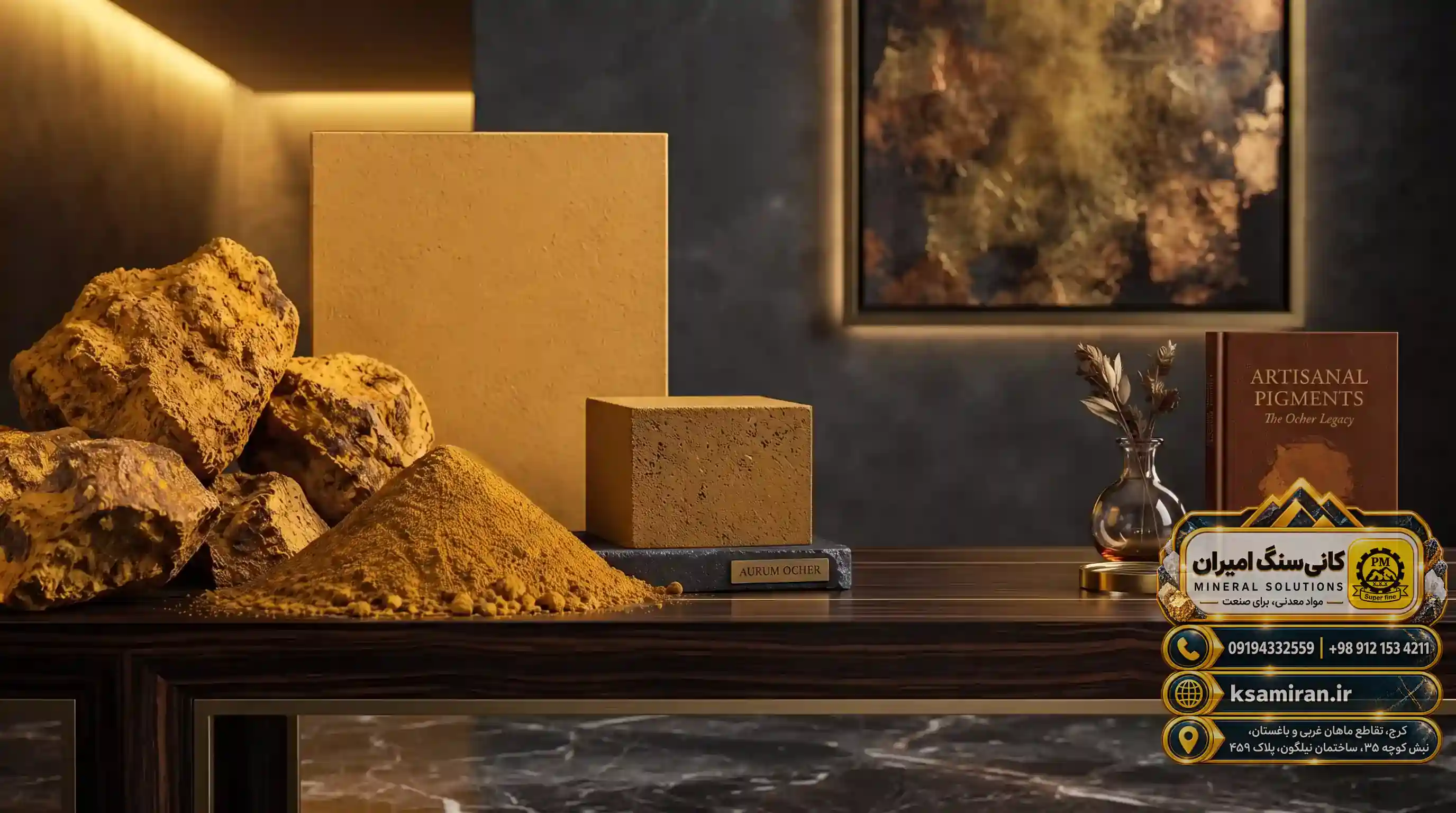
Advantages of Using Limonite Oxide (Gole Mash) in the Construction Industry
The use of Limonite Oxide (Gole Mash) in the construction industry has several advantages, the most important of which we will discuss in this chapter. Understanding these advantages helps in making better decisions regarding the selection of raw materials and the optimization of building product formulations.
First, long-term color stability. Due to its stable mineral structure, this pigment has high resistance against UV rays, moisture, temperature changes, and environmental pollutants, and its color remains unchanged over the years. This feature is vital for exterior facades and materials exposed to harsh conditions.
Second, natural and beautiful color. The earthy yellow to brown colors of this product harmonize with nature and indigenous architecture, creating a feeling of warmth and intimacy in the space. These colors never go out of style and are equally applicable in classic and mode projects.
Third, compatibility with various bases. This pigment can be used in water-based, solvent-based, powder, and cement systems, which gives high flexibility to formulations. Fourth, the relatively affordable price of this material compared to high-quality synthetic pigments, making it economical for large projects.
Fifth, safety and environmental friendliness. Natural iron oxides are non-toxic and, by observing simple safety precautions, working with them is safe. Sixth, a wide dimensional variety (450 to 1500 mesh) which allows the selection of a product tailored to any application and gives the producer the ability to manufacture diverse products with a single raw material.
Seventh, surface longevity and reduced maintenance costs. Coatings and materials containing this pigment, due to their high stability, require less renovation and periodic repairs, which in the long run leads to significant cost savings. All these advantages have made limonite oxide one of the most popular mineral pigments in the construction industry.
In addition to the above, the compatibility of this pigment with other mineral pigments allows the creation of unlimited color palettes. This feature is of strategic importance, especially for manufacturers looking for distinct products in a competitive market, allowing them to increase their product variety without changing their production structure.
Selection Guide, Maintenance, and Conclusion
Choosing the right Limonite Oxide (Gole Mash) for a construction project requires attention to a few key points. First, determining the final application: is the product to be used for paint and coatings or for concrete and prefabricated materials? Each application requires specific dimensions and characteristics, and the right choice guarantees the quality of the final product.
For high-quality paints and coatings that require a smooth finish and strong color, finer particles at the higher end of the mesh range are more suitable. For concrete and building materials, medium particles are a better choice. For prefabricated materials, a controlled size distribution is very important to achieve a uniform color during production.
The second point is product uniformity. Purchasing from a manufacturer that performs dimensional and color quality control guarantees that the received product will have the same color and behavior across different batches. This issue is very important for material manufacturers for whom color uniformity is vital.
The third point is maintenance and storage. This pigment must be kept in a dry environment away from moisture to prevent agglomeration and loss of quality. Also, when handling and working with the product, respiratory protective equipment must be used so that its dust is not inhaled.
The fourth point is consulting with technical experts before purchasing. Choosing the right dimensions and amount of product depends on project details, formulation, and production equipment. Receiving guidance from the manufacturer's technical team can prevent costly mistakes and help optimize the production process.
Limonite Oxide (Gole Mash), with a set of outstanding features, has become one of the popular mineral pigments in the construction industry. Color stability, dimensional variety, natural and beautiful color, compatibility with various bases, and affordable price have made this product an ideal choice for manufacturers of paint, concrete, and prefabricated materials. For more information and to view the specifications of this product, you can visit the Limonite Oxide (Gole Mash) product page on the Amirian Kani Sang Project website.
| Question | Answer |
|---|---|
| What is Limonite Oxide (Gole Mash)? | It is a natural mineral pigment from the iron oxide family with a yellow to brown color used in the construction industry. |
| What are its applications in the construction industry? | Use in mineral pigments, coatings, and building products such as paints, powder paints, colored concrete, and prefabricated materials. |
| What does the 450 to 1500 mesh range mean? | It indicates the dimensional variety of the product's particles; the higher the mesh number, the finer the particles. |
| Is the color of this product stable against sunlight? | Yes, iron oxide mineral pigments are stable against UV rays and atmospheric conditions and retain their color. |
| Is it suitable for powder paints? | Yes, it is used in industrial coatings due to its baking temperature tolerance and color stability. |
| What is its main difference from synthetic pigments? | Long-term color stability, natural earthy color, and a relatively more affordable price. |
| Can it be used in concrete? | Yes, it is used for volumetric coloring of concrete and cement products. |
| How do we choose the right dimensions? | Based on the final application; finer particles for paints and coatings, and medium particles for concrete and building materials. |
| How should this product be stored? | Keep in a dry environment away from moisture and prevent inhalation of its dust. |
| Where can this product be obtained? | It can be obtained from the Amirian Kani Sang Project, a producer of mineral materials. |
Source: Amirian Kani Sang Project — Mineral Materials Production (Information and specifications of the Limonite Oxide product).
برچسب: Limonite Oxide (Gole Mash),Application of Limonite Oxide (Gole Mash) in the Construction Industry,
نویسنده: رساوب آفرین