
درباره سایت
آخرین مطالب
- انتخاب اکسید آهن قرمز (اخرا) برای بهبود کیفیت پیگمنت و پوششهای رنگی
- تامین کربنات کلسیم با دانهبندی دقیق جهت استفاده در مستربچ
- تأمین تخصصی سیلیس برای مصالح ساختمانی، شیشه و صنایع سرامیک
- ویژگیهای فنی بنتونیت کانی سنگ امیران برای کاربردهای خاص
- فلدسپات کانی سنگ امیران برای شیشه کاشی و سرامیک
- کاربرد تالک سفید درجه یک در فرمولاسیون پیشرفته رنگ و محصولات کاغذی
- اکسید آهن قرمز (اخرا) کاربردی جهت تولید محصولات سرامیکی و پوشش
- مشخصات فنی اکسید آهن قرمز (اخرا) مناسب برای پوشش و تولید پیگمنت
- مشاوره تخصصی خرید کربنات کلسیم بر اساس نیاز دقیق صنعت شما
- انتخاب تالک سفید صنعتی مناسب برای تولیدات کاغذ و مستربچ
امکانات وب
What is Calcium Carbonate and Why is it So Widely Used in Manufacturing Industries?
Calcium carbonate with the chemical formula CaCO3 is one of the most abundant and well-known mineral compounds on Earth, found naturally in limestone, marble, chalk, and travertine. After extraction from mines, through crushing, grinding, and classification processes, it is transformed into a white powder with very fine particles used in a wide range of manufacturing industries. The abundance of reserves, affordable price, bright white color, appropriate chemical purity, and dispersibility in various matrices have made this material one of the most important mineral fillers in the world.
In industrial applications, calcium carbonate is produced in two general forms: Ground Calcium Carbonate (GCC), which is milled directly from limestone, and Precipitated Calcium Carbonate (PCC), which is prepared through chemical processes. Due to lower production costs, the ground type is consumed in much larger volumes in the plastics, paint, paper, and engineered stone industries. Choosing between these two types depends on the qualitative needs of the process and the final product, and in many cases, a combination of both is used.
Amiran Stone Mineral Project, as one of the producers of mineral materials, offers calcium carbonate with a particle size range of 100 to 3500 mesh for polymer, paint, paper, and engineered product applications. The variety of particle dimensions allows each industry to select the appropriate product for its production line based on its process needs. If you are looking for a high-quality mineral filler for your industrial application, the calcium carbonate produced by this company is a valuable option to consider.
The most important reasons for the popularity of this material in manufacturing industries are: reducing formulation costs by replacing part of expensive materials, improving mechanical properties such as hardness and compressive strength, increasing the dimensional stability of the final product, natural white color which plays a foundational role in coloring, suitable dispersibility in polymer and aqueous matrices, and finally, sustainable supply of raw material due to large limestone reserves in the country. These features have made calcium carbonate a strategic material for production lines.
In addition to economic and technical advantages, the use of calcium carbonate aligns with a sustainable production approach. Limestone is an abundant and relatively low-risk material, and its substitution for more expensive synthetic fillers or more hazardous chemicals can reduce the environmental impact of the production process. On the other hand, the lower weight of the final formulation and reduced consumption of petroleum resins in the polymer industry contribute to reducing energy consumption over the product's life cycle.
In the rest of this article, we will separately examine the application of calcium carbonate in various industries including plastics and polymers, cables, artificial leather, paint, paper, adhesives, and engineered stone, and at the end, we will present important points regarding the importance of particle dimensions and a guide to choosing this product. This guide will help you choose the most suitable type of calcium carbonate for your production line with a broader and more precise perspective.
Application of Calcium Carbonate in the Plastics Industry: PVC/UPVC Profiles and Pipes, and Masterbatch
The plastics industry is the largest consumer of calcium carbonate in the world. In most polymer formulations, a significant portion of the weight of the final product consists of this mineral. The main reason for this is calcium carbonate's ability to reduce the finished cost of the product while simultaneously improving some physical and mechanical properties. In fact, this material is not merely a cheap filler, but a functional material that directly impacts the quality of the polymer product.
In the production of PVC/UPVC profiles and pipes used for windows, doors, water and sewage transmission pipes, and cable routing, calcium carbonate plays multiple roles. This material increases the hardness and compressive strength of pipes and profiles, improves the dimensional stability of the part against temperature changes, reduces shrinkage after exiting the mold, and raises the surface gloss of the final product. Also, due to its alkaline nature, it helps thermal stabilization of PVC and somewhat reduces the consumption of stabilizers.
Another important application of this material in the plastics industry is masterbatch production. Masterbatch is a concentrate of color or additives in a polymer carrier used for coloring and modifying the properties of plastic grades. In white masterbatches, calcium carbonate acts as an auxiliary whitening agent alongside titanium dioxide, and by dispersing the titanium particles, increases its optical efficiency. In filler masterbatches, calcium carbonate enters the final grade at high concentrations and modifies its mechanical and surface properties. For more specialized information, you can read the article Applications of Coated Calcium Carbonate in the Plastics Industry.
In advanced polymer formulations, coated calcium carbonate is used; meaning particles whose surface is covered with a thin organic layer, usually a fatty acid. This coating allows particles to disperse better in the polymer matrix, reduces agglomeration, and increases the degree of integrity between the mineral and polymer phases. The result of this is improved impact resistance, better melt flow in the extruder, and reduced energy consumption of machinery.
The consumption level of calcium carbonate in plastic formulations depends on the product type, expected surface quality, and target mechanical properties. In thick sewage pipes, higher percentages are usually used, while in delicate parts and decorative profiles, finer and purer grades are applied. Choosing the right particle size is very important; coarse particles cause a drop in impact resistance, and very fine particles are more expensive and may agglomerate. Therefore, the balance between price, particle size distribution, and dispersion quality is the key to success in this industry.

The Role of Calcium Carbonate in the Cable and Artificial Leather Industry
The cable and wire industry is one of the important consumers of calcium carbonate. In the production of sheathing and insulation for power and telecommunication cables, this mineral enters the polymer formulation (often PVC or polyethylene) as a functional filler. Besides reducing production costs, calcium carbonate modifies the dielectric and mechanical properties of the insulation, raises the tensile strength of the sheath, and prevents ignition and fire spread in case of physical damage to the cable.
In cables pulled through harsh environments, the wear resistance of the sheath is very critical. Calcium carbonate particles, with their relative hardness, improve the abrasion and scratch resistance of the polymer sheath and increase the cable's useful life in harsh environmental conditions. Additionally, the alkaline nature of this material helps neutralize acid gases produced during PVC combustion, which is considered a major advantage in cables with low-smoke and toxic-gas safety requirements.
The artificial leather industry is also a significant consumer of this material. Artificial leather usually consists of a fabric base layer and one or more polymer coating layers (PVC or polyurethane). In the base and middle layers of artificial leather, calcium carbonate is used as a filler to simulate the natural texture and sticky appearance of the product. This material helps control the density, softness, and thickness of the layers while lowering the finished cost of the product.
In the top layer of artificial leather, where surface quality and touch are very important, higher-quality grades of calcium carbonate with uniform particles and high brightness must be used. The more uneven the particle size distribution, the lower the surface quality of the leather, and invisible lines and spots appear on the coating. For this reason, supplying calcium carbonate with consistent quality and precise control of particle dimensions is a necessity for artificial leather manufacturers.
In addition to cables and artificial leather, calcium carbonate is widely used in the production of hoses, polymer adhesive tapes, polymer sheets, polymer floorings, and injected parts. In all these applications, the key point is matching the calcium carbonate specifications (particle dimensions, brightness, moisture, and coating type) to the process needs. For example, extrusion processes require finer and more uniform particles, while medium grades can be used in compression molding. Precise knowledge of production line needs significantly helps reduce waste and increase efficiency.
Application of Calcium Carbonate in Paint and Surface Coatings Production
The paint and coatings industry is one of the oldest consumers of calcium carbonate. In paint manufacturing, this material is known as an extender pigment; meaning a substance that, although it has no distinct color itself, increases the volume of paint and improves the performance of primary pigments. By dispersing titanium dioxide (TiO2) particles in the paint layer, calcium carbonate prevents their agglomeration and enhances the covering power and whiteness of the paint.
One of the most important functions of calcium carbonate in paint is reducing formulation costs. Titanium dioxide is the most expensive component of paint, and using calcium carbonate with appropriate dimensions can replace part of it without a significant drop in covering power. The working mechanism is that calcium carbonate particles fill the space between titanium particles and prevent their accumulation; a phenomenon known as the "spacing effect," which maximizes the optical efficiency of each titanium particle.
Besides affecting coverage, calcium carbonate also affects other paint properties. This material increases the resistance of the paint layer to abrasion and scratching, helps improve adhesion to the underlying surface, provides acid-neutralizing properties in paints used in industrial environments, and acts as an alkaline buffer to prevent rusting of the metal surface beneath the paint layer. In primer and anti-rust paints, this property is especially valuable.
In water-based paints and polymer coatings, calcium carbonate particles must disperse well in water. For this, grades with appropriate surface coatings are usually used to prevent rapid settling of particles during storage. The rheology of the paint (its flow behavior during spraying and rolling) is also affected by the amount and type of calcium carbonate; the usage level of this material can adjust the paint consistency for spray gun application or roller application.
The particle dimensions of calcium carbonate directly affect the gloss and matte finish of the final paint. Coarser particles create a more matte surface, and very fine particles (nano and high-micron) contribute to glossy and transparent paints. Paint manufacturers typically keep several different grades on hand to produce the desired level of gloss by combining them. Also in powder coatings used in home appliances and aluminum profiles, calcium carbonate acts as a filler with high thermal stability and does not change color at baking oven temperatures.

Calcium Carbonate in the Paper Industry: Brightness, Opacity, and Print Quality
The paper industry is one of the largest consumers of calcium carbonate in the world. In the paper production process, this material is used as a filler and also in the paper surface coating stage. In the past, kaolin was used as the main filler, but the popularization of alkaline papermaking processes in recent decades has made calcium carbonate the dominant filler; because this material does not dissolve in the alkaline environment of the process and is fully compatible with alkaline papermaking systems.
The addition of calcium carbonate to paper pulp has several major advantages. First, replacing part of the expensive cellulose fibers, which means reducing production costs and preserving forest resources. Second, a significant increase in the brightness and opacity of the paper, which is vital for printing and writing paper. Third, improved print quality; the surface of paper filled with calcium carbonate becomes smoother and more even, printing ink settles on it more uniformly, and as a result, the clarity of printed images and text increases.
In the paper coating stage, calcium carbonate is applied along with adhesives and other additives as a thin layer on the paper surface. This layer smooths the paper surface and significantly improves its optical and printing properties. In this application, precipitated calcium carbonate (PCC) is usually used, whose crystal shape is controlled and particle size distribution is narrower; although ground calcium carbonate with high purity and brightness is also used in many paper mills.
The type of paper produced determines which grade of calcium carbonate is used. In high-quality writing and printing papers, high brightness and uniform particle dimensions are important. In cardboard and packaging papers where mechanical strength is more important than appearance, coarser and more economical grades are used. In blueprint and photocopy papers, a smooth and glossy surface is needed, which fine calcium carbonate provides.
An important technical point in consuming calcium carbonate for the paper industry is controlling impurities, especially iron and silica ions. Iron causes paper discoloration, and silica causes abrasion and damage to papermaking machinery. Also, quality consistency across different shipments is important to prevent machine setting changes. For this reason, suppliers with precise quality control hold a better position in this industry.
Application of Calcium Carbonate in Adhesives, Sealants, and Engineered Stone
The adhesive and sealant industry is another major consumer of calcium carbonate. In the formulation of construction, wood, tile, and flooring adhesives, this mineral acts as a functional filler. Calcium carbonate increases the volume of adhesive, regulates its consistency and viscosity, and at the same time lowers formulation costs. In polymer adhesives, this material helps control rheological behavior during application so the adhesive does not drip from the surface and stays in place to dry.
In sealants used for sealing joints in windows, sanitary fixtures, and building exteriors, calcium carbonate plays the role of a structural filler. This material gives the sealant elastic properties and cohesion and reduces its shrinkage during drying. In polyurethane and silicone sealants, choosing the right particle dimensions of calcium carbonate greatly affects the final result; very fine particles cause excessive viscosity increase, and coarse particles cause a drop in strength and surface properties.
The artificial and engineered stone industry is also one of the important and growing applications of calcium carbonate. Artificial stone is composed of calcium carbonate particles (as the main aggregate) and a polymer resin, which in a vacuum compression process are tued into stone blocks. These blocks are then cut and transformed into slabs, countertops, floorings, and interior decorations. In this product, calcium carbonate constitutes more than 80% of the weight, and therefore its quality directly affects the quality of the final stone.
In engineered stone, the brightness and uniformity of calcium carbonate particles contribute to the design and color of the artificial stone, and its resin absorption must be controlled so bubbles and porosity do not form in the block. The compressive strength, hardness, and durability of the final stone are directly dependent on the mineral filler. Due to similar chemical compositions, many artificial stone producers use several carbonate minerals; to familiarize yourself with other options, you can read the article Dolomite in Construction and Manufacturing Industries.
In addition to adhesives and artificial stone, calcium carbonate is used in the production of bitumen-plastic mastics, industrial coatings, toothpastes, agricultural pesticides, and industrial diatomaceous earth. In all these applications, the wide range of 100 to 3500 mesh dimensions allows each industry to procure the grade suited to its needs. This flexibility is one of the main reasons for the ever-increasing expansion of calcium carbonate applications in various industries.
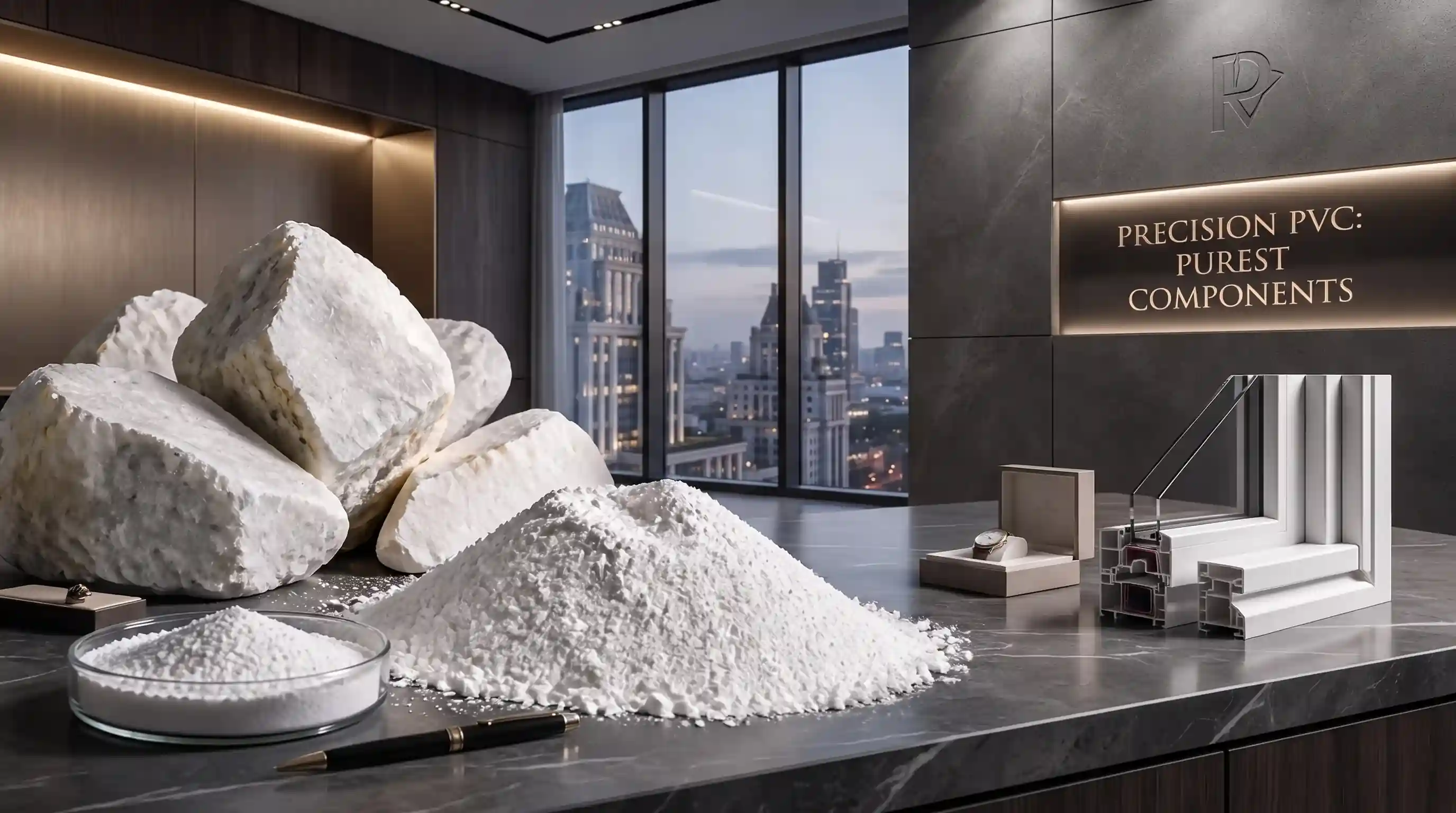
The Importance of Particle Dimensions: A Guide to Choosing the Right Grade (100 to 3500 Mesh)
In the mineral materials market, particle size is usually expressed in "mesh" units. The mesh number means the number of openings in a standard unit area; the larger the mesh number, the finer the particles. As a general rule, 100 mesh corresponds to particles around 150 microns, and 3500 mesh corresponds to particles under 5 microns. Amiran Stone Mineral Project produces calcium carbonate in a wide range of 100 to 3500 mesh, covering the needs of various industries.
Why are particle dimensions so important? Because the performance of calcium carbonate in the final product process is directly dependent on particle size, particle shape, and particle size distribution. Fine particles have a higher specific surface area and create better dispersion in the polymer matrix or liquid carrier, while coarser particles have a lower price and are more suitable for applications that do not require surface precision. Choosing the wrong grade can lead to reduced product quality, increased waste, and process problems.
As a general guide:
- 100 to 400 mesh grades: suitable for construction adhesives, bulk fillers, mastic and economical sealants, cardboard papers, and applications where a matte and rough surface is desired.
- 400 to 1250 mesh grades: suitable for PVC profiles and pipes, cables, artificial leather, construction paints, and medium print papers. This range has the highest consumption volume in industries.
- 1250 to 3500 mesh grades: suitable for masterbatch, high-quality and glossy paints, surface coatings, coated papers, and advanced polymer products that require a smooth and glossy surface.
In addition to particle size, other qualitative parameters are important in choosing calcium carbonate: brightness and whiteness, which affect the color of the final product; chemical purity and especially iron content, which causes discoloration; moisture, which must be controlled in polymer processes; oil absorption, which is important in the formulation of organic carriers; and abrasion, which affects machinery wear. To lea about how these parameters are controlled in mode industries, read the article Silica Quality Standards in Mode Manufacturing Industries.
A practical tip is that before buying in high volume, be sure to obtain a laboratory sample and test it in your production line. Simple tests such as measuring brightness, particle size distribution, oil absorption, and dispersion quality in the carrier can prevent major production problems. Also, consistency of specifications across different shipments is essential to prevent frequent changes in machine settings.
Guide to Choosing Calcium Carbonate and Conclusion
Given the variety of applications of calcium carbonate in manufacturing industries, choosing the right grade requires precision and knowledge of the production line's needs. Here is a list of key points for making the right decision:
- Determine the final application: Is your product a UPVC profile, masterbatch, cable, artificial leather, paint, paper, adhesive, or artificial stone? Each has its own specific requirements.
- Choose particle dimensions based on the expected surface: For glossy and delicate surfaces, use fine grades (1250 mesh and above), and for bulk and structural applications, use medium and coarse grades.
- Check brightness and purity: In white and colored products, the brightness of calcium carbonate directly affects the final quality.
- Consider the particle coating type: If dispersion in the polymer matrix is important in your process, use coated calcium carbonate.
- Ensure quality consistency: Changes in specifications between shipments can cause disruptions in the production line.
- Buy from a reliable source: Choosing a manufacturer with precise quality control reduces your risk.
The table below shows a summary of the main applications and suggested calcium carbonate grades:
| Industry / Product | Suggested Grade (Mesh) |
|---|---|
| PVC/UPVC Profiles and Pipes | 400 1250 |
| Masterbatch | 1250 3500 |
| Cable and Wire | 400 1250 |
| Artificial Leather | 400 1250 |
| Paint and Coatings | 400 3500 |
| Paper and Cardboard | 100 1250 |
| Adhesive and Sealant | 100 400 |
| Engineered Stone | 100 400 |
Calcium carbonate is one of the strategic mineral materials in mode manufacturing industries. From window profiles and sewage pipes to printing paper, construction paint, and artificial stone, this material, as a functional filler, improves the quality of the final product and lowers production costs. Understanding the relationship between particle dimensions, purity, and type of application helps you make the best purchasing decision. Amiran Stone Mineral Project supplies the needs of various industries by offering calcium carbonate in the 100 to 3500 mesh range. It is recommended to receive technical consultation before ordering so that a grade fully matched to your production line is selected.

| Question | Answer |
|---|---|
| What is calcium carbonate and where does it come from? | It is a mineral compound with the formula CaCO3, extracted mainly from limestone and converted into white powder after crushing and grinding. |
| What are the most important applications of calcium carbonate in manufacturing industries? | PVC/UPVC profiles and pipes, masterbatch, cables, artificial leather, paint, paper, adhesives, and engineered stone. |
| What does the "mesh" unit mean in calcium carbonate specifications? | Mesh is a unit for expressing particle size; the higher the mesh number, the finer the particles. |
| What difference does the 100 to 3500 mesh range make? | Coarser grades are more suitable for bulk applications like adhesives and artificial stone, while finer grades are better for masterbatch, high-quality paint, and glossy surfaces. |
| What role does calcium carbonate play in PVC? | It increases hardness and compressive strength, improves dimensional stability, raises surface gloss, and reduces formulation costs. |
| What is coated calcium carbonate? | Particles with an organic surface coating that provide better dispersion in the polymer matrix and higher impact resistance. |
| Can it replace titanium dioxide in paint? | Not completely, but by dispersing TiO2 particles, it increases their optical efficiency and reduces the consumption of part of this expensive material. |
| What is the role of calcium carbonate in paper production? | Increasing brightness and opacity, improving surface and print quality, reducing fiber consumption, and production costs. |
| How is it used in engineered stone? | It is combined with resin as the main aggregate to form the artificial stone block; its brightness and uniformity directly affect the stone's quality. |
| What factors should be considered when choosing calcium carbonate? | Final application, particle dimensions, brightness, purity, moisture, coating type, and quality consistency across shipments. |
This article is based on the product information of calcium carbonate from Amiran Stone Mineral Project and general sources of the mineral materials industry.

برچسب: Calcium Carbonate,Applications of Calcium Carbonate in Various Manufacturing Industries,
نویسنده: رساوب آفرین