
درباره سایت
آخرین مطالب
- استخدام أكسيد الليمونيت (الماغش) في صناعات الزجاج
- کاربرد اکسید لیمونیت (گل ماش) در صنایع شیشهسازی
- A Review of Daily Prices for Limonite Oxide (Ocher) in the Market
- چگونه خالص بودن اکسید لیمونیت (گل ماش) را تشخیص دهیم؟
- بررسی قیمت روز اکسید لیمونیت (گل ماش) در بازار
- Application of Limonite Oxide (Gole Mash) in Glassmaking Industries
- كيف تتعرف على نقاء أكسيد الليمونيت (جول ماش)؟
- How to Determine the Purity of Limonite Oxide (Gol Mash)?
- بررسی استانداردهای ایمنی کار با اکسید لیمونیت (گل ماش)
- Comprehensive Guide to Technical Analysis of Limonite Oxide (Gol Mash)
امکانات وب
Introduction to Kaolin Purity and Its Importance in Manufacturing Industries
Kaolin is one of the few minerals that simultaneously holds strategic importance in the tile, ceramic, glaze, paper, and paint industries. The reason for this is its special mineralogical composition, high brightness, suitable thermal behavior, and particle distribution capability. However, the value of kaolin for production lines is not limited to the type of mineral; its purity directly determines the final color, strength, process stability, surface appearance, and product performance.
When we speak of kaolin purity, we mean not only the percentage of pure kaolinite but a set of qualitative characteristics such as the amount of quartz, feldspar, mica, iron and titanium oxides, organic matter, and soluble salt impurities. Each of these factors can affect the firing temperature, color change, porosity, water absorption, covering capability, and surface quality of the final product. For this reason, controlling purity is a technical necessity, not merely a commercial option.
The kaolin product is introduced for tile, ceramic product, glaze, paper, and paint applications, and its aounced mesh range is 450 to 1500 mesh. This wide range allows the selection of particles suited to the process; because in tiles and ceramics, particle distribution affects shrinkage and body strength, while in paper and paint, fineness and brightness are closely related to coverage and final appearance.
In this article, we examine the effect of kaolin purity on the quality of manufactured products from the perspective of mineralogy, thermal processes, glazing, papermaking, and paint. The goal is for buyers, quality controllers, and formulation designers to better understand why purity, particle size distribution, and kaolin brightness must be measured together, and the final result chosen based on the actual needs of the production line.
Mineralogy of Kaolin and Impurities That Change Product Quality
Kaolin is mainly composed of kaolinite; a hydrous aluminum silicate that, due to its layered structure, plastic behavior, and suitable thermal stability, is used in industrial formulations. In nature, kaolin is rarely found completely pure and is usually accompanied by associated minerals such as quartz, feldspar, mica, and iron-bearing compounds. These associates are advantageous in some cases, but in many more delicate applications, they are the source of quality variations.
Siliceous and feldspathic impurities can change the thermal behavior of the ceramic body. Free quartz increases resistance and hardness but has higher thermal expansion and can create inteal stresses during the firing cycle. Feldspars act as fluxes and shift the melting point and glassy formation; as a result, the body may seal earlier or show greater dimensional changes. Mica can also affect brightness, layered structure, and firing behavior.
Iron and titanium oxides are among the most important coloring impurities. Even at low percentages, they can tint the final product's color towards yellow, brown, or gray, and are clearly detectable in light glazes, white tiles, and coated papers. Organic matter and soluble salts also release gases and can cause blistering, porosity, rough surfaces, and reduced adhesion.
Understanding why controlling impurities in industrial minerals matters helps in better understanding the relationships between mineral quality and final product performance; for example, in mining and concrete projects, the effect of silica quality on the durability and strength of industrial concrete shows how impurities can affect final durability and strength. The same logic holds true for kaolin: raw material quality is the foundation of manufactured product quality.
The Effect of Kaolin Purity on Tiles and Ceramic Products
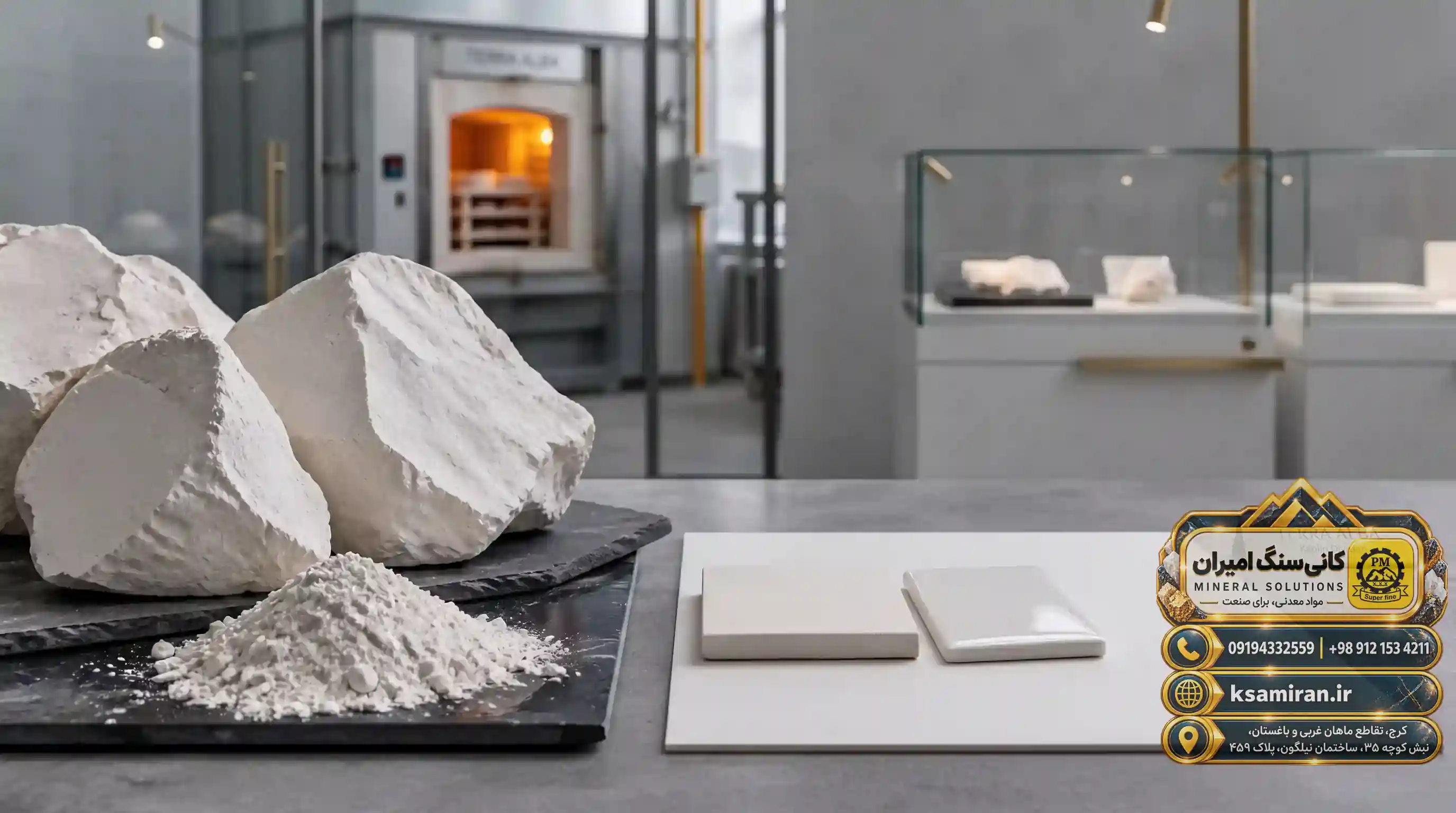
In the production of tiles and ceramic products, kaolin plays a structural role. This material contributes to the body's plasticity, green strength, proper shaping, and mechanical resistance after firing. For this reason, any factor that reduces the purity and uniformity of kaolin can directly affect the thickness, dimensions, lamination, water absorption, and strength of the tile.
Flux-bearing impurities like feldspars and some micas accelerate the firing cycle and cause early melt phase formation. This condition can lead to faster sealing, increased shrinkage, edge lamination, and even tile warping. On the other hand, free quartz raises the body's resistance but, due to different thermal expansion, can create thermal stresses and increase sensitivity to thermal shock.
In white ceramic products and light tiles, the final color is an important criterion. The presence of iron and titanium oxides causes a yellow to brown tint and affects the whiteness degree, glaze transparency, and visual value of the tile. Careful inspection of the mineral powder before entering the formulation is one of the essential steps; therefore, the kaolin powder appearance and color quality inspection guide can help identify color variations and visible impurities before production.
In addition to color, plasticity and particle size distribution also affect tile quality. Kaolin with appropriate purity and proportional particle distribution creates a more uniform paste, better flow, and controlled drying. These characteristics reduce cracking in the dryer and damage during transport, ultimately increasing the accepted product rate in the line.
The Role of Kaolin Purity in Glaze Quality
In the glaze industry, kaolin is not merely a filler. This mineral acts as a suspending agent, plasticizer, and a refractory component in the glaze composition. In fact, kaolin helps the glaze remain uniformly on the body surface before firing and forms a stable glassy structure during firing.
Kaolin purity has a direct impact on the transparency, color, final surface, and glaze defects. Iron and titanium impurities make the light glaze color dull or yellow and are highly destructive in white, glossy, and low-tint glazes. Soluble salts and organic matter, by releasing gas, can cause blistering, pinholes, crawling, and reduced gloss.
In glazing, particle size is considered alongside purity. Finer particles provide more surface contact and better reactivity; but at the same time, they change viscosity, dewatering, and suspension behavior. Improper particle distribution can cause drips, layering, or a drop in coverage in different parts of the tile.
High-quality kaolin makes the glazing process more predictable: it creates a more uniform final layer, controlled thickness, and more stable drying. Alongside this, using functional and high-quality minerals in the formulation mix can help improve the surface, resistance, and product performance; to examine this approach in products where multiple minerals play a role together, one can refer to the key role of industrial talc in improving the quality of manufactured products. Overall, in glaze too, controlling the purity, color, and particles of kaolin is a quality control tool, not a laboratory formality.
Application of Kaolin in the Paper Industry and the Importance of Brightness and Fineness
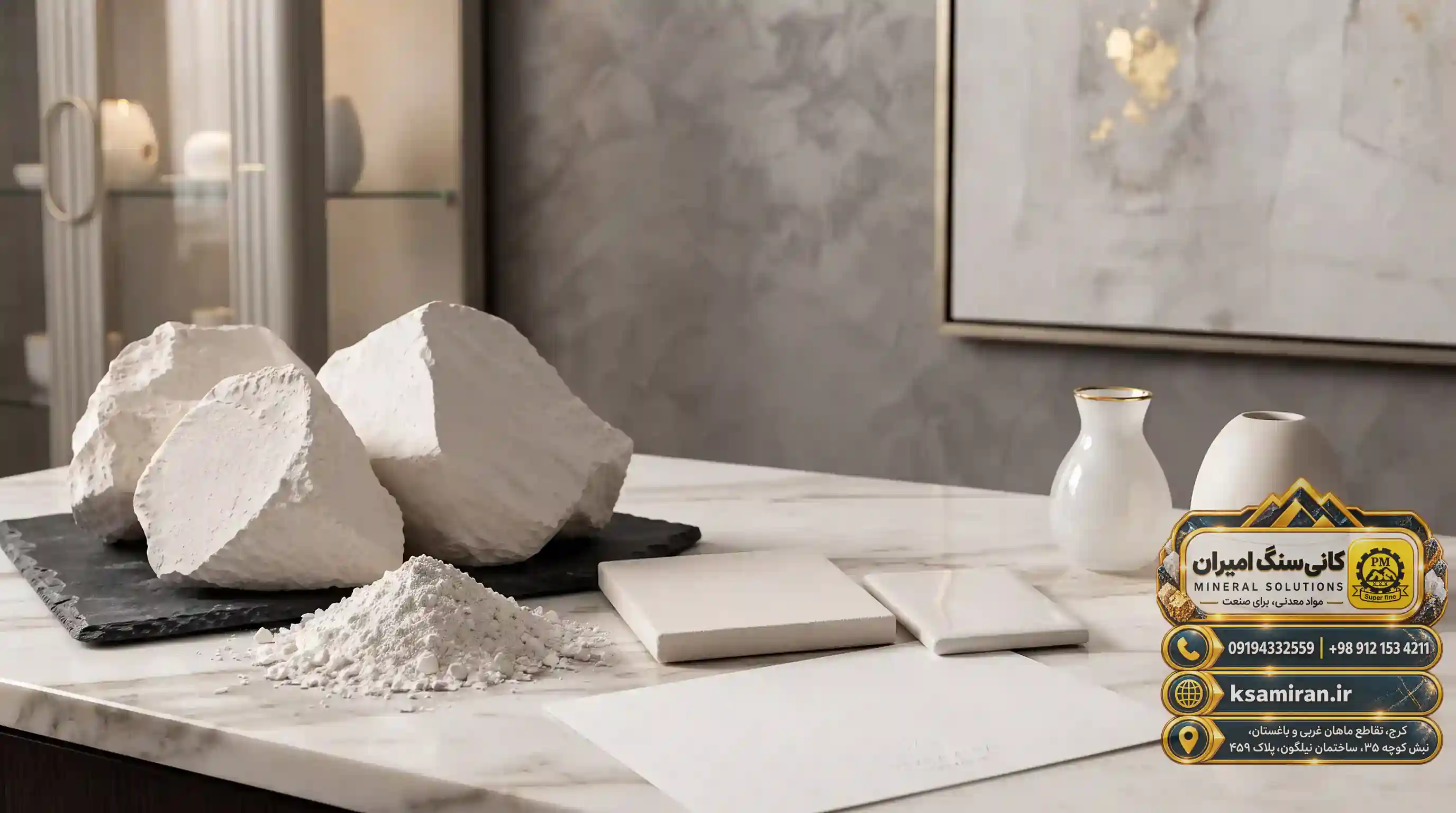
Kaolin is one of the most important coating pigments in the paper industry. The main purpose of using it is to create a smooth, bright, printable, and low-porosity surface. In this application, purity means functional quality: the lower the coloring and abrasive impurities, the brighter the paper, the more precise the printing, and the less damage to the machines.
Kaolin brightness plays a key role in high-quality printing papers. Iron and titanium oxides reduce surface brightness and lower ink contrast. Abrasive particles like free quartz cause increased wear on cylinders, blades, and paper machine surfaces, raising maintenance costs. Therefore, a kaolin with a high kaolinite percentage and controlled impurities creates abundant technical and economic advantages.
In papermaking, particle size distribution in the coating is very important. Finer particles create a smoother surface and better coating, and improve ink holdout and print clarity. However, excessive fineness can increase coating viscosity and make spraying, drying, and machine cleaning difficult. For this reason, the 450 to 1500 mesh range for kaolin represents options for different processes, not a fixed specification for all paper products.
In addition to brightness, quality kaolin affects ink absorption, moisture, surface smoothness, and reduced light transmission. These characteristics are important in printing papers, coated paperboard, and high-quality packaging products. Consequently, purchasing kaolin for the paper industry should be based on brightness data, particle distribution, and suspension behavior, not just on price or general percentages.
Application of Kaolin in Paint and the Effect of Purity on Coverage and Stability
In the paint industry, kaolin is used as an extender pigment and mineral filler. This material contributes to paint coverage, pumpability, can stability, and final film resistance. In this application, kaolin purity is closely related to paint appearance, surface uniformity, and coating durability.
Paint coverage depends on particle surface contact and distribution. Finer kaolin with appropriate purity arranges particles into a cohesive network in the paint film, thereby increasing the hiding power of the underlying surface without overconsuming expensive pigments. In contrast, coarse and irregular impurities can cause roughness, reduced gloss, and even a quality drop in paints with a high-end finish.
Coloring impurities, especially iron compounds, change the base color. This issue is highly critical in white paints, light-tinted paints, and paints with precise color matching. In addition, soluble salts and organic matter can affect viscosity stability, foaming, film adhesion, and moisture resistance.
In architectural and industrial paints, the film's resistance to abrasion, washing, and moisture is very important. Pure and controlled kaolin particles contribute to a uniform structure and film cohesion. Choosing the right mesh range is also vital: coarser particles can create abrasion durability but reduce gloss, while finer particles create a smoother surface and better appearance. A balanced combination of these characteristics is the key to final quality in the paint industry.
The Importance of the 450 to 1500 Mesh Range in Selecting Kaolin
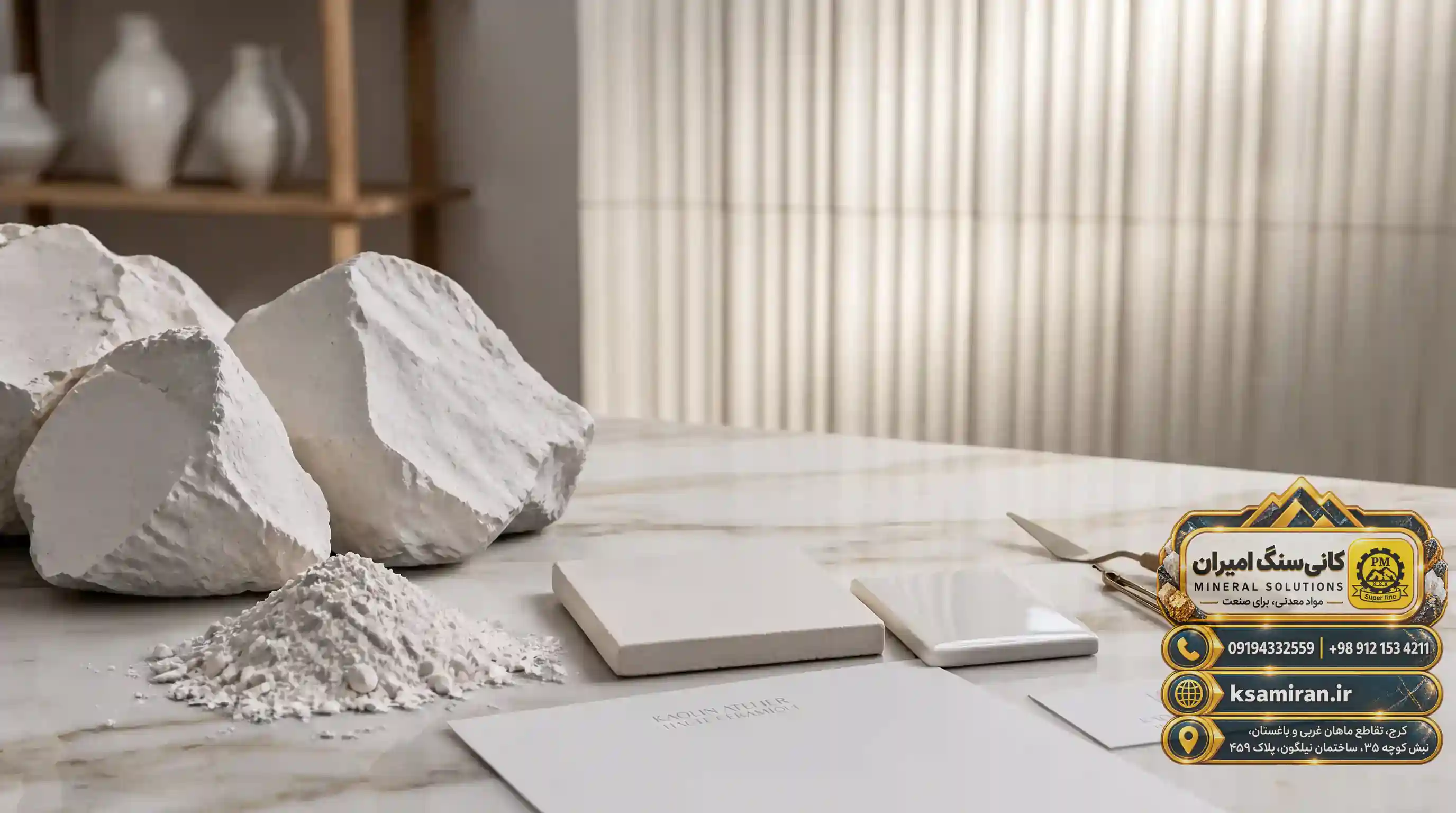
One of the most important parameters in selecting kaolin is the mesh range. The introduced kaolin is offered in the 450 to 1500 mesh range, and this span shows that the product can cover the needs of various processes. But what is the technical concept of these numbers, and why should they be chosen based on production line needs?
Mesh grading is, in fact, a measurement of the powder's fineness. A higher mesh number indicates finer particles. In tile and ceramic production, finer particles can increase reactivity, plasticity, and body uniformity; but at the same time, they change dewatering, drying, and shrinkage. In glaze, finer particles create a smoother final surface, while in ceramic bodies, coarser particles might make stress control and dimensional stability easier.
In the paper and paint industries, fineness plays a more critical role. Finer particles create a smoother surface, higher brightness, and better coverage. For this reason, higher meshes are usually more suitable for high-quality print coatings, bright papers, and high-appearance paints. In contrast, lower meshes can be used in bulk products, general fillers, and processes that do not require high surface smoothness.
Choosing the wrong mesh range can cause problems such as high viscosity, sedimentation, reduced coverage, increased shrinkage, cracking, or decreased strength. For this reason, the mesh must be chosen based on the product type, layer thickness, application method, drying conditions, and final specifications. The mesh number should be evaluated alongside purity, brightness, moisture, and batch uniformity so that a technical and economic selection is made.
Quality Control, Storage, and Kaolin Purchasing Criteria
After understanding the effect of kaolin purity on final product quality, the next step is quality control and targeted purchasing. Kaolin is an industrial raw material, and its quality must be checked in every batch; because changes in the mineral deposit, extraction, processing, and transport can alter its specifications. A batch with a similar appearance can show completely different behavior on the production line.
Key inspections include: percentage of kaolinite and associated mineral composition, coloring impurities like iron and titanium, particle size distribution, brightness, moisture, organic matter, and soluble salts. In sensitive applications, test results should be recorded periodically to identify trends. This helps prevent sudden changes in color, firing, viscosity, and strength.
Storage also plays an important role. Kaolin must be stored in a dry, clean environment away from moisture, dust, and mineral contamination. High moisture can cause stickiness, caking, and behavior changes in dosing systems. Contamination with other minerals, even in small volumes, can enter the formulation as an impurity and affect the final product quality.
When purchasing, instead of relying on price or general specifications, the exact needs of the production line must be defined: is the priority brightness, plasticity, thermal resistance, coverage, or surface smoothness? Then the mesh range, purity, and appearance quality must match that need. Ultimately, the right kaolin is the one that reliably guarantees uniformity, surface quality, strength, and production efficiency in the final product.
| Question | Answer |
|---|---|
| Why is kaolin purity important in manufacturing industries? | Kaolin purity affects the color, strength, firing, coverage, and surface quality of the final product, and impurities can make process performance unreliable. |
| Which impurities cause the most damage in kaolin? | Iron and titanium oxides, free quartz, feldspar, mica, organic matter, and soluble salts have the greatest effect on color, firing, and stability. |
| How does kaolin purity affect tiles and ceramics? | Impurities change firing behavior, shrinkage, sealing, green strength, and body color, and can cause lamination, warping, or a drop in whiteness. |
| Why is kaolin used in glazing? | Kaolin provides suspension, plasticity, and thermal resistance to the glaze and helps form a uniform and durable glassy layer. |
| What is the effect of kaolin purity in the paper industry? | Pure kaolin increases brightness, surface smoothness, printability, and coating abrasion resistance, and prevents color dulling and machine damage. |
| What role does kaolin play in paint? | As an extender pigment, kaolin improves coverage, viscosity, and paint film resistance, and reduces the consumption of expensive pigments. |
| What is the concept of the 450 to 1500 mesh range? | This range indicates different degrees of kaolin powder fineness; a higher number means finer particles, which are more suitable for applications sensitive to smoothness and brightness. |
| Which kaolin mesh is right for my application? | Mesh choice depends on the product, application method, layer thickness, and final surface quality; more delicate processes usually require higher meshes. |
| How do we protect kaolin quality in storage? | Kaolin should be stored in a dry, clean environment without contact with other minerals to prevent caking, moisture, and contamination. |
| Is kaolin just a cheap filler? | No; kaolin is a functional mineral that affects the strength, plasticity, color, coverage, and thermal stability of manufactured products. |
This article is prepared based on the specifications of the Kaolin from the Kani Sang Amiran project, including applications in tiles, ceramics, glaze, paper, and paint, and the 450 to 1500 mesh range.
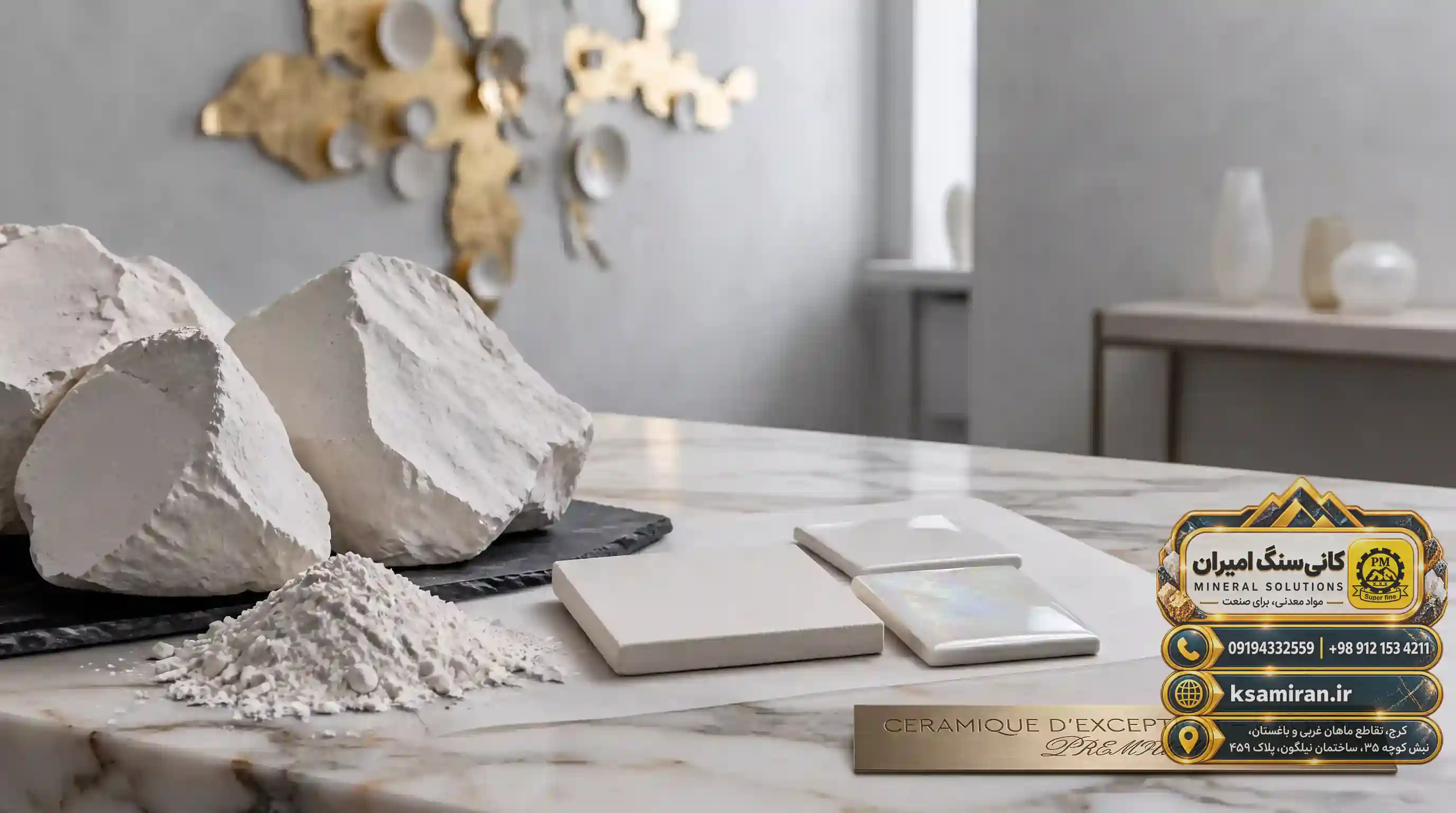
برچسب: Kaolin,The Effect of Kaolin Purity on the Final Quality of Manufactured Products,
نویسنده: رساوب آفرین