
درباره سایت
آخرین مطالب
- انتخاب اکسید آهن قرمز (اخرا) برای بهبود کیفیت پیگمنت و پوششهای رنگی
- تامین کربنات کلسیم با دانهبندی دقیق جهت استفاده در مستربچ
- تأمین تخصصی سیلیس برای مصالح ساختمانی، شیشه و صنایع سرامیک
- ویژگیهای فنی بنتونیت کانی سنگ امیران برای کاربردهای خاص
- فلدسپات کانی سنگ امیران برای شیشه کاشی و سرامیک
- کاربرد تالک سفید درجه یک در فرمولاسیون پیشرفته رنگ و محصولات کاغذی
- اکسید آهن قرمز (اخرا) کاربردی جهت تولید محصولات سرامیکی و پوشش
- مشخصات فنی اکسید آهن قرمز (اخرا) مناسب برای پوشش و تولید پیگمنت
- مشاوره تخصصی خرید کربنات کلسیم بر اساس نیاز دقیق صنعت شما
- انتخاب تالک سفید صنعتی مناسب برای تولیدات کاغذ و مستربچ
امکانات وب
Introduction to the Importance of Feldspar in Ceramic Industries
Feldspar is one of the most widely used minerals in the ceramic industry, and due to its fluxing role, it significantly changes the thermal behavior of the body and glaze. During firing, this material helps form a molten phase; as a result, densification occurs faster and the need for very high temperatures is reduced. This property is of strategic importance for tile, ceramic, and glass manufacturers, as it both stabilizes product quality and manages the energy load of kilns.
In mode ceramic industries, reducing firing temperature is not merely an economic advantage; it is a technical requirement for faster production, better control of dimensional changes, and a lower likelihood of thermal defects. With a lower firing temperature, the ceramic is not exposed to oxidation, excessive softening, and degradation of sensitive phases. For this reason, the choice of feldspar type and particle size directly affects the firing schedule, production line speed, and ultimately the final behavior of the product.
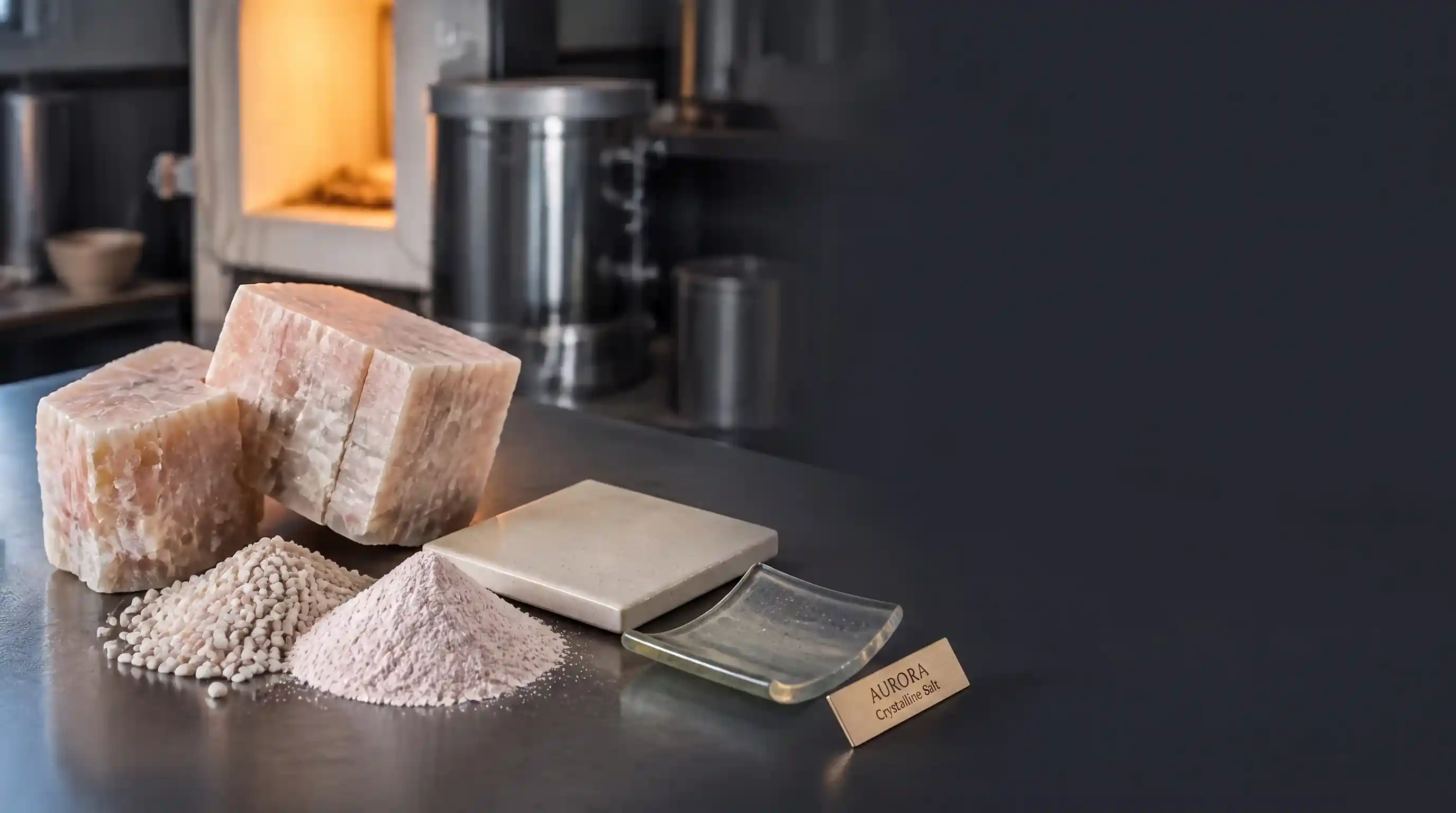
The Feldspar product is offered for main applications in glass, tiles, ceramic products, and glaze. This broad range shows that the material functions effectively not only in ceramic bodies but also in surface compositions and glass. The 10 450 mesh range also allows particle size adjustment for various processes, from structural bodies to fine and smooth glazes.
The purpose of this article is to examine in detail the mechanism by which feldspar reduces firing temperature and its effects on ceramic quality. In the following, the structure, thermal behavior, applications, role of particle size, and selection tips for this material will be discussed so that decision-making for production lines becomes easier and more scientific.
Structure and Basic Properties of Feldspar
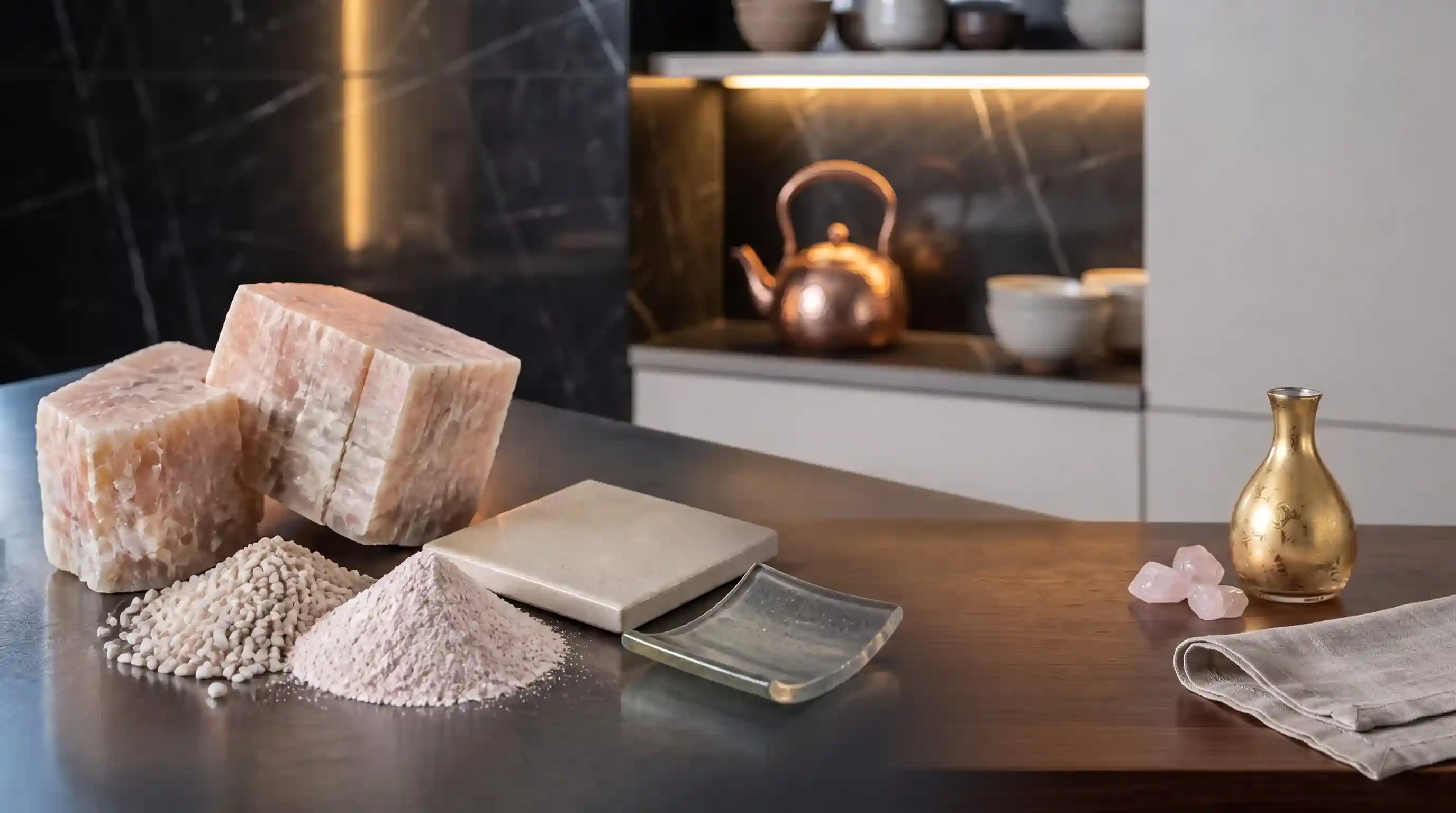
Feldspars are a group of aluminum silicates in whose structure alkali cations such as sodium and potassium or alkaline earth cations such as calcium are incorporated. This structural composition tus the material into a natural flux; that is, a substance that reacts with other ceramic components and creates a molten phase at a temperature lower than the melting point of the individual components. This behavior is the foundation of feldspar's application in ceramics.
The difference in thermal behavior among feldspar types is important. Potassium varieties typically have higher melt viscosity and provide better thermal stability, while sodium varieties produce a more fluid melt. These differences determine which material is more suitable for tile bodies, glaze, glass, or particular ceramic products. In any case, the precise selection must be based on the overall body composition and the desired behavior in the kiln.
In addition to its fluxing effect, feldspar introduces alumina and silica into the ceramic structure. Alumina improves strength, dimensional stability, and hardness, while silica reinforces the glassy network and chemical stability. Therefore, feldspar is not a single-function material; it simultaneously affects densification, strength, glaze transparency, and the thermal behavior of the product.
Understanding this structure helps ceramic engineers adjust feldspar consumption so that maximum densification is achieved with minimum energy. Excessive consumption can produce more melt and cause deformation, kiln sticking, or dimensional loss; conversely, insufficient consumption leads to increased porosity, reduced strength, and the need for higher temperatures.
The Mechanism of Firing Temperature Reduction by Feldspar
The reduction of firing temperature with feldspar occurs through the formation of an early molten phase. During heating, feldspar reacts with quartz, alumina, and other body components and forms a melt with suitable viscosity. This melt acts as a thermal adhesive, bringing particles closer together and facilitating ion movement and diffusion. As a result, densification begins at a lower temperature than in conditions where no molten phase is present.
One of the key concepts in this process is the formation of a eutectic phase. The combination of feldspar with other ceramic minerals can lower the melting point of the system compared to the pure components. This depends on the overall body composition, particle distribution, and maximum kiln temperature. Therefore, feldspar's effectiveness is not a fixed number but a function of the entire ceramic formulation design.
The produced molten phase has two essential roles: first, gradually filling the empty spaces between particles and reducing porosity; second, solubility and reaction with solid particles, which accelerates the formation of new phases. This function allows the ceramic's strength to develop at a lower temperature and reduces the holding time at peak temperature. To understand topics related to reducing the melting point of high-alumina materials, you can read the article The Role of Feldspar in Reducing the Melting Point of Alumina.
Controlling this mechanism requires balance. Less melt leads to incomplete densification and residual porosity, while too much melt can result in product softening, deformation, and even tiles sticking together. Therefore, the feldspar amount must always be coordinated with the kiln, formulation design, and production line speed.
The Effect of Feldspar on the Quality and Durability of the Ceramic Body
By reducing firing temperature and increasing densification, feldspar directly affects the physical quality of ceramics. A properly densified body shows lower porosity, higher mechanical strength, and better resistance to moisture and frost. These properties are of great importance for floor tiles, exterior facades, and ceramic products used in variable environmental conditions.
Reducing porosity not only helps strength but also makes the product surface smoother for glazing. When the body is porous, glaze can penetrate the pores and cause surface irregularities after firing. In contrast, the denser body resulting from balanced feldspar consumption enables the formation of a thier, more transparent, and more uniform glaze layer.
The long-term durability of ceramics depends on the structural bond between particles and the development of resistant phases. By creating a molten phase, feldspar increases contact between particles and provides the opportunity for stronger bonds to form. For a more detailed examination of this topic, read the article The Role of Feldspar in Increasing Ceramic Body Durability.
However, it should be noted that using feldspar is not a substitute for principled formulation design. If the composition of alumina, silica, clay, and other fluxes is not balanced, even a high-quality material caot prevent defects such as thermal cracking, color variation, or dimensional change. Controlling the uniformity of raw materials and the firing schedule is the primary condition for the proper use of this mineral.
Applications of Feldspar in Glass, Tiles, Ceramics, and Glaze
In the tile and ceramic industry, feldspar is one of the main body components. Combined with clay, quartz, and fillers, it regulates the body's thermal behavior and helps the tile reach final density at the appropriate temperature. This property becomes even more important in the production of larger and thier tiles, which are more sensitive to thermal changes.
In the glaze industry, feldspar has multiple roles: flux, source of alumina and silica, and viscosity-regulating agent. The glaze must melt at a temperature similar to or close to that of the body in order to create proper adhesion and thermal compatibility. By controlling this behavior, feldspar helps reduce defects such as crawling, bubbling, color loss, and glaze cracking.
In the glass industry, feldspar is used as a source of alumina and alkalis. The presence of alumina increases the chemical and mechanical resistance of glass, while the alkalis contribute to easier melting and a lower process temperature. This not only consumes less energy but also affects the lifespan of melting equipment.
The Feldspar product, given its main applications in glass, tiles, ceramic products, and glaze, is offered in the 10 450 mesh range. To review the specifications of this mineral, you can visit the Feldspar product page. Choosing the appropriate size within this range depends on the product type, production method, glaze thickness, and kiln conditions.
The Role of Particle Size and Quality Control in Feldspar Performance
Feldspar particle size is one of the key factors in reducing firing temperature. Finer particles have more contact surface with other body components and initiate thermal reactions faster. As a result, the melt forms earlier and densification takes place at a lower temperature. However, being excessively fine can reduce the melt viscosity and cause product softening or increased kiln sticking.
In glaze applications, particle size has a direct effect on surface quality. Inappropriate particles can cause a rough texture, bubbles, or color imbalance. In this case, very fine particles and a uniform distribution are usually required so that the glaze appears transparent, smooth, and free of surface defects after firing. In ceramic bodies, combining different sizes can improve the packing density of particles and thus the final densification.
The 10 450 mesh range provides a wide span for adjusting the product's behavior. Coarser sizes are more suitable for larger structures and applications requiring gradual reaction, while finer particles are considered for glaze, advanced tiles, and more delicate ceramic products. Controlling particle size distribution and composition uniformity is an important part of guaranteeing final quality.
Integrated mineral management should also not be overlooked. Selecting high-quality sources, preventing environmental impurities, and controlling the crushing process contribute to production stability. To become familiar with a similar approach in the field of industrial minerals, read the article The Role of Dolomite in Reducing Industrial Environmental Impacts.
Considerations for Selecting and Substituting Feldspar in Formulations
Selecting the right feldspar should not be based solely on price or availability. The main cation type, particle size distribution, impurity level, and thermal behavior of the material must be coordinated with the overall body composition. If the ceramic body softens rapidly at a lower temperature, a higher-viscosity flux or a modified firing schedule may be needed, rather than increasing feldspar.
When substituting one flux with feldspar, the simultaneous effects on melting point, viscosity, densification, and strength must be examined. Substituting minerals without testing can lead to color changes, dimensional discrepancies, or increased production losses. Laboratory firing tests, water absorption determination, and final strength inspection are scientific methods for evaluating these changes.
In integrating feldspar with other materials, the composition of quartz, alumina, and clay must also be considered. Adding feldspar without taking these interactions into account can disrupt the chemical balance of the body. For this reason, a gradual approach to formulation change, accompanied by documentation of results, is the safest path for optimizing production.
Factory equipment should also be taken into account. Changes in particle size or feldspar amount can affect powder behavior, the moisture needed for pressing, drying, and stability in the kiln. These adjustments may seem simple in the short term, but in mass production, the smallest fluctuation can affect the overall quality of the tile or ceramic.
Conclusion and Practical Recommendations for Using Feldspar
By creating a molten phase at lower temperatures, faster densification, and reducing the need for extreme temperatures, feldspar is one of the most effective minerals in the ceramic industries. In addition to reducing firing temperature, this material introduces alumina and silica into the product structure and contributes to strength, chemical stability, and glaze surface quality. Therefore, using it is not merely a cost choice but a technical tool for quality control.
Success in using this material requires balance: the right amount, particle size suited to the product, and full coordination with the firing schedule. If this balance is maintained, the manufacturer can increase line speed, manage energy consumption, and minimize product defects. If this balance is disrupted, increasing feldspar can, instead of improving quality, cause deformation and dimensional loss.
It is recommended that the current condition of the body or glaze first be evaluated in terms of water absorption, strength, color, and porosity. Then, changes in the feldspar ratio should be made step by step and the results of each stage recorded. This method enables quick identification of side effects such as excessive softening, reduced strength, or glaze texture changes.
Finally, communicating with a supplier that provides application information, the mesh range, and usage methods across different industries is of strategic importance. Kani Sang Amiran, a mineral producer, offers Feldspar with main applications in glass, tiles, ceramic products, and glaze; this broad range makes it a flexible material for designing high-quality, low-energy ceramic products.
| Question | Answer |
|---|---|
| Why does feldspar reduce the firing temperature of ceramics? | Feldspar creates an early molten phase, accelerates densification, and consequently reduces the need for very high temperatures. |
| In which industries is it most used? | The main applications of this material are glass, tiles, ceramic products, and glaze. |
| What is the mesh range of this product? | A 10 450 mesh range is offered, allowing the selection of sizes appropriate for bodies and glazes. |
| What is the difference between feldspar's role in body and glaze? | In the body it mainly affects densification and strength, but in glaze it regulates viscosity, transparency, and surface quality. |
| How much will the firing temperature be reduced? | The exact amount depends on the body composition, particle size, and kiln schedule, and must be determined through firing tests. |
| Are finer particles always better? | Not necessarily; finer particles react faster, but they can cause excessive softening or product sticking. |
| What are the side effects of overusing feldspar? | Excess melt can lead to deformation, dimensional loss, kiln sticking, and reduced product stability. |
| What is its role in the glass industry? | It introduces alumina and alkalis into the glass, raises chemical resistance, and helps reduce the melting temperature. |
| How is the appropriate consumption level determined? | Through firing tests, water absorption measurement, strength testing, and dimensional inspection, the optimal ratio is determined for each body. |
| What is the key point in substituting fluxes? | Substitution must be gradual and tested, since feldspar affects melting, viscosity, densification, and product color. |
The reference for this article is the application information of the Feldspar product from the Kani Sang Amiran project.
برچسب: Feldspar,The Role of Feldspar in Reducing Firing Temperature in Ceramic Industries,
نویسنده: رساوب آفرین