
درباره سایت
آخرین مطالب
- انتخاب اکسید آهن قرمز (اخرا) برای بهبود کیفیت پیگمنت و پوششهای رنگی
- تامین کربنات کلسیم با دانهبندی دقیق جهت استفاده در مستربچ
- تأمین تخصصی سیلیس برای مصالح ساختمانی، شیشه و صنایع سرامیک
- ویژگیهای فنی بنتونیت کانی سنگ امیران برای کاربردهای خاص
- فلدسپات کانی سنگ امیران برای شیشه کاشی و سرامیک
- کاربرد تالک سفید درجه یک در فرمولاسیون پیشرفته رنگ و محصولات کاغذی
- اکسید آهن قرمز (اخرا) کاربردی جهت تولید محصولات سرامیکی و پوشش
- مشخصات فنی اکسید آهن قرمز (اخرا) مناسب برای پوشش و تولید پیگمنت
- مشاوره تخصصی خرید کربنات کلسیم بر اساس نیاز دقیق صنعت شما
- انتخاب تالک سفید صنعتی مناسب برای تولیدات کاغذ و مستربچ
امکانات وب
What Is Industrial Talc? Structure, Properties and Production Process
Industrial talc is one of the most important and most widely used industrial minerals in the world, deriving its name from a unique combination of softness, layered structure and chemical neutrality. This mineral is classified in the magnesium silicate group and its standard chemical formula is Mg3Si4O10(OH)2; that is, a magnesium hydroxide silicate that crystallizes in the triclinic crystal system. Talc crystals form as very thin sheets and plates stacked upon one another, and it is this layered structure that imparts characteristics such as a greasy surface, high slip between layers and hydrophobicity.
In nature, talc is mostly found alongside minerals such as chlorite, dolomite, quartz, calcite and tremolite, and its extraction is usually carried out by open-pit mining. After extraction, the ore is converted into a uniform powder with precise particle sizing through several stages including primary crushing, hand sorting, grinding and air classification. The final quality of the product depends directly on precision in these very stages; especially the grinding and classification stage, which determines the mesh range and the uniformity of the final powder.
In terms of physical properties, talc has a Mohs hardness of about 1, making it the softest known mineral on this scale. Its relative density is about 2.5 to 2.8, its color is white to grayish-white or pale green, and its luster is pearly to greasy. This mineral exhibits good chemical resistance to common acids and bases, remains stable at high temperatures, and has very low electrical conductivity — the very properties that are later put to use in the electronics and battery manufacturing industries.
Today, manufacturers offer various grades of this mineral, classified based on particle sizing (mesh), brightness level, iron impurity content and end-use application. For sensitive industrial applications, very fine high-mesh powders are typically used. Among these, the industrial talc product of the Kani Sang Amiran Project is offered in the 450 to 1000 mesh range for polymers, rubber, paints and other industrial applications. To view the full product specifications and get in touch with the sales unit, please visit the Industrial Talc page.
The Battery Manufacturing Industry and the Need for Functional Minerals
The body of every battery — whether lithium-ion, lead-acid or flow battery — is composed of materials, each of which plays a precise role: active electrodes, electrolyte, separators, enclosure, thermal management system and insulating parts. Many of these components depend directly on milled industrial minerals. In fact, without high-quality minerals, producing mode batteries at this vast scale would be practically impossible.
Today's battery industry faces a dual challenge: on one hand, a growing demand for higher energy density, and on the other, stricter safety requirements. The increasing phenomenon of thermal runaway in lithium-ion batteries has driven engineers to seek thermal barriers, ceramic-like coatings and separators resistant to thermal shrinkage. Among these, industrial talc — thanks to its high thermal stability, chemical neutrality and layered structure — has found a place as a safe and readily available mineral filler.
Alongside talc, other minerals such as kaolin are also used in the electronics and coatings industry. To better understand the difference in performance between these two minerals, you can read the article Application of Kaolin in the Paint Manufacturing Industry and Industrial Coatings. Although the end uses differ, the logic of using both minerals — controlling surface properties, stability and final cost — is shared across many industries.
One of the most important properties of talc for the battery industry is its low chemical reactivity. In environments of organic electrolytes and lithium salts, the presence of active impurities can negatively affect the battery's cycle life; hence, high-purity grades with controlled iron content are prioritized. In addition, talc's layered structure offers suitable mechanical behavior in host polymers and remains stable at high temperatures.
Current market trends also move in this direction: electric vehicle production, grid energy storage systems and portable devices have all reached an unprecedented scale, and each of them requires sustainable, high-quality and reliable minerals. This has doubled the importance of quality control in talc mines and processing plants.
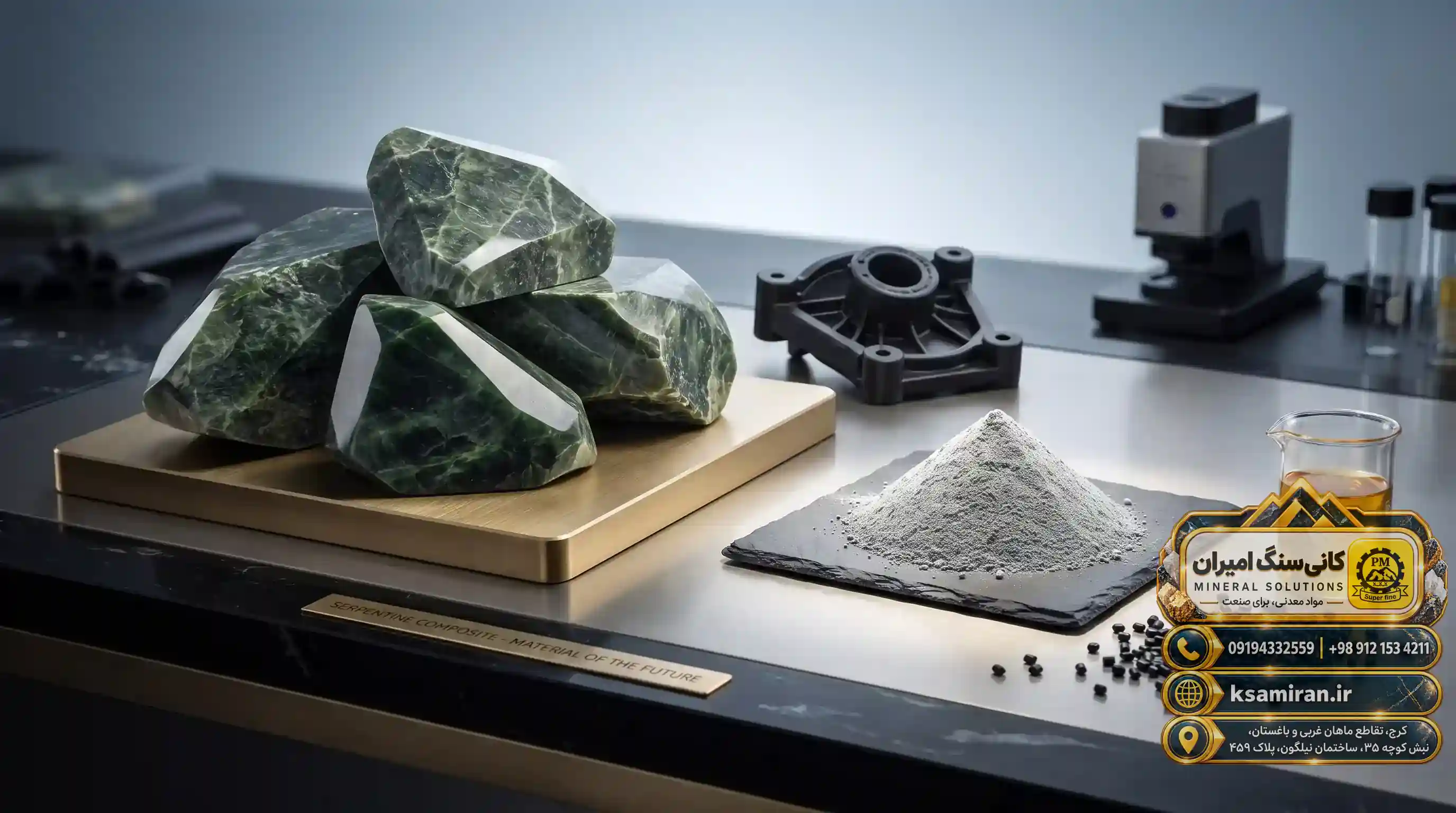
Application of Industrial Talc in Lithium-Ion Batteries and Energy Storage Systems
A lithium-ion battery consists of three main parts: cathode, anode and separator. The separator is a porous membrane that prevents physical contact between the electrodes while allowing ions to pass through. Common polymer separators (polyethylene and polypropylene) soften and shrink at relatively low temperatures, which can lead to an inteal short circuit. One industrial approach to addressing this conce is the use of mineral coatings on separators, in which very fine particles of minerals such as industrial talc act as a protective ceramic layer.
In such coatings, micron-sized talc particles with a uniform distribution are placed on the separator surface together with suitable binders. This layer shows greater resistance to high temperatures, reduces rapid shrinkage of the polymer membrane, and in the event of failure, further limits short-circuit paths. As expected, the quality of this coating depends heavily on talc's particle sizing and purity; for this reason, fine grades of 450 to 1000 mesh are often selected for such sensitive applications.
Beyond separators, talc also holds a place as a mineral filler in the composition of polymer parts used in the battery system: battery enclosures, frames, coectors and inteal insulators, which are often produced from reinforced polypropylene and polyamide. In these parts, talc helps improve stiffness, dimensional stability and reduced flammability. In larger batteries used in grid energy storage systems, thermal management and safety are even more critical, and this very fact has driven up demand for engineered talc grades.
In flow batteries as well, electrolyte flow and chemical stability take center stage; talc, due to its low chemical reactivity, offers acceptable stability in mild environments. Of course, it should be noted that selecting the appropriate grade is always based on formulation requirements and application testing, and there is no single answer for all products.
Industrial Talc in the Electronics Industry; From Circuit Boards to Final Components
The electronics industry does not forgive the slightest physical error; in many products, components operate in small spaces, at high temperatures and in the presence of moisture. For this reason, the mineral fillers used in these products must be uniform, pure and functionally predictable. Industrial talc is one of the well-known options in this category, present in several parts of the electronics production line.
One of the applications is in printed circuit board (PCB) laminates. In the production of adhesives, resins and composite layers, mineral fillers are responsible for filling, reducing shrinkage and adjusting thermal properties. Talc, given its layered structure, can produce mechanical and thermal behavior different from that of some spherical fillers and improve resin flow during the production process. Moreover, in pressure-sensitive adhesives, sealants and structural adhesives used in the assembly of electronic components, talc is known as an industrial filler.
In encapsulation and potting as well, mineral fillers are widely used. Potting compounds are employed to protect boards against moisture, dust and vibration, and the fillers play the role of moderating the coefficient of thermal expansion and controlling generated heat. Talc, with its high brightness, light color and good thermal stability, counts as a suitable option for such formulations.
Thermal management in mode electronic devices is a key issue. Although talc is not a standout thermal conductor, at suitable concentrations it can act as a barrier material against heat propagation and as a mechanical reinforcer in polymer compounds. In the production of cables, coatings and polymer insulators too, mineral fillers are used to improve resistance to heat, abrasion and flame, and talc is one of the commonly consumed items in this category.
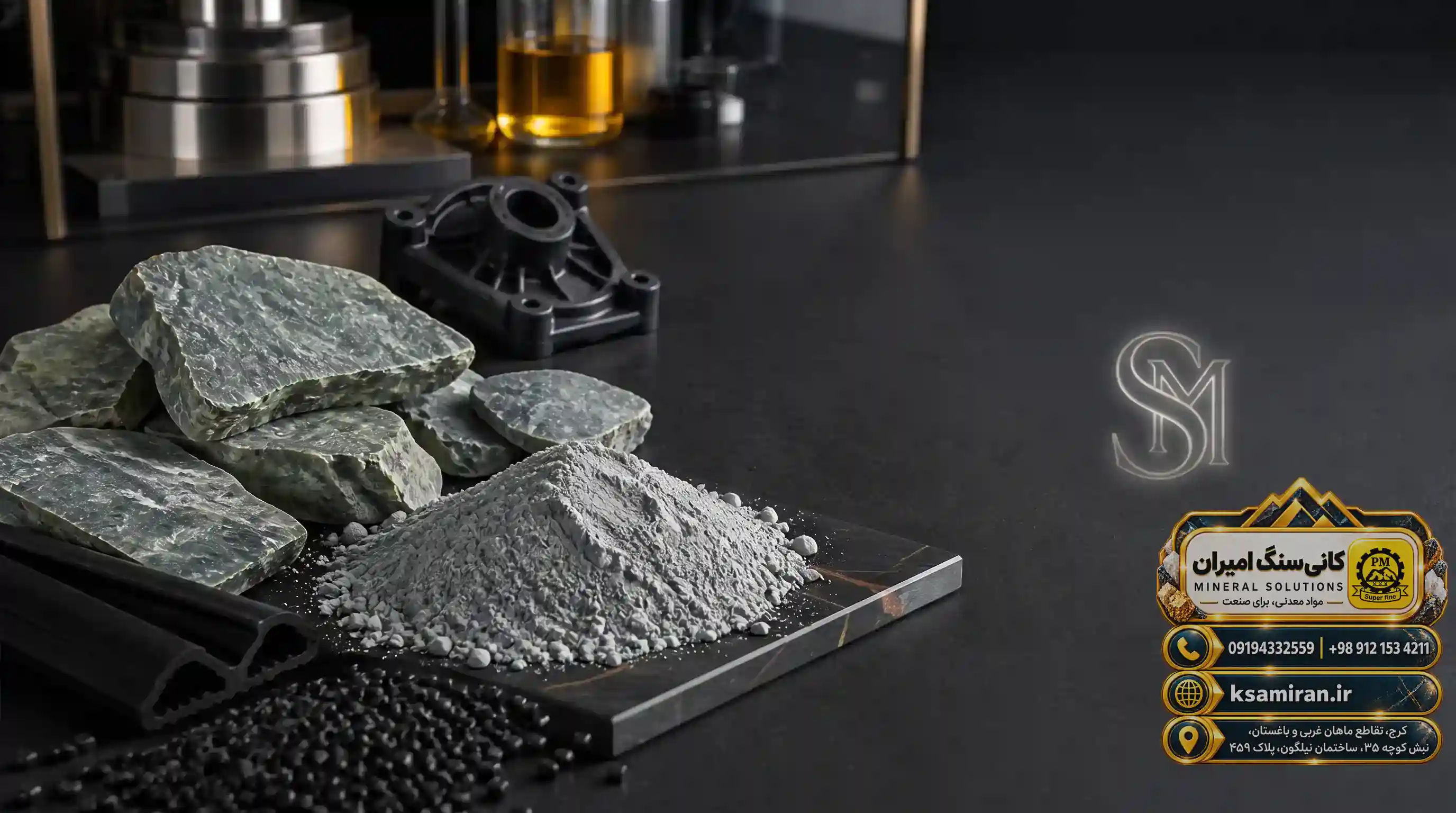
Thermal and Electrical Insulation; The Chemistry Behind Talc's Performance
Two fundamental properties of industrial talc that bring it closer to the electronics and battery industries are its electrical insulation and thermal stability. Talc is naturally a very good insulator; its low dielectric constant and low dielectric loss enable it to deliver acceptable performance in applications where preventing current leakage and mitigating electromagnetic interference matter. This property becomes significant in compact electronic components where the distance between conducting points is very small.
On the other hand, talc retains its stability at high temperatures. Its magnesium silicate hydroxide structure does not undergo structural change up to relatively high temperatures, and it behaves predictably in high-temperature industrial processes such as adhesive curing, laminate production and thermal operations. This same stability is what makes talc an option for thermal barriers and mineral coatings in batteries.
Talc's inherent hydrophobicity is also a major advantage in the electronics industry; moisture is one of the main enemies of electronic boards and energy storage systems. The presence of a filler with low moisture absorption can help preserve dielectric properties and prevent resin degradation over time. This property complements talc's chemical neutrality, which does not produce undesirable reactions in contact with various chemicals.
Compared with other widely used minerals such as kaolin, calcium carbonate or mica, talc finds its strength in the combination of softness, surface greasiness and layered structure. This means that in mixing and molding processes, talc disperses easily and causes less damage to equipment. Of course, choosing between these minerals always depends on the end product's requirements, cost and desired technical specifications, and no single material is the best for all applications.
Talc in Engineering Polymers and Reinforced Electronic Components
In the production of polymer parts used in electronic products and battery systems, talc is known as a reinforcing filler. Polypropylene, polyamide, ABS and other engineering polymers often lack, on their own, sufficient mechanical and thermal properties for harsh environments. Adding talc at suitable percentages significantly increases the part's stiffness, dimensional stability and heat deflection temperature (HDT).
One of the main challenges in injection molding of thin and complex parts is shrinkage and warpage of the part after cooling. Talc particles, due to their layered structure and high aspect ratio, align during the flow of the molten polymer and control shrinkage in different directions. The result is parts with better dimensional tolerances and higher surface quality — a matter of great value in high-volume production lines of electronic products.
Battery enclosures, holders, coectors, inteal insulators and board-mounted parts are all examples produced from talc-reinforced polymers. These parts must resist temperature, vibration and, in some cases, chemicals; reinforcement with mineral filler is one of the common approaches to achieving these goals. If you would like to know how this affects the quality of final products, read the article The Key Role of Industrial Talc in Improving the Quality of Manufactured Products.
In formulation, factors such as particle size, size distribution, surface treatment method and loading level are decisive. Talc of 450 to 1000 mesh is typically selected for applications that require a smooth surface, uniform dispersion and high mechanical properties. The right combination of resin, additives and talc can shift the balance between price and performance in favor of the manufacturer while maintaining the safety requirements of the final product.

Quality Control, Mesh Sizing and Purity in Industrial Grades
In sensitive industrial applications, quality control of talc is of an importance equal to the production process itself. One of the most important indicators is the product's particle sizing, expressed in mesh. The 450 to 1000 mesh range indicates how fine the particles are: the higher the mesh number, the smaller the particle size and the greater the specific surface area. In applications such as separator coatings, precision electronic parts and polymer parts with high surface quality, finer particles deliver better performance.
The effect of particle size is not limited to the product's appearance. Finer particles disperse better in polymers and resins, create a smoother surface and bring about more uniform mechanical properties. Coarser particles may cause stress concentration points, a rough surface or a drop in properties. Therefore, precise determination of particle size distribution (PSD) using methods such as dry sieving, sedimentation techniques or laser diffraction is one of the essential steps of quality control.
Alongside sizing, the brightness level and impurity content — especially iron compounds — are other key indicators. Iron can affect the final product's color and be undesirable in applications where surface aesthetics matter. Also, the moisture present in the powder must be controlled within the permissible limit, since high moisture in polymer processes can cause voids and quality loss. Common tests include moisture measurement, fuace tolerance determination, whiteness measurement and chemical analysis.
Batch-to-batch consistency is something that electronic and battery component manufacturers attach great importance to. A final product may comprise thousands of parts, and any change in filler specifications can cause fluctuations in the production line. For this reason, professional suppliers provide customers with the necessary assurance by keeping records of each batch and presenting specification sheets. This approach is the foundation adopted at the Kani Sang Amiran Project for its mineral products.
Market Outlook, Challenges and Conclusion
The global battery and electronics market has seen remarkable growth over the past decade: electric vehicles, grid energy storage systems, wearable devices and the Inteet of Things are all moving toward larger scales and higher densities. This growth has directly increased the demand for high-quality industrial minerals including industrial talc, as these minerals form part of the puzzle of safety, performance and cost reduction in advanced products.
One clear trend in the industry is the move toward finer and more specialized grades. As we saw, in sensitive applications such as separator coatings and precision electronic parts, fine sizing (450 to 1000 mesh) and high uniformity are a necessity. Also, the development of surface treatment methods and chemical modification of particles paves the way for new applications.
Alongside technical issues, supply chain sustainability and responsible extraction are also of growing importance. Major companies are looking for suppliers who, in addition to consistent quality, offer transparency in processing and compliance with environmental requirements. This presents a real opportunity for domestic mines that align with up-to-date global standards.
Besides the advanced industries discussed, industrial talc also has broad applications in more traditional industries; for instance, its role in the gypsum and building materials industries demonstrates the breadth of this mineral's applications. This diversity has tued talc into one of the strategic minerals.
In conclusion, it can be said: industrial talc, with a combination of unique properties — softness, layered structure, thermal stability, electrical insulation and chemical neutrality — has secured a firm place in the battery manufacturing and electronics industries. From separator coatings to battery enclosures, from board laminates to component encapsulation, this mineral is present in the background of many of our everyday technologies. Choosing a high-quality product, precise control of particle sizing and collaboration with a committed supplier are the keys to fully haessing this potential.
| Question | Answer |
|---|---|
| What is industrial talc? | A magnesium hydroxide silicate with a layered structure, Mohs hardness of 1 and hydrophobic properties, offered as a powder with various particle sizings. |
| Why is talc used in the battery manufacturing industry? | Due to its high thermal stability, chemical neutrality and electrical insulation, which are useful in separators, enclosure parts and thermal management systems. |
| What is talc's role in lithium-ion battery separators? | As a fine mineral coating, it raises the separator's thermal resistance and prevents shrinkage and short circuits. |
| How is talc used in the electronics industry? | It is used as a mineral filler in printed board laminates, adhesives and sealants, encapsulation compounds and polymer insulators. |
| What difference does 450 to 1000 mesh make? | The higher the mesh, the finer the particles; better dispersion, smoother surface and more uniform mechanical properties result for sensitive parts. |
| Is talc a good electrical insulator? | Yes; its low dielectric constant and very low electrical conductivity have made it a suitable insulator for electronic components. |
| What effect does talc have on engineering polymers? | It increases stiffness, dimensional stability and heat deflection temperature, and reduces shrinkage and warpage of parts. |
| What does talc quality control involve? | Measuring particle size distribution, brightness level, iron content, moisture and consistency between production batches. |
| What is the difference between talc and kaolin? | Talc is softer, greasier and more layered, with different performance in insulation and polymer reinforcement; kaolin is mostly used in coatings and paints. |
| What is the future of the talc market in advanced industries? | The growth of electric vehicles and energy storage is increasing demand for finer and higher-quality grades. |
Source: Kani Sang Amiran Project — production of mineral materials.
برچسب: Industrial Talc,The Role of Industrial Talc in the Battery Manufacturing and Electronics Industries,
نویسنده: رساوب آفرین