
درباره سایت
آخرین مطالب
- تاثیر اندازه ذرات کربنات کلسیم در صنایع
- ما هو الفرق بين الفلسبار والكوارتز؟ مقارنة شاملة بين أكثر مادتيْن معدنيتيْن استخدماً
- دليل شراء أكسيد الليمونيت عالي الجودة (الجول ماش)
- What is the Difference Between Kaolin, Bentonite, and Talc in Industry? A Complete Application Comparison
- کربنات کلسیم یا دولومیت؟ بررسی تفاوتها و کاربردهای کلیدی
- مراجعة معايير التصدير لأكسيد الليمونيت (جول ماش)
- راهنمای نگهداری و انبارداری اکسید لیمونیت (گل ماش)
- National Quality Standards of Limonite Oxide (Gol Mash)
- Guide to Receiving the Catalog and Specifications of Limonite Oxide (Gol Mash)
- کاربرد اکسید لیمونیت (گل ماش) در صنایع چرم و پارچه
امکانات وب
Introduction: Raw Material Waste, the Hidden Cost that Devours Industrial Profits
Raw material waste is one of the biggest challenges facing manufacturing industries. In glass, foundry, ceramic, and construction material plants, a significant portion of finished product costs goes toward purchasing raw materials. Industrial estimates show that in many production lines, between five and twenty percent of the raw materials entering the line leave the production cycle as waste, dust, loss, or defective product without ever becoming the final product. This number may seem small at first glance, but when calculated on an aual scale and considering the volume of raw material purchases, it becomes a considerable figure.
In addition to the direct cost of purchasing materials, side costs must also be considered, such as the energy needed to re-melt or re-fire waste, waste transport, storage and recycling, production line capacity loss, and increased equipment downtime. All of these reduce a production unit's profit margin, and in competitive markets where finished cost is decisive, they can shift the boundary between profit and loss.
One of the most effective ways to reduce this waste is proper selection of raw materials, and especially choosing silica with technical specifications suited to the production process. Silica, as one of the most widely used industrial minerals, plays a key role in dozens of production processes. The quality, consistency, and particle size distribution of this mineral directly affect the amount of production line waste, the acceptance rate of the final product, and the lifespan of molds and fuaces. In other words, choosing the right silica is not simply a purchasing decision; it is an engineering and economic decision.
In this article from the Kani Sang Amiran project, we intend to examine how an informed choice of silica can reduce raw material waste in its four main application areas: the glass industry, foundry products, ceramic products, and construction materials. We have concluded that many of the production problems factories struggle with are rooted in unsuitable raw material specifications and can largely be resolved with a simple review of purchasing practices.
To begin, we need to know what silica is, what characteristics it has, and why a difference in its quality can make a big difference in production line output. In the next chapter, we will cover the definition and technical properties of this mineral and then examine its applications case by case.
What Is Silica and Why Does Its Quality Determine the Fate of the Production Line?
Silica, or silicon dioxide (SiO2), is one of the most abundant mineral compounds in the Earth's crust. It is found in crystalline forms such as quartz and cristobalite and in amorphous forms such as diatomaceous earth. In industrial applications, which are the subject of this article, silica is typically extracted from quartz and sandstone mines and, after crushing, washing, classification, and in some cases processing, is offered to the market with defined particle sizes. The final product can be in the form of silica sand, silica powder, granules, or silica lumps.
The characteristics that determine the quality of silica in industrial applications are: the SiO2 purity percentage, which usually must not fall below a certain threshold; the levels of impurities such as iron, aluminum, calcium, and titanium oxides, which can affect the color, melting temperature, and thermal behavior of the product; particle size distribution, usually expressed in mesh units; the consistency of particle shape and size; the moisture content; and finally, the material's thermal behavior at high temperatures.
In the Kani Sang Amiran project, silica is offered for glass, foundry, ceramic, and construction material applications and is produced and supplied in the 10 to 450 mesh size range. This wide range means the product can cover diverse needs, from coarse particles for construction materials to very fine particles for ceramic and chemical applications. The variety of particle sizes allows factories to procure exactly the meshes their process requires, and this in itself is the first step in preventing waste.
But why is silica quality so decisive? The main reason is that silica plays a structural role in most of these industries. In glass, it forms the main network of the glass. In foundry, it constitutes the primary molding material. In ceramics, it builds the skeleton of the ceramic body, and in construction materials, it guarantees the strength and durability of the product. When a material serves a skeleton-building role, any impurity or inconsistency in it translates directly into defects in the final product, and this defect is exactly the waste that must be minimized.
Consequently, silica selection should not be based on price alone. A buyer who chooses silica with an unsuitable purity percentage or incorrect particle size distribution is, in practice, purchasing extra raw material to compensate for that same product's defects.
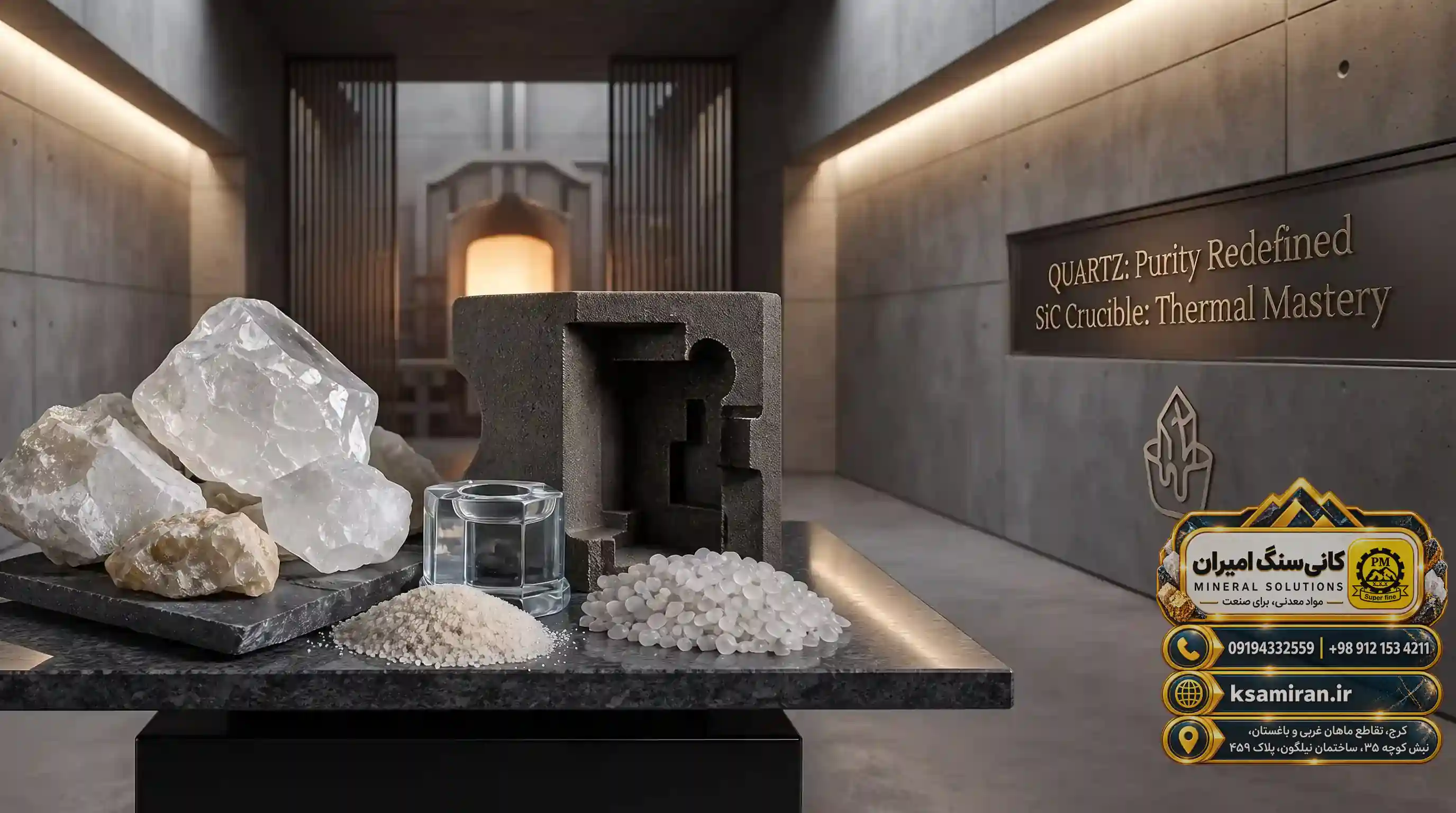
Reducing Waste in the Glass Industry with Proper Silica Selection
The glass industry is the world's largest consumer of silica. In producing all types of glass — from clear packaging glass to flat glass, crystal glass, and glass fibers — silica serves as the main network former and makes up more than seventy percent of the raw glass batch. For this reason, even the smallest change in silica quality can affect the entire production line.
One of the most important causes of waste in the glass industry is the presence of coloring impurities in silica. Iron and chromium compounds, even in very tiny amounts, can tint glass green or blue and make it unsuitable for applications requiring high transparency. In this case, the product must either be sold at a lower price to second-grade markets or recycled again. In both cases, energy, time, and raw materials are wasted. Choosing silica with a high and controlled purity percentage minimizes this portion of waste.
The second reason for waste is improper particle size distribution. In glass fuaces, very fine particles melt quickly but can be carried out of the fuace by the flow of hot gases and lost as dust. Coarse particles require more time and energy to melt, and if they do not fully melt, they appear as un-melted stones in the final product, causing glass waste. A uniform distribution aligned with the process optimizes melting time and reduces waste.
The third factor is the consistency of the fuace charge composition. When silica is supplied from a source with stable quality, the chemical composition of the final glass remains stable as well, eliminating the need for frequent formulation adjustments. Quality instability results in defective batches, which are an invisible yet very costly form of waste.
In addition, in glass production, one must also pay attention to the thermal behavior and reactivity of silica with other charge materials. To lea more about how to purchase quality mineral materials and its effect on the production process, you can read the Comprehensive Guide to Buying Quality Silica for Factories. This guide provides practical and technical tips for evaluating quality and selecting a supplier.
Finally, it should be noted that recycling waste glass (cullet) itself also requires quality silica. Combining cullet with unsuitable raw materials can cause problems such as bubbles, cords, and color instability. Therefore, even in lines where recycling takes place, silica selection remains of key importance.
The Foundry Industry: How Proper Silica Reduces Mold and Part Waste
In the foundry industry, silica is the primary material for making sand molds. Sand molds are made by combining silica sand, binders, and additives, and after pouring molten metal, the cast part takes shape within them. The quality of silica in this industry directly affects the quality of the final part, mold life, and the amount of waste.
One of the most important properties of silica in foundry is its high thermal resistance and melting temperature. Molten metals such as cast iron, steel, and aluminum are poured at very high temperatures, and the mold sand must be able to withstand these temperatures without melting, sintering, or reacting severely with the metal. If silica is thermally weak, the ier surface of the mold is damaged and the final part suffers from surface defects, sand penetration, gas, and cavities. Such a part must be reworked or scrapped, meaning waste of both raw materials and precious metal.
The second waste factor in foundry is particle size distribution and grain shape. Foundry sand must have uniform grains with a round or multi-faceted shape to provide sufficient permeability for gases to escape while the mold surface remains smooth and dense. Very fine particles trap gases and cause cavities in the part. Coarse particles roughen the part's surface. In both cases, a defective part is produced. Choosing the right meshes in the 10 to 450 mesh range enables the foundry to create a balanced combination of permeability and surface quality.
The third factor is the level of clay and organic impurities in silica. These impurities produce gas upon contact with molten metal and can cause porosity and part defects. Organic materials also bu at high temperatures and weaken the mold structure. Proper washing and quality control during production resolve these issues.
Another important consideration in foundry is the mold sand's recyclability. High-quality silica sand can be reused multiple times after reprocessing, which not only reduces raw material purchase costs but also drastically limits the foundry industry's waste volume. Low-quality sands quickly degrade and lose their recyclability.
Alongside silica sand, other minerals are used in foundry compounds and related industries. To become familiar with mineral market analysis and how minerals are priced, you can read the article Feldspar Price Review in Iran's Mineral Market.
The Ceramic Industry: Silica Consistency, the Key to Reducing Firing and Glaze Waste
In the ceramic industry, silica is one of the three main components of the ceramic body and plays a skeleton-building and shaping role. Tiles, ceramic tableware, sanitary ware, kiln fuiture, and various engineering ceramic bodies all contain significant amounts of silica. The quality of silica in this industry directly affects the amount of firing waste, cracking, warping, and loss of product surface quality.
In a ceramic body, silica particles stabilize the structure during the shaping and drying process and then, at firing temperature, enter phase-formation reactions with other components. The particle size distribution of silica plays a decisive role in this process. Finer particles have a higher reactive surface and react more readily at firing temperature, but very fine particles can cause increased water demand, excessive stickiness, and drying problems. Coarser particles require higher firing temperatures and can cause increased energy costs and the formation of unwanted phases. The correct combination of particles in fine mesh ranges such as 200 to 450 mesh enables ceramic factories to produce a body with stable performance.
One of the major problems in ceramics is the difference in thermal expansion between different parts of the body. If silica particles are not uniform, asymmetric inteal stresses arise during the fuace's heating and cooling cycle, and the product cracks or breaks. Cracking in the kiln is one of the largest sources of waste in ceramic factories and can be controlled by stabilizing raw material quality.
In tile and ceramic production, in addition to the body, the glaze also contains silica. In glaze, the particles must be very fine and uniform so that a completely transparent and defect-free surface is created. The presence of coarse particles in glaze causes roughness, bubbles, and cloudy spots on the tile surface, and the final product is downgraded to a second grade. Here again, we witness the waste of raw materials and energy.
Besides technical aspects, the stability of silica's chemical composition is very important. Changes in the SiO2 percentage and impurities change firing behavior and force the factory to constantly adjust fuace settings. These frequent adjustments themselves lead to the production of damaged batches during the transition period. A supplier that offers stable quality helps the factory keep its product acceptance rate high.
Finally, the storage and handling of silica in the ceramic factory should not be forgotten. High humidity causes fine particles to clump together, resulting in improper body mixing, uneven firing, and waste. Controlling moisture at the time of delivery is one of the simple yet effective steps in reducing waste.
Construction Materials: Silica, Strength and Durability at the Right Price
In the construction materials sector, silica in the form of silica sand and silica powder is one of the main components. In the production of concrete, mortar, cement products, bricks, artificial stones, mastics, and insulation systems, silica acts as a filler and, in some cases, plays a chemically active role. Choosing the right silica in this industry affects both the durability of the final product and the reduction of construction waste.
In concrete and cement products, properly graded silica particles fill the space between coarser particles and increase the density of the concrete. Increased density means reduced porosity, higher compressive strength, and lower water and salt permeability. As a result, the structure's lifespan is extended and the need for repairs and reconstruction — which itself causes further material waste — is reduced. Using microsilica particles alongside coarse particles creates a very good filling effect.
One of the major challenges in construction materials is the presence of clay impurities, organic matter, and salts in the sand. Clay impurities retain water and cause a drop in concrete strength. Organic matter and salts can also react with concrete additives and cause quality reduction. Proper washing of silica and careful quality control eliminate these problems and prevent hidden waste. Many premature failures in structures stem from these same simple impurities.
In the production of bricks and artificial stones, silica particle size distribution is decisive. The right combination of coarse and fine particles creates a dense, cavity-free body and reduces waste from breakage during firing or transport. Also, uniformity of particle shape makes drying behavior predictable and prevents cracking.
In mastics, adhesives, and insulation systems, silica is used as a mineral filler. In these applications, uniform particle distribution and a suitable particle surface contribute to the product's consistency and durability. In some of these products, other minerals such as barite are also used to control weight and special properties. If you want to lea more about the role of mineral fillers in the paint industry, read the article Why Is Using White Barite Essential in Paint Production?
In the Kani Sang Amiran project, silica for construction materials is supplied in the 10 to 450 mesh size range. This variety enables producers to choose the right particles for each process and avoid purchasing excess or unsuitable materials.
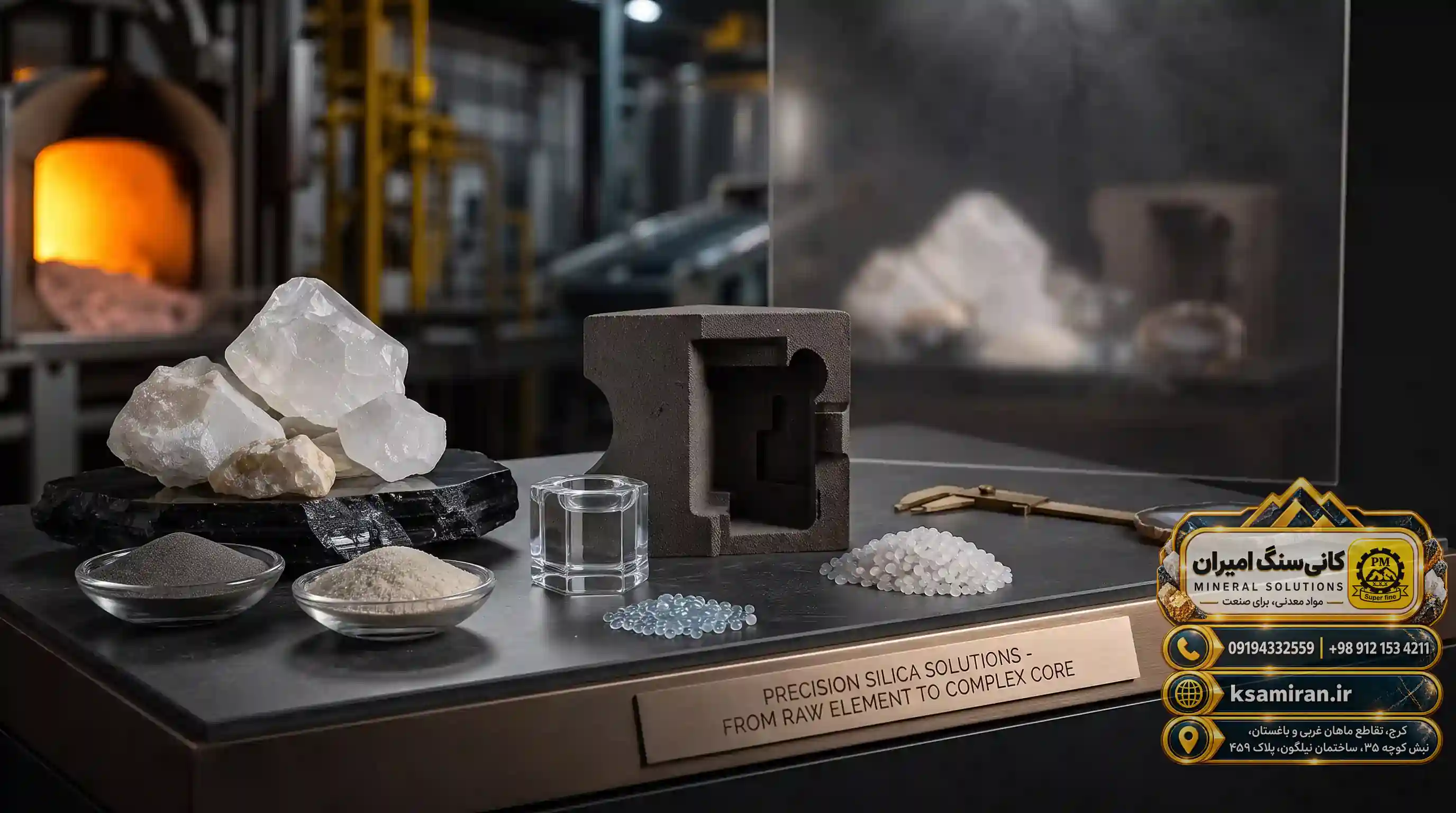
Technical Criteria for Choosing Silica: From Mesh and Purity to Plant Tests
To reduce raw material waste, silica must be selected based on technical criteria, not just price. In this chapter, we review the most important criteria to consider when purchasing.
First: particle size range (mesh). Silica particle size is expressed in mesh units. A larger mesh number means finer particles. In the Kani Sang Amiran project, silica is supplied in the 10 to 450 mesh range. Your application determines which mesh is suitable. For construction materials, coarser particles are usually used; for ceramics and chemicals, finer particles are used. Obtaining the right meshes is the first and most effective step in preventing waste.
Second: SiO2 purity percentage. The purity percentage indicates how much of the material is actual silicon dioxide. The higher the percentage, the fewer coloring and reactive impurities there are, and the product's thermal behavior is more predictable. For clear glass and ceramic applications, a high purity percentage is more important.
Third: specific impurities. Iron, aluminum, calcium, magnesium, sodium, potassium, and titanium oxides can each affect the color, firing temperature, chemical behavior, and mechanical properties of the product. You must define the permissible limits of each impurity according to the application and request an analysis from the supplier.
Fourth: consistency and reproducibility. Particle consistency and quality stability across different shipments are sometimes more important than the purity value itself. A heterogeneous shipment causes frequent production line adjustments and defective batches. Requesting samples and testing before purchasing the entire shipment is a standard practice.
Fifth: moisture. High moisture causes fine particles to clump and disrupts weighing, mixing, and firing behavior. Moisture must be within the standard range for your application.
Sixth: packaging and transport. Proper packaging prevents the entry of impurities, moisture, and contamination and reduces waste during storage and transport. This is especially important for fine powder shipments.
Requesting chemical analysis (XRF), particle size distribution (mesh ratio), moisture testing, and, if needed, a laboratory sample is the right of an industrial buyer. A supplier that transparently provides this information usually controls its quality. To view product specifications and the available range, you can visit the silica product page on the Kani Sang Amiran project website.
In addition, a simple economic evaluation can clarify your decision: multiply the purchase price by a factor of the waste rate and then compare the options. Most of the time, silica that is slightly more expensive but generates less waste tus out to be much cheaper in the final calculation.
Conclusion and Practical Steps to Reduce Raw Material Waste
Throughout this article, we have seen that raw material waste is not a marginal problem but a costly factor that affects every part of production, from energy and time to final product quality. We have also seen that proper silica selection can significantly reduce the amount of waste in all four main application areas — glass, foundry, ceramics, and construction materials.
To summarize, a few practical steps can be suggested. The first step is understanding your own production process precisely. You must know where in the production line waste occurs and how much there is. This requires data recording and measurement. Without numbers, the right decision caot be made.
The second step is defining the required technical specifications. Based on your process, specify the suitable mesh, purity percentage, impurity limits, and allowable moisture. These specifications must be documented and measurable so they can be referenced during purchasing.
The third step is choosing a supplier with stable quality. A supplier that provides transparent technical information, sends samples, and whose shipment quality is trustworthy will help you keep your production line optimized over time. The Kani Sang Amiran project, by offering silica in the 10 to 450 mesh range for glass, foundry, ceramic, and construction material applications, strives to cover this need.
The fourth step is continuous testing and review. Raw material quality must be checked periodically, because changes can occur in the mineral over time. Even with an excellent supplier, continuous monitoring is necessary.
The fifth step is training the production team. Line workers and technicians must know why moisture, consistency, and particle size matter, and how raw materials should be handled so quality is maintained. Much of the waste occurs due to improper handling, storage, or mixing within the factory itself.
Finally, it must be emphasized that reducing waste is not a one-off project but a continuous improvement process. Every time the waste rate decreases by one percent, a considerable savings is generated over the course of a year. Silica with the right quality is one of the most effective tools on this path, because as a network-forming material, it plays a central role in many industries.
We hope this article has helped you make decisions about raw material purchasing with a broader perspective. If you have any questions or need advice on choosing the right meshes, you can stay in touch with the experts at the Kani Sang Amiran project. Keep in mind that the true cost of raw materials is not just the purchase price; it is the purchase price plus the cost of the waste generated during production.
| Question | Answer |
|---|---|
| What is silica and where is it used? | Silica, or silicon dioxide, is one of the most abundant mineral compounds in the Earth's crust and is widely used in the glass, foundry, ceramic, and construction material industries. |
| What is the mesh range of silica offered by the Kani Sang Amiran project? | Silica is produced and supplied in the 10 to 450 mesh size range, covering diverse needs from coarse to very fine particles. |
| Why does choosing the right silica reduce raw material waste? | Because the quality, consistency, and particle size distribution of silica directly affect the amount of production line waste, the acceptance rate of the final product, and the lifespan of fuaces and molds, preventing defective product output. |
| In the glass industry, what effect do impurities have? | Iron and chromium impurities, even in small amounts, can color glass and destroy its transparency, which lowers the product's quality grade and increases waste. |
| In foundry, why is particle size distribution important? | Very fine particles trap gases and create cavities, and coarse particles roughen the part's surface; a balanced combination provides permeability and surface quality. |
| Is foundry mold silica sand recyclable? | Yes, high-quality silica sand can be reused after reprocessing, which both reduces purchase costs and limits waste volume. |
| In ceramics, what are the main waste problems? | Kiln cracking, warping, glaze surface defects, and defective batches caused by fuace setting changes are the most important sources of waste in ceramics, and they can be controlled by stabilizing silica quality. |
| In construction materials, what harm do clay impurities do? | Clay impurities retain water and cause a drop in the strength and durability of concrete and other products, and in the long run lead to further material waste in repairs. |
| What technical information should be requested from the supplier before purchase? | Chemical analysis (XRF), particle size distribution, moisture percentage, a laboratory sample, and if possible the quality records of previous shipments. |
| Is the cheapest silica always the best economic choice? | No. You must multiply the price by the waste factor; silica that is slightly more expensive but generates less waste usually tus out cheaper in the final calculation. |
Kani Sang Amiran Project — Mineral Material Production; Silica product page: https://ksamiran.ir/products/silica/

برچسب: Silica,How to Reduce Raw Material Waste by Choosing the Right Silica?,
نویسنده: رساوب آفرین