
درباره سایت
آخرین مطالب
- استخدام أكسيد الليمونيت (الماغش) في صناعات الزجاج
- کاربرد اکسید لیمونیت (گل ماش) در صنایع شیشهسازی
- A Review of Daily Prices for Limonite Oxide (Ocher) in the Market
- چگونه خالص بودن اکسید لیمونیت (گل ماش) را تشخیص دهیم؟
- بررسی قیمت روز اکسید لیمونیت (گل ماش) در بازار
- Application of Limonite Oxide (Gole Mash) in Glassmaking Industries
- كيف تتعرف على نقاء أكسيد الليمونيت (جول ماش)؟
- How to Determine the Purity of Limonite Oxide (Gol Mash)?
- بررسی استانداردهای ایمنی کار با اکسید لیمونیت (گل ماش)
- Comprehensive Guide to Technical Analysis of Limonite Oxide (Gol Mash)
امکانات وب
Introduction to Industrial Talc and its Position in the Polyethylene Pipe Industry
Industrial talc is one of the most widely used mineral materials in the polymer industry, which has today found a special place in the production lines of polyethylene pipes. Talc is a hydrous magnesium silicate with a layered structure, which, due to its softness, light color, chemical inertness, and reasonable price, has become one of the most popular mineral fillers for combining with polymers. In the polyethylene pipe industry, the use of mineral fillers not only helps reduce the final cost of the product but can also significantly improve the mechanical, thermal, and dimensional properties of the pipes.
Polyethylene pipes are widely used in water, sewage, gas, agricultural, and chemical transmission networks due to their light weight, corrosion resistance, flexibility, and easy installation. However, pure polyethylene has limitations in some conditions, such as long-term pressures, high temperatures, and continuous abrasion, which engineers try to overcome by adding fillers such as talc. Industrial talc, with particles in the 450 to 1000 mesh range, offers exactly the size needed for uniform dispersion in the polymer matrix and achieving the desired properties in polyethylene pipes.
The industrial talc product offered by Amiran Stone Minerals Project is selected for polymer, rubber, paint, and industrial applications, and its mesh range is optimized for consumption in the polymer industry. This variety of applications shows that talc is a multipurpose material; for example, the same properties that make talc valuable in the gypsum and building materials industries, i.e., layered structure and dimensional stability, play a key role in polyethylene pipe manufacturing. If you are interested in this topic, you can also read the article The Role of Industrial Talc in the Gypsum and Building Materials Industries.
In a general overview, the application of industrial talc in the polyethylene pipe industry includes the following:
- Increasing the mechanical resistance and elastic modulus of the pipe
- Reducing creep and improving long-term resistance to inteal pressure
- Improving dimensional stability and reducing shrinkage during pipe cooling
- Increasing thermal resistance and reducing the coefficient of thermal expansion
- Reducing the final production cost by replacing part of the polyethylene resin
- Improving the output rate in extrusion lines and increasing production efficiency
In the rest of this article, we will fully examine the structure of talc, how it interacts with polyethylene, its mechanical and thermal properties, comparison with other fillers, quality control tips, and the challenges ahead in using industrial talc in the pipe industry.
Structure and Physical Properties of Industrial Talc and its Interaction with Polyethylene
To better understand the application of industrial talc in polyethylene pipe manufacturing, we must first know the structure of this mineral. Chemically, talc is a hydrous magnesium silicate in which magnesium-hydroxide layers are placed between two silicate layers. This layered structure makes talc very soft (hardness of about 1 on the Mohs scale), easily cleaved along the layers, and creates a smooth, greasy surface. These properties are very valuable for polymer processability, because talc particles move when mixed with the polymer and reduce inteal friction.
One of the most important characteristics of industrial talc is the high aspect ratio of its particles. Talc particles are platelet-shaped or flat, and this geometric shape has a much stronger mechanical reinforcing role than spherical or cubic particles in the polymer matrix. When platelet-shaped talc particles are properly dispersed in polyethylene, they act like small reinforcing plates and increase the strength of the material in different directions. For a more detailed study of these properties, the article Investigation of the Physical and Mechanical Properties of Industrial Talc Powder is a comprehensive source.
In addition to the layered structure, industrial talc has the following characteristics that make it ideal for polyethylene pipe manufacturing:
- Chemical inertness: Talc does not react with most chemicals and therefore remains stable in water and chemical transmission pipes.
- White and light color: This feature allows the use of desired final colors in the production of colored pipes.
- Appropriate density: Talc has a lower density than many other fillers, and for this reason, the increase in the final weight of the pipe is limited.
- Inherent lubricity: Reduces friction during extrusion and improves the final surface of the pipe.
- Thermal stability: Talc does not decompose at polyethylene processing temperatures.
The interaction of talc with polyethylene is not limited to filling empty spaces. Research shows that talc particles can act as a nucleating agent in the polyethylene crystallization process. This means that the presence of talc increases the rate of crystal formation and creates a more uniform crystalline structure. This is especially important in pipes subjected to inteal pressure and varying temperatures, because a better crystalline structure usually means higher resistance to creep and cracking.
Another key point is the particle size. The 450 to 1000 mesh range of industrial talc means that the particles are very fine and in the micron range. This fineness allows the particles to disperse well in the polymer matrix, have a high contact surface with the polymer, and prevent the formation of stress concentration points that could lead to the onset of cracking. At the same time, very fine particles require more careful management in the mixing process, a topic that is addressed in the following chapters.
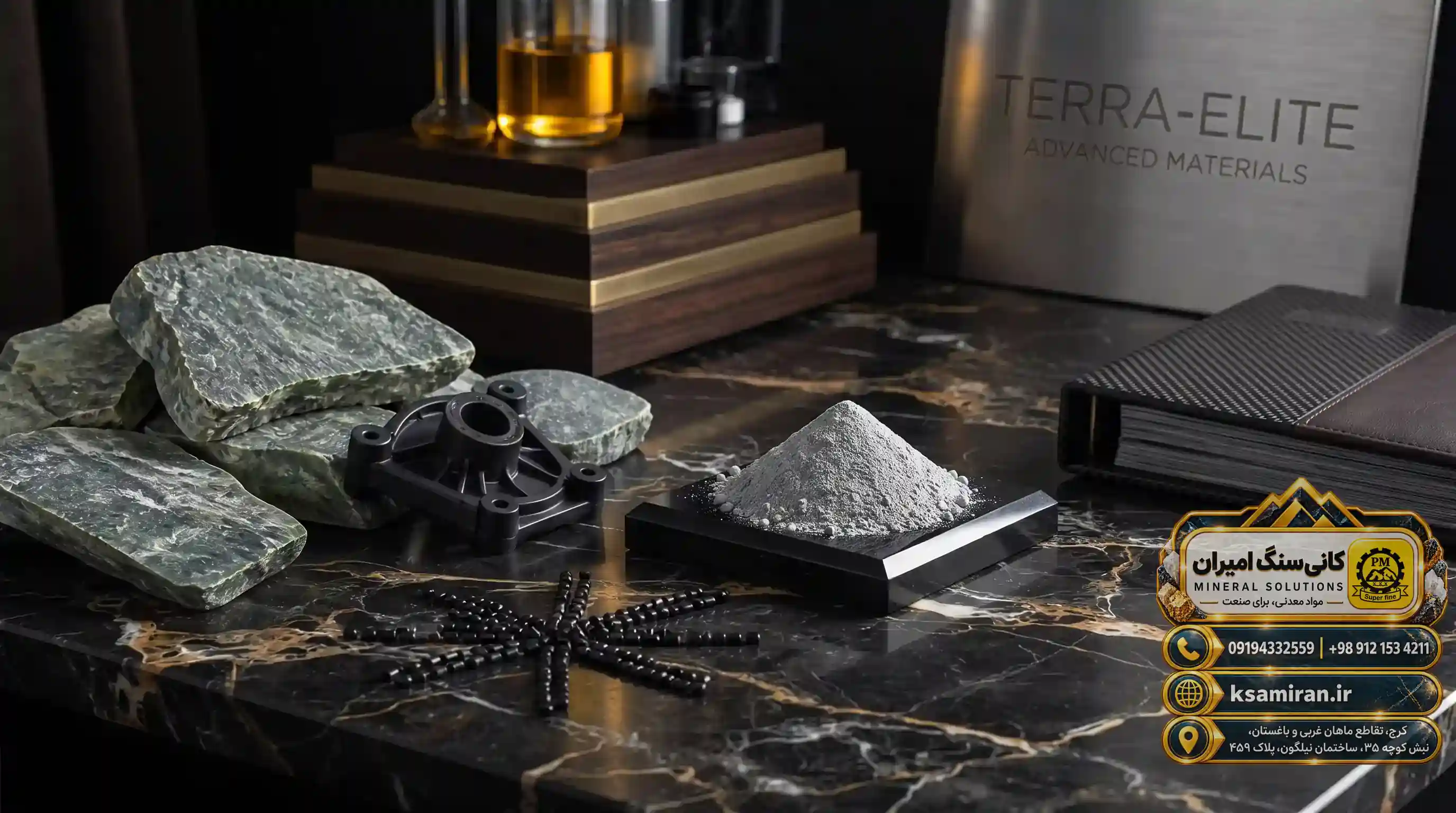
Improving the Mechanical Properties of Polyethylene Pipes Using Industrial Talc
One of the most important reasons for using industrial talc in the polyethylene pipe industry is the ability of this material to improve the mechanical properties of the final product. Polyethylene pipes face a variety of stresses in their applications: inteal pressure of water or gas, pressures from burial in the ground, bending during installation, mechanical impacts, and abrasion from fluid flow. Adding talc to polyethylene can significantly improve the material's response to these stresses.
The first and most obvious effect of talc is an increase in the elastic modulus (stiffness) of polyethylene. The elastic modulus indicates the material's resistance to elastic deformation. By adding platelet-shaped talc particles, the polyethylene pipe becomes more resistant to bending and deformation. This property is especially important in pipes buried at depth and subjected to soil pressure, because it prevents excessive deformation of the pipe cross-section (ovalization). Along with the modulus, the surface hardness of the pipe also increases, making it more resistant to scratches during transport, installation, and handling.
The second very important effect of industrial talc is the improvement of the creep behavior of polyethylene. Creep means the gradual deformation of a material under constant stress over time. Polyethylene pipes under constant inteal pressure creep over the years, and this phenomenon is one of the factors limiting their useful life. Talc particles, with their layered structure, restrict the movement of polymer chains and reduce the creep rate. The practical result of this is an increase in the useful life of the pipe under working pressure and the possibility of using higher design pressures.
The third important effect of talc is the improvement of dimensional stability. Polyethylene shrinks as it cools from the molten state, and this shrinkage can cause dimensional changes, distortion, and residual stresses in the pipe. Talc particles reduce the contact surface of the polymer and lower the shrinkage rate during cooling. As a result, pipes produced with industrial talc have more uniform dimensions, better cross-sectional roundness, and more precise wall thickness tolerances, which are vital for meeting coection and sealing standards in piping networks.
In addition to these, industrial talc can also have the following effects on the mechanical properties of polyethylene pipes:
- Increased resistance to rapid crack propagation (RCP), which is an important risk in pressurized pipes.
- Improved impact resistance, provided the particles are correctly dispersed and the optimal amount of talc is used.
- Increased abrasion resistance of the ier wall of the pipe in applications where suspended particles are present in the fluid.
- Reduction of residual stresses caused by uneven cooling in different wall thicknesses.
A very important point is that the improvement of mechanical properties with talc is strongly dependent on the quality of particle dispersion, particle size, aspect ratio, and filler content. A low amount of talc may not have a significant effect, and a high amount can cause brittleness and a drop in tensile properties. For this reason, finding the optimal amount of industrial talc for each type of pipe and each application is a specialized engineering task that must be accompanied by standard mechanical tests.
Industrial Talc as an Economic Filler and its Role in Reducing Production Costs
In manufacturing industries, cost management always goes hand in hand with quality. Industrial talc is one of the most effective tools for achieving this balance in the polyethylene pipe industry. Polyethylene is a petroleum-based material, and its price is directly affected by oil market fluctuations. On the other hand, talc is an abundant and relatively cheap mineral. Replacing part of the polyethylene resin with industrial talc can significantly reduce the cost of raw materials without compromising the quality of the final product.
The economic advantage of industrial talc is not limited to its price alone. Talc also improves production line efficiency. By reducing inteal friction and increasing the melt flow rate, talc particles increase production speed in extrusion machines. This means that in a given unit of time, more footage of pipe is produced, energy consumption per meter of pipe decreases, and consequently, overhead costs also drop. For manufacturers with high-capacity production lines, this improvement in efficiency equates to significant financial savings.
From another perspective, industrial talc can shorten the pipe cooling time. Because talc conducts heat well and its particles limit polymer shrinkage, the pipe stabilizes faster and the need for a long cooling section in the production line is reduced. This can be effective in overall production speed and reducing cooling water consumption. Also, an increase in the density of the composite material can in some cases mean a reduction in the weight needed per meter of pipe to achieve the desired strength.
The 450 to 1000 mesh range of industrial talc is also economically important from this perspective. These particles are fine enough to disperse uniformly in the polymer, and at the same time, they are economical enough that the cost of grinding and preparing them is reasonable compared to very nanometer-sized particles. Choosing much coarser particles can cause a drop in mechanical properties, and choosing particles finer than needed increases costs without a high operational advantage.
Of course, it should be noted that using industrial talc with its economic benefits requires proper management. Process integration, the use of appropriate mixing equipment, the addition of compatibilizer polymers if needed, and strict quality control are all part of the initial capital costs that must be included in economic calculations. Also, in applications where the visual transparency of the pipe or very high flexibility is important, the amount of talc should be limited. Along with these, it is mandatory to observe the permissible filler limit in the standards related to the final application of the pipe (for example, drinking water pipes).
Ultimately, many manufacturers find that with an optimal formulation, a significant portion of the resin can be replaced by industrial talc while maintaining the required mechanical properties. This approach both helps reduce dependence on petroleum materials and creates a sustainable competitive advantage in the market.
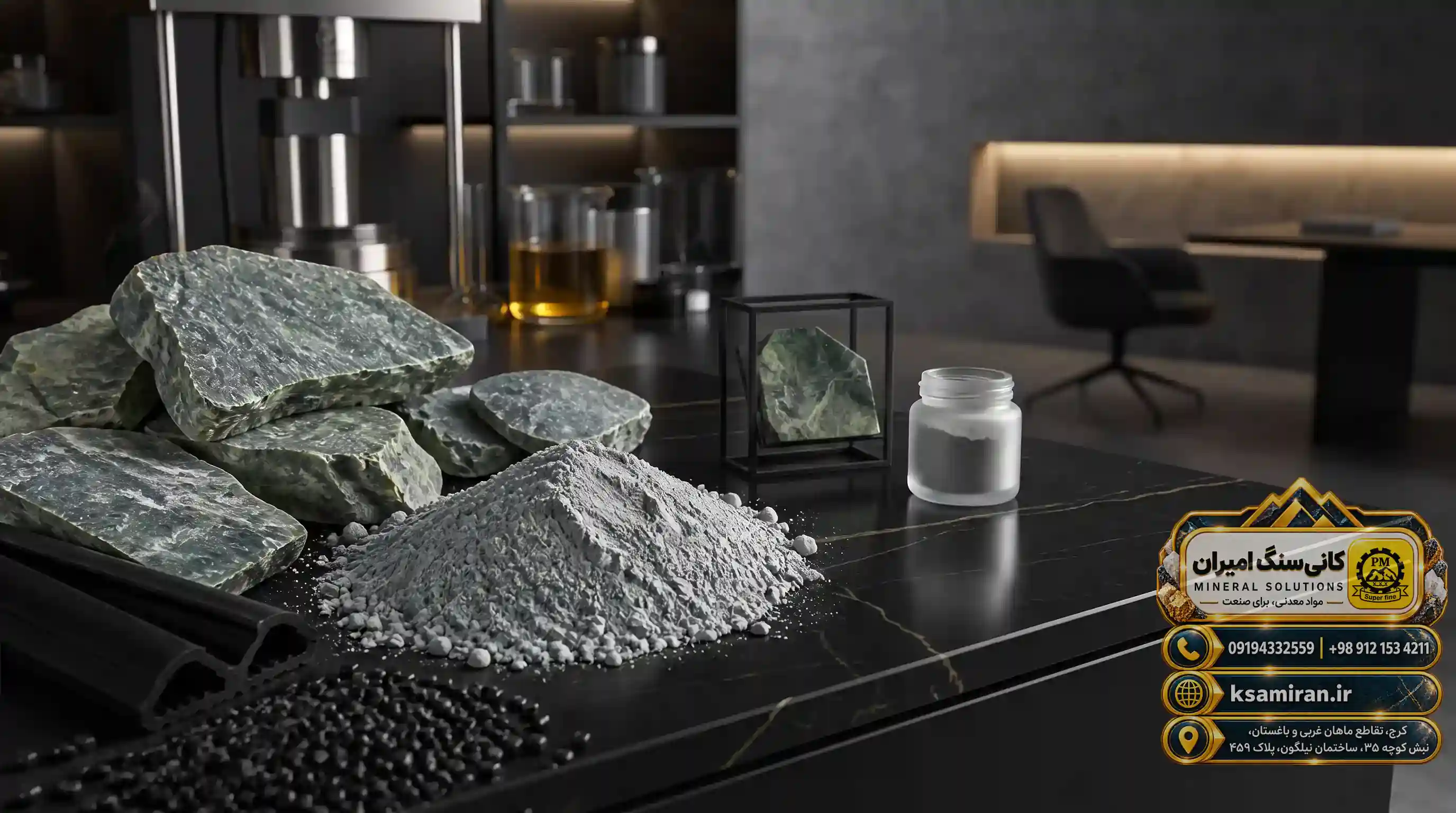
Thermal, Abrasion, and Durability Resistance of Polyethylene Pipes Containing Industrial Talc
In addition to mechanical properties, industrial talc has significant effects on the thermal behavior and durability of polyethylene pipes. Polyethylene is a semi-crystalline polymer that softens at relatively low temperatures (compared to metals and ceramics). In applications where pipes are exposed to high temperatures or severe thermal fluctuations, this limitation can be problematic. With their inherent thermal stability, talc particles play the role of a thermal resistance agent in the polymer matrix.
One of the most important effects of talc on the thermal properties of polyethylene is the reduction of the coefficient of thermal expansion. All materials expand as temperature increases, but polyethylene has a high coefficient of thermal expansion. This means that a polyethylene pipe experiences a significant change in length in summer and winter, which can cause stress in coections, bending of exposed pipes, and in some cases, failure to seal joints. By adding industrial talc, the mineral particles, which have a very low coefficient of expansion, limit these dimensional changes and improve the thermal stability of the pipe over a wider temperature range.
Increased thermal resistance means that the pipe can withstand higher fluid temperatures. This property is very important for applications such as hot water transmission pipes, cooling and heating systems, industrial cooling lines, and agricultural applications in hot regions. In addition, due to its relatively good thermal conductivity, talc can help distribute heat more uniformly in the pipe wall and prevent the formation of hot spots that could be the starting point for polymer degradation.
On the other hand, the abrasion resistance of polyethylene pipes is very important in some applications. For example, in pipes transmitting sewage, sandy water, mineral slurries, or industrial fluids containing suspended particles, the ier wall of the pipe gradually wears away. Talc particles, with their hardness and platelet structure, create a surface more resistant to abrasion and increase the useful life of the pipe in these harsh conditions. Along with this, the smoother ier surface of talc-containing pipes reduces fluid friction, which in itself means less pressure drop and long-term savings in pumping costs.
Environmental durability is another advantage of using industrial talc. Talc, as a mineral material, is resistant to moisture, mild chemicals, ultraviolet rays (in appropriate formulations), and the growth of microorganisms. These properties give polyethylene pipes containing talc high stability in soil, aquatic, and chemical environments. Also, the presence of talc can reduce the permeability of the pipe wall to gases and liquids, which is important for gas pipes and volatile material transmission lines.
In general, the combination of the thermal, abrasion, and chemical properties of industrial talc has made it a multipurpose additive in polyethylene pipe manufacturing. Together, these properties produce pipes with a longer useful life, less maintenance, and higher reliability in infrastructure networks.
Comparison of Industrial Talc with Other Mineral Fillers in Pipe Manufacturing
In the polyethylene pipe industry, industrial talc is not the only mineral filler available. Calcium carbonate, kaolin, mica, clay, and glass fibers are also used with their own advantages and disadvantages. Knowing the differences between these materials is essential for choosing the best option in each project.
Calcium carbonate is the most common mineral filler in the polymer industry, and the main reason is its low price and abundance. Calcium carbonate is mostly used to reduce costs, but its reinforcing properties are more limited compared to talc. While calcium carbonate particles are usually spherical to irregular in shape, talc particles are platelet-shaped, and their layered structure plays a stronger reinforcing role in the polymer matrix. On the other hand, calcium carbonate decomposes in acidic environments, while talc has higher chemical resistance.
Kaolin is also a mineral filler with a layered structure used in various industries. Kaolin is valuable in paint and industrial coatings due to its excellent gloss and coverage; although its applications are different in this context, you can read the article Application of Kaolin in the Paint and Industrial Coatings Industries to become familiar with it. Compared to kaolin, talc is usually softer, creates less friction, and provides better lubricity in the extrusion process. Kaolin may be more suitable for applications requiring a very glossy surface, but talc is a better choice for applications requiring higher thermal and creep resistance.
Mica also has a layered structure similar to talc and provides good electrical and thermal insulation properties, but its higher price and greater hardness limit the widespread use of mica in pipe manufacturing. Glass fibers are also a very strong reinforcement, but their high cost, high machinery wear, and need for specialized mixing equipment make them inefficient for ordinary polyethylene pipes.
The general comparison of these fillers is given in the list below:
- Talc: Medium to excellent reinforcement, excellent thermal resistance, good lubricity, high chemical resistance, medium price
- Calcium carbonate: Weak to medium reinforcement, low thermal resistance, very low price, weak acid resistance
- Kaolin: Medium reinforcement, excellent surface coverage, medium price, suitable for surface applications
- Mica: Good reinforcement, excellent electrical insulation, high price, harder processing
- Glass fibers: Very excellent reinforcement, high price, high machinery wear, need for process expertise
The conclusion of this comparison is that industrial talc is a balanced choice: it is neither the cheapest option (calcium carbonate is cheaper) nor the strongest (glass fibers are stronger), but the combination of reasonable price, good mechanical properties, excellent thermal and chemical resistance, easy processability, and availability has made it the default option for many polyethylene pipe manufacturers. The final choice between these fillers should be made based on application needs, budget, and available equipment.
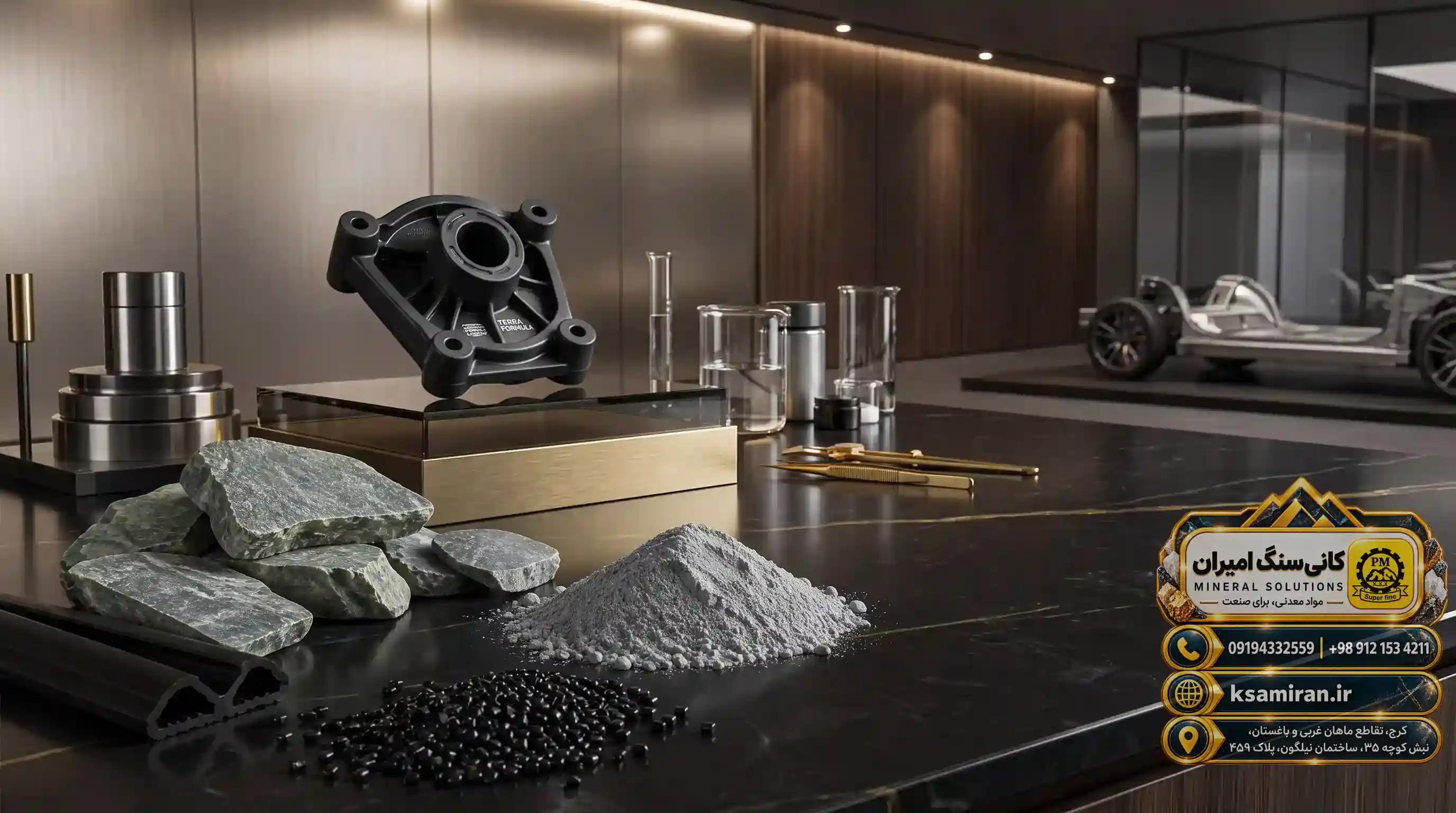
Quality Control and Processing Tips for Using Industrial Talc in Pipe Manufacturing
The successful use of industrial talc in the polyethylene pipe industry is not limited to choosing this mineral; it depends on the quality of the product, the mixing process, and precise control of production parameters. In this chapter, we examine the most important processing and quality tips that manufacturers need to know.
Importance of grading and mesh range: Industrial talc with a 450 to 1000 mesh range is suitable for polymer applications, because the particles in this range are fine enough to create uniform dispersion in the polymer matrix. Coarser particles can act as stress concentration points and cause a drop in mechanical properties, reduced impact resistance, and surface defects in the pipe. For this reason, controlling the grading of received talc shipments should be part of the quality control procedure. It should also be noted that very fine (nanometer) particles, due to their very high contact surface, require more energy and mixing equipment to prevent agglomeration.
Moisture and drying: Talc is a mineral material that can absorb moisture. The moisture present in talc tus into steam during the extrusion process and can cause bubbles, porosity, and weak points in the pipe wall. Therefore, drying talc before mixing and storing it in a dry, sealed environment is essential. This point is especially important in humid regions and during rainy seasons.
Dispersion and mixing: The key to exploiting the properties of industrial talc is the uniform dispersion of particles in polyethylene. The agglomeration of talc particles can destroy all the benefits of using this filler. To ensure proper dispersion, manufacturers typically use high-speed mixers, twin-screw extruders, or two-stage compounding. In cases where dispersion is very important, talc coated with organic materials (such as fatty acids or silanes) can be used, which allows the particles to interact better with the polymer chains.
Process parameters: When using talc in the polyethylene pipe formulation, the extrusion machine settings must be revised. Feed zone temperatures, melt pressure, screw speed, and output rate must be optimized considering the presence of talc. Talc increases the melt viscosity, so it may be necessary to increase heating or adjust the temperature profile. Also, the haul-off speed and calibration pressure must be set in a way that accounts for the reduced shrinkage of the composite material.
Final product quality control: After production, talc-containing pipes must undergo tests like any other standard pipe:
- Hydrostatic pressure test to check resistance to inteal pressure
- Tensile test to determine strength and elongation
- Impact test to check toughness at low temperatures
- Measurement of dimensions and wall thickness to comply with standard tolerances
- Inspection of the ier and outer surface of the pipe to ensure the absence of bubbles, cracks, and visual defects
- Determination of density and filler mass fraction to confirm the correct mixture
Implementing a strict quality control system ensures that the use of industrial talc truly leads to improved properties and reduced costs, rather than a drop in product quality. This approach also guarantees trust in the manufacturer's brand and the satisfaction of final customers.
Standards, Challenges, and Conclusion
The production of polyethylene pipes around the world is carried out under strict standards and regulations, because these pipes are a vital part of the water, gas, and sewage infrastructure of societies. The use of industrial talc as a filler must take place within the framework of these standards. Standards such as ISO 4427 and EN 12201 for drinking water pipes, ISO 4437 for gas pipes, and ASTM F714 for general applications set a series of requirements for the mechanical, chemical, and hygienic properties of pipes.
One of the challenges of using industrial talc in pipe manufacturing is that fillers are usually limited to permissible amounts in the standards. In sensitive applications such as drinking water pipes, any additive must be hygienically certified, and the migration of substances into the water must be below the permissible limit. Talc, as an inert mineral silicate, is generally considered hygienically safe, but local and national certifications may require chemical migration tests. Manufacturers must coordinate with relevant local authorities.
Another challenge is the loss of some properties if too much talc is used. Although talc improves many mechanical properties, a high amount can cause a reduction in elongation at break, a drop in impact resistance at low temperatures, and pipe brittleness. Also, talc can affect processability and color dispersion in the production of colored pipes. For this reason, the formulation must be carefully balanced, and in sensitive applications, the amount of talc should be limited to the necessary level.
Ultimately, attention must be paid to the ability to supply sustainably and the uniform quality of industrial talc. Pipe manufacturers need sources that can deliver the same amount of product with consistent quality for years. Amiran Stone Minerals Project, by producing high-quality mineral materials, is a reliable source for supplying the industrial talc needed by the polyethylene pipe industry. If you are also looking for a high-quality mineral for your production line, you can purchase the industrial talc you need from this collection.
In summary, the application of industrial talc in the polyethylene pipe industry is a smart technical and economic decision:
- Talc improves the mechanical, thermal, and dimensional properties of polyethylene pipes.
- Talc, as an economic filler, reduces the final production cost.
- The 450 to 1000 mesh range is suitable for uniform dispersion in the polymer matrix.
- Compared to calcium carbonate and kaolin, talc offers a better balance between price and properties.
- Successful use requires quality control, proper drying, and uniform dispersion.
- In sensitive applications, hygienic standards and regulations must be observed.
With a full understanding of the structure, properties, and processing tips of industrial talc, manufacturers can produce polyethylene pipes with higher quality, lower cost, and longer useful life, and gain a superior position in today's competitive market.
| Question | Answer |
|---|---|
| What is industrial talc? | Industrial talc is a hydrous magnesium silicate with a layered structure that is used as a mineral filler in the polymer, rubber, paint, and industrial industries. |
| Why is industrial talc used in polyethylene pipe manufacturing? | Talc improves the mechanical, thermal, and dimensional properties of polyethylene pipes, reduces creep, and lowers production costs. |
| What is the appropriate mesh range of industrial talc for pipe manufacturing? | The 450 to 1000 mesh range is suitable for uniform dispersion in the polymer matrix and achieving the desired properties in polyethylene pipes. |
| How much talc is added to polyethylene? | The exact amount of talc depends on the type of pipe and its application and must be determined by mechanical tests; a high amount can cause brittleness. |
| Does talc cause a drop in the mechanical properties of the pipe? | In the optimal amount and with correct dispersion, talc improves mechanical properties, but excessive use can cause a drop in impact resistance and brittleness. |
| What is the difference between industrial talc and calcium carbonate? | Talc has a platelet structure and offers better reinforcing and thermal properties, while calcium carbonate is cheaper but has lower chemical and thermal resistance. |
| Is talc safe for drinking water pipes? | Talc is an inert mineral material, but its use in drinking water pipes must be accompanied by hygienic standards and local certifications. |
| What is the effect of talc on the creep of polyethylene pipes? | Platelet-shaped talc particles restrict the movement of polymer chains and reduce the creep rate under constant pressure, which means a higher useful life. |
| How should industrial talc be stored? | Talc should be stored in a dry, sealed environment to prevent moisture absorption; moisture can cause bubbles in the pipe wall. |
| What are the characteristics of the industrial talc from Amiran Stone Minerals Project? | This product is selected for polymer, rubber, paint, and industrial applications and is offered with a 450 to 1000 mesh range. |
This article is written based on the technical information of the industrial talc product of Amiran Stone Minerals Project and scientific sources of the polymer and pipe industry.
برچسب: Industrial Talc,Application of Industrial Talc in the Polyethylene Pipe Industry,
نویسنده: رساوب آفرین