
درباره سایت
آخرین مطالب
- استخدام أكسيد الليمونيت (الماغش) في صناعات الزجاج
- کاربرد اکسید لیمونیت (گل ماش) در صنایع شیشهسازی
- A Review of Daily Prices for Limonite Oxide (Ocher) in the Market
- چگونه خالص بودن اکسید لیمونیت (گل ماش) را تشخیص دهیم؟
- بررسی قیمت روز اکسید لیمونیت (گل ماش) در بازار
- Application of Limonite Oxide (Gole Mash) in Glassmaking Industries
- كيف تتعرف على نقاء أكسيد الليمونيت (جول ماش)؟
- How to Determine the Purity of Limonite Oxide (Gol Mash)?
- بررسی استانداردهای ایمنی کار با اکسید لیمونیت (گل ماش)
- Comprehensive Guide to Technical Analysis of Limonite Oxide (Gol Mash)
امکانات وب
Introduction to Calcium Carbonate and Its Role in Mode Industries
Calcium carbonate with the chemical formula CaCO3 is one of the most abundant mineral compounds in the Earth's crust, found naturally in various forms including calcite, aragonite, limestone, chalk, and marble. Due to its high abundance, low extraction and processing costs, non-toxicity, natural white color, and good chemical stability, this material has become one of the most widely used industrial minerals, with thousands of tons used daily across various industries.
The main reason for the popularity of calcium carbonate in industry is a combination of its unique features: abundance in nature, low processing cost, environmental compatibility, high whiteness, ability to be ground to very fine dimensions, and the possibility of surface modification with various materials. These features allow calcium carbonate to replace expensive polymeric materials while improving the mechanical and physical properties of the final product.
In the polymer industry, calcium carbonate acts as a mineral filler which, in addition to reducing production costs, increases the strength, hardness, and dimensional stability of the product. In the paint industry, this material acts as an extender pigment, improving the covering power and durability of the paint. In the papermaking industry, calcium carbonate is used both as a filler and as a coating material, increasing whiteness, print quality, and ink absorption.
Amiran Stone Mineral Project, as one of the producers of mineral materials in the country, offers high-quality calcium carbonate with mesh sizes from 100 to 3500 for a wide range of industrial applications including PVC/UPVC profiles and pipes, masterbatch, cables, artificial leather, paint, paper, glue, and engineered stone. To view the full product specifications, you can visit the Calcium Carbonate page.
In this comprehensive guide, we intend to fully examine various aspects of calcium carbonate supply: from production and processing methods to selecting the right mesh, industrial applications, quality criteria, and storage and warehousing tips. The goal is to familiarize you with complete and accurate information for deciding on the selection and purchase of calcium carbonate suitable for your industrial needs, enabling you to make the best choice based on your product's technical requirements.
Calcium Carbonate Production and Processing Methods
Industrial calcium carbonate is produced in two main ways: grinding natural rocks (GCC - Ground Calcium Carbonate) and chemical precipitation (PCC - Precipitated Calcium Carbonate). Each of these methods has its own specific characteristics and applications, and the choice between them depends on the technical requirements of the final product.
In the grinding method or GCC, limestone extracted from mines is broken in primary crushers and then enters the milling stages. This process can be done dry or wet. In dry milling, rocks are ground using ball mills or continuous vertical mills, and then classified to the desired dimensions using air classifiers. In the wet method, rocks are ground along with water, which produces finer and more uniform particles but requires a drying process.
In the chemical precipitation method or PCC, limestone is calcined in special fuaces and converted into calcium oxide (CaO). Then this material is combined with water to produce lime milk (Ca(OH)2). In the next stage, CO2 gas is injected into the lime milk, and calcium carbonate is produced as a precipitate with very fine particles and controlled shape and dimensions. This method allows precise control over morphology, particle size, and size distribution.
One of the important steps in calcium carbonate processing is surface modification or coating. In this process, calcium carbonate particles are coated with fatty acids such as stearic acid. This causes the particles to disperse better in the polymer matrix, not absorb moisture, and improve processability in extruder machines. Coated calcium carbonate is especially widely used in the polymer and plastic injection industries.
Amiran Stone Mineral Project, using mode equipment and advanced processing, produces calcium carbonate in the 100 to 3500 mesh range. This wide range allows for selecting the appropriate particle size for any industrial application. The produced calcium carbonate is manufactured with strict quality control in terms of whiteness, particle size distribution, moisture, and chemical purity to meet the diverse needs of different industries.
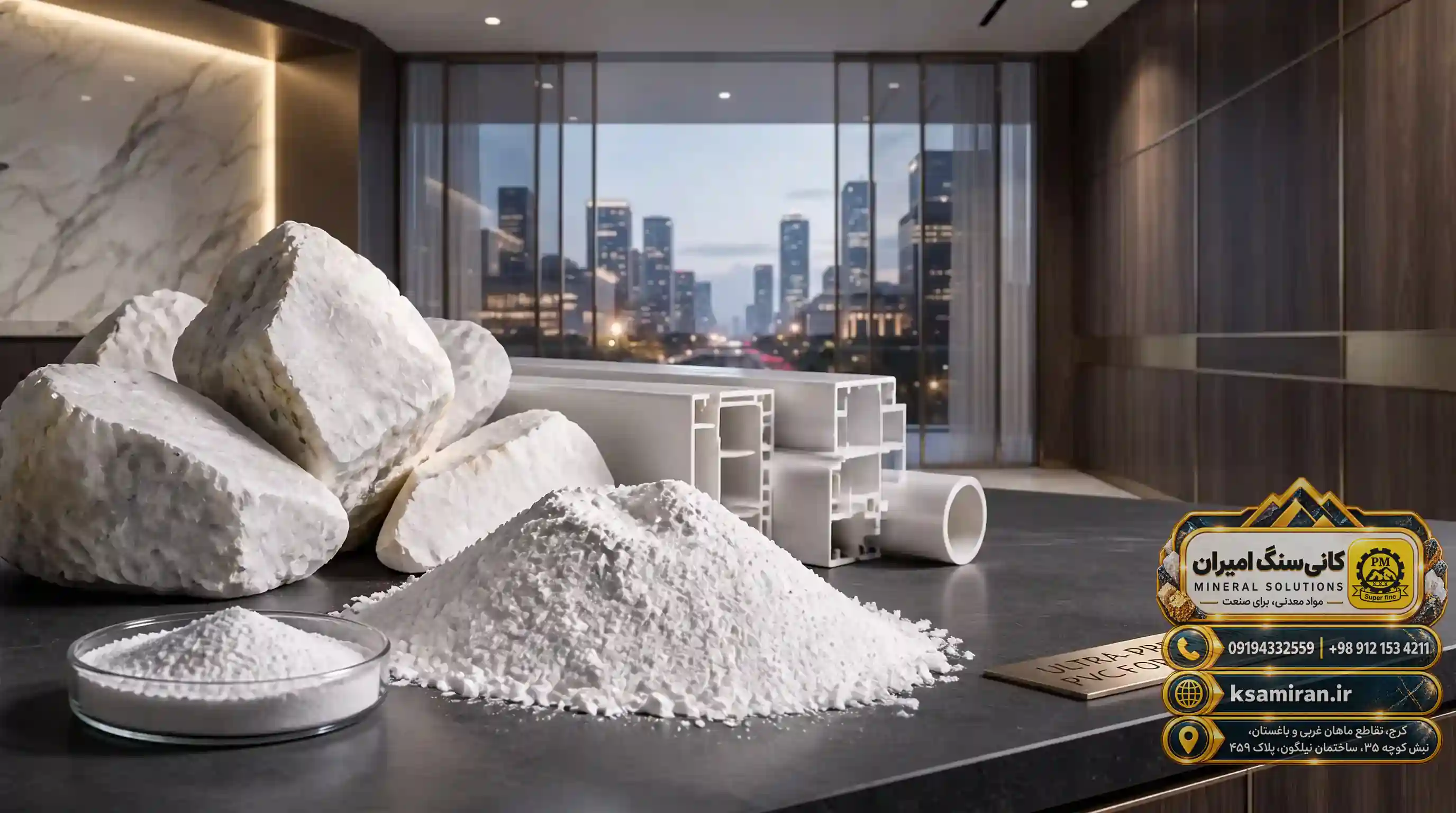
Meshing and the Importance of Particle Size in Calcium Carbonate
One of the most important technical parameters in choosing calcium carbonate is its particle size or mesh. The mesh number indicates the number of holes per inch of the screen through which the particles pass; the higher the mesh number, the finer the particles. For example, 3500 mesh calcium carbonate has much finer particles than 100 mesh calcium carbonate.
The particle size of calcium carbonate has a direct impact on the properties of the final product. Finer particles usually improve mechanical properties, increase whiteness and transparency, disperse better in the polymer matrix, and create a smoother surface in the final product. On the other hand, coarser particles may be more suitable for applications requiring high bulk filling and strength, and also reduce production costs.
Different meshes are used in various industries. For PVC/UPVC profiles and pipes, meshes of 400 to 1250 are typically used to achieve a smooth surface and proper strength. For masterbatch, higher meshes (1250 to 2500) are needed for better color dispersion and transparency. In the paint and coatings industry, meshes of 800 to 2500 are used to improve covering power and a uniform surface.
Choosing the right mesh depends on various factors: polymer type, processing method (injection, extrusion, calendar), final product thickness, desired mechanical properties, and project financial conditions. For a specialized guide on choosing the right mesh for plastic injection, you can refer to the Guide to Choosing the Right Mesh for Coated Calcium Carbonate in Plastic Injection.
In addition to average particle size, Particle Size Distribution is also very important. A proper size distribution allows different particles to fit together well, resulting in high density, a smooth surface, and appropriate mechanical properties in the final product. Amiran Stone Mineral Project offers controlled size distribution in its products using advanced classifiers.
Applications of Calcium Carbonate in the Polymer Industry
The polymer industry is the largest consumer of calcium carbonate in the world. This material, as a cheap and efficient mineral filler, is used in the production of various polymer products including PVC/UPVC profiles and pipes, masterbatch, cables, artificial leather, and injected parts. In the polymer industry, calcium carbonate plays multiple roles: cost reduction, improved mechanical properties, increased thermal stability, improved processability, and shrinkage control.
In the production of PVC/UPVC profiles and pipes, calcium carbonate is one of the main components of the formulation. This material acts as a filler and improves the compressive strength, dimensional stability, and surface quality of pipes and profiles. It also reduces shrinkage during cooling and improves production speed in extruder machines. The amount of calcium carbonate used in UPVC profiles can be up to 50 percent by weight of the formulation.
In the masterbatch industry, calcium carbonate is used as a color carrier and filler. White and colored masterbatches usually contain high amounts of calcium carbonate. In this application, fine particles (high meshes) are used to ensure uniform color dispersion and prevent weak points in the final product. Coated calcium carbonate performs better in this application due to its proper surface coating.
In the cable industry, calcium carbonate is used in cable coverings and insulations. This material improves mechanical properties, increases moisture resistance, and improves processability in extruder machines. In high-voltage cables, high purity and the absence of conductive impurities in calcium carbonate are very important.
Artificial leather is another polymer product that uses calcium carbonate. In the production of artificial leather, this material is used as a filler in different layers and improves the texture, strength, and surface quality of the product. Coated calcium carbonate has an advantage in this application due to better compatibility with polyurethane and PVC resins.
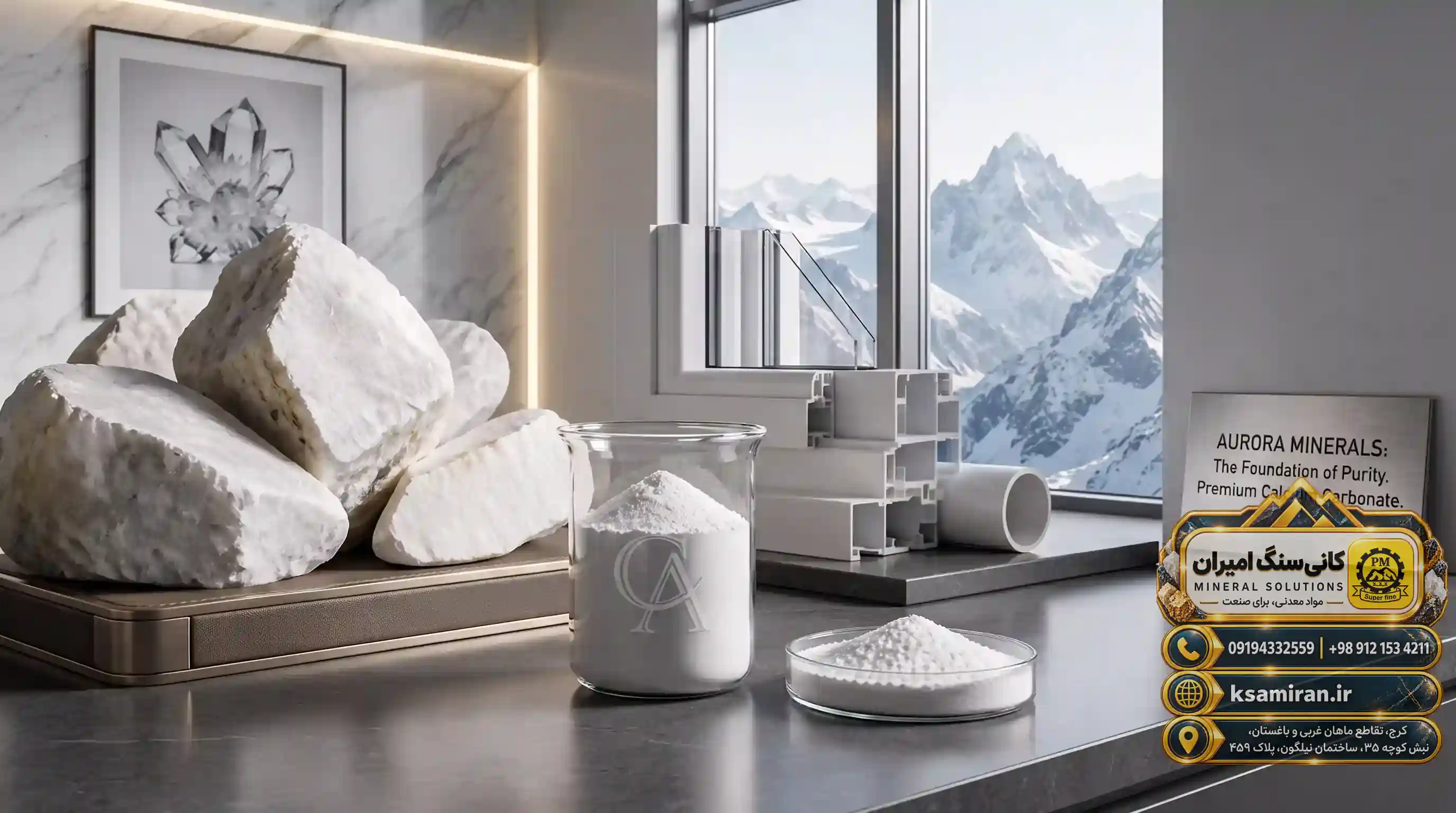
Application of Calcium Carbonate in Paint, Paper, and Glue
In addition to the polymer industry, calcium carbonate has extensive applications in the paint, papermaking, and glue industries. In each of these industries, the role of calcium carbonate is different and it is selected and formulated based on the specific technical requirements of that industry.
In the paint and coatings industry, calcium carbonate acts as an extender pigment. This material increases the paint's covering power, improves paint film durability, controls gloss, and reduces production costs. In building paints, calcium carbonate makes up a large volume of the formulation and is used to create a uniform surface, proper coverage, and abrasion resistance. For specialized information on the use of coated calcium carbonate in paint making, you can read the Comprehensive Guide to Using Coated Calcium Carbonate in Paint Making.
In the papermaking industry, calcium carbonate has two main applications: as a filler inside the paper structure and as a coating material on the paper surface. As a filler, calcium carbonate replaces part of the cellulose fibers and increases whiteness, improves print quality, increases ink absorption, and reduces production costs. In paper coating, this material is used along with various binders to create a smooth and uniform surface for high-quality printing.
In the glue and sealant industry, calcium carbonate acts as a filler that controls the viscosity, density, and mechanical properties of the glue. In building glues, polymer sealants, and industrial adhesives, this material increases volume, improves strength, and reduces costs. The right particle size is very important in this application because very fine particles can increase viscosity excessively.
In all these applications, the quality of calcium carbonate—including whiteness, size distribution, chemical purity, and moisture content—plays a decisive role in the final product quality. Amiran Stone Mineral Project provides the calcium carbonate needed by these industries in various meshes with strict quality control.
Calcium Carbonate in Engineered Stone and Engineered Products
Engineered stone, or artificial stone, is one of the most important engineered products in the production of which calcium carbonate is used. Engineered stones include artificial marble, artificial quartz, and composite stones used in interior decoration, building facades, kitchen countertops, flooring, and decorative applications.
In the production of engineered stone, calcium carbonate is used as a primary mineral filler alongside polymer resins (polyester, epoxy, or acrylic). This material can constitute more than 70 percent by weight of the artificial stone formulation. The role of calcium carbonate in this product includes: creating a stone-like texture, increasing compressive strength, improving abrasion resistance, controlling density, and reducing production costs.
Choosing the right calcium carbonate for engineered stone depends on various factors: high whiteness for light stones, appropriate size distribution to improve density and strength, and chemical purity to prevent reaction with the resin. In artificial quartz stones, calcium carbonate is typically used alongside silica particles to maximize the strength and resistance of the final product.
In addition to engineered stone, calcium carbonate is also used in other engineered products. In the production of composite parts, extruded sheets, engineered profiles, and injected products with high technical specifications, this material acts as a filler that improves mechanical properties, thermal stability, and surface quality. In these applications, coated calcium carbonate has a great advantage due to better compatibility with the polymer matrix and easier processability.
Amiran Stone Mineral Project covers the diverse needs of the engineered stone industry and engineered products by offering calcium carbonate in the 100 to 3500 mesh range. Coarser particles are used for stones requiring a natural texture, and finer particles for products with a smooth and glossy surface.

Criteria for Selecting and Supplying High-Quality Calcium Carbonate
Choosing the right calcium carbonate for any industrial application requires attention to a set of technical parameters. These parameters determine whether a specific product is suitable for your needs or not. Below we examine the most important selection criteria.
Whiteness: Whiteness is one of the most important parameters in applications where the appearance of the product matters, such as paint, paper, and white masterbatch. High-quality calcium carbonate should have a whiteness of over 90 percent. The whiteness level depends on the purity of the raw material and processing, and in lower-grade products, the presence of iron and other metal impurities reduces whiteness.
Particle Size Distribution: In addition to average particle size, size distribution is also very important. A proper (narrow) size distribution makes the properties of the final product more uniform. A wide size distribution can cause inconsistencies in the production process and a drop in product quality.
Chemical Purity: The amount of CaCO3 in the final product and the absence of impurities such as silica, iron, alumina, and magnesium are very important. High purity is crucial for sensitive applications such as cables, paper, and paint.
Moisture: The moisture content of calcium carbonate must be controlled because high moisture causes particle clumping, problems in the polymer process, and quality loss. Coated calcium carbonate usually has lower moisture.
Oil Absorption: This parameter is important in paint and glue applications and indicates the amount of resin absorbed by the particles. Lower oil absorption leads to reduced resin consumption and lower costs.
When choosing a supplier, in addition to technical parameters, you should pay attention to uniformity of quality across different production batches, the ability to provide various meshes, proper packaging, and timely delivery. Amiran Stone Mineral Project, by offering calcium carbonate in the 100 to 3500 mesh range with strict quality control, strives to cover the diverse needs of different industries.
Storage, Warehousing, and Conclusion
Proper storage and warehousing of calcium carbonate is very important to maintain its quality over time. If this material is not stored properly, it may suffer from clumping, moisture absorption, contamination, and quality loss, which directly affects the quality of your final product.
Calcium carbonate should be stored in a dry and enclosed environment, away from moisture, rain, and direct sunlight. Packages and bags should be placed on wooden or plastic pallets and kept at least 10 centimeters off the ground. Bags should not be placed directly on the floor or against walls because floor and wall moisture can damage the product.
The warehouse temperature should be kept at an appropriate level, and severe temperature changes should be avoided. In areas with high humidity, the use of dehumidifying fans and protective covers on packages is recommended. Also, storing calcium carbonate next to reactive and acidic chemicals should be avoided.
For comprehensive information on the storage and warehousing of industrial coated calcium carbonate, you can read the Comprehensive Guide to Storage and Warehousing of Industrial Coated Calcium Carbonate. This guide provides specialized and practical tips on optimal storage conditions.
In conclusion, calcium carbonate, as one of the most widely used industrial minerals, plays a strategic role in the polymer, paint, paper, glue, cable, artificial leather, and engineered stone industries. Choosing the right mesh, paying attention to quality parameters such as whiteness, purity, and size distribution, and proper storage are key factors in the optimal utilization of this valuable material. Amiran Stone Mineral Project, producing calcium carbonate in the 100 to 3500 mesh range with strict quality control, is ready to offer diverse products for various industrial needs.

| Question | Answer |
|---|---|
| What is calcium carbonate and what are its applications? | Calcium carbonate (CaCO3) is a widely used mineral material used as a filler and pigment in the polymer, paint, paper, glue, cable, artificial leather, and engineered stone industries. |
| What does the mesh number in calcium carbonate mean? | The mesh number indicates particle size; the higher the mesh number, the finer the particles. Calcium carbonate is available in the 100 to 3500 mesh range. |
| Which mesh of calcium carbonate is suitable for UPVC profiles and pipes? | For PVC/UPVC profiles and pipes, meshes of 400 to 1250 are typically used to achieve a smooth surface and proper strength. |
| What is the difference between coated and uncoated calcium carbonate? | In coated calcium carbonate, particles are coated with fatty acids such as stearic acid, which improves dispersion in the polymer matrix, reduces moisture absorption, and improves processability. |
| What role does calcium carbonate play in the paint industry? | In the paint industry, calcium carbonate acts as an extender pigment, improving covering power, paint film durability, and gloss control, while reducing production costs. |
| How should calcium carbonate be stored? | Calcium carbonate should be stored in a dry, enclosed environment, on pallets, away from moisture, direct sunlight, and reactive chemicals. |
| What role does calcium carbonate play in engineered stone? | In engineered stone, calcium carbonate is used as the main filler alongside resin, improving the strength, texture, and surface quality of the stone. |
| What are the most important quality criteria for calcium carbonate? | Whiteness, chemical purity, particle size distribution, moisture content, and oil absorption are the most important quality criteria for calcium carbonate. |
| What is the application of calcium carbonate in the paper industry? | In the paper industry, calcium carbonate is used both as a filler inside the paper structure and as a surface coating material to increase whiteness and print quality. |
| How to choose the right calcium carbonate mesh for our application? | Mesh selection depends on the polymer type, processing method, product thickness, and desired properties. For plastic injection, you can refer to the guide on choosing the right mesh. |
Technical specifications and applications of calcium carbonate based on the information provided on the Amiran Stone Mineral Project product page: https://ksamiran.ir/products/calcium-carbonate/

برچسب: Calcium Carbonate,Comprehensive Guide to Supplying Mineral Materials and Calcium Carbonate,
نویسنده: رساوب آفرین