
درباره سایت
آخرین مطالب
- استخدام أكسيد الليمونيت (الماغش) في صناعات الزجاج
- کاربرد اکسید لیمونیت (گل ماش) در صنایع شیشهسازی
- A Review of Daily Prices for Limonite Oxide (Ocher) in the Market
- چگونه خالص بودن اکسید لیمونیت (گل ماش) را تشخیص دهیم؟
- بررسی قیمت روز اکسید لیمونیت (گل ماش) در بازار
- Application of Limonite Oxide (Gole Mash) in Glassmaking Industries
- كيف تتعرف على نقاء أكسيد الليمونيت (جول ماش)؟
- How to Determine the Purity of Limonite Oxide (Gol Mash)?
- بررسی استانداردهای ایمنی کار با اکسید لیمونیت (گل ماش)
- Comprehensive Guide to Technical Analysis of Limonite Oxide (Gol Mash)
امکانات وب
Introduction to Bentonite and its Position in the Mining Industry
Bentonite is one of the most widely used and valuable industrial minerals that has become a key element in drilling, foundry, moisture absorption, and binding industries in recent decades. This material belongs to the family of industrial clays, and its unique features such as high swelling in the presence of water, suspension capability, cation exchange capacity, and bonding strength have tued it into a strategic material for many production lines.
In fact, bentonite is a swelling clay mainly composed of the smectite group, especially the montmorillonite mineral. The layered structure of this mineral provides empty spaces between layers for water molecules to enter, and this phenomenon justifies its swelling and gelling behavior. For this reason, this product is an almost irreplaceable option in industries that require moisture control, surface stabilization, or suspension creation.
In the drilling industry, bentonite is the main base of drilling fluids; in foundry, the quality of the binder in molding sand plays the primary role; and in absorbent products, its ability to quickly absorb moisture and odor has created extensive applications for it. The variety of applications of this mineral is such that its value chain extends from raw mines to complex industrial plants.
Due to its vast geological expanse and past volcanic activities in various regions, Iran has significant reserves of this mineral, and active mines in provinces such as Khorasan, Semnan, Qazvin, Isfahan, and Kerman supply part of the domestic industry's needs and even export markets. The Kani Sang Amiran project, aiming to produce and supply high-quality minerals, offers this product in the 200 to 450 mesh range for drilling fluids, foundry products, absorbents, and binder applications.
To view product specifications and more information, you can visit the Bentonite page. In the rest of this article, we will comprehensively examine the full jouey of this mineral from the heart of the mine to the final product, including exploration, extraction, processing, quality control, and industrial applications.
Geology of Bentonite: How is this Mineral Formed in Nature?
To better understand the production process, we first need to know how bentonite forms in nature. This mineral is usually the result of alteration and chemical weathering of volcanic ashes and tuffs in lacustrine, shallow, or marine aqueous environments. Over millions of years, the interaction of water, temperature, and the chemical composition of the environment has transformed the original structure of volcanic ash into smectite group clays.
The key factors in the formation of this mineral are: the presence of silica and alumina sources, sufficient water for hydration reactions, an alkaline environment, and long geological time. For this reason, its deposits are usually found in areas with a volcanic history, alongside evaporite deposits or alkaline waters. Recognizing these geological pattes is the first important step in exploring economic mines.
In terms of mineralogical composition, bentonite mainly contains montmorillonite, but it is also accompanied by minerals such as illite, kaolinite, quartz, feldspar, goethite, and organic matter. The associated composition and impurities play an important role in the final quality and industrial application of the product; such that two similar-looking deposits can perform completely differently in industry.
From an industrial classification perspective, this mineral is divided into two main categories: the sodium type, which has a very high swelling capacity and is more used in drilling and gelling, and the calcium type, which swells less but is used in absorbent products and some foundry applications due to its fast absorption and affordable price. In many plants, the calcium type is converted to the sodium type through a chemical activation process.
Knowing the difference between these two types and the geological structure of each mine determines the processing path and the final economic value of the product; therefore, geological studies and mineralogical tests are a prerequisite for any serious investment in this field.

Exploration and Extraction of Bentonite in Mines
The exploration stage begins with desktop studies, geological maps, and satellite imagery. Geologists identify potential areas, and then field prospecting operations are carried out, including taking surface samples, digging exploration pits, and borehole drilling. The main goal is to determine the extent of the reserve, layer thickness, depth of occurrence, and mineral quality in terms of swelling, absorption, and impurities.
After confirming the economic viability of the reserve, it is time to design the mine. Mines for this mineral are usually extracted by open-pit methods, because its layers are close to the surface and cutting them does not require complex underground operations. In this method, the overburden soil and rocks are first removed with heavy machinery such as excavators and loaders to expose the mineral layer.
Extraction is usually done in a terraced maer with precise depth control to keep the composition of the samples uniform. The extracted minerals are sorted at the site itself or at an adjacent plant, based on visual characteristics and laboratory results. This early separation is the key to producing a high-quality product and reducing processing costs.
The extraction method of industrial clay mines is very similar to other non-metallic mines; for example, in the article Familiarity with Dolomite Mines and Extraction in Iran, the general stages of exploration and extraction of carbonate mines are discussed, which can provide a clear picture of the workflow in non-metallic mines.
Along with the extraction method, environmental management is also important; dust control, recycling of removed soil, and waste management are among the duties of mode mining management. Observing these points not only ensures legal requirements are met, but also contributes to the long-term sustainability of mining activities.
Processing and Production of Bentonite: From Ore to Final Product
The processing of this mineral includes several specific stages: primary crushing, drying, grinding and classification, and if necessary, chemical activation. The output of this line is a uniform powder in the 200 to 450 mesh range, ready for use in various applications.
In the primary crushing stage, coarse lumps are reduced to smaller dimensions by jaw or impact crushers. The materials then enter rotary dryers or agitated kilns to evaporate free and hygroscopic moisture. Precise temperature control at this stage is crucial; because excessive heat can destroy the mineral structure and its swelling ability, while residual moisture causes the powder to stick and creates problems in subsequent mills.
After drying, the materials enter industrial mills (hammer, roller, or jet mill types) to reach the desired particle size. In systems with dynamic separators or cyclones, particles are separated by size, and coarse particles retu to the mill circuit. This closed cycle ensures that the final product is produced with high uniformity and in the desired mesh range.
In many cases, alkaline activation by adding sodium carbonate is carried out during the so-called activation process to convert calcium bentonite into the sodium type with higher swelling and viscosity. In addition, processing sometimes involves blending with additives, granulation, or the production of micronized powder.
The quality of the final product depends on factors such as the mineralogical composition of the feed, precision in moisture control, mill settings, and the ability to classify particles accurately. A standard processing line works in coordination with continuous sampling tests and quality control so that any change in the mine feed is quickly reflected in the process.
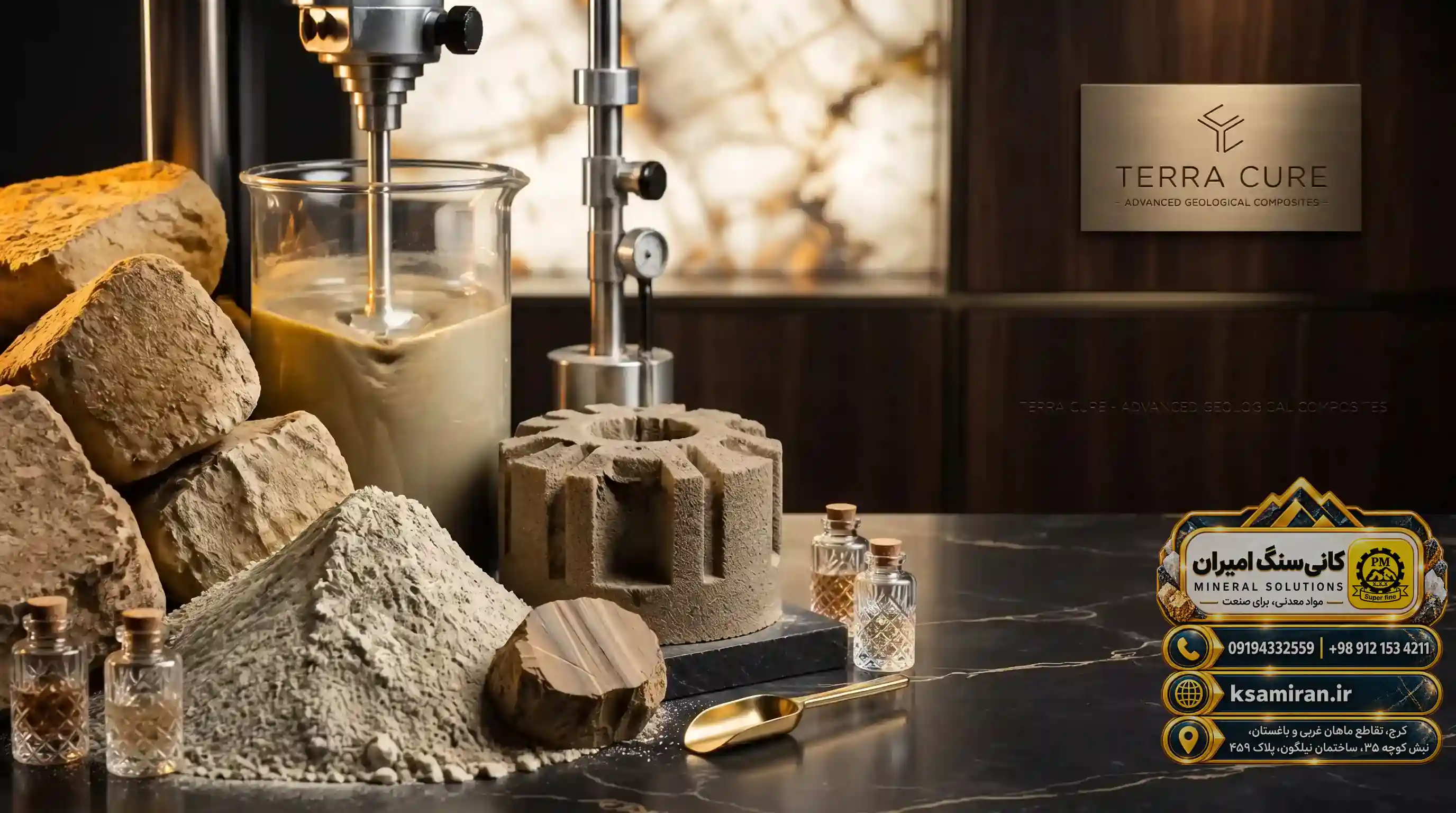
Quality Control and the Importance of the 200 to 450 Mesh Range in Bentonite Production
One of the most important quality indicators of this product is its particle size, expressed in mesh units. The mesh number indicates the number of openings per inch of screen; the larger the number, the finer the particles. In the Kani Sang Amiran project, this product is produced in the 200 to 450 mesh range, indicating very fine and homogeneous particles with a high contact surface.
The importance of this range lies in the fact that the product's application behavior is directly related to particle size. In drilling fluids, finer particles disperse quickly in water and create favorable viscosity and filtration control. In foundry, uniform distribution of powder in molding sand improves the surface quality of parts. And in absorbents, a larger contact surface entails faster absorption of moisture and odor.
In the quality control unit, numerous tests are performed on each production batch: particle size measurement with sieve series, moisture determination, swelling rate measurement, viscosity test, methylene blue absorption determination, cation exchange capacity measurement, and color and impurity checks. These tests are set according to industrial standards and customer requirements.
In addition to laboratory tests, continuous sampling from the production line ensures that errors do not accumulate. Any deviation from specifications is corrected at that very stage. In micronized products, the presence of coarse particles or impurities even in low percentages can affect final performance, which is why quality control is of utmost importance in this product.
Ultimately, the 200 to 450 mesh range along with other physical specifications provides complete information for process engineers and industrial buyers to make a reliable and efficient choice; this transparency in specifications is the main factor of trust in the industrial supply chain.
Application of Bentonite in Drilling Fluids
The largest industrial consumption of this mineral is in the drilling of oil, gas, and water wells. In drilling fluids (drilling mud), this material has vital responsibilities: increasing viscosity and weighting the fluid, carrying cuttings from the bottom of the well to the surface, controlling fluid invasion into the formation, cooling and lubricating the drill bit, and forming a mud cake on the well wall to prevent caving.
Rapid swelling in water and the creation of a gel structure have made bentonite the primary suspending agent in water-based muds. Its sodium type is more widely used in this industry due to its high swelling and good thermal stability. In addition to traditional drilling muds, this mineral is also used as a primary or supplementary element in mode fluids such as polymer muds, chitosan, or biologically derived fluids.
The economic advantage of this mineral in drilling is very significant: a small amount of it can tu a large volume of water into a fluid with suitable viscosity, and its performance-to-price ratio gives it superiority over expensive synthetic polymers. This is the reason for its popularity in large and small drilling projects worldwide.
These same fluids are used in mining and infrastructure projects such as drilling piles, underground walls, and tuels. In fact, wherever there is a need for wall stabilization, cutting transport, or pressure control, this mineral is present. That is why the quality and uniformity of the final product directly impacts the safety and cost of drilling projects.
Quality stability throughout projects is crucial; sudden changes in mud specifications can lead to operational stoppages and increased costs. For this reason, suppliers capable of providing a product with fixed and controlled specifications are highly valued in this market.
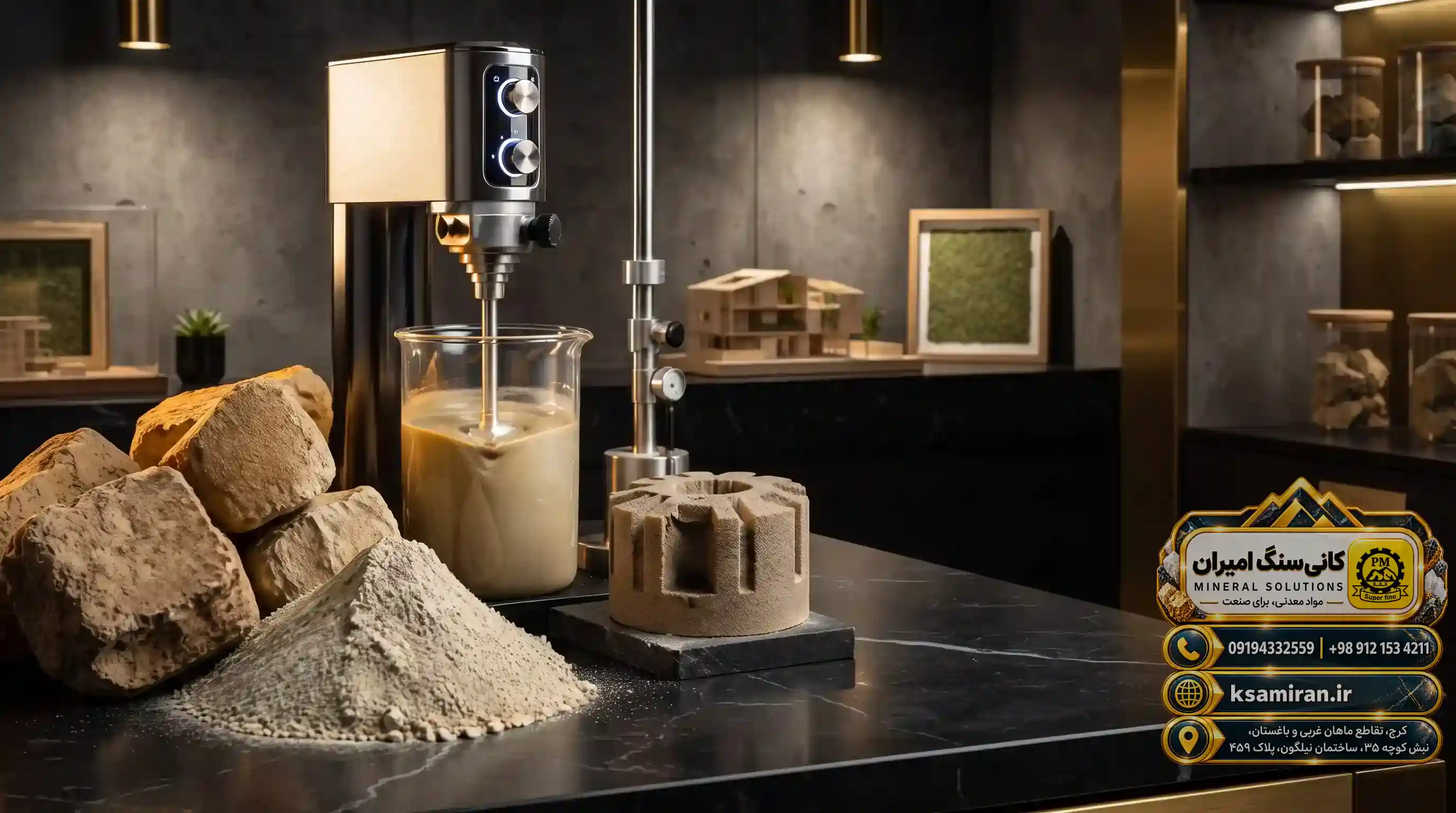
Application of Bentonite in Foundry, Absorbents, and Binders
In addition to the drilling industry, this mineral holds a special position in foundries. In the production of sand molds, bentonite is mixed with sand and water as a binder so that the molding sand sticks together and maintains its stable shape. This "green sand" allows the casting of complex metal parts with high precision and affordable cost, and the mold easily collapses after casting.
In the field of absorbents, this mineral's ability to quickly absorb moisture, oil, and odor has created extensive applications for it. Industrial absorbents, cat litter, oil and acid absorbents, and even agricultural absorbents are all designed based on this feature. The porous structure and large contact surface of this mineral are the main reasons for its rapid absorption power.
The bonding and flexibility characteristics of this mineral have made it a key material in the production of industrial muds, refractory adhesives, ceramic coatings, soil stabilizers, and even in some fertilizer and soil amendment formulations. It is also used in waste disposal projects and dam sealing to prevent water leakage.
In steel plants, this mineral is also used as a binder in the production of iron ore pellets so that fine iron particles bond together before entering the fuace. This helps improve reduction efficiency and reduce dust in the fuace.
Fine-grained minerals also play a role in the paint and mineral filler industries; for example, in the article Why is the Use of White Barite Essential in Paint Production?, the role of fine-grained minerals in improving paint quality is explained. The sum of these applications shows that bentonite is not just a simple mineral, but a strategic material present in several industrial value chains.
Storage, Warehousing, and a Look at the Bentonite Market
After production, it is time for packaging and warehousing. Due to its hydrogel nature and rapid reaction with ambient moisture, this product must be stored under controlled conditions. Packaging is usually done in multi-layer polyethylene or polypropylene bags, or one-ton jumbo packages, to prevent moisture ingress. Warehouses must be dry, enclosed, and temperature-balanced.
Technically, proper storage includes avoiding direct contact with the ground, keeping distance from walls, orderly arrangement for airflow, and periodic monitoring of moisture and temperature. Observing these points prevents the formation of hardened lumps, quality loss, and increased product wastage, guaranteeing the product's shelf life.
For a practical guide and specialized tips in this regard, the article Bentonite Storage and Warehousing Management Guide in Plants covers this topic comprehensively. Also, transportation by flatbed trucks or containers and adherence to safety and environmental principles form an important part of the supply chain.
From a market perspective, global demand for this mineral is growing due to the development of oil, gas, and mining projects. The Asia-Pacific market, developing countries, and large infrastructure projects are the main consumers. However, it should be noted that reserve quality, currency fluctuations, competition among producers, and compliance with environmental standards are among the factors affecting the price and profitability of this sector.
Ultimately, success in this market depends on a combination of a suitable mine, precise processing, continuous quality control, and professional after-sales service. The Kani Sang Amiran project, emphasizing high-quality production and transparent specifications, seeks to find a stable position in the supply chain of this industrial mineral and to take effective steps in market development in the future.
| Question | Answer |
|---|---|
| What is bentonite and what minerals is it composed of? | It is a swelling industrial clay mainly composed of the montmorillonite mineral (smectite group) and has absorption, swelling, and bonding properties. |
| What stages does the production process of this product include? | Open-pit extraction, crushing, drying, grinding, classification, and if necessary, chemical activation, followed by packaging and quality control. |
| What is the production mesh range in the Kani Sang Amiran project? | This product is produced in the 200 to 450 mesh range, indicating very fine and homogeneous particles with a high contact surface. |
| What is the main application of this mineral in drilling fluids? | Increasing viscosity, controlling filtration, carrying cuttings from the bottom of the well, and forming a mud cake on the well wall to prevent caving. |
| What is the difference between the sodium and calcium types? | The sodium type has higher swelling and gelling and is more used in drilling; the calcium type swells less and is mostly used in absorbents and foundry, and can be converted to the sodium type through activation. |
| Why is this mineral used in foundry? | It acts as a binder in molding sand, stabilizes the mold shape, and easily collapses after casting. |
| What is the reason for using this product in absorbent materials? | Its porous structure and large contact surface provide rapid absorption of moisture, oil, and odor, which is used in cat litter, industrial and agricultural absorbents. |
| How should this product be stored? | In a dry and enclosed space, away from moisture and direct contact with the ground, in durable packaging, and with periodic monitoring of moisture and temperature. |
| Does the quality of this mineral remain constant throughout industrial projects? | With continuous quality control, sampling from the production line, and laboratory tests, the uniformity of specifications is maintained, which is vital for sensitive projects. |
| What role does this product play in iron ore pellet production? | As a binder, it binds fine iron ore particles together to form stable pellets before entering the fuace. |
Source: Kani Sang Amiran Project — Mineral Production (https://ksamiran.ir) and technical information from the bentonite product page.

برچسب: Bentonite,Understanding the Production and Processing of Bentonite in Mines,
نویسنده: رساوب آفرین