
درباره سایت
آخرین مطالب
- انتخاب اکسید آهن قرمز (اخرا) برای بهبود کیفیت پیگمنت و پوششهای رنگی
- تامین کربنات کلسیم با دانهبندی دقیق جهت استفاده در مستربچ
- تأمین تخصصی سیلیس برای مصالح ساختمانی، شیشه و صنایع سرامیک
- ویژگیهای فنی بنتونیت کانی سنگ امیران برای کاربردهای خاص
- فلدسپات کانی سنگ امیران برای شیشه کاشی و سرامیک
- کاربرد تالک سفید درجه یک در فرمولاسیون پیشرفته رنگ و محصولات کاغذی
- اکسید آهن قرمز (اخرا) کاربردی جهت تولید محصولات سرامیکی و پوشش
- مشخصات فنی اکسید آهن قرمز (اخرا) مناسب برای پوشش و تولید پیگمنت
- مشاوره تخصصی خرید کربنات کلسیم بر اساس نیاز دقیق صنعت شما
- انتخاب تالک سفید صنعتی مناسب برای تولیدات کاغذ و مستربچ
امکانات وب
What is Calcium Carbonate and Why is it Important in Industries?
Calcium carbonate, with the chemical formula CaCO₃, is one of the most abundant mineral compounds in the Earth's crust. It is found naturally in limestone, marble, travertine, and lime deposits, and has been used for centuries in the production of mortar, paint, and paper, and today in polymer and engineering products. The abundance of reserves, white color, stability in most chemical environments, and cost-effective price have made this material one of the most important mineral fillers in industries.
In the polymer industry, the main role of this powder is to reduce formulation costs and improve the mechanical properties of the final product. Its particles disperse within the polymer matrix, contributing to stiffness, dimensional stability, resistance to temperature changes, and increased production line speed. For this reason, manufacturers of PVC/UPVC profiles and pipes, masterbatches, cables, and artificial leather use it as the primary filler.
The application of this material is not limited to the polymer industry. In the production of paint, paper, adhesives, and engineered stone, its high brightness, good covering power, and competitive price are highly valued. In papermaking, it acts as a filler and white pigment, and in cement-based or resinous engineered stones, it constitutes a major portion of the formulation volume.
In the market, this product is offered in the mesh range of 100 to 3500 mesh. This wide range means a high diversity of particle sizes; from coarser powders for applications that do not require precise dispersion to very fine micronized powders for industries sensitive to surface quality and transparency. Choosing the right grade directly affects the quality of the final product.
However, this diversity is not achieved randomly. Each grade of powder is the result of a controlled chain from the mine to the mill, classification, coating, and laboratory. Understanding this chain helps engineers, purchasing managers, and R&D teams make more precise choices and keep their product quality predictable.
In this article, we examine the complete process of calcium carbonate powder production from stone extraction to the final product. If you are looking for technical details of the product, you can read the specifications of calcium carbonate provided by the Kani Sang Amiran Project.
Mine; Geological Resources and Limestone Extraction
The production process begins in the mine. Industrial calcium carbonate is mostly extracted from limestone, marble, and travertine; rocks formed over millions of years from the accumulation of marine organisms and the chemical precipitation of calcium carbonate. The purity and whiteness of these reserves are two key factors in determining the powder's end-use.
Selecting the right stone is based on several criteria. First, the calcium carbonate percentage; the higher it is, the fewer impurities need to be removed in later stages. Second, the color and brightness of the stone; for applications like paint, paper, and bright masterbatch, a stone with high whiteness is required. Third, the type and amount of impurities; the presence of iron oxides, magnesium, silica, and organic compounds can affect the color, thermal behavior, and dispersion of the final powder.
After geological studies and sampling from exploratory boreholes, the extractable reserve is evaluated in terms of quality and quantity. At this stage, the extraction route and the location of processing equipment are also plaed to keep transportation and stone reduction costs as low as possible. Proper management of this stage is the foundation of quality stability throughout the chain.
The common extraction method is open-pit mining. After stripping and preparing the working face, controlled drilling and blasting are carried out to break the rock mass. The resulting fragments are loaded with loaders or excavators and transported by truck to the processing plant. Along with blasting, mechanical methods such as impact and cutting are also used depending on the rock type.
After transport, the stones are inspected at primary sorting platforms, and pieces that are out of the permissible range in terms of color, texture, or impurities are separated from the processing stream. This simple visual control has a significant impact on the performance of the entire line; the entry of impurities into the mill not only degrades the product color but also increases equipment wear. Reserve management and mine land reclamation are also part of the responsible process that keeps production sustainable in the long term.

Primary Processing; From Rock to Mill Feed
Extracted stone often has pieces larger than one meter, which caot be fed directly into the mill. The primary stage of processing is crushing. In mineral production lines, crushing is usually done in several stages to reduce the stone dimensions to the required range for the mill and to decrease energy consumption.
In the first stage, large rocks enter the jaw crusher. In this machine, the moving and fixed plates compress the stone between them, converting it into pieces in the ten-centimeter range. This machine is designed for hard and tough materials and is typically used as the primary crusher in calcium carbonate processing lines.
In the second stage, the pieces enter impact, cone, or hammer crushers to reach dimensions of a few centimeters. The output of this stage is then placed on multi-deck screens and divided into different groups based on size. Coarse pieces retu to the crusher, and finer pieces proceed to the next stage.
One of the important stages in producing high-quality powder is washing and drying. Clays, organic matter, and fine surface particles adhering to the stone due to weathering and stripping can reduce the product's brightness. Closed-circuit washing separates these impurities, and the added moisture is then removed in rotary dryers or moisture separators so that the mill feed has controlled and uniform moisture.
At the end of this stage, the feed is gathered and homogenized in specific silos or storage areas. Homogenization is the blending of pieces from different parts of the mine, compensating for natural fluctuations in stone quality. A uniform feed means stable conditions in the mill and, consequently, a consistent particle size distribution in the final product. This stage is often overlooked but directly impacts quality consistency throughout production.
Grinding and Micronization; The Key to High Mesh Powder Production
The heart of the powder production process is the milling section. At this stage, the formed particles are ground to reach the desired size. Equipment used includes ball mills, vertical roller mills, and industrial mills with hot air. The choice of machine depends on the infeed size, the final product grade, and production capacity.
In a ball mill, steel or ceramic balls crush the stone particles by falling and tumbling. This machine consumes a lot of energy but is flexible and can produce a wide range of sizes. Vertical roller mills, which grind material between a rotating table and rollers, have lower energy consumption and are considered a better option for large capacities.
The grinding process can be done in two ways: dry or wet. In the dry method, hot air or hot gas circulates inside the mill to reduce the material's moisture and prevent caking. In the wet method, the stone is ground in water and then dried; this method is suitable for producing very fine powders with a uniform particle distribution, but its drying cost is higher.
For grades with a high mesh number, micronization is used. At this stage, the powder enters micronizing machines, which reduce them to micron dimensions using high-speed air flow and particle-to-particle collisions. This is vital for applications requiring a smooth surface, high transparency, and excellent dispersion, such as high-quality paints and masterbatches.
During grinding, particles are continuously retued to the classifier. This inteal circulation ensures the production of powder within a specified range and prevents coarse particles from appearing in the final product. Energy consumption and wear of inteal parts are the two main challenges of this stage, which are controlled by selecting the right machine and a regular maintenance schedule.
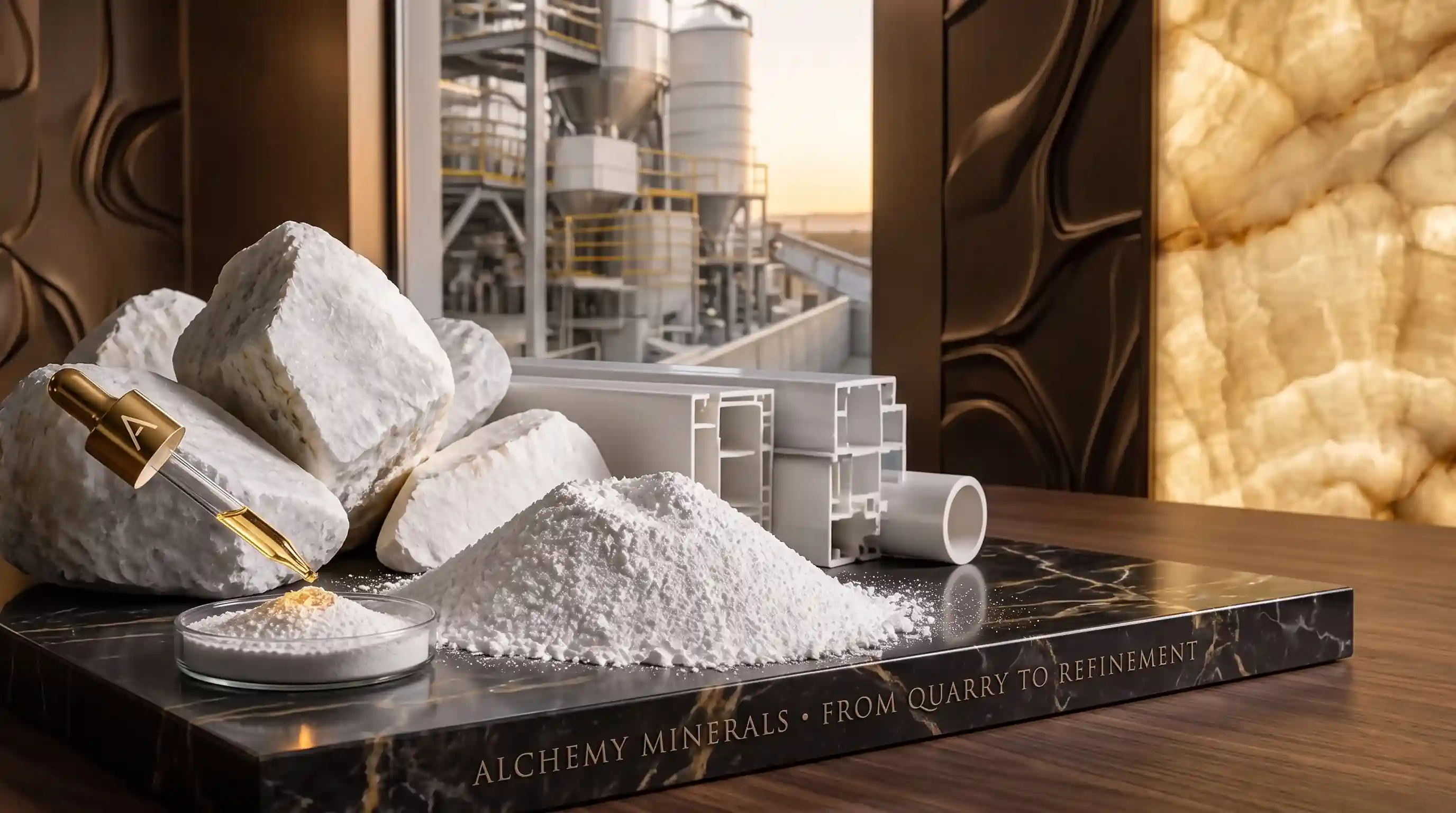
Particle Classification and Mesh Range Control 100 to 3500
The concept of "mesh" is a method of expressing particle size. The mesh number indicates the number of holes per unit area of the screen; for example, 100 mesh means the particles have passed through a screen with 100 holes per unit area. The higher the mesh number, the finer the particles. The range of 100 to 3500 mesh covers a wide span from coarse to micronized particles.
To separate particles by size, air classifiers and cyclones are used. The air classifier, by creating a controlled air flow, separates fine particles from coarse ones and retus the coarse particles to the mill. This method has replaced mechanical screens for fine grades because screening very fine particles leads to caking and screen blinding.
The most important output of this stage is the particle size distribution (PSD). Instead of a single size, the product is characterized by a distribution curve showing the proportion of particles of different sizes. Indicators such as D50, D90, and the upper size limit are key quality metrics. A high-quality powder has a narrow distribution; meaning most particles are concentrated within a specific range.
Each application demands its own particle distribution. In PVC profiles, uniform dispersion of particles is important to prevent a drop in impact resistance. In paper and paint, brightness and covering power are enhanced with finer particles. In artificial leather and membranes, the stability of surface properties is vital. Choosing between calcium carbonate and other mineral fillers also involves understanding these differences; for example, the article Structural Differences Between White Talc and Calcium Carbonate examines the differences in structure, mechanical behavior, and application of these two materials.
At the end of the classification stage, each powder grade is stored and labeled in separate silos. This separation prevents the mixing of different grades and enables full product traceability from the mine to packaging.
Coating; Production of Coated Calcium Carbonate
Calcium carbonate particles are naturally hydrophilic. This characteristic does not cause problems in aqueous environments, but in non-hydrophilic polymer matrices, it causes particles to stick together and form heterogeneous dispersion. To solve this problem, the coating process is used, in which the particle surface is covered with a thin organic layer.
The most common coating agent is stearic acid and its salts. These compounds attach their carboxyl group to the surface of the calcium carbonate particle, with their long hydrocarbon chain facing outward. The result is a particle with a hydrophobic surface that is more compatible with the polymer matrix. The coating percentage is typically between 1 and 3 percent by weight.
The coating process is carried out in high-speed mixers or inside the mill in the presence of hot air. Controlling temperature, mixing time, and the percentage of coating agent are the three main parameters of this process. A temperature lower than required leaves the reaction incomplete, while a higher temperature causes the organic material to decompose and the product color to change. In professional production, samples are continuously tested to check dispersion, flowability, and oil migration.
Coated calcium carbonate offers significant advantages. In PVC profiles and pipes, it brings better dispersion, a smoother surface, reduced mold adhesion, and increased production line speed. In masterbatches, higher transparency and the reduction of localized density points are important outcomes. In cables, improved electrical properties and less equipment wear are crucial. For a more detailed examination of this topic, read the article Economic Benefits of Using Coated Calcium Carbonate in Manufacturing.
Despite the advantages, improper use of coated powder can also cause problems; including a drop in impact resistance, color change, or reduced gelation speed. In such cases, the guide Troubleshooting Production Problems with Coated Calcium Carbonate can help identify the cause and correct the formulation.
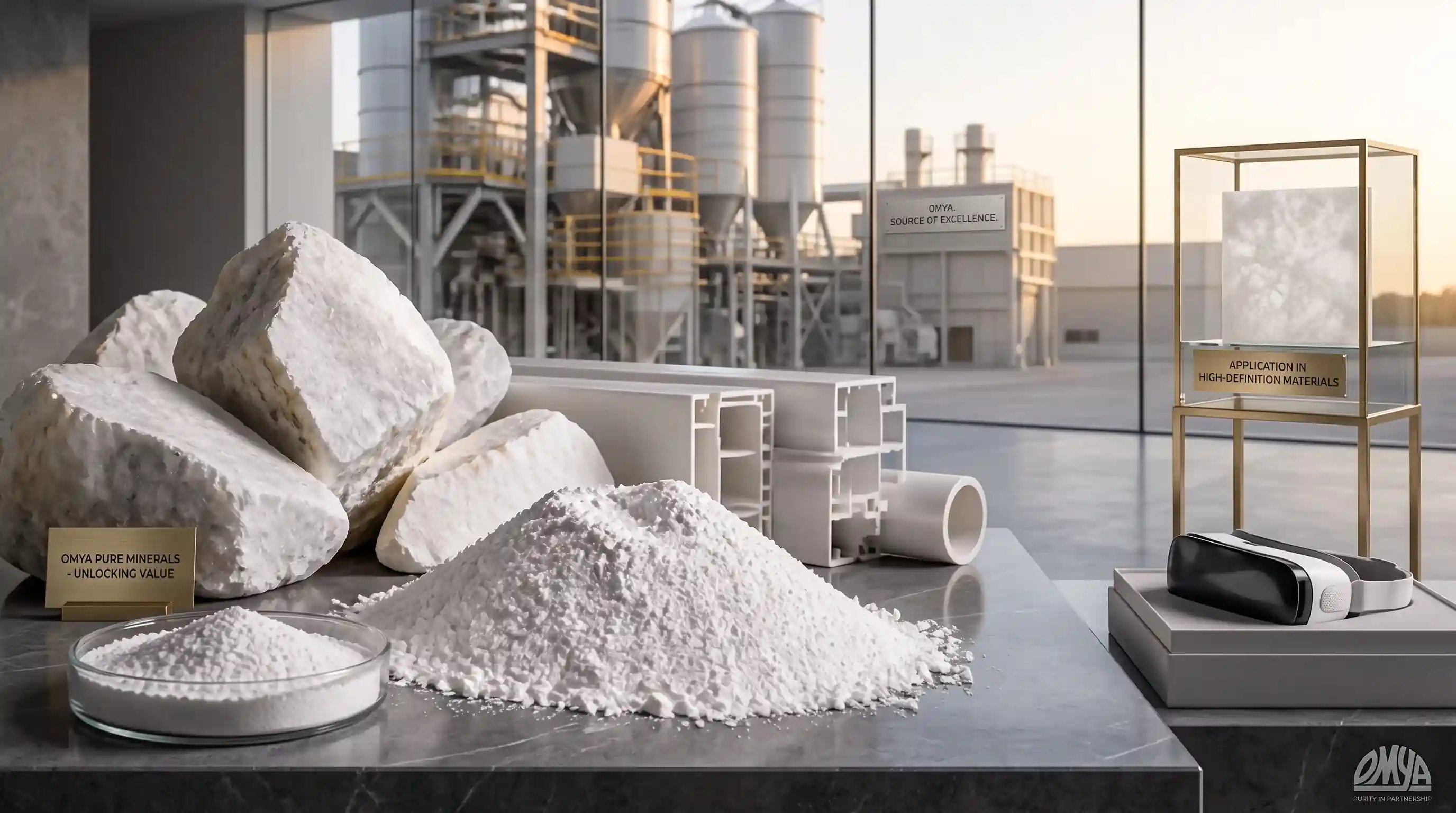
Quality Control, Testing, and Packaging
Quality control in calcium carbonate powder production is not a single stage; it is a continuous process from stone entry to product packaging. Sampling at various points along the line allows for rapid identification of fluctuations and process correction. The ultimate goal is to deliver a product with consistent specifications in every shipment.
The first group of tests relates to particle size. Analysis is done using the dry sieve method for coarse grades and laser diffraction methods for fine grades. Parameters such as D50, D90, upper size limit, and sieve residue define the main specifications of each grade. These results provide a roadmap for adjusting the classifier and mill.
The second group of tests covers surface and chemical properties. Brightness and color are measured with colorimeters based on the L*a*b* color space. Moisture content, oil absorption, pH, bulk density, and specific surface area are other important parameters. For sensitive applications, trace elements and metallic impurities are also examined to ensure the product's compliance with the standards of the polymer, paint, and paper industries.
Consistency between shipments is the main criterion of a producer's maturity. To achieve it, laboratory statistics are reviewed periodically, and if a trend outside the control range is observed, the process is corrected at that very stage. Lot identification (Lot ID) enables full traceability from incoming stone to the packaged product.
In the packaging section, the powder is loaded into multi-wall bags, big bags, or in bulk. The choice of packaging type depends on the customer's needs and consumption volume. In any case, preventing moisture absorption, maintaining purity, and avoiding dust contamination are constant principles. Each packaging unit includes a label with product specifications, lot number, and production date so that technical product information remains available to the consumer until the moment of use.
End-Uses of Calcium Carbonate and Selecting the Right Grade
PVC/UPVC profiles and pipes are the largest consumers of this powder. In these products, calcium carbonate acts both as a filler and a viscosity regulator. Medium mesh grades are used for general applications, while finer and coated grades are used for profiles with a glossy surface and high impact resistance. Choosing the wrong grade can lead to reduced resistance, extruder wear, and increased formulation costs.
In the masterbatch industry, calcium carbonate powder is used as a pigment carrier and filler. In this application, color stability, excellent dispersion, and prevention of white spots are the main criteria. In the cable industry, this powder is used as an insulation filler and electrical property regulator; where clay and metallic impurities must be carefully controlled.
Artificial leather, which is produced by polymer coating on fabric or paper, utilizes calcium carbonate powder to create a uniform surface and control density. In this application, uniform particle distribution and compatibility with formulation oils are of high importance.
In the paint and paper industries, this material acts both as a filler and as a white pigment. Brightness, covering power, and proper dispersion are key properties. In the adhesive industry, calcium carbonate powder adjusts volume, adhesion, and viscosity stability. In engineered stone, this powder makes up a large part of the formulation volume and plays the main role in the stone's density, strength, and final surface finish.
Choosing the right grade requires knowing the final product's details: wall thickness, line speed, required transparency, finishing method, and cost constraints. In each case, selecting the appropriate grade rather than the highest grade is the best solution. To view specifications, mesh range, and exact applications, see the calcium carbonate product page on the Kani Sang Amiran Project website.

| Question | Answer |
|---|---|
| What is calcium carbonate? | A mineral compound with the formula CaCO₃ extracted from limestone, marble, and travertine, used as a mineral filler in the polymer, paint, paper, adhesive, and engineered stone industries. |
| What is the mesh range of this product? | The product's mesh range is 100 to 3500 mesh, covering from coarse particles to very fine micronized powders. |
| What is coated calcium carbonate? | It is a powder whose particle surfaces are coated with organic materials like stearic acid so it disperses better in polymer matrices and mold adhesion is reduced. |
| What are the main applications? | PVC/UPVC profiles and pipes, masterbatch, cable, artificial leather, paint, paper, adhesives, and engineered stone. |
| What are its advantages in the polymer industry? | Reduced formulation cost, increased stiffness and dimensional stability, improved thermal properties, and increased production line speed. |
| Why is particle size important? | Particle size directly affects the dispersion, brightness, impact resistance, and surface quality of the final product, and must be selected for each application. |
| How is the powder produced? | Stone extraction, multi-stage crushing, washing and drying, grinding and micronization, particle classification, optional coating, and final quality control. |
| What is the difference between this material and talc? | The crystal structure, mechanical behavior, and applications of these two fillers differ; examining the structural differences between white talc and calcium carbonate helps in making the right choice. |
| How is quality control performed? | Analysis of particle size distribution, brightness, moisture, oil absorption, purity, and consistency between shipments is carried out continuously in a dedicated laboratory. |
| How can I view the product specifications? | The full product specifications are presented on the calcium carbonate page of the Kani Sang Amiran Project website. |
Technical guide for the production and quality control of mineral fillers, Kani Sang Amiran Project — mineral materials production.
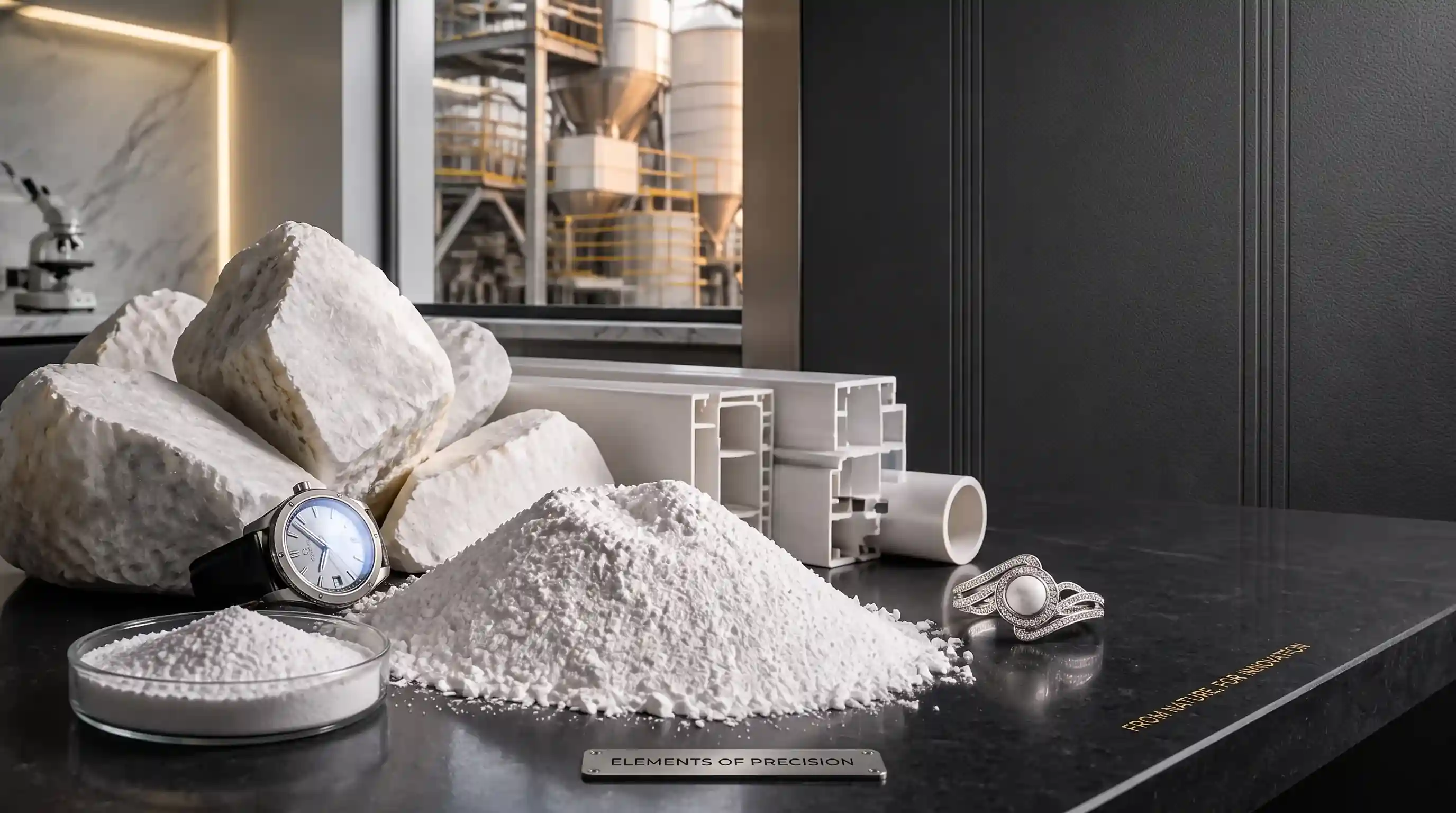
برچسب: Calcium Carbonate,Calcium Carbonate Powder Production Process, From Mine to Final Product,
نویسنده: رساوب آفرین