
درباره سایت
آخرین مطالب
- تاثیر اندازه ذرات کربنات کلسیم در صنایع
- ما هو الفرق بين الفلسبار والكوارتز؟ مقارنة شاملة بين أكثر مادتيْن معدنيتيْن استخدماً
- دليل شراء أكسيد الليمونيت عالي الجودة (الجول ماش)
- What is the Difference Between Kaolin, Bentonite, and Talc in Industry? A Complete Application Comparison
- کربنات کلسیم یا دولومیت؟ بررسی تفاوتها و کاربردهای کلیدی
- مراجعة معايير التصدير لأكسيد الليمونيت (جول ماش)
- راهنمای نگهداری و انبارداری اکسید لیمونیت (گل ماش)
- National Quality Standards of Limonite Oxide (Gol Mash)
- Guide to Receiving the Catalog and Specifications of Limonite Oxide (Gol Mash)
- کاربرد اکسید لیمونیت (گل ماش) در صنایع چرم و پارچه
امکانات وب
Why is Choosing Graded Silica the Starting Point of Industrial Quality?
Silica is one of the most fundamental mineral materials in industry and plays a structural role in glass, foundry, ceramic, and building material processes. But this same material can have excellent performance in one factory and be a cause of quality degradation in another; because the final result depends not only on the type of mineral, but on particle size distribution, relative purity, particle shape, and uniformity. For this reason, choosing graded silica must first be done through a precise understanding of the process, not just a price comparison.
In glass production, silica particles must be selected so that the batch homogenizes well, melting occurs within a reasonable time, and the probability of creating unmelted grains, bubbles, or color impurities is reduced. In foundries, particle size affects mold permeability, part surface quality, and the thermal behavior of the sand system. In ceramics, silica granulation affects dry shrinkage, porosity, and phase development of the body, and in building materials, its role as an aggregate or filler relates to the strength, workability, and durability of the final product.
The 10 to 450 mesh range shows that this product can cover a wide range of industrial needs; from relatively coarse particles for applications requiring permeability and proper volume, to very fine particles used in finer formulations such as glazes, ceramic bodies, and filler materials. But this same breadth means the buyer must specify the granulation suitable for their application; because choosing based solely on being “finer” or “coarser” is usually an incomplete decision.
A common mistake is considering silica only as a cheap filler material. In fact, graded silica is an engineered material: every delivered batch must have measurable and repeatable key characteristics. If the particles fall within a suitable range but their distribution changes between batches, process parameters such as energy consumption, binder demand, mixing time, or product defect rate will also change.
Therefore, the starting point of a correct purchase is preparing a checklist including the following: final application, process sensitivity to impurities, transfer and storage method, the factory's laboratory capability to confirm granulation, and the standard the supplier applies for quality control. This checklist helps you choose silica that is not only compatible with your formulation but also reduces the risk of production fluctuations.
Ultimately, choosing the right silica means choosing a technical partner; a supplier who transparently specifies the properties, provides testable samples, and knows why a glass factory caot buy with the same logic as a building materials factory. This approach transforms purchasing from a raw transaction into a qualitative decision.
Managing the 10 to 450 Mesh Range and Its Interpretation for the Production Line
The term “mesh” in silica granulation refers to the number of holes per unit area of the sieve, and a higher mesh number indicates finer particles. The 10 to 450 mesh range covers a relatively broad spectrum, and it is important for the buyer to know that this range is only a general band, not a single technical specification. What determines the final behavior of the product is how the particles are distributed within this range and the amount of particles outside the permissible limits.
In practice, two batches of silica, both introduced within the same mesh range, can behave differently. The reason is that one sample may have a narrow and concentrated distribution, while the other sample is a mixture of fine and coarse particles with a similar average. This difference affects specific surface area, water or binder demand, mill density, mixture fluidity, and the speed of thermal reactions.
To correctly interpret the 10 to 450 mesh range, it is better to examine the sizing data in the form of a particle size distribution curve, not just an average number. In this curve, three points are usually important: the coarse particle decile, the middle decile, and the fine particle decile. These values tell you how homogeneous the product is, how much fine material might increase water or binder demand, and what portion of the batch might exhibit coarse-grained material behavior.
- Coarser particles are usually more suitable for applications requiring permeability, inter-particle space, and mechanical strength.
- Middle particles help create a continuous structure and stability in the mixture.
- Fine particles may increase the specific surface area and perform better in glazes, adhesion, or filling, but they can also raise water and mixing energy demands.
In the glass industry, improper distribution can prolong melting time or cause unmelted grains. In foundries, excessively fine particles reduce mold permeability and increase the risk of gas defects; while excessively coarse particles can ruin the part's surface quality. In ceramics, a change in distribution causes shrinkage and porosity fluctuations, and in building materials, granulation uniformity directly affects the workability and strength of the product.
Also, do not forget that the testing method matters too: dry sieving, wet sieving, and laser diffraction can provide different results for the same sample. Therefore, in negotiations with the supplier, the measurement method, sample preparation, and result reporting conditions must be specified. This transparency transforms the 10 to 450 mesh range from an advertising phrase into a real quality control tool.
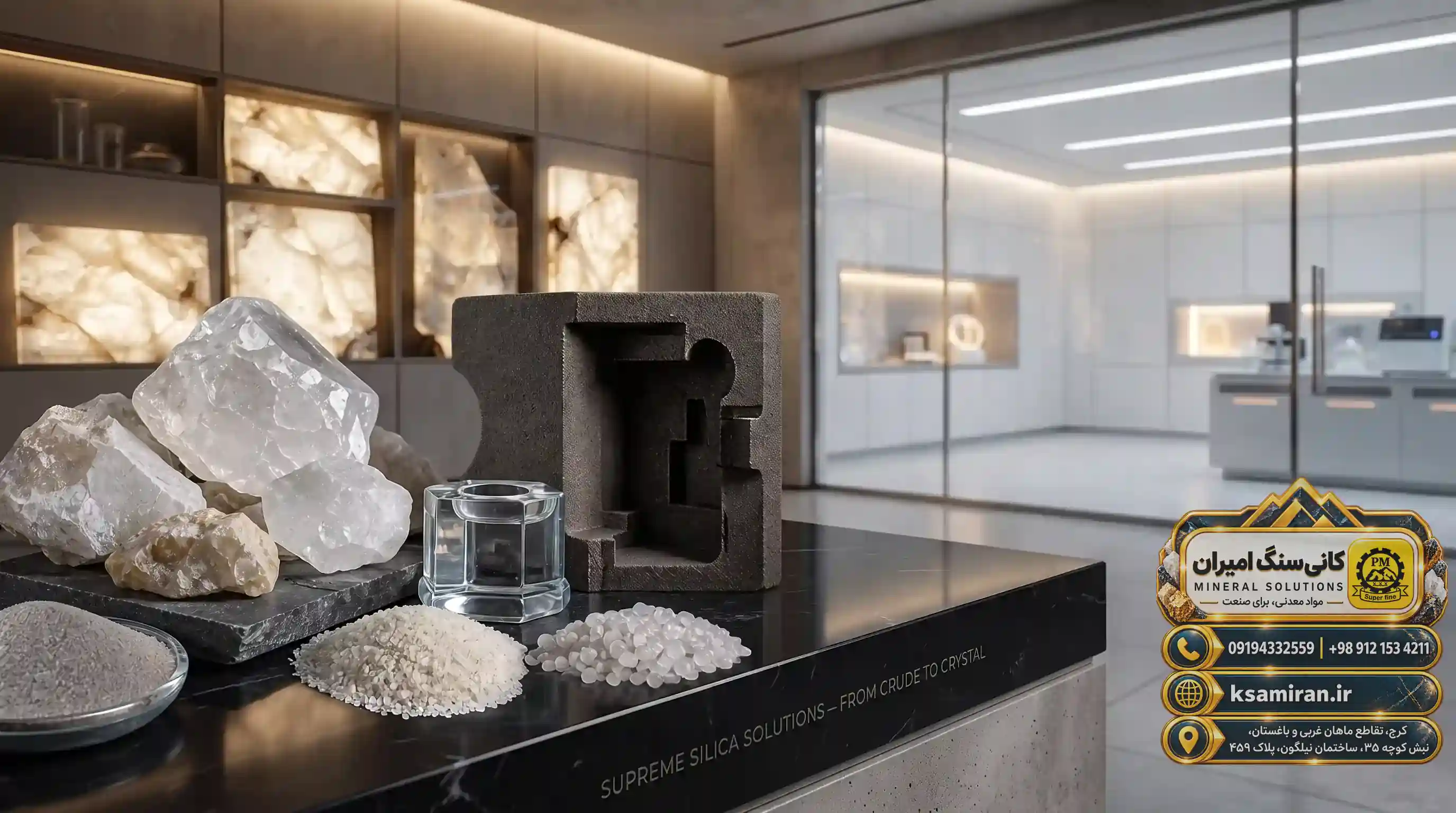
Standards and Technical Parameters for Inspecting Silica Before Purchase
To purchase graded silica, you must first request the product's technical specifications from the supplier and then match this data with your process requirements. Otherwise, comparing different proposals degenerates into price comparison and general claims instead of technical decision-making.
The first parameter is chemical composition. The silica content and the percentage of impurities such as iron oxide, aluminum oxide, titanium oxide, and alkaline compounds can be decisive in sensitive applications. In clear glass and light-colored ceramic products, even minor color impurities can affect the final quality. In foundries and some building materials, restrictions may be different, but they must still align with your product standards.
The second parameter is particle size distribution. Request that the sizing report shows what percentage of particles are at the lower limit, upper limit, and middle range. A single average number is not enough; because two samples with the same average can behave completely differently in practice. It must also be specified whether the product actually falls within your desired mesh range or only has a general classification.
The third parameter is moisture. High moisture can cause particles to stick, equipment corrosion, silo clumping, and weighing errors. In processes where the mixture must be dry and homogeneous, moisture control is a quality factor, not a marginal detail. Along with moisture, the amount of fine materials and dust should also be evaluated, as these particles can disrupt flow behavior and pneumatic transfer.
The fourth parameter is particle shape and morphology. Angular and round particles behave differently in adhesion, permeability, and density. In foundry molds, particle shape affects binder demand and part surface quality; in ceramics and building materials, this property affects the density and strength of the raw body.
Supplementary parameters include acidic behavior, abrasion, organic matter, and friability. In some applications, chemical reactivity and thermal stability must also be evaluated. The important thing is that every technical claim must be accompanied by an analysis certificate or laboratory report. These reports must include the date, test method, and sample ID to be traceable.
Ultimately, a professional supplier should be able to provide samples, explain the sampling method, and, if necessary, accept independent laboratory results. The buyer should also test a sample under real production line conditions before ordering a high volume. This reduces the risk of choosing the wrong granulation or inappropriate impurity.
Choosing Silica for the Glass Industry
In the glass industry, silica is the main network former and constitutes the bulk of the molten structure. For this reason, any fluctuation in its granulation or purity can directly affect transparency, bubbles, stones, color, and energy consumption. Choosing the right graded silica in this industry means creating a balance between melting speed, batch uniformity, and process stability.
First, the sensitivity of the final product must be determined. Clear and luxury glasses, glass containers, decorative glasses, and packaging products are usually more sensitive to color impurities and metal particles. In contrast, some colored glasses, glass fibers, or industrial products may have different strictness. Therefore, the chemical composition of silica must be matched to the color and transparency needs of the product.
Next, particle size distribution is decisive. Excessively coarse particles may not melt well in the fuace and cause stones. Excessively fine particles can create powdery behavior, dust, stickiness, and an increased specific surface area, resulting in a transformation in mixture fluidity and increased energy demand. The goal is usually to find a granulation that provides maximum homogeneity and melting speed with minimal transfer and mixing problems.
An important point is controlling fine particles and moisture. Moisture can cause clumping in the silo, sediment in the transfer line, and dosing errors. Also, dust-contaminated particles may remain locally unmelted and create surface defects. Therefore, when reviewing supplier offers, a moisture report and the percentage of particles below the permissible limit must also be requested.
In glass production, uniformity of the incoming batch is as important as the chemical composition. If the silica is within a generally suitable range but its particles change between batches, the fuace operating point and damper settings must be corrected repeatedly. This issue can affect production efficiency and glass quality. For this reason, a transparent technical agreement on the permissible range and test method is essential.
In addition, you must specify the sampling method. A sample must be representative of the whole batch, not just the part taken from the surface of the truck or bag. Contracts can stipulate that a sizing report and chemical analysis be provided for each shipment, and in case of discrepancy, joint sampling be performed. This approach transforms glassmaking purchases from a simple dependence on the supplier into a controlled system.

Choosing Silica for Foundry Products
In foundries, silica is one of the most important components of the mold and core sand system. Its task is not only to resist the temperature of the molten metal, but also to create a stable geometry, allow gases to escape, and achieve proper surface quality. For this reason, choosing the right silica granulation is directly related to mold strength, defect rate, and production costs.
One of the key concepts is permeability. Excessively fine particles reduce the space between particles and make it difficult for the gases produced during casting to escape. This issue can cause gas defects, bubbles, and even mold destruction. In contrast, very coarse particles may provide mechanical strength but cause the part's surface to become rough.
For this reason, a balanced distribution is usually needed: coarser particles form the skeleton structure, middle particles manage the space between them, and a controlled amount of fine particles helps improve the surface and continuity. If this balance is disrupted, the demand for binder, moisture, and chemicals also changes, making the core-making process unstable.
In addition to particle size, particle shape is very important. Angular particles usually create more resistance to displacement and can bond better with the binder, but they also increase binder and water demand. Round particles may improve flowability and reusability, but in some processes require less binder. The final choice depends on the type of metal, binder system, core production method, and the part's sensitivity to surface quality.
The uniformity of silica in foundries is very important. If granulation changes between batches, mold strength, binder demand, permeability, and mixing time also change. This issue can increase scrap, require frequent machine adjustments, and even cause production stoppages. Therefore, the permissible amounts of coarse, middle, and fine particles must be defined in the purchasing specifications.
When evaluating suppliers, request that the test report includes particle size distribution, moisture, and chemical composition. Also, the amount of fine materials, dust, and, if necessary, the amount of organic contamination must be specified. Organic contaminants can increase gas generation and disrupt the thermal behavior of the mold.
If you use reclaimed sand, you must consider the effect of attrition and the accumulation of fine particles. During reuse, particles break and the granulation composition shifts toward finer particles. In this case, purchasing suitable silica must be accompanied by a granulation control strategy at the factory to maintain the overall balance of the mixture.
Choosing Silica for Ceramic Products
In the ceramic industry, silica is one of the structural components of the formulation, and its role in dry behavior, density, firing shrinkage, and the surface quality of the product is very critical. Choosing the right granulation depends on the product type, shaping method, and firing temperature, and there is no fixed rule for all types of ceramics.
In ceramic bodies, silica is usually used along with clay, feldspar, and other minerals. In this composition, silica particles act as a strong, non-plastic phase. Their size affects particle adhesion, water distribution in the body, dry strength, and shrinkage rate. Very fine particles may increase shrinkage and the risk of cracking, while coarse particles can increase porosity and surface roughness.
In traditional ceramic products, a balanced distribution usually helps with structural stability and defect reduction. In more advanced products, a need for more precise control exists, because particle distribution can be directly related to final density, crystalline phases, and mechanical properties. For this reason, a complete sizing report should be part of the purchasing specifications, not an optional add-on.
Regarding glazes, the sensitivity is even greater. Inappropriate particles can cause undesirable color, bubbles, surface non-uniformity, and reduced gloss. Since glaze is usually applied in thin layers under precise conditions, particle distribution and impurity control must be examined more carefully. In this application, very fine silica can be desirable, but it must be coordinated with suspension behavior and additive demand.
One important point is color stability. Metallic and color impurities can severely degrade the quality of light-colored ceramic products. Therefore, the chemical composition of silica must be matched to the color sensitivity of the product. Also, the effect of alkaline and aluminum impurities on firing and shaping behavior should be examined, as these impurities can change the firing point and phases of the product.
In the ceramic production line, batch uniformity is a competitive advantage. If silica is supplied in the same mesh range but its particle distribution changes, shrinkage, porosity, and surface quality will also change. This issue especially increases scrap in productions with precise geometry and small tolerances. Therefore, the sampling method, testing, and permissible range must be defined in the contract.
Ultimately, a successful purchasing process involves three steps: technical review, sample testing in the research and development line, and using the results to define final specifications. This method reduces sudden formulation changes and helps you choose silica not just as a raw material, but as a quality control agent.
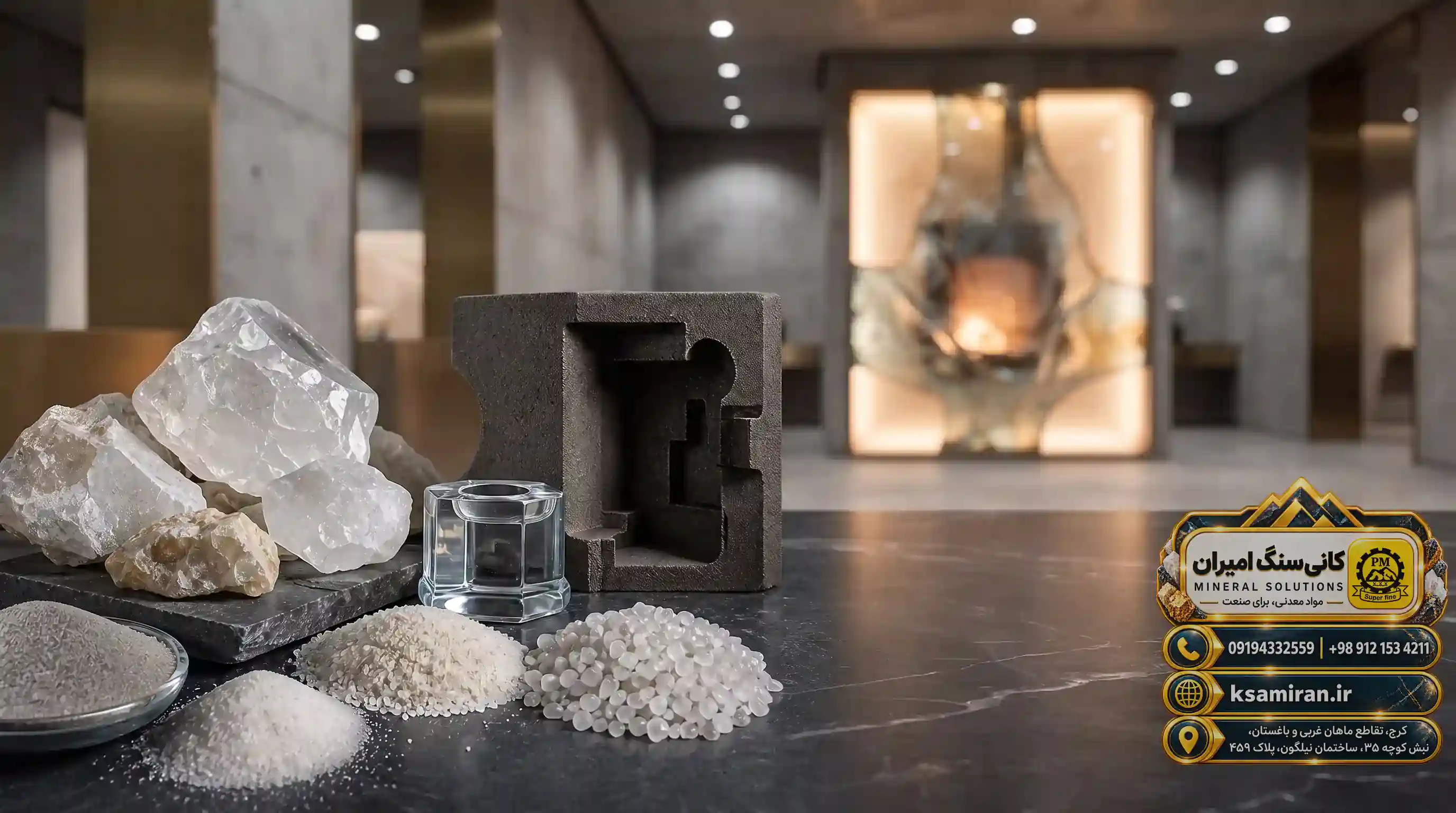
Choosing Silica for Building Materials
In the building materials industry, silica is used in various roles such as aggregate, filler, process sand, and structural component. This material is used in concrete, mortar, prefabricated products, artificial stones, and various coatings, and choosing its proper granulation directly affects the workability, strength, and durability of the final product.
First, it must be determined what role silica plays in your product. If used as the main aggregate, particle size distribution affects density, water consumption, and mechanical strength. If used as a fine filler, its specific surface area can affect water, binder, and mixture fluidity demands. These two scenarios require two different purchasing approaches, even if both fall in the general 10 to 450 mesh range.
In concrete and mortar, a suitable composition usually requires creating a dense structure. Coarse particles fill the inteal space, middle particles help with density, and fine particles are responsible for improving workability and filling very small spaces. But if there are too many fine particles, the demand for water and binder increases, which can increase shrinkage and the risk of cracking. Therefore, the full particle distribution must be examined, not just the general phrase “suitable mesh silica”.
In prefabricated products and artificial stones, appearance and surface uniformity are very important. Inappropriate particles can cause voids, roughness, color differences, and reduced strength at the edges. In these products, in addition to particle size, the shape and color of silica must also be coordinated with the product design.
In building materials, impurity control must be done carefully. Dust particles, organic contamination, undesirable reactivity of aggregates, and moisture levels can affect workability and durability. In cases where the aggregate is exposed to moisture and harsh conditions, the chemical and physical behavior of the material should be evaluated based on building material standards. If necessary, compliance tests with standards related to building products should be performed.
Batch uniformity in this industry means production process stability. If silica granulation changes between shipments, the water/binder ratio, mixing time, fluidity, and early strength will also change. As a result, final quality control of the manufactured product becomes more difficult. For this reason, it is better to reach an agreement with the supplier on the permissible particle range and test method.
Also, in evaluating proposals, you should consider the technical delivered cost, not just the price per ton. Silica that seems cheaper but requires more water, more binder, or extra processing may ultimately be more expensive. In contrast, silica with proper granulation and high uniformity can reduce energy, binder, and scrap, and its true value is beyond the initial price.
Final Checklist for Purchasing, Supplying, and Inspecting Graded Silica
Purchasing graded silica is successful when its process is documented and repeatable. This stage should not be limited to a verbal agreement about the 10 to 450 mesh range; rather, it should include technical requirements, testing, packaging, shipping, and traceability.
In the first step, define your process: what is the final product, which features are critical, and what risks exist in the production line. Then prepare written permissible specifications for granulation, impurities, moisture, and particle shape. This document helps you compare suppliers' proposals with the same criteria.
In the second step, request technical information. The sizing report, chemical analysis, and moisture data must include the test method, date, and sample ID. If the supplier caot provide this information, the reason should be investigated. In bulk purchases, the sample must be tested under real production line conditions to confirm the silica's behavior in your process.
In the third step, evaluate supply uniformity. A good supplier does not just deliver a good product once; rather, they have a quality control system that makes results comparable between batches. Request that periodic samples or shipment reports be provided. It should also be clear what the handling process is in case of deviation from specifications.
In the fourth step, define shipping and storage conditions. Packaging must protect against contamination, moisture, and abrasion. In bulk shipments, the unloading method, moisture, and the possibility of joint sampling must be specified. For fine particles, dust control and transfer equipment are also important.
In the fifth step, before purchasing, be sure to visit the silica product page and review the information introduced for glass, foundry, ceramic, and building material applications. This page, as the starting point for product information of the Kani-Sang Amirghan mineral project, can help you prepare essential parameters before technical negotiation.
If you also know the selection criteria for other minerals, you can use the related guides: Guide to Choosing the Right Granulation for Industrial Kaolin and Guide to Choosing Limonite Oxide (Gol Mash) Granulation. Also for Arabic-speaking users, the Arabic version of the Guide to Choosing Limonite Oxide (Gol Mash) Granulation is available.
Ultimately, see silica purchasing as a chain decision: choosing the right granulation, controlling impurities, shipment uniformity, and sample testing all help reduce scrap, reduce hidden costs, and increase your product's credibility. This approach transforms silica from a simple raw material into a competitive advantage factor.
| Question | Answer |
|---|---|
| What is graded silica? | It is silica classified by particle size and controlled for industrial applications such as glass, foundry, ceramics, and building materials. |
| What does the 10 to 450 mesh range mean? | This range shows the product can cover from relatively coarse to very fine particles, but the exact particle distribution for your application must be examined. |
| Why is only the mesh number not enough? | Because two samples with a similar average mesh can have different distributions and behaviors, changing production performance. |
| Which main industries use this silica? | The glass industry, foundry products, ceramic products, and building materials use this material according to their process needs. |
| Why should a sample be tested before purchase? | To confirm the actual behavior of silica in your production line, including melting, permeability, mixing, shrinkage, and final strength. |
| Which technical reports should be requested? | Sizing, chemical composition, moisture, and if necessary, information related to particle shape and impurities, along with the test method and sample ID. |
| How is uniformity between shipments controlled? | By defining the permissible particle range, systematic sampling, shipment reports, and periodic inspection at delivery time. |
| Why does moisture matter? | Moisture can cause particle stickiness, silo clumping, weighing errors, and a change in water or binder demand in the formulation. |
| Is the same silica suitable for all industries? | No; each industry needs a different granulation and purity degree based on color, temperature, permeability, and strength sensitivity. |
| What is the best way to start purchasing? | Defining technical specifications, requesting reports, testing a sample under real conditions, and agreeing on the sampling and quality control method. |
Kani-Sang Amirghan Mineral Project — Mineral Materials Production; Guide to Choosing Graded Silica for Industry.

برچسب: Silica,Guide to Choosing Graded Silica for Industry,
نویسنده: رساوب آفرین