
درباره سایت
آخرین مطالب
- انتخاب اکسید آهن قرمز (اخرا) برای بهبود کیفیت پیگمنت و پوششهای رنگی
- تامین کربنات کلسیم با دانهبندی دقیق جهت استفاده در مستربچ
- تأمین تخصصی سیلیس برای مصالح ساختمانی، شیشه و صنایع سرامیک
- ویژگیهای فنی بنتونیت کانی سنگ امیران برای کاربردهای خاص
- فلدسپات کانی سنگ امیران برای شیشه کاشی و سرامیک
- کاربرد تالک سفید درجه یک در فرمولاسیون پیشرفته رنگ و محصولات کاغذی
- اکسید آهن قرمز (اخرا) کاربردی جهت تولید محصولات سرامیکی و پوشش
- مشخصات فنی اکسید آهن قرمز (اخرا) مناسب برای پوشش و تولید پیگمنت
- مشاوره تخصصی خرید کربنات کلسیم بر اساس نیاز دقیق صنعت شما
- انتخاب تالک سفید صنعتی مناسب برای تولیدات کاغذ و مستربچ
امکانات وب
Introduction to Silica and the Importance of Particle Size
Silica or silicon dioxide (SiO₂) is one of the most abundant mineral compounds in the Earth's crust, widely used in various industries including glassmaking, casting, ceramics, and building materials. Due to its unique physical and chemical properties, this mineral has become one of the vital raw materials in industries, and its quality directly affects the quality of final products.
One of the most important parameters determining the quality of silica for industrial applications is its particle size. Silica particle size directly affects the production process and final product quality. In the glass industry, particle size affects melting speed and melt uniformity. In casting, particle size affects the surface quality of parts and mold permeability. In ceramics, particle size affects strength and behavior during firing. And in building materials, particle size affects the strength and durability of products.
Silica particle size is usually measured in mesh units. Mesh unit indicates the number of openings in each square inch of the screen. Silica is produced in the 10 to 450 mesh range, which covers a wide range of particle sizes and meets the needs of various industries. Coarser particles (lower mesh) are suitable for applications requiring more porosity and permeability, while finer particles (higher mesh) are used for applications requiring a smooth and uniform surface or higher reactivity.
The importance of silica particle size is not limited to technical issues, but also affects production costs and energy consumption. For example, in the glass industry, using silica with a suitable particle size can reduce the melting temperature and consequently lower energy consumption. This shows that choosing the right silica particle size affects not only product quality but also the economic efficiency of production.
In addition to particle size, other factors such as chemical purity, particle shape, and particle size distribution also affect silica quality. The chemical purity of silica is very important for industries such as glassmaking, where iron and other metal impurities can affect the color and transparency of the product. Particle shape also affects the behavior of silica in various processes; angular particles are more suitable for applications requiring greater adhesion, while round particles perform better for applications requiring lubrication.
Particle size distribution is also an important factor. Uniform particle distribution makes the final product have more uniform properties, while non-uniform distribution can cause fluctuations in product quality. For this reason, silica manufacturers usually try to control the particle size distribution of their product within a specific range.
In this article, we comprehensively examine the effect of silica particle size on the quality of the final product in four main industries: glass, casting, ceramics, and building materials. We also explain how to choose the right silica size for different applications. To see the full specifications of silica and the available mesh range, you can visit the product page.
The Effect of Silica Particle Size on Glass Quality
Glass is one of the most important products of industry, and silica is considered its main raw material. In glass production, silica constitutes more than 70% of the raw material composition, and its quality directly affects the quality of the final glass. Silica particle size is one of the key factors determining the melting process and the quality of the final product.
In the glass production process, raw materials must be melted in melting fuaces. Silica particle size directly affects the speed and uniformity of this process. Finer particles have more contact surface with other raw materials and therefore melt faster and more completely. This makes the glass melt more uniform and reduces unmelted impurities in the final product.
However, using very fine particles can also cause problems. Very fine particles tend to create dust, which can cause material loss and environmental problems. Also, very fine particles may cause bubbles in the glass melt, because gases trapped between fine particles take longer to escape. Therefore, balance in particle size is very important.
Silica particle size also affects glass transparency. Using silica with a uniform particle size makes the glass melt more homogeneous, resulting in clearer and higher-quality glass. In contrast, using silica with a non-uniform particle size can cause areas with different transparency in the glass.
In the production of special glasses such as borosilicate glasses or crystal glasses, controlling silica particle size becomes more important. These glasses require very high uniformity, and any fluctuation in silica particle size can cause defects in the final product.
Also, silica particle size affects energy consumption in melting fuaces. Using silica with a suitable particle size can reduce the melting temperature and consequently lower energy consumption. This not only reduces production costs but is also environmentally beneficial.
In the glass industry, silica with a particle size in the range of 20 to 140 mesh is usually used. This range creates a good balance between melting speed, melt uniformity, and preventing problems caused by very fine or very coarse particles. Of course, the exact range can vary depending on the type of glass produced and the process used.
In summary, silica particle size is one of the most important factors in determining the quality of final glass. Choosing the right silica particle size can improve the transparency, uniformity, and overall quality of the glass while reducing production costs and energy consumption.
The Effect of Silica Particle Size on Casting Products
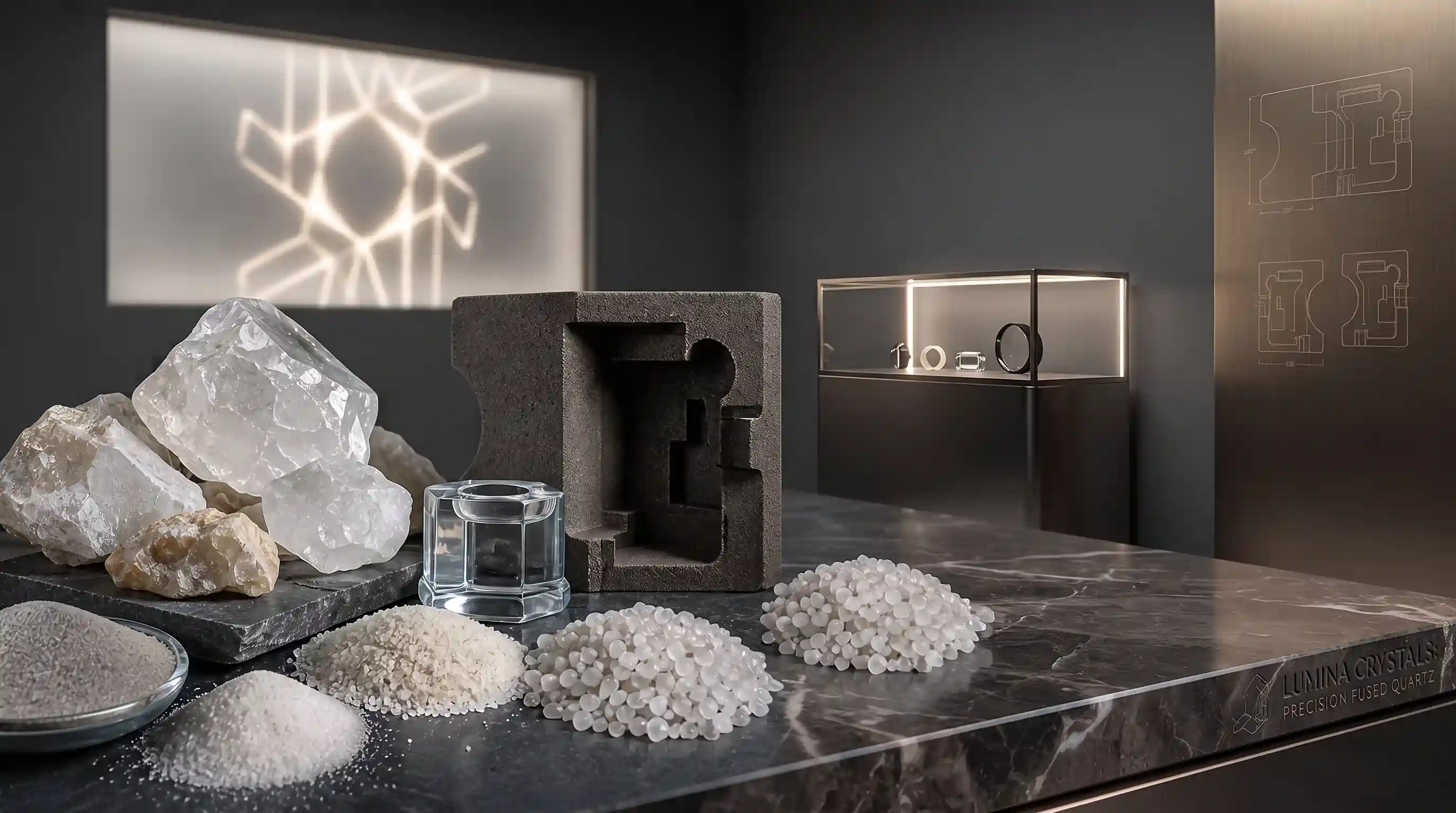
Casting is one of the oldest and most important industrial production processes, in which molten metal is poured into molds usually made of silica sand. Due to characteristics such as high heat resistance, availability, and suitable price, silica is the main raw material in making casting molds. Silica particle size in foundry sand directly affects the quality of cast parts.
One of the most important effects of silica particle size in casting is on the surface quality of cast parts. Using silica with finer particles makes the mold surface smoother, and as a result, the cast parts have a smoother and higher-quality surface. This is especially important for parts that require less surface finishing.
On the other hand, using finer particles reduces mold permeability. Mold permeability is very important for the exit of gases produced during the casting process. If gases caot escape the mold, they may create bubbles or porosity in the cast part. Therefore, the balance between surface quality and mold permeability must be considered.
The particle size distribution of silica in foundry sand is also very important. A suitable distribution of particles with different sizes makes the mold have appropriate density and permeability. Coarser particles create larger spaces that help gases escape, while finer particles fill the spaces between coarse particles and improve surface quality.
Silica particle size also affects the adhesion and strength of the mold. Finer particles have more contact surface with binders, and as a result, the mold has higher strength. This is especially important for molds under pressure or wear.
In steel and iron casting, the melt temperature is very high, and silica must be able to withstand this temperature. Silica particle size affects the thermal resistance of the mold. Coarser particles usually have higher heat resistance because they require more energy to melt. But finer particles can create better uniformity in the mold.
In addition, silica particle size affects the need for binders. Using finer particles usually requires more binders because the contact surface is larger. This can increase production costs and may also affect the quality of the final part, as extra binders can cause gas formation during the casting process.
In general, in the casting industry, choosing the right silica particle size is a balance between surface quality, mold permeability, heat resistance, and production costs. Manufacturers must choose the appropriate silica particle size based on the type of part, metal used, and casting process.
The Effect of Silica Particle Size on Ceramic Products
Ceramics is another important industry where silica is one of the main raw materials. In ceramic production, silica acts as one of the main components of the ceramic body, and its particle size directly affects the physical and mechanical properties of the final product. From tiles and porcelain dishes to advanced industrial ceramics, silica particle size plays a key role in determining product quality.
One of the most important effects of silica particle size in ceramics is on the density of the ceramic body. Finer particles can fill the spaces between larger particles, resulting in a denser ceramic body. This makes the final ceramic have higher strength and less porosity. In contrast, coarser particles create more spaces between them, leading to more porosity and less strength.
The strength of ceramics is strongly influenced by silica particle size. Finer particles have more contact surface with each other, and consequently, create stronger bonds during the firing process. This makes the ceramic have higher compressive, tensile, and flexural strength. Also, finer particles make the stress distribution in the ceramic body more uniform, which prevents cracking and fracture.
In the ceramic firing process, silica particle size affects the thermal behavior of the body. Finer particles have higher reactivity and begin to melt and form a liquid phase at lower temperatures. This can reduce the firing temperature, which is beneficial in terms of energy consumption and production costs. But at the same time, it may cause excessive shrinkage during firing.
Shrinkage during firing is one of the problems affected by silica particle size. Finer particles show more shrinkage during firing because more liquid phase is formed and particles move closer together. This can cause problems in controlling the dimensions of the final product. Therefore, in the production of ceramics requiring high dimensional accuracy, controlling silica particle size is very important.
In the production of tiles and building ceramics, silica particle size also affects the water absorption of the final product. Finer particles make the ceramic body denser and consequently reduce water absorption. This is especially important for tiles used in humid environments.
In advanced and technical ceramics, precise control of silica particle size becomes more important. These ceramics are used for special applications such as electronic components, cutting tools, and engine parts, and require very precise mechanical and thermal properties. In these applications, silica particle size must be controlled with very high precision.
In summary, silica particle size is one of the key factors in determining the quality of ceramic products. Choosing the right size can improve the strength, density, water absorption, and dimensional accuracy of the final product. Ceramic manufacturers must choose the appropriate silica particle size based on the type of product and required properties.
The Effect of Silica Particle Size on Building Materials
Building materials is another important area of silica application. From concrete and mortar to bricks and building stones, silica is used in various forms in the construction industry. Silica particle size in building materials directly affects the strength, durability, and performance of the final product. To better understand this topic, you can read the article The Effect of Silica Quality on the Durability and Strength of Industrial Concrete.
In concrete production, silica is used in two main forms: as part of the aggregates (silica sand) and as an active additive (microsilica or silica fume). In both cases, silica particle size plays an important role in determining the properties of the final concrete. Silica with a suitable particle size can improve the strength, durability, and performance of concrete.
In silica sand used in concrete, particle size affects the overall aggregate size distribution. A suitable distribution of particles with different sizes makes concrete have higher density and less porosity. Finer particles fill the spaces between coarser particles, resulting in stronger and more durable concrete. Also, the appropriate silica particle size can reduce the amount of cement needed, which is economically beneficial.
Microsilica or silica fume, which consists of very fine silica particles (usually less than 1 micron), is used as a pozzolanic material in concrete. These very fine particles react with the calcium hydroxide released during the cement hydration process and form new cementitious compounds. This makes the concrete have much higher strength and less permeability. The particle size of microsilica plays a key role in this process, as a larger contact surface creates higher reactivity.
In the production of bricks and building ceramic products, silica particle size affects strength, water absorption, and freeze-thaw resistance. Finer particles make the final product denser and stronger. This is especially important for bricks used in cold environments and exposed to freeze-thaw cycles.
In mortars and plasters, silica particle size affects the workability and strength of the product. Finer particles make the mortar smoother and more workable, resulting in a flatter surface. Also, finer particles can reduce shrinkage during drying, which prevents cracking.
In artificial building stones, silica particle size affects the appearance and strength of the product. Using silica with a suitable particle size can create a smooth and uniform surface while providing the necessary strength for use in high-traffic environments.
In addition to strength and durability, silica particle size also affects the weight of building materials. Using finer particles can increase density and consequently increase product weight. This should be considered in applications where weight is a limiting factor.
In general, in the building materials industry, choosing the right silica particle size is a balance between strength, durability, workability, and weight. Manufacturers must choose the appropriate silica particle size based on the type of product, final application, and environmental conditions.
Mesh Range 10 to 450: A Complete Guide to Sizes
Silica is produced in a wide range of sizes, usually specified in mesh units. The 10 to 450 mesh range covers a very wide range of particle sizes, each suitable for specific applications. Understanding this range and its meaning is very important for choosing the right silica.
Mesh unit indicates the number of openings in each square inch of the screen. For example, 10-mesh silica has particles that pass through a screen with 10 openings per inch. The higher the mesh number, the finer the openings and consequently the finer the silica particles. Approximately, 10-mesh silica has particles about 2000 microns in diameter, and 450-mesh silica has particles about 30 microns in diameter.
The 10 to 50 mesh range usually includes coarse silica particles. These particles are suitable for applications requiring high permeability or a rough surface. For example, in casting, low-mesh silica is used for molds that require good gas venting. Also in building materials, coarse silica is used to create rough and anti-slip surfaces.
The 50 to 150 mesh range includes medium silica particles. This range has the widest application in various industries. In glassmaking, silica with 20 to 140 mesh is used. In casting, silica with 50 to 150 mesh is used to create a balance between surface quality and mold permeability. In ceramics, medium-mesh silica is used for bodies requiring medium strength.
The 150 to 450 mesh range includes fine silica particles. These particles are suitable for applications requiring a smooth surface, high uniformity, or high reactivity. In ceramics, fine silica is used to create a dense body and high strength. In building materials, fine silica is used as a filler and pozzolanic material. In the glass industry, fine silica is used to create high transparency.
Choosing the right mesh depends on several factors. Industry type, production process, required properties in the final product, and available equipment all play a role in this choice. For example, in glassmaking, melting speed, melt uniformity, and transparency of the final product are among the factors determining which mesh range to use.
Also, it should be noted that in many applications, a combination of different silica sizes is used. This combination makes the final product have optimal properties. For example, in casting, combining coarse and fine particles makes the mold have both good permeability and a smooth surface.
Particle size distribution is also very important. Uniform particle distribution makes the final product have more uniform properties. Silica manufacturers usually try to control the particle size distribution of their product within a specific range. This is done using screening and classification processes.
Finally, it should be noted that mesh size is not the only factor determining silica quality. Chemical purity, particle shape, and moisture also affect the quality of silica and the final product. But particle size is one of the most important and controllable factors through which manufacturers can improve the quality of the final product.
Guide to Choosing Silica with the Right Particle Size
Choosing silica with the right particle size is one of the important decisions that manufacturers in various industries must make. This choice can have a direct impact on the quality of the final product, production costs, and process efficiency. In this chapter, we examine the factors that should be considered in choosing silica with the right particle size. For more information, you can read the Comprehensive Guide to Buying Quality Silica for Factories.
The first factor in choosing silica is knowing the exact industrial needs. Each industry and each production process requires specific particle sizes. For example, the glass industry needs silica with medium particle sizes, while the ceramic industry may need finer silica. Therefore, before choosing silica, the exact needs of the industry and production process must be determined.
The second factor is the required properties in the final product. If the final product requires high strength, silica with finer particles is probably more suitable. If the product requires permeability, silica with coarser particles may be better. If transparency is important, silica with uniform particle size should be chosen.
The third factor is equipment and production process. Some equipment may not be suitable for working with very fine or very coarse particles. For example, in processes where silica must be mixed with other materials, very fine particles may cause mixing problems. Therefore, it must be ensured that the chosen silica is compatible with available equipment.
The fourth factor is environmental and safety issues. Very fine silica particles can create dust, which has safety and environmental risks. If fine silica is used, necessary measures must be taken to control dust and protect workers.
The fifth factor is costs. Silica with finer particle sizes is usually more expensive because its production process is more complex. Therefore, a balance must be struck between the cost and the benefits of using finer silica. In some cases, using a combination of silica with different sizes can be a cost-effective solution.
The quality of silica is also an important factor. In addition to particle size, chemical purity, particle shape, and moisture also affect silica quality. High-quality silica should have appropriate chemical purity, uniform particle size distribution, and controlled moisture. Also, the quality of other minerals used in industries is also important; for example, Examining the Appearance Characteristics and Quality of White Dolomite Powder shows that the quality of similar mineral materials is also important in various industries.
To ensure silica quality, periodic tests should be performed. These tests include measuring particle size distribution, chemical purity, and moisture. The results of these tests should be compared with the specifications of the purchased silica to ensure that the silica meets standards.
Finally, it is recommended to test samples in your production process before buying a large volume of silica. This helps you make sure that the chosen silica is compatible with your needs and improves the quality of the final product. Also, consulting with reputable suppliers can be useful in choosing the right silica.
Conclusion: The Importance of Silica Particle Size in Final Product Quality
In this article, we comprehensively examined the effect of silica particle size on the quality of the final product in four main industries: glass, casting, ceramics, and building materials. The results show that silica particle size is one of the most important factors determining the quality of the final product in these industries.
In the glass industry, silica particle size affects melting speed, melt uniformity, and transparency of the final product. Using silica with a suitable particle size can produce clearer and higher-quality glass while reducing energy consumption. Silica with finer particles melts faster and creates a more uniform melt, but very fine particles can cause bubbles and environmental problems.
In the casting industry, silica particle size affects the surface quality of parts, mold permeability, and heat resistance. The balance between surface quality and mold permeability is very important. Using a combination of particles with different sizes can create a mold with good surface quality and appropriate permeability.
In the ceramic industry, silica particle size affects the density, strength, water absorption, and dimensional accuracy of the final product. Finer particles create a denser body and higher strength, but may cause excessive shrinkage during firing. Precise control of particle size is especially important for advanced ceramics.
In the building materials industry, silica particle size affects the strength, durability, and performance of products. Silica is used as aggregate and also as an active additive. In both cases, particle size plays an important role in determining the properties of the final product.
Silica is produced in the 10 to 450 mesh range, which covers a wide range of particle sizes. Each of these sizes is suitable for specific applications. Understanding this range and choosing the right size for the specific application is one of the keys to success in various industries.
Choosing silica with the right particle size requires a precise understanding of industrial needs, required properties in the final product, production equipment, environmental issues, and costs. Also, silica quality, including chemical purity, particle shape, and moisture, should also be considered.
Finally, it should be noted that silica particle size is only one of the factors affecting the quality of the final product. Other factors such as chemical purity, production process, equipment, and quality control are also important. But silica particle size is one of the most controllable and influential factors through which manufacturers can improve the quality of their final product. By choosing the right silica and precisely controlling particle size, the quality of the final product can be significantly improved while reducing production costs.
| Question | Answer |
|---|---|
| How is silica particle size measured? | Silica particle size is usually measured in mesh units, which indicate the number of openings per square inch of screen. The higher the mesh number, the finer the particles. |
| What is the effect of silica particle size on glassmaking? | In glassmaking, finer particles melt faster and create a more uniform melt, which increases product transparency, but very fine particles can cause bubbles. |
| What particle size is suitable for casting? | In casting, a combination of particles with different sizes is usually used to balance surface quality and mold permeability. Silica with 50 to 150 mesh is common. |
| What does the mesh range 10 to 450 mean? | This range shows that silica is produced from coarse particles (10 mesh, about 2000 microns) to very fine particles (450 mesh, about 30 microns), covering the needs of various industries. |
| What effect does silica particle size have on ceramic strength? | Finer particles create higher density and strength in ceramics, but may cause more shrinkage during firing, which must be controlled. |
| How to choose the right silica size? | Choosing the right size depends on the industry, required properties in the final product, production equipment, environmental issues, and costs. It is recommended to test samples before buying. |
| What is the difference between fine-grained and coarse-grained silica? | Coarse-grained silica creates more permeability and a rougher surface, while fine-grained silica has a smoother surface, higher density, and greater reactivity. |
| What effect does silica particle size have on concrete durability? | Finer silica particles can reduce concrete porosity and increase its strength and durability, especially microsilica which has a pozzolanic reaction. |
| What particle size of silica is suitable for building materials? | For building materials, a combination of different sizes is usually used to balance strength, workability, and weight. |
| Why is the uniformity of silica particle size important? | Uniformity of particle size makes the final product have more uniform properties and prevents quality fluctuations. |
Kani Sang Amiran Project — Mineral Material Production, https://ksamiran.ir/products/silica/
برچسب: Silica,The Effect of Silica Particle Size on Final Product Quality,
نویسنده: رساوب آفرین