
درباره سایت
آخرین مطالب
- استخدام أكسيد الليمونيت (الماغش) في صناعات الزجاج
- کاربرد اکسید لیمونیت (گل ماش) در صنایع شیشهسازی
- A Review of Daily Prices for Limonite Oxide (Ocher) in the Market
- چگونه خالص بودن اکسید لیمونیت (گل ماش) را تشخیص دهیم؟
- بررسی قیمت روز اکسید لیمونیت (گل ماش) در بازار
- Application of Limonite Oxide (Gole Mash) in Glassmaking Industries
- كيف تتعرف على نقاء أكسيد الليمونيت (جول ماش)؟
- How to Determine the Purity of Limonite Oxide (Gol Mash)?
- بررسی استانداردهای ایمنی کار با اکسید لیمونیت (گل ماش)
- Comprehensive Guide to Technical Analysis of Limonite Oxide (Gol Mash)
امکانات وب
Introduction to Dolomite and Its Position in the Paint Industry
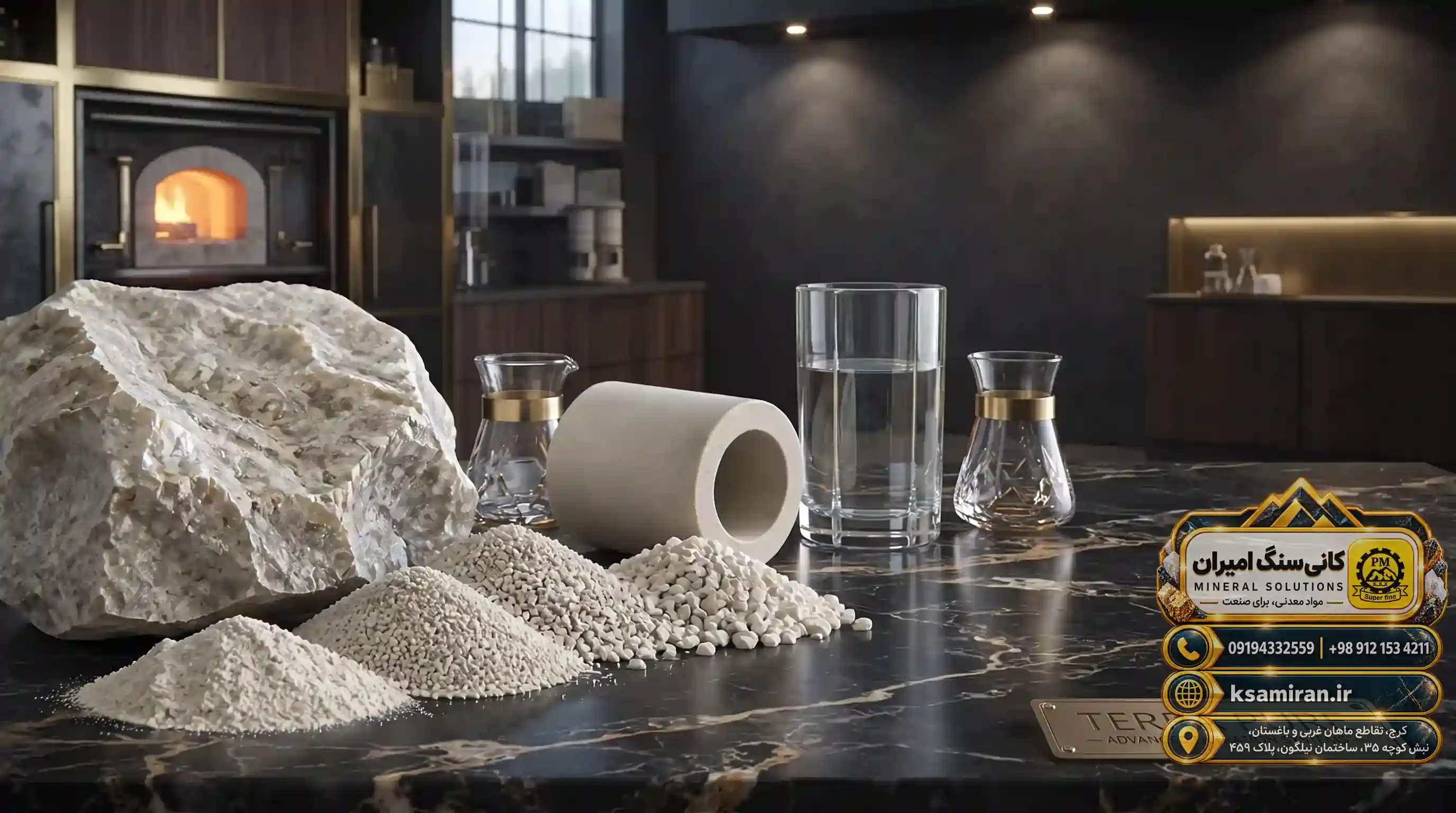
Dolomite is a widely used carbonate mineral that, due to its natural combination of calcium and magnesium, suitable crystalline structure, light color, and relatively stable chemical behavior, is known in many mineral industries. This material is often produced and supplied as stone, granules, or powder, and holds a special position in the supply chain of industries such as glassmaking, ceramics, and building materials. In a general overview, dolomite can act as a neutral mineral filler, a rheological property regulating agent, and a part of mineral compounds in various formulations.
In the comprehensive guide to using dolomite in the paint industry, the goal is a logical examination of this mineral for paint applications, industrial coatings, and related products. The dolomite product of the Kani Sang Amiran Project is introduced for glass, ceramic products, and building materials, and its mesh range is 10 to 40 mesh. Therefore, when paint making is discussed, a distinction must be made between the main application of the product and its potential for development in paint fillers. In other words, dolomite with the mentioned mesh range is a suitable raw material for the glass, ceramics, and building materials industries, but its entry into paint formulation requires grinding, finer sizing, quality control tests, and compatibility evaluation with the resin system.
The importance of dolomite in paint making is mostly due to characteristics such as relatively good brightness, lower abrasiveness compared to silica fillers, stability against atmospheric conditions, and reasonable final cost. This material can be used in architectural paints, building coatings, industrial paints, and facility coatings as a mineral extender. However, the final performance depends heavily on particle size distribution, purity, moisture, the presence of colored impurities, and the surface saturation capacity of the material with oil or resin. For this reason, purchasing this product should be based on technical data and careful sampling.
One of the key points of this guide is that dolomite should not be considered just a simple white powder. This mineral is part of a complex filler system in which calcium carbonate, kaolin, barite, talc, and other minerals each have specific roles. Correct selection between them helps the final paint output, matte level, wash resistance, adhesion, and durability against environmental factors. In the following chapters, the structure, main applications, testing methods, and comparison criteria of dolomite with other fillers are fully examined so that a correct technical and economic decision can be formed.
Structure, Composition, and Key Properties of Dolomite
Dolomite belongs to the group of mineral carbonates, and its general chemical formula is known as double carbonate of calcium and magnesium. This structure is its main difference from calcium carbonate or calcite; because in dolomite, calcium and magnesium cations are placed in the crystal lattice, creating different thermal and chemical behavior. This dual composition gives dolomite the properties of an intermediate mineral between calcium and magnesium carbonate: it both has carbonate stability and shows different performance against heat and alkaline reactions.
Visually, dolomite is usually seen in white, light gray, pale yellow to beige. The final color of the product depends on the amount of impurities such as iron oxides, manganese, clay materials, and organic compounds. In the paint industry, lightness and color stability are among the fundamental criteria, as any colored impurity can affect the base color, gloss, and final color spectrum. For this reason, controlling defective particles, colored stones, and metallic impurities in dolomite processing is important.
The hardness of dolomite falls into the category of soft to medium minerals. This feature reduces the wear of grinding and mixing equipment compared to harder fillers such as silica, while allowing the preparation of powder with a suitable particle size distribution. In paint formulation, particles must be fine and uniform enough to disperse well in the paint film, not agglomerate, and create a smooth surface. The 10 to 40 mesh range shows that the initial product is still coarse-grained and for delicate paint applications, the grinding and classification process must be performed on it.
The chemical behavior of dolomite is also important in formulation design. This material reacts with weak acids and has good stability in the alkaline environments of most paint and coating industries. The degree of reaction with acid, the natural pH of the product, and oil absorption capacity are three determining factors in selecting dolomite for paint. If the raw material has high oil absorption, the need for binder and resin increases, and the final cost of paint rises. In contrast, lower oil absorption helps better dispersibility and a more resistant film. Therefore, oil absorption, pH, moisture, and particle size distribution tests are an inseparable part of evaluating this product.
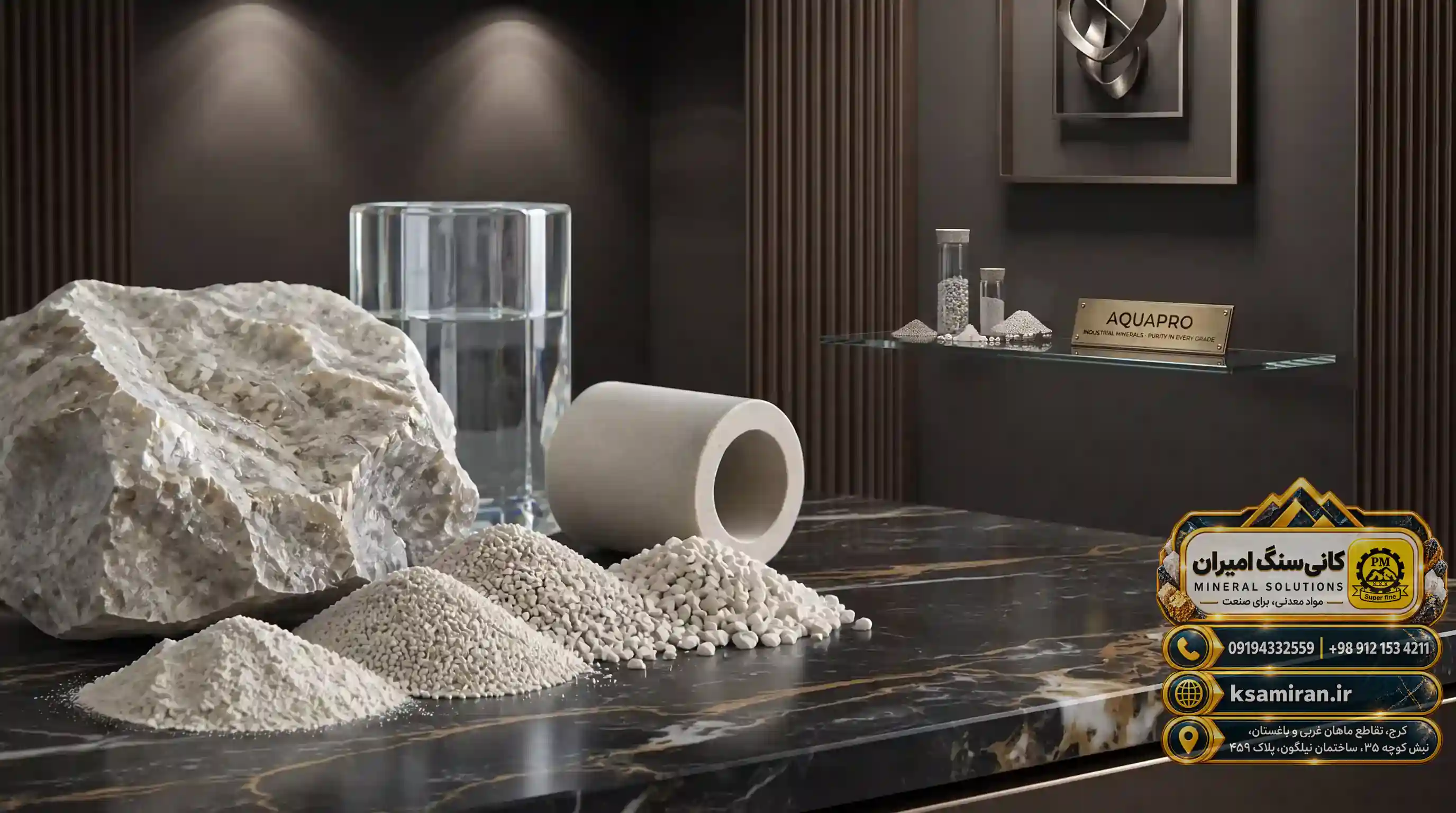
Application of Dolomite in Glassmaking and Its Coection to the Paint Industry
One of the main applications of dolomite is in the glassmaking industry. In this industry, dolomite enters the batch composition as a source of calcium and magnesium and helps regulate the melting point, melt viscosity, chemical stability, and mechanical strength of the final glass. The presence of magnesium can improve the glass's resistance to moisture and chemical solutions while controlling fuace energy consumption with its melting point reducing effect. For this reason, the quality of dolomite used in glassmaking is strictly controlled by chemical composition, particle size, and batch uniformity.
The 10 to 40 mesh range of the Kani Sang Amiran Project dolomite product is a conventional range for feeding glassmaking processes, because in this industry, coarser particles than paint powders are typically used. These particles must be selected in such a way that they disperse well in the glass mixture, do not create severe gas evolution during melting, and keep colored and metallic impurities within the formulation's allowable limits. Particle size stability and low moisture are two key factors in preventing glass quality fluctuations.
The coection of this application to the paint industry is very interesting. Although glassmaking and paint making have different products, both require light, stable mineral materials with uniform particle distribution. In glass, dolomite enters the melt mostly as a chemical component, while in paint, it assumes the role of a filler and surface property regulator. In glass, the transparency of the final product is important, but in paint, matte level, hiding power, adhesion, and the film's resistance to moisture are more important. This difference shows why a specific grade of dolomite can be suitable for glass, but for paint, it must undergo grinding, particle control, and application tests.
Generally, the experience of using dolomite in glassmaking shows that this mineral has stable behavior in high-temperature processes and can improve the final structure of the product. These features are also valuable in the paint and industrial coatings industry in a different form: high thermal stability means better coating resistance against thermal cycles, reduced gas evolution, and higher durability in harsh environments. However, each application must be evaluated with its own specific laboratory data.
Dolomite in Ceramics, Industrial Coatings, and Its Role as a Filler
Dolomite is a well-known mineral in the ceramic industry. This material can act as a fluxing agent and thermal expansion regulator in the ceramic body, glaze, tiles, porcelain ware, and high-temperature firing processes. The calcium and magnesium composition in dolomite helps reduce firing temperature, improve the formation of molten phases, and increase the strength of the final product. In ceramic products, controlling particle size distribution and composition uniformity is very important, because fluctuations in sizing can cause changes in shrinkage, porosity, and final surface.
In the paint and industrial coatings industries, dolomite can be used as a mineral filler after grinding and quality control. The main task of a filler in paint is to occupy the volume of the paint film, regulate the level of gloss or matte, improve mechanical properties, and reduce the consumption of organic compounds. Dolomite particles can strengthen the paint film structure, help increase abrasion and wash resistance, and in building coatings, create a uniform and velvety appearance. As a result, this material is attractive for interior and exterior architectural paints, paint powders, industrial coatings, and protective paints.
In industrial coatings, durability against moisture, temperature changes, and contact with mild chemicals is vital. Dolomite, due to its carbonate structure and the presence of magnesium, can show balanced behavior in alkaline environments and be evaluated in water-based and solvent-based formulations. However, in contact with strong acids or highly corrosive environments, the full chemical resistance of the formulation must be ensured. In these cases, immersion testing, moisture cycle testing, and paint film adhesion checking are essential.
One of the main advantages of using dolomite in ceramics and paint is the logical coection between these two industries. In ceramics, the glaze must spread uniformly over the body surface and create a resistant surface after firing. In paint as well, particles must disperse well in the paint film, not agglomerate, and form a uniform surface. Therefore, a manufacturer that successfully controls dolomite particles for ceramics also has good processing knowledge and quality control in the field of paint fillers. This issue helps the buyer to request appropriate tests from the supplier according to their needs.
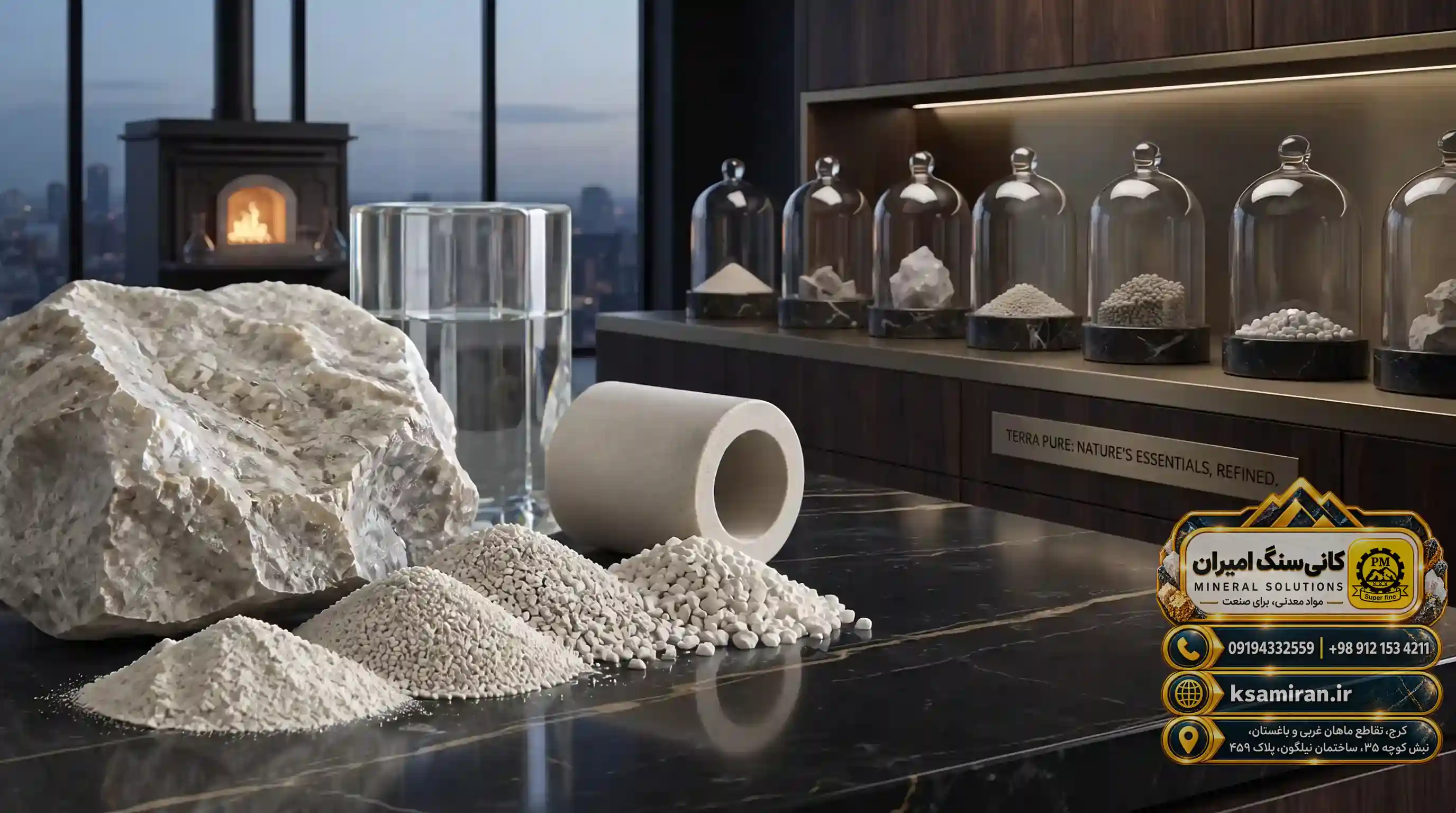
Dolomite in Building Materials and Architectural Paints
In the building materials industry, dolomite is used in the production of building stones, granular materials, gypsum, mortar, and concrete due to its strength, stability, and availability. In these products, coarser particles such as the 10 to 40 mesh range can play the role of a structural mineral aggregate or a mineral additive. Dolomite in these applications can help reduce costs, improve mortar workability, and regulate the density and strength of the product.
The coection of building materials to the paint industry is very close. Many surfaces that are painted are themselves made of similar mineral materials. Plaster walls, cement surfaces, mineral mortars, stone facades, and ceramic panels are all in contact with paint coatings. When the substrate and the paint have similar thermal and moisture behavior, the likelihood of cracking, paint peeling, and blistering decreases. For this reason, dolomite can equally be considered in both the building substrate and architectural paint formulation.
In architectural paints, mineral particles must be selected so that the final surface appearance is desirable. Dolomite powder can be used in the production of matte, semi-matte, and mineral-textured paints. This material helps reduce unwanted gloss while improving the hiding power of the paint. In interior paints, the main goal is to create a clean, uniform surface resistant to mild abrasion. In exterior paints, resistance to rain, sunlight, moisture cycles, and temperature changes is vital. Weathering and adhesion tests gain importance here.
Dolomite can also help the anti-settling properties of paint; meaning a material that helps reduce the tendency of particles to sediment and separate during storage. In formulations with high filler content, rapid sedimentation is a known problem. The correct combination of filler, binder, thickener, and surface additives can control this problem. Dolomite in these systems must be selected with appropriate particle size and oil absorption to achieve stable suspension, suitable sprayability, and a uniform film. As a result, this mineral can be a bridge between the two major industries of building materials and paint making.
Quality Control and Testing for Dolomite Entry into Paint Formulation
The entry of dolomite into a paint formulation should not be done without quality control. The first step is confirming the initial product specifications: 10 to 40 mesh range, low moisture, sizing uniformity, and the absence of large colored impurities. Then it must be determined whether this product enters the paint directly or must first be ground. In most paint applications, particles coarser than a few tens of microns are not suitable, as they cause surface roughness, reduced gloss, and film defects. Therefore, the paint manufacturer must carefully determine the final specifications of the powder after processing.
A simple quality control program includes the following tests: measuring particle size distribution, determining oil absorption, measuring moisture, checking pH, measuring hardness, and examining the apparent color of the product. In addition, suspension testing and dispersibility testing in the resin system are essential. If particles sediment rapidly during mixing, create agglomerates, or clog the paint line, it indicates that this grade of dolomite is not suitable for that formulation or requires surface modification and the addition of dispersants.
After the initial tests, a small experimental sample of paint must be prepared. At this stage, comparing the sample containing dolomite with the reference sample is very informative. Parameters such as viscosity, density, drying time, gloss, matte level, adhesion, film flexibility, and wash resistance must be evaluated. Also, examining changes over time in stored samples helps confirm formulation stability. This method minimizes the risk of changing the raw material grade.
Ultimately, quality control is a continuous process. Even if an initial batch is acceptable, subsequent batches must be tested according to the same method. Changes in mineral raw material can occur due to changes in mine raw material, processing conditions, moisture, and storage. For this reason, a standard checklist including precise specifications, sampling method, allowable ranges, and a periodic inspection schedule must be prepared and included in supplier contracting. This approach reduces production losses and keeps the final paint quality stable.
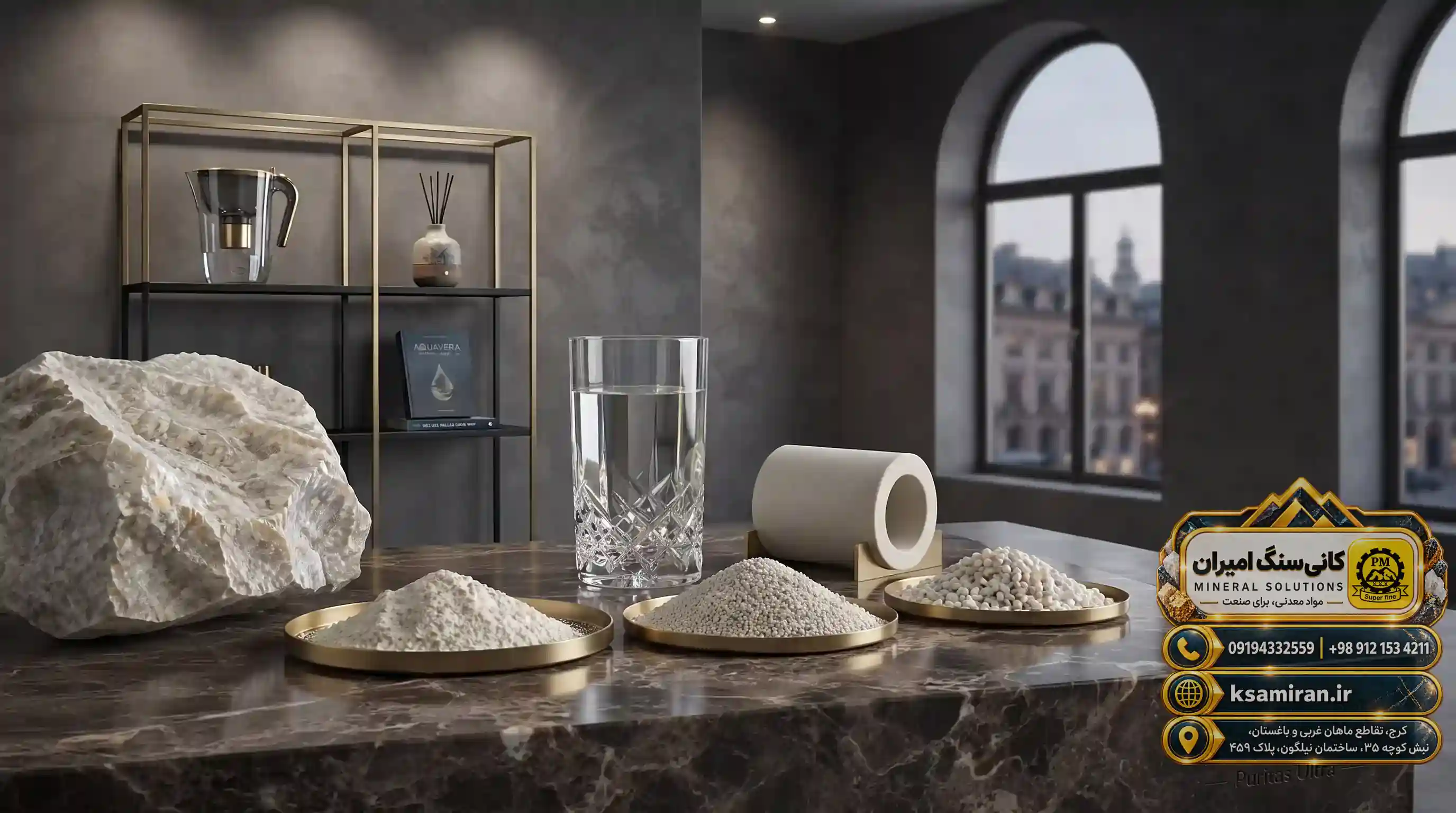
Comparing Dolomite with Other Mineral Fillers in Paint
Dolomite faces numerous competitors in the mineral filler market. To make the right choice, the role of each mineral in paint formulation must be understood. For example, calcium carbonate is a very common and bright filler with high consumption in architectural paints. Coated calcium carbonate is known for its surface coating, better dispersibility, and reduced moisture sensitivity in water-based systems. To better understand this difference, you can read the Comprehensive Guide to Using Coated Calcium Carbonate in Paint Making. In comparison, dolomite is different in chemical composition due to the presence of magnesium and can be evaluated in coatings requiring thermal resistance and stability in alkaline environments.
Kaolin is another important mineral in paint making. The platy structure of kaolin helps improve hiding power, suspension, and creating a velvety surface. This material is especially considered in higher quality paints and systems requiring stable suspension. For a more detailed investigation, you can read the Application of Kaolin in Paint Making and Industrial Coatings. Compared to kaolin, dolomite usually has higher gloss and shows different rheological behavior. Combining both materials in one formulation can also be beneficial, as kaolin provides suspension and dolomite provides dispersibility and film strength.
White barite or barium sulfate is also very important in the paint industry. This material is used in industrial paints, anti-corrosion coatings, and high-quality paints due to its high density, low oil absorption, and excellent chemical resistance. To understand its importance, you can read Why Using White Barite is Essential in Paint Production. Compared to barite, dolomite has lower density and is more attractive for applications where film weight reduction and lower cost are important. But in highly corrosive environments, barite is usually superior.
Finally, the choice of filler must be based on the paint's final needs: gloss, matte, chemical resistance, adhesion, final cost, and paint application method. Dolomite can be an economical and versatile option in architectural paints and industrial coatings, while coated calcium carbonate, kaolin, and barite show their advantages in more specific cases. It is recommended that compatibility tests be performed before replacing any of these materials so that the final formulation performance is not jeopardized.
Safety, Storage, and Dolomite Purchase Checklist
Purchasing and using dolomite, like any powdered mineral, requires attention to safety and storage. During loading, unloading, grinding, and mixing, significant dust is generated. Workers must use appropriate respiratory masks, safety glasses, gloves, and protective clothing. Local ventilation and dust collection in the paint factory not only protect employee health but also prevent dust explosions and contamination of other products. Moisture and foreign material contamination must be controlled to maintain formulation quality.
In storage, dolomite must be kept in a dry, enclosed environment away from moisture. Bags must be placed on pallets and direct contact with the ground prevented. If the product is bulk, silos must be cleaned and dried before use. Moisture is one of the main enemies of quality control in minerals; because it can cause caking, changes in oil absorption behavior, and fluctuations in paint formulation. Also, mixing dolomite with acidic chemicals or other colored materials in storage must be prevented.
When preparing a purchase checklist, first specify your formulation needs: do you need very fine sizing, high brightness, low oil absorption, or specific chemical resistance? Then ask the supplier to provide laboratory data and samples. A product introduced for glass, ceramics, and building materials demonstrates the ability to control sizing and processing stability, but for paint application, compatibility tests must be performed. Request periodic reports, sampling methods, and specification allowable ranges in your contracts.
Finally, the Kani Sang Amiran Project, as a mineral materials producer, offers a product for glass, ceramic products, and building materials with a 10 to 40 mesh range. If you intend to evaluate this material for the paint industry, you can study the Dolomite product page. On this page, you can examine product information and then begin sampling and application tests based on your needs. A step-by-step approach, including needs assessment, requesting technical data, laboratory testing, semi-industrial production testing, and finally economic evaluation, helps you make the right decision.
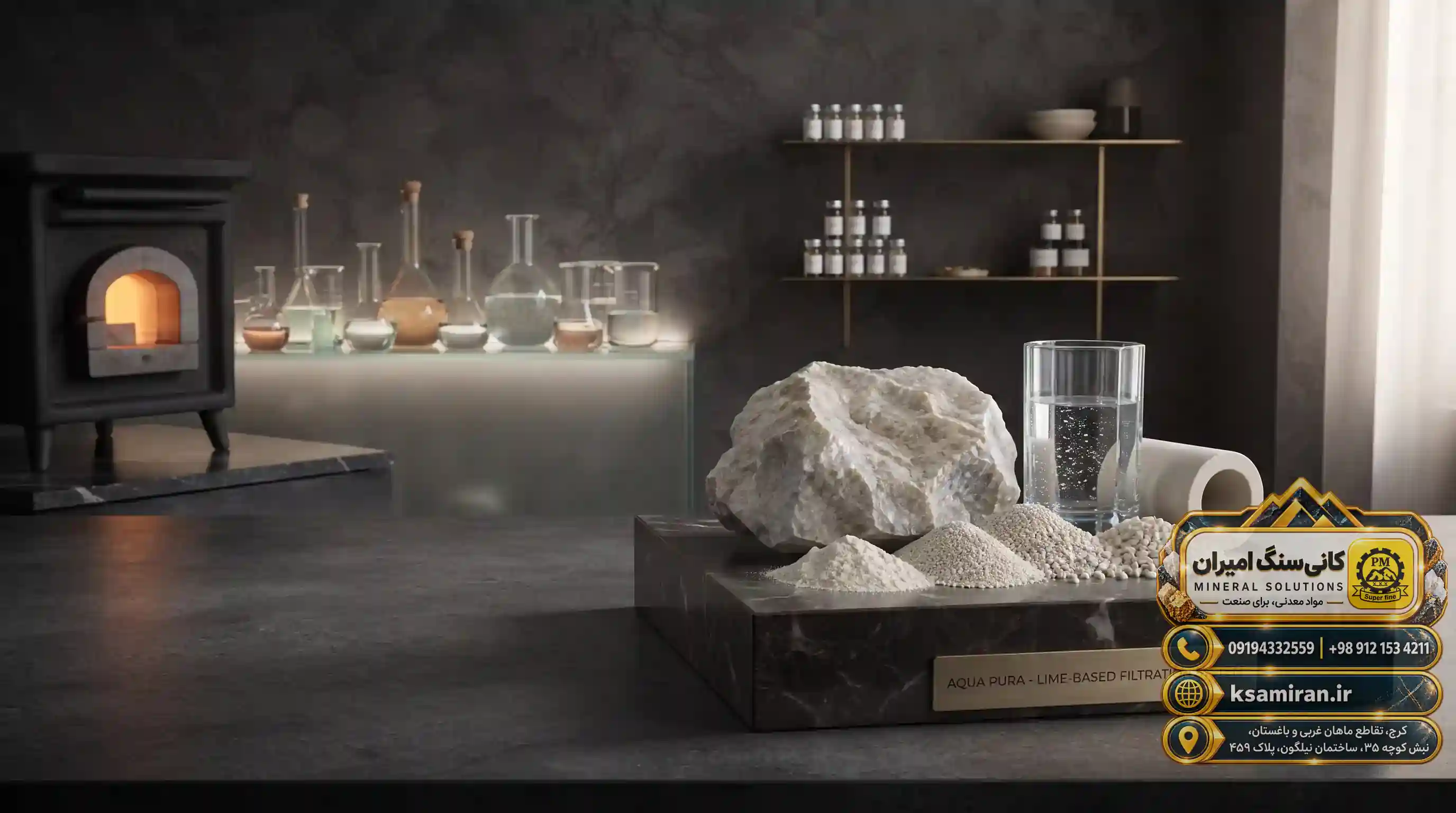
| Question | Answer |
|---|---|
| What is dolomite? | It is a carbonate mineral containing calcium and magnesium, widely used in glass, ceramics, and building materials. |
| Is dolomite used in paint making? | After grinding and quality control, it can be evaluated as a mineral filler in architectural paints and industrial coatings. |
| What is the mesh range of the product? | The mesh range of the Kani Sang Amiran Project dolomite product is 10 to 40 mesh. |
| Why is mesh range important in paint making? | Particle size directly affects surface roughness, gloss, dispersibility, and uniformity of the paint film. |
| Is dolomite the same as calcium carbonate? | No; dolomite contains calcium and magnesium and has different chemical and thermal behavior. |
| What is the advantage of dolomite over kaolin? | Dolomite usually has higher gloss and a more suitable price, while kaolin is superior in suspension and hiding power. |
| What tests are needed to evaluate dolomite? | Particle size distribution, oil absorption, moisture, pH, apparent color, suspension, dispersibility, and wash resistance. |
| Is dolomite resistant to acid? | Dolomite is a mineral carbonate and does not have complete stability against acids; in corrosive environments, the formulation must be tested. |
| What is the correct storage method for dolomite? | Keep in a dry, enclosed environment, on pallets, away from moisture and colored or acidic contamination. |
| Where can I examine the product? | The dolomite product page on the Kani Sang Amiran Project website provides more information for evaluation. |
The specifications and descriptions of this guide are based on general information from the paint industry and the dolomite product page of the Kani Sang Amiran Project.
برچسب: Dolomite,Comprehensive Guide to Using Dolomite in the Paint Industry,
نویسنده: رساوب آفرین