
درباره سایت
آخرین مطالب
- انتخاب اکسید آهن قرمز (اخرا) برای بهبود کیفیت پیگمنت و پوششهای رنگی
- تامین کربنات کلسیم با دانهبندی دقیق جهت استفاده در مستربچ
- تأمین تخصصی سیلیس برای مصالح ساختمانی، شیشه و صنایع سرامیک
- ویژگیهای فنی بنتونیت کانی سنگ امیران برای کاربردهای خاص
- فلدسپات کانی سنگ امیران برای شیشه کاشی و سرامیک
- کاربرد تالک سفید درجه یک در فرمولاسیون پیشرفته رنگ و محصولات کاغذی
- اکسید آهن قرمز (اخرا) کاربردی جهت تولید محصولات سرامیکی و پوشش
- مشخصات فنی اکسید آهن قرمز (اخرا) مناسب برای پوشش و تولید پیگمنت
- مشاوره تخصصی خرید کربنات کلسیم بر اساس نیاز دقیق صنعت شما
- انتخاب تالک سفید صنعتی مناسب برای تولیدات کاغذ و مستربچ
امکانات وب
Introduction to Red Iron Oxide (Ochre) and Its Chemical Nature
Red iron oxide (ochre) is one of the oldest, most well-known, and most widely used mineral pigments in the building materials industry, playing a very vital role today in the production of colored cement and decorative concrete. Known in Iranian industry texts and the mineral materials market as "Ochre," this substance is actually iron (III) oxide with the chemical formula Fe2O3. The chemical composition of this material and the arrangement of iron and oxygen atoms in its crystal lattice are the main reasons for the appearance of the warm, vivid, and stable red color in this pigment.
In nature, red iron oxide is found as the mineral hematite in various mines, and humans have used it for coloring for thousands of years. Today, however, this material is produced and processed with high purity in different particle size ranges to meet the precise needs of various industries. Red iron oxide (ochre) is specifically introduced for pigment, coating, cement, and ceramic product applications, and thus holds a unique position in the colored cement production industry.
The reason for the importance of this pigment in the cement industry is its extraordinary color durability in the highly alkaline environment of cement. While many organic pigments are damaged by the alkaline environment of cement, moisture, and temperature, red iron oxide shows very high color stability when combined with cement due to its mineral nature and stable structure. This feature causes the produced color to remain without significant change for long years on building facades, floorings, and cement products.
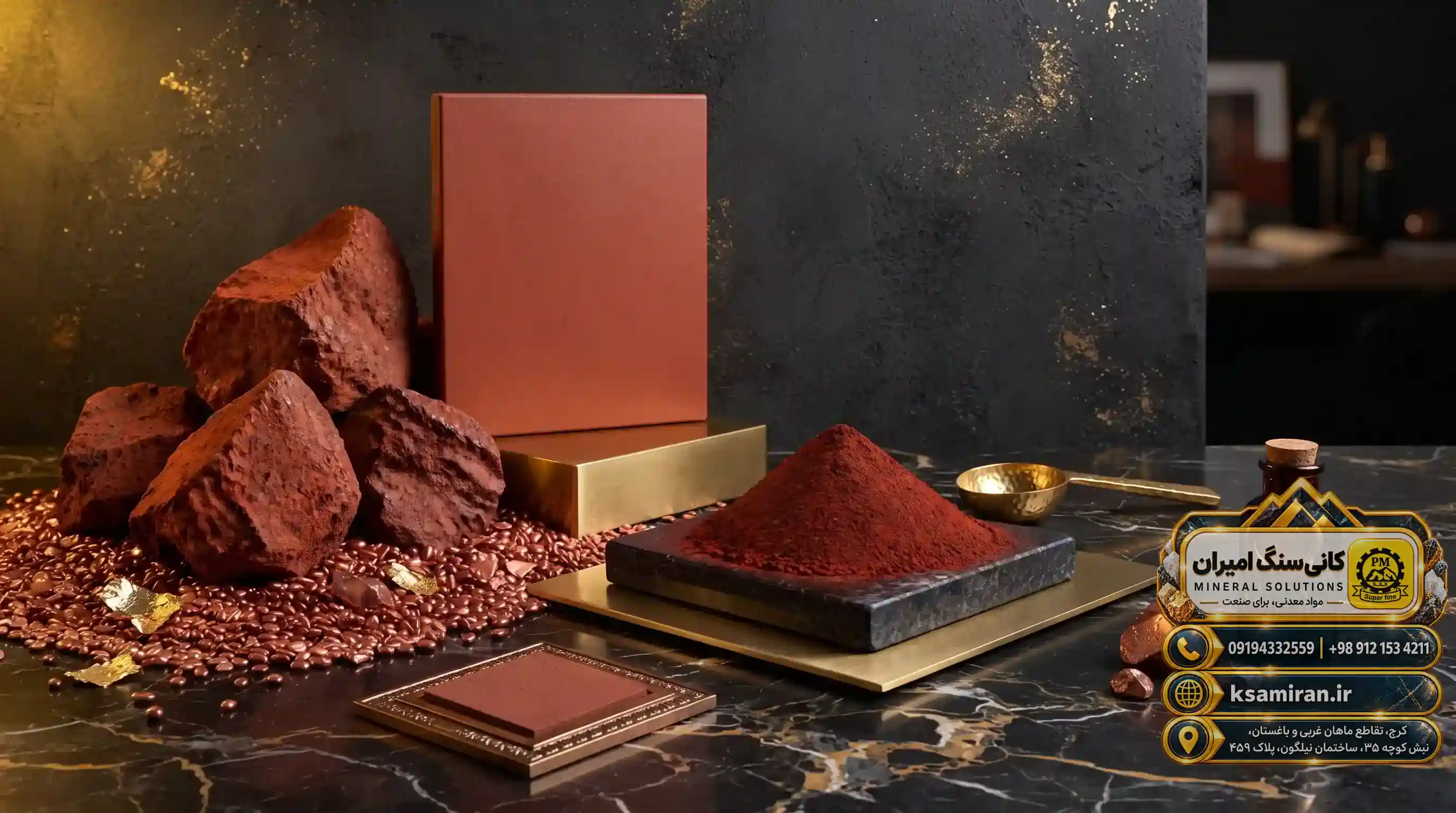
Visually, red iron oxide (ochre) is a soft, dry, fine-grained powder, ranging in color from brick red to brownish red depending on the degree of processing. The finer and more uniform the particles, the greater the coloring power of the pigment and the smoother the final surface of the product. This same feature highlights the importance of controlling particle size in the 450 to 1500 mesh range in the colored cement industry.
In addition to the cement industry, this mineral has extensive applications in other industries; for example, the role of red iron oxide (ochre) in glass manufacturing industries and also the role of red iron oxide (ochre) in paper manufacturing industries have been examined in dedicated articles. In this article, however, our focus will be on the application of this pigment in the colored cement production industry.
From a technical perspective, red iron oxide (ochre) is known as a non-toxic, environmentally friendly mineral pigment that does not exhibit destructive reactions upon contact with moisture and alkaline materials. These features, along with its cost-effective price compared to organic pigments and synthetic colors, have made red iron oxide an ideal choice for colored cement manufacturers.
History of Red Iron Oxide Use in Coloring and Building Materials
The use of red iron oxide (ochre) as a coloring agent dates back thousands of years. Archaeological evidence shows that prehistoric humans used soils containing iron oxide to paint cave walls. In ancient Egyptian, Mesopotamian, and Iranian civilizations, this material was used to color pottery, decorate temples, and produce colored building materials.
During the Roman Empire, red iron oxide was widely used in the production of mortars and colored cements. The Romans realized that adding ochre soils to lime mortar, besides creating a beautiful color, also increased the durability and strength of the product. Many historical buildings remaining from that era still retain their red and ochre colors, testifying to the amazing stability of this pigment over time.
In traditional Iranian architecture, red iron oxide (ochre) also held a special place. This material was used in coloring bricks, tiling, colored plasterwork, and facade decorations. Iran's historical cities, with their red and ochre buildings, display prominent examples of the use of this material in building materials. Traditional knowledge of brick and colored cement production unconsciously utilized the chemical properties of red iron oxide.
With the onset of the Industrial Revolution and the development of mode chemistry, red iron oxide production methods changed from traditional and mineral to industrial and controlled production. Manufacturers were able to produce pigments with uniform quality and high coloring power by controlling purity, particle size, and particle size distribution. This transformation paved the way for the extensive use of red iron oxide (ochre) in the mode colored cement and decorative concrete industry.
Today, with the advancement of milling and mineral processing technology, it is possible to produce red iron oxide in very precise particle size ranges, from 450 mesh to 1500 mesh. This progress allows colored cement manufacturers to produce products with smooth surfaces, uniform color, and high visual quality usable in mode architectural projects.
Interestingly, despite the development of organic and synthetic pigments, red iron oxide (ochre) still remains the most consumed pigment in the colored cement and concrete industry worldwide. The combination of high stability, reasonable cost, durability against weather conditions, and environmental compatibility has kept this mineral competitive against new alteatives, linking its historical importance to industrial and economic significance.
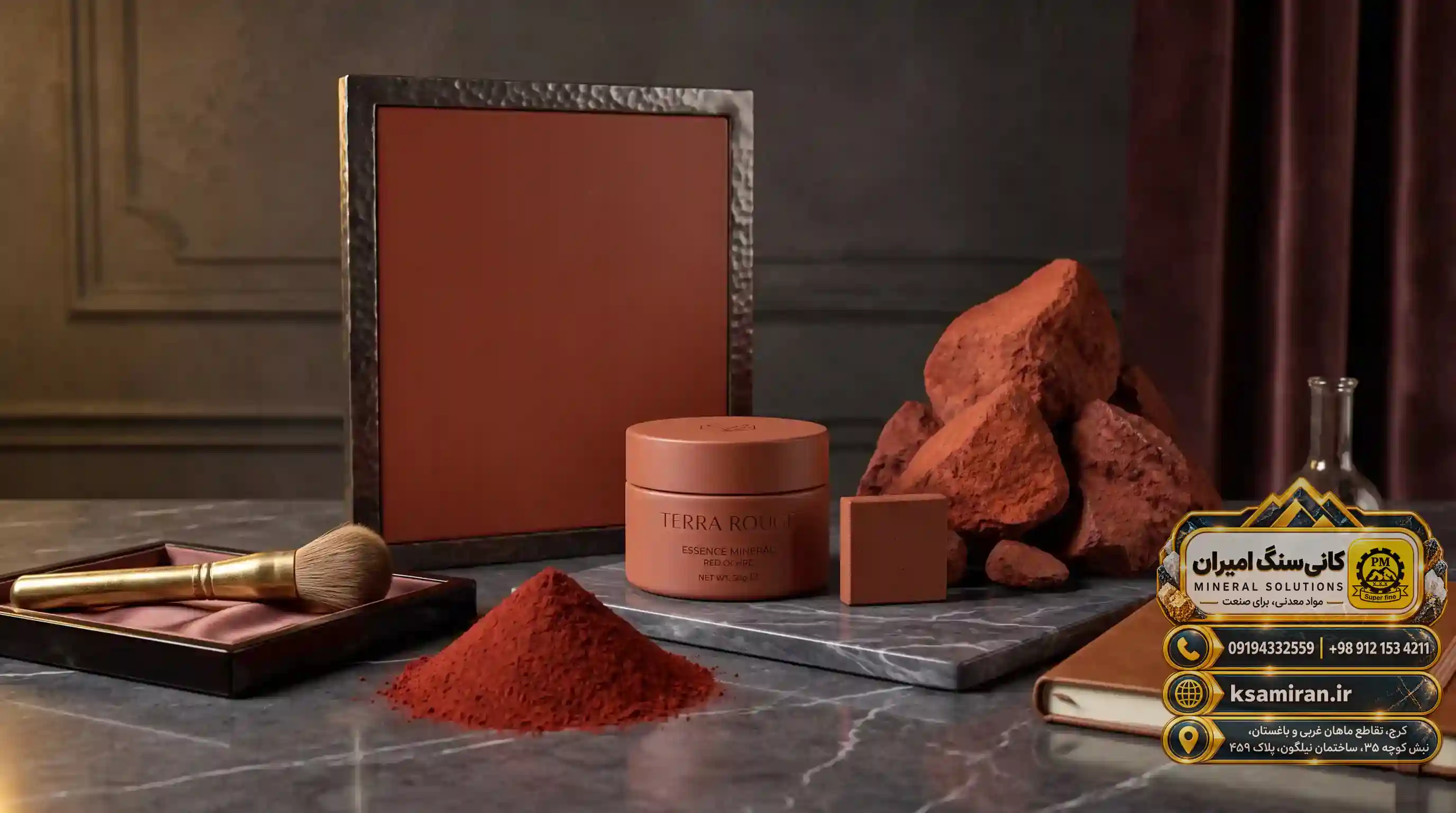
The Process of Producing Colored Cement Using Red Iron Oxide (Ochre)
Producing colored cement is a multi-step process in which the addition of red iron oxide (ochre) as a pigment constitutes one of the most important parts of the job. A precise understanding of this process helps manufacturers produce products with desirable and uniform color quality.
The first stage is selecting the base cement. The base cement can be white cement or gray cement. To achieve light and vivid colors, white cement is usually used, but in producing red colored cement, using gray cement is also common because the base color of the cement matches well with the red color of iron oxide. Choosing the right base cement directly affects the final color of the product.
The second stage is the precise weighing and preparation of the pigment. The amount of red iron oxide (ochre) to be added to the cement is calculated based on the desired color, the coloring power of the pigment, and the type of base cement. In the colored cement industry, the pigment dosage is usually considered as a percentage of the cement weight, and the higher the amount of pigment, the darker the final color will be. Accuracy in weighing the pigment is very vital to maintain color uniformity across different production batches.
The third stage is dry mixing. At this stage, red iron oxide powder is slowly added to the dry cement and mixed for a sufficient time so that the pigment distribution throughout the cement volume becomes completely uniform. Insufficient mixing causes color streaks, light and dark spots, and consequently a decline in the visual quality of the product. Using horizontal or twin-shaft mixers at appropriate speed yields better results.
The fourth stage is adding water and other additives and wet mixing. After the dry mixture is prepared, water, aggregates, and if needed, chemical additives such as superplasticizers or water reducers, are added to the mixture. At this stage too, continuing mixing until the colored cement paste becomes completely homogeneous is mandatory. Observing the water-to-cement ratio plays an important role in preserving the color and strength of the product.
The fifth stage is molding, compaction, and curing. The prepared colored cement is poured into molds, vibrated, and then cured under appropriate humidity and temperature conditions. It should be noted that improper curing, using hot steam, or rapid drying can negatively affect the final color of the cement. Controlling temperature and humidity during curing is among the key factors in producing high-quality colored cement.
Finally, the color quality control of the final product is performed. Produced samples are compared with reference standards, and if there is a color discrepancy, the process settings are adjusted. Using red iron oxide (ochre) with uniform particle size and in the appropriate mesh range is one of the main ways to achieve color stability in this process.
The Importance of Particle Size and the 450 to 1500 Mesh Range in Colored Cement
One of the most important technical parameters in mineral pigments is their particle size and size distribution. Red iron oxide (ochre) used in the colored cement industry is usually produced and offered in the 450 to 1500 mesh range; a range indicating very fine and processed particles. But what exactly does this fineness of particles do to the quality of colored cement?
First, the concept of the mesh unit should be clarified. The mesh unit indicates the number of holes per inch of the sieve; the higher the mesh number, the finer the particles passing through that sieve. Therefore, particles in the 450 to 1500 mesh range are very fine (in the range of a few microns to sub-micron), and this fineness brings several advantages to the colored cement industry.
The first and most important effect is increased coloring power. The finer the pigment particles, the greater their contact surface with cement particles, and light scattering occurs better. The result is a more intense color and better coverage with less pigment. In other words, red iron oxide (ochre) in the high mesh range has very high color value and reduces production costs.
The second important effect is color uniformity on the product surface. Fine particles disperse better in the cement paste and minimize the likelihood of color streaks, spots, or visual inconsistencies. This feature is vital for products like cement mosaics, colored floorings, and facades where surface appearance matters greatly.
The third effect is a smoother surface texture. In cement and ceramic products, the presence of coarse pigment particles causes small bumps and surface irregularities. Using red iron oxide (ochre) in the 450 to 1500 mesh range gives the final product smooth and polished surfaces, which is highly valuable in the ceramic products and cement tiles industry.
The fourth effect is better dispersibility in the mixture. Fine particles disperse faster and more completely in cement during dry and wet mixing, which reduces production time and increases product uniformity. Also, better dispersibility prevents the pigment from settling in the cement paste.
It should be noted that choosing the exact mesh range also depends on the type of final product. For products requiring high coloring power and a very smooth surface, a higher mesh range (finer particles) is more suitable, while for some textured products, slightly coarser particles might create a more beautiful appearance. Colored cement manufacturers usually choose the appropriate range based on product type, process conditions, and base cement.
Since red iron oxide (ochre) is introduced for pigment, coating, cement, and ceramic product applications, precise control of particle size in the production of this material directly affects the quality of the final products of these industries and is considered one of the main quality indicators in the colored cement supply chain.
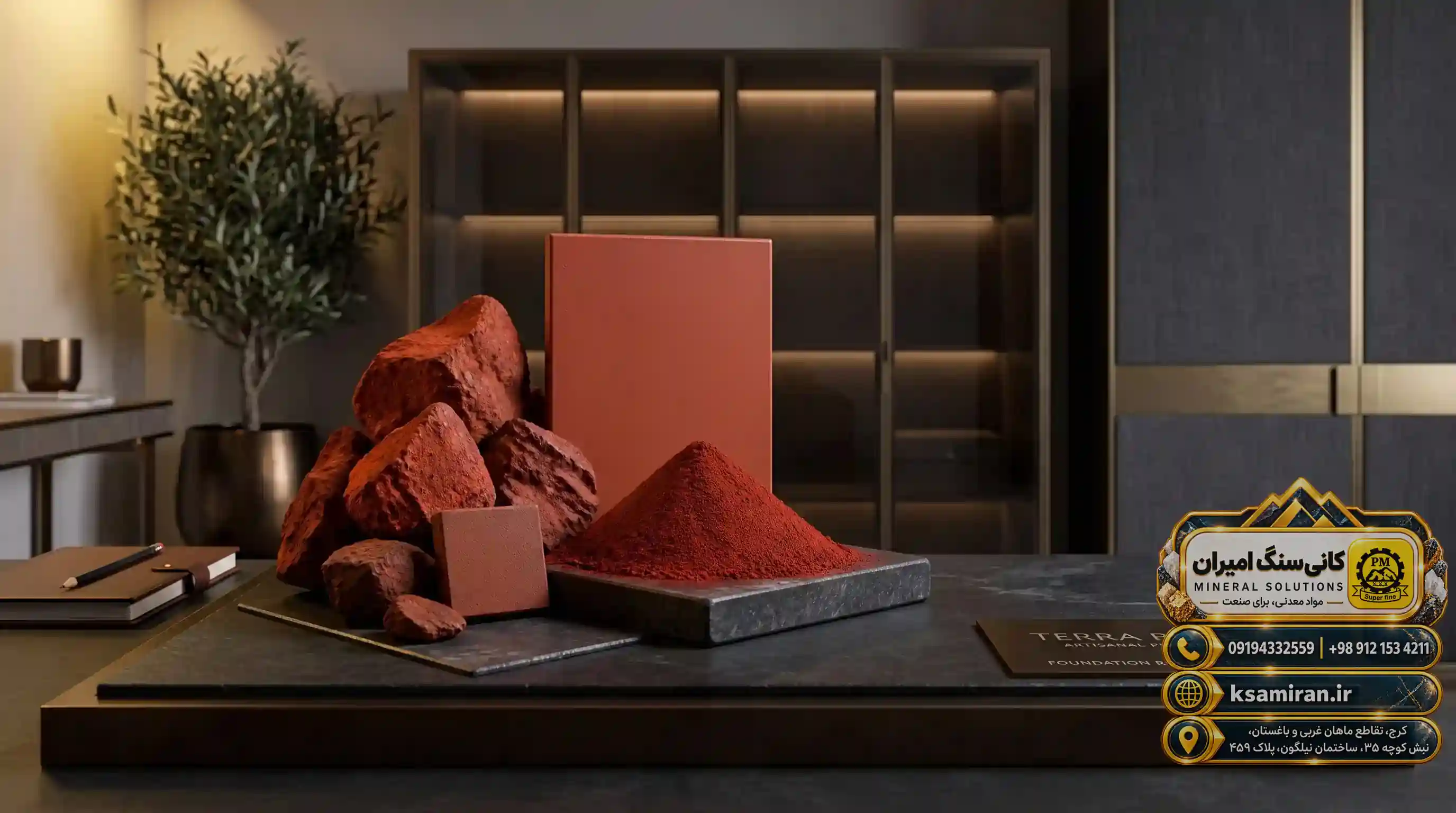
Advantages of Red Iron Oxide (Ochre) Compared to Other Cement Pigments
In the cement pigment market, there are various options including organic pigments, synthetic colors, and mineral pigments. But red iron oxide (ochre), with its unique set of advantages, has maintained its position in the colored cement industry, and its consumption volume in construction projects increases every year.
1. UV resistance: One of the most important reasons for the superiority of red iron oxide is its very high resistance to the sun's ultraviolet rays. Many organic colors fade under continuous sunlight, while red iron oxide (ochre) is resistant to UV light in its crystal structure and preserves the color of facades, floorings, or cement products for decades.
2. High thermal stability: Red iron oxide has good resistance to high temperatures and does not lose its color in processes where cement is exposed to high temperatures (such as steam curing or precast production). This feature is also very important in the ceramic products industry where the firing process occurs at high temperatures.
3. Chemical resistance in alkaline environments: Cement has a highly alkaline environment due to the presence of calcium hydroxide. Many colors decompose or change color in this environment, but red iron oxide (ochre) is completely stable against the alkaline environment of cement and shows no undesirable chemical reaction. This feature is the main reason for the widespread use of this pigment in the cement industry.
4. Resistance to moisture and weather conditions: Colored cement products containing red iron oxide have very good resistance to rain, snow, moisture, and seasonal temperature changes. This causes their color to remain unchanged for long years on building facades and exterior floorings.
5. Cost-effectiveness: Compared to organic pigments and synthetic colors, red iron oxide (ochre) has a much more economical price, and given the high coloring power of its fine particles in the 450 to 1500 mesh range, a smaller amount of this pigment is needed to achieve the desired color. This significantly reduces the production cost of colored cement.
6. Environmental compatibility: Red iron oxide is a mineral, non-toxic, and non-combustible pigment that does not release hazardous materials during production and use. This feature aligns with today's environmental standards and allows manufacturers to produce environmentally friendly products.
7. No negative effect on cement strength: Unlike some organic colors and additives that might disrupt the cement hydration process, red iron oxide (ochre) does not interfere in cement hydration reactions, and as a result, the compressive and mechanical strength of the final product is not diminished.
The sum of these advantages has made red iron oxide (ochre) recognized as a standard and reliable pigment not only in the colored cement industry but also in the pigment, coating, and ceramic products industries.
Applications of Colored Cement Containing Red Iron Oxide in the Construction Industry
Red iron oxide (ochre) has very extensive applications in the construction industry, and the products made with this pigment have a high diversity in terms of shape, color, and application. Below we examine the most important applications of colored cement containing this pigment.
1. Decorative concrete and colored floorings: One of the largest markets for red iron oxide is the production of decorative concrete and colored floorings. These floorings are used in parking lots, sidewalks, squares, factory floors, and even interior building spaces. The red and ochre color gives a special warmth and beauty to these spaces while having high resistance to wear and traffic.
2. Colored cement bricks and blocks: In the production of cement bricks and decorative blocks, red iron oxide (ochre) plays an important role. Adding this pigment to the cement brick mixture produces a product with a natural and beautiful color used in facades and decorative walls. How to use red iron oxide (ochre) in brick production is one of the most important topics in this industry.
3. Cement mosaic and cement tile: Colored cement mosaics and tiles, especially in traditional and decorative models, are produced using red iron oxide. These products are used for flooring interior spaces and courtyards, and their red ochre color creates a special appeal. The fineness of the pigment particles in the 450 to 1500 mesh range creates smooth and glossy surfaces in these products.
4. Colored plaster and gypsum: In the production of colored plasters and gypsum used for thin-coating walls and ceilings, red iron oxide is used as a pigment. These products have extensive use in interior architecture and building facade finishing.
5. Exposed concrete and facade: In mode architecture, exposed concrete with a natural red ochre color is used as a decorative and structural element. Red iron oxide (ochre) in this type of concrete creates a stable and beautiful color that aligns with contemporary architectural elements.
6. Precast cement products: Precast products such as cement planters, park benches, street curbs, decorative columns, and cement statues are colored using red iron oxide (ochre). In these products, color durability against weather conditions and UV rays is very important.
7. Colored mortars and sealants: Red iron oxide is used in producing colored mortars for filling joints between facade bricks and stones. These mortars must have a color matching the brick or stone facade and be resistant to moisture and freezing.
8. Ceramic products: In addition to cement, red iron oxide (ochre) is also used in the production of some ceramic products and colored ceramic bodies. Due to its high thermal stability, this pigment can also be used in ceramic firing processes.
As can be seen, red iron oxide (ochre) is present in almost all sectors of the construction industry where color and beauty are involved, and this diversity of applications doubles the importance of this mineral.
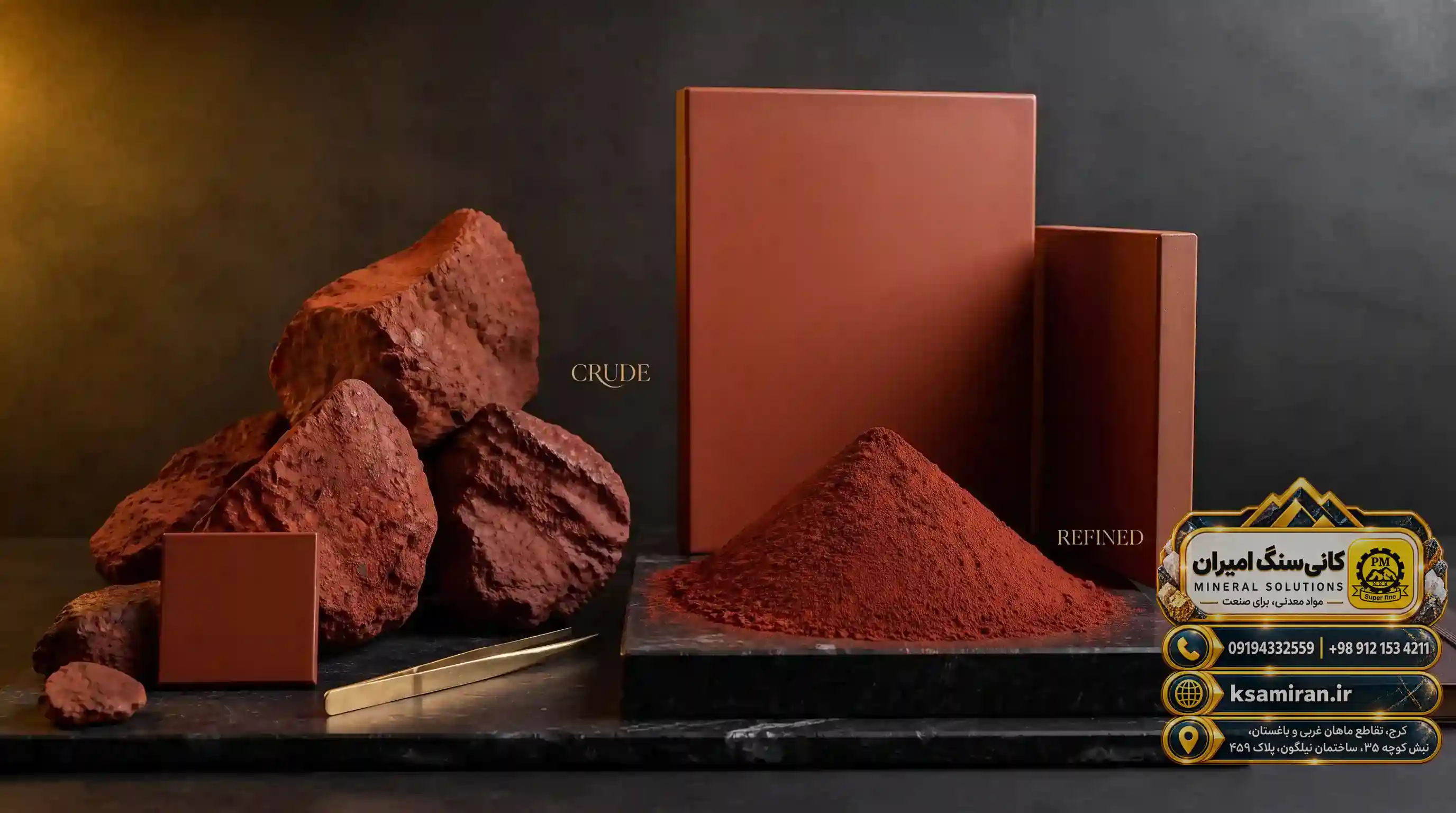
Factors Affecting Color Stability in Colored Cement Production and Quality Control
One of the biggest challenges for colored cement manufacturers is maintaining color stability across different production batches. Even if high-quality red iron oxide (ochre) is used, multiple factors can affect the final color of the product. Understanding these factors is the key to producing uniformly high-quality colored cement.
1. Pigment amount: The first factor is accuracy in weighing and adding the exact amount of red iron oxide (ochre). In the colored cement industry, the pigment dosage is usually determined based on the weight percentage of cement. Any change in this amount directly reflects on the color intensity of the product. Using precise and calibrated weighing systems is mandatory to maintain color stability.
2. Base cement quality: The type and quality of the base cement have a significant impact on the final color. Different cements vary in natural color, particle fineness, and material composition. Using one type of cement with a consistent brand and production batch is very important in maintaining color uniformity of products. Changes in the natural color of the base cement can completely change the final color of the product.
3. Water-to-cement ratio: The amount of water used in the mixture also affects the color. Increasing water dilutes the color and reduces its intensity, while decreasing water creates a denser color and a darker surface. Maintaining the water-to-cement ratio across all production batches is one way to control color stability.
4. Mixing time and method: Insufficient mixing causes improper pigment distribution and creates color streaks. On the other hand, over-mixing can change the structure of the cement paste and affect color intensity. Determining a standard mixing time and observing it in all production batches is important.
5. Curing conditions and humidity: Temperature and humidity during curing affect the product's color. Curing under inappropriate humidity conditions or rapid drying can cause color spots, changes in color intensity, or even surface efflorescence. Controlling environmental conditions during curing is essential to preserve color quality.
6. Aggregate quality: In products that use aggregates, the color of the aggregates can also affect the final color, especially in exposed concrete where the aggregate surface is visible. Using aggregates with a consistent color is effective in maintaining product uniformity.
7. Pigment particle size: As mentioned, red iron oxide (ochre) is produced in the 450 to 1500 mesh range. Any change in the particle size distribution of the pigment affects the coloring power and color clarity. Using pigment with uniform and controlled particle size is very important in maintaining color stability.
Quality control methods: Professional manufacturers usually prepare reference samples with a standard color and compare each production batch against them. Using colorimeters and color matching systems increases the accuracy of this control. Also, accurately recording production parameters (pigment amount, cement type, water ratio, etc.) for each batch provides the ability to trace the cause if a problem occurs.
Purchase, Storage, and Conclusion Tips
To purchase and effectively use red iron oxide (ochre) in the colored cement industry, paying attention to several key points is essential. These tips help manufacturers produce products with desirable color quality and high durability, and prevent potential problems.
1. Choosing a reputable supplier: The first step in purchasing red iron oxide is selecting a supplier that offers a product with uniform and controlled quality. Kani Sang Amiran Project (ksamiran.ir), as a mineral materials producer, manufactures this material for pigment, coating, cement, and ceramic product applications in the 450 to 1500 mesh range. To view product details, you can visit the red iron oxide (ochre) product page.
2. Attention to particle size: Before purchasing, you must specify which mesh range you need for your product. For products requiring a smooth surface and high coloring power, finer particles in the higher mesh range are more suitable. Consulting with the supplier's technical experts helps you choose the appropriate range.
3. Sample testing: Before buying in high volume, be sure to obtain a product sample and test it in your own production line. This allows you to evaluate the coloring power, uniformity, and behavior of the pigment in your own production process and ensure it matches your product.
4. Storage conditions: Red iron oxide (ochre) should be stored in a dry, cool environment away from moisture. Moisture can cause particles to clump and reduce pigment quality. Also, the product packaging must be intact and without tears to prevent the entry of air and moisture.
5. Safety in application: Although red iron oxide (ochre) is a non-toxic substance, when working with its powder, a respiratory mask and safety goggles should be used to prevent dust inhalation. Also, observe factory safety instructions and supplier recommendations.
6. Color testing before mass production: Before starting mass production, be sure to prepare a test sample of the colored cement and check its color after full curing. This helps you adjust the pigment amount or other parameters if needed.
Ultimately, it can be said that red iron oxide (ochre) is the best choice for the colored cement industry due to its color stability, resistance to harsh conditions, cost-effective price, and environmental compatibility. A complete understanding of this material and observing the points mentioned in this article helps manufacturers produce high-quality, long-lasting products that will be successful in today's competitive market.
| Question | Answer |
|---|---|
| What is red iron oxide (ochre) and what is its application in colored cement? | Red iron oxide (ochre) is iron (III) oxide with the formula Fe2O3, used as a mineral pigment in the production of colored cement, decorative concrete, and ceramic products, creating a red, stable, and resistant color. |
| How much red iron oxide is added to cement? | The amount of pigment is determined based on the weight percentage of cement and the desired color intensity, and is usually in the range of a few percent of the cement weight. The exact amount must be determined by testing on the base cement. |
| Does red iron oxide (ochre) reduce the strength of cement? | No. Red iron oxide is mineral and does not interfere in cement hydration reactions, therefore it does not negatively affect the compressive and mechanical strength of the final product. |
| Does the color of colored cement containing red iron oxide remain stable against sunlight? | Yes. Red iron oxide (ochre) is highly resistant to the sun's ultraviolet rays, and its color remains without significant change for years on facades and exterior floorings. |
| What effect does the 450 to 1500 mesh range have on color quality? | The particles in this range are very fine, which causes increased coloring power, color uniformity on the product surface, better dispersion in the mixture, and a smoother final surface. |
| Is red iron oxide (ochre) harmful to the environment? | No. This material is a mineral, non-toxic, and non-combustible pigment that does not release hazardous materials during production and use, and it aligns with environmental standards. |
| What is the difference between natural and synthetic red iron oxide? | Natural red iron oxide is extracted from hematite mines, while the synthetic type is produced by controlling purity and particle size, having higher uniformity and coloring power for precise industrial applications. |
| Can red iron oxide be combined with other pigments? | Yes. Red iron oxide can be combined with other mineral oxides to produce a wider range of colors in colored cement, provided that mixing is done uniformly. |
| What are the main factors affecting color stability in colored cement? | Pigment amount, type and quality of base cement, water-to-cement ratio, mixing time, curing conditions, and uniformity of pigment particle size are among the main factors of color stability. |
| How should red iron oxide (ochre) be stored? | This material should be stored in a dry, cool environment away from moisture, in intact and unbroken packaging, to prevent particle clumping and quality loss. |
Source: Kani Sang Amiran Project (ksamiran.ir) — producer of industrial mineral materials, red iron oxide (ochre) product page.
برچسب: Red Iron Oxide (Ochre),The Role of Red Iron Oxide (Ochre) in the Colored Cement Production Industry,
نویسنده: رساوب آفرین