
درباره سایت
آخرین مطالب
- استخدام أكسيد الليمونيت (الماغش) في صناعات الزجاج
- کاربرد اکسید لیمونیت (گل ماش) در صنایع شیشهسازی
- A Review of Daily Prices for Limonite Oxide (Ocher) in the Market
- چگونه خالص بودن اکسید لیمونیت (گل ماش) را تشخیص دهیم؟
- بررسی قیمت روز اکسید لیمونیت (گل ماش) در بازار
- Application of Limonite Oxide (Gole Mash) in Glassmaking Industries
- كيف تتعرف على نقاء أكسيد الليمونيت (جول ماش)؟
- How to Determine the Purity of Limonite Oxide (Gol Mash)?
- بررسی استانداردهای ایمنی کار با اکسید لیمونیت (گل ماش)
- Comprehensive Guide to Technical Analysis of Limonite Oxide (Gol Mash)
امکانات وب
Introduction to Industrial Barite; The Mineral Supporting Heavy Industries
Industrial barite is one of the most important and widely used minerals in mode industries, and due to its unique physical and chemical properties, it has become an inseparable component in the production of many industrial products. This mineral belongs to the group of heavy minerals and is mainly composed of barium sulfate (BaSO4). The high density of this material is the main reason various industries pay attention to it; so much so that its scientific name is derived from the Greek word "baros" meaning "heavy," and this simple name indicates the main characteristic of this mineral, i.e., high weight and density.
In nature, barite is usually found as veins and mineral masses alongside other minerals. After extraction from mines, this material is converted into powders with different mesh sizes through crushing, grinding, and precise classification processes. Industrial barite is a product prepared for specific industrial uses and must have certain quality characteristics to perform optimally in production processes.
One of the most prominent features of industrial barite is its high density, which usually ranges from 4.2 to 4.5 grams per cubic centimeter. This high density, combined with its light color, relative softness, and chemical inertness against most reactions, makes barite an ideal material for applications where weight gain or coating properties are required. For example, in drilling fluids, barite is used as a weighting agent to provide the necessary pressure to control the well while not changing the chemical properties of the fluid.
The industrial barite market is growing in Iran and the world; because the oil and gas industries, which are the main consumers of this material, are constantly developing. In addition, extensive applications in the production of welding electrodes and the rubber and plastic industries have increased the demand for this mineral at various industrial levels. Kani Sang Amiran Project (KS Amiran) is one of the mineral producers that produces and supplies industrial barite for these applications. Choosing a reliable supplier is the first step in buying high-quality industrial barite, and in the following sections of this guide, we will examine more precise tips for evaluating quality and choosing the right supplier.
In the rest of this article, we will first examine the technical specifications and the importance of the 200 to 450 mesh range, then we will review in detail each of the main applications of this product (drilling fluids, electrodes, rubber and plastic products), and finally, we will explain the key buying tips, daily price inquiry, and ordering steps at Kani Sang Amiran Project.
Technical Specifications of Industrial Barite and the Importance of the 200 to 450 Mesh Range
When it comes to buying industrial barite, one of the most important specifications you should pay attention to is the degree of crushing and particle size, or the product's "mesh." The industrial barite supplied by Kani Sang Amiran Project is produced in the 200 to 450 mesh range; meaning the particles of this powder are ground so finely that they pass through sieves with 200 to 450 holes per square inch. Generally, the higher the mesh number, the finer the particles and the softer the powder.
But why is this mesh range important for industrial applications? In drilling fluids, barite particles must be fine enough to be easily suspended in the fluid and not settle, but not so fine that they clog filters and separation screens. In electrode production, barite powder must have a uniform distribution so that the structure of the electrode coating remains consistent during the welding current. In the rubber and plastic industries, fine and uniform particles lead to better dispersion in the polymer matrix and improve the quality of the final product.
In addition to meshing, there are a few other key characteristics in evaluating the quality of industrial barite that you should inquire about from the supplier when buying:
- Density and specific gravity: High-quality barite must have high density, because this characteristic determines its main task in drilling fluids (increasing fluid weight).
- Purity percentage: The purity level of barium sulfate in the final product determines its performance in sensitive applications.
- Color: For applications where the appearance of the final product matters, the light and uniform color of barite is desirable.
- Particle size distribution: In addition to the overall mesh, the uniformity of particle distribution also plays a role in process quality.
- Moisture: The powder must have low moisture to disperse well in mixing processes and not clump.
Since this product is introduced for sensitive industrial applications such as drilling fluids, electrodes, and rubber and plastic products, it is recommended to request exact specifications of each production batch from the supplier before buying in high volume and, if possible, receive a test sample. This assures you that the product is compatible with your production process and reduces the risk of stopping the production line due to poor quality of raw materials.
Another important point is the consistency of specifications across different batches. Buyers who procure barite continuously must ensure that their supplier can deliver the same quality over time. To do this, you can control the density and mesh of the product on a sample basis in each shipment. In the following sections, we will examine each of the applications of industrial barite in more detail so that you gain a better understanding of the importance of each of these specifications in different industries.
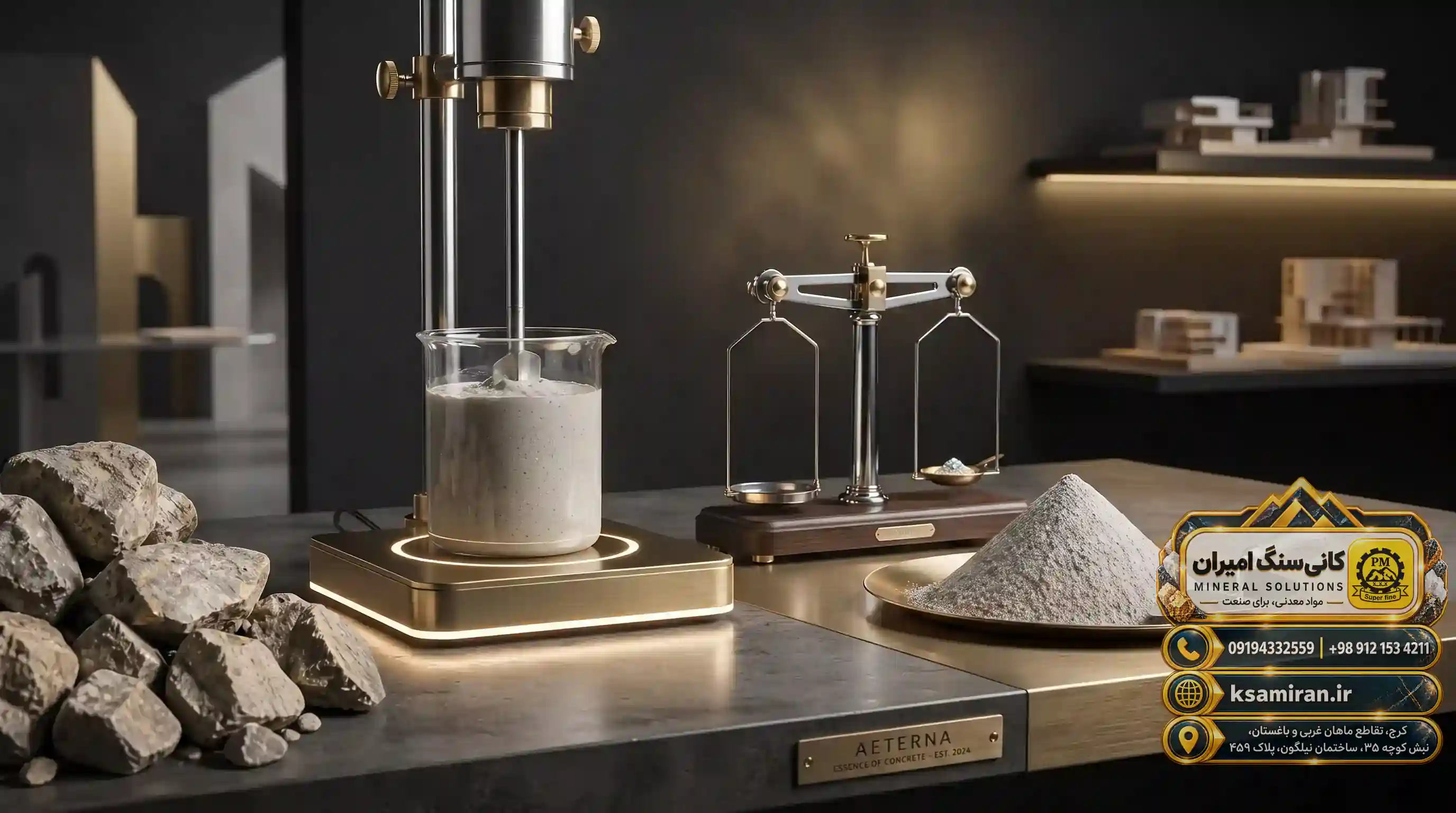
Application of Industrial Barite in Drilling Fluids
The most important and widespread application of industrial barite is in the oil and gas industry, and specifically in the production of drilling fluids (drilling mud). Drilling oil and gas wells is a process in which fluid is pumped into the well to provide the pressure needed to prevent oil or gas from flowing out from underground layers. This fluid must have controlled weight and density, and industrial barite is exactly the material that provides this weight.
But why barite? Among various minerals, barite is the best option for this application due to its high density, softness, light color, relatively affordable price, and abundance in nature. When barite is added to drilling mud, the fluid's density increases, and this causes the hydrostatic pressure of the fluid on the rock layers to create a proper balance with the reservoir pressure. The result of this balance is the prevention of blowout and increased safety of drilling operations.
An important point in using barite in drilling fluids is its particle size. If barite particles are too coarse, they settle in the fluid and cause pumping problems. If they are too fine, they may clog the system's filters and increase the fluid's viscosity. For this reason, the 200 to 450 mesh range offered in the Kani Sang Amiran Project product is considered a suitable option for this application, as it keeps particles fine enough to remain suspended in the fluid while simultaneously not causing filtration problems.
In addition to pressure control, barite has other duties in drilling fluids:
- Cooling and lubricating the drill bit: The fluid containing barite cools and lubricates the drill bit while transporting rock cuttings to the surface.
- Stabilizing the well wall: The weight of the fluid causes the well wall's stability and prevents it from collapsing.
- Transporting drilling cuttings: The heavier fluid can transport rock cuttings from drilling to the ground surface.
- Preventing fluid invasion into the reservoir: The proper fluid weight prevents fluid from entering the reservoir and damaging it.
A significant volume of barite produced in the world is spent on this application, and for this reason, the quality of barite used in drilling fluids directly affects costs and operational safety. Any fluctuation in the density or particle size distribution of barite can lead to stopping drilling operations or increasing their costs. Therefore, buying high-quality industrial barite with uniform specifications is among the important actions of drilling project managers.
Kani Sang Amiran Project (KS Amiran) has introduced its industrial barite with a 200 to 450 mesh range for these types of applications. Companies active in the oil services sector and drilling contractors can evaluate its suitability for their projects by receiving exact product specifications and testing samples. In the next section, we will examine the second application of this product, i.e., its use in welding electrode production.
Application of Industrial Barite in Electrode Production
Another important application of industrial barite is its use in the production of welding electrodes. Welding electrodes consist of a metal core and a coating applied over it. This coating incorporates various agents, each playing a specific role in the welding process, and industrial barite is one of these materials.
The main role of barite in electrode coating is to create a light and controllable slag on the fresh weld. This slag protects the molten surface from oxygen and nitrogen in the air, and after solidification, it is easily removed from the weld surface. The result of this process is a clean, high-quality weld that reduces the need for secondary finishing. In addition, barite helps stabilize the electric arc; because at the high temperature of the arc, barium ions are released and help conduct electric current in the arc region, which leads to a more stable arc and fewer sparks.
In electrode production, barite powder must have precise specifications:
- Fineness and uniformity of particles: The powder must be so fine and uniform that it mixes well with other coating materials and creates a uniform coating on the metal core. The 200 to 450 mesh range fulfills this condition.
- High density: The density of barite contributes to the coating structure and its behavior in the welding process.
- Chemical purity: Impurities can affect weld quality and arc stability, hence product purity is important.
- Light color: The light color of barite is useful in visual assessment of electrode coating quality.
Different electrodes have different amounts of barite in their coating, and this amount varies depending on the welding type, base metal type, and welding position. Electrode manufacturers usually have their own proprietary formulations, and to achieve uniform quality in the final product, they need a supplier that provides industrial barite with consistent and reproducible specifications. Changes in barite quality can lead to changes in arc behavior, spark rate, and the visual quality of the weld, which is noticeable to end customers.
Since the welding industry is developing in Iran and various projects from construction to oil, gas, and automotive industries use domestic electrodes, the demand for high-quality industrial barite in this sector is on the rise. Electrode manufacturers typically use barite in their formulations in two categories: rutile and basic electrodes, and each requires a specific amount of this mineral.
If you are an electrode manufacturer, it is recommended to test the barite sample in your formulation before buying in bulk and compare the results with the previous product. This helps you ensure the uniformity of your products' weld quality and prevent losses caused by sudden changes in raw materials.
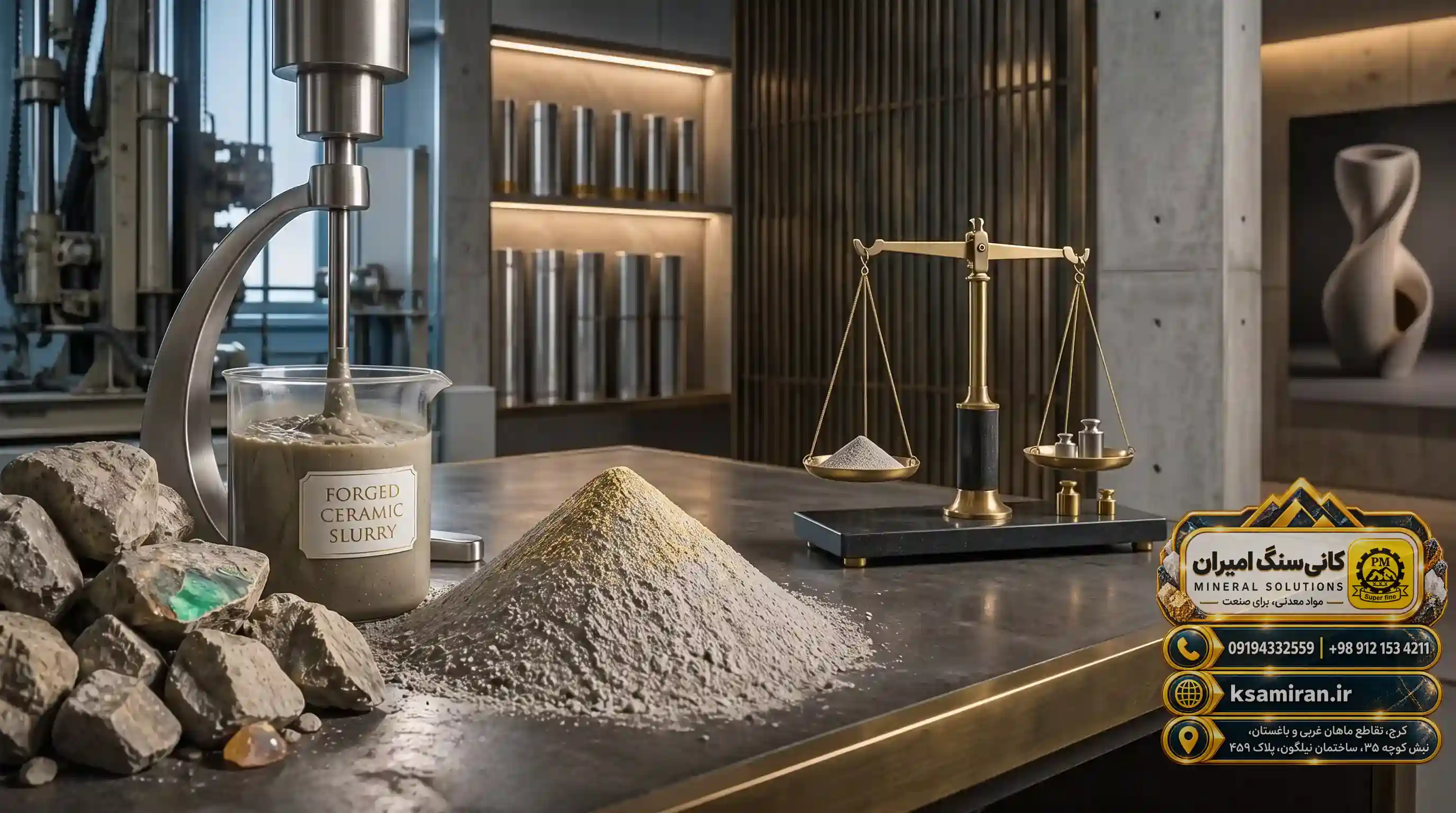
Application of Industrial Barite in the Rubber and Plastics Industries
The rubber and plastics industries are among the largest consumers of mineral fillers, and industrial barite holds a special position among them. In these industries, barite is used as a mineral filler, which, while reducing the finished product cost, also improves its physical and functional properties. The use of mineral fillers is a standard practice in the formulation of polymeric products, and choosing the right filler plays a key role in the final product quality.
One of the most important reasons for using barite in these industries is its high density. In producing rubber or plastic parts that require more weight (such as sound-deadening parts, machinery mounts, weight pads, and sound deadening parts), barite is used as a heavy filler. Besides weight, due to its light color, barite is a desirable option for products that require whiteness and bleaching, and it is compatible with various color systems.
In the plastics industry, industrial barite is used in the production of sheets, films, and molded parts, and helps improve mechanical properties, reduce post-molding shrinkage, and increase dimensional stability. In the rubber industry, barite is used in the production of industrial tires, gaskets, and sealing parts, and as an inert filler, it is compatible with other additives and stabilizer systems.
The benefits of using industrial barite in these industries include:
- Increasing the product's specific gravity without needing more expensive materials
- Improving mechanical properties such as wear resistance and hardness in some formulations
- Reducing production costs by partially replacing expensive polymers
- Chemical compatibility with most polymeric systems and common additives
- Property stability over time and resistance to environmental conditions
A key point in using barite in these industries is the fineness of the particles. For barite to disperse well in the polymer matrix and not weaken the mechanical properties, its particles must be very fine and uniform. The 200 to 450 mesh range makes the product suitable for most filler applications in rubber and plastics. Also, uniform particle size distribution helps prevent clumping and poor dispersion, which is directly important in the mixing process.
Rubber and plastics manufacturers typically choose the appropriate mesh based on their final product type and equipment (such as extruders, inteal mixers, or ovens). It is recommended to specify your process's exact requirements before purchase and consult with the supplier regarding the product's technical specifications. Receiving a sample and testing it on the production line is the most reliable method to ensure product compatibility with your process.
Key Tips When Buying Industrial Barite
Buying industrial barite, especially in high volumes, is a decision that should be made carefully and by examining all aspects. In this section, we review the most important points to consider when buying.
1. Request exact product specifications
Before any purchase, you should request the exact product specifications, including mesh range, density, purity percentage, color, and moisture, from the supplier. Reputable suppliers readily provide this information. For example, the product offered on the Kani Sang Amiran Project industrial barite page is introduced for drilling fluids, electrodes, and rubber and plastic products, and its mesh range is 200 to 450.
2. Take samples
Never make a bulk purchase without receiving a sample and testing it. The sample should be tested in your production process to ensure it is compatible with your process specifications. In sensitive projects like drilling fluids or electrode production, a low-quality batch can cause significant damages.
3. Evaluate reliable supply capability
If barite is an important part of your supply chain, you must ensure your supplier can meet your needs continuously and without fluctuation. Direct producers like Kani Sang Amiran Project (KS Amiran), which produce minerals themselves, usually offer more competitive prices and more stable supply than intermediaries.
4. Specify shipping and packaging terms
Industrial barite is usually supplied in standard bags or in bulk. The packaging must prevent moisture ingress, because high moisture causes the powder to clump and creates problems in the mixing process. Also, clarify shipping costs and delivery methods before contracting.
5. Make transparent pricing mandatory
The price of industrial barite depends on various factors and must be transparent. In the next section, we will examine the factors affecting price and how to inquire about daily prices.
6. Verify product authenticity
Since barite may be mixed with other minerals (such as calcium carbonate or talc), you must ensure the purchased product is actually barite with proper density. The simplest method is testing the product's density and specific gravity. If you are a bulk buyer, repeat this test periodically.
7. Documentation and after-sales service
Choose a supplier that provides technical product documentation and is available after sales to answer you in case of problems.
By following these tips, you can minimize the risk of bulk purchases and guarantee the quality of your final products. In the next section, we will address the important topic of price and how to inquire about daily prices.
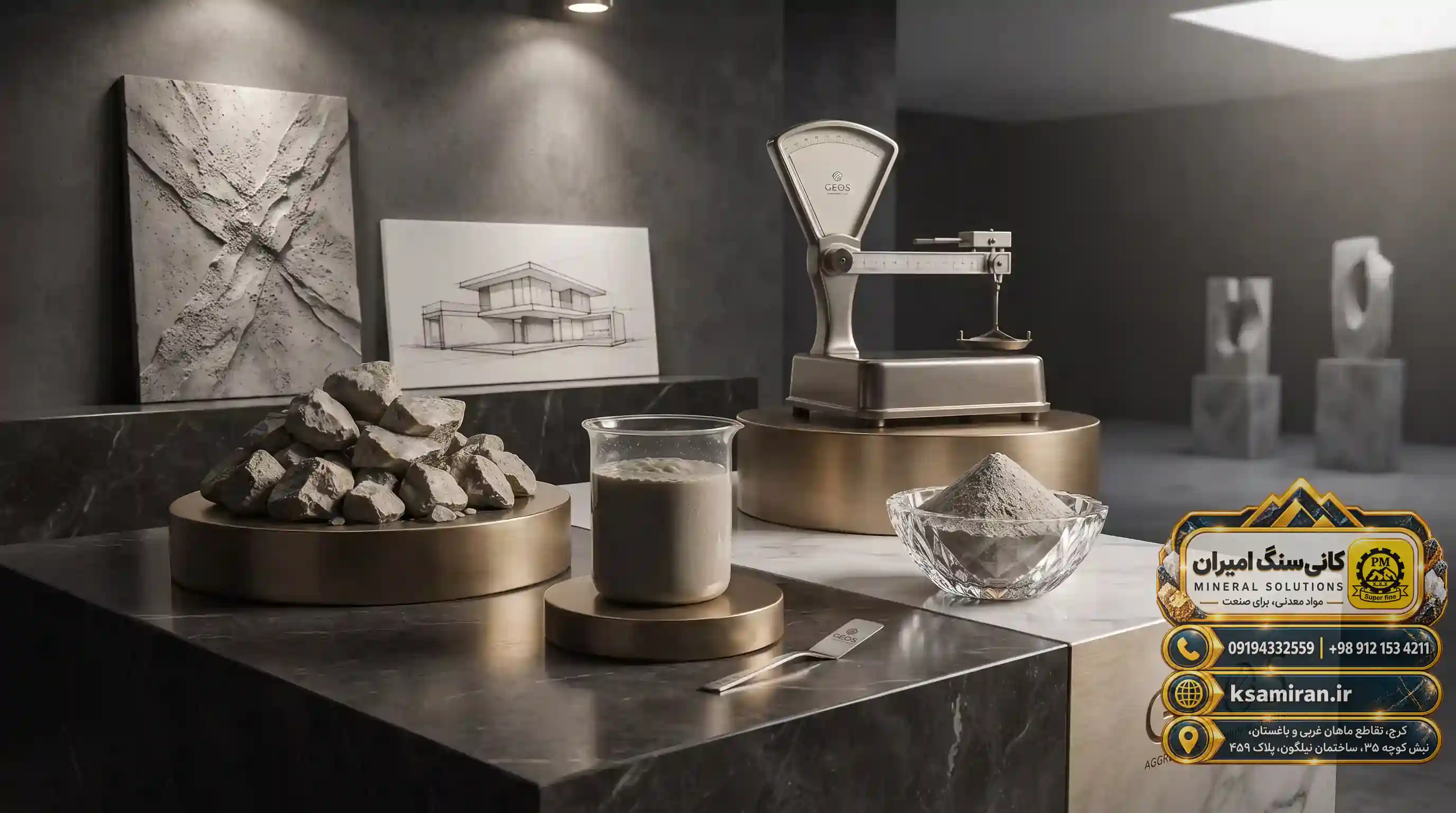
Daily Price Inquiry for Industrial Barite and Factors Affecting Price
The price of industrial barite is not a fixed number and depends on multiple factors that change over time. Therefore, professional buyers always inquire about the daily price from various suppliers before purchasing. Below, we examine the main factors determining the price of industrial barite.
Factors affecting price:
- Mesh range: The higher the mesh and the finer the particles, the higher the processing cost and price.
- Purchase volume: Bulk buying always comes with a lower finished price.
- Purity and density: Products with higher purity and density cost more.
- Packaging type: Packaging in bags or bulk affects the final price.
- Shipping cost: Your distance from the mine or supplier's warehouse and the shipping method make up a large part of the final cost.
- Currency and market fluctuations: The price of minerals in Iran is tied to exchange rate fluctuations and global market conditions.
- Market demand: During seasons when oil and gas projects are more active, demand for barite increases and prices may be affected.
How to inquire about prices?
The best way to inquire about the daily price is direct contact with the producer or a reputable supplier. Kani Sang Amiran Project (KS Amiran) is a mineral producer, and you can inquire about prices and place orders through the product page or the Industrial Barite Online Purchase Request Guide. After receiving your request, sales experts will aounce the daily price based on your needs and order volume.
A few tips for optimal purchasing:
- Compare different prices, but don't just settle for the lowest price; product quality and uniformity are more important than price.
- Negotiate with the supplier; continuous purchasing usually brings better terms.
- Ensure you receive an official proforma invoice with complete product specifications.
- For bulk purchases, inquire about prices periodically so you can act at the right time.
It is recommended that if you need other minerals alongside barite, consolidate your purchases to reduce shipping and supply chain management costs. Kani Sang Amiran Project also produces talc in addition to barite; for this purpose, you can use the White Talc Order and Purchase Price Inquiry Guide and the Industrial Talc Buying Guide to make an optimal and cost-effective purchase with full product knowledge.
How to Order and Buy Industrial Barite from Kani Sang Amiran Project
After familiarizing yourself with the specifications, applications, and buying tips for industrial barite, we now reach the final stage: placing an order. Kani Sang Amiran Project (KS Amiran) produces various minerals, including industrial barite with a 200 to 450 mesh range, and the purchasing process from this company is designed to be simple and transparent.
Purchasing steps:
1. View the product page and check specifications
In the first step, view the dedicated product page. On this page, technical specifications, applications, and product descriptions are provided, and you can evaluate the product's suitability according to your needs. To view full product details, you can visit the Industrial Barite page.
2. Submit an online request
You can then submit your request online. To do this, read the Industrial Barite Online Purchase Request Guide so the ordering process is explained step by step. This guide includes important tips on how to complete the request form and the information you should provide.
3. Receive a price quote and approval
After submitting the request, the company's experts will contact you and offer the daily price based on order volume, desired mesh range, and shipping conditions. At this stage, you can ask your technical questions.
4. Sampling (if needed)
If you are using this product for the first time, you can request a sample to test the product in your process before buying in bulk.
5. Contracting and shipping
After agreeing on price and specifications, your order will be registered for production or supply and then shipping. Shipping terms and delivery time depend on the order volume and destination, and will be communicated to you by sales experts.
Other available products
In addition to industrial barite, Kani Sang Amiran Project produces various other minerals. If you need industrial talc alongside barite, you can use the White Talc Order and Price Inquiry Guide and the Industrial Talc Buying Guide with Best Quality and Affordable Price to make a complete and consolidated purchase from one supplier.
Concluding remarks
Industrial barite is a vital material for drilling fluids, electrode production, and the rubber and plastics industries. By understanding technical specifications, choosing the right mesh range (200 to 450 mesh), and collaborating with a reputable supplier, you can guarantee your products' quality and optimize costs. Kani Sang Amiran Project (KS Amiran) is ready to provide guidance and supply your needs.
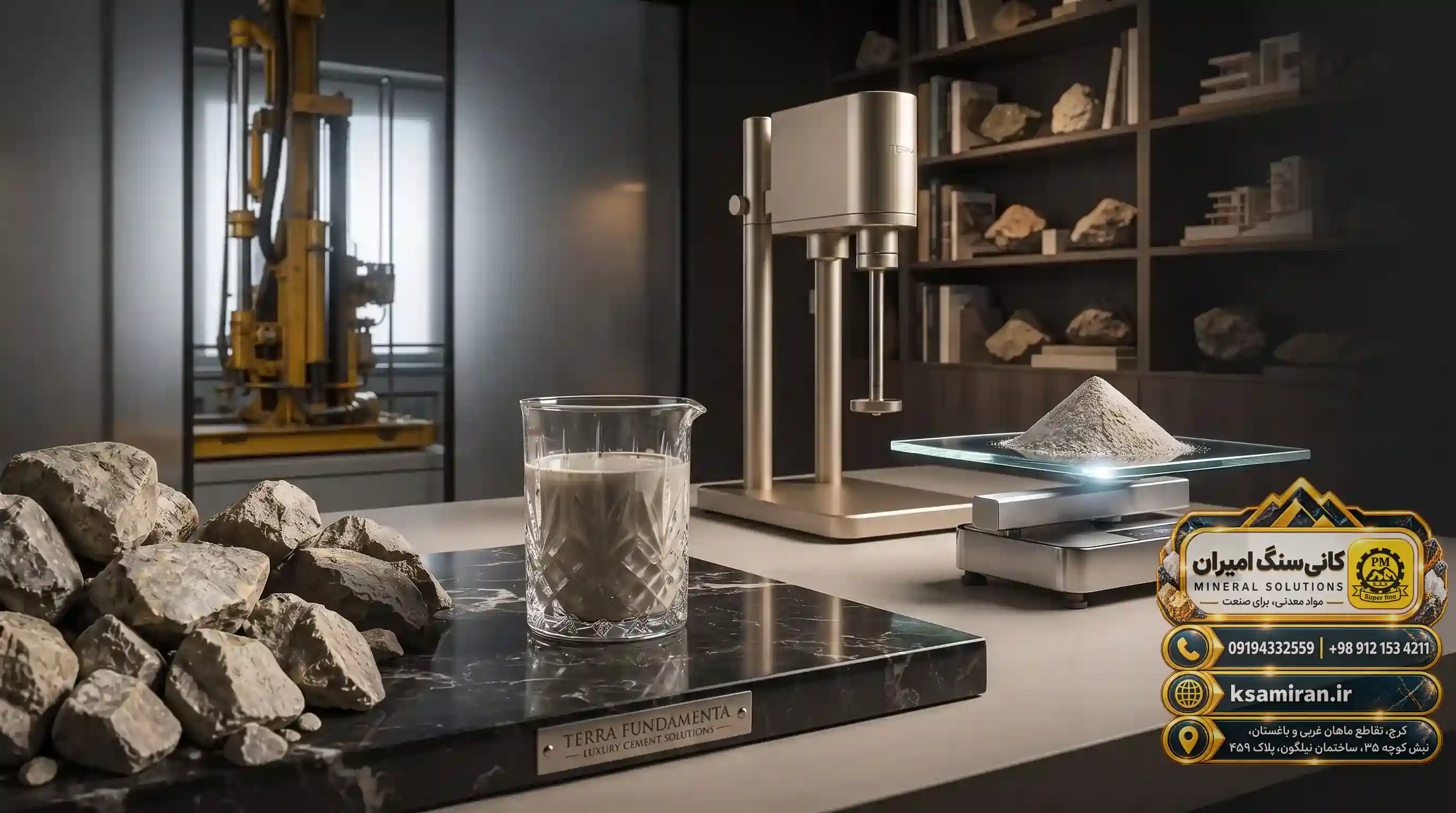
| Question | Answer |
|---|---|
| What is industrial barite? | Industrial barite is a heavy mineral primarily composed of barium sulfate, used in various industries including drilling fluids, electrodes, and rubber and plastic products due to its high density, light color, and chemical inertness. |
| What is the mesh range of Kani Sang Amiran Project's industrial barite? | The industrial barite supplied by Kani Sang Amiran Project is produced in the 200 to 450 mesh range. |
| What are the most important applications of industrial barite? | The main applications of this product include drilling fluids, electrodes, rubber products, and plastic products. |
| Why is barite used in drilling fluids? | Barite is used as a weighting agent in drilling mud due to its high density, and by increasing fluid density, it provides the pressure needed to control the well and prevent blowouts. |
| What is the role of barite in welding electrode production? | Barite in electrode coating helps create protective slag over the weld, stabilizes the electric arc, and produces a clean, high-quality weld. |
| How is industrial barite used in the rubber and plastics industries? | Barite is used as a mineral filler in these industries to improve the product's specific gravity, mechanical properties, and dimensional stability while reducing production costs. |
| How can we inquire about the daily price of industrial barite? | To inquire about the daily price, you can proceed through the product page or the industrial barite online purchase request guide on the Kani Sang Amiran Project website so that sales experts can aounce the price. |
| Is it possible to receive a sample before purchase? | To ensure the product is compatible with your production process, it is suggested to request a sample; sample shipping details can be coordinated with the company's sales experts. |
| How is industrial barite packaged and shipped? | Packaging and shipping details depend on your order volume; to receive exact information on this, coordinate with sales experts when submitting your request. |
| What is the difference between different barite meshes? | The higher the mesh number, the finer the powder particles. Higher mesh is more suitable for applications requiring better dispersion and particle suspension (like drilling fluids and polymer fillers). |
The specifications and descriptions of this article are adapted from the Kani Sang Amiran Project (KS Amiran) industrial barite product page: https://ksamiran.ir/products/industrial-barite/
برچسب: Industrial Barite,Industrial Barite Buying Guide, Key Tips and Daily Price Inquiry,
نویسنده: رساوب آفرین