
درباره سایت
آخرین مطالب
- انتخاب اکسید آهن قرمز (اخرا) برای بهبود کیفیت پیگمنت و پوششهای رنگی
- تامین کربنات کلسیم با دانهبندی دقیق جهت استفاده در مستربچ
- تأمین تخصصی سیلیس برای مصالح ساختمانی، شیشه و صنایع سرامیک
- ویژگیهای فنی بنتونیت کانی سنگ امیران برای کاربردهای خاص
- فلدسپات کانی سنگ امیران برای شیشه کاشی و سرامیک
- کاربرد تالک سفید درجه یک در فرمولاسیون پیشرفته رنگ و محصولات کاغذی
- اکسید آهن قرمز (اخرا) کاربردی جهت تولید محصولات سرامیکی و پوشش
- مشخصات فنی اکسید آهن قرمز (اخرا) مناسب برای پوشش و تولید پیگمنت
- مشاوره تخصصی خرید کربنات کلسیم بر اساس نیاز دقیق صنعت شما
- انتخاب تالک سفید صنعتی مناسب برای تولیدات کاغذ و مستربچ
امکانات وب
Industrial barite is one of the most widely used non-metallic mineral materials in the world, obtained from the natural mineral barium sulfate (BaSO4). This material has eaed a special place in the production lines of various industries due to its high specific gravity, its colorlessness when combined with other materials, its low chemical activity, and its resistance to harsh conditions. The mineral's name is derived from the Greek word "baros," meaning heavy, and this very heaviness is one of the most important reasons for its widespread use in industry.
Industrial barite differs from pharmaceutical barite or highly pure laboratory samples, since in industrial applications, ultra-high chemical purity is not the main priority; rather, characteristics such as specific gravity, uniform particle size distribution, and a suitable mesh range are more important. In fact, industrial barite is a product that is milled and graded according to each industry's needs to deliver the best performance in the production process.
The value chain of this product covers the stages of mine extraction, crushing, specialized milling, and finally precise particle-size control. After extraction, barite ore is fed into crushing machines at processing plants and then separated into different meshes using screens and air classifiers. The result of this process is a uniform, ready-to-use powder that is used across a very diverse range of industries.
Among the main applications of this product are drilling fluids, electrode production, the rubber industry, and the plastics industry. Each of these industries has its own technical requirements, which are fully examined later in this article. The Kani Sang Amiran Project, with years of experience in mineral production, supplies this product in the 200 to 450 mesh range, tailored to the needs of these industries.
Why Are Industries Dependent on Industrial Barite?
- High specific gravity, which enables density control in fluids and compounds.
- Chemical neutrality, which minimizes unwanted reactions with other materials.
- Millability and precise particle-size control across different ranges.
- Light color, which is an advantage in products such as electrodes and plastics.
- A reasonable total cost relative to the performance it delivers.
At the end of this chapter, it should be emphasized that correctly selecting this product directly affects final-product quality, equipment lifespan, and even process safety. For this reason, understanding the technical specifications and matching them to your industry's needs is an essential step before purchase.
One of the most important technical parameters in choosing industrial barite is its particle size, measured in "mesh." The term mesh refers to the number of openings in each square inch of a screen; therefore, the higher the mesh number, the finer the particles. The 200 to 450 mesh range designated for this product shows that its particles are very fine and homogeneous, and this property is ideal for industries that require uniform dispersion.
In industrial applications, 200 mesh particles are around 74 microns and 450 mesh particles around 32 microns. That is, within this range, the product consists of very fine particles that create a high contact surface area. This high contact surface area leads to better dispersion of the powder inside liquids, polymers, and coating compounds, and it reduces the so-called springiness or balling up of the powder in tanks.
Key Physical and Chemical Properties
- Specific gravity: The specific gravity of this material falls within a remarkable range, which is why it is used for weighting fluids.
- Hardness: The low hardness of this mineral keeps wear on mixing equipment and pumps to a minimum — an advantage that is very important in continuous production lines.
- Color: The brightness and whiteness of the product are highly valuable in applications where the final appearance matters, such as coated electrodes and plastic parts.
- Low chemical activity: This mineral is resistant to weak acids and bases and shows no significant reaction with common additives.
- Bulk density: The possibility of reaching high density in fluids without a noticeable increase in viscosity.
One of the common mistakes buyers make is focusing solely on chemical purity, whereas in most industrial applications, particle size distribution and its uniformity are more important. For example, if the particle distribution is heterogeneous, rapid settling occurs in drilling fluids and uneven filler distribution in rubber and plastics, which directly leads to a drop in final-product quality.
The fine particle range of this product also causes more dust during handling; therefore, factory conditions, pneumatic conveying systems, and adequate ventilation must be considered before purchase and storage. Proper ventilation not only prevents material loss but also guarantees the health of production-line workers.
It should also be noted that in production plants, different batches are controlled as lots; each batch may have its own particle distribution. Professional buyers usually request samples to gauge the product's performance on their own production line before purchasing in bulk. This is of strategic importance, especially for industries with sensitive lines such as electrode production.
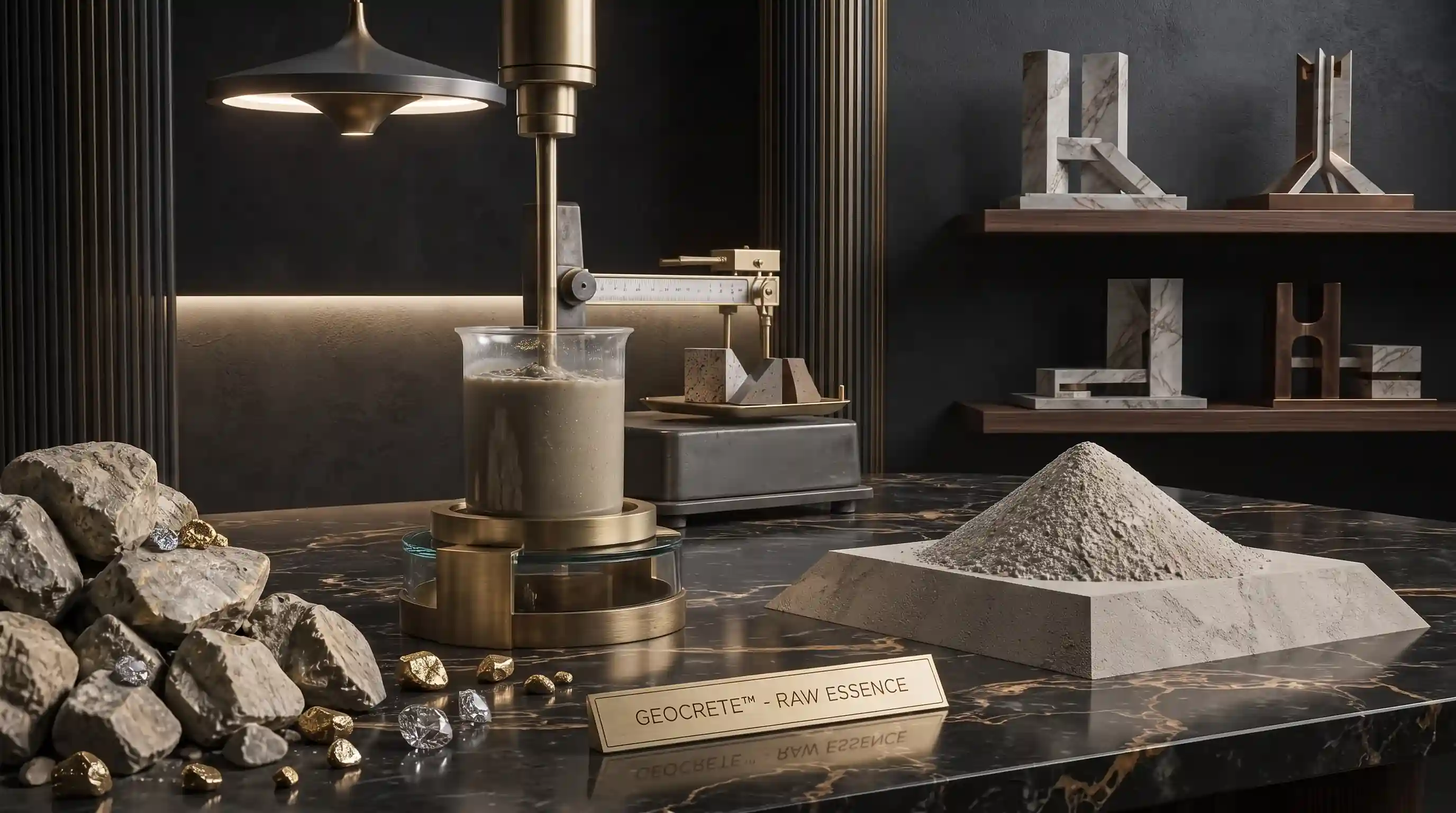
The most important and best-known application of industrial barite in the oil, gas, and geotechnical industries is its use in drilling fluids. In deep well drilling operations, controlling formation pressure is a critical matter. The drilling fluid, or drilling mud, must have sufficient weight to prevent formation fluids from suddenly entering the well and causing a blowout. This weight is provided by materials called weighting agents, and this mineral is the most widely used material in this field.
Why Is Barite Suitable for Weighting Drilling Mud?
- High specific gravity makes it possible to reach the required density without needing a large volume of material.
- Low chemical activity is compatible with other mud additives such as polymers and salts.
- Low hardness reduces wear on pumps and rotating equipment.
- Its relatively affordable price, compared with alteatives, keeps operation costs under control.
- Its availability in various particle-size ranges makes flexible technical selection possible.
A very important point in this application is the uniform distribution of particle size. If coarse particles are present alongside fine particles, rapid settling occurs when mud circulation stops, and more agitators must be employed to fix it. The fine and uniform particle range of this product ensures that the suspension stays stable for a longer time, and as a result, the quality of the entire drilling operation improves.
In addition to weighting, this mineral plays another role in drilling mud: controlling mud-cake thickness and reducing fluid invasion into the formation. This both prevents damage to the wellbore and makes subsequent operations such as cementing easier. That is why the quality of the powder used in this industry is not a secondary matter and directly affects the safety and total cost of the project.
In geotechnical drilling projects, water wells, and injection wells, the same logic applies; wherever a fluid with controlled density is needed, this product offers a technical and economic solution. Engineering teams usually sample and carry out the necessary tests before starting operations to determine the consumption rate and required specifications based on well depth and formation temperature.
From a safety standpoint, using powder with controlled particle size also makes dust-related hazards manageable. Mud preparation plants typically employ closed transfer systems and storage silos so that worker safety is preserved and material loss is minimized.
One of the specialized applications of industrial barite is its use in the production of coated welding electrodes. Electric arc electrodes consist of a metal core and a chemical coating layer. This coating is tasked with performing several duties during welding: stabilizing the electric arc, generating shielding gases, shaping the slag, and finally controlling the chemical composition of the weld metal. Among these, this mineral plays a key role.
Technical Roles of Barite in Electrode Coating
- Arc stabilization: The presence of this material in the coating composition helps the stability of the electric arc and reduces current fluctuations.
- Slag formation: Slags based on this mineral are ideal options for covering the molten pool against oxygen and nitrogen and for controlling the weld's cooling rate.
- Shielding gas control: Combined with carbonates, it supplies the shielding gases needed to prevent oxidation of the weld metal.
- Improved weldability: Electrodes containing this material show a softer arc and better droplet transfer, which increases weld quality.
Why does the fine mesh range matter in this application? Because the electrode coating must be applied onto the metal core as a thin, dense, and homogeneous layer. Finer particles create better adhesion when mixed with the coating cement, and during welding the coating bus in an integral and predictable maer. This directly affects weld quality, the amount of spark spatter, and the ease of slag removal.
In the production of alkaline and cellulosic electrodes, this material is usually combined with feldspar, calcium carbonate, and other minerals. The ratio and quality of each determines the electrode's properties and its standard classifications. Therefore, electrode manufacturers usually choose a supplier that can guarantee the product's particle size and uniformity over the long term, because a change in the powder's specifications requires re-adjusting the entire production line.
Another important point is this material's moisture. In electrode factories, controlling the coating's moisture is very important, and the powder must not carry water that would cause fluctuations in the final mixture's moisture level. Proper packaging and storage in dry conditions preserve this property.
Finally, electrodes produced with this mineral are usually used in the construction, bridge, pipeline, and high-pressure industries, and that is where they prove their quality. This means that choosing the right raw material has a direct impact on the safety of industrial structures.

The rubber industry is one of the largest consumers of mineral fillers, and industrial barite holds a special position in this industry. In the production of all kinds of rubber — from automobile and heavy-machinery tires to rubber sheets, hoses, gaskets, and insulation — mineral additives are used to improve physical properties, reduce total cost, and increase product lifespan.
Advantages of Using Barite in Rubber Compounds
- Neutral filler: This mineral is compatible with different curing systems and does not disrupt the cure rate.
- Increased density: Products such as sound and vibration insulation sheets benefit from this material's high weight.
- Chemical resistance: Rubbers in contact with acids and oils show better performance in the presence of this material.
- Lower total cost: Replacing part of the raw rubber with this mineral keeps production costs under control.
- Improved processing: This powder makes the flow of the compound easier in extruders and calenders.
In tire production, this material can be used in undertread compounds and other inteal parts. The presence of fine and uniform particles improves filler distribution in the polymer matrix and prevents localized weak points that cause early damage. This matter is of great importance in applications where the rubber is under load and temperature.
In the production of industrial hoses and gaskets, this material acts as a technical filler. Its high density gives hoses more weight, which is desirable in some applications. Also, in the production of rubber products against noise and vibration, the high weight is considered a competitive advantage.
One of the key points in this application is the mixing method. Mineral fillers must be well dispersed in the rubber matrix so that localized agglomerations do not form. The fine mesh range of this product creates a high contact surface with the rubber and makes the mixing process more efficient. Of course, it should be noted that excessive use of any filler can reduce tensile and flexibility properties, so the formulation must be designed by specialists.
From an environmental standpoint as well, this material is completely safe and poses no risks to human health or the environment during the product's life cycle. This property is very important in the rubber industry, whose products come into direct contact with people.
Finally, manufacturers who seek consistent quality usually choose a supplier that controls the particle size and uniformity of the product across different batches. This choice allows production lines to continue operating without the need for constant formulation changes.
The plastics industry is one of the broadest industries in Iran and the world, and industrial barite plays an important role in this industry as a functional mineral filler. In the production of various products such as PVC sheets, injected plastic parts, masterbatches, sound insulation, and plastic stone panels, this mineral is used to improve properties and control costs.
Why Do Plastics Makers Use This Material?
- Total cost control: Replacing part of the expensive polymer with this filler significantly reduces production costs.
- Targeted density: In products that need weight and a more substantial feel, this material's high density is ideal.
- Dimensional stability: This material can help reduce shrinkage during cooling.
- Better processing: This powder regulates the melt flow in injection and extrusion machines.
- Acid and oil resistance: Parts in contact with chemicals show better performance.
One of the best-known applications of this product is in the production of cabinet sheets and panels. In these products, combining this mineral with PVC produces heavy, flat, and moisture-resistant panels. The high weight of these panels increases the final product's perceived quality and improves its mechanical resistance.
In masterbatch production, this powder is used as a carrier and filler. The very fine particles in the 200 to 450 mesh range guarantee excellent dispersion in the polymer matrix and cause colors and additives to be distributed uniformly in the final product. This is a major competitive advantage in industries where the product's visual quality matters.
In sound insulation and anti-vibration panels, the high weight of this mineral plays the main role. These products are typically used in machinery rooms, vehicle floors, and industrial walls, and due to their high weight they absorb and contain sound waves well.
An important technical point in this application is the powder's moisture. In extrusion processes, moisture causes bubbles and porosity in the final product. Therefore, suppliers who offer a product with low moisture and proper packaging have more supporters in this industry. In addition, powder feeding systems in plastics lines must work with uniform powder so that the raw material flow does not fluctuate.
Finally, it must be emphasized that this material in plastics is not merely a cheap filler; it is a technical additive that, with the right choice of particle size and quality, can tangibly upgrade the final product. For this reason, large manufacturers usually carry out preliminary tests on samples before bulk purchases.

Choosing the right industrial barite requires a precise understanding of the production line's needs. In the market, this product is offered with different particle sizes and qualities, and buying without awareness can lead to a drop in final-product quality, increased costs, and even damage to equipment. In this chapter, we examine the most important criteria for choosing the best type, step by step.
1. Determine Your Final Application
The first step is to determine exactly which product you want to use this material in. Each application has its own technical requirements; for example, in drilling fluids, specific gravity and suspension stability have the first say, while in plastics and rubber, particle dispersion and moisture become more important. In electrode production, coating uniformity and arc behavior take priority.
2. Choose the Particle Size (Mesh Range) Based on Your Needs
The 200 to 450 mesh range is suitable for applications that require fine and homogeneous particles. Finer particles disperse better in liquids and polymers, but in retu they create more dust and require conveying and ventilation equipment. Before purchasing, make sure your production line is compatible with this range.
3. Assess Uniformity and Batch Quality Control
A quality product depends not only on average specifications but also on its uniformity across different batches. A change in particle size between batches can cause fluctuations in the production line. The best way is to request samples and carry out preliminary tests before a bulk purchase.
4. Check the Moisture Content and Packaging
High moisture is a destructive factor in the plastics and electrode industries. Ask the supplier to clearly state the product's moisture level and the packaging method. Proper packaging both preserves the product's quality and prevents material loss during transport.
5. Choose an Experienced Supplier
A manufacturer's experience in the mineral materials industry guarantees that the product is offered with consistent quality. The Kani Sang Amiran Project, with its experience in mineral production, supplies this product tailored to the needs of various industries. To view full specifications and place an order, you can visit the industrial barite product page, and if you intend to buy, reading the online purchase request guide for industrial barite will help you register your order faster.
6. Compare With Other Mineral Options
In some applications, this mineral competes with other minerals. For example, in the paint and plastics industries, iron oxides also have broad applications, and reading the guide to choosing the best red iron oxide (ochre) gives you a useful perspective on how to select minerals. Knowing the alteative options helps you make an economical and technical choice.
In the end, do not forget that a lower price does not always mean economic savings. If a product has low quality, material waste, a drop in final-product quality, and production-line stoppages will impose far greater costs on you than the amount saved.
After purchasing industrial barite, the storage and warehousing stage is very important. If this mineral is stored in unsuitable conditions, it may absorb moisture, pick up soot and dirt, or — due to pressure and humidity — become lumpy, all of which negatively affect the final product's quality. In this chapter, we present the key storage points and, finally, the summary of this article.
Key Storage Points
- Dry environment: The warehouse must be kept away from moisture and water seepage, since moisture is one of the biggest enemies of this powder.
- Proper covering: If bags and sacks are used, they should be kept on pallets with a waterproof cover.
- Adequate ventilation: During handling, ventilation and dust-collection systems must be active.
- Away from chemicals: It should not be stored next to strong acids and bases to prevent potential reactions.
- Inventory rotation: Use first-in, first-out warehousing so that the product does not get old.
To become fully familiar with the professional principles of storing this product, reading the comprehensive guide to warehousing and storage of industrial white barite powder will help you prevent raw-material loss and control production costs. Also, during transport, trucks with proper covers should be used so that the powder is protected against wind and moisture.
Article Summary
In this article, we examined this mineral's applications in various industries. From drilling fluids — in which high specific gravity and suspension stability have the first say — to electrode production, in which coating uniformity and arc behavior are important, and the rubber and plastics industries, in which this material acts as a technical filler and cost controller. In all these applications, choosing the right particle size and a supplier with consistent quality plays a decisive role in production-line success.
The 200 to 450 mesh range makes this product suitable for industries that require fine and homogeneous particles. Alongside this property, batch uniformity, low moisture, and proper packaging are criteria that should not be overlooked. The Kani Sang Amiran Project, with its experience in mineral production, supplies this product with controlled quality and tailored to the needs of various industries.
If you need this mineral for your project, first list your required technical specifications, then request a sample from the supplier, and upon confirmation, register your order. This professional approach protects you from wrong purchases and extra costs and guarantees your final product's quality.

| Question | Answer |
|---|---|
| What is industrial barite? | It is the natural mineral barium sulfate (BaSO4) that, after crushing and particle-size control, is supplied for industrial applications such as drilling fluids, electrodes, rubber, and plastics. |
| What is this product's mesh range? | This product is supplied in the 200 to 450 mesh range, which includes very fine and homogeneous particles. |
| Why is this material used in drilling fluids? | Due to its high specific gravity, low chemical activity, and low hardness, this material is very suitable for weighting drilling mud and controlling pressure. |
| What is this mineral's role in electrode production? | In electrode coating, it helps with arc stability, protective slag formation, and weld quality control. |
| What application does it have in the rubber industry? | As a neutral filler, it increases density and chemical resistance and controls the product's total cost. |
| How is it used in the plastics industry? | It is used as a filler in PVC, masterbatches, and sound insulation, and it improves processing and the final product's properties. |
| How should we choose the best type? | Choose based on the final application, the required particle size, batch uniformity, moisture, and the supplier's experience. |
| Why should we take samples before a bulk purchase? | To ensure that the product's specifications match the production line's needs and to prevent fluctuations in the final product's quality. |
| How should this product be stored? | In a dry environment, with proper packaging, away from chemicals, and with proper inventory rotation. |
| Which company supplies this product? | The Kani Sang Amiran Project (mineral production) supplies this product in the 200 to 450 mesh range. |
Source: Kani Sang Amiran Project (mineral production) — technical guide and product specifications for industrial barite.

برچسب: Industrial Barite,Industrial Barite Applications Across Various Industries and a Guide to Choosing the Best Type,
نویسنده: رساوب آفرین