
درباره سایت
آخرین مطالب
- مشخصات فنی و آنالیز سیلیس مناسب ریختهگری و سرامیک از امیران
- استعلام قیمت اکسید لیمونیت (گل ماش) مخصوص پیگمنتهای معدنی
- انتخاب دقیق دولومیت برای ارتقای کیفیت مصالح ساختمانی و شیشه
- فلدسپات با دانهبندی دقیق برای تولید شیشه و لعاب
- نقش بنتونیت در افزایش کیفیت چسبانندهها و مواد جاذب صنعتی
- انتخاب تالک صنعتی مناسب برای ارتقای کیفیت محصولات پلیمری و رنگ
- خرید کائولن با مش ۴۵۰ تا ۱۵۰۰ از کانی سنگ امیران برای تولید لعاب
- کائولن مرغوب کانی سنگ امیران؛ انتخابی ایدهآل برای صنعت کاغذ و رنگ
- بهترین تالک سفید صنعتی با مش ۴۵۰ تا ۲۵۰۰ جهت کاربردهای سرامیکی
- کاربرد تخصصی کربنات کلسیم در ساخت چرم مصنوعی و محصولات پلیمری
امکانات وب
Introduction to Red Iron Oxide (Ochre) and Its Position in the Rubber Industry
Coloring is one of the important stages in producing rubber parts, and choosing the right pigment plays a decisive role in the visual and functional quality of the final product. Red iron oxide (ochre), with the chemical formula Fe2O3, is one of the mineral pigments with a long history in industry; due to its outstanding stability against light, heat, and chemicals, it still holds a special position in the rubber industry. This mineral is used in a wide range of industrial products and is recognized for its main applications including pigment, coatings, cement, and ceramic products.
In the rubber industry, pigments have two main responsibilities: first, creating the desired color and appearance in the final product, and second, protecting the rubber against ultraviolet radiation and environmental factors. Red iron oxide (ochre) performs both functions well; the particles of this pigment absorb UV light and prevent the degradation of polymer chains, thereby increasing the service life of the rubber product. That is why it is used in the production of tires, conveyor belts, gaskets, hoses, and outdoor rubber parts.
One of the most important advantages of red iron oxide over organic pigments is its high thermal stability. The rubber production process involves heating and vulcanization at relatively high temperatures, and many organic pigments lose their color or decompose under these conditions. Red iron oxide (ochre), however, has a completely stable structure and retains its red-to-brown color throughout rubber-processing temperatures. This characteristic guarantees color reproducibility of the final product in mass production.
From an economic perspective, red iron oxide is also a cost-effective choice. This pigment is abundant in nature and its production process is relatively simple; as a result, its final price is lower than red organic pigments such as quinacridone and perylene. This matter is very important for rubber-part manufacturers who seek to reduce costs while maintaining quality, and it is one of the main reasons for the expanding use of this pigment in the rubber industry.
Kani Sang Amiran Project, a producer of mineral materials, supplies this product in the 450 to 1500 mesh range for the main applications of pigment, coatings, cement, and ceramic products. To view the specifications and product information, you can visit the Red Iron Oxide (Ochre) page.
In the rest of this article, we will examine the chemical structure, coloring mechanism, effect of particle dimensions, formulation tips, and practical applications of this pigment in the rubber industry, so that with complete and scientific insight you can make the best decision for your production line.
Chemical Structure and Coloring Properties of Red Iron Oxide (Ochre)
Red iron oxide (ochre), with the chemical formula Fe2O3 and the mineralogical name hematite, belongs to the group of iron oxides. In this compound, iron is in the +3 oxidation state, and oxygen atoms are arranged in a hexagonal crystal structure. This stable crystal structure determines the coloring and resistance properties of the material; the distinct red-to-brown color of red iron oxide arises from the absorption of visible light by the d-layer electrons of iron.
One of the prominent characteristics of red iron oxide (ochre) is its color stability under harsh environmental conditions. This pigment shows high resistance to ultraviolet radiation, moisture, oxygen, and many chemicals. Therefore, rubber products used in open environments and under sunlight — such as tires, outdoor hoses, and exterior seals — retain their color for a longer time when made with this pigment and do not suffer premature fading.
High thermal resistance is another important property of this material. Red iron oxide remains stable and does not decompose at temperatures far above the usual temperatures of the rubber vulcanization process. This property allows the producer to use this pigment in rubber formulations without conce about color change during curing. This material is also non-flammable and behaves very well in terms of process safety in rubber factories.
Among the main applications of red iron oxide (ochre) — pigment, coatings, cement, and ceramic products — rubber coloring and polymer parts fall under its pigment application. In addition to creating color, red iron oxide particles can act as a filling material due to their suitable size and hardness, functioning as an operational filler in some formulations, which organic pigments caot match.
In terms of safety and health, red iron oxide (ochre) is considered a non-toxic pigment; unlike some pigments containing heavy metals such as lead or chromium, it poses fewer environmental and health risks. This is especially important for manufacturers of rubber products in contact with human skin — such as gloves or toy parts. However, observing usual safety practices when working with fine powders, such as using a mask and proper ventilation, is necessary.
In general, chemical and thermal stability, UV resistance, suitable coloring strength, non-toxicity, and low cost can be counted among the key characteristics of red iron oxide (ochre), making it a suitable and reliable choice for coloring rubber products.
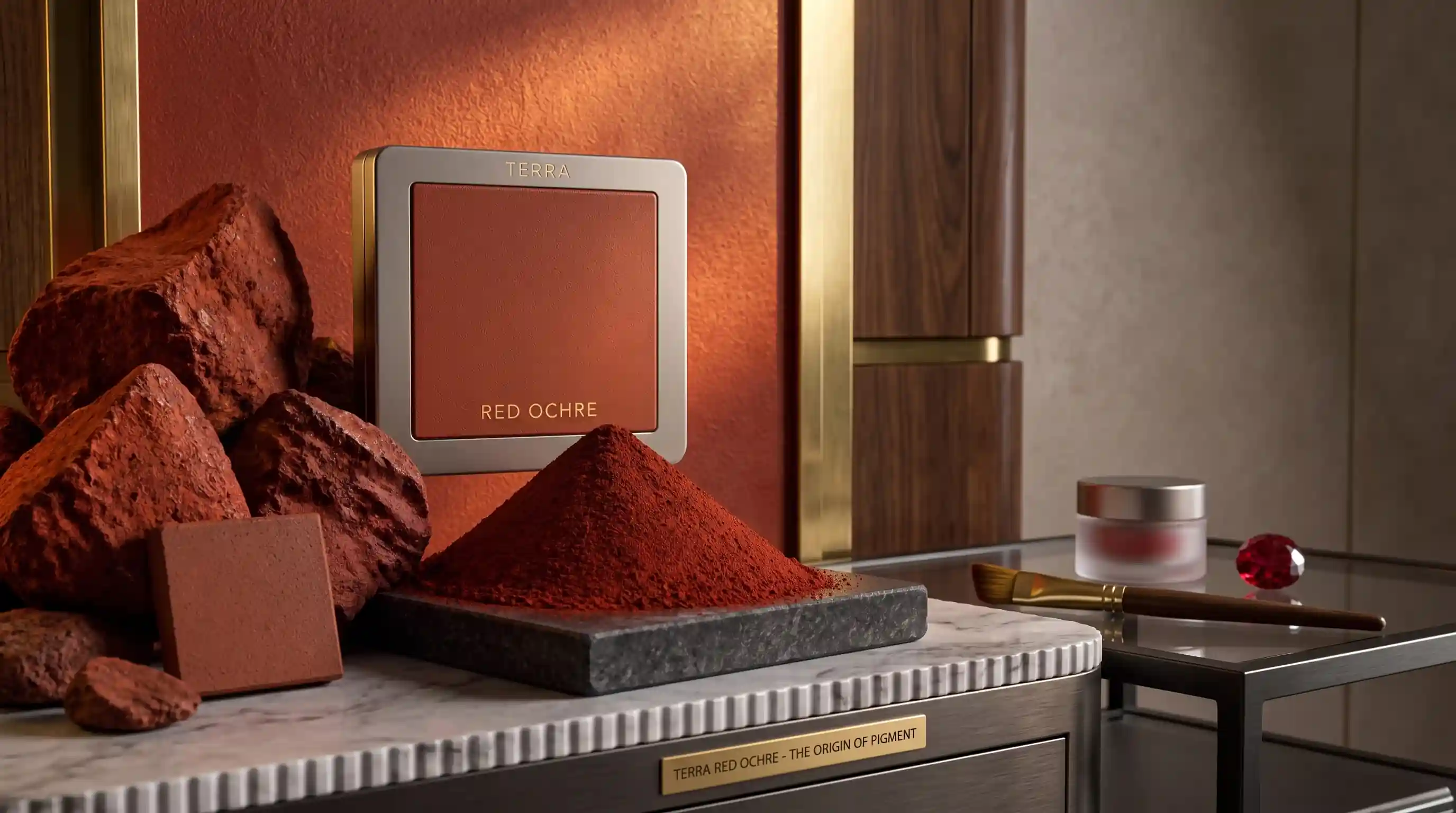
The Coloring Mechanism of Red Iron Oxide (Ochre) in Rubber Compounds
Rubber coloring is a physical-mechanical process during which pigment particles become dispersed in the rubber matrix (elastomer) and, by absorbing and reflecting light, produce a red color in the final product. Red iron oxide (ochre), as an insoluble mineral pigment, does not chemically react with rubber during the curing and vulcanization process; rather, it remains as suspended particles within the polymer network. This chemical neutrality prevents it from interfering with the cure system.
The key stage in coloring is the dispersion stage, or the distribution of particles in the matrix. Due to their mineral nature and polar surface, red iron oxide particles tend to agglomerate. To achieve a uniform color, these particles must be dispersed completely and homogeneously during mixing in Banbury mixers or open mills. Otherwise, color spots, streaks, and poor surface quality will appear in the final product.
To improve dispersion, process aids such as process oils, fatty acids, or esters are typically used to make the particle surfaces wettable and prevent them from sticking together. The sequence of adding materials to the mixer is also very important; it is better to add the pigment after the rubber has melted and before adding the main fillers, so enough time is available for dispersion.
Tinting strength and hiding power are two important indicators for evaluating a pigment’s performance. Red iron oxide (ochre) has strong absorption in the red region of the spectrum and provides good reflectance at red wavelengths; as a result, the final color of the rubber will be a transparent to semi-transparent red-brown. To achieve brighter red or orange colors, manufacturers usually combine this material with organic pigments.
An important point in rubber coloring is that the final color depends on the pigment loading. The greater the amount of red iron oxide in the formulation, the higher the color saturation; however, excessive increase can affect the mechanical properties of the rubber, such as tensile strength, elongation, and abrasion. Therefore, determining the optimal percentage based on laboratory tests and simultaneous evaluation of color and mechanical properties is essential.
Finally, after vulcanization, the pigment particles become locked within the three-dimensional rubber network, and the product’s color remains stable for a very long time. This stability, combined with UV resistance, gives rubber products colored with red iron oxide (ochre) a longer useful service life under harsh environmental conditions and reduces the need for early replacement.
The Effect of Particle Dimensions and the 450 to 1500 Mesh Range on Coloring Quality
One of the most important factors affecting the performance of mineral pigments is their particle dimensions. In industry, particle dimensions are usually expressed with the mesh unit, which indicates the number of holes per inch of screen; the higher the mesh number, the finer the particles. Red iron oxide (ochre) supplied by Kani Sang Amiran Project is produced in the 450 to 1500 mesh range, covering a wide spectrum from relatively coarse to very fine particles.
Particle dimensions directly affect several key coloring properties. First, tinting strength: finer particles have a higher specific surface area and absorb and reflect light more effectively; as a result, they produce a stronger color at the same loading. Second, transparency and opacity: very fine particles can create a more transparent color, while coarser particles give a more opaque and covering product. Third, surface quality: coarse particles can cause the rubber surface to become rough, which is undesirable in decorative and fine applications.
In the rubber industry, higher mesh numbers (finer particles) are usually preferred for products with high surface quality, such as precision seals, decorative parts, and high-quality tires, because they provide better dispersion and create a more uniform color. Lower mesh numbers can be suitable for general applications and non-decorative parts where lower cost matters, while still delivering acceptable color.
The 450 to 1500 mesh range enables rubber manufacturers to select the suitable grade according to product requirements. For example, for a rubber part with a bright red color and high surface quality, a finer grade is more suitable; but for an industrial conveyor belt where surface quality is not a priority, a coarser grade can be a more economical option while still meeting the product’s color requirements.
Another important point is that finer particles are not always better. Very fine particles have a greater tendency to agglomerate, their dispersion in the rubber matrix becomes more difficult, and they require higher mixing energy. Also, very fine powder increases dust concentration in the work environment and requires more ventilation equipment and safety equipment. Therefore, the grade selection should be made according to production facilities, mixer type, and formulation.
It is recommended that before bulk ordering, you test different grades of the product in your formulation and compare the color, dispersion, and mechanical results together. This helps you select the best grade of red iron oxide (ochre) for your rubber product and ensures cost efficiency.
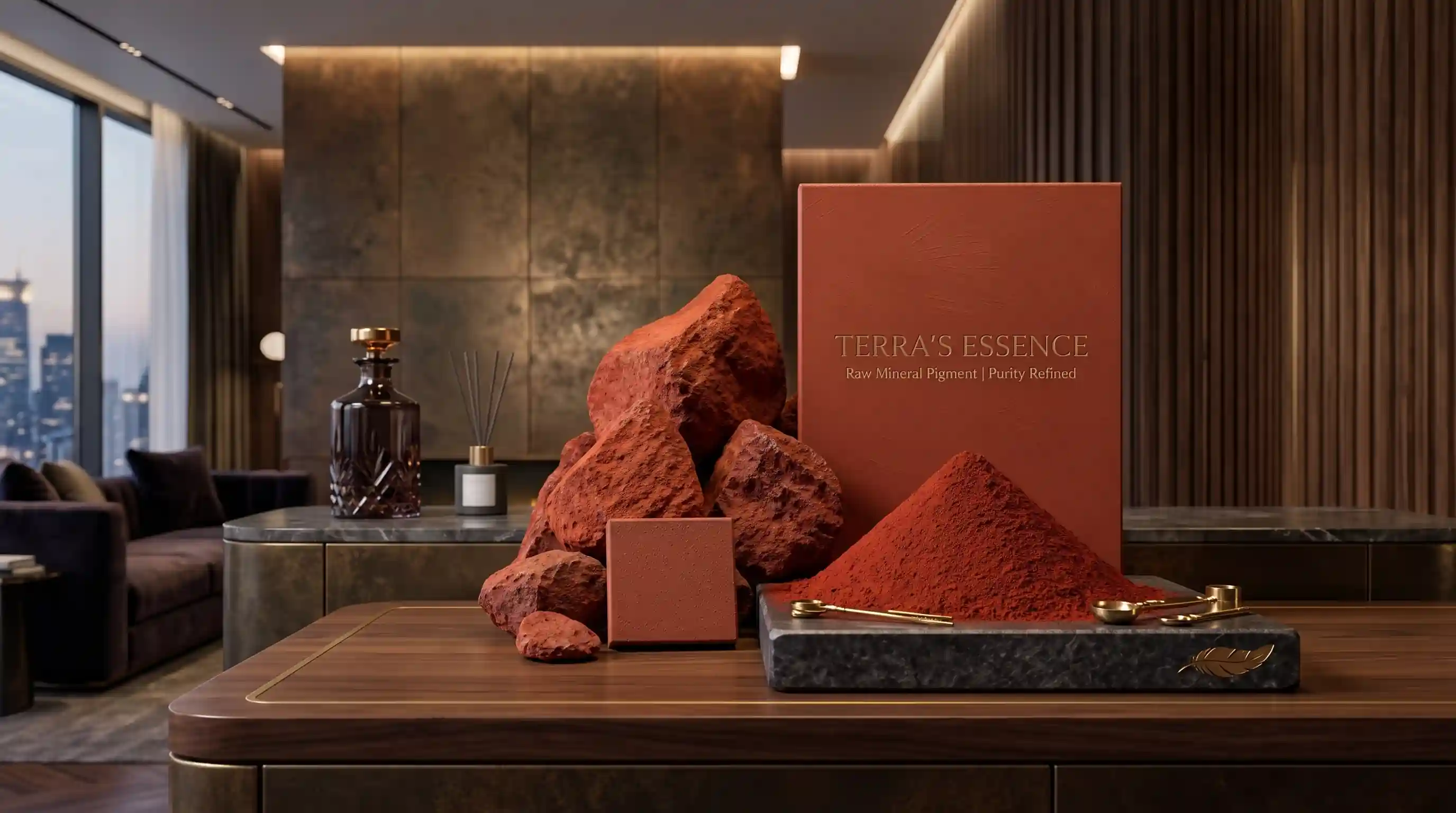
Comparison of Red Iron Oxide (Ochre) with Other Rubber Pigments
In the rubber industry, various pigments are used to create red and brown colors. Red iron oxide (ochre) is the most important mineral option in this color range, but organic pigments such as quinacridone, perylene, and alizarin also exist. Each has its own advantages and disadvantages, and the correct choice depends on the desired final product, budget, and operating conditions.
The most important difference between red iron oxide and organic pigments is stability and price. Organic pigments produce brighter and more saturated colors, but have lower stability against heat and UV and a much higher price. In contrast, red iron oxide (ochre) offers a softer but much more stable color and significantly reduces formulation costs. For many industrial applications that do not require a dazzling red color, red iron oxide is the best and most reasonable choice.
Another comparison is with carbon black, which is the most widely used pigment and reinforcing agent in rubber. Carbon black produces a black color and, in addition to color, acts as a reinforcing filler. Red iron oxide does not have a similar reinforcing property, but it is used to create red and brown colors and, like carbon black, provides good protection against UV radiation. In many tire formulations, carbon black is the main base, and red iron oxide is used to produce colored tires and distinctive parts.
Among other mineral pigments, yellow iron oxide and black iron oxide also exist, each with a different color. Combining these pigments with red iron oxide (ochre) allows the producer to create a wide range of earth tones in rubber products. To become more familiar with the differences between the types of this product and how to choose correctly, you can read the article Comparison of Types of Red Iron Oxide (Ochre) in the Paint and Resin Industries.
Besides the rubber industry, red iron oxide is also widely used in the paint, resin, glass, paper, cement, and ceramic industries. This variety of applications demonstrates the high potential and broad acceptance of this material in the value chains of various industries, and causes its price to remain more stable due to high-volume production.
Finally, when selecting a pigment, you should consider the operating conditions of the final product. If the product is used outdoors and under direct sunlight, the UV stability of the pigment becomes a priority, and red iron oxide (ochre) performs very well. If color quality and brilliance are more important, combining red iron oxide with a small amount of organic pigment can be a suitable solution.
Practical Applications of Red Iron Oxide (Ochre) in the Rubber Industry
The main use of red iron oxide (ochre) in rubber making is coloring rubber products that require red, brown, or orange colors. One of the largest markets for this pigment is the tire industry. Although most tires are black due to the use of carbon black, special tires, agricultural machinery tires, bicycle and motorcycle tires, and colored tires use red iron oxide to create a distinctive color.
In addition to tires, this pigment is used in producing a wide range of other rubber products: industrial conveyor belts, water and steam hoses, rubber gaskets and seals, polymer pipes, shoe soles, rubber toys, and automotive rubber parts. In many of these products, the red-brown color serves as a waing or code; for example, fire hoses or gas pipes are identified by red color, and red iron oxide (ochre) is the pigment used in them.
One of the key points in these applications is protection against ultraviolet radiation. Outdoor rubber products such as conveyor belts in mines, outdoor hoses, and exterior seals are exposed to direct sunlight. UV radiation causes polymer chain degradation and surface cracking of the rubber. Red iron oxide (ochre) particles absorb this radiation and act as a UV blocker, significantly increasing the product’s service life.
Beyond rubber, red iron oxide is used in very diverse industries. For example, in the glass industry it is used to produce colored glass and control light; to lea about this topic, you can read the article The Role of Red Iron Oxide (Ochre) in Glass Manufacturing Industries. In the paper industry, this material is used as a pigment and filler, discussed in the article The Role of Red Iron Oxide (Ochre) in Paper Manufacturing Industries.
Red iron oxide is also used in cement and colored concrete, bricks and ceramic tiles, industrial paints, and surface coatings. This variety shows that red iron oxide (ochre) is a strategic mineral located within the value chains of different industries, with a stable demand for it.
For example, in producing EPDM window seals, uniform color and stability against sunlight are very important because these products are exposed to direct light for years. With its high color stability, red iron oxide (ochre) meets this need well and is a common choice in these products.
Finally, it should be noted that for every application, the appropriate grade (particle dimensions and purity) is different. Rubber applications usually require grades with good dispersion and a uniform particle size distribution to guarantee the color and surface quality of the product and prevent color spots from appearing.
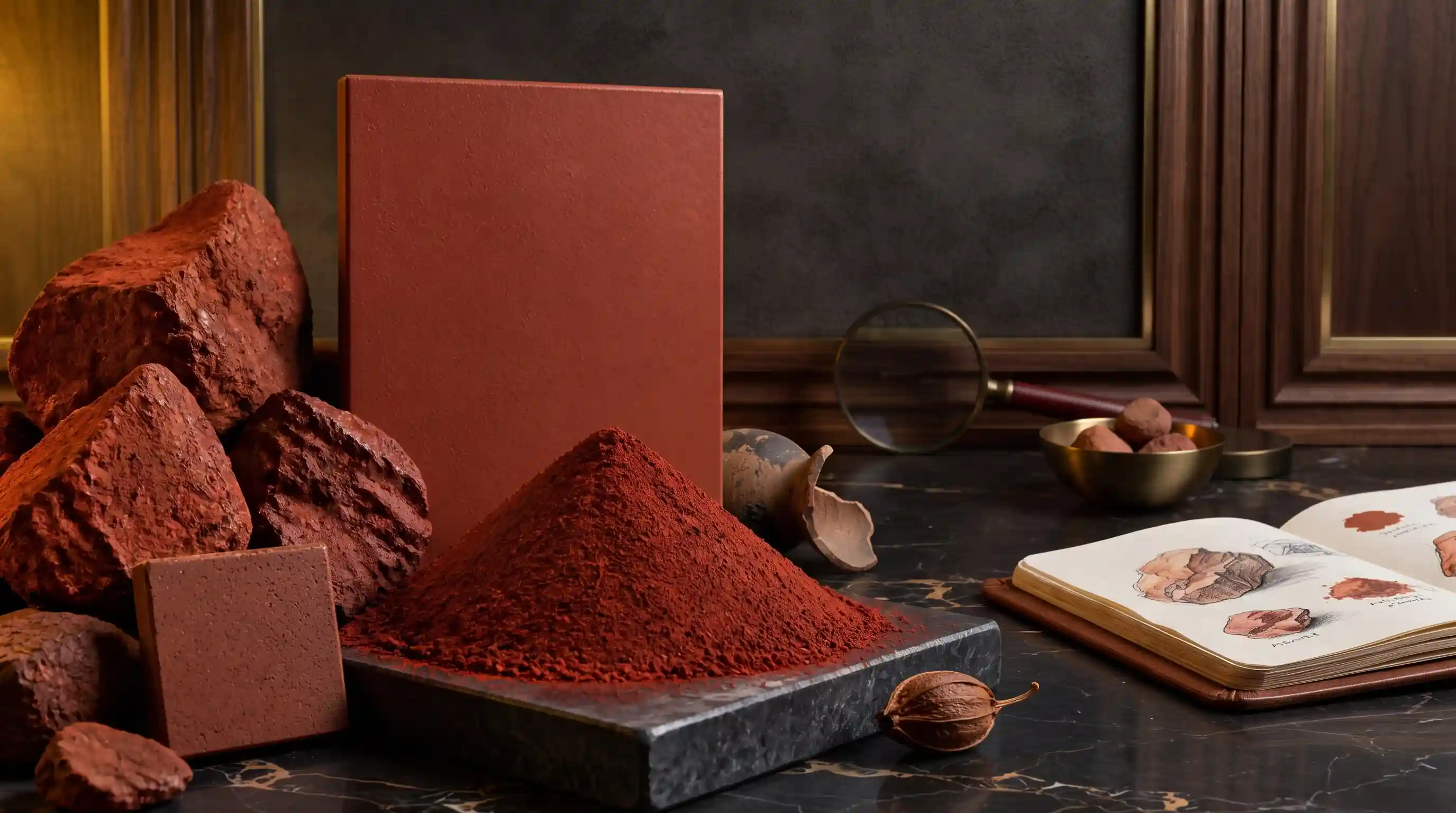
Practical Formulation and Selection Tips for Red Iron Oxide (Ochre)
Effective use of red iron oxide (ochre) in the rubber industry requires following a series of formulation principles. In this section, we examine the most important points to consider when using this pigment on a rubber production line.
Selecting the appropriate grade: The first step is selecting the appropriate grade according to product requirements. Red iron oxide is offered in the 450 to 1500 mesh range, and each grade performs differently. For products that demand high surface quality and uniform color — such as precision seals or decorative parts — a finer grade is more suitable. For general applications such as conveyor belts or industrial hoses, a coarser grade can be a more economical option. Laboratory testing of samples before bulk ordering is the best way to ensure the right choice.
Pigment loading percentage: The amount of red iron oxide in the formulation must be determined precisely. Loading less than necessary produces a weak and pale color, while overloading can affect the mechanical properties of the rubber, such as tensile strength and elongation. The standard approach is to start with a low percentage and gradually increase it until reaching the desired color, testing the product’s mechanical properties at each stage.
Dispersion and mixing: The final color quality depends heavily on particle dispersion. It is best to add the pigment after the rubber has completely melted in the mixer (Banbury) and before adding the main fillers, so it has enough time to disperse. Using dispersion aids, process oils, and fatty acids improves particle wetting and prevents their agglomeration.
Interference with the cure system: One advantage of red iron oxide (ochre) is that, as a neutral mineral pigment, it does not interfere with the vulcanization system and does not negatively affect cure time and curing speed. However, when changing the pigment in an existing formulation, it is recommended to recheck and adjust the cure time and curing properties.
Storage and prevention of caking: Red iron oxide powder should be stored in a dry, cool environment away from moisture. Moisture absorption causes particle caking, resulting in reduced dispersion quality and the appearance of color spots on the final product. Packages should also be sealed well and not exposed to humid airflow.
Color quality control: After production, check the product’s color quality using color measurement devices and comparison with the standard sample. Indicators such as color difference (ΔE) and surface color uniformity are important for guaranteeing final product quality. Establishing an approved standard sample and comparing every production batch against it is an effective and low-cost method for quality control.
Safety, Storage, and Summary of Using Red Iron Oxide (Ochre)
In this final chapter, we address safety issues, market trends, and a summary of the material. Red iron oxide (ochre) is generally considered a safe and non-toxic material; unlike pigments containing heavy metals such as lead or chromium, it poses few health and environmental risks. However, like any other fine mineral powder, working with it requires observing safety measures.
When handling and weighing red iron oxide powder, using a respiratory mask, safety goggles, and gloves is recommended to prevent dust from entering the respiratory system and contacting the eyes. The work environment should have a proper ventilation system. In case of contact with skin or eyes, thorough washing with plenty of water is sufficient. This material is non-flammable and has no explosion risk; however, airboe particles can become hazardous under specific conditions and must be controlled with ventilation.
From an environmental perspective, red iron oxide (ochre) is a stable and non-degradable material that does not create chemical pollution. Wastewater containing this material should be treated according to local regulations to prevent suspended particles from entering the environment. Rubber waste colored with this pigment can also be recycled like other rubber products or used in fuel-recovery processes.
In the global market, demand for red iron oxide (ochre) is growing in the paint, coatings, cement, ceramic, glass, paper, and rubber industries. Price stability relative to organic pigments and the increasing tendency of industries to use safer mineral materials reinforce this growth. Due to cost pressures, rubber manufacturers are also increasingly tuing toward mineral pigments.
Kani Sang Amiran Project, as a producer of mineral materials, produces red iron oxide (ochre) in the 450 to 1500 mesh range for pigment, coatings, cement, and ceramic product applications. This variety of grades enables customers to select the most suitable product for their needs and use it in the rubber industry.
Summary: Red iron oxide (ochre) is a stable, safe, and cost-effective mineral pigment that holds an important position in the rubber industry. Its key advantages include thermal and UV stability, chemical resistance, non-toxicity, and suitable price. By selecting the right grade, observing dispersion principles, and controlling quality, you can produce rubber products with stable color and high quality.
Finally, before bulk use in a new formulation, it is highly recommended to carry out the necessary laboratory tests. This pigment’s performance results can differ depending on the type of elastomer (natural, SBR, EPDM, NBR, etc.), the cure system, and other additives. A small laboratory test prevents major problems in mass production.
| Question | Answer |
|---|---|
| What is red iron oxide (ochre)? | It is a mineral pigment with the formula Fe2O3, used for coloring rubber products and for pigment, coatings, cement, and ceramic applications. |
| Why is red iron oxide used in rubber making? | To create a stable red-brown color, provide UV and heat resistance, and offer a suitable price compared with organic pigments. |
| What difference does the 450 to 1500 mesh range make? | Higher mesh means finer particles, stronger color, and better surface quality; lower mesh is more economical. |
| Does red iron oxide interfere with vulcanization? | No, this mineral material is neutral and does not interfere with the cure system. |
| Is red iron oxide toxic? | No, it is non-toxic; however, when working with the powder, a mask and proper ventilation should be used. |
| Which rubber products are colored with this pigment? | Tires, conveyor belts, hoses, gaskets, seals, pipes, and decorative rubber parts. |
| How much is used in a formulation? | It varies depending on the required color intensity and should be determined through laboratory testing. |
| How should red iron oxide be stored? | In a dry, cool environment away from moisture to prevent caking. |
| Does this material have applications in other industries? | Yes; pigment, coatings, cement, ceramics, glass, and paper are among its main applications. |
| Where can red iron oxide (ochre) be obtained? | Kani Sang Amiran Project produces this product in the 450 to 1500 mesh range; the product page is available on the website. |
Kani Sang Amiran Project — mineral materials production. For more information, visit the product page at https://ksamiran.ir/products/red-iron-oxide/
برچسب: Red Iron Oxide (Ochre),The Effect of Red Iron Oxide (Ochre) Coloring in the Rubber Industry,
نویسنده: رساوب آفرین