
درباره سایت
آخرین مطالب
- Why is choosing Limonite Oxide (Gole Mash) important for industries?
- چگونه بهترین فرمولاسیون با اکسید لیمونیت (گل ماش) بسازیم؟
- لماذا يعد اختيار أكسيد الليمونيت (أوكر أصفر/كلماش) مهماً للصناعات؟
- دور أكسيد الليمونيت (الجول ماش) في إنتاج الطوب والفخار
- Examining the Effect of Limonite Oxide (Gol Mash) on Color Stability
- مراجعة مزايا الشراء بالجملة لأكسيد الليمونيت (غل ماش)
- دور أكسيد الليمونيت (الغل ماش) في الصناعات الدوائية ومستحضرات التجميل
- بررسی میزان سختی و سایش اکسید لیمونیت (گل ماش)
- Application of Limonite Oxide (Gole Mash) in Anti-Rust Industries
- نقش اکسید لیمونیت (گل ماش) در تولید پوششهای محافظ
امکانات وب
What is Silica? A Comprehensive Introduction to This Mineral and Its Industrial Importance
Silica (Silica) or silicon dioxide with the chemical formula SiO₂ is one of the most abundant mineral compounds in the Earth's crust and makes up a large portion of its weight. This material is mainly found in the form of the mineral quartz and as silica sand, sandstone, quartzite, and other sedimentary and metamorphic rocks. Due to its high abundance, affordable price, and unique physical and chemical properties, silica has become one of the most important raw materials in mode industries, and you can hardly find an industry that does not deal with this material in some way.
The term “silica” in Persian is often used to refer to silica sand, silica powder, and crushed stones containing SiO₂; however, this term has a much broader scope and includes crystalline forms such as quartz, cristobalite, and tridymite, as well as amorphous forms like silica gel, foamed silica, and diatomaceous earth. Each of these forms has its specific applications in the pharmaceutical, food, chemical, agricultural, and construction industries; however, the bulk of global silica consumption is concentrated in four sectors: glass, foundry, ceramics, and building materials.
What makes silica so vital for industries is a special combination of properties: high hardness on the Mohs scale, a relatively high melting point, chemical stability against most acids, low thermal conductivity, and good abrasion resistance. These properties, along with the ability to process it into very fine particle sizes, have made silica a versatile material for manufacturers. In the current market, this product is typically offered in a particle size range of 10 to 450 mesh to meet the diverse needs of various industries.
From a historical perspective, the use of silica dates back thousands of years; early humans used silica sand to make chipped stone tools, and ancient civilizations in Egypt and Mesopotamia utilized it to produce mortar, glass, and pottery. Today, the advancement of chemical and mineral technologies has expanded silica's applications into advanced fields such as semiconductors, solar panels, and specialized additives, but the volume of consumption in basic industries remains more significant.
In this article, we intend to comprehensively examine what silica is, how it forms, what types it has, and why the glass, foundry, ceramic, and building materials industries are so dependent on it. In the following, the processing method, quality criteria, and key purchasing tips for this mineral product will also be discussed so that factories and professional buyers can make more accurate choices. If you are looking for a reliable source for supplying minerals, you can read specialized information on the Silica Product page.
Structure, Properties, and Types of Silica
To better understand what silica is, we must look at its atomic structure. Each structural unit of silica consists of a central silicon atom bonded to four oxygen atoms, forming an SiO₄ tetrahedron. In the general formula SiO₂, each oxygen atom is shared between two tetrahedra, creating a continuous three-dimensional network. This network structure gives silica high thermal stability and hardness, distinguishing it from many common minerals.
In nature, silica is divided into two general groups: crystalline silica and amorphous silica. Crystalline silica includes quartz, cristobalite, and tridymite, with quartz being its most stable and common type. Amorphous silica includes diatomaceous earth, silica gel, and industrial silica, which are used in filtration, insulation, and specialized additive industries. It is worth noting that prolonged inhalation of crushed crystalline silica dust can pose occupational hazards, and therefore processing plants must adhere to dust control protocols.
In terms of physical properties, pure quartz has a hardness of 7 on the Mohs scale, a density of about 2.65 grams per cubic centimeter, and a melting point of around 1710 degrees Celsius. This material is insoluble in most acids (except hydrofluoric acid) and shows high resistance to weathering and chemical erosion. Density, porosity, color, and impurity levels (especially iron, aluminum, and titanium) are among the most important factors determining the quality grading of industrial silica.
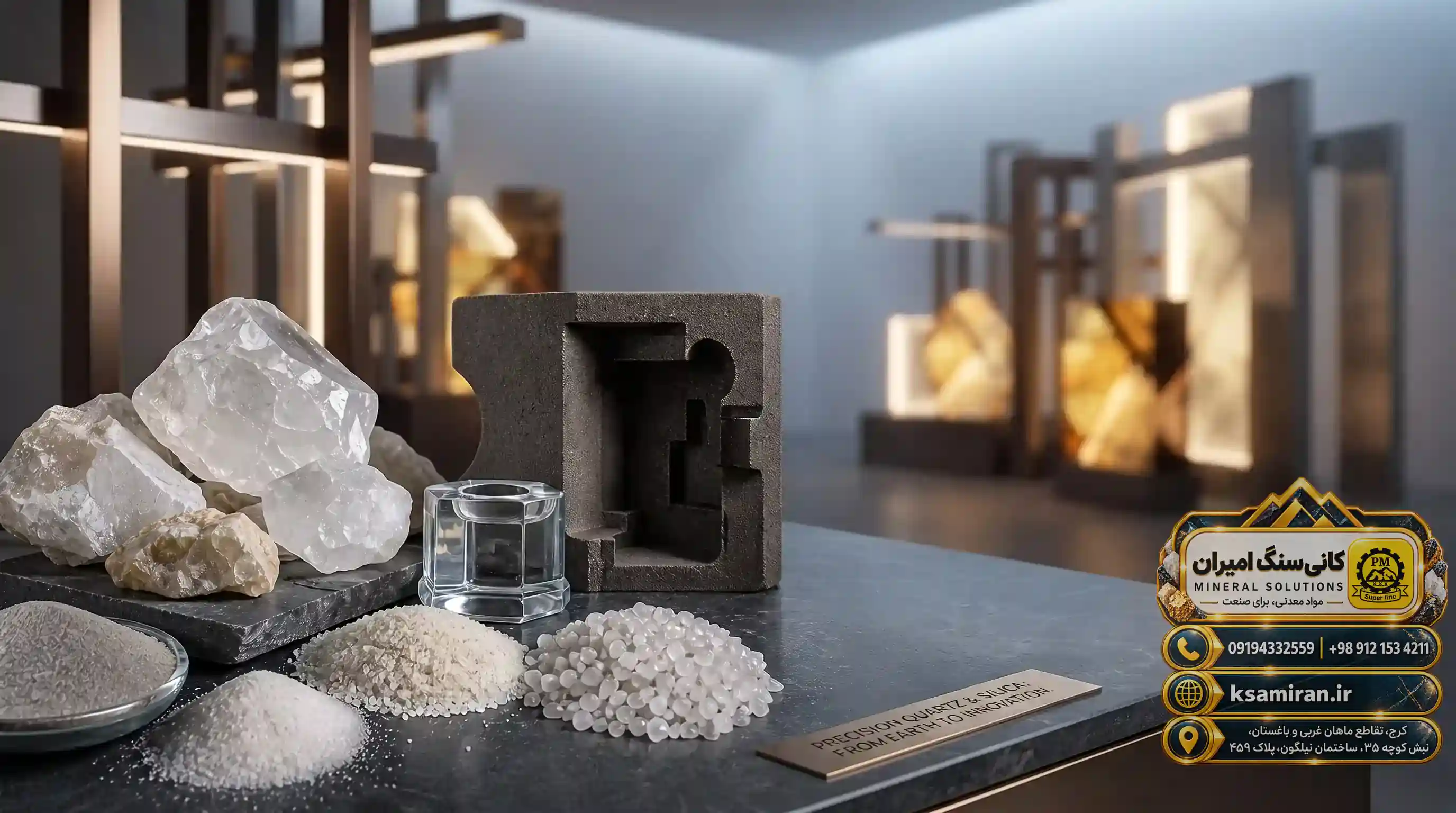
One of the key features of industrial silica is its ability to be processed into different meshes. In the market, this product is typically offered in a particle size range of 10 to 450 mesh; from coarse sand for construction materials and filtration to very fine powder for chemical, ceramic, and polymer applications. The higher the mesh number, the finer the particles and the greater the specific surface area they create, which is more suitable for chemical reactions, adhesion, and mixture uniformity. Choosing the right mesh directly affects the quality of the final product.
In addition to particle size, the purity level of SiO₂ is also a determining criterion. Glass-grade silica usually has high purity because the presence of iron and chromium impurities causes color changes in the glass and a decline in visual quality. In contrast, for general construction and foundry applications, lower purity is acceptable, and the main criteria are particle size uniformity and the absence of fine and sticky impurities. Understanding these differences helps buyers optimize their costs without compromising quality.
Natural Sources, Extraction, and Processing of Silica
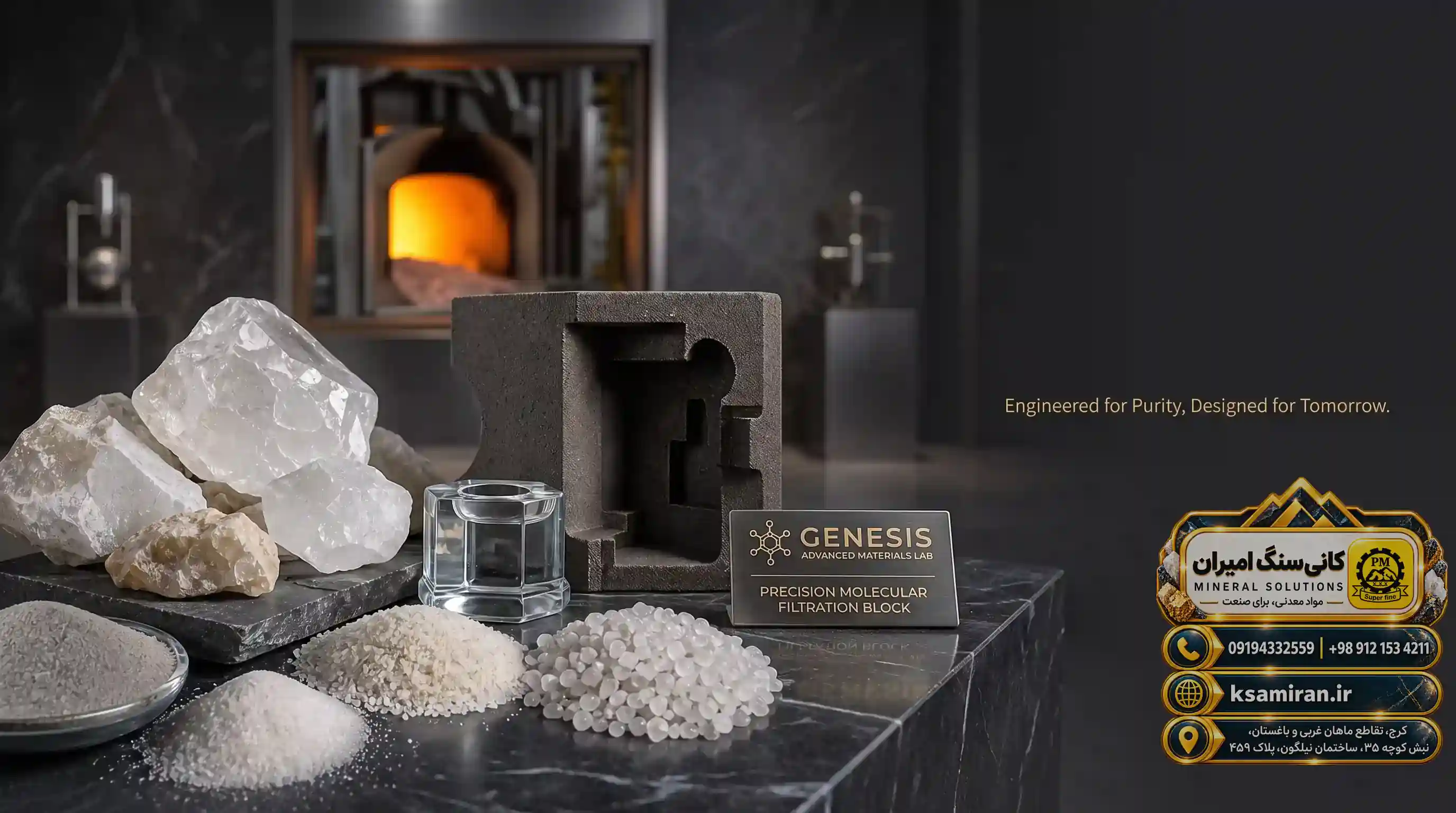
Silica sources in nature are very extensive; from silica sand mines and silica sandstones to quartzite, volcanic rocks, and diatom deposits. The quality and mineralogical composition of each mine determine the processing route and the final grade of the product. Generally, mines with higher SiO₂ and lower iron and aluminum impurities are more suitable for higher value-added industries such as glassmaking and ceramics, while medium-quality mines are mostly used in building materials and general foundries.
The extraction method depends on the type of mine. In open-pit mines, after removing the top layer, silica sand is extracted with an excavator or loader and transported to the processing plant. In underground mines, which are usually implemented for quartzite and harder rocks, blasting methods and drilling machinery are used. After extraction, the raw materials go through several stages, including crushing, milling, screening, washing, and classification, to be converted into different particle sizes.
The crushing stage usually begins with jaw and cone crushers, and then rod, ball, or vertical mills convert the product into powder with the desired mesh. Washing and rinsing at this stage are very important because they separate large amounts of soil, clay, and fine impurity particles, increasing the transparency and purity of the product. Where iron impurities are present, magnetic separation, flotation, or acid-washing processes are used to bring the iron oxide level within the permissible range.
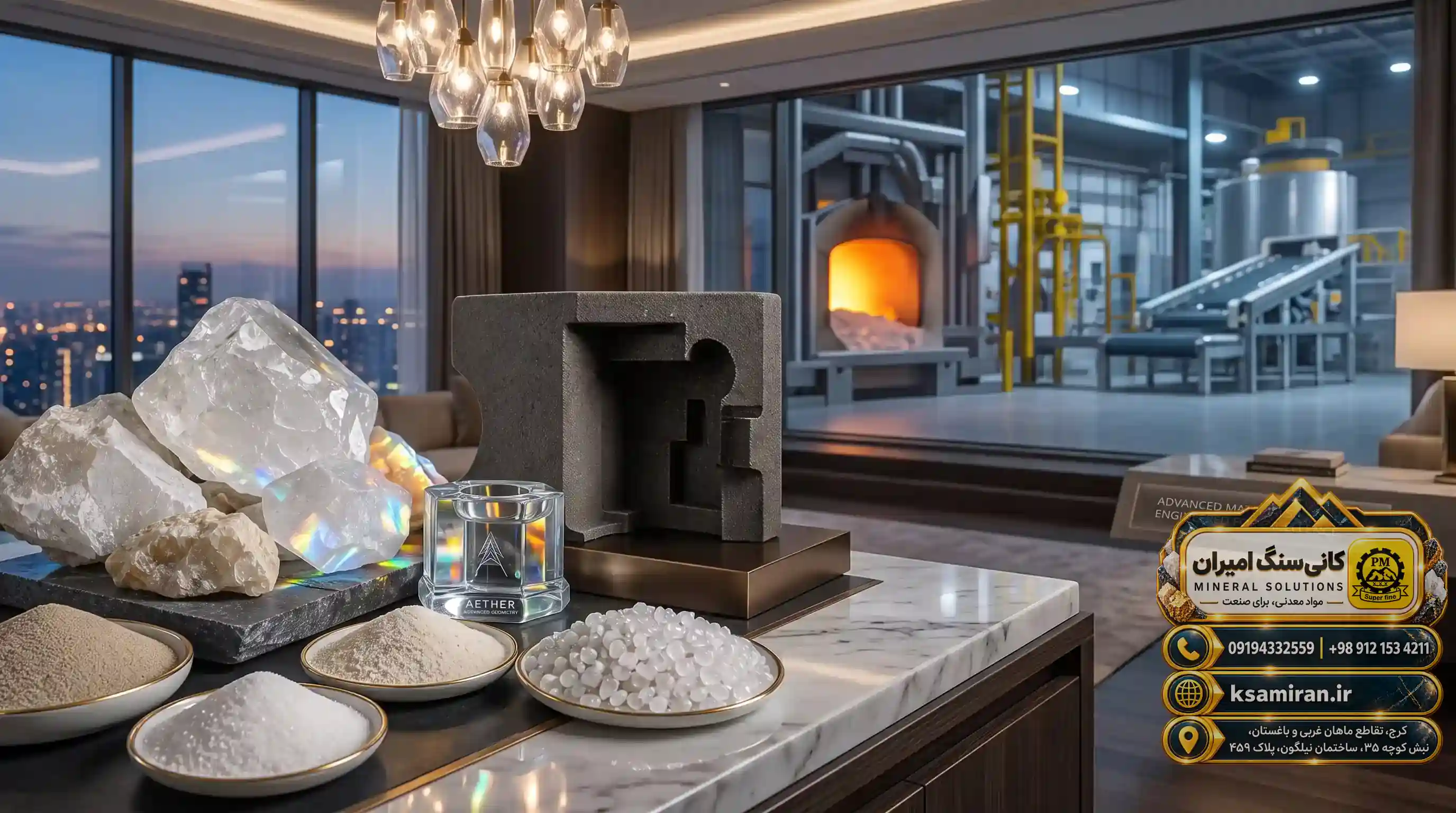
After processing, the final product is packaged and offered in different mesh ranges. In the Kani Sang Amiran project, which operates in the field of mineral production, silica is produced in the 10 to 450 mesh particle size range and supplied for glass, foundry, ceramic, and building material applications. The variety of particle sizes allows factories to choose a product suited to their needs: from coarse sand for concrete and filtration to fine powder for ceramics and glass.
Quality control in silica processing includes chemical analysis, determining particle size distribution, measuring moisture content, and checking for colored impurities. These tests ensure that each shipment matches the declared specifications. Professional buyers usually request analysis and samples before bulk purchases to ensure the product matches their production line. To familiarize yourself with technical documents and how to receive them, you can visit the Guide to Receiving Silica Technical Catalogue and Specialized Analysis.
Application of Silica in the Glass Industry
The glass industry is the largest consumer of silica in the world and accounts for the bulk of this material's global consumption. The reason for this is clear: glass is essentially the product of melting SiO₂ at high temperatures along with soda, lime, and other additives. Silica plays the role of the forming skeleton in glass, making the glass structure stable, transparent, and resistant to heat and chemicals. Without high-quality silica, producing glass to today's standards is practically impossible.
In the production of packaging glass (beverage containers, pharmaceutical and food glass), high-purity silica sand with a controlled particle size is used. The presence of overly coarse or fine particles causes melting anomalies, bubble formation, and a decline in visual quality. In flat glass (windows, automobiles, and mirrors), purity and uniformity are also of high importance, as iron impurities cause green or blue tinting in the glass and reduce final transparency.
In the production of specialized glasses such as borosilicate glass, optical glasses, glass fiber, and insulation fibers, the quality of silica becomes even more important. In these products, precise control of chemical composition and particle size is vital due to the sensitivity of the melting and fiber drawing processes. Any fluctuation in the feed can lead to fiber breakage, changes in the refractive index, or reduced thermal resistance, causing significant damage to the production line.
Another important application of silica in this industry is the production of colored glasses and mirrors, where very fine silica powder (high mesh) is used to homogenize the mixture and reduce melting time. In safety and laminated glasses, silica also plays a decisive role in transparency and toughness. Additionally, in crystal and lead glasses, controlling the silica composition is of special importance due to its effect on the product's brilliance and weight.
Choosing the right supplier is of special importance for glassmaking industries, as the uniformity of quality across different shipments directly affects fuace efficiency and the scrap rate. Factories typically enter into long-term contracts after approving the analysis and samples to ensure the stability of the production process. In this regard, receiving specialized consultation and carefully reviewing the product analysis can minimize the risk of making the wrong choice.
The Role of Silica in the Foundry Industry
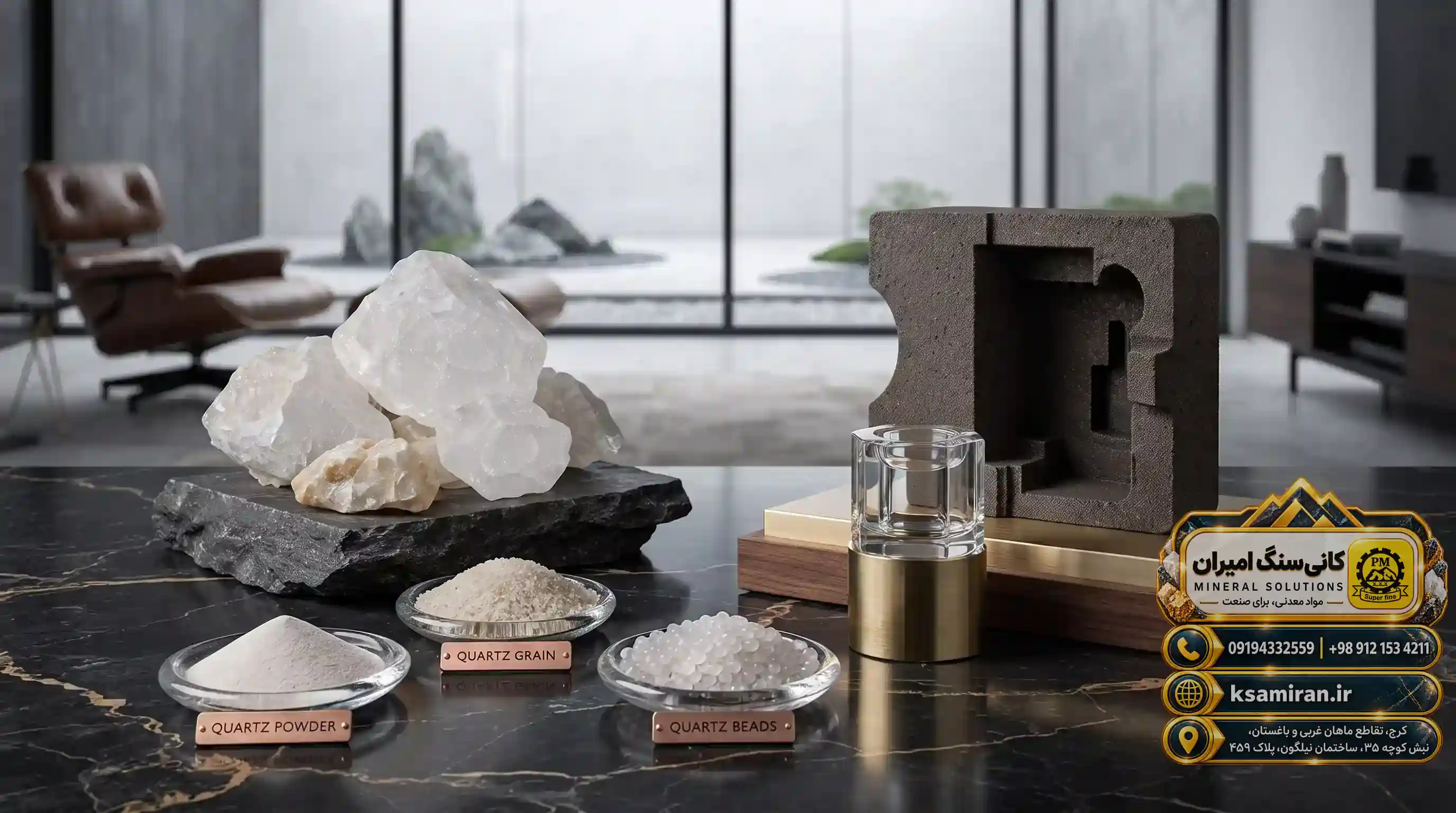
Foundry is one of the oldest and most important applications of silica. In this industry, silica sand is used as the primary material for making molds and cores because it can withstand the high temperature of molten metal, has good formability, and is economically priced. The bulk of silica consumption in foundries is dedicated to molding sand, which is widely used in the casting of iron, steel, aluminum, and brass.
Key properties of foundry sand include appropriate particle size, particle shape, clay content (bond strength), gas permeability, and thermal resistance. Rounded silica particles require less binder and create a better surface on the castings, while angular particles increase the mold's mechanical strength. Particle size also varies depending on the type of metal and the part; medium meshes are typically used for general casting, while finer particles are needed for more delicate parts.
In addition to raw sand, silica is used in foundries in other forms: in the production of coating powders for molds and cores, in mold-backing refractory materials, in gating and feeding systems, and in welding powders and electrodes. In investment casting, very fine silica flour is used to make the ceramic coatings for wax pattes. Each of these applications requires specific particle sizes and purity.
Very fine-grained silica (up to 450 mesh) in investment casting and refractory coatings smooths the surface of the final parts and reduces the need for post-casting machining. This advantage reveals the importance of diversity in the silica production range for the foundry industry. On the other hand, coarser sand is used for large parts and general casting to ensure mold permeability and gas venting.
Also, silica sand is recyclable after use; thermal or mechanical recycling reduces resource consumption and contributes to environmental sustainability. Many mode plants have installed sand reclamation systems that retu a significant portion of the molding sand back into the production cycle. In addition to reducing costs, this also helps conserve mineral resources.
Application of Silica in the Ceramic Industry
Ceramics represent one of the four primary applications of silica. In the production of traditional ceramics (such as pottery, porcelain, tiles, and bricks) and advanced engineering ceramics, silica is used in two main areas: the structure of the ceramic body and the glaze composition. In the body, silica acts as the product's skeleton and, along with feldspar and clay, creates glassy and crystalline phases at the firing temperature that guarantee the final strength of the piece.
In the formulation of the ceramic body, the three main components are clay (plasticity), feldspar (flux and melting agent), and silica (hardness and thermal resistance). During firing, a portion of the silica melts to form a glassy phase, while the remainder stays as quartz, increasing mechanical strength. For this reason, the choice of silica particle size and purity has a direct impact on the water absorption rate, flexural strength, and impact strength of tiles and ceramics.
In glaze production, very fine silica powder (high mesh) is also used. The glaze must melt uniformly at the firing temperature and create a transparent and glossy surface on the ceramic. Fine silica particles control the melting point and viscosity of the glaze and prevent the composition from separating during melting. Iron and titanium impurities are highly detrimental in this application, as they cause color changes in the glaze and spotting on the product's surface.
In addition to traditional ceramics, silica is widely used in the production of technical ceramics, refractory powders, and refractory kilns. In these products, high-purity silica with a controlled particle size is used to maintain thermal and mechanical behavior within the designed range. Silica's resistance to thermal shock and chemical corrosion has made it a suitable choice for harsh industrial environments.
In the production of silica bricks and refractory materials, silica sand and powder are also used as the primary material. For this reason, a supplier that can offer silica in a wide particle size range (from 10 to 450 mesh) covers the diverse needs of the ceramic and refractory industries. This variety allows manufacturers to choose a product perfectly matched to their firing process and type of ceramic.
Application of Silica in Building Materials
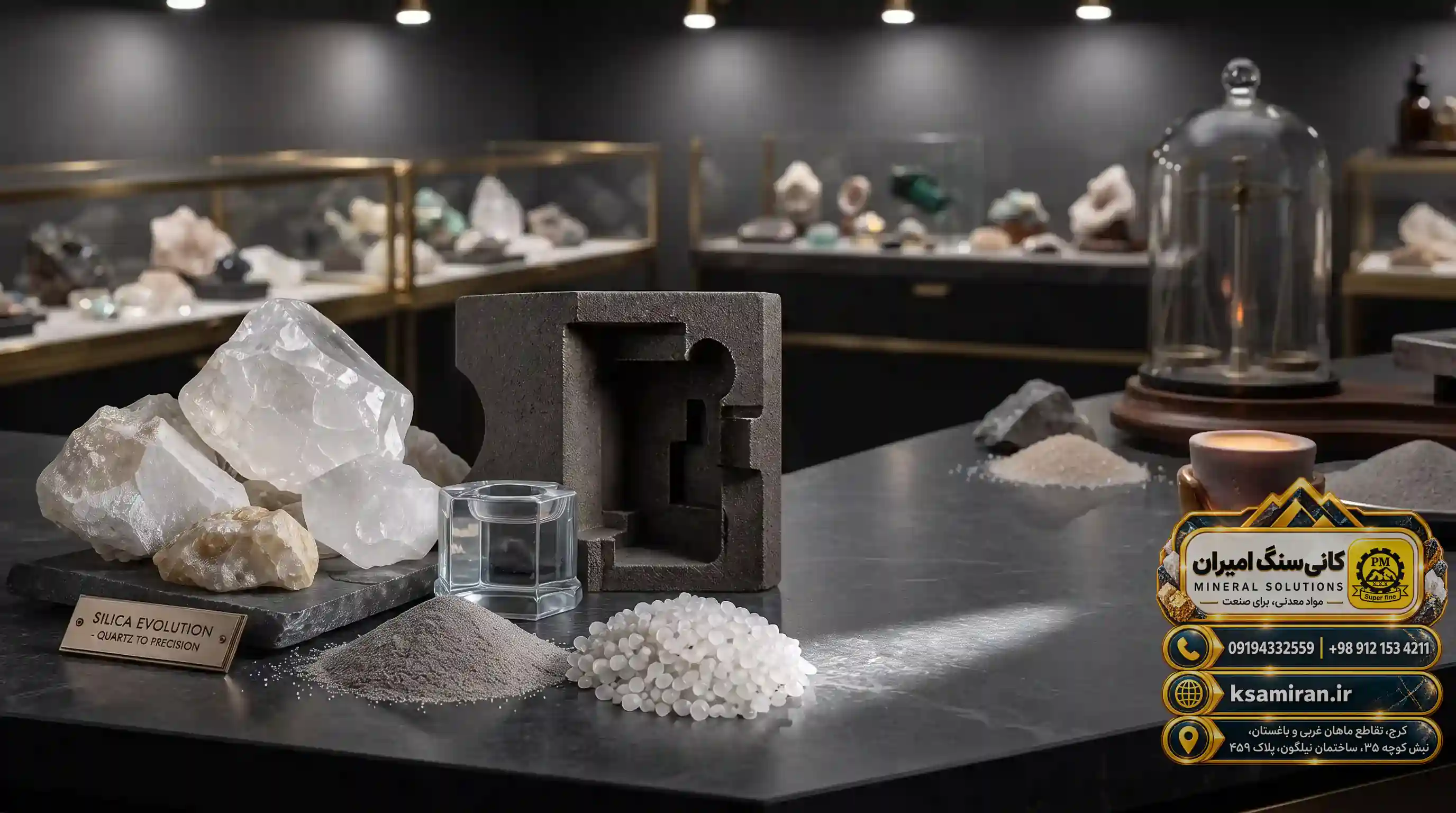
The construction industry is one of the largest consumers of silica by volume. Silica sand is used in the production of concrete, mortar, bricks, tiles, artificial stones, and building coatings. The role of silica in these applications is generally as a filler and fine aggregate, or as a chemically active material in high-performance concrete. Without silica sand, producing concrete and mortar with the desired strength and durability is practically impossible.
In concrete, silica sand makes up the bulk of the fine aggregates and, along with gravel, cement, and water, forms the strong structure of concrete. The shape, particle size, and cleanliness of the sand directly affect the workability of fresh concrete and its final strength. Sand containing fine clay particles and dust will reduce strength and increase water demand. For this reason, road and building construction projects impose limits on the amount of very fine particles.
In artificial stones and engineered surfaces, silica powder plays the role of the main mineral filler, which, combined with polymer resins, creates a surface resistant to abrasion, staining, and heat. In this application, high mesh and particle uniformity are very important, as the final surface must be perfectly smooth and non-porous. The 10 to 450 mesh production range allows manufacturers to choose the mesh appropriate for the product type and production process.
In the production of bricks, tiles, and building ceramics, silica is also used as the main body material. In silica and refractory bricks, the high percentage of SiO₂ increases the thermal and chemical resistance of the product. Also in ready-mixed mortars, tile adhesives, and building coatings, silica powder acts as a filler and viscosity regulator, improving the durability and applicability of the product.
Alongside traditional applications, silica also plays a role in mode building technologies such as high-performance concrete and self-compacting concrete. In these cases, very fine silica particles fill the spaces between cement particles and, through pozzolanic reactions, increase the strength and durability of the concrete. The importance of choosing the right silica sand and powder in the construction and road-building industries has direct consequences on the safety and lifespan of structures, which is why selecting a reliable supplier becomes very important.
Guide to Choosing and Buying High-Quality Silica
Choosing the right silica for any industry requires attention to several essential factors: chemical purity, particle size, uniformity between shipments, moisture content, and the final cost. Glassmaking and ceramic plants typically have the highest standards for SiO₂ purity and the reduction of iron impurities, while the construction and general foundry industries focus more on particle size uniformity and price. Knowing the exact needs of the production line is the first step in making a smart purchase.
If your product falls within glass, ceramics, foundry, or building materials, you must specify which mesh range is most suitable for you. In the Kani Sang Amiran project, silica is produced in the 10 to 450 mesh range, and this variety allows buyers to choose a product suited to their application. It is recommended to receive an analysis and sample before bulk purchase, and to evaluate quality criteria, read the Comprehensive Guide to Buying Quality Silica for Factories.
The second factor is quality consistency over time. Sudden changes in particle size or chemical composition can cause a drop in efficiency, an increase in scrap, and even stoppage of the production line. For this reason, choose suppliers who have documented quality control and periodic testing. Receiving a technical catalogue and specialized product analysis helps you confirm the product's compliance with process requirements and reduces purchasing risk.
The third point is the type of packaging and transportation. Silica packaging may be in the form of bags, jumbo bags (big bags), or bulk, and the choice depends on the factory's consumption volume, unloading and storage capabilities, and transportation costs. Many factories reduce their costs by buying in bulk and storing in silos. Also, if your factory requires various types of minerals, you can submit online purchase requests for other products; for this purpose, the Guide to Submitting an Online Purchase Request for Industrial Barite is available.
Ultimately, continuous communication with the supplier and transparency in technical information are the keys to a successful purchase. This article has attempted to provide a practical answer to the question “What is silica” and to examine the main applications of this mineral in glass, foundry, ceramics, and building materials. By understanding the properties and quality criteria, factories can make smarter choices and increase the quality of their final products.
| Question | Answer |
|---|---|
| What is silica? | Silica, or silicon dioxide (SiO₂), is one of the most abundant minerals in the Earth's crust, found mainly in the form of quartz, and has extensive applications in the glass, ceramic, foundry, and construction industries. |
| What is the mesh range of the produced silica? | In the Kani Sang Amiran project, silica is produced in a particle size range of 10 to 450 mesh. |
| What are the main applications of silica? | Glassmaking, foundry products, ceramic products, and building materials. |
| Why is silica purity important for glassmaking? | Impurities such as iron cause color changes and a decline in the visual quality of the glass; therefore, high purity is vital in this industry. |
| What is the role of silica in foundries? | Silica sand is the primary material for making molds and cores in foundries, providing the mold with thermal resistance, formability, and gas permeability. |
| What is the difference between different silica meshes? | The higher the mesh number, the finer the particles and the greater the specific surface area they create, which is more suitable for chemical, ceramic, and polymer applications. |
| How is silica used in ceramics? | Silica acts as the skeleton and strengthener in the ceramic body and is used in glazes to control melting, viscosity, and transparency. |
| How is silica used in building materials? | It is used as a fine aggregate and filler in concrete, mortar, bricks, tiles, artificial stone, and building coatings. |
| How can I receive the silica analysis and technical catalogue? | You can proceed through the guide for receiving the silica technical catalogue and specialized analysis. |
| Is foundry silica sand recyclable? | Yes, molding sand can be recycled after use through thermal or mechanical methods and retued to the production cycle. |
Silica product information — Kani Sang Amiran project (mineral production): https://ksamiran.ir/products/silica/
برچسب: Silica,What is Silica? A Comprehensive Guide to the Applications of This Mineral in Various Industries,
نویسنده: رساوب آفرین