
درباره سایت
آخرین مطالب
- انتخاب اکسید آهن قرمز (اخرا) برای بهبود کیفیت پیگمنت و پوششهای رنگی
- تامین کربنات کلسیم با دانهبندی دقیق جهت استفاده در مستربچ
- تأمین تخصصی سیلیس برای مصالح ساختمانی، شیشه و صنایع سرامیک
- ویژگیهای فنی بنتونیت کانی سنگ امیران برای کاربردهای خاص
- فلدسپات کانی سنگ امیران برای شیشه کاشی و سرامیک
- کاربرد تالک سفید درجه یک در فرمولاسیون پیشرفته رنگ و محصولات کاغذی
- اکسید آهن قرمز (اخرا) کاربردی جهت تولید محصولات سرامیکی و پوشش
- مشخصات فنی اکسید آهن قرمز (اخرا) مناسب برای پوشش و تولید پیگمنت
- مشاوره تخصصی خرید کربنات کلسیم بر اساس نیاز دقیق صنعت شما
- انتخاب تالک سفید صنعتی مناسب برای تولیدات کاغذ و مستربچ
امکانات وب
Introduction to Calcium Carbonate and Its Role in Mode Industries
Calcium carbonate, with the chemical formula CaCO3, is one of the most abundant mineral compounds in the Earth's crust, found naturally as limestone, marble, calcite, and dolomite. After extraction from mines, primary crushing, milling in industrial mills, and precise particle classification, it is produced as white powder in various grades. Its white color, high purity, abundant reserves, and affordable price have made this powder one of the most in-demand industrial additives worldwide. In today's industries, there is hardly any manufactured product that is not somehow related to calcium carbonate; from PVC profiles and pipes to paint, paper, adhesives, artificial leather, cables, and engineered stone.
Calcium carbonate powder is essentially a mineral filler added to base formulations to reduce the final product cost, improve physical and mechanical properties, and in some cases, impart specific characteristics. This product is chosen for polymer, paint, paper, and engineering applications, and is produced in the particle size range of 100 to 3500 mesh. The variety of grades allows manufacturers to select the product best suited to their process and output.
Key properties of this material include high whiteness, uniform particle distribution, good thermal stability, medium hardness, and low reactivity with most chemicals. These properties ensure stable performance of calcium carbonate powder in extrusion processes, plastic injection molding, paint manufacturing, papermaking, and engineered stone production. Additionally, due to its natural origin, it is highly compatible with other raw materials in many applications.
- Reduces overall product cost by partially replacing expensive polymers or resins
- Improves mechanical properties such as hardness, modulus, and compressive strength
- Controls shrinkage in extruded and injection-molded products
- High whiteness reduces the need for expensive pigments
- Thermal and chemical stability in industrial processes
Economically, the extraction and processing of this mineral is a major industry in many countries, as extraction costs are relatively low and reserves are widely available. For this reason, manufacturers across various industries prefer to replace a portion of their expensive raw materials with this powder without any degradation in final product quality. The main applications of this product include PVC/UPVC profiles and pipes, masterbatch, cables, artificial leather, paint, paper, adhesives, and engineered stone. In the following article, we will explore each of these applications in detail to see why calcium carbonate powder has become a standard choice for manufacturers.
Application of Calcium Carbonate in PVC/UPVC Profiles and Pipes
One of the largest consumer markets for calcium carbonate powder is the PVC and UPVC profile and pipe manufacturing industry. In the formulation of these products, calcium carbonate acts as an active filler; meaning that in addition to reducing costs, it also affects the final properties of the product. In UPVC window and door profiles, decorative coatings, and water and sewage transmission pipes, this powder is incorporated in significant quantities and fulfills part of the PVC resin requirement.
In UPVC pipes, calcium carbonate increases compressive strength, improves the elastic modulus, and controls linear shrinkage of the pipe during cooling. It also improves melt flow in the extruder and stabilizes production speed. The proper combination of this powder with stabilizers and lubricants keeps the ier and outer surfaces of the pipe uniform and glossy, preventing surface streaks.
In UPVC window profiles, this mineral helps improve surface hardness, scratch resistance, dimensional stability, and heat deflection resistance. The consumption level and selected grade depend on the profile thickness, extrusion conditions, and final product standards. Using powder with uniform particle distribution prevents agglomeration and the creation of weak points in the profile.
One key point when using this powder in PVC is selecting coated (surface-treated) grades. Coating is typically done with fatty acids, allowing mineral particles to bond better with the polymer, reducing oil absorption speed, and ensuring more uniform particle dispersion in the melt. For more information on this topic, you can read the article Applications of Coated Calcium Carbonate in the Plastics Industry.
- Increases compressive and impact strength in UPVC pipes
- Controls shrinkage and improves dimensional stability of profiles
- Improves melt flow and production line efficiency
- Reduces final cost without quality loss
Choosing the appropriate mesh grade is also crucial; very coarse particles can cause mechanical property degradation, rough surfaces, and pipe calibration issues, while very fine particles increase production costs. Manufacturers typically select a grade that offers the best balance between price and performance for the final product while remaining compatible with existing equipment and formulations.

Application of Calcium Carbonate in Masterbatch, Cable Industry, and Artificial Leather
Masterbatches are one of the most significant areas of calcium carbonate powder consumption in the plastics industry. A masterbatch is a concentrated mixture of pigments or additives in a polymeric carrier used for coloring or modifying the properties of plastics. In this formulation, calcium carbonate acts both as a filler and an auxiliary carrier, aiding better pigment dispersion in the base polymer.
In masterbatch production, high whiteness and uniform particle distribution are critical, as the final color depends directly on these factors. Using fine and uniform powder ensures the color appears even on the final part's surface and reduces the need for additional colorant. Also, in white masterbatches, this powder plays a complementary role alongside titanium dioxide.
In the cable industry, calcium carbonate is widely used. It serves as a filler in cable insulation and polymeric sheaths to improve mechanical properties, thermal resistance, and dimensional stability of the jacket and insulation. In building and industrial cables, the right blend of this powder with polymers can enhance the coating's abrasion resistance while controlling production costs. Particle uniformity is highly important in this application, as any mineral agglomeration can act as a weak point in the insulation.
Artificial leather is another product manufactured with this powder. Artificial leather typically consists of a fabric layer and one or more polymeric layers (such as PVC or polyurethane). Calcium carbonate in the top layer helps control surface gloss, create a leather-like texture, improve abrasion resistance, and reduce tackiness. It also lowers costs as a filler and enhances the tactile properties of the final surface.
- In masterbatch: improves color dispersion and reduces pigment consumption
- In cables: increases mechanical and thermal resistance of insulation and sheathing
- In artificial leather: controls mattness, surface texture, and abrasion resistance
- In all three applications: cost reduction and improved processability
In all these applications, powder moisture and uniformity play a key role; higher moisture can cause bubbles and quality defects in extrusion and coating processes. Therefore, reputable manufacturers implement strict quality controls on these parameters.
Application of Calcium Carbonate in the Paint and Industrial Coatings Industry
The paint manufacturing industry is one of the most traditional and important markets for calcium carbonate powder. In paint formulation, this material is used as a filler and extender pigment; meaning it increases paint volume, improves hiding power, and significantly reduces final paint costs. It is prominently present in architectural paints, industrial coatings, oil-based, and water-based paints.
One of the key roles of calcium carbonate in paint is controlling viscosity and the rheological behavior of the formulation. It allows the paint to spread evenly on surfaces, prevents sagging, and forms a uniform film upon drying. By reducing the need for primary pigments, it controls production costs while maintaining the paint's hiding power.
In architectural paints, especially white and base paints, this powder is used to adjust gloss, mattness, and surface abrasion resistance. In industrial and protective coatings, calcium carbonate helps improve abrasion resistance, proper drying, and coating adhesion. In ready-mixed paints, its presence aids storage stability and prevents settling.
Mesh grade and particle size distribution are critical in paint manufacturing. Finer powders are typically used for high-quality paints and topcoats, creating smoother and glossier surfaces. Coarser powders are more suited for economical architectural paints and primers. Any impurities or particle agglomeration can degrade surface quality and cause streaks in the coating.
- Increases hiding power and reduces primary pigment consumption
- Controls viscosity and improves paint spreading on surfaces
- Improves abrasion resistance and adhesion of the dry coating
- Adjusts the gloss and mattness of the final paint
- Reduces the final cost of the paint
It should also be noted that in paint manufacturing, the powder's oil absorption is important, as it affects the required solvent and binder volumes. Choosing a high-quality, uniform powder leads to better final paint quality and fewer production issues.
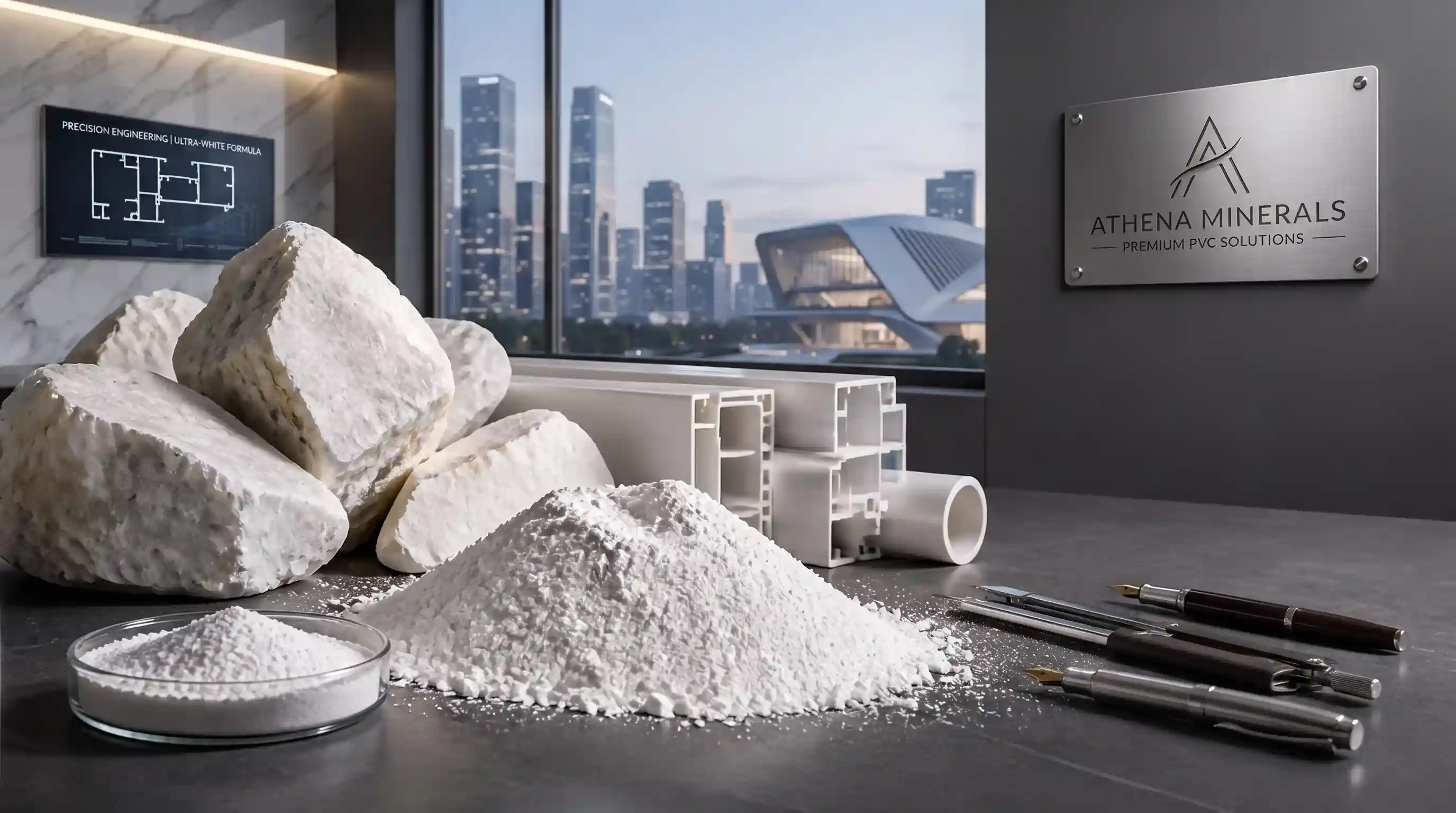
Application of Calcium Carbonate in the Paper Industry
The papermaking industry is one of the world's largest consumers of calcium carbonate powder. In this industry, the mineral is used in two main forms: as a filler in paper pulp and as a pigment in the surface coating process. Both applications play a vital role in the final paper quality and production economics.
As a filler, calcium carbonate replaces a portion of the paper pulp. This significantly reduces production costs, as cellulosic pulp is far more expensive than this mineral powder. Furthermore, the presence of mineral particles in the pulp increases brightness and whiteness, reduces transparency, and makes the paper more suitable for printing. It also helps improve optical properties such as mattness and surface uniformity.
In the coating process, calcium carbonate is applied with binders and additives onto the paper surface to create a smooth, uniform, and high-quality printing surface. This coating controls ink absorption, improves print clarity, and provides a glossy or matte finish as required by the product. Coated papers for magazine printing, packaging, and high-quality printed products benefit from this process.
Advantages of using calcium carbonate in the paper industry include:
- Increases paper brightness and whiteness
- Improves paper surface and printability
- Reduces pulp consumption and production costs
- Controls ink absorption on the paper surface
- Increases production speed and machine efficiency
In papermaking, the powder's mesh grade directly affects product quality. Finer particles create smoother surfaces and higher brightness, making them more suitable for high-quality printing papers. Uniform particle distribution prevents dark spots or surface quality loss. The chemical purity of the mineral is also important, as impurities can negatively impact the production process and final paper quality. Consistent powder quality within specified ranges allows paper mills to keep machine settings constant.
Application of Calcium Carbonate in Adhesives and Artificial Stone
The adhesive and artificial stone (engineered stone) manufacturing industries are other major consumers of calcium carbonate powder. In the adhesive industry, this mineral acts as a filler and plays a key role in controlling viscosity, strength, drying time, and final product cost. It is heavily consumed in water-based adhesives, construction adhesives, industrial glues, and sealants.
In construction adhesives like tile glue, cement-based adhesives, and polymer glues, calcium carbonate acts as an active filler; meaning that besides adding volume, it contributes to the bond strength between the adhesive and the surface. Mineral particles in the formulation reduce shrinkage during drying and improve the dimensional stability of the adhesive layer. In sealants, this powder helps control sag and improves the dried surface's resistance.
In the production of artificial and engineered stone, calcium carbonate is one of the primary fillers alongside resins (such as polyester or acrylic polymers). The combination of aggregates, mineral powder, and resin creates a stone with a natural look, high strength, and appropriate weight. Calcium carbonate powder ensures a smooth, uniform stone surface, simulates natural stone texture, and increases abrasion resistance. Due to its high whiteness, it also acts as a color base in light-colored stones.
It is worth noting that in some mineral applications, calcium carbonate powder is compared with dolomite powder. Both belong to the carbonate family and share applications, but differences in chemical composition and hardness make them suitable for different uses. To lea about dolomite powder properties, you can read the article Examining the Appearance and Quality of White Dolomite Powder.
- In adhesives: controls viscosity, reduces shrinkage, and improves bond strength
- In sealants: controls sag and improves surface resistance
- In artificial stone: creates a smooth surface, natural texture, and abrasion resistance
- In both applications: cost reduction and improved processability
In both industries, particle uniformity and powder purity are highly important, as they directly affect the visual quality and performance of the final product. Selecting the right grade depends on the resin type, production process, and product standards.
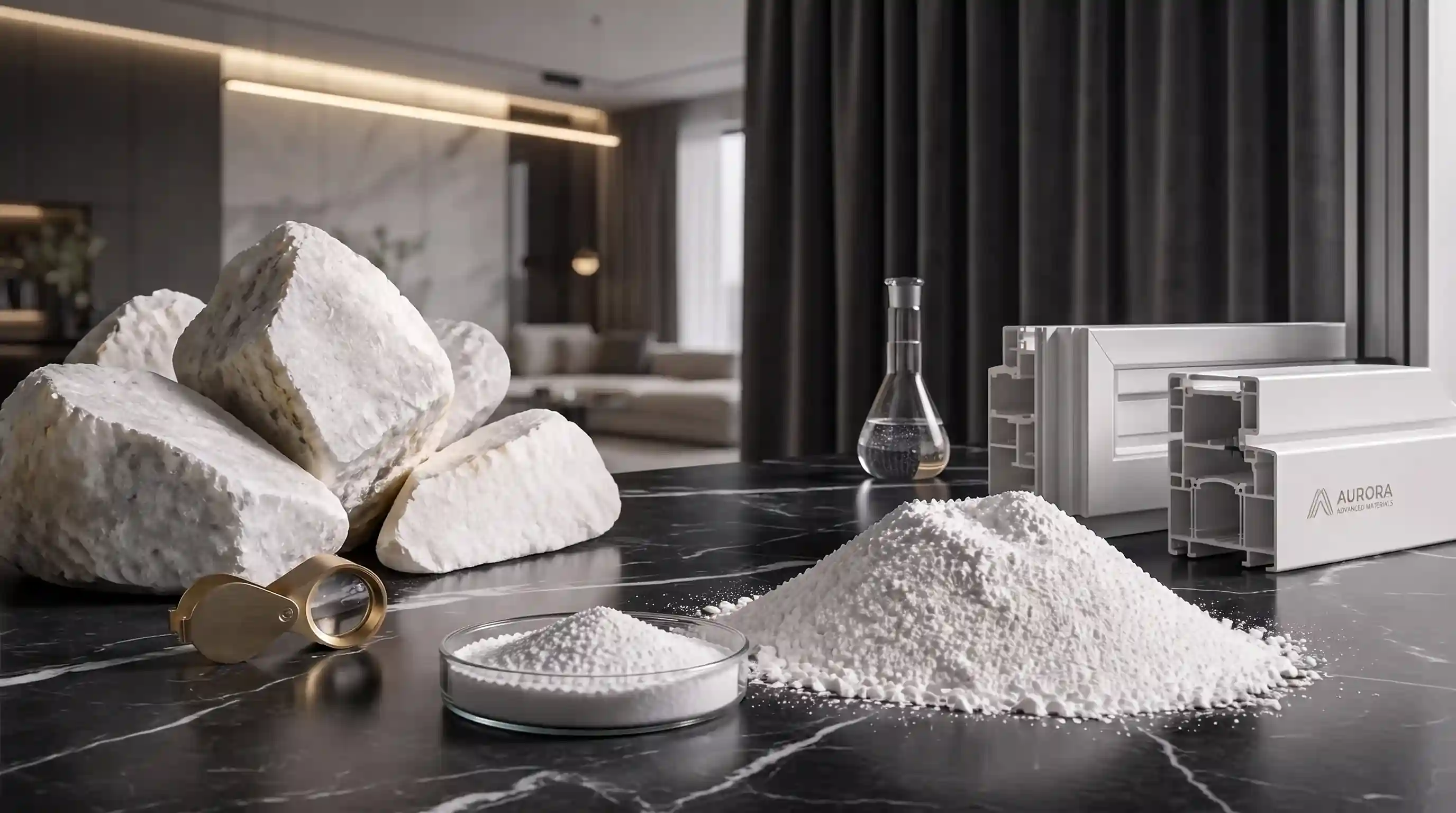
Importance of Mesh Grade (100 to 3500 Mesh) and Selecting the Right Grade
One of the most critical factors in selecting calcium carbonate powder is its mesh grade or particle size. The term mesh refers to the screen size the powder passes through; the higher the mesh number, the finer the screen openings and, consequently, the finer the powder particles. This product is manufactured in the 100 to 3500 mesh range, and this wide variety explains its diverse applications across industries.
Lower mesh powders (coarser particles) are typically used where a very fine surface is not required and cost reduction is the priority. For instance, in some construction adhesives, economical primers, and general fillers, these grades are ideal. Higher production speeds and reduced machinery wear are advantages of these grades.
Higher mesh powders (finer particles) are used where surface quality and optical properties matter. In paint, paper, masterbatch, artificial leather, and high-quality artificial stone, fine particles deliver a smooth surface, high brightness, and better uniformity. However, finer particles increase processing costs; therefore, the grade should be selected based on the product's actual requirements.
Besides size, particle size distribution (PSD) is highly important. A powder with uniform distribution offers more predictable performance in production and prevents issues like agglomeration, mechanical property loss, or surface lines. Professional manufacturers maintain strict control over this parameter.
To select the right grade, answering these questions is helpful:
- What surface does the final product require: glossy, matte, or rough?
- Will the part be subjected to mechanical stress?
- Is the production process extrusion, injection molding, coating, or mixing?
- How much priority is given to cost reduction?
Ultimately, determining powder quality and authenticity requires careful examination of visual and technical properties. If you wish to recognize high-quality powder signs, the article How to Identify Original Calcium Carbonate Powder? serves as a useful guide. Note that choosing the wrong grade not only lowers product quality but can also increase rework and raw material waste.
Key Points When Buying Calcium Carbonate Powder and Conclusion
When purchasing calcium carbonate powder, considering key points can prevent quality issues and rising production costs. First, the intended application must be clarified, as the right grade for a UPVC pipe is not necessarily right for paint or paper. Determining mesh grade, coating type, and consumption rate is the first step in correct selection.
The second key factor is powder quality and uniformity. A high-quality product must have uniform particle size distribution, high chemical purity, controlled moisture, and desirable whiteness. Fluctuations in these parameters can alter production processes and degrade final product quality. Thus, obtaining samples and conducting initial tests before bulk purchases is a smart move.
The third point is choosing a reputable supplier. An expert manufacturer understands each industry's needs, provides proper technical consulting, and ensures the product grade matches the buyer's process. Appropriate packaging and consistent quality across shipments prevent issues like moisture absorption, caking, and contamination.
The fourth factor is storage and handling. This powder must be stored in a dry environment away from moisture, as moisture absorption can cause bubbles, surface defects, and machinery disruptions in extrusion, paint, and paper processes. Using shipments promptly and following storage principles preserves product value.
- Define the final application and choose the matching grade
- Emphasize particle uniformity and purity
- Sample and test initially before bulk buying
- Buy from a supplier offering technical support
- Control storage conditions and moisture
Conclusion: White calcium carbonate powder, spaing 100 to 3500 mesh, is one of the most widely used minerals in mode industries. From PVC/UPVC profiles and pipes and masterbatch to cables, artificial leather, paint, paper, adhesives, and engineered stone, it is a logical choice for manufacturers due to its high whiteness, stability, affordable price, and compatibility with industrial processes. Choosing the right grade and a reliable supplier is decisive for final product quality and cost reduction. If you plan to purchase this product, visiting the Calcium Carbonate page is a good starting point for more information.
| Question | Answer |
|---|---|
| What is white calcium carbonate powder? | It is a natural mineral filler produced from limestone and calcite, used in polymeric, paint, paper, and engineering applications. |
| What is the mesh range of this product? | This product is manufactured in the 100 to 3500 mesh range. |
| What are the main applications of calcium carbonate powder? | PVC/UPVC profiles and pipes, masterbatch, cables, artificial leather, paint, paper, adhesives, and engineered stone. |
| What role does it play in the plastics industry? | As a filler, it reduces costs and improves mechanical properties, dimensional stability, and melt flow. |
| What is coated calcium carbonate? | It is a powder whose particles are coated with fatty acids for better dispersion and bonding with polymers. |
| How is it used in paint manufacturing? | As a filler and extender pigment, it improves hiding power, controls viscosity, and reduces paint costs. |
| What role does it play in the paper industry? | As a filler and coating pigment, it increases paper brightness and reduces pulp consumption. |
| Why is it used in artificial stone? | It creates a smooth surface and natural texture while increasing the engineered stone's abrasion resistance. |
| How do I choose the right mesh? | It is selected based on the required surface quality, production process type, and cost reduction priorities; higher mesh is suited for finer surfaces. |
| What is the difference between calcium carbonate and dolomite? | Both are mineral carbonates but have different chemical compositions and hardness, making them suitable for different applications. |
The information in this article is based on the product specifications provided on the https://ksamiran.ir/products/calcium-carbonate/ page.
برچسب: Calcium Carbonate,Applications of White Calcium Carbonate Powder in Various Industries,
نویسنده: رساوب آفرین